DEPARTMENT
OF
MEDICAL SURGICAL NURSING
Learning objectives
At the end of this lecture, the students should be
able to
• define epistaxis.
• enlist the causes epistaxis
• describe the clinical manifestations of epistaxis.
• discuss the management of epistaxis.
2
Introduction
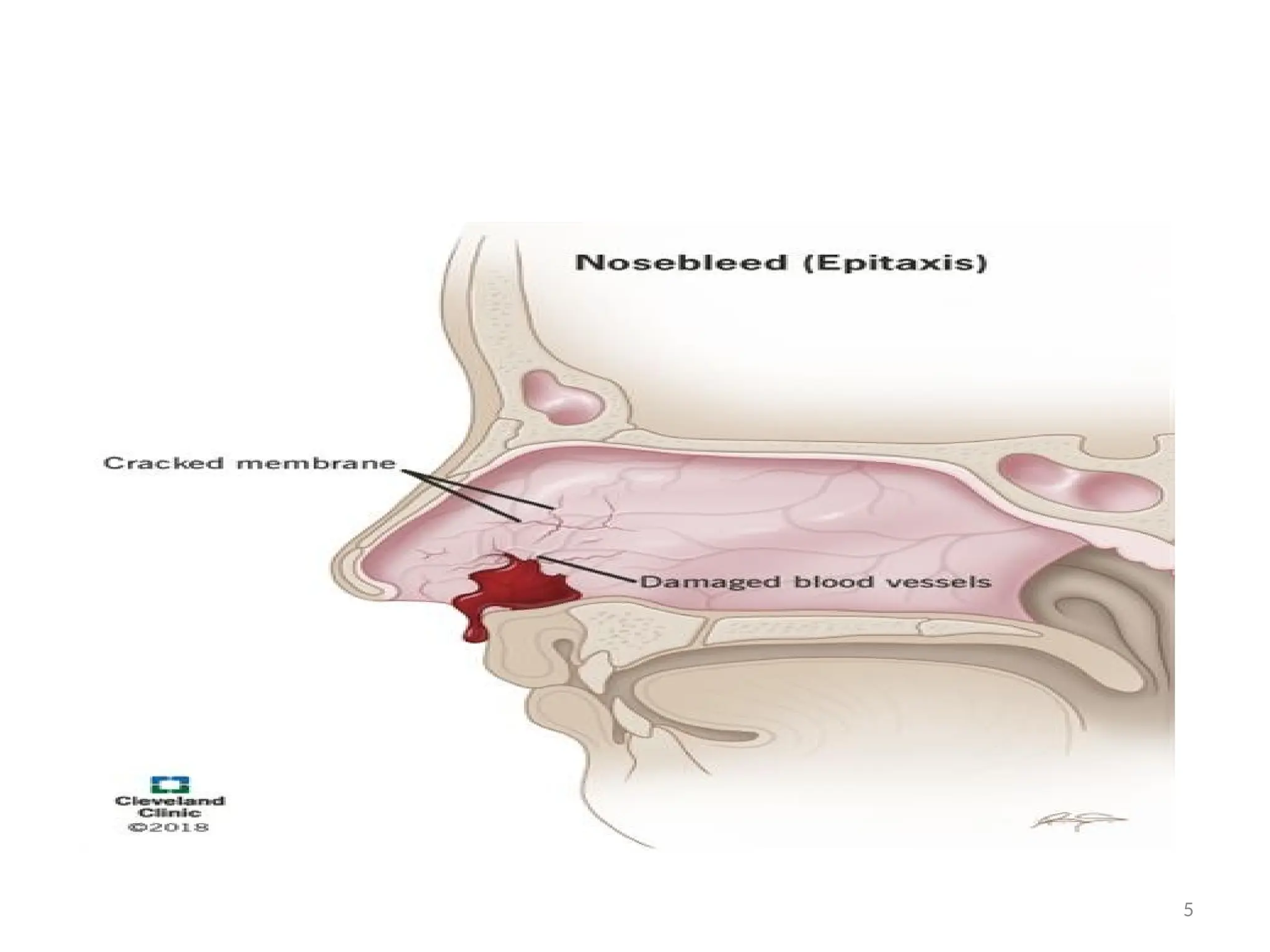
• Bleeding from inside the nose is called
epistaxis
• Fairly common and is seen in all age
groups. “Epistaxis refers to nose bleed
or hemorrhage from the nose”.
• It‘s mostly commonly originates in the
anterior portion of the nasal cavity.
3
4
5
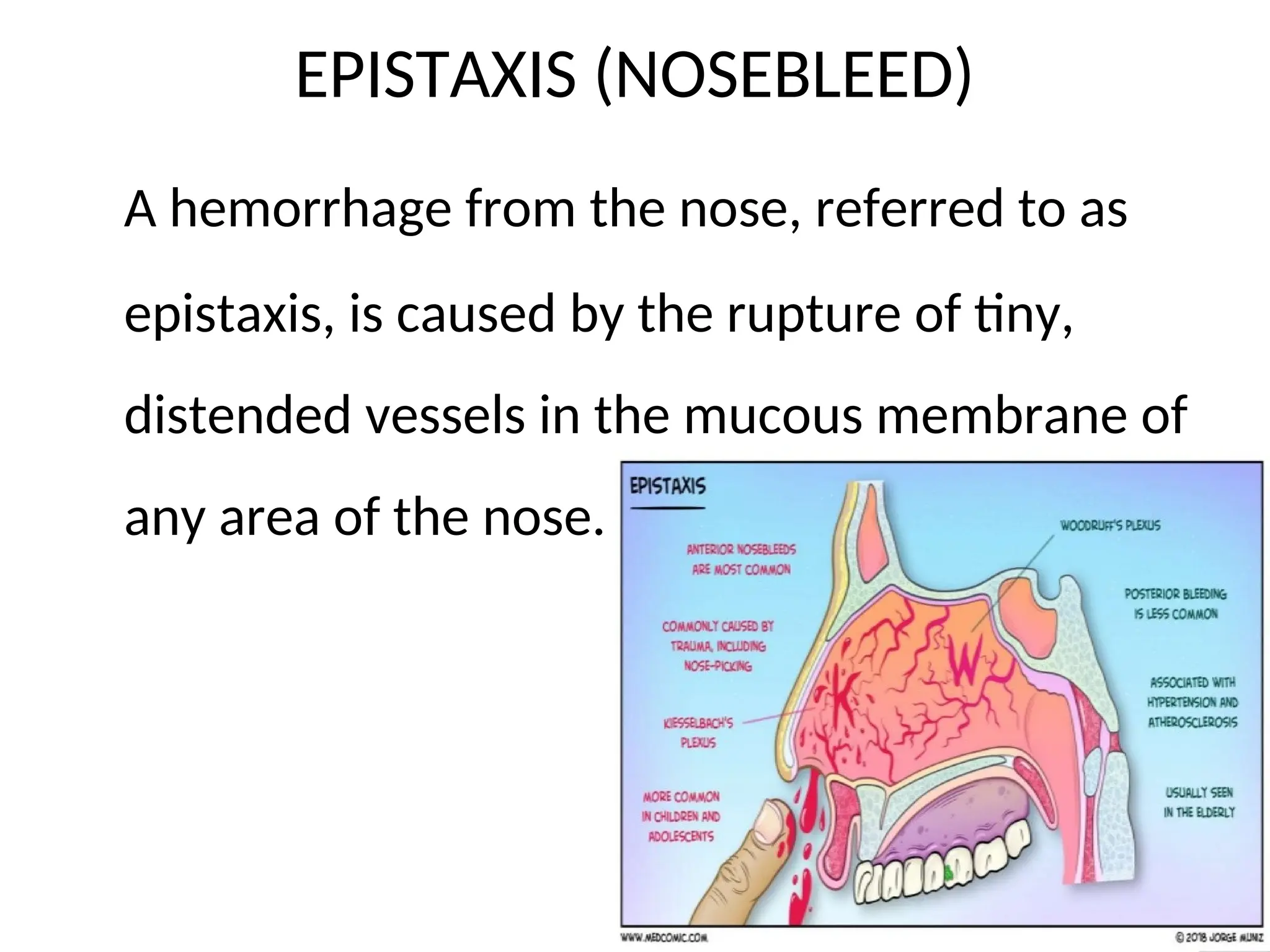
EPISTAXIS (NOSEBLEED)
A hemorrhage from the nose, referred to as
epistaxis, is caused by the rupture of tiny,
distended vessels in the mucous membrane of
any area of the nose.
6
Most commonly, the site is the anterior septum,
• the anterior ethmoidal artery on
the forward part of the roof
• the sphenopalatine artery in
the posterosuperior region, and
• the internal maxillary
7
Types of Epistaxis
1. ANTERIOR EPISTAXIS (Most common
and less severe and easy to control)
2. POSTERIOR EPISTAXIS ( Less common
more severe and difficult to control)
8
Causes and risk factors
• trauma,
• infection, (rhinitis, sinusitis, fever)
• inhalation of illicit drugs,(cocaine)
• cardiovascular diseases, (HTN)
• tumor,
• thrombocytopenia
9
• Rendu- Osler- Weber syndrome
• low humidity,
• a foreign body in the nose, and
• a deviated nasal septum.
• Additionally, vigorous nose blowing and
nose picking.
10
11
Clinical features
• continuous and intermittent bleeding
• Hemoptysis or Hematemesis
• anxiety
• shock
12
Investigations
• Haemogram
• Test for coagulation (CT & BT)
• Radiography
• CT scan
• Endoscopy
• Biopsy
13
Medical Management
• Management of epistaxis depends on
the location of the bleeding site.
• A nasal speculum or headlight-to determine the
site of bleeding in the nasal cavity.
• Most nosebleeds - anterior portion of the nose.
14
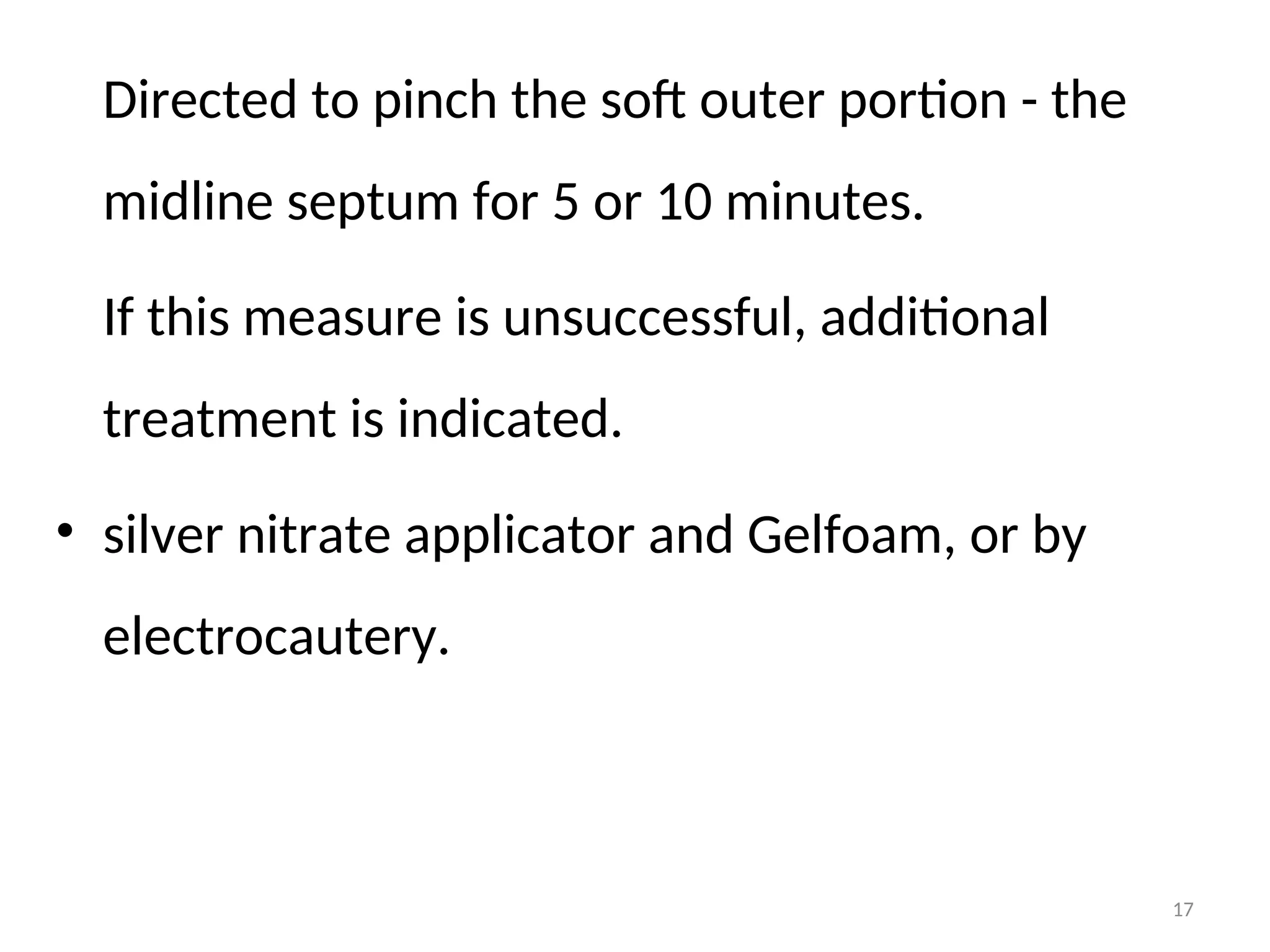
• Initial treatment may include applying direct
pressure.
• The patient sits upright with the head tilted
forward to prevent swallowing and aspiration of
blood 15
16
Directed to pinch the soft outer portion - the
midline septum for 5 or 10 minutes.
If this measure is unsuccessful, additional
treatment is indicated.
• silver nitrate applicator and Gelfoam, or by
electrocautery.
17
• Topical vasoconstrictors, such as adrenaline
(11,000),
• cocaine (0.5%), and phenylephrine may be
prescribed.
• If bleeding -posterior regions,
• cotton pledgets soaked in a vasoconstricting
solution may be inserted into the nose.
• Suction 18
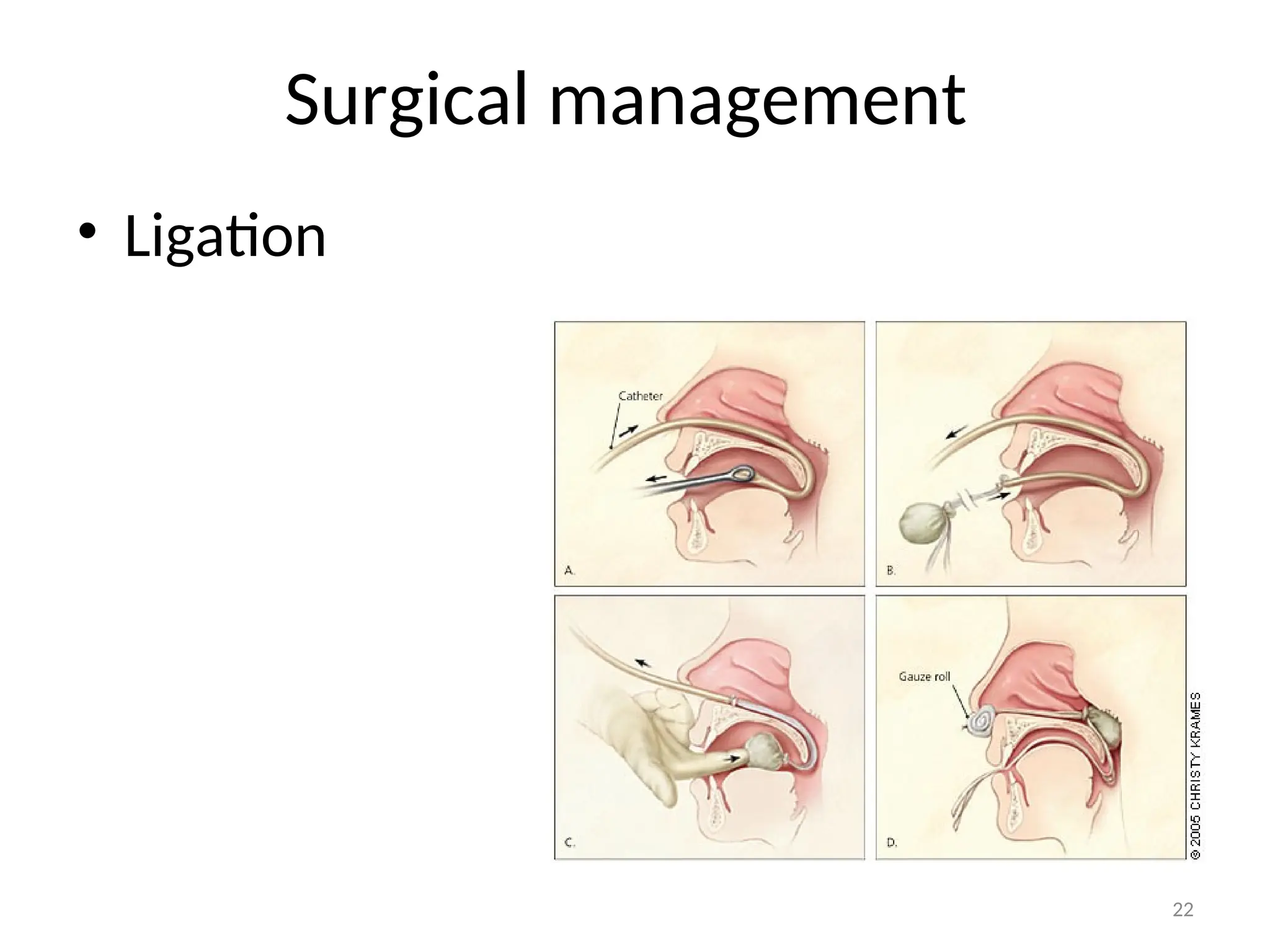
When the origin of the bleeding cannot be
identified,
• the nose may be packed with gauze
impregnated with petroleum jelly or
• antibiotic ointment;
• a topical anesthetic spray and
• decongestant agent.
19
• The packing may remain in place for 48 hours
or up to 5 or 6 days if necessary to control
bleeding.
• Antibiotics may be prescribed because of the
risk of iatrogenic sinusitis and toxic shock
syndrome.
20
21
Surgical management
• Ligation
22
Nursing Management
• The nurse monitors the vital signs,
• assists in the control of bleeding
• Assuring the patient in a calm, efficient manner
that bleeding can be controlled can help reduce
anxiety.
23
TEACHING PATIENTS SELF-CARE
• Discharge teaching
• avoiding forceful nose blowing,
• straining, high altitudes, and nasal trauma.
• Adequate humidification may prevent drying of
the nasal passages.
24
The nurse instructs the
• Patient how to apply direct pressure to
the nose with the thumb and the index finger
for 15 minutes in the case of a recurrent
nosebleed.
25
• If recurrent bleeding cannot be stopped,
the patient is instructed to seek additional
medical attention.
26
Summary
So far we have discussed about definition,
causes, clinical manifestations, and
managements of epistaxis.
Bibliography
• Lewis et al, Medical Surgical Nursing, Mosby
Elsevier,7th
edition.
• Joyce.M.Black et al, Medical Surgical Nursing,
Saunders publication.
• Brunner and Siddhartha, Medical Surgical
Nursing, Lippincott Williams and Wilkins.
28
Thank You

Epistaxis ( Nose Bleeding ) .ppt

  • 1.
  • 2.
    Learning objectives At theend of this lecture, the students should be able to • define epistaxis. • enlist the causes epistaxis • describe the clinical manifestations of epistaxis. • discuss the management of epistaxis. 2
  • 3.
    Introduction • Bleeding frominside the nose is called epistaxis • Fairly common and is seen in all age groups. “Epistaxis refers to nose bleed or hemorrhage from the nose”. • It‘s mostly commonly originates in the anterior portion of the nasal cavity. 3
  • 4.
  • 5.
  • 6.
    EPISTAXIS (NOSEBLEED) A hemorrhagefrom the nose, referred to as epistaxis, is caused by the rupture of tiny, distended vessels in the mucous membrane of any area of the nose. 6
  • 7.
    Most commonly, thesite is the anterior septum, • the anterior ethmoidal artery on the forward part of the roof • the sphenopalatine artery in the posterosuperior region, and • the internal maxillary 7
  • 8.
    Types of Epistaxis 1.ANTERIOR EPISTAXIS (Most common and less severe and easy to control) 2. POSTERIOR EPISTAXIS ( Less common more severe and difficult to control) 8
  • 9.
    Causes and riskfactors • trauma, • infection, (rhinitis, sinusitis, fever) • inhalation of illicit drugs,(cocaine) • cardiovascular diseases, (HTN) • tumor, • thrombocytopenia 9
  • 10.
    • Rendu- Osler-Weber syndrome • low humidity, • a foreign body in the nose, and • a deviated nasal septum. • Additionally, vigorous nose blowing and nose picking. 10
  • 11.
  • 12.
    Clinical features • continuousand intermittent bleeding • Hemoptysis or Hematemesis • anxiety • shock 12
  • 13.
    Investigations • Haemogram • Testfor coagulation (CT & BT) • Radiography • CT scan • Endoscopy • Biopsy 13
  • 14.
    Medical Management • Managementof epistaxis depends on the location of the bleeding site. • A nasal speculum or headlight-to determine the site of bleeding in the nasal cavity. • Most nosebleeds - anterior portion of the nose. 14
  • 15.
    • Initial treatmentmay include applying direct pressure. • The patient sits upright with the head tilted forward to prevent swallowing and aspiration of blood 15
  • 16.
  • 17.
    Directed to pinchthe soft outer portion - the midline septum for 5 or 10 minutes. If this measure is unsuccessful, additional treatment is indicated. • silver nitrate applicator and Gelfoam, or by electrocautery. 17
  • 18.
    • Topical vasoconstrictors,such as adrenaline (11,000), • cocaine (0.5%), and phenylephrine may be prescribed. • If bleeding -posterior regions, • cotton pledgets soaked in a vasoconstricting solution may be inserted into the nose. • Suction 18
  • 19.
    When the originof the bleeding cannot be identified, • the nose may be packed with gauze impregnated with petroleum jelly or • antibiotic ointment; • a topical anesthetic spray and • decongestant agent. 19
  • 20.
    • The packingmay remain in place for 48 hours or up to 5 or 6 days if necessary to control bleeding. • Antibiotics may be prescribed because of the risk of iatrogenic sinusitis and toxic shock syndrome. 20
  • 21.
  • 22.
  • 23.
    Nursing Management • Thenurse monitors the vital signs, • assists in the control of bleeding • Assuring the patient in a calm, efficient manner that bleeding can be controlled can help reduce anxiety. 23
  • 24.
    TEACHING PATIENTS SELF-CARE •Discharge teaching • avoiding forceful nose blowing, • straining, high altitudes, and nasal trauma. • Adequate humidification may prevent drying of the nasal passages. 24
  • 25.
    The nurse instructsthe • Patient how to apply direct pressure to the nose with the thumb and the index finger for 15 minutes in the case of a recurrent nosebleed. 25
  • 26.
    • If recurrentbleeding cannot be stopped, the patient is instructed to seek additional medical attention. 26
  • 27.
    Summary So far wehave discussed about definition, causes, clinical manifestations, and managements of epistaxis.
  • 28.
    Bibliography • Lewis etal, Medical Surgical Nursing, Mosby Elsevier,7th edition. • Joyce.M.Black et al, Medical Surgical Nursing, Saunders publication. • Brunner and Siddhartha, Medical Surgical Nursing, Lippincott Williams and Wilkins. 28
  • 29.