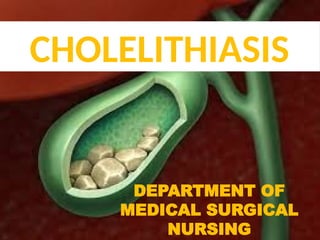
CHOLELITHIASIS
DEPARTMENT OF
MEDICAL SURGICAL
NURSING
At the end of the class students will be
able to:---
1. Define cholelithiasis
2. Enlist the etiology and risk factors of
cholelithiasis
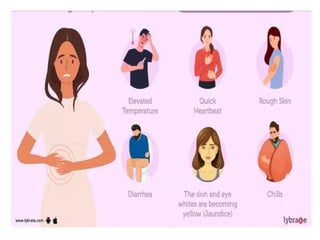
3. Discuss the clinical manifestations and
diagnostic evaluation of cholelithiasis
Learning objectives
4.Explain the management of cholelithiasis.
5.Discuss the complications &
health education of cholelithiasis.
Ct- Learning objectives
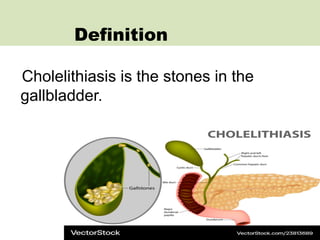
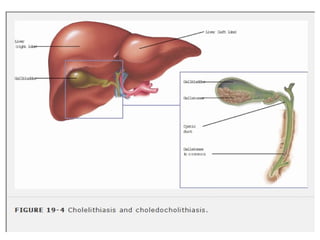
Cholelithiasis is the stones in the
gallbladder.
Definition
Incidence
• The gallbladder disease is a common health
problem in India, particularly North India
• The prevalence of gall stones in India ranges
from 2% in South India up to 7%in North India
Age
Gender
Malabsorption of bile salts with GI disease
Bile fistula
Carcinoma of the gallbladder.
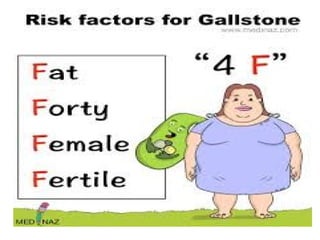
Obesity
Multiple pregnancies
Diabetes mellitus
Risk Factors
Rapid weight loss (leads to rapid
development of gallstones and high risk of
symptomatic disease)
Treatment with high-dose estrogen (ie, in
prostate cancer).
Cystic fibrosis
Risk Factors
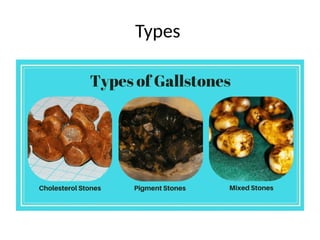
Types
Type of gall stones
• Cholesterol stones : radiating crystal like
appearance
• Mixed stone : most common type of stone,
contains cholestrol, calcium salts of
phosphates and carbonates, protein
• Pigment stone : small, black or greenish black,
multiple and often sludge like
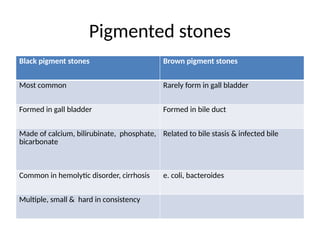
Pigmented stones
Black pigment stones Brown pigment stones
Most common Rarely form in gall bladder
Formed in gall bladder Formed in bile duct
Made of calcium, bilirubinate, phosphate,
bicarbonate
Related to bile stasis & infected bile
Common in hemolytic disorder, cirrhosis e. coli, bacteroides
Multiple, small & hard in consistency
Pathophysiology
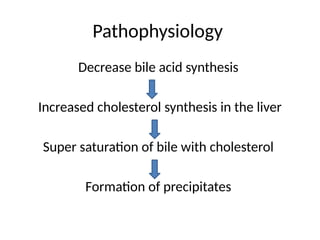
Decrease bile acid synthesis
Increased cholesterol synthesis in the liver
Super saturation of bile with cholesterol
Formation of precipitates
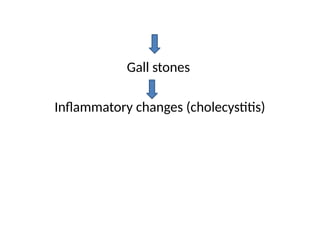
Gall stones
Inflammatory changes (cholecystitis)
Gallstones that remain in the gallbladder are
usually asymptomatic.
Biliary colic can be caused by gallstones.
(Steady, severe, aching pain to right
hypocondrium & epigastserium, radiating to
chest, back & shoulder.)
Clinical Manifestations
Sensation of pressure in the— Epigastrium or
Right upper quadrant, begins suddenly and
persists for 1 to 3 hours until the stone falls
back into the gallbladder.
Vomiting
Fever
Increased WBCs
Murphy’s sign
1. Cholecystography
2. Ultrasonography
3. Radionuclide imaging or cholescintigraphy
4. ERCP or PTC to visualize location of
stones & extension of obstruction).
Diagnostic Evaluation
Nutrition & Supportive management
• Adequate bed rest
• Low fat and liquid diet
• Give - Cooked vegitable/fruits, rice, lean meat,
bread etc.
• avoid- fried food, pork, cream, cheese, other fats
and alcohol
Management
Pharmacological therapy
• Ursodeoxycholic acid
• Chenodeoxycholic acid
To decrease the size of existing gall stone and
stop formation of new stone
6-12 month therapy are required
• Non surgical removal of stone
• Dissolving gallstone
• Stone removed by instrumentation (ERCP)
• Extracorporeal shock wave lithotripsy
• Intracorporeal lithotripsy
Cholecystectomy.
Choledochostomy
Surgical management
1. Cholangitis.
2. Necrosis, empyema, or perforation of the
gallbladder.
3. Biliary fistula through the duodenum.
4. Adenocarcinoma of the gallbladder.
Complications
1. Obtain history and demographic data that
may indicate risk factors for biliary disease.
2. Assess patient's pain for location,
description, intensity, relieving and
exacerbating factors.
Nursing Assessment
3. Assess for signs of dehydration: dry
mucous membranes, poor skin turgor, low
urine output with elevated specific gravity.
4. Assess sclera and skin for jaundice.
5. Monitor temperature and white blood
count for indications of infection.
Nursing Assessment
1.Acute Pain related to biliary colic or stone
obstruction.
Assess pain location, severity, and
characteristics.
Administer medications or monitor patient-
controlled analgesia to control pain.
Assist in attaining position of comfort.
Ct--Nursing Assessment
2.Deficient Fluid Volume related to nausea and
vomiting and decreased intake.
Administer I.V. fluids and electrolytes as
prescribed.
Administer antiemetic as prescribed to decrease
nausea and vomiting.
Maintain NG decompression, if needed.
Ct--Nursing Assessment
Begin food and fluids as tolerated, after
acute symptoms subside or postoperatively.
Observe and record amount of biliary tube
drainage, if applicable.
Ct--Nursing Assessment
• Impaired gas exchange related to the high
abdominal surgical incision
• Impaired digestion related to altered biliary
drainage
• Impaired nutrition less than body requirement
related to altered bile secretion
Instruct patient in care of tubes or catheters
that may be in place at discharge.
Review discharge instructions for activity,
diet, medications, and postoperative follow-
up.
Encourage follow-up as indicated.
Health Education
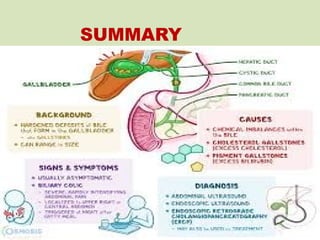
Definition of cholelithiasis
Etiology and risk factors of cholelithiasis
Clinical manifestations and diagnostic
evaluation of cholelithiasis.
Management of cholelithiasis.
Complications &
Health education of cholelithiasis.
SUMMARY
BIBLIOGRAPHY
• Black, J.M. & Hawks, J.H. (2009). Medical-Surgical
Nursing: Clinical Management for Positive Outcomes
(8th ed.). Philadelphia: Elsevier/Saunders.
• Porth, C.M. (2009). Pathophysiology: Concepts of
Altered Health States (8th ed.). Philadelphia:
Lippincott Williams & Wilkins.
• Smeltzer, S.C., Bare, B.G., Hinkle, J.L., & Cheever,
K.H. (2010). Brunner & Suddarth’s Textbook of
Medical-Surgical Nursing (12th ed.). Philadelphia:
Lippincott Williams & Wilkins.
THANK
YOU
!

CHOLELITHIASIS (gall bladder stone).pptx

  • 1.
  • 2.
    At the endof the class students will be able to:--- 1. Define cholelithiasis 2. Enlist the etiology and risk factors of cholelithiasis 3. Discuss the clinical manifestations and diagnostic evaluation of cholelithiasis Learning objectives
  • 3.
    4.Explain the managementof cholelithiasis. 5.Discuss the complications & health education of cholelithiasis. Ct- Learning objectives
  • 4.
    Cholelithiasis is thestones in the gallbladder. Definition
  • 6.
    Incidence • The gallbladderdisease is a common health problem in India, particularly North India • The prevalence of gall stones in India ranges from 2% in South India up to 7%in North India
  • 7.
    Age Gender Malabsorption of bilesalts with GI disease Bile fistula Carcinoma of the gallbladder. Obesity Multiple pregnancies Diabetes mellitus Risk Factors
  • 8.
    Rapid weight loss(leads to rapid development of gallstones and high risk of symptomatic disease) Treatment with high-dose estrogen (ie, in prostate cancer). Cystic fibrosis Risk Factors
  • 10.
  • 11.
    Type of gallstones • Cholesterol stones : radiating crystal like appearance • Mixed stone : most common type of stone, contains cholestrol, calcium salts of phosphates and carbonates, protein • Pigment stone : small, black or greenish black, multiple and often sludge like
  • 12.
    Pigmented stones Black pigmentstones Brown pigment stones Most common Rarely form in gall bladder Formed in gall bladder Formed in bile duct Made of calcium, bilirubinate, phosphate, bicarbonate Related to bile stasis & infected bile Common in hemolytic disorder, cirrhosis e. coli, bacteroides Multiple, small & hard in consistency
  • 13.
    Pathophysiology Decrease bile acidsynthesis Increased cholesterol synthesis in the liver Super saturation of bile with cholesterol Formation of precipitates
  • 14.
  • 15.
    Gallstones that remainin the gallbladder are usually asymptomatic. Biliary colic can be caused by gallstones. (Steady, severe, aching pain to right hypocondrium & epigastserium, radiating to chest, back & shoulder.) Clinical Manifestations
  • 16.
    Sensation of pressurein the— Epigastrium or Right upper quadrant, begins suddenly and persists for 1 to 3 hours until the stone falls back into the gallbladder. Vomiting Fever Increased WBCs Murphy’s sign
  • 18.
    1. Cholecystography 2. Ultrasonography 3.Radionuclide imaging or cholescintigraphy 4. ERCP or PTC to visualize location of stones & extension of obstruction). Diagnostic Evaluation
  • 19.
    Nutrition & Supportivemanagement • Adequate bed rest • Low fat and liquid diet • Give - Cooked vegitable/fruits, rice, lean meat, bread etc. • avoid- fried food, pork, cream, cheese, other fats and alcohol Management
  • 20.
    Pharmacological therapy • Ursodeoxycholicacid • Chenodeoxycholic acid To decrease the size of existing gall stone and stop formation of new stone 6-12 month therapy are required
  • 21.
    • Non surgicalremoval of stone • Dissolving gallstone • Stone removed by instrumentation (ERCP) • Extracorporeal shock wave lithotripsy • Intracorporeal lithotripsy
  • 22.
  • 23.
    1. Cholangitis. 2. Necrosis,empyema, or perforation of the gallbladder. 3. Biliary fistula through the duodenum. 4. Adenocarcinoma of the gallbladder. Complications
  • 24.
    1. Obtain historyand demographic data that may indicate risk factors for biliary disease. 2. Assess patient's pain for location, description, intensity, relieving and exacerbating factors. Nursing Assessment
  • 25.
    3. Assess forsigns of dehydration: dry mucous membranes, poor skin turgor, low urine output with elevated specific gravity. 4. Assess sclera and skin for jaundice. 5. Monitor temperature and white blood count for indications of infection. Nursing Assessment
  • 26.
    1.Acute Pain relatedto biliary colic or stone obstruction. Assess pain location, severity, and characteristics. Administer medications or monitor patient- controlled analgesia to control pain. Assist in attaining position of comfort. Ct--Nursing Assessment
  • 27.
    2.Deficient Fluid Volumerelated to nausea and vomiting and decreased intake. Administer I.V. fluids and electrolytes as prescribed. Administer antiemetic as prescribed to decrease nausea and vomiting. Maintain NG decompression, if needed. Ct--Nursing Assessment
  • 28.
    Begin food andfluids as tolerated, after acute symptoms subside or postoperatively. Observe and record amount of biliary tube drainage, if applicable. Ct--Nursing Assessment
  • 29.
    • Impaired gasexchange related to the high abdominal surgical incision • Impaired digestion related to altered biliary drainage • Impaired nutrition less than body requirement related to altered bile secretion
  • 30.
    Instruct patient incare of tubes or catheters that may be in place at discharge. Review discharge instructions for activity, diet, medications, and postoperative follow- up. Encourage follow-up as indicated. Health Education
  • 31.
    Definition of cholelithiasis Etiologyand risk factors of cholelithiasis Clinical manifestations and diagnostic evaluation of cholelithiasis. Management of cholelithiasis. Complications & Health education of cholelithiasis. SUMMARY
  • 32.
    BIBLIOGRAPHY • Black, J.M.& Hawks, J.H. (2009). Medical-Surgical Nursing: Clinical Management for Positive Outcomes (8th ed.). Philadelphia: Elsevier/Saunders. • Porth, C.M. (2009). Pathophysiology: Concepts of Altered Health States (8th ed.). Philadelphia: Lippincott Williams & Wilkins. • Smeltzer, S.C., Bare, B.G., Hinkle, J.L., & Cheever, K.H. (2010). Brunner & Suddarth’s Textbook of Medical-Surgical Nursing (12th ed.). Philadelphia: Lippincott Williams & Wilkins.
  • 33.