Department
of
Medical Surgical Nursing
LEARNING OBJECTIVES
At the end of this lecture students will be able to:
• Define keratitis
• Enlist the causes of keratitis
• List out the clinical features of keratitis
• Enlist the diagnostic evaluation of keratitis
• Describe the treatment of keratitis
• Explain the surgical management & methods
of corneal preservation
Introduction
• The corneal diseases are one of the leading
causes of blindness in the world. in most
cases, these infections are preventable or
treatable
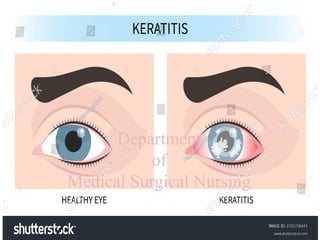
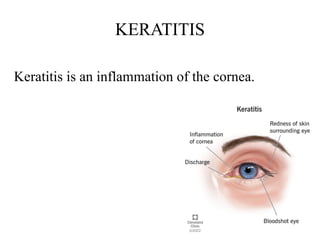
KERATITIS
Keratitis is an inflammation of the cornea.
ETIOLOGY
• Infection: bacterial, fungal, viral, chlamydial &
protozoal
• Mechanical: trauma, chemical burns & thermal
burns, use of contact lenses
• Allergic substances: animal bite, dust, pollens
• Causative organism: Gonorrhoea,klebsiella,
staphylococcus aureus, candida, herpes simplex
virus
Risk Factors
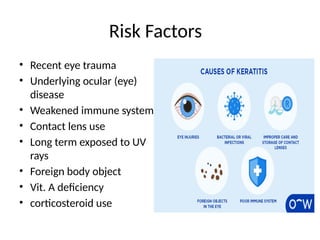
• Recent eye trauma
• Underlying ocular (eye)
disease
• Weakened immune system
• Contact lens use
• Long term exposed to UV
rays
• Foreign body object
• Vit. A deficiency
• corticosteroid use
SIGN & SYMPTOMS
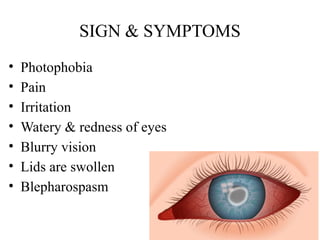
• Photophobia
• Pain
• Irritation
• Watery & redness of eyes
• Blurry vision
• Lids are swollen
• Blepharospasm
DIAGNOSTIC EVALUATION
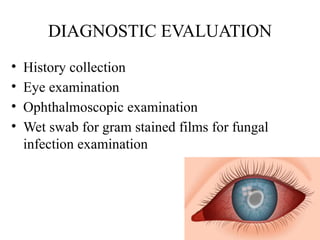
• History collection
• Eye examination
• Ophthalmoscopic examination
• Wet swab for gram stained films for fungal
infection examination
TREATMENT
• Medical:
• Topical antibiotics eye drops e.g. GH.
• Topical cycloplegic drugs preferably 1%
atropine eye ointment or eyedrops to paralyse
ciliary muscle & to reduce pain.
- systemic analgesic
- vitamin A, B complex & C to help in early
healing the ulcer
- hot fomentation
- for fungal infection administer antifungal
drugs.
- in case of viral keratitis administer topical
acyclovir eye ointment.
SURGICAL MANAGEMENT
• KERATOPLASTY: also called as “ corneal
grafting” or corneal transplantation .
it is a operation in which the patients disease
cornea is replaced by the donors healthy cornea.
Methods of corneal preservation
• Short term storage
• Intermediate storage
• Long term storage
Summary
• So far we have discussed about definition,
causes, clinical manifestations, diagnostic
evaluation and managements of keratitis
Bibliography
• Lewis et al, Medical Surgical Nursing, Mosby
Elsevier,7th
edition.
• Joyce.M.Black et al, Medical Surgical
Nursing, Saunders publication.
• Brunner and Siddhartha, Medical Surgical
Nursing, Lippincott Williams and Wilkins.
THANKS.

KERATITIS AND ITS MANAGEMENT........pptx

  • 1.
  • 2.
    LEARNING OBJECTIVES At theend of this lecture students will be able to: • Define keratitis • Enlist the causes of keratitis • List out the clinical features of keratitis • Enlist the diagnostic evaluation of keratitis • Describe the treatment of keratitis • Explain the surgical management & methods of corneal preservation
  • 3.
    Introduction • The cornealdiseases are one of the leading causes of blindness in the world. in most cases, these infections are preventable or treatable
  • 4.
    KERATITIS Keratitis is aninflammation of the cornea.
  • 5.
    ETIOLOGY • Infection: bacterial,fungal, viral, chlamydial & protozoal • Mechanical: trauma, chemical burns & thermal burns, use of contact lenses • Allergic substances: animal bite, dust, pollens • Causative organism: Gonorrhoea,klebsiella, staphylococcus aureus, candida, herpes simplex virus
  • 6.
    Risk Factors • Recenteye trauma • Underlying ocular (eye) disease • Weakened immune system • Contact lens use • Long term exposed to UV rays • Foreign body object • Vit. A deficiency • corticosteroid use
  • 7.
    SIGN & SYMPTOMS •Photophobia • Pain • Irritation • Watery & redness of eyes • Blurry vision • Lids are swollen • Blepharospasm
  • 8.
    DIAGNOSTIC EVALUATION • Historycollection • Eye examination • Ophthalmoscopic examination • Wet swab for gram stained films for fungal infection examination
  • 9.
    TREATMENT • Medical: • Topicalantibiotics eye drops e.g. GH. • Topical cycloplegic drugs preferably 1% atropine eye ointment or eyedrops to paralyse ciliary muscle & to reduce pain.
  • 10.
    - systemic analgesic -vitamin A, B complex & C to help in early healing the ulcer - hot fomentation
  • 11.
    - for fungalinfection administer antifungal drugs. - in case of viral keratitis administer topical acyclovir eye ointment.
  • 12.
    SURGICAL MANAGEMENT • KERATOPLASTY:also called as “ corneal grafting” or corneal transplantation . it is a operation in which the patients disease cornea is replaced by the donors healthy cornea.
  • 13.
    Methods of cornealpreservation • Short term storage • Intermediate storage • Long term storage
  • 14.
    Summary • So farwe have discussed about definition, causes, clinical manifestations, diagnostic evaluation and managements of keratitis
  • 15.
    Bibliography • Lewis etal, Medical Surgical Nursing, Mosby Elsevier,7th edition. • Joyce.M.Black et al, Medical Surgical Nursing, Saunders publication. • Brunner and Siddhartha, Medical Surgical Nursing, Lippincott Williams and Wilkins.
  • 16.