MUCOUS MEMBRANE
DISORDERS 1
DEPARTMENT OF MEDICAL SURGICAL NURSING
LEARNING OBJECTIVES
At the end of this class the students
should be able to:-
• Enumerate the different types of
mucous membrane disorders.
• Enlist the signs and symptoms of
mucous membrane disorders.
• Explain the diagnosis and treatment of
mucous membrane disorders.
CHEILITIS
• Cheilitis is a medical condition that results
in inflammation of lips marked by one or
more symptoms such as redness, itching,
swelling, dryness, crack.
• Cheilitis can be affects a side effect of
certain drugs, high dose of vitamin A, iron
deficiency, vitamin B12 deficiency, and
oral candidiasis
Causes
• Dry or chapped lips : exposure to
harsh weather condition, dehydration or
habitual lip licking can leads to dry and
chapped lips
• Infection: bacterial, viral or fungal
infection
• Sun exposure
• Contact dermatitis
• Nutritional deficiency
• Auto immune condition
Types
• Cheilitis Exfoliativa
• Allergic Contact Cheilitis
• Actinic Cheilitis
• Cheilitis Glandularis
• Angular Cheilitis
CHEILITIS EXFOLIATIVA
• Most Common upper lip if cause is unknown.
• Most Common lower lip if it is a reaction to
other disease states, ie. Sickle cell,
Alzheimer’s Disease.
• Irritation: lipsticks, dentifrices, mouthwashes,
shaving/aftershave, nail enamel, lip licking, UV
• Tx: Remove cause, topical steroids, emollient
ointments
Allergic Contact Cheilitis
• dryness, fissuring, edema, crusting,
angular cheilitis.
• Topicals - meds, dental, lipsticks,
sunscreen lip balms, cosmetics, nail
polish, cigarette holders, rubber, metals,
toothpaste.
• Foods – oranges, lemons, artichokes,
mangoes
• Saxophone or Clarinet cane reeds
• Tx: avoid antigen, topical steroids
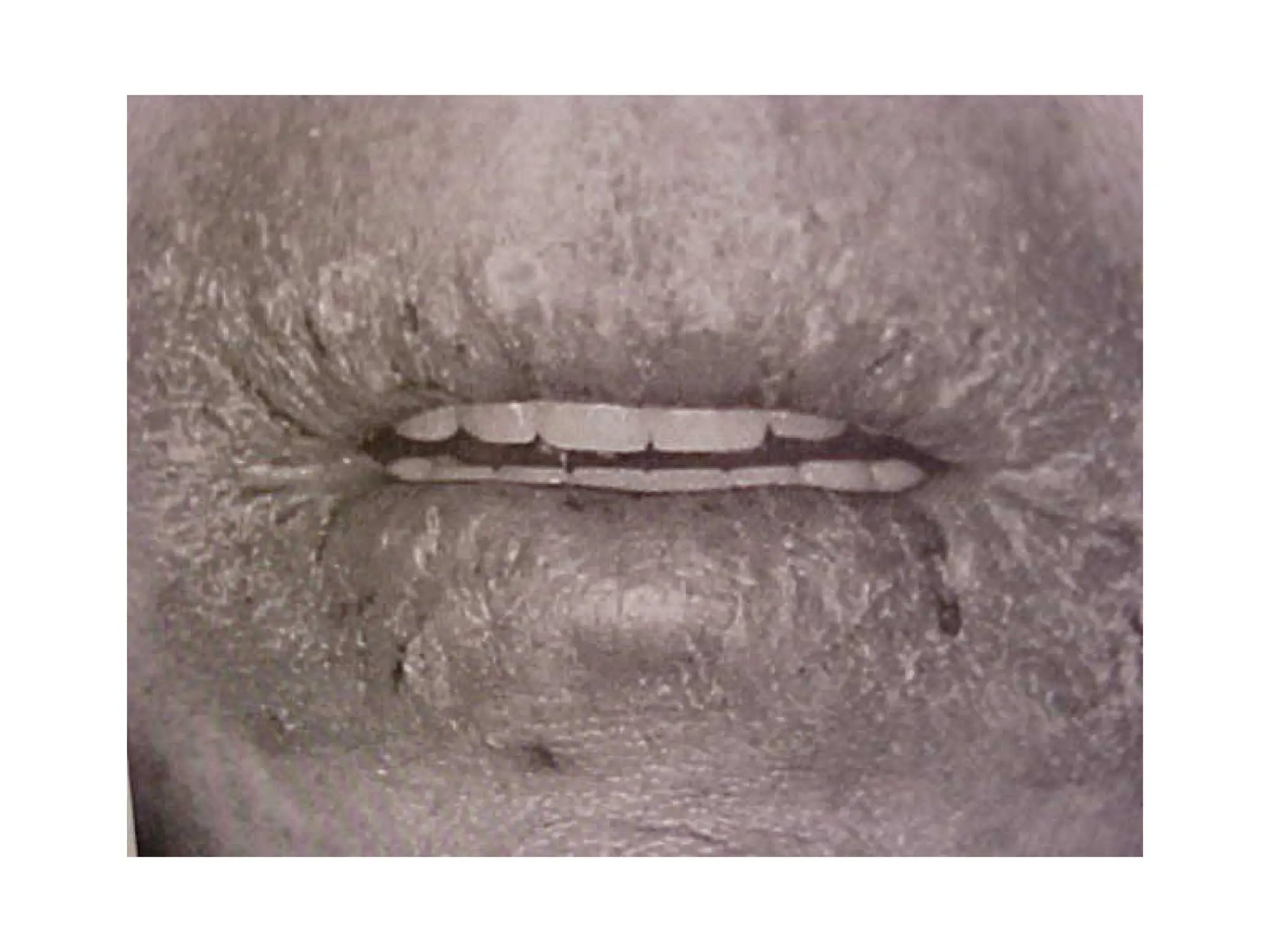
Actinic Cheilitis
• It is precancerous lesion that forms most
commonly on Lower lip
• Ulceration is rare
• Hereditary
• Treatment: Biopsy if thickened or
ulcerated, Cyro, 5-FU, CO2 laser,
Vermilionectomy,
• Photodynamic Therapy with 5-ALA
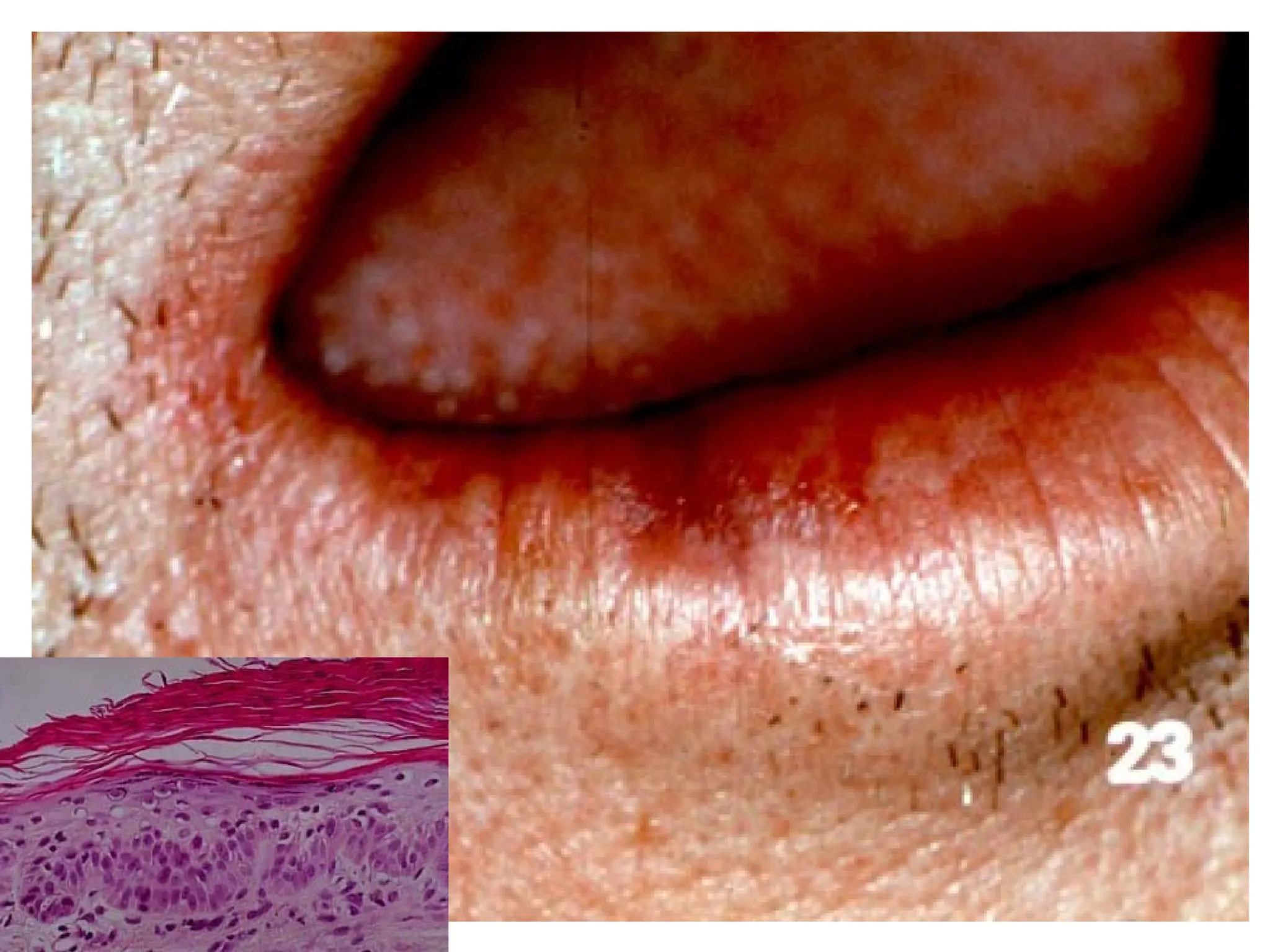
Cheilitis Glandularis
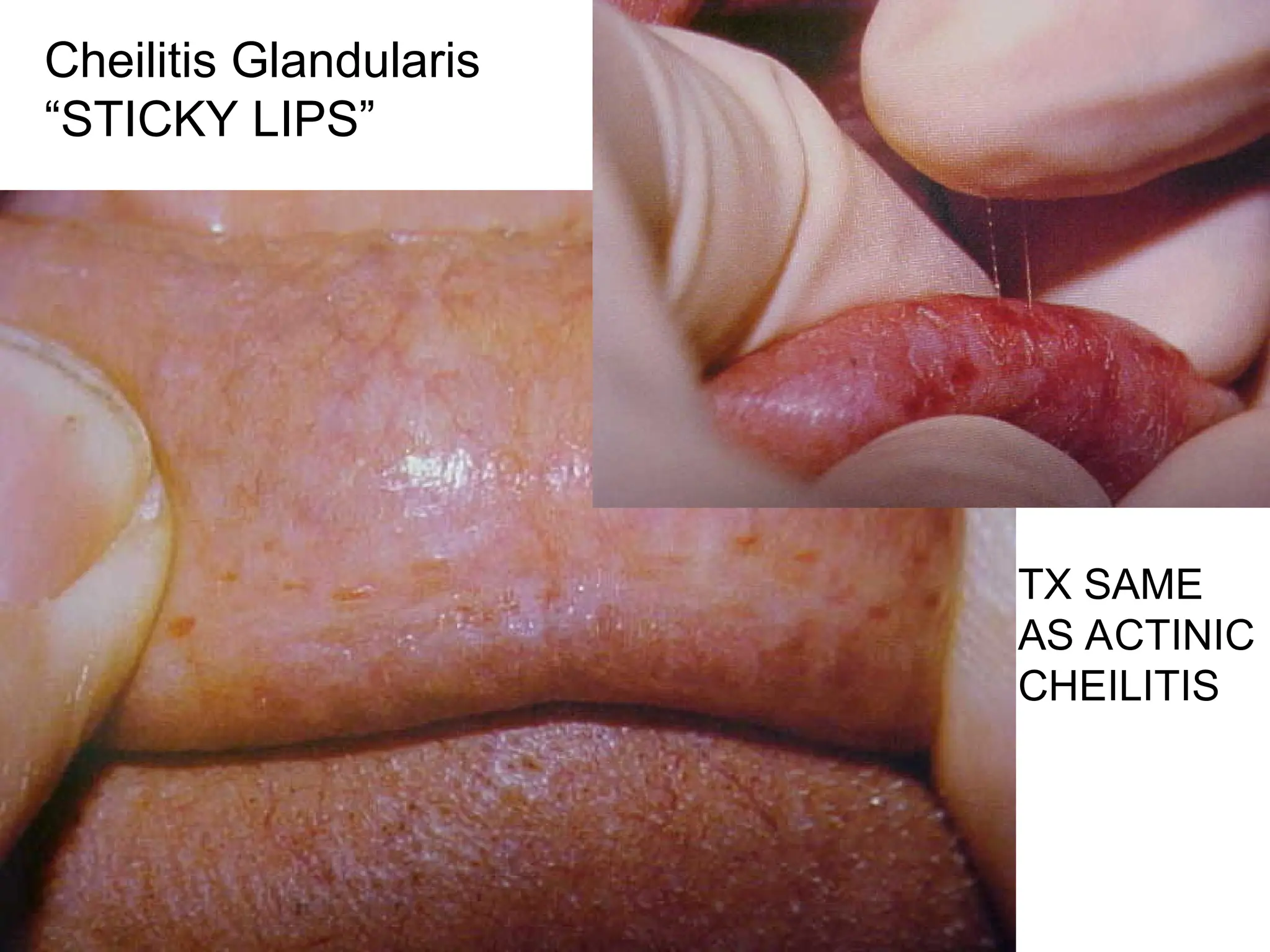
• Swelling and eversion of lower lip with
patulous openings of the ducts of the
mucous glands - Chronic, inflammatory.
• Mucous exudes freely to form a glue-like
film, lips stick together, palpation feels
like pebbles beneath the surface.
• Etiology: irritation, atopic, factitious,
actinic
Cheilitis Glandularis
“STICKY LIPS”
TX SAME
AS ACTINIC
CHEILITIS
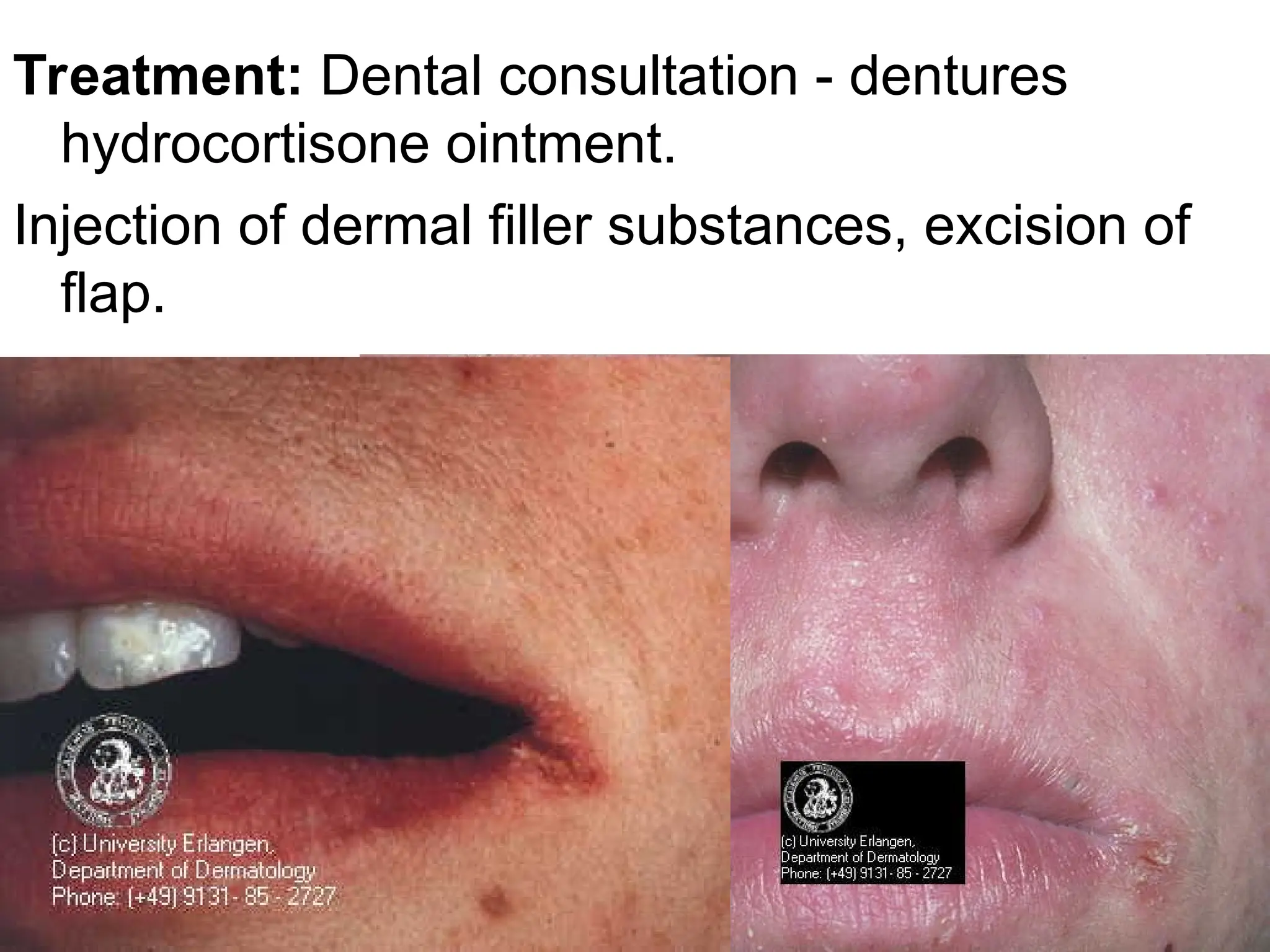
Angular Cheilitis (Perleche)
• Most Common cause Candida albicans
• Elderly – facial and dental architecture
• Youth – thumbsucking, lollipops,
• Thrush in DM II or HIV, Deficiency of
Iron, Riboflavin, Vitamin A, E, etc.
Treatment: Dental consultation - dentures
hydrocortisone ointment.
Injection of dermal filler substances, excision of
flap.
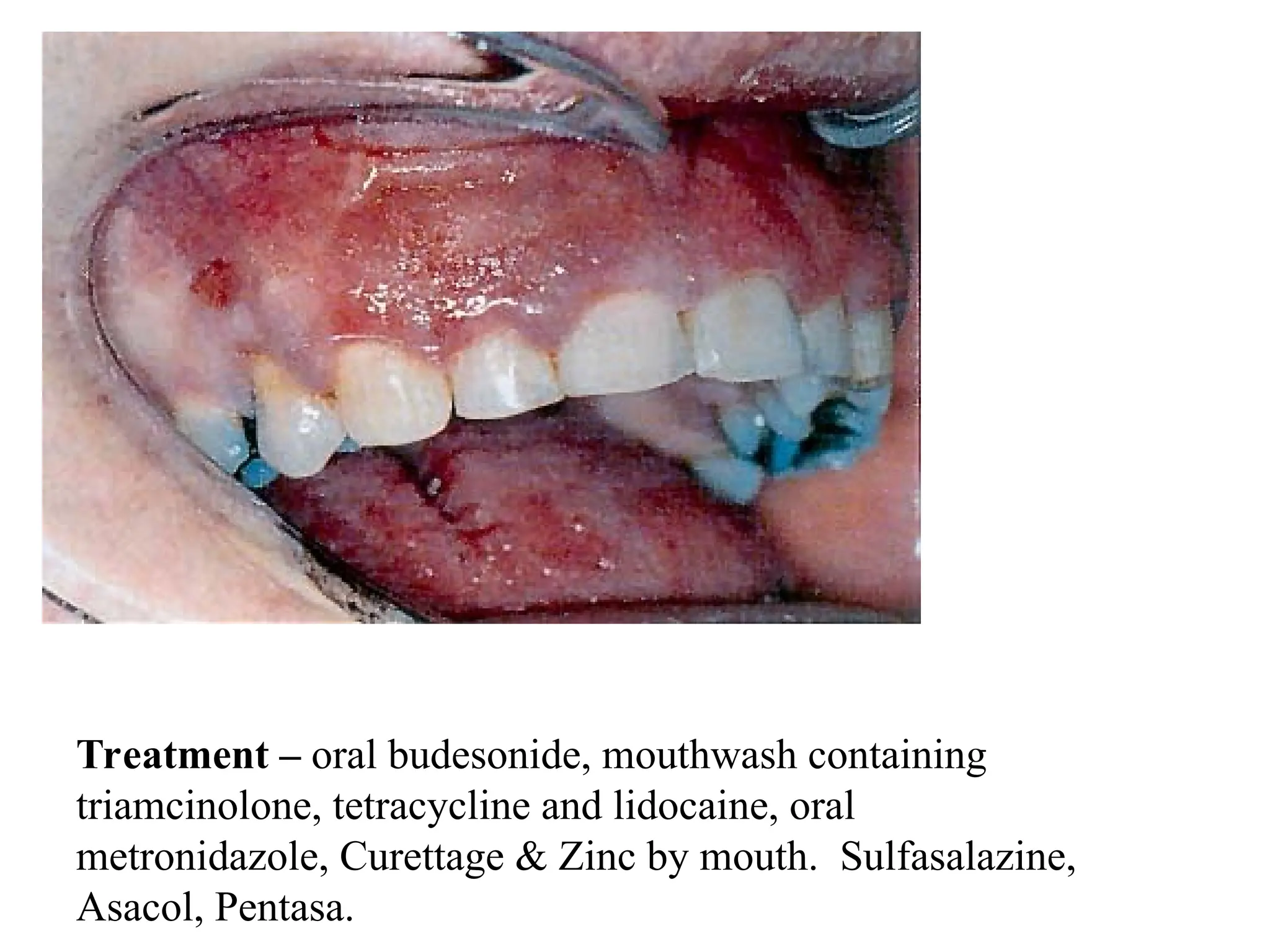
Oral Crohn’s Disease
• 10-20% of Crohn’s patients
• 90% have granulomas on biopsy
• Inflammatory hyperplasia of oral mucosa,
cobblestoning, fissuring,
• Metallic dysgeusia
• Gingival bleeding
• Metastatic Crohn’s – non-caseating
granulomatous skin lesions in patients with
Crohn’s.
Treatment – oral budesonide, mouthwash containing
triamcinolone, tetracycline and lidocaine, oral
metronidazole, Curettage & Zinc by mouth. Sulfasalazine,
Asacol, Pentasa.
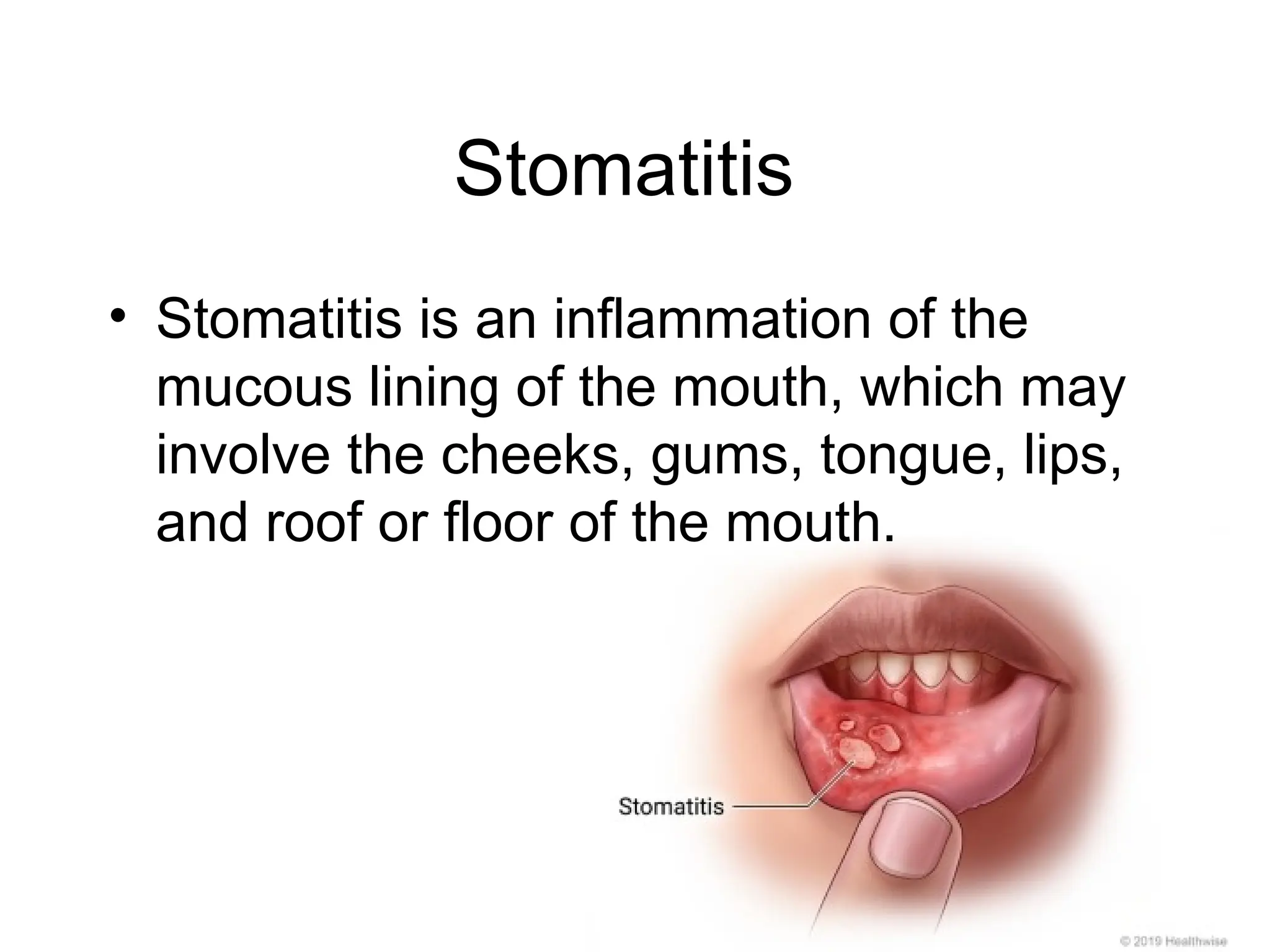
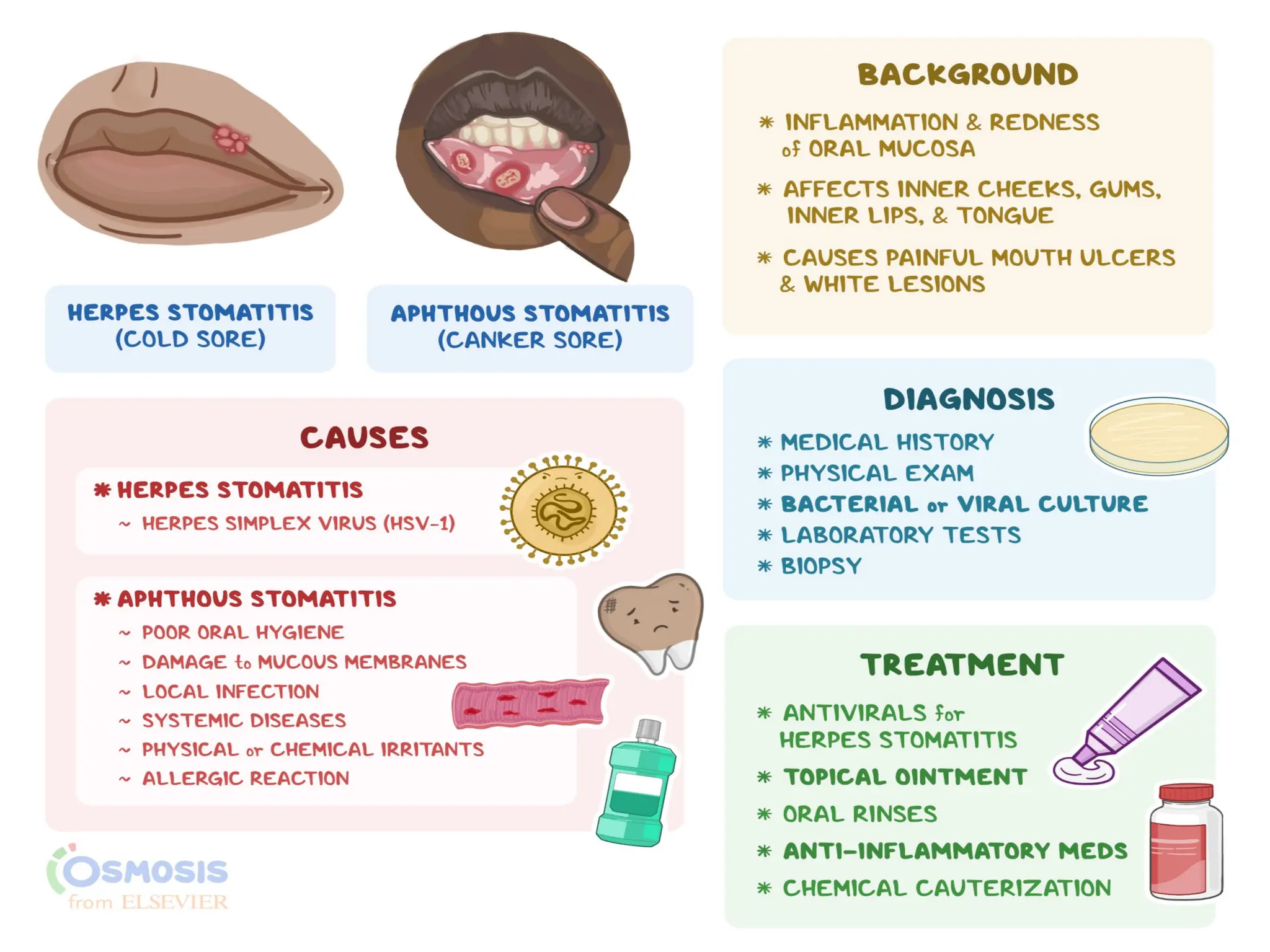
Stomatitis
• Stomatitis is an inflammation of the
mucous lining of the mouth, which may
involve the cheeks, gums, tongue, lips,
and roof or floor of the mouth.
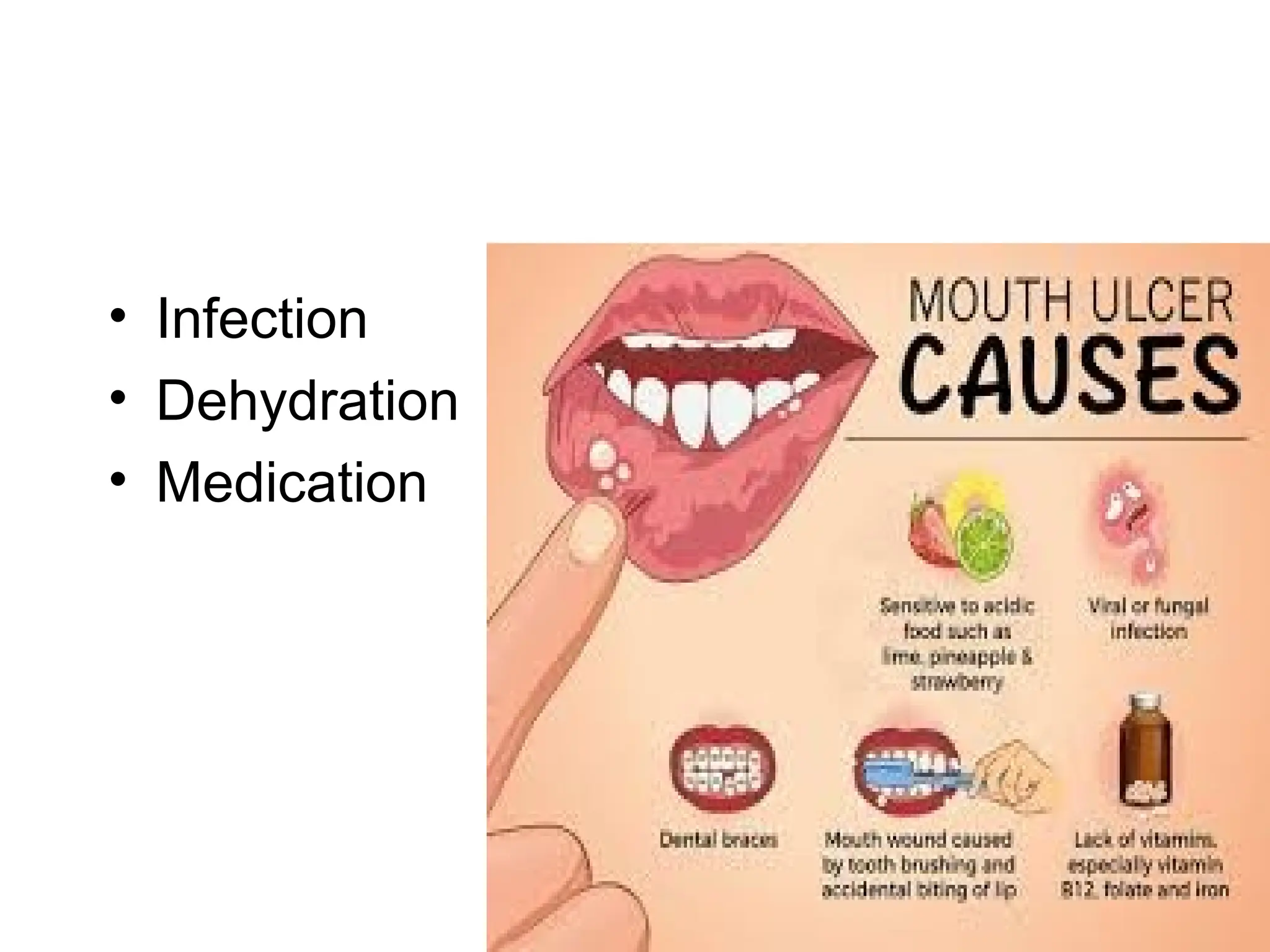
Causes
• Chemotherapy
• Radiotherapy
• Loose-fitting dental prosthetics
• Trauma
• Poor dental hygiene
• Smoking
• Hematological malignancies
• Infection
• Dehydration
• Medication
Signs and symptoms
• Pain or discomfort in the mouth
• The presence of open sores or ulcers in
the mouth
• Fever
• Irritability and restlessness
• Blisters in the mouth
• Swollen gums
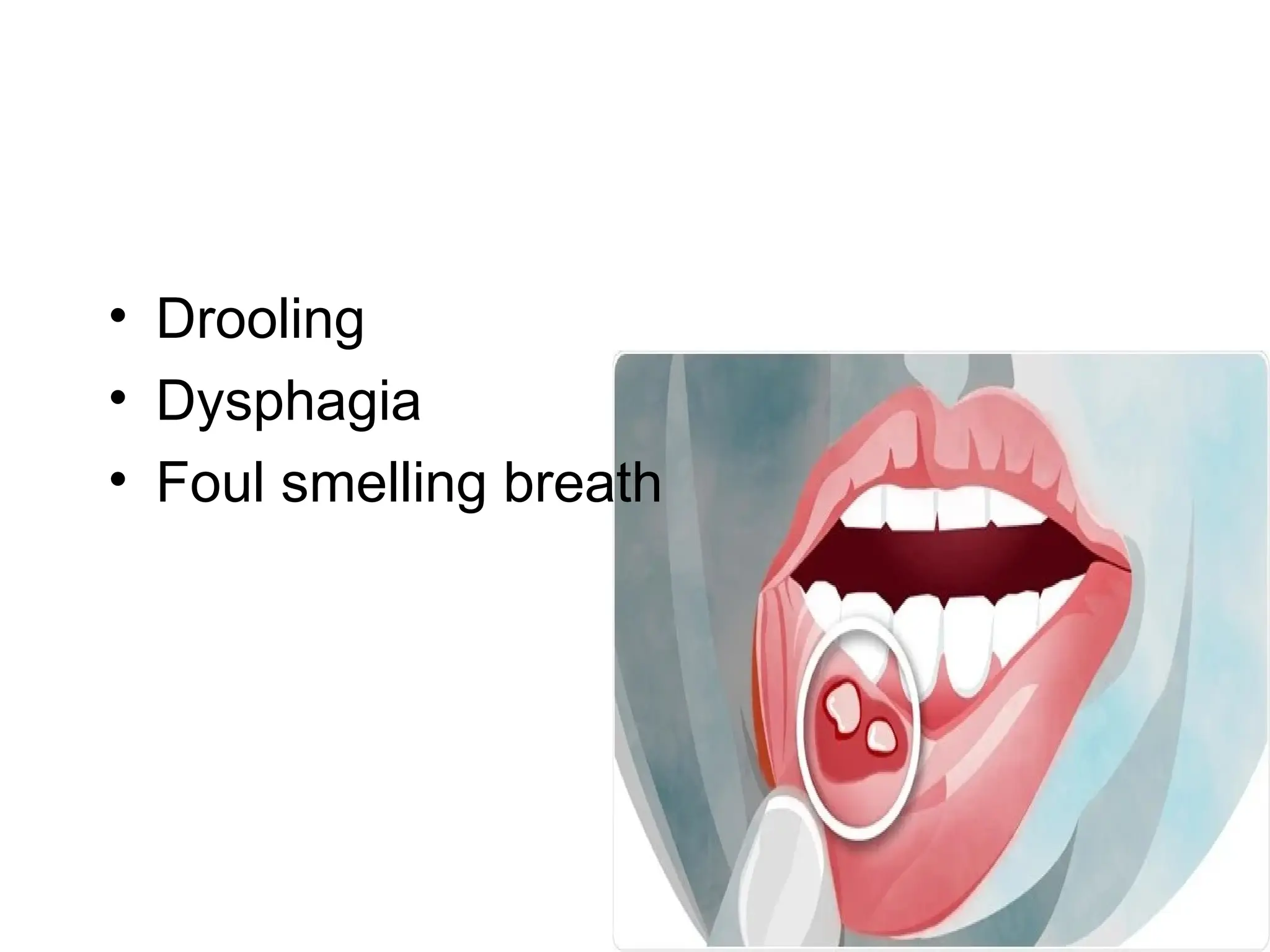
• Drooling
• Dysphagia
• Foul smelling breath
Type of stomatitis
• Nutritional deficiency stomatitis
• Aphthous stomatitis
• Angular stomatitis
• Denture related stomatitis
• Allergic contact stomatitis
• Migratory stomatitis
Management
• Coating agents such as bismuth salicylate,
sucralfate, or other antacids
• Water soluble lubricants for mouth and lips
• Topical analgesics such as lidocaine
viscous (might impair gag reflex for a short
period)
• Oral or parenteral analgesics including
opioids
• Antiseptic mouthwash
• Protective pastes
• Local anesthetic mouthwash or spray
• Oral analgesics
• Tropical corticosteroids
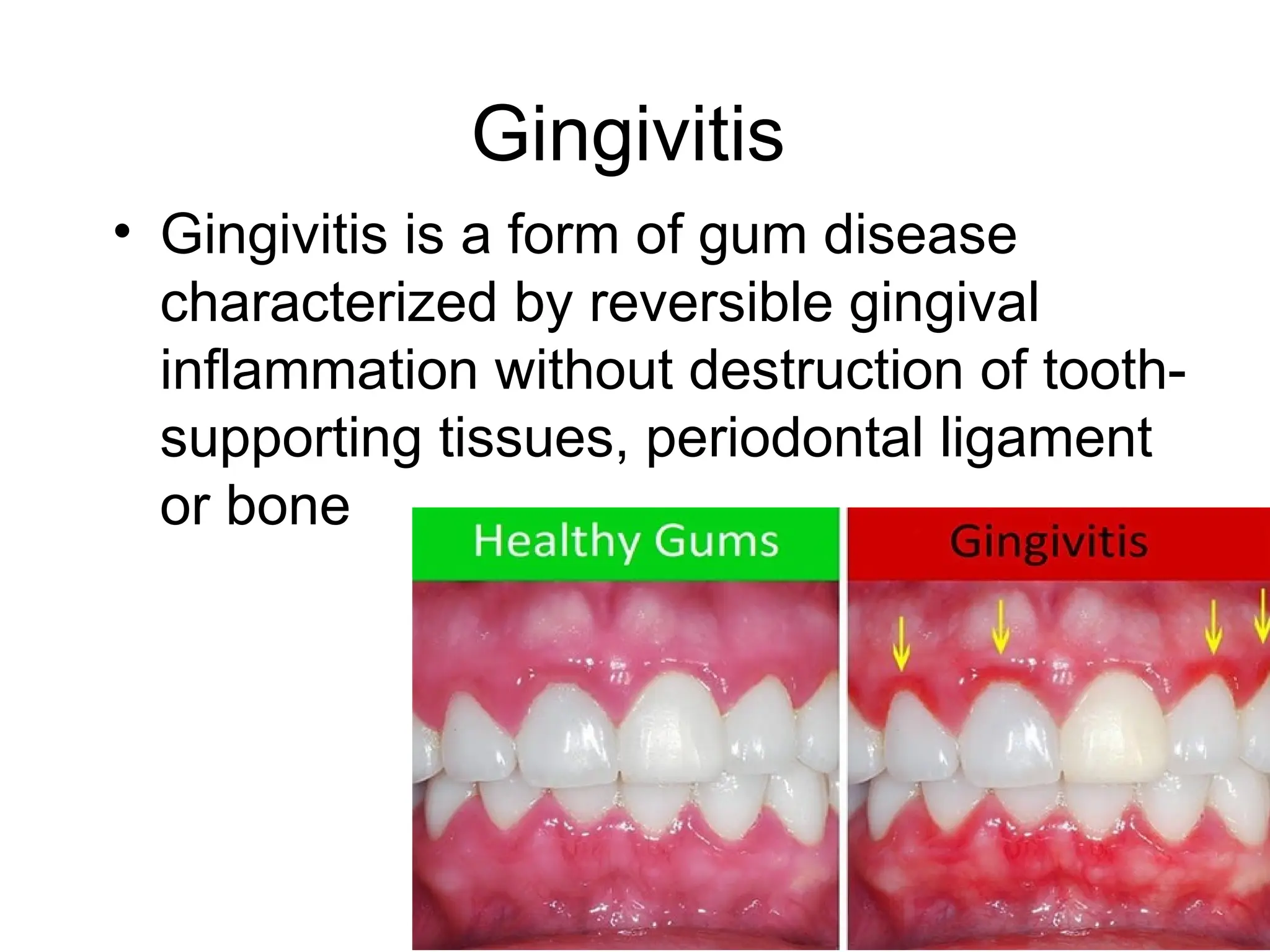
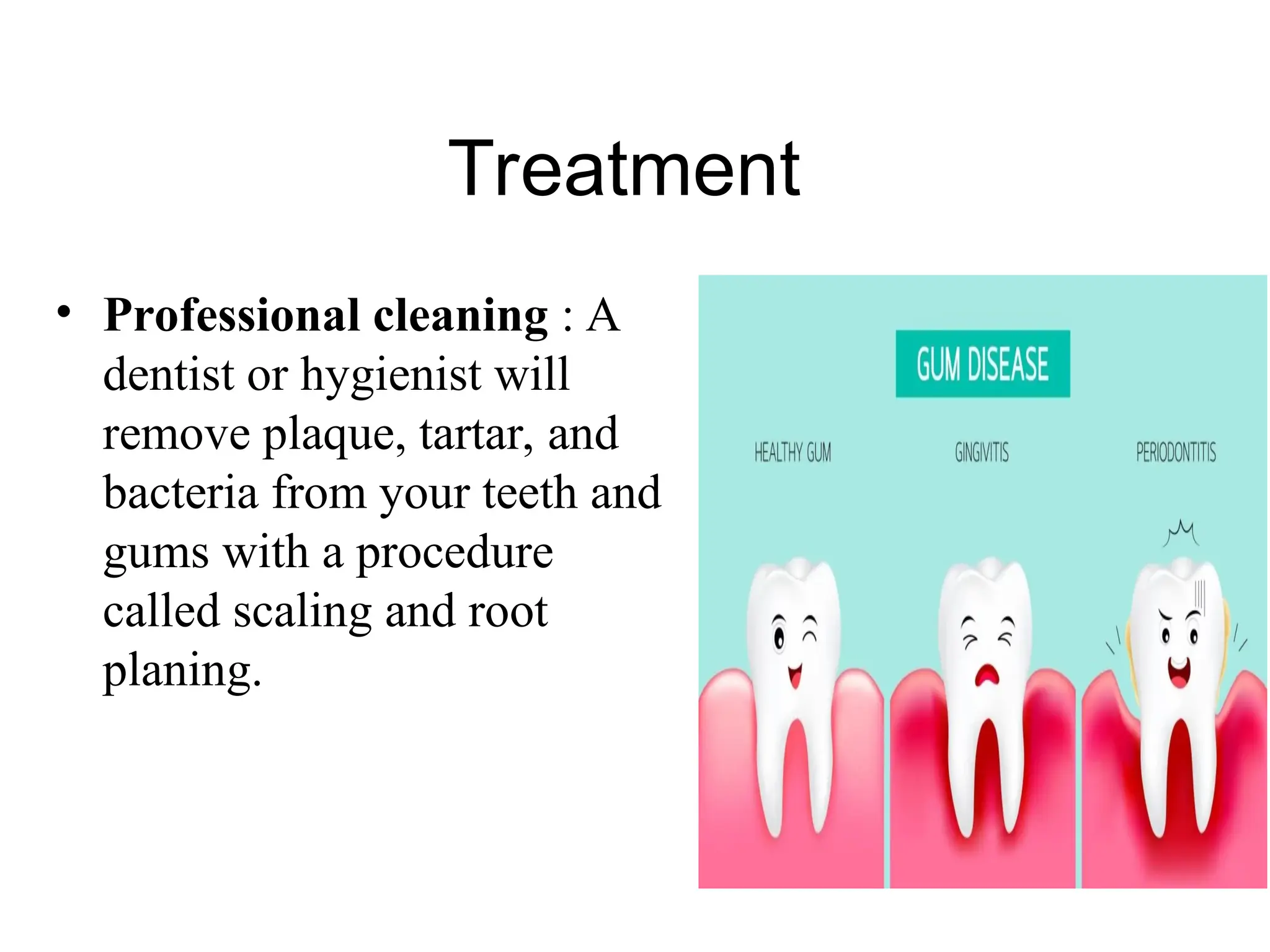
Gingivitis
• Gingivitis is a form of gum disease
characterized by reversible gingival
inflammation without destruction of tooth-
supporting tissues, periodontal ligament
or bone

Etiology
• Bacterial infection
• Immuno-inflammatory response
• Genetic: family history
• Habits : smoking, tobacco.
• Systemic disease or condition: pregnancy,
diabetes mellitus.
• Age : adults are more likely to have
gingivitis
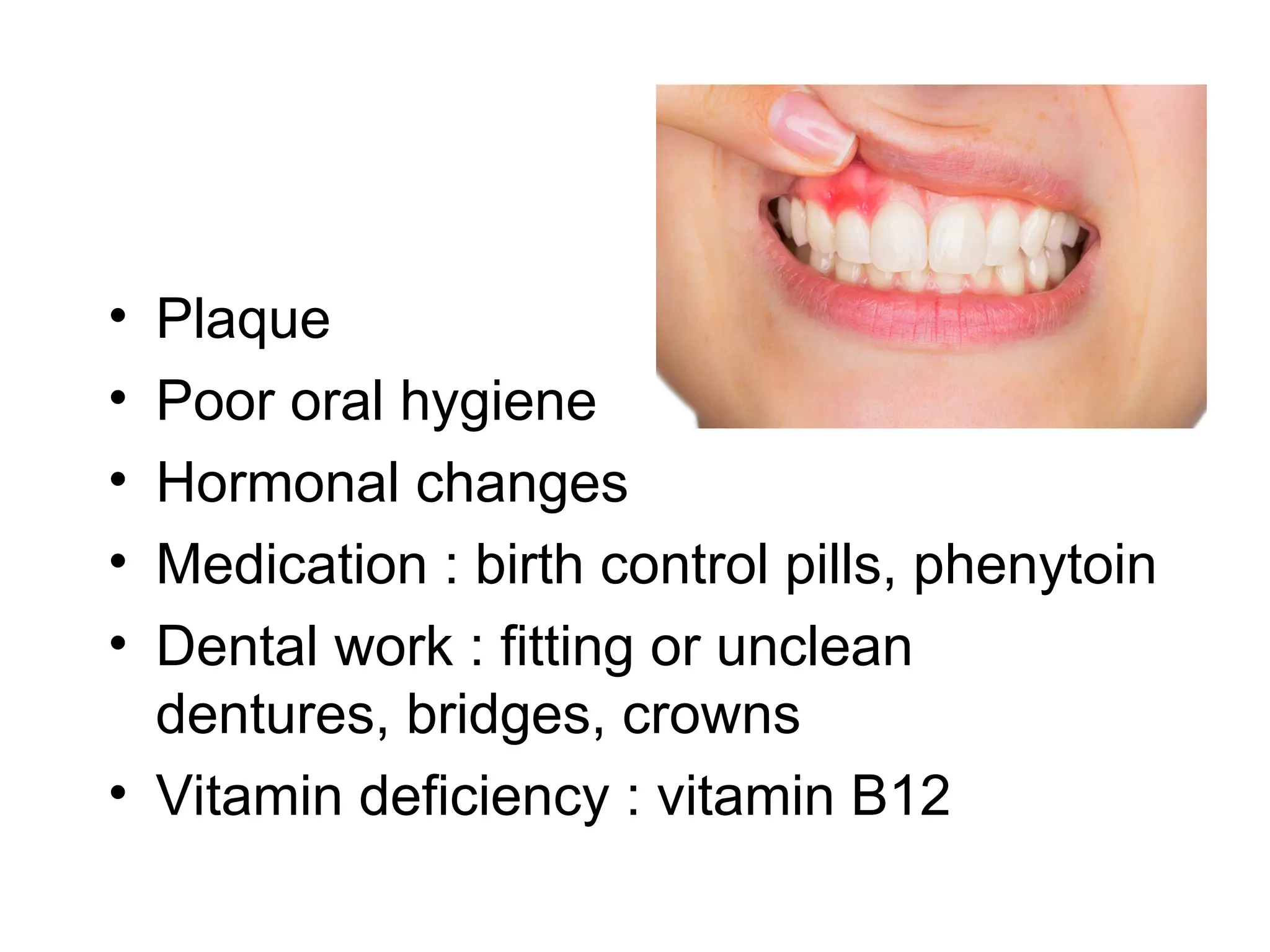
• Plaque
• Poor oral hygiene
• Hormonal changes
• Medication : birth control pills, phenytoin
• Dental work : fitting or unclean
dentures, bridges, crowns
• Vitamin deficiency : vitamin B12
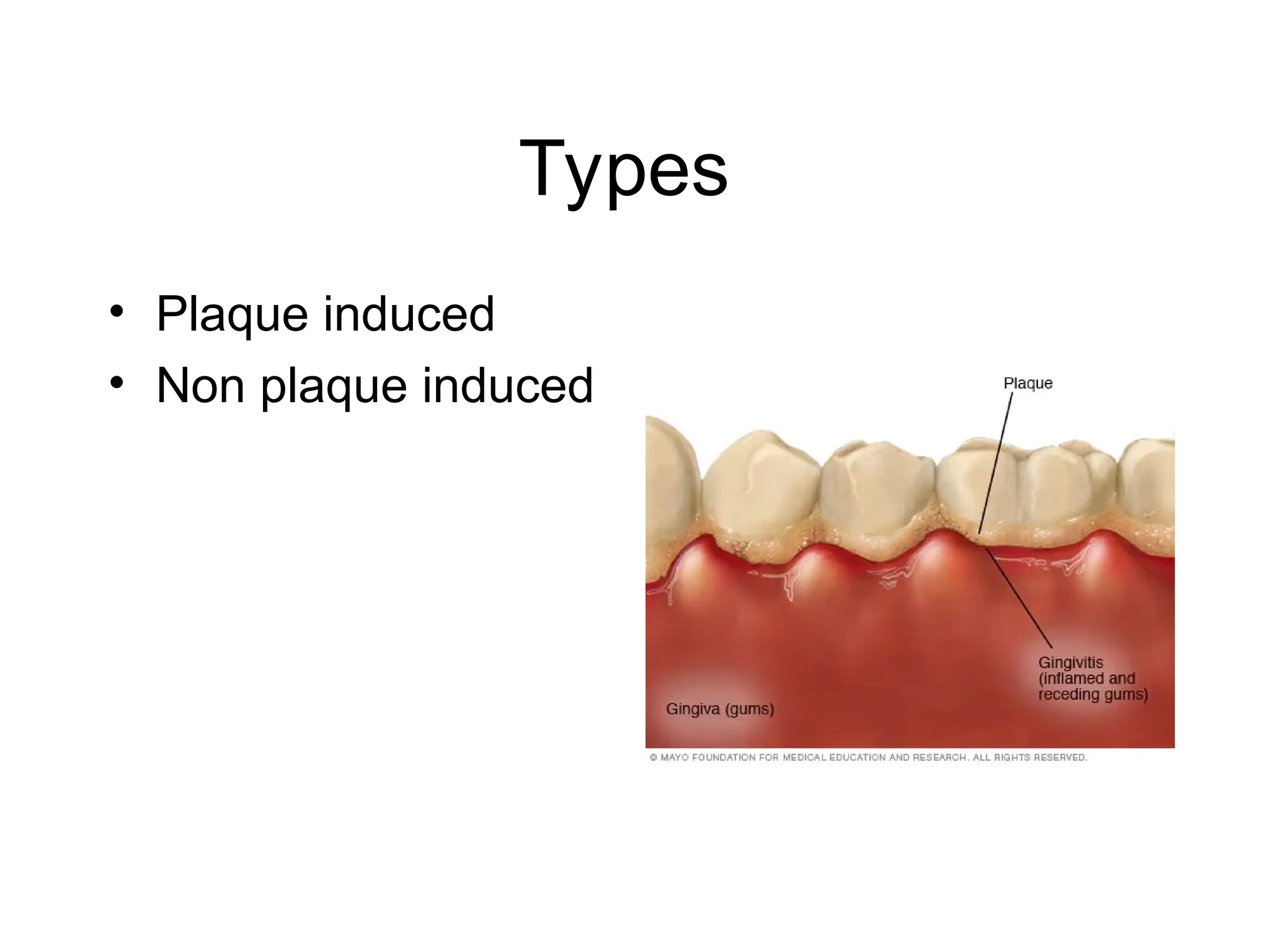
Types
• Plaque induced
• Non plaque induced
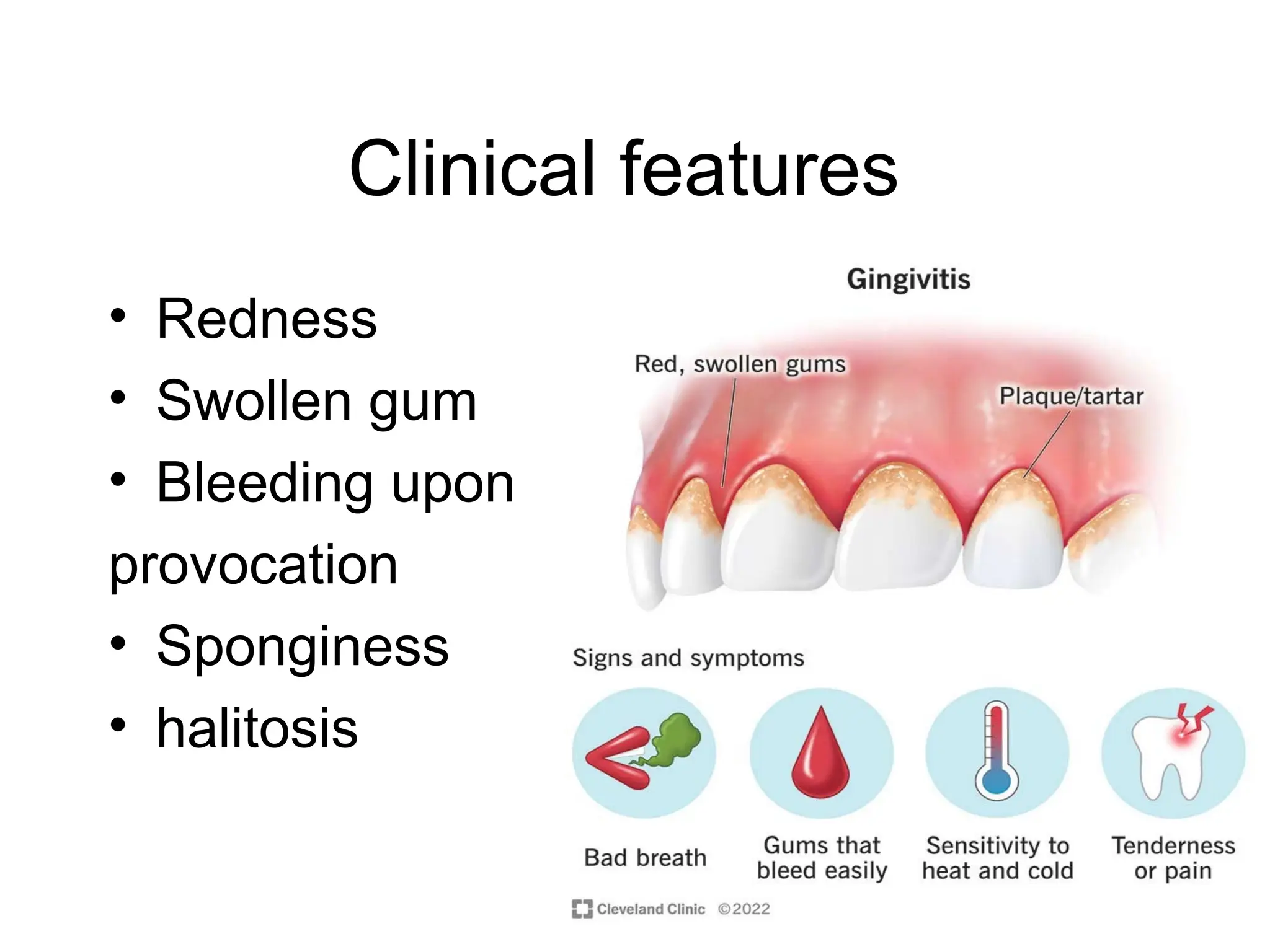
Clinical features
• Redness
• Swollen gum
• Bleeding upon
provocation
• Sponginess
• halitosis
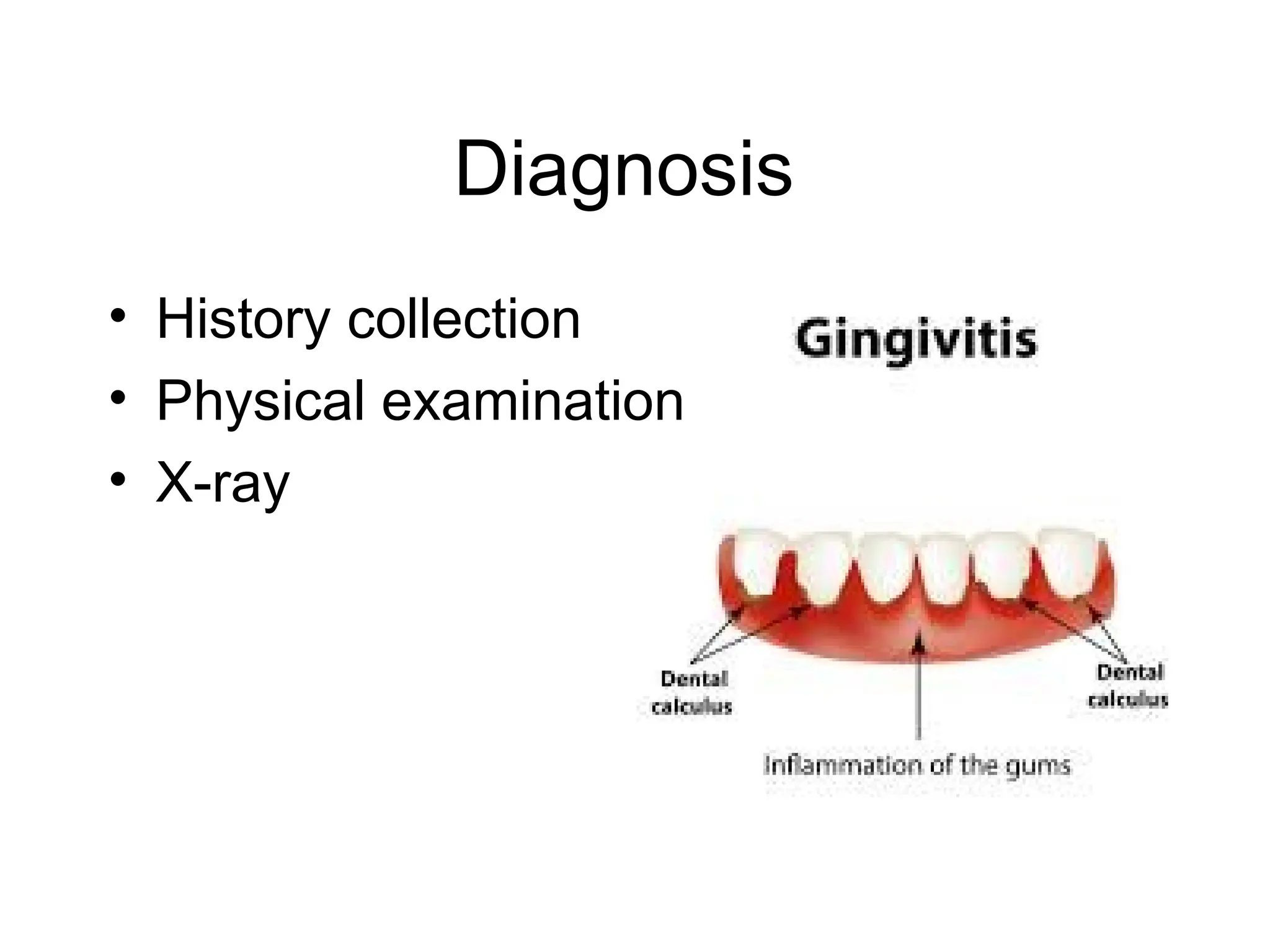
Diagnosis
• History collection
• Physical examination
• X-ray
Complication
Treatment
• Professional cleaning : A
dentist or hygienist will
remove plaque, tartar, and
bacteria from your teeth and
gums with a procedure
called scaling and root
planing.
• Dental repairs : If poorly fitting crowns,
bridges, or fillings are contributing to
gingivitis
• Oral hygiene: need to maintain good oral
hygiene at home, including brushing and
flossing regularly.
• Antimicrobial mouthwash: Rinsing with an
antimicrobial mouthwash can help destroy
disease-causing bacteria.
• Antibiotics : metronidazole are used for the
treatment of gingivitis
SUMMARY
In this class we discussed the:-
• Different types of mucous membrane
disorders.
• Signs and symptoms of mucous
membrane disorders.
• Diagnosis and treatment of mucous
membrane disorders.
BIBLIOGRAPHY
• Lewis et al, Medical Surgical Nursing, Mosby
Elsevier,7th
edition.
• Joyce.M.Black et al, Medical Surgical
Nursing, Saunders publication.
• Brunner and Siddhartha, Medical Surgical
Nursing, Lippincott Williams and Wilkins.
mucous membrane disorders for nurses 1.ppt

mucous membrane disorders for nurses 1.ppt

  • 1.
    MUCOUS MEMBRANE DISORDERS 1 DEPARTMENTOF MEDICAL SURGICAL NURSING
  • 2.
    LEARNING OBJECTIVES At theend of this class the students should be able to:- • Enumerate the different types of mucous membrane disorders. • Enlist the signs and symptoms of mucous membrane disorders. • Explain the diagnosis and treatment of mucous membrane disorders.
  • 3.
    CHEILITIS • Cheilitis isa medical condition that results in inflammation of lips marked by one or more symptoms such as redness, itching, swelling, dryness, crack. • Cheilitis can be affects a side effect of certain drugs, high dose of vitamin A, iron deficiency, vitamin B12 deficiency, and oral candidiasis
  • 4.
    Causes • Dry orchapped lips : exposure to harsh weather condition, dehydration or habitual lip licking can leads to dry and chapped lips • Infection: bacterial, viral or fungal infection • Sun exposure • Contact dermatitis
  • 5.
    • Nutritional deficiency •Auto immune condition
  • 6.
    Types • Cheilitis Exfoliativa •Allergic Contact Cheilitis • Actinic Cheilitis • Cheilitis Glandularis • Angular Cheilitis
  • 7.
    CHEILITIS EXFOLIATIVA • MostCommon upper lip if cause is unknown. • Most Common lower lip if it is a reaction to other disease states, ie. Sickle cell, Alzheimer’s Disease. • Irritation: lipsticks, dentifrices, mouthwashes, shaving/aftershave, nail enamel, lip licking, UV • Tx: Remove cause, topical steroids, emollient ointments
  • 8.
    Allergic Contact Cheilitis •dryness, fissuring, edema, crusting, angular cheilitis. • Topicals - meds, dental, lipsticks, sunscreen lip balms, cosmetics, nail polish, cigarette holders, rubber, metals, toothpaste. • Foods – oranges, lemons, artichokes, mangoes • Saxophone or Clarinet cane reeds • Tx: avoid antigen, topical steroids
  • 10.
    Actinic Cheilitis • Itis precancerous lesion that forms most commonly on Lower lip • Ulceration is rare • Hereditary • Treatment: Biopsy if thickened or ulcerated, Cyro, 5-FU, CO2 laser, Vermilionectomy, • Photodynamic Therapy with 5-ALA
  • 12.
    Cheilitis Glandularis • Swellingand eversion of lower lip with patulous openings of the ducts of the mucous glands - Chronic, inflammatory. • Mucous exudes freely to form a glue-like film, lips stick together, palpation feels like pebbles beneath the surface. • Etiology: irritation, atopic, factitious, actinic
  • 13.
  • 14.
    Angular Cheilitis (Perleche) •Most Common cause Candida albicans • Elderly – facial and dental architecture • Youth – thumbsucking, lollipops, • Thrush in DM II or HIV, Deficiency of Iron, Riboflavin, Vitamin A, E, etc.
  • 15.
    Treatment: Dental consultation- dentures hydrocortisone ointment. Injection of dermal filler substances, excision of flap.
  • 16.
    Oral Crohn’s Disease •10-20% of Crohn’s patients • 90% have granulomas on biopsy • Inflammatory hyperplasia of oral mucosa, cobblestoning, fissuring, • Metallic dysgeusia • Gingival bleeding • Metastatic Crohn’s – non-caseating granulomatous skin lesions in patients with Crohn’s.
  • 17.
    Treatment – oralbudesonide, mouthwash containing triamcinolone, tetracycline and lidocaine, oral metronidazole, Curettage & Zinc by mouth. Sulfasalazine, Asacol, Pentasa.
  • 18.
    Stomatitis • Stomatitis isan inflammation of the mucous lining of the mouth, which may involve the cheeks, gums, tongue, lips, and roof or floor of the mouth.
  • 19.
    Causes • Chemotherapy • Radiotherapy •Loose-fitting dental prosthetics • Trauma • Poor dental hygiene • Smoking • Hematological malignancies
  • 20.
  • 21.
    Signs and symptoms •Pain or discomfort in the mouth • The presence of open sores or ulcers in the mouth • Fever • Irritability and restlessness • Blisters in the mouth • Swollen gums
  • 22.
    • Drooling • Dysphagia •Foul smelling breath
  • 23.
    Type of stomatitis •Nutritional deficiency stomatitis • Aphthous stomatitis • Angular stomatitis • Denture related stomatitis • Allergic contact stomatitis • Migratory stomatitis
  • 24.
    Management • Coating agentssuch as bismuth salicylate, sucralfate, or other antacids • Water soluble lubricants for mouth and lips • Topical analgesics such as lidocaine viscous (might impair gag reflex for a short period) • Oral or parenteral analgesics including opioids
  • 25.
    • Antiseptic mouthwash •Protective pastes • Local anesthetic mouthwash or spray • Oral analgesics • Tropical corticosteroids
  • 27.
    Gingivitis • Gingivitis isa form of gum disease characterized by reversible gingival inflammation without destruction of tooth- supporting tissues, periodontal ligament or bone
  • 28.
    Etiology • Bacterial infection •Immuno-inflammatory response • Genetic: family history • Habits : smoking, tobacco. • Systemic disease or condition: pregnancy, diabetes mellitus. • Age : adults are more likely to have gingivitis
  • 29.
    • Plaque • Poororal hygiene • Hormonal changes • Medication : birth control pills, phenytoin • Dental work : fitting or unclean dentures, bridges, crowns • Vitamin deficiency : vitamin B12
  • 30.
    Types • Plaque induced •Non plaque induced
  • 31.
    Clinical features • Redness •Swollen gum • Bleeding upon provocation • Sponginess • halitosis
  • 32.
    Diagnosis • History collection •Physical examination • X-ray
  • 33.
  • 34.
    Treatment • Professional cleaning: A dentist or hygienist will remove plaque, tartar, and bacteria from your teeth and gums with a procedure called scaling and root planing.
  • 35.
    • Dental repairs: If poorly fitting crowns, bridges, or fillings are contributing to gingivitis • Oral hygiene: need to maintain good oral hygiene at home, including brushing and flossing regularly. • Antimicrobial mouthwash: Rinsing with an antimicrobial mouthwash can help destroy disease-causing bacteria. • Antibiotics : metronidazole are used for the treatment of gingivitis
  • 36.
    SUMMARY In this classwe discussed the:- • Different types of mucous membrane disorders. • Signs and symptoms of mucous membrane disorders. • Diagnosis and treatment of mucous membrane disorders.
  • 37.
    BIBLIOGRAPHY • Lewis etal, Medical Surgical Nursing, Mosby Elsevier,7th edition. • Joyce.M.Black et al, Medical Surgical Nursing, Saunders publication. • Brunner and Siddhartha, Medical Surgical Nursing, Lippincott Williams and Wilkins.