Diverticulitis Presented By: Burila, John Louise Capili, Jan Bernice Engalla, Wilmar
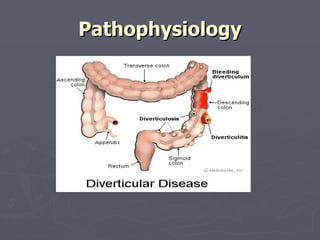
Diverticulitis Definition: Diverticulitis is out pouching of the mucosal lining of the GIT, commonly in the colon Diverticula/ diverticulosis are multiple out pouchings Diverticulitis is acute inflammation and infection caused by trapped fecal material and bacteria
Complication: Peritonitis Bowel obstruction Fistula formation Hemorrhage Abscess formation   Etiology: Precipitating factors: Low-fiber diet Use of corticosteroids Use of NSAIDS Predisposing factor: Age-  most common in older adults (60 up)
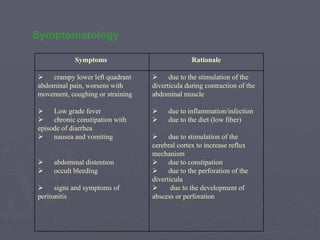
Symptomatology               due to the stimulation of the diverticula during contraction of the abdominal muscle           due to inflammation/infection         due to the diet (low fiber)            due to stimulation of the cerebral cortex to increase reflux mechanism         due to constipation         due to the perforation of the diverticula          due to the development of abscess or perforation         crampy lower left quadrant abdominal pain, worsens with movement, coughing or straining         Low grade fever         chronic constipation with episode of diarrhea         nausea and vomiting         abdominal distention         occult bleeding         signs and symptoms of peritonitis      Rationale Symptoms
Pathophysiology
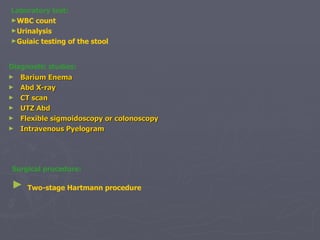
Laboratory test: WBC count  Urinalysis Guiaic testing of the stool   Diagnostic studies: Barium Enema Abd X-ray CT scan UTZ Abd Flexible sigmoidoscopy or colonoscopy Intravenous Pyelogram Surgical procedure:   Two-stage Hartmann procedure
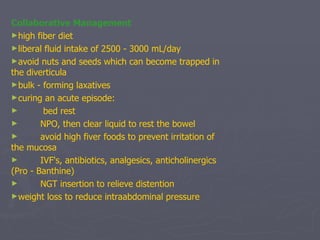
Collaborative Management high fiber diet liberal fluid intake of 2500 - 3000 mL/day avoid nuts and seeds which can become trapped in the diverticula bulk - forming laxatives curing an acute episode:               bed rest          NPO, then clear liquid to rest the bowel          avoid high fiver foods to prevent irritation of the mucosa          IVF's, antibiotics, analgesics, anticholinergics (Pro - Banthine)          NGT insertion to relieve distention weight loss to reduce intraabdominal pressure
Patients with mild symptoms abdominal pain due to muscular spasm in the area of the diverticula may benefit from anti-spasmodic drugs such as: chlordiazepoxide (Librax) dicyclomine (Bentyl),  atropine, scopolamine, phenobarbital (Donnatal), and hyoscyamine (Levsin). Oral antibiotics are sufficient when symptoms are mild. Some examples of commonly prescribed antibiotics include:   ciprofloxacin (Cipro) metronidazole (Flagyl) cephalexine (Keflex) Doxycycline (Vibramycin).  
Nursing Management Impaired tissue integrity r/t gastrointestinal (colon) obstruction as evidenced by diverticula Nursing Interventions Monitor BP, PR, & RR at least every 4 hours. (Increase in PR and RR may be an early indication of fluid volume deficit due to bleeding/infection) Take temperature every 4 hours. (Elevation greater than 38.3  C may indicate an increase in the severity of the disease. Perform an abdominal assessment every 4 to 8 hours or more often as indicated, including measuring abdominal girth, ausculting bowel sounds and palpating the abdomen for tenderness. Assess for evidence of lower intestinal bleeding by visual examination and guiaic testing of stools for occult blood. Maintain IVF, TPN, and accurate intake and output records. Give antibiotic as indicated.
Nursing Management Altered Comfort: Acute Pain r/t out pouching colon and stimulation of the diverticula during abdominal contraction Nursing Interventions        Describe the characteristics of pain, frequency, intensity, location, and duration.       Provide emotional support and comfortable measures to the client.        Provide pain management.        Give analgesics as indicated. Anxiety r/t possible surgery of the diverticula    Nursing Interventions        Monitor emotional reaction and anxiety level of the patient.        Explain the treatment regimen and plan of care to the patient/SO.        Discuss to the patient and SO the need for surgery of the patient’s condition and its possible complications.        Provide collaborative management of the patient’s medical management.        Provide comfort to the patient
Nursing Management Risk for Nutritional Imbalance: less than body requirement r/t impaired nutritional absorption secondary to disease process              Nursing Interventions Provide adequate nutrition to the patient such foods high in fiber. Include the use of TPN in nutritional management of the patient. Weight the patient to determine the deviation of the patient nutritional status. Refer to dietician for appropriate plan of nutritional treatment to the patient.

Diverticulitis

  • 1.
    Diverticulitis Presented By:Burila, John Louise Capili, Jan Bernice Engalla, Wilmar
  • 2.
    Diverticulitis Definition: Diverticulitisis out pouching of the mucosal lining of the GIT, commonly in the colon Diverticula/ diverticulosis are multiple out pouchings Diverticulitis is acute inflammation and infection caused by trapped fecal material and bacteria
  • 3.
    Complication: Peritonitis Bowelobstruction Fistula formation Hemorrhage Abscess formation   Etiology: Precipitating factors: Low-fiber diet Use of corticosteroids Use of NSAIDS Predisposing factor: Age- most common in older adults (60 up)
  • 4.
    Symptomatology            due to the stimulation of the diverticula during contraction of the abdominal muscle          due to inflammation/infection        due to the diet (low fiber)          due to stimulation of the cerebral cortex to increase reflux mechanism        due to constipation        due to the perforation of the diverticula          due to the development of abscess or perforation        crampy lower left quadrant abdominal pain, worsens with movement, coughing or straining        Low grade fever        chronic constipation with episode of diarrhea        nausea and vomiting        abdominal distention        occult bleeding        signs and symptoms of peritonitis     Rationale Symptoms
  • 5.
  • 6.
    Laboratory test: WBCcount Urinalysis Guiaic testing of the stool   Diagnostic studies: Barium Enema Abd X-ray CT scan UTZ Abd Flexible sigmoidoscopy or colonoscopy Intravenous Pyelogram Surgical procedure: Two-stage Hartmann procedure
  • 7.
    Collaborative Management highfiber diet liberal fluid intake of 2500 - 3000 mL/day avoid nuts and seeds which can become trapped in the diverticula bulk - forming laxatives curing an acute episode:               bed rest         NPO, then clear liquid to rest the bowel         avoid high fiver foods to prevent irritation of the mucosa         IVF's, antibiotics, analgesics, anticholinergics (Pro - Banthine)         NGT insertion to relieve distention weight loss to reduce intraabdominal pressure
  • 8.
    Patients with mildsymptoms abdominal pain due to muscular spasm in the area of the diverticula may benefit from anti-spasmodic drugs such as: chlordiazepoxide (Librax) dicyclomine (Bentyl), atropine, scopolamine, phenobarbital (Donnatal), and hyoscyamine (Levsin). Oral antibiotics are sufficient when symptoms are mild. Some examples of commonly prescribed antibiotics include:   ciprofloxacin (Cipro) metronidazole (Flagyl) cephalexine (Keflex) Doxycycline (Vibramycin).  
  • 9.
    Nursing Management Impairedtissue integrity r/t gastrointestinal (colon) obstruction as evidenced by diverticula Nursing Interventions Monitor BP, PR, & RR at least every 4 hours. (Increase in PR and RR may be an early indication of fluid volume deficit due to bleeding/infection) Take temperature every 4 hours. (Elevation greater than 38.3  C may indicate an increase in the severity of the disease. Perform an abdominal assessment every 4 to 8 hours or more often as indicated, including measuring abdominal girth, ausculting bowel sounds and palpating the abdomen for tenderness. Assess for evidence of lower intestinal bleeding by visual examination and guiaic testing of stools for occult blood. Maintain IVF, TPN, and accurate intake and output records. Give antibiotic as indicated.
  • 10.
    Nursing Management AlteredComfort: Acute Pain r/t out pouching colon and stimulation of the diverticula during abdominal contraction Nursing Interventions       Describe the characteristics of pain, frequency, intensity, location, and duration.      Provide emotional support and comfortable measures to the client.       Provide pain management.       Give analgesics as indicated. Anxiety r/t possible surgery of the diverticula    Nursing Interventions       Monitor emotional reaction and anxiety level of the patient.       Explain the treatment regimen and plan of care to the patient/SO.       Discuss to the patient and SO the need for surgery of the patient’s condition and its possible complications.       Provide collaborative management of the patient’s medical management.       Provide comfort to the patient
  • 11.
    Nursing Management Riskfor Nutritional Imbalance: less than body requirement r/t impaired nutritional absorption secondary to disease process             Nursing Interventions Provide adequate nutrition to the patient such foods high in fiber. Include the use of TPN in nutritional management of the patient. Weight the patient to determine the deviation of the patient nutritional status. Refer to dietician for appropriate plan of nutritional treatment to the patient.