1. Pyogenic liver abscess, which is most often
polymicrobial
2. Amoebic liver abscess due to Entamoeba
histolytica
3. Fungal abscess, most often due to Candida
species
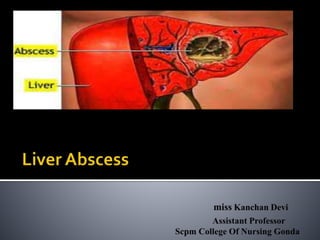
 A liver abscess is a collection of pus in the liver
caused by bacteria, fungi, or parasites.
 It may occur as a single lesion or as multiple
lesions of different sizes.
 The abscess may contain thick, bad smelling pus
or reddish-brown anchovy paste-like fluid with
no odor.
 Occurs when bacteria/protozoa destroy hepatic
tissue, produces a cavity which fills up with
infective organisms, liquefied cells & leucocytes.
 Necrotic tissue then falls off the cavity from rest
of the liver.
A liver abscess is a collection of pus in the liver
caused by bacteria, fungi, or parasites.
 Advanced age
 Having a long-term disease, (cancer, diabetes,
tuberculosis) or splenectomy
 weak immune system,
 Taking Drugs: Such as steroids, chemotherapy, prolong
use of antibiotics (fungal abscess).
 Drinking too much alcohol.
 Living in over crowding area
 poor sanitation
 Being malnourished
 Traveling to places where amebiasis is common.
 Eating foods and drinking liquids that are sold in the
street
 Disorders or bacterial infection of following origins
may invade liver to cause abscess
 Biliary disease (most common) e.g.: stones,
cholangiocarcinoma, infection
 Colonic disease : diverticulitis, appendicitis, Crohn's
disease
 Pancreatitis
 Infection of blood
 Intra-abdominal sepsis
 Endocarditic
 Dental infection (with streptococci)
 Traumatic
 Iatrogenic
Due to etiological factor infection develops along the biliary and
GIT
Infecting organism reach to the liver through biliary system or
lymphatic system
Bacterial toxins destroying liver cells results necrotic tissues
Leucocytes migrates into infected area
Abscess cavity full of liquid containing living and dead leucocytes,
liver cells and bacteria
Liver abscess
 Right upper abdominal pain
 Nausea and vomiting
 Weight loss
 Right chest pain
 Jaundice
 Fever and weakness
 Dark urine
 Joint pain
 Loss of appetite
 General discomfort
 Blood test:- CBC , LFT, Bilirubin, blood
culture
 Abdominal CT scan
 Abdominal ultrasound
 Liver biopsy
Pyogenic liver abscess:
 Broad spectrum antibiotics should be started before
waiting for culture results.
 Usually start treatment with tri-therapy included the
use of penicillin, amino-glycoside and metronidazole.
 A third-generation cephalosporin can be considered in
the elderly or if renal function is impaired.
 Antibiotic therapy can be modified once culture results
are available. Treatment may be needed for up to 12
weeks and should be guided by the clinical picture and
radiological monitoring.
If Amoebic liver abscess:
 Metronidazole is the treatment of choice.
 Diloxanide furoate should be prescribed for 10
days to eliminate intestinal amoebae after the
abscess has been successfully treated.
 Antifungal agents such as amphotericin B are
used if fungal abscess is suspected.
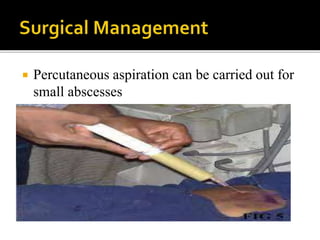
 Percutaneous aspiration can be carried out for
small abscesses
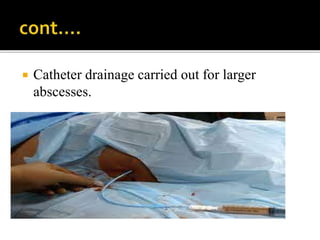
 Catheter drainage carried out for larger
abscesses.
 Open surgery may be necessary if Abscess
ruptured Signs of peritonitis, Abscess 5 cm
and Appendicitis.
 Pain Management: Alleviation or reduction in
pain
 Nutrition Management: Assisting with or
providing a balanced dietary intake of foods
and fluids.
 Infection Protection: Infection Control,
Prevention and early detection of infection in a
patient at risk.
 Return of Abscess
 Widespread infection in abdomen.
 Overwhelming sepsis.
 Rupture of the abscess into adjacent structures
(pleural, peritoneal and pericardial spaces).
 Secondary infection of amoebic liver
abscesses.
liver abcsess.pptx

liver abcsess.pptx

  • 2.
    1. Pyogenic liverabscess, which is most often polymicrobial 2. Amoebic liver abscess due to Entamoeba histolytica 3. Fungal abscess, most often due to Candida species
  • 3.
     A liverabscess is a collection of pus in the liver caused by bacteria, fungi, or parasites.  It may occur as a single lesion or as multiple lesions of different sizes.  The abscess may contain thick, bad smelling pus or reddish-brown anchovy paste-like fluid with no odor.  Occurs when bacteria/protozoa destroy hepatic tissue, produces a cavity which fills up with infective organisms, liquefied cells & leucocytes.  Necrotic tissue then falls off the cavity from rest of the liver.
  • 4.
    A liver abscessis a collection of pus in the liver caused by bacteria, fungi, or parasites.
  • 5.
     Advanced age Having a long-term disease, (cancer, diabetes, tuberculosis) or splenectomy  weak immune system,  Taking Drugs: Such as steroids, chemotherapy, prolong use of antibiotics (fungal abscess).  Drinking too much alcohol.  Living in over crowding area  poor sanitation  Being malnourished  Traveling to places where amebiasis is common.  Eating foods and drinking liquids that are sold in the street
  • 6.
     Disorders orbacterial infection of following origins may invade liver to cause abscess  Biliary disease (most common) e.g.: stones, cholangiocarcinoma, infection  Colonic disease : diverticulitis, appendicitis, Crohn's disease  Pancreatitis  Infection of blood  Intra-abdominal sepsis  Endocarditic  Dental infection (with streptococci)  Traumatic  Iatrogenic
  • 7.
    Due to etiologicalfactor infection develops along the biliary and GIT Infecting organism reach to the liver through biliary system or lymphatic system Bacterial toxins destroying liver cells results necrotic tissues Leucocytes migrates into infected area Abscess cavity full of liquid containing living and dead leucocytes, liver cells and bacteria Liver abscess
  • 8.
     Right upperabdominal pain  Nausea and vomiting  Weight loss  Right chest pain  Jaundice  Fever and weakness  Dark urine  Joint pain  Loss of appetite  General discomfort
  • 9.
     Blood test:-CBC , LFT, Bilirubin, blood culture  Abdominal CT scan  Abdominal ultrasound  Liver biopsy
  • 10.
    Pyogenic liver abscess: Broad spectrum antibiotics should be started before waiting for culture results.  Usually start treatment with tri-therapy included the use of penicillin, amino-glycoside and metronidazole.  A third-generation cephalosporin can be considered in the elderly or if renal function is impaired.  Antibiotic therapy can be modified once culture results are available. Treatment may be needed for up to 12 weeks and should be guided by the clinical picture and radiological monitoring.
  • 11.
    If Amoebic liverabscess:  Metronidazole is the treatment of choice.  Diloxanide furoate should be prescribed for 10 days to eliminate intestinal amoebae after the abscess has been successfully treated.  Antifungal agents such as amphotericin B are used if fungal abscess is suspected.
  • 12.
     Percutaneous aspirationcan be carried out for small abscesses
  • 13.
     Catheter drainagecarried out for larger abscesses.
  • 14.
     Open surgerymay be necessary if Abscess ruptured Signs of peritonitis, Abscess 5 cm and Appendicitis.
  • 15.
     Pain Management:Alleviation or reduction in pain  Nutrition Management: Assisting with or providing a balanced dietary intake of foods and fluids.  Infection Protection: Infection Control, Prevention and early detection of infection in a patient at risk.
  • 16.
     Return ofAbscess  Widespread infection in abdomen.  Overwhelming sepsis.  Rupture of the abscess into adjacent structures (pleural, peritoneal and pericardial spaces).  Secondary infection of amoebic liver abscesses.