ABDOMINAL TUBERCULOSIS
PRESENTED BY
MR SUDIP DAS
M.SC NURSING 2ND SEMESTER
DEPARTMENT OF MEDICAL SURGICAL NURSING
DEFINITION :-
Abdominal Tuberculosis is a form of
tuberculosis which affects the
gastrointestinal system of the body.
Specifically, it affects the peritoneum, the
abdominal lymph nodes, and in some rare
cases the kidney, liver, and the pancreas.
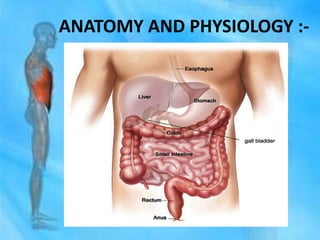
ANATOMY AND PHYSIOLOGY :-
INCIDENCE :-
Extra-pulmonary forms of TB which
account for 10-15 per cent of all
cases may represent up to 50 per
cent of patients with AIDS. TB of the
gastrointestinal tract is the sixth most
frequent form of extra-pulmonary
site, after lymphatic, genitourinary,
bone and joint, miliary and
meningeal tuberculosis.
RISK FACTOR AND CAUSES :-
1. Family history.
2. Cirrhosis.
3. HIV infection.
4. Diabetes mellitus.
5. Underlying malignancy.
6. Treatment with TNF agent.
7. Peritoneal dialysis.
8. Consumption of pasteurization
milk.
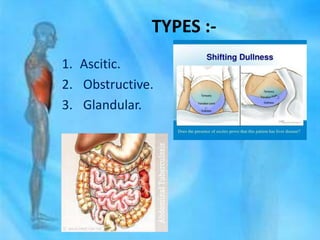
TYPES :-
1. Ascitic.
2. Obstructive.
3. Glandular.
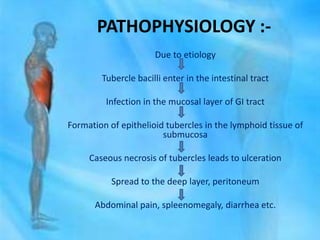
PATHOPHYSIOLOGY :-
Due to etiology
Tubercle bacilli enter in the intestinal tract
Infection in the mucosal layer of GI tract
Formation of epithelioid tubercles in the lymphoid tissue of
submucosa
Caseous necrosis of tubercles leads to ulceration
Spread to the deep layer, peritoneum
Abdominal pain, spleenomegaly, diarrhea etc.
CLINICAL FEATURES :-
Abdominal pain
Diarrhea
Alternate constipation
Abdominal distension
Fever
Weight loss
Malabsorption
Fistula
Bowel obstruction
Fatigue
Diffuse abdominal tenderness
Night sweats
DIAGNOSTIC EVALUATION :-
Blood test.
Tuberculin test.
Biopsy.
Radiographs.
Colonoscopy and endoscopy.
TREATMENT :-
Drug: RNTCP Category I treatment
for 6 months 2(HRZE)3 + 4(HR)
Drug:RNTCP Category I treatment for
9months 2(HRZE)3 + 4(HR)
 Surgical management.
NURSING MANAGEMENT :-
Assessment.
Nursing diagnosis :-
Acute pain related to damage of mucosa
layer of stomach.
Fluid volume deficit related to vomiting.
Imbalance nutrition less than body
requirement related to disease process.
Sleeping pattern disturbance related to
pain.
Anxiety related to hospitalization.
Knowledge deficit related to treatment
process.
o Intervention.
PREVENTION OF TB ABDOMEN :-
Take all of medicines as they’re prescribed,
until your doctor takes you off them.
Keep all doctor appointments.
Always cover your mouth with a tissue when
you cough or sneeze. Seal the tissue in a plastic
bag, then throw it away.
Wash hands after coughing or sneezing.
Don’t visit other people and don’t invite them
to visit .
Stay home from work, school, or other public
places.
Use a fan or open windows to move around
fresh air.
Don’t use public transportation.
Tb abdomen or abdominal tuberculosis

Tb abdomen or abdominal tuberculosis

  • 1.
    ABDOMINAL TUBERCULOSIS PRESENTED BY MRSUDIP DAS M.SC NURSING 2ND SEMESTER DEPARTMENT OF MEDICAL SURGICAL NURSING
  • 2.
    DEFINITION :- Abdominal Tuberculosisis a form of tuberculosis which affects the gastrointestinal system of the body. Specifically, it affects the peritoneum, the abdominal lymph nodes, and in some rare cases the kidney, liver, and the pancreas.
  • 3.
  • 4.
    INCIDENCE :- Extra-pulmonary formsof TB which account for 10-15 per cent of all cases may represent up to 50 per cent of patients with AIDS. TB of the gastrointestinal tract is the sixth most frequent form of extra-pulmonary site, after lymphatic, genitourinary, bone and joint, miliary and meningeal tuberculosis.
  • 5.
    RISK FACTOR ANDCAUSES :- 1. Family history. 2. Cirrhosis. 3. HIV infection. 4. Diabetes mellitus. 5. Underlying malignancy. 6. Treatment with TNF agent. 7. Peritoneal dialysis. 8. Consumption of pasteurization milk.
  • 6.
    TYPES :- 1. Ascitic. 2.Obstructive. 3. Glandular.
  • 7.
    PATHOPHYSIOLOGY :- Due toetiology Tubercle bacilli enter in the intestinal tract Infection in the mucosal layer of GI tract Formation of epithelioid tubercles in the lymphoid tissue of submucosa Caseous necrosis of tubercles leads to ulceration Spread to the deep layer, peritoneum Abdominal pain, spleenomegaly, diarrhea etc.
  • 8.
    CLINICAL FEATURES :- Abdominalpain Diarrhea Alternate constipation Abdominal distension Fever Weight loss Malabsorption Fistula Bowel obstruction Fatigue Diffuse abdominal tenderness Night sweats
  • 9.
    DIAGNOSTIC EVALUATION :- Bloodtest. Tuberculin test. Biopsy. Radiographs. Colonoscopy and endoscopy.
  • 10.
    TREATMENT :- Drug: RNTCPCategory I treatment for 6 months 2(HRZE)3 + 4(HR) Drug:RNTCP Category I treatment for 9months 2(HRZE)3 + 4(HR)  Surgical management.
  • 11.
    NURSING MANAGEMENT :- Assessment. Nursingdiagnosis :- Acute pain related to damage of mucosa layer of stomach. Fluid volume deficit related to vomiting. Imbalance nutrition less than body requirement related to disease process. Sleeping pattern disturbance related to pain. Anxiety related to hospitalization. Knowledge deficit related to treatment process. o Intervention.
  • 12.
    PREVENTION OF TBABDOMEN :- Take all of medicines as they’re prescribed, until your doctor takes you off them. Keep all doctor appointments. Always cover your mouth with a tissue when you cough or sneeze. Seal the tissue in a plastic bag, then throw it away. Wash hands after coughing or sneezing. Don’t visit other people and don’t invite them to visit . Stay home from work, school, or other public places. Use a fan or open windows to move around fresh air. Don’t use public transportation.