Digital Library
Digital Library
  A digital library is a library in which
   collections are stored in digital formats
   (as opposed to print, or other media)
   and accessible by computers.
  The digital content may be stored
   locally, or accessed remotely via
   computer networks. A digital library is a
   type of information retrieval system.
Cont…
  It provides the architecture to model, map,
   integrate, condense and transform
   scattered information housed in digital
   documents.
  Companies can perform more substantive,
   accurate and consistent analyses using
   the digital library as a foundation for
   decision support system.
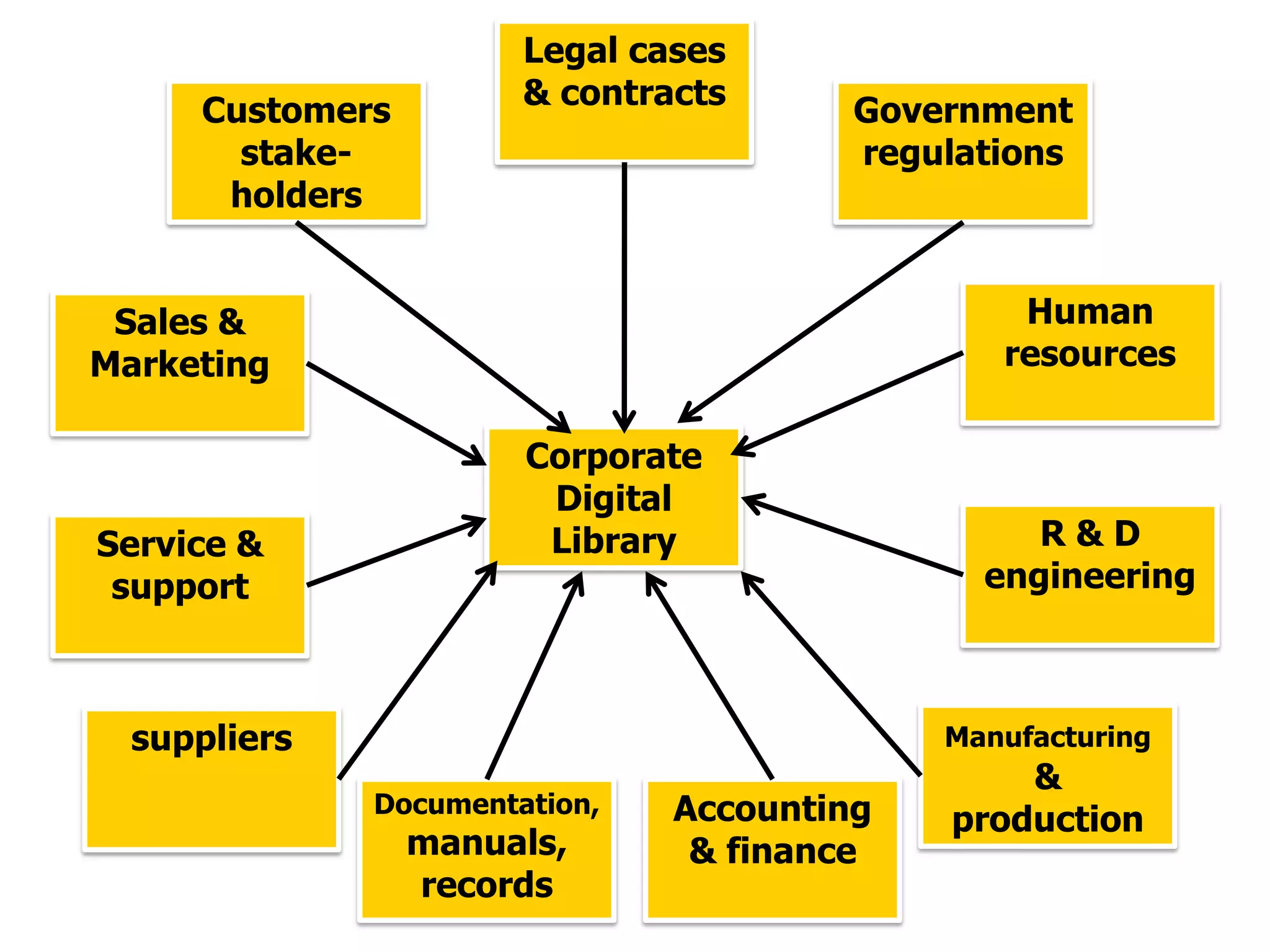
Legal cases
                       & contracts
     Customers                          Government
       stake-                           regulations
      holders


 Sales &                                        Human
Marketing                                      resources

                       Corporate
                        Digital
Service &               Library                  R&D
 support                                      engineering


  suppliers                                 Manufacturing
                                                &
              Documentation,   Accounting   production
                 manuals,       & finance
                 records
Traditional vs. Digital Library
   Storage Space
   Maintenance cost
   Willingness to adopt innovations in
    technology
   Accessibility to users
   Simultaneous access
Types of digital libraries
  Document Digital Libraries
  Data Warehouses
Cont…
   Document Digital Libraries
     It is a distributed network of interlinked
      information mainly for electronic publishing
     Books, reports, paper materials, electronic
      files, video and audio
     Digital document formats( word processing,
      spreadsheets, audio recordings, digital video)
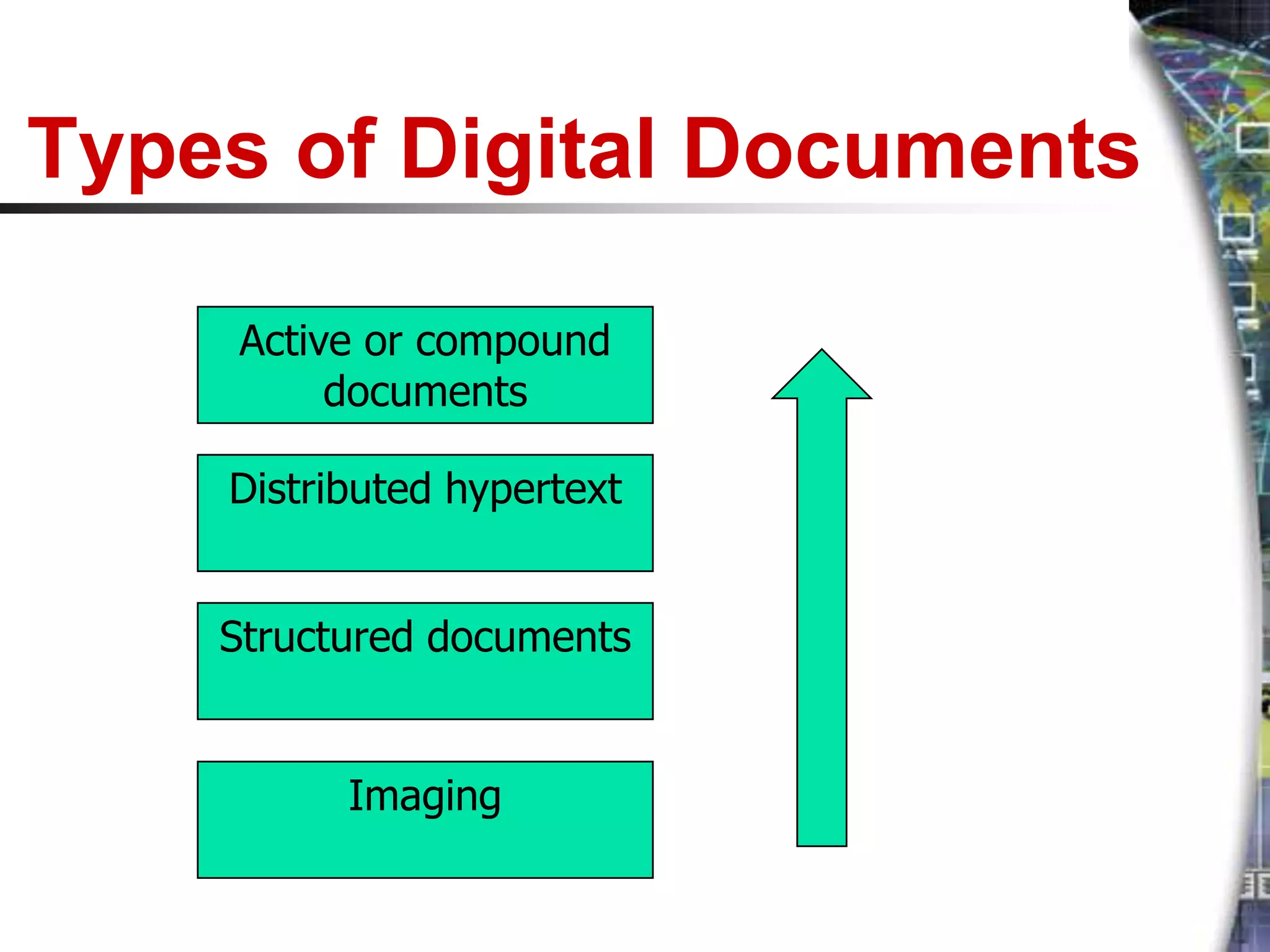
Types of Digital Documents

    Active or compound
         documents

    Distributed hypertext


    Structured documents


          Imaging
Types of Digital Documents
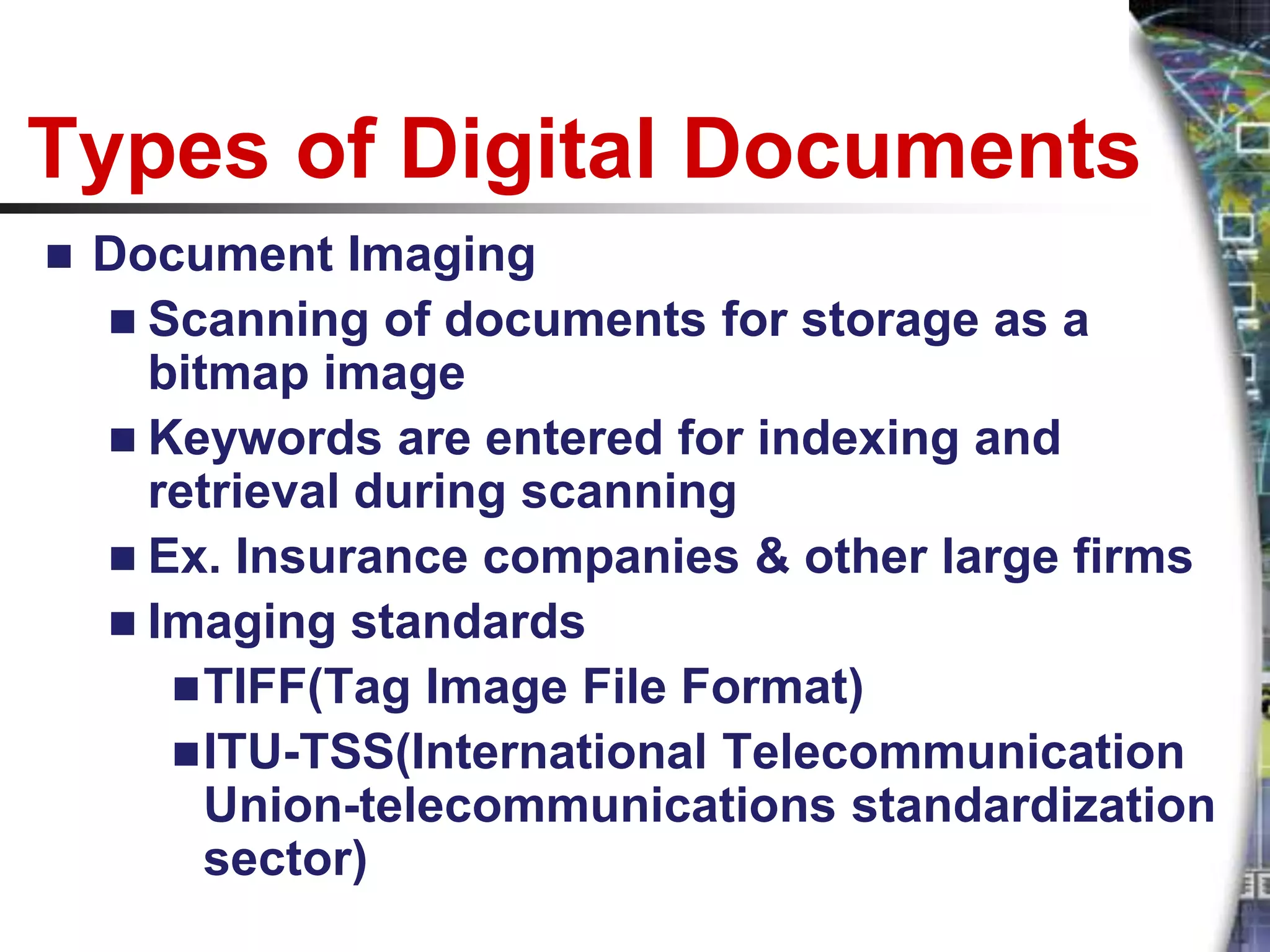
   Document Imaging
     Scanning of documents for storage as a
      bitmap image
     Keywords are entered for indexing and
      retrieval during scanning
     Ex. Insurance companies & other large firms
     Imaging standards
        TIFF(Tag Image File Format)
        ITU-TSS(International Telecommunication
         Union-telecommunications standardization
         sector)
Types of Digital Documents
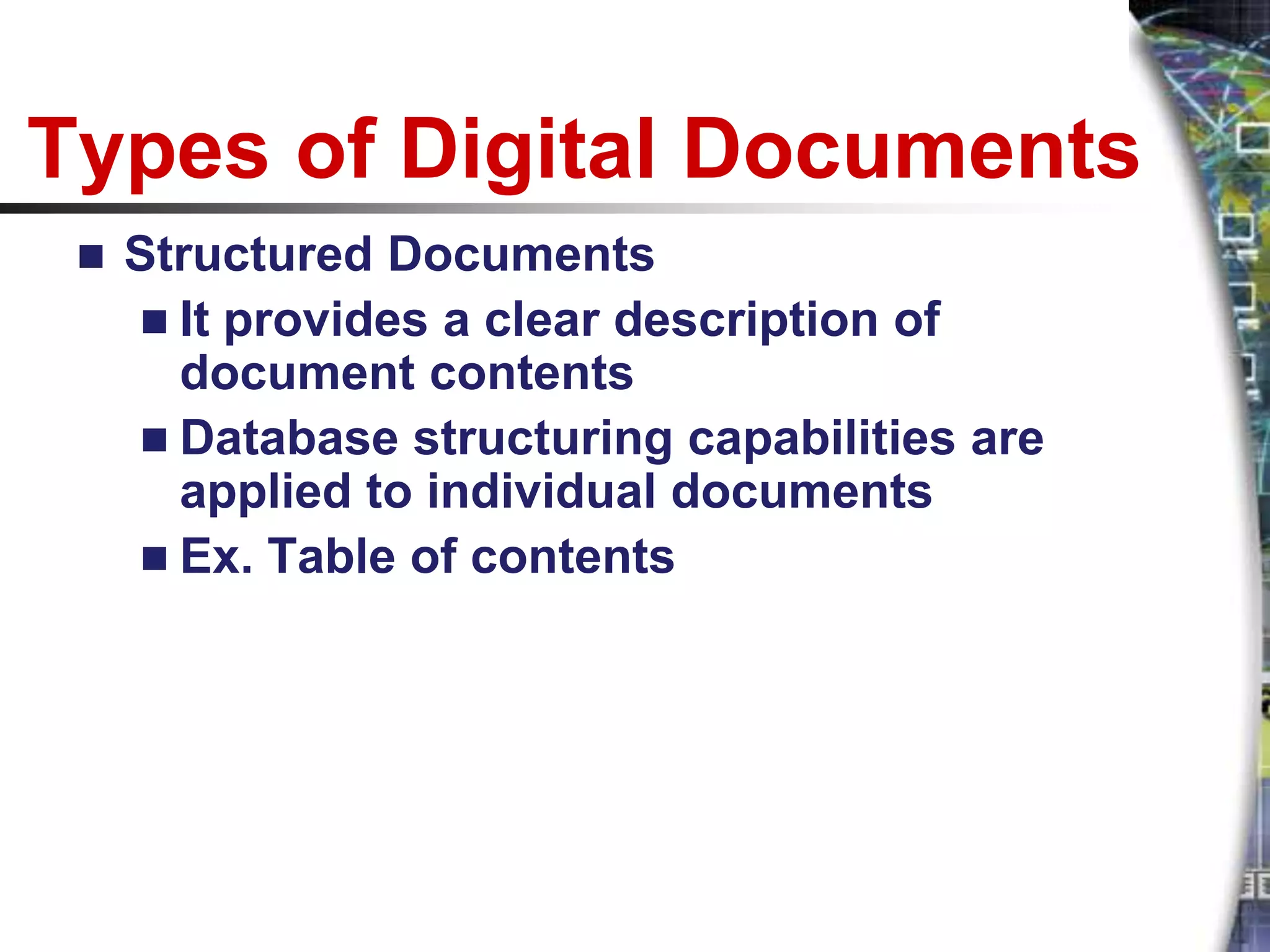
    Structured Documents
      It provides a clear description of
       document contents
      Database structuring capabilities are
       applied to individual documents
      Ex. Table of contents
Types of Digital Documents
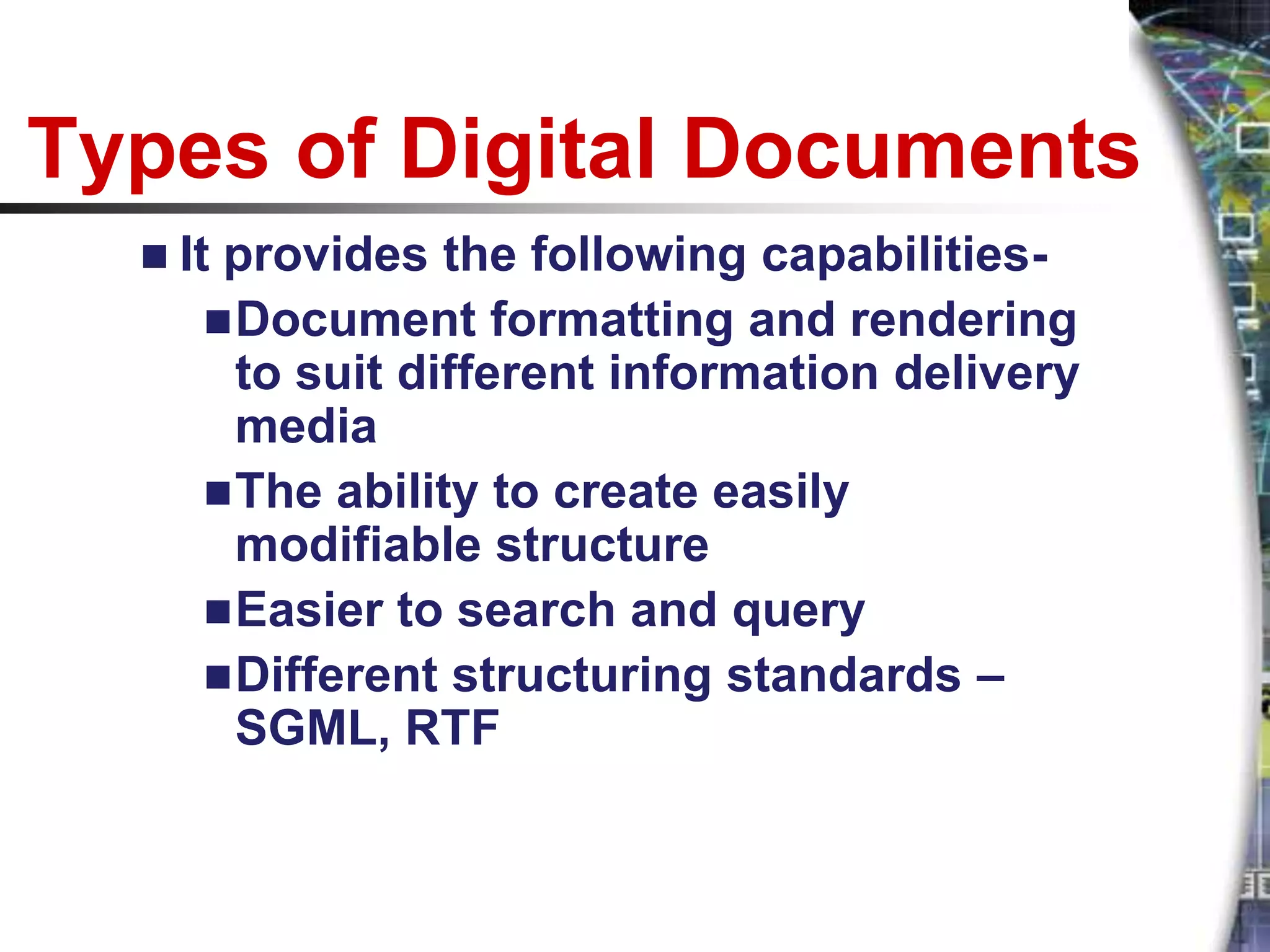
   Itprovides the following capabilities-
      Document formatting and rendering
       to suit different information delivery
       media
      The ability to create easily
       modifiable structure
      Easier to search and query
      Different structuring standards –
       SGML, RTF
Types of Digital Documents
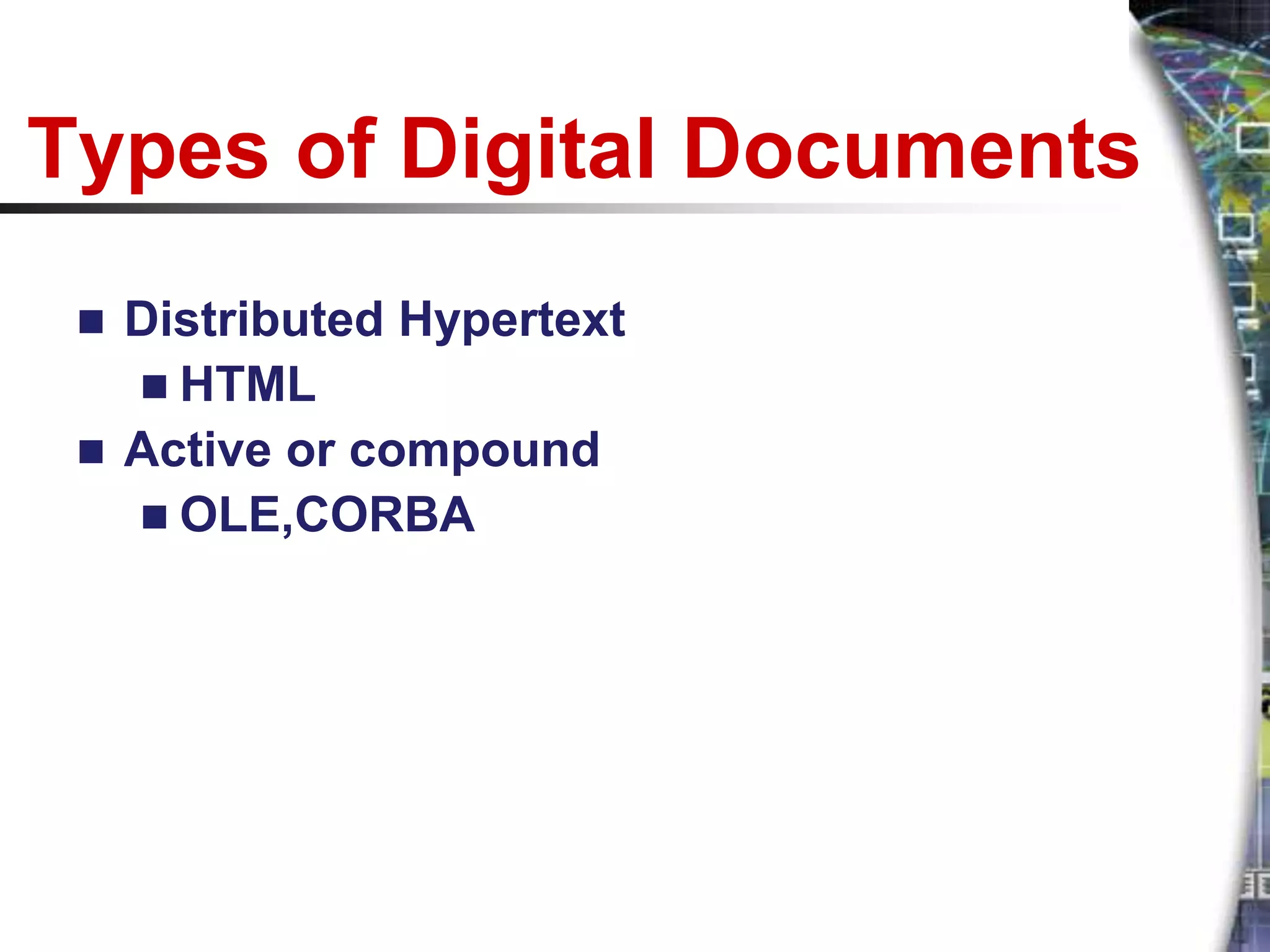
  Distributed Hypertext
    HTML
  Active or compound
    OLE,CORBA
Data warehouses
    Data Warehouses
      These are Central Information repositories for
       combining and storing vast amounts of
       historical and reference data from a number of
       different sources.
      It is a physical separation of an organization’s
       operational data systems from its decision
       support systems.
Benefits
    No physical boundary
    Round the clock availability
    Multiple accesses
    Structured approach
    Information retrieval
    Preservation and conservation
    Space
    Networking
    Cost
Limitations
   Although   digital libraries do away with
    these fees, digital libraries can be no
    less expensive in their own way to
    operate.
   large costs incurred for the
    conversion of print materials into
    digital format, for the technical skills
    of staff to maintain them, and for the
    costs of maintaining online access
    (i.e. servers, bandwidth costs, etc.).
Digital library

Digital library

  • 1.
  • 2.
    Digital Library A digital library is a library in which collections are stored in digital formats (as opposed to print, or other media) and accessible by computers.  The digital content may be stored locally, or accessed remotely via computer networks. A digital library is a type of information retrieval system.
  • 3.
    Cont…  Itprovides the architecture to model, map, integrate, condense and transform scattered information housed in digital documents.  Companies can perform more substantive, accurate and consistent analyses using the digital library as a foundation for decision support system.
  • 4.
    Legal cases & contracts Customers Government stake- regulations holders Sales & Human Marketing resources Corporate Digital Service & Library R&D support engineering suppliers Manufacturing & Documentation, Accounting production manuals, & finance records
  • 5.
    Traditional vs. DigitalLibrary  Storage Space  Maintenance cost  Willingness to adopt innovations in technology  Accessibility to users  Simultaneous access
  • 6.
    Types of digitallibraries  Document Digital Libraries  Data Warehouses
  • 7.
    Cont…  Document Digital Libraries  It is a distributed network of interlinked information mainly for electronic publishing  Books, reports, paper materials, electronic files, video and audio  Digital document formats( word processing, spreadsheets, audio recordings, digital video)
  • 8.
    Types of DigitalDocuments Active or compound documents Distributed hypertext Structured documents Imaging
  • 9.
    Types of DigitalDocuments  Document Imaging  Scanning of documents for storage as a bitmap image  Keywords are entered for indexing and retrieval during scanning  Ex. Insurance companies & other large firms  Imaging standards  TIFF(Tag Image File Format)  ITU-TSS(International Telecommunication Union-telecommunications standardization sector)
  • 10.
    Types of DigitalDocuments  Structured Documents  It provides a clear description of document contents  Database structuring capabilities are applied to individual documents  Ex. Table of contents
  • 11.
    Types of DigitalDocuments  Itprovides the following capabilities-  Document formatting and rendering to suit different information delivery media  The ability to create easily modifiable structure  Easier to search and query  Different structuring standards – SGML, RTF
  • 12.
    Types of DigitalDocuments  Distributed Hypertext  HTML  Active or compound  OLE,CORBA
  • 13.
    Data warehouses  Data Warehouses  These are Central Information repositories for combining and storing vast amounts of historical and reference data from a number of different sources.  It is a physical separation of an organization’s operational data systems from its decision support systems.
  • 14.
    Benefits  No physical boundary  Round the clock availability  Multiple accesses  Structured approach  Information retrieval  Preservation and conservation  Space  Networking  Cost
  • 15.
    Limitations Although digital libraries do away with these fees, digital libraries can be no less expensive in their own way to operate.  large costs incurred for the conversion of print materials into digital format, for the technical skills of staff to maintain them, and for the costs of maintaining online access (i.e. servers, bandwidth costs, etc.).