Corporate Social
 Responsibility
Introduction
               Responsibility of a Business


                                   Responsibility of a
           Responsibility of a
                                   business in present
          business traditionally
                                        scenario


            • Providing goods         To solve social
              and services to         problems like
                 society.                 poverty,
               •Maximizing              corruption,
             corporate profit            pollution,
              • Creating job            educational
            opportunities etc          problem etc.
Meaning of CSR


• According to European Union, “ CSR is a concept that an enterprise is
accountable for its impact on all relevant stakeholders. It is the continuing
commitment by business to behave fairly and responsibly and contribute to
economic development while improving the quality of life of the work force and
their families as well as the local community and society at large.”

• Social responsibility refers to the obligation of an organisation to seek actions
that protect and improve the welfare of society along with its own interest.
Nature of Social Responsibility


• Focus   on Business Firms
• It deals with moral issues
• It moves along with the objective of profit
maximization
• It is a pervasive activity
• It is a continuing process
Historical Perspectives of Social Responsibility
• Expectations of society from business firms in regard to
corporate social responsibility has gone through 3 phases:
Profit Maximization (Traditional Philosophy)


   Historically, business enterprise was mainly looked
  for the interest of the owners.
   Social responsibility of the organisation was to
  maximize the profit within the legal framework of the
  country.
Trusteeship Management (Stakeholder Philosophy)


 During later years, the concept of social responsibility
widened from mere satisfaction of owners’ interests to
interest of other stakeholders like employees,
consumers, creditors etc.
 Providing good working conditions, better quality
goods, timely repayment of loans to creditors etc.
Quality of life management(Affirmative philosophy)


 A still wider concept of social responsibility developed
in 1960s.
It viewed business enterprises as institutions to remove
social ills and uplift the society.
 Business enterprises are now supposed to uplift the
quality of life in the society.
Four-Part model of Corporate Social
                       Responsibility
Type of              Societal               Examples
Responsibility       Expectation

                     DESIRED of             Corporate contributions.
  Philanthropic                             Programs supporting community/education,
                     business by            health, poverty etc
                     society
                                             Creating Job Opportunities
                     EXPECTED of             Providing products as per the need of the
  Ethical            business by society     customers etc


                                            Obey all laws;
                                            Environmental laws.
                      REQUIRED of
  Legal                                     Consumer laws.
                      business by society
                                            Laws affecting all employees.


                                            Be profitable.
                      REQUIRED by
  Economic                                  Maximise sales revenue.
                      business
                                            Minimize costs (administrative, production, marketing,
                                            distribution).
                                            Make wise strategic decisions.
                                            Be attentive to dividend policy
Arguments in favour of social responsibility

  Long-run survival of Business concerns.
  Profitability for business concerns.
  Moral and Social commitment.
  Combination of several interests.
  Improvement in public image.
  Complementary to profit maximization
  Helps in avoiding Government Regulations
  Status of a citizen
  Available Surpluses
Arguments against Social Responsibility


 Business is an economic activity.
 Burdensome for business organizations.
 Cost-benefit analysis.
 Lack of skill and competence.
 Transfer of social costs: Increase in prices, reduction in
wages, reduction in profits.
Barriers to Social Responsibility

 Managerial perceptions
 Comparison of divisional performance
 Overall Organisational Barriers
 International Barriers
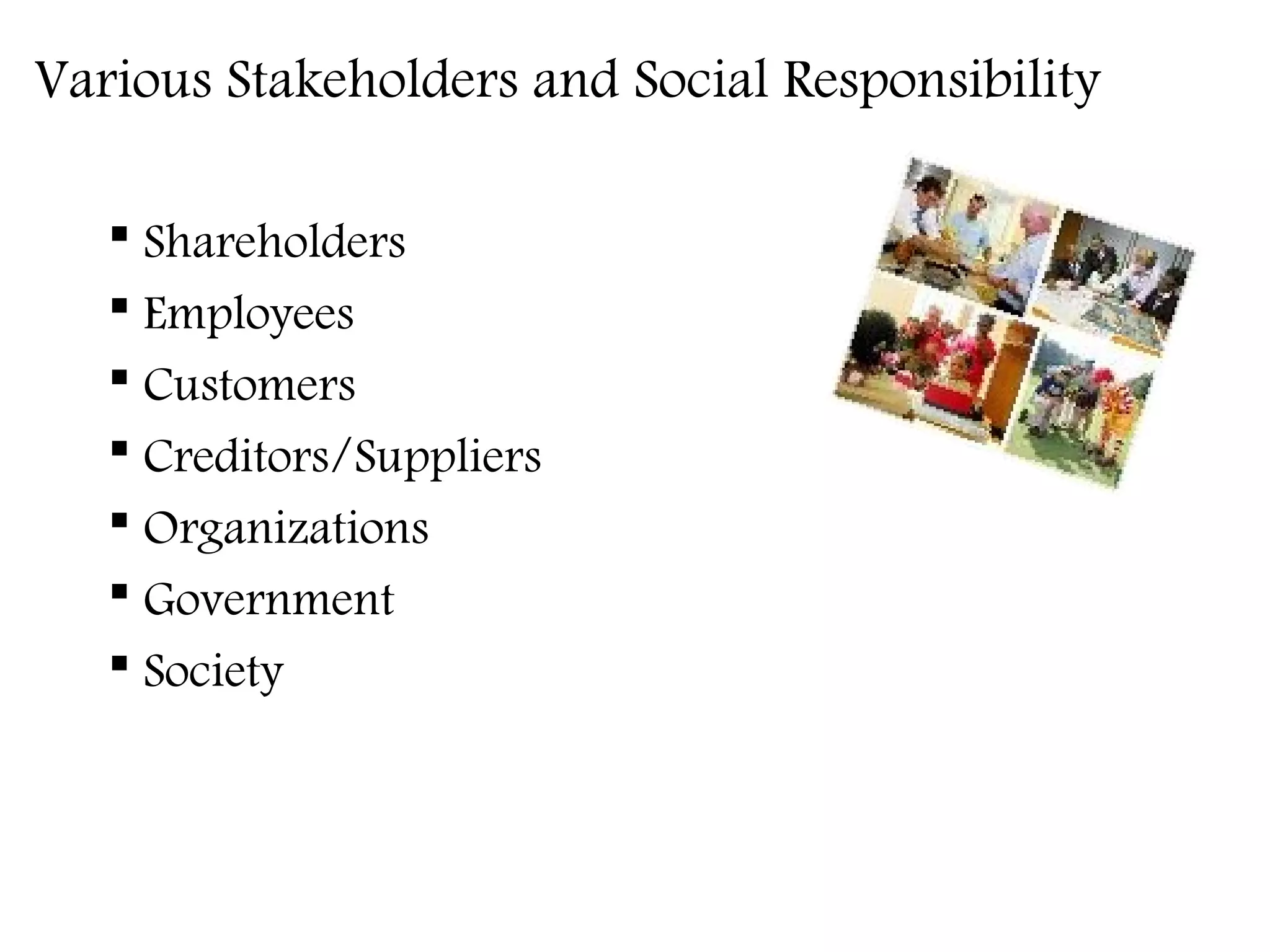
Various Stakeholders and Social Responsibility

    Shareholders
    Employees
    Customers
    Creditors/Suppliers
    Organizations
    Government
    Society
Queries ?

Corporate Social Responsibility

  • 1.
  • 2.
    Introduction Responsibility of a Business Responsibility of a Responsibility of a business in present business traditionally scenario • Providing goods To solve social and services to problems like society. poverty, •Maximizing corruption, corporate profit pollution, • Creating job educational opportunities etc problem etc.
  • 3.
    Meaning of CSR •According to European Union, “ CSR is a concept that an enterprise is accountable for its impact on all relevant stakeholders. It is the continuing commitment by business to behave fairly and responsibly and contribute to economic development while improving the quality of life of the work force and their families as well as the local community and society at large.” • Social responsibility refers to the obligation of an organisation to seek actions that protect and improve the welfare of society along with its own interest.
  • 4.
    Nature of SocialResponsibility • Focus on Business Firms • It deals with moral issues • It moves along with the objective of profit maximization • It is a pervasive activity • It is a continuing process
  • 5.
    Historical Perspectives ofSocial Responsibility • Expectations of society from business firms in regard to corporate social responsibility has gone through 3 phases:
  • 6.
    Profit Maximization (TraditionalPhilosophy)  Historically, business enterprise was mainly looked for the interest of the owners.  Social responsibility of the organisation was to maximize the profit within the legal framework of the country.
  • 7.
    Trusteeship Management (StakeholderPhilosophy)  During later years, the concept of social responsibility widened from mere satisfaction of owners’ interests to interest of other stakeholders like employees, consumers, creditors etc.  Providing good working conditions, better quality goods, timely repayment of loans to creditors etc.
  • 8.
    Quality of lifemanagement(Affirmative philosophy)  A still wider concept of social responsibility developed in 1960s. It viewed business enterprises as institutions to remove social ills and uplift the society.  Business enterprises are now supposed to uplift the quality of life in the society.
  • 9.
    Four-Part model ofCorporate Social Responsibility Type of Societal Examples Responsibility Expectation DESIRED of Corporate contributions. Philanthropic Programs supporting community/education, business by health, poverty etc society Creating Job Opportunities EXPECTED of Providing products as per the need of the Ethical business by society customers etc Obey all laws; Environmental laws. REQUIRED of Legal Consumer laws. business by society Laws affecting all employees. Be profitable. REQUIRED by Economic Maximise sales revenue. business Minimize costs (administrative, production, marketing, distribution). Make wise strategic decisions. Be attentive to dividend policy
  • 10.
    Arguments in favourof social responsibility  Long-run survival of Business concerns.  Profitability for business concerns.  Moral and Social commitment.  Combination of several interests.  Improvement in public image.  Complementary to profit maximization  Helps in avoiding Government Regulations  Status of a citizen  Available Surpluses
  • 11.
    Arguments against SocialResponsibility  Business is an economic activity.  Burdensome for business organizations.  Cost-benefit analysis.  Lack of skill and competence.  Transfer of social costs: Increase in prices, reduction in wages, reduction in profits.
  • 12.
    Barriers to SocialResponsibility  Managerial perceptions  Comparison of divisional performance  Overall Organisational Barriers  International Barriers
  • 13.
    Various Stakeholders andSocial Responsibility  Shareholders  Employees  Customers  Creditors/Suppliers  Organizations  Government  Society
  • 14.