Essentials of Human Anatomy & Physiology


The Digestive System
 Anatomy & Physiology II

            Mr. Hildebrandt
Digestive System Overview
• Mastication: chewing of food
• Peristalsis: moving food along
    the alimentary canal
• Digestion Function:
  • Breakdown of ingested food
  • Absorption of nutrients into blood
• Metabolism: production of
 cellular energy (ATP)
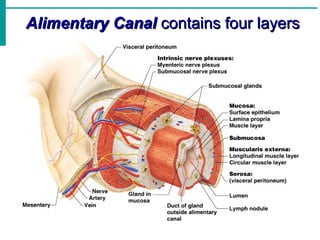
Alimentary Canal contains four layers
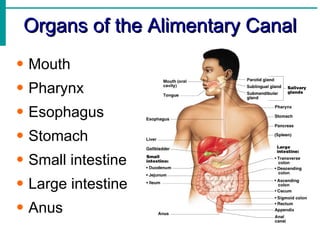
Organs of the Alimentary Canal
• Mouth
• Pharynx
• Esophagus
• Stomach
• Small intestine
• Large intestine
• Anus
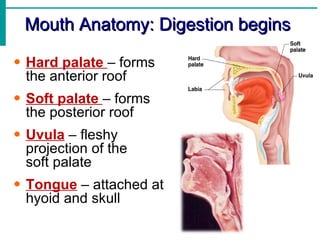
Mouth Anatomy: Digestion begins

• Hard palate – forms
  the anterior roof
• Soft palate – forms
  the posterior roof
• Uvula – fleshy
  projection of the
  soft palate
• Tongue – attached at
  hyoid and skull
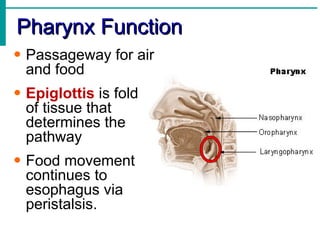
Pharynx Function
• Passageway for air
  and food
• Epiglottis is fold
  of tissue that
  determines the
  pathway
• Food movement
  continues to
  esophagus via
  peristalsis.
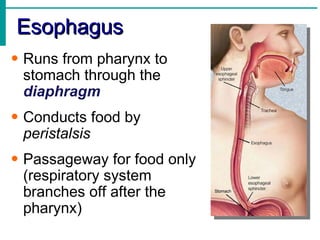
Esophagus
• Runs from pharynx to
  stomach through the
  diaphragm
• Conducts food by
  peristalsis
• Passageway for food only
  (respiratory system
  branches off after the
  pharynx)
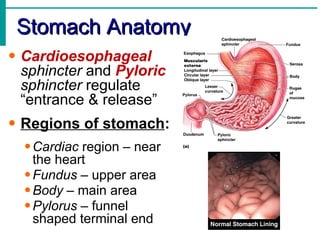
Stomach Anatomy
• Cardioesophageal
  sphincter and Pyloric
  sphincter regulate
  “entrance & release”
• Regions of stomach:
  • Cardiac region – near
    the heart
  • Fundus – upper area
  • Body – main area
  • Pylorus – funnel
    shaped terminal end
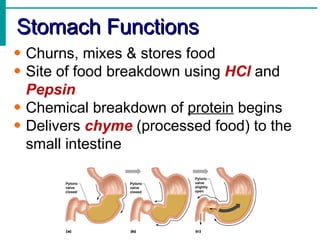
Stomach Functions
• Churns, mixes & stores food
• Site of food breakdown using HCl and
  Pepsin
• Chemical breakdown of protein begins
• Delivers chyme (processed food) to the
  small intestine
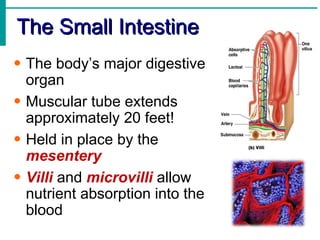
The Small Intestine
• The body’s major digestive
  organ
• Muscular tube extends
  approximately 20 feet!
• Held in place by the
  mesentery
• Villi and microvilli allow
  nutrient absorption into the
  blood
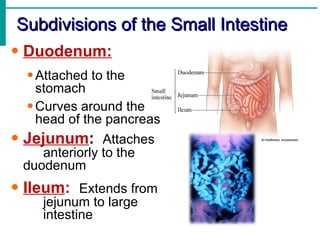
Subdivisions of the Small Intestine
• Duodenum:
  • Attached to the
    stomach
  • Curves around the
    head of the pancreas
• Jejunum: Attaches
    anteriorly to the
 duodenum
• Ileum: Extends from
    jejunum to large
    intestine
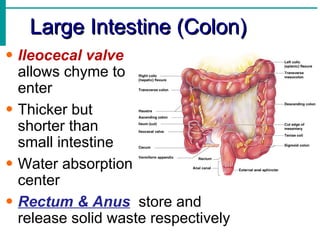
Large Intestine (Colon)
• Ileocecal valve
  allows chyme to
  enter
• Thicker but
  shorter than
  small intestine
• Water absorption
  center
• Rectum & Anus store and
  release solid waste respectively
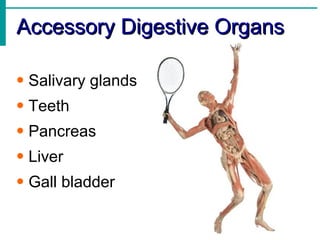
Accessory Digestive Organs

• Salivary glands
• Teeth
• Pancreas
• Liver
• Gall bladder
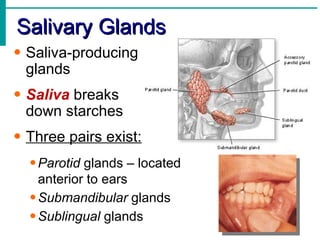
Salivary Glands
• Saliva-producing
  glands
• Saliva breaks
  down starches
• Three pairs exist:
  • Parotid glands – located
    anterior to ears
  • Submandibular glands
  • Sublingual glands
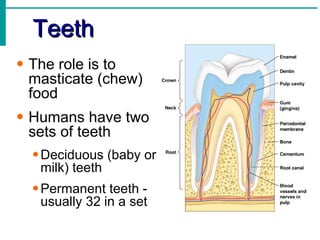
Teeth
• The role is to
  masticate (chew)
  food
• Humans have two
  sets of teeth
  • Deciduous (baby or
    milk) teeth
  • Permanent teeth -
    usually 32 in a set
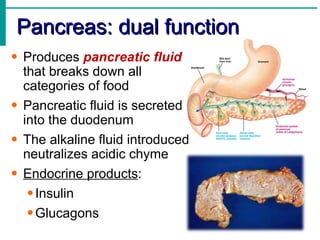
Pancreas: dual function
• Produces pancreatic fluid
  that breaks down all
  categories of food
• Pancreatic fluid is secreted
  into the duodenum
• The alkaline fluid introduced
  neutralizes acidic chyme
• Endocrine products:
   • Insulin
   • Glucagons
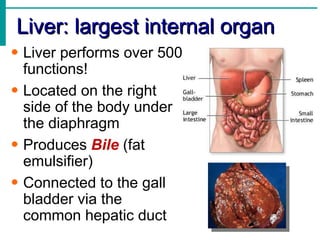
Liver: largest internal organ
• Liver performs over 500
  functions!
• Located on the right
  side of the body under
  the diaphragm
• Produces Bile (fat
  emulsifier)
• Connected to the gall
  bladder via the
  common hepatic duct
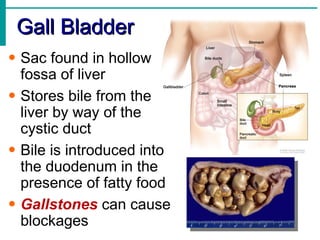
Gall Bladder
• Sac found in hollow
  fossa of liver
• Stores bile from the
  liver by way of the
  cystic duct
• Bile is introduced into
  the duodenum in the
  presence of fatty food
• Gallstones can cause
  blockages
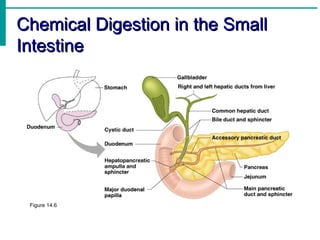
Chemical Digestion in the Small
Intestine


 Figure 14.6
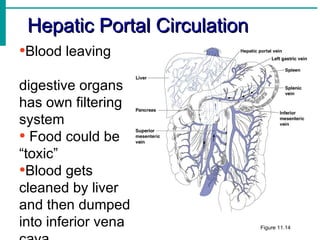
Hepatic Portal Circulation
•Blood leaving
digestive organs
has own filtering
system
• Food could be
“toxic”
•Blood gets
cleaned by liver
and then dumped
into inferior vena            Figure 11.14

Digestive System Notes

  • 1.
    Essentials of HumanAnatomy & Physiology The Digestive System Anatomy & Physiology II Mr. Hildebrandt
  • 2.
    Digestive System Overview •Mastication: chewing of food • Peristalsis: moving food along the alimentary canal • Digestion Function: • Breakdown of ingested food • Absorption of nutrients into blood • Metabolism: production of cellular energy (ATP)
  • 3.
  • 4.
    Organs of theAlimentary Canal • Mouth • Pharynx • Esophagus • Stomach • Small intestine • Large intestine • Anus
  • 5.
    Mouth Anatomy: Digestionbegins • Hard palate – forms the anterior roof • Soft palate – forms the posterior roof • Uvula – fleshy projection of the soft palate • Tongue – attached at hyoid and skull
  • 6.
    Pharynx Function • Passagewayfor air and food • Epiglottis is fold of tissue that determines the pathway • Food movement continues to esophagus via peristalsis.
  • 7.
    Esophagus • Runs frompharynx to stomach through the diaphragm • Conducts food by peristalsis • Passageway for food only (respiratory system branches off after the pharynx)
  • 8.
    Stomach Anatomy • Cardioesophageal sphincter and Pyloric sphincter regulate “entrance & release” • Regions of stomach: • Cardiac region – near the heart • Fundus – upper area • Body – main area • Pylorus – funnel shaped terminal end
  • 9.
    Stomach Functions • Churns,mixes & stores food • Site of food breakdown using HCl and Pepsin • Chemical breakdown of protein begins • Delivers chyme (processed food) to the small intestine
  • 10.
    The Small Intestine •The body’s major digestive organ • Muscular tube extends approximately 20 feet! • Held in place by the mesentery • Villi and microvilli allow nutrient absorption into the blood
  • 11.
    Subdivisions of theSmall Intestine • Duodenum: • Attached to the stomach • Curves around the head of the pancreas • Jejunum: Attaches anteriorly to the duodenum • Ileum: Extends from jejunum to large intestine
  • 12.
    Large Intestine (Colon) •Ileocecal valve allows chyme to enter • Thicker but shorter than small intestine • Water absorption center • Rectum & Anus store and release solid waste respectively
  • 13.
    Accessory Digestive Organs •Salivary glands • Teeth • Pancreas • Liver • Gall bladder
  • 14.
    Salivary Glands • Saliva-producing glands • Saliva breaks down starches • Three pairs exist: • Parotid glands – located anterior to ears • Submandibular glands • Sublingual glands
  • 15.
    Teeth • The roleis to masticate (chew) food • Humans have two sets of teeth • Deciduous (baby or milk) teeth • Permanent teeth - usually 32 in a set
  • 16.
    Pancreas: dual function •Produces pancreatic fluid that breaks down all categories of food • Pancreatic fluid is secreted into the duodenum • The alkaline fluid introduced neutralizes acidic chyme • Endocrine products: • Insulin • Glucagons
  • 17.
    Liver: largest internalorgan • Liver performs over 500 functions! • Located on the right side of the body under the diaphragm • Produces Bile (fat emulsifier) • Connected to the gall bladder via the common hepatic duct
  • 18.
    Gall Bladder • Sacfound in hollow fossa of liver • Stores bile from the liver by way of the cystic duct • Bile is introduced into the duodenum in the presence of fatty food • Gallstones can cause blockages
  • 19.
    Chemical Digestion inthe Small Intestine Figure 14.6
  • 20.
    Hepatic Portal Circulation •Bloodleaving digestive organs has own filtering system • Food could be “toxic” •Blood gets cleaned by liver and then dumped into inferior vena Figure 11.14