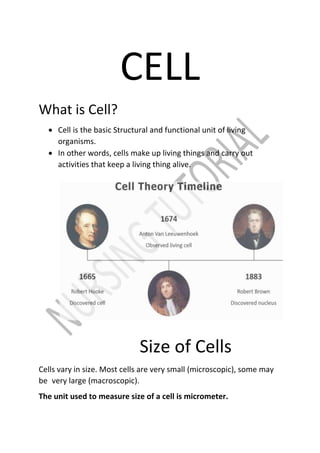
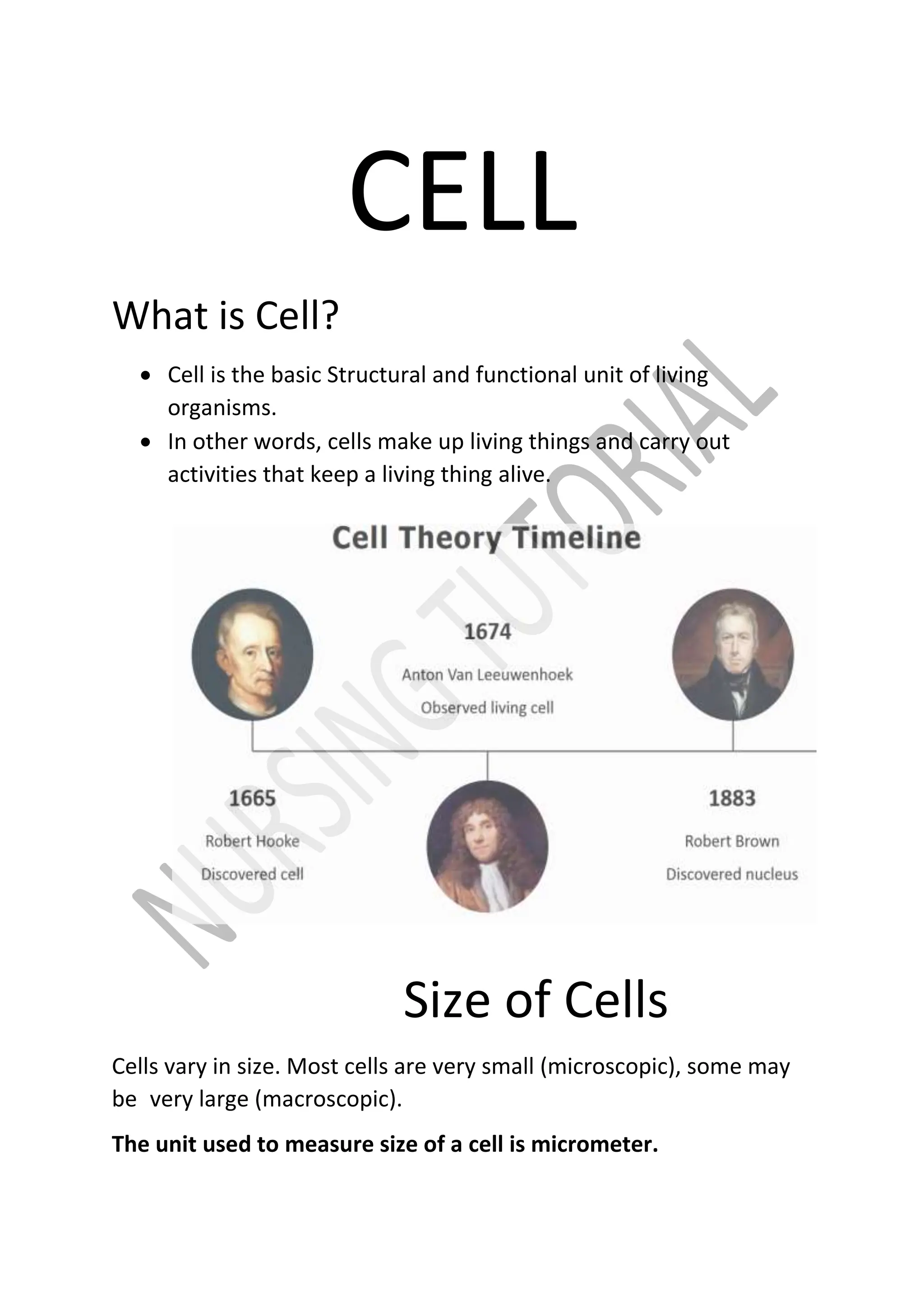
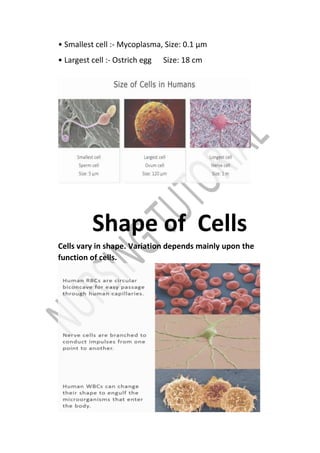
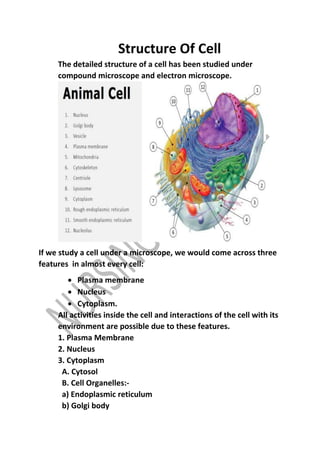
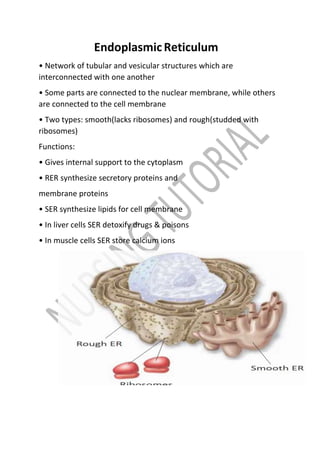
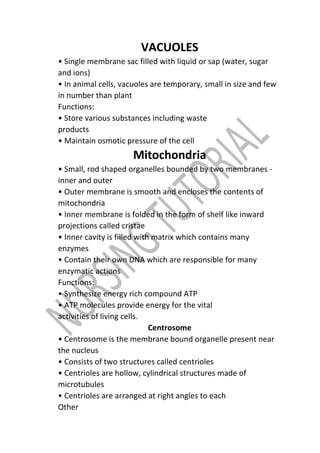
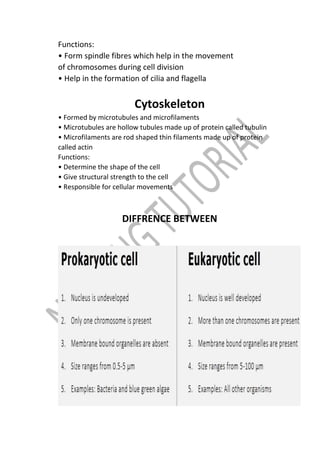
Cells are the basic structural and functional units of living organisms. They vary greatly in size, from the smallest cell Mycoplasma at 0.1 μm to the largest cell the ostrich egg at 18 cm. All cells contain a plasma membrane, nucleus, and cytoplasm. The cytoplasm contains various organelles that carry out specific functions necessary for cell survival, such as mitochondria which produce energy and the endoplasmic reticulum which synthesizes proteins. The nucleus contains DNA and controls cell activities like metabolism, protein synthesis, growth and cell division.