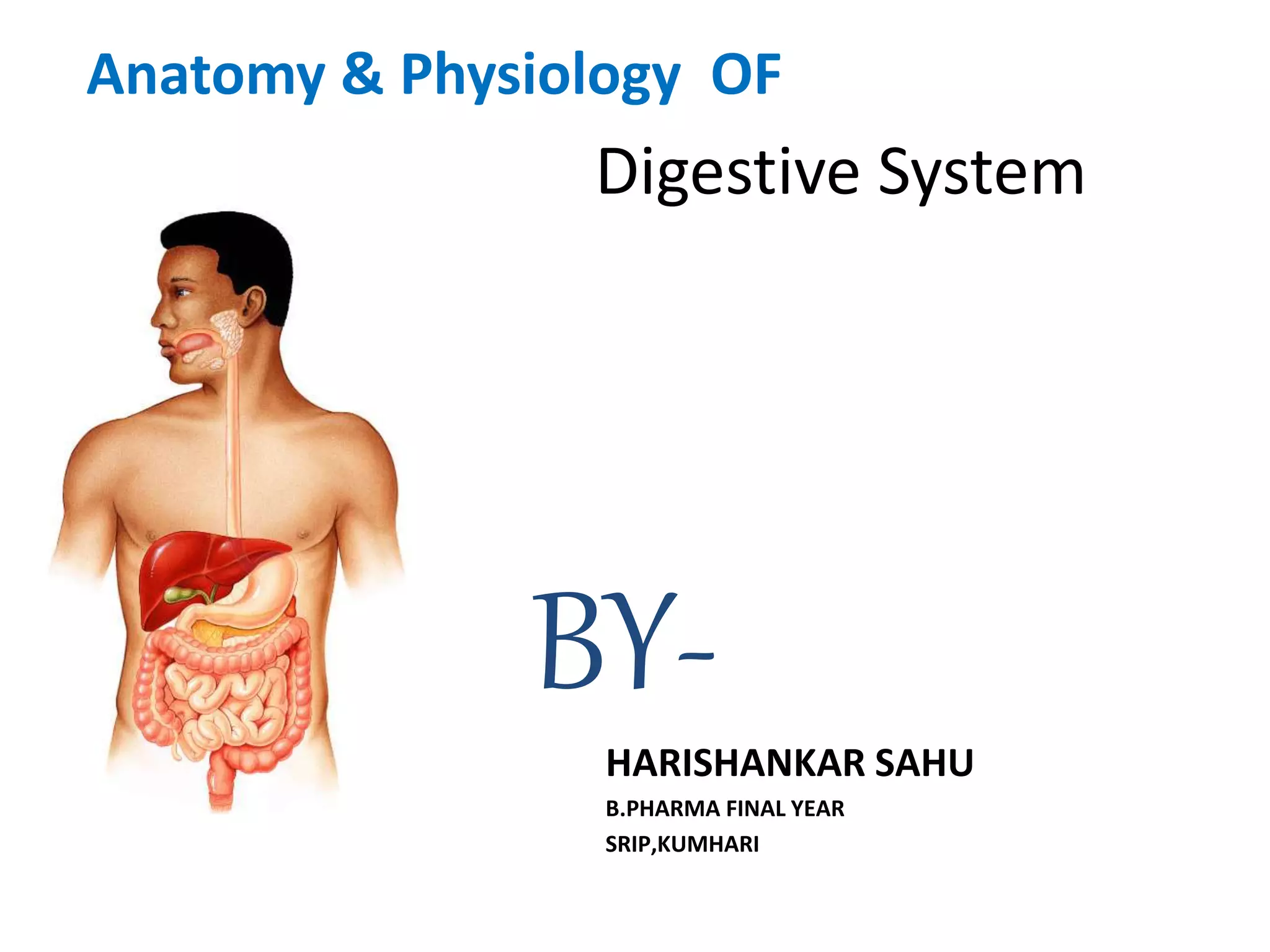
Anatomy & Physiology OF
HARISHANKAR SAHU
B.PHARMA FINAL YEAR
SRIP,KUMHARI
BY-
Digestive System
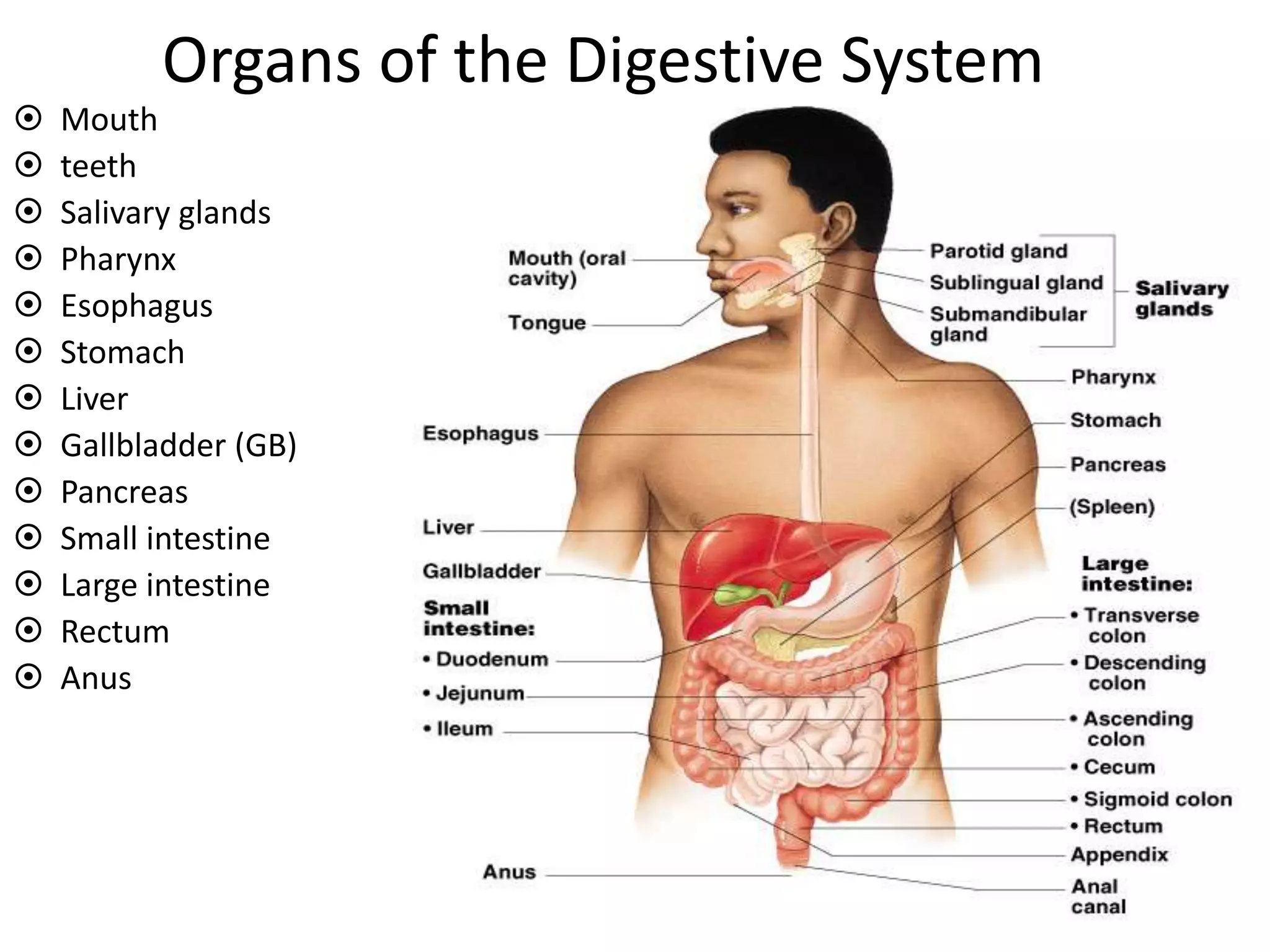
Organs of the Digestive System
 Mouth
 teeth
 Salivary glands
 Pharynx
 Esophagus
 Stomach
 Liver
 Gallbladder (GB)
 Pancreas
 Small intestine
 Large intestine
 Rectum
 Anus
Main Functions
Digesting food
– Physical and chemical breakdown of large food into
molecules: glucose, triglycerides, amino acids
Absorbing nutrients
– From intestines
– Circulated through the body by cardiovascular system
Eliminating waste
– Any food that cannot be digested or absorbed is expelled
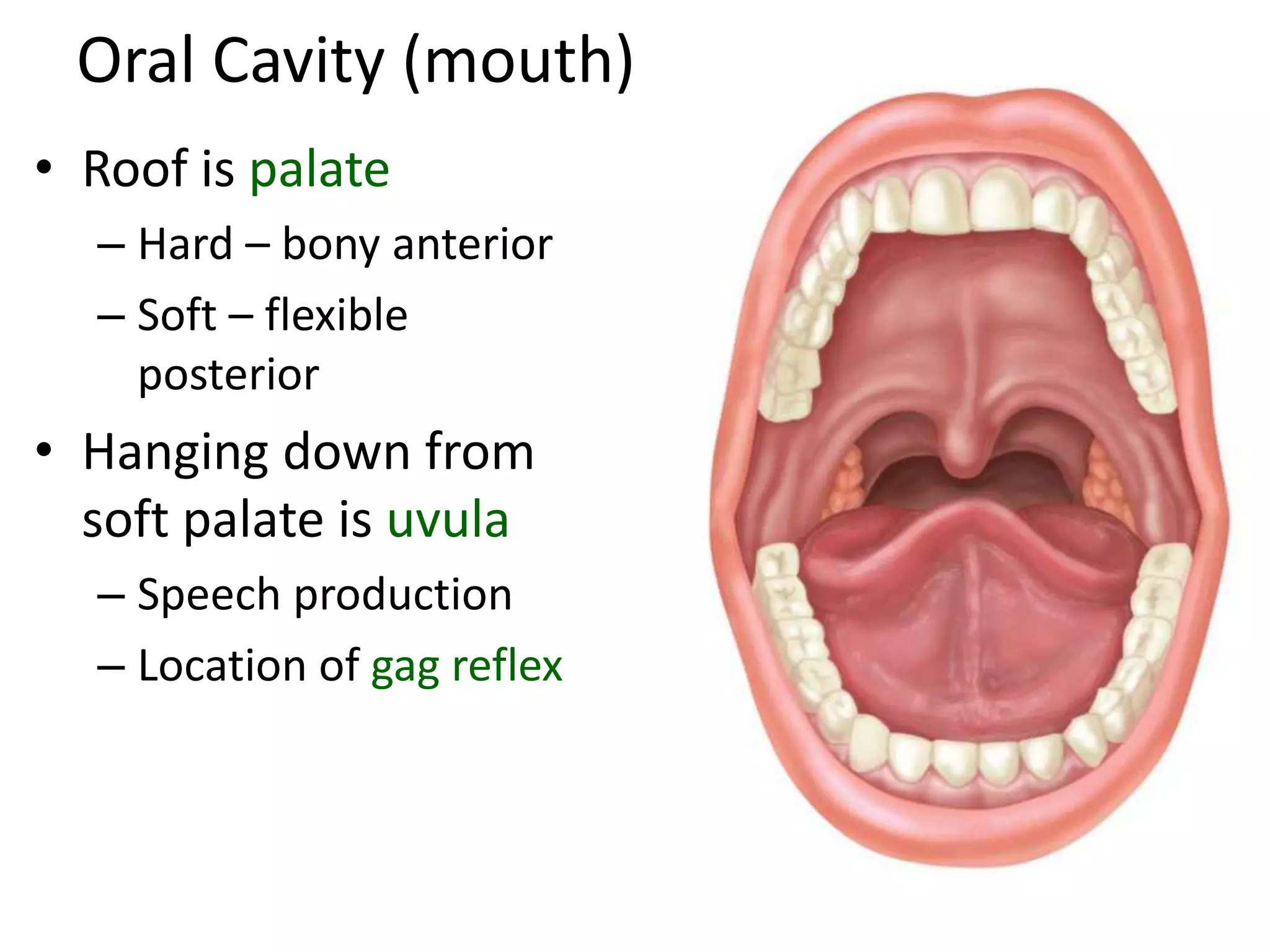
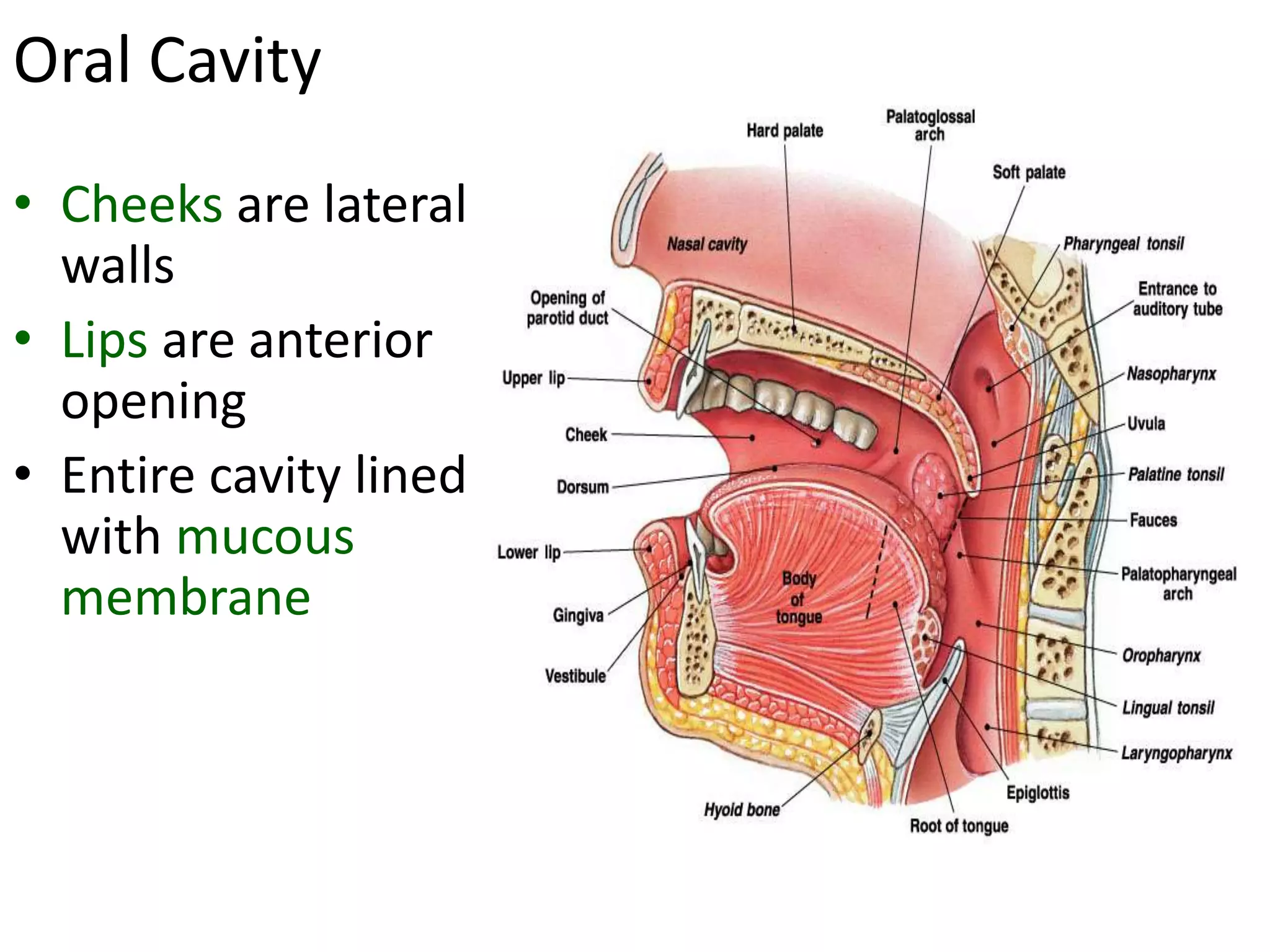
Oral Cavity (mouth)
• Roof is palate
– Hard – bony anterior
– Soft – flexible
posterior
• Hanging down from
soft palate is uvula
– Speech production
– Location of gag reflex
Oral Cavity
• Cheeks are lateral
walls
• Lips are anterior
opening
• Entire cavity lined
with mucous
membrane
Oral Cavity
• Digestion begins when food enters mouth
– Mechanically broken up by chewing
• Tongue moves food within mouth
• Mixes with saliva
– Digestive enzymes
– Lubricates
• Taste buds on tongue surface
– Detect bitter, sweet, salty, sour flavors
Processes of the Mouth
 Mastication (chewing) of food
 Mixing masticated food with saliva
 Initiation of swallowing by the tongue
 Allowing for the sense of taste
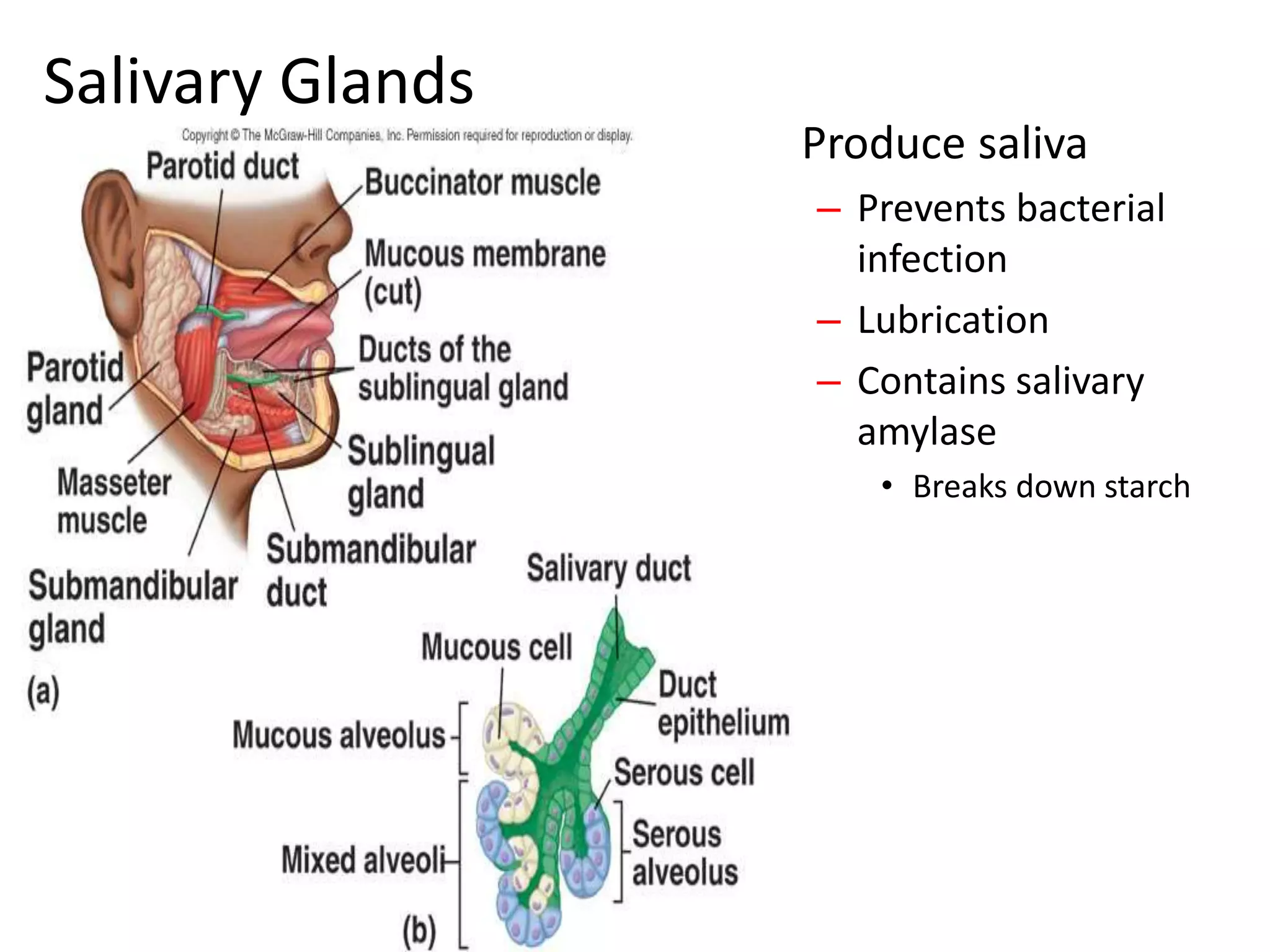
Salivary Glands
• Produce saliva
– Prevents bacterial
infection
– Lubrication
– Contains salivary
amylase
• Breaks down starch
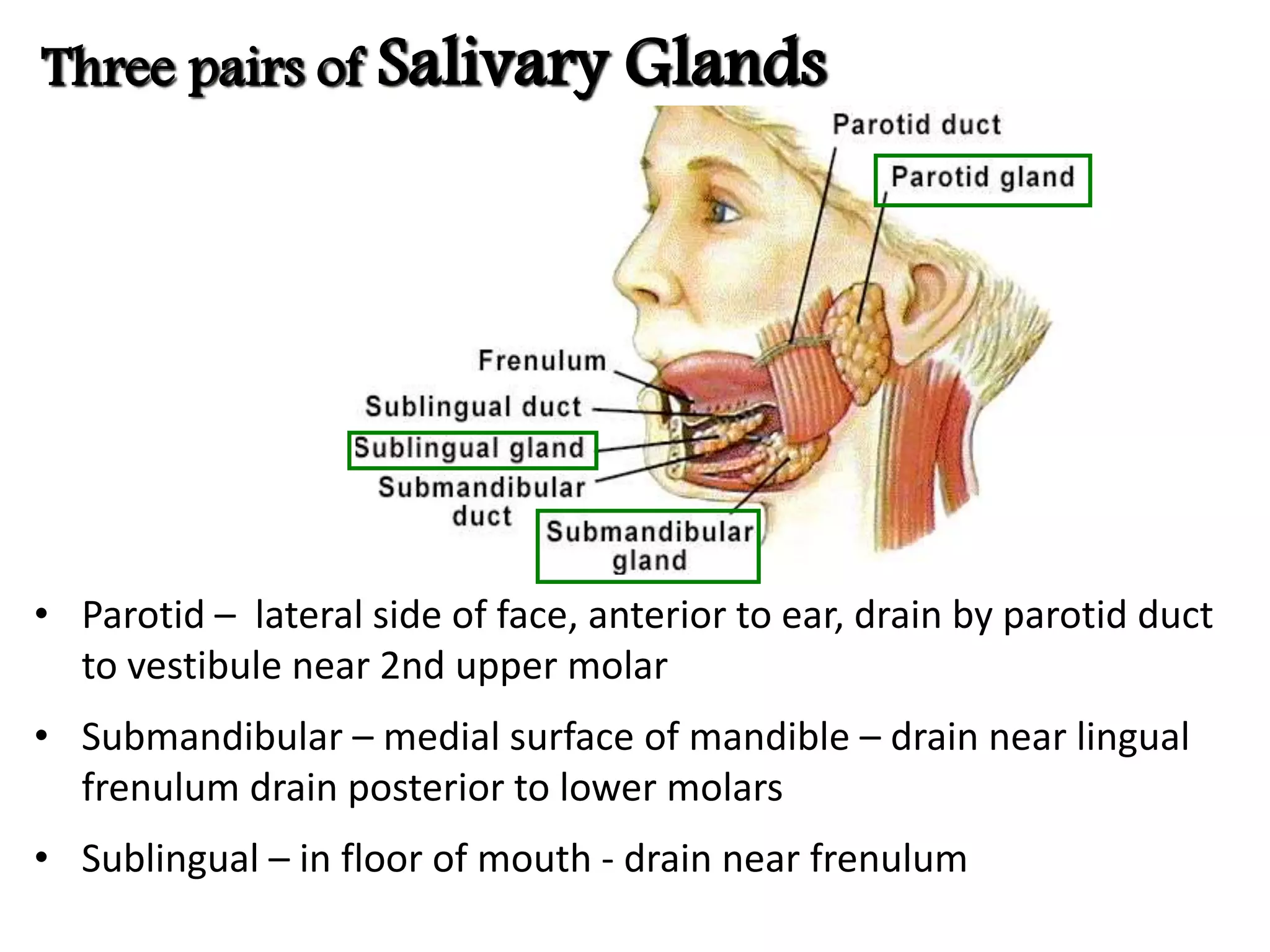
Three pairs of Salivary Glands
• Parotid – lateral side of face, anterior to ear, drain by parotid duct
to vestibule near 2nd upper molar
• Submandibular – medial surface of mandible – drain near lingual
frenulum drain posterior to lower molars
• Sublingual – in floor of mouth - drain near frenulum
Function
 Mixture of mucus and serous fluids
 Helps to form a food bolus
 Contains salivary amylase to begin
starch digestion
 Dissolves chemicals so they can be
tasted
Teeth
 The role is to masticate (chew) food
 Humans have two sets of teeth
1. Deciduous (baby or milk) teeth
 20 teeth are fully formed by age two
2. Permanent teeth
 Replace deciduous teeth beginning between the ages
of 6 to 12
 A full set is 32 teeth, but some people do not have
wisdom teeth
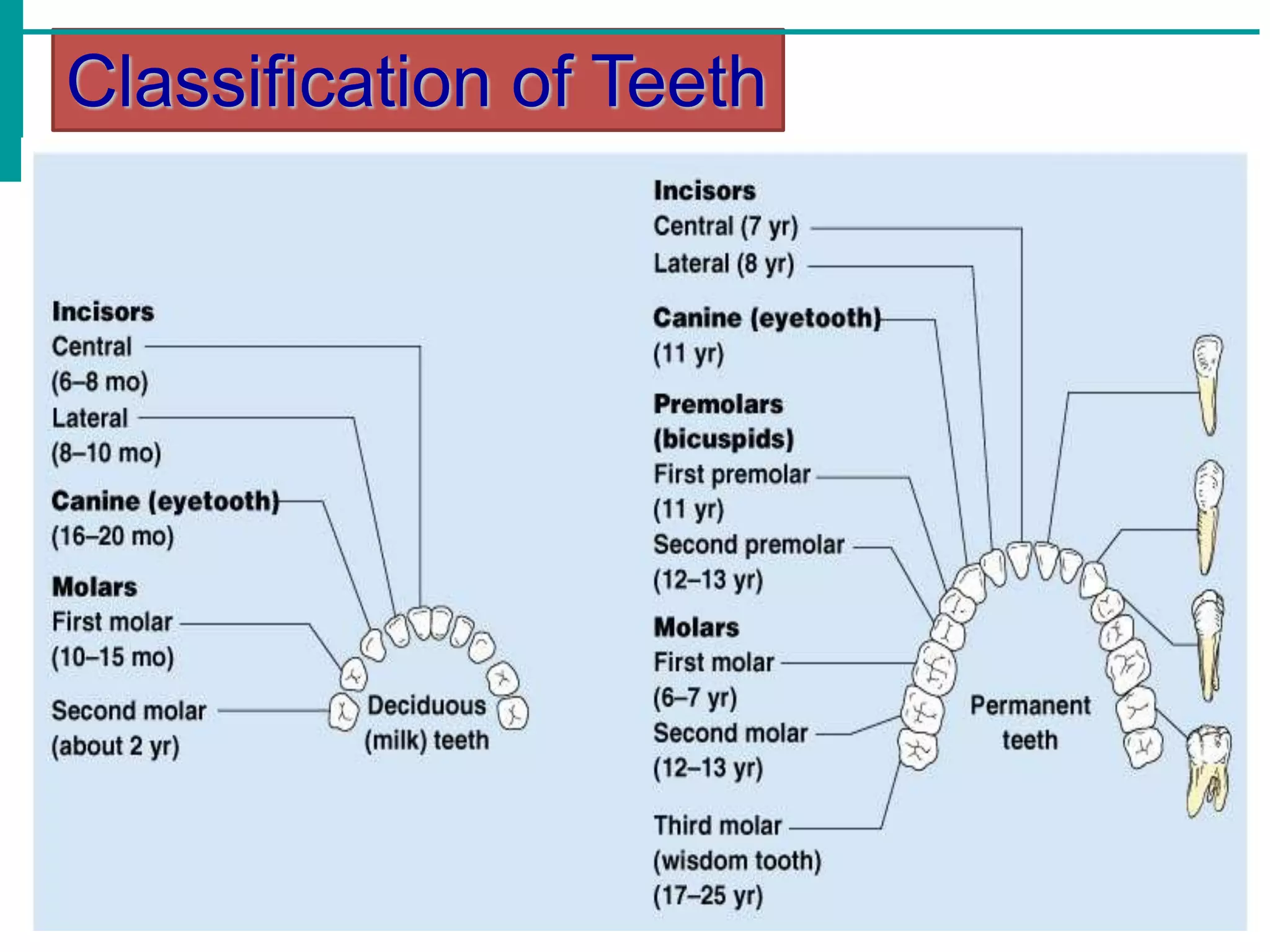
Classification of Teeth
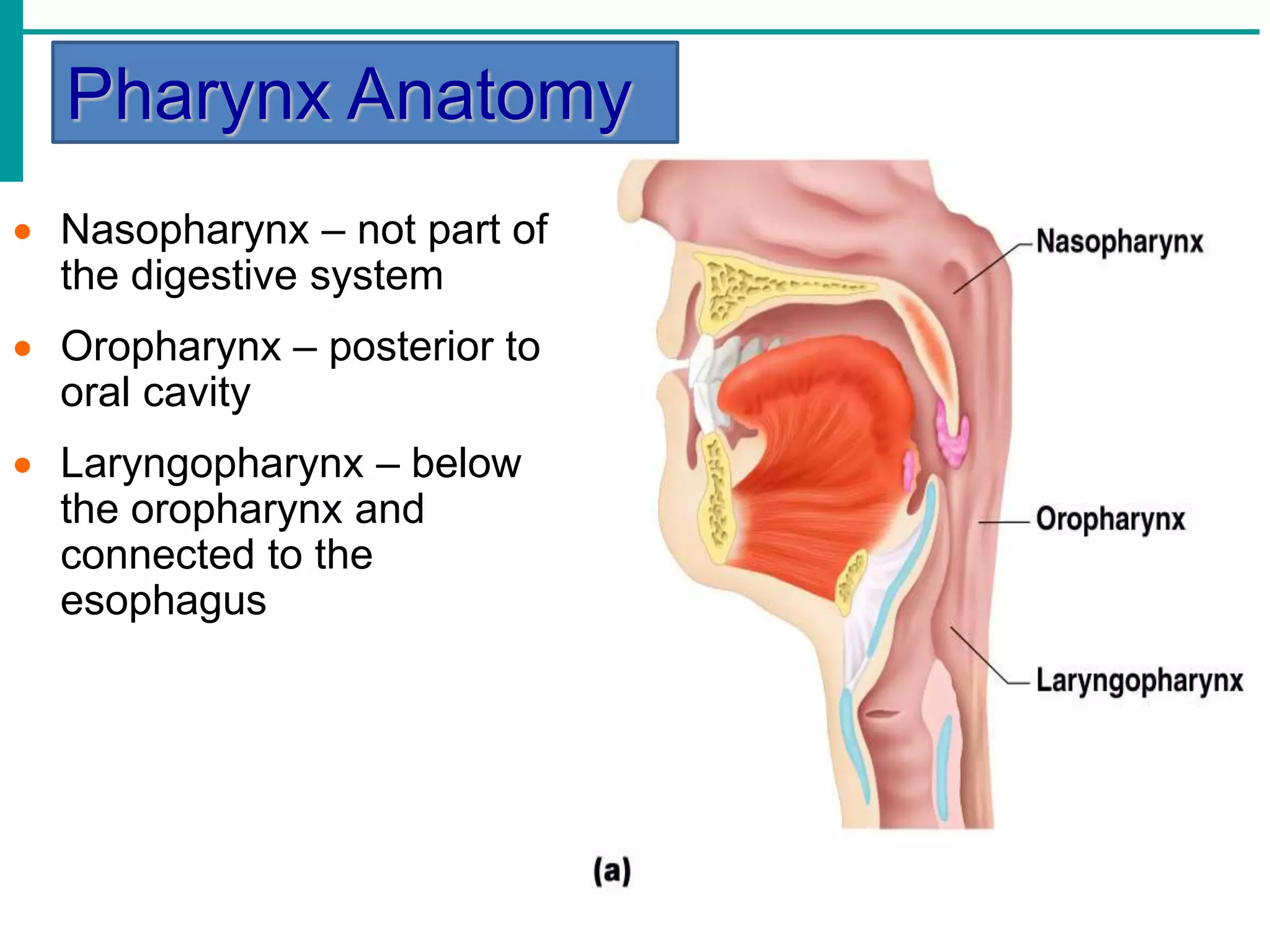
Pharynx Anatomy
 Nasopharynx – not part of
the digestive system
 Oropharynx – posterior to
oral cavity
 Laryngopharynx – below
the oropharynx and
connected to the
esophagus
Pharynx Function
 Serves as a passageway for air and food
 Food is propelled to the esophagus by two
muscle layers
 Longitudinal inner layer
 Circular outer layer
 Food movement is by alternating contractions of
the muscle layers (peristalsis)
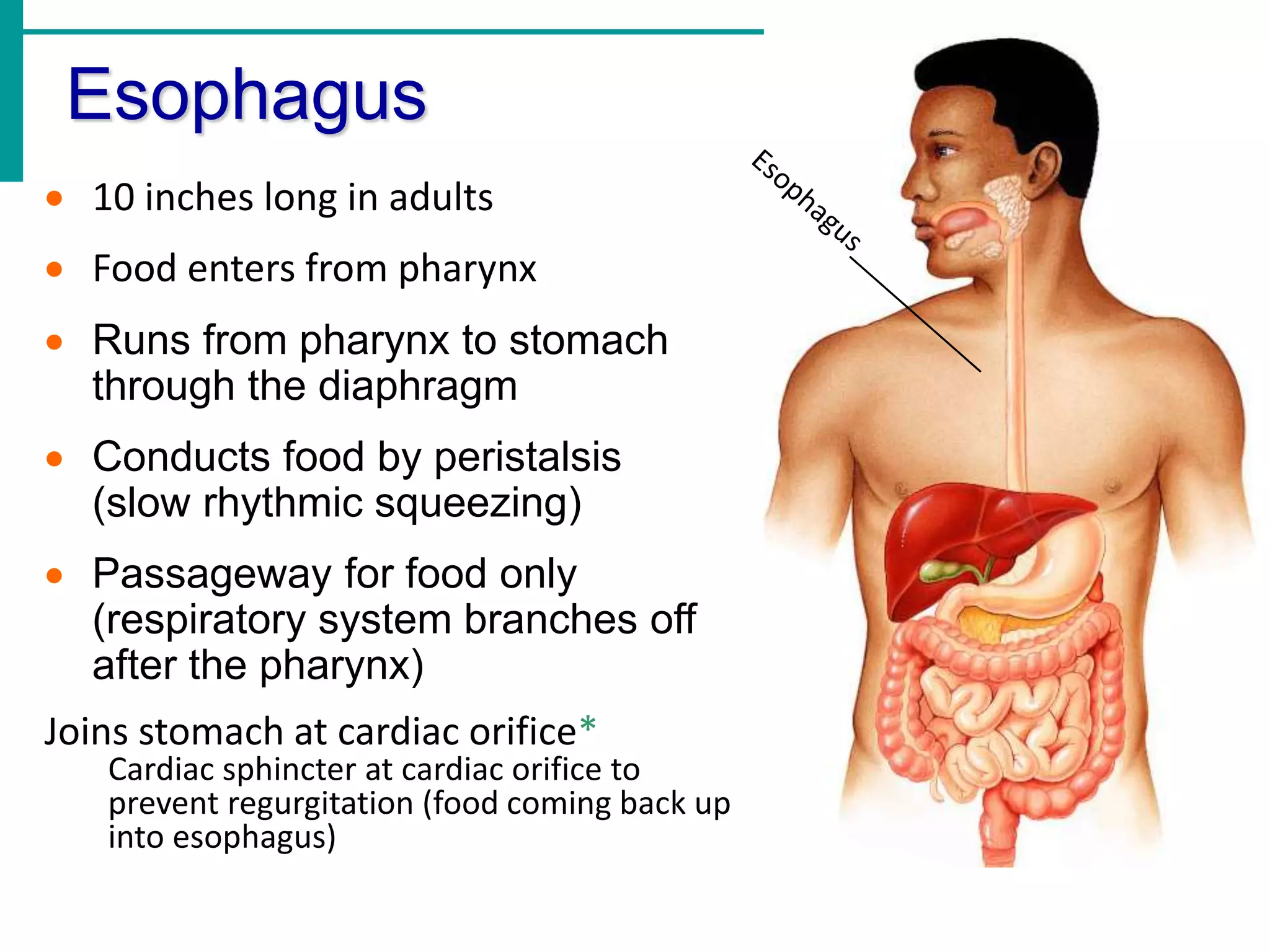
Esophagus
 10 inches long in adults
 Food enters from pharynx
 Runs from pharynx to stomach
through the diaphragm
 Conducts food by peristalsis
(slow rhythmic squeezing)
 Passageway for food only
(respiratory system branches off
after the pharynx)
Joins stomach at cardiac orifice*
Cardiac sphincter at cardiac orifice to
prevent regurgitation (food coming back up
into esophagus)
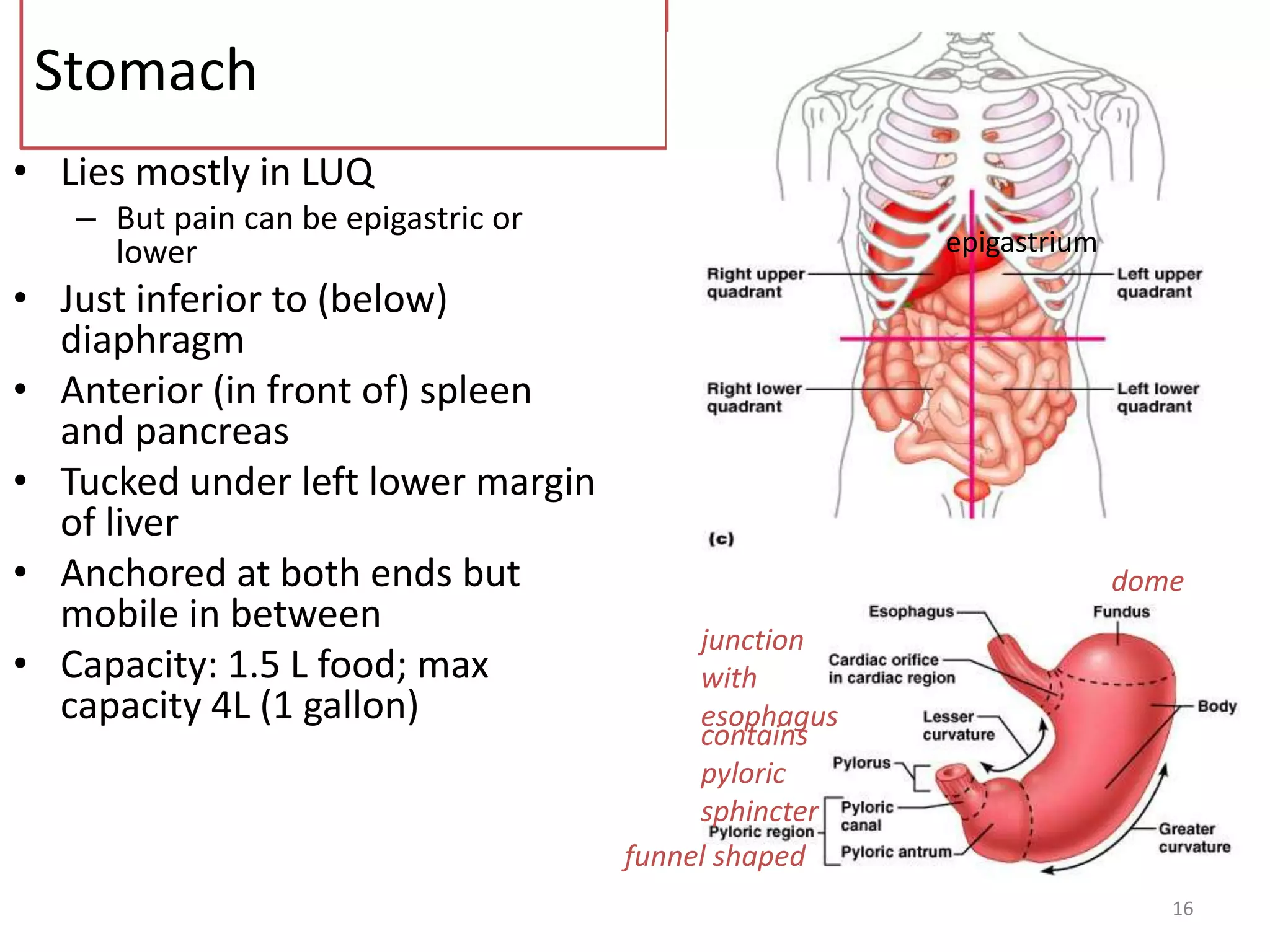
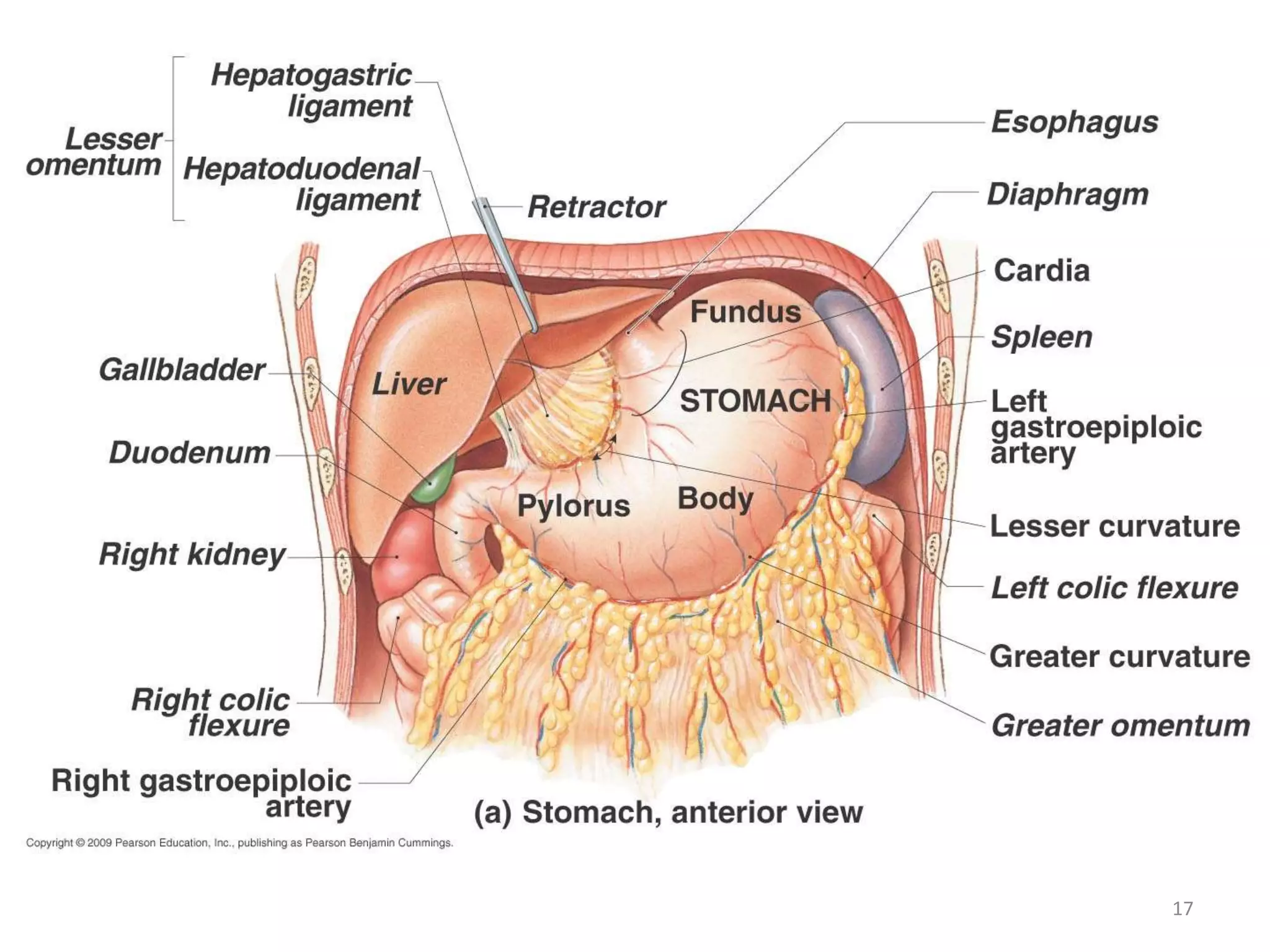
Stomach
• Lies mostly in LUQ
– But pain can be epigastric or
lower
• Just inferior to (below)
diaphragm
• Anterior (in front of) spleen
and pancreas
• Tucked under left lower margin
of liver
• Anchored at both ends but
mobile in between
• Capacity: 1.5 L food; max
capacity 4L (1 gallon)
16
epigastrium
junction
with
esophagus
funnel shaped
contains
pyloric
sphincter
dome
17
Stomach
• J-shaped; widest part of alimentary canal
• Temporary storage and mixing – 4 hours
– Into “chyme”
• Starts food breakdown
– Pepsin (protein-digesting enzyme needing acid
environment)
– HCl (hydrochloric acid) helps kill bacteria
– Stomach tolerates high acid content but esophagus doesn’t
– why it hurts so much when stomach contents refluxes
into esophagus (heartburn; GERD)
• Most nutrients wait until get to small intestine to be
absorbed; exceptions are:
– Water, electrolytes, some drugs like aspirin and alcohol
(absorbed through stomach)
18
Stomach Functions
 Acts as a storage tank for food
 Site of food breakdown
 Chemical breakdown of protein begins
 Delivers chyme (processed food) to the
small intestine
 It secretes intrinsic factor which is
necessary for the absorption of vit.B12
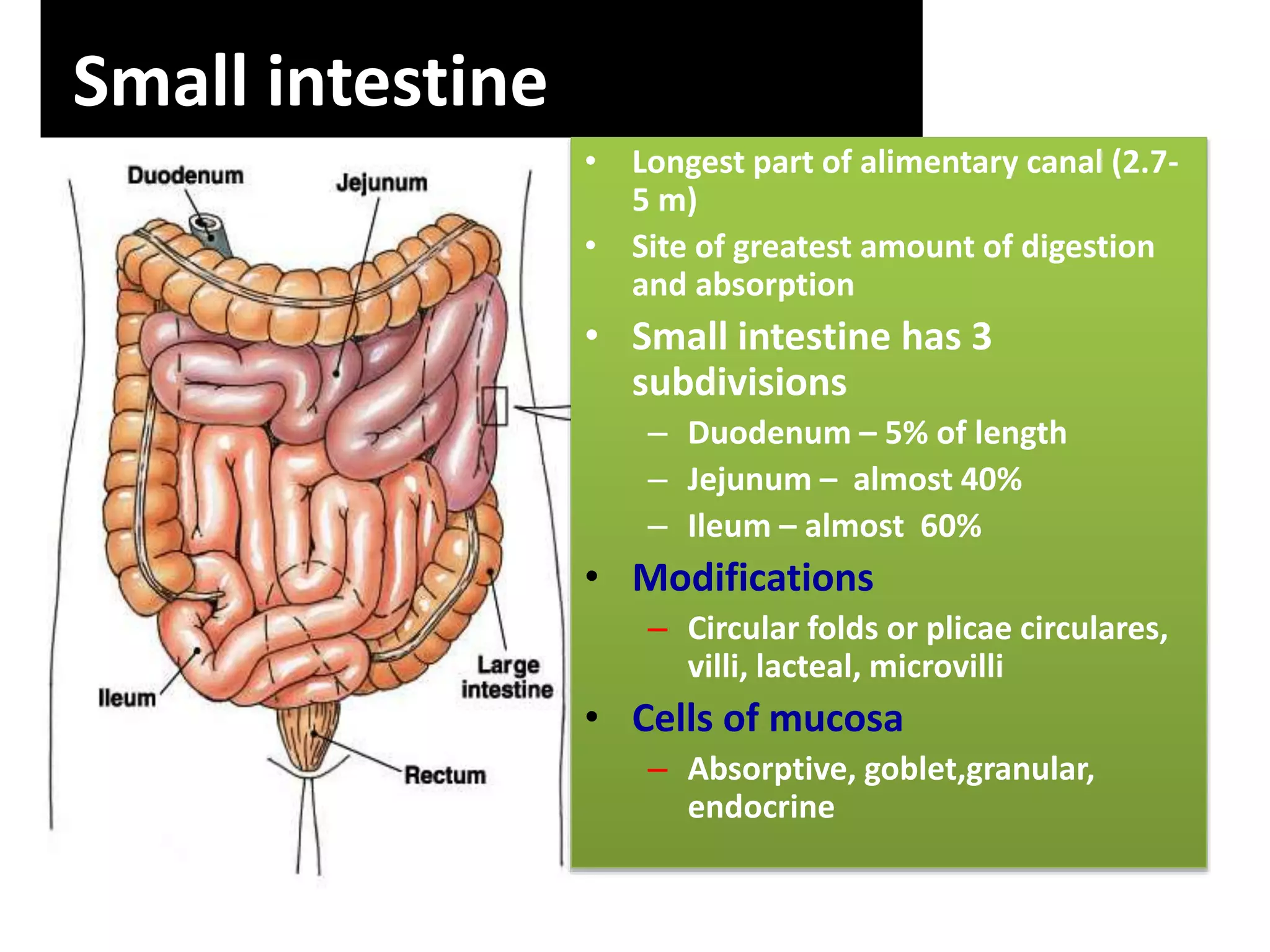
Small intestine
• Longest part of alimentary canal (2.7-
5 m)
• Site of greatest amount of digestion
and absorption
• Small intestine has 3
subdivisions
– Duodenum – 5% of length
– Jejunum – almost 40%
– Ileum – almost 60%
• Modifications
– Circular folds or plicae circulares,
villi, lacteal, microvilli
• Cells of mucosa
– Absorptive, goblet,granular,
endocrine
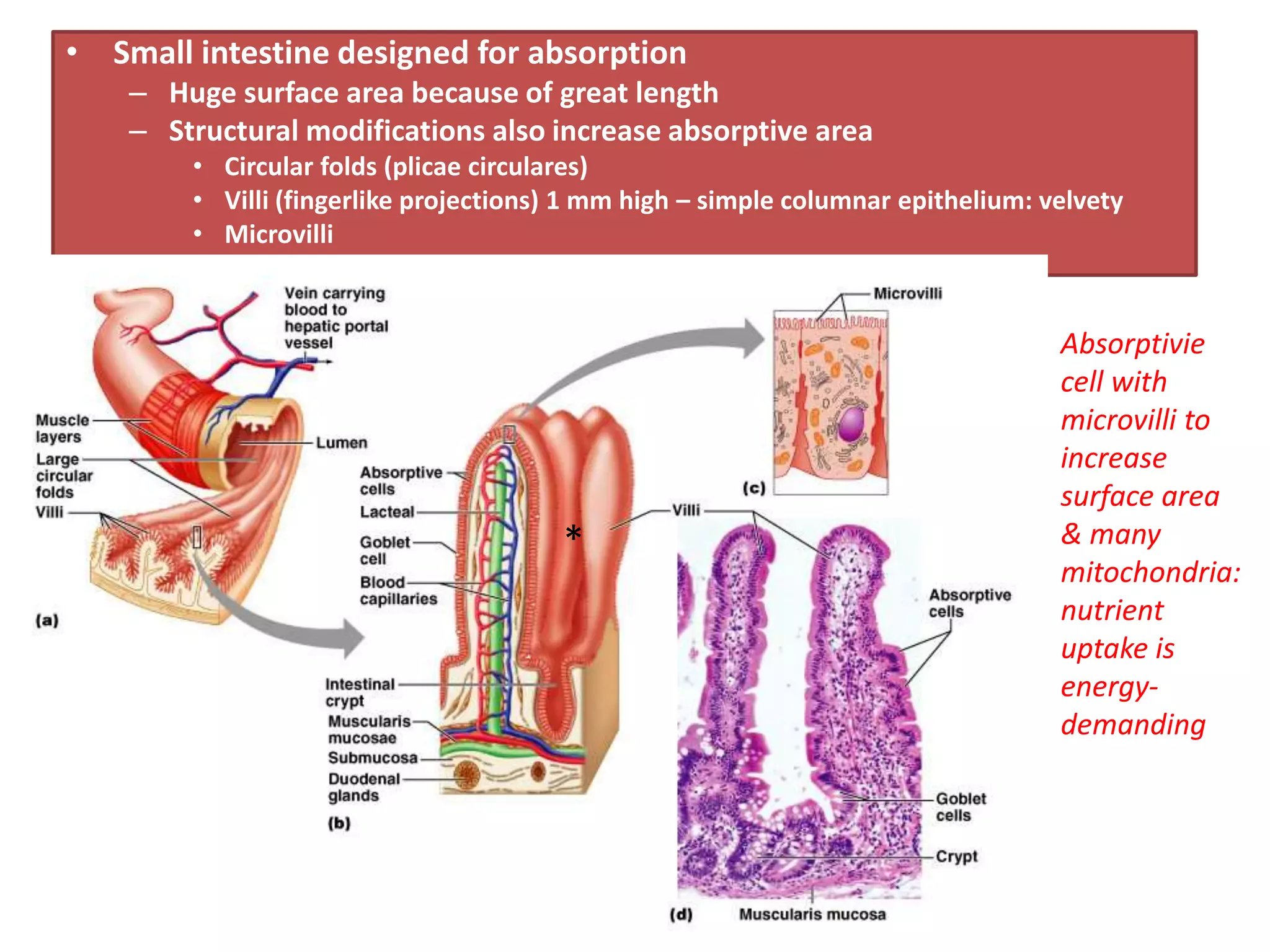
• Small intestine designed for absorption
– Huge surface area because of great length
– Structural modifications also increase absorptive area
• Circular folds (plicae circulares)
• Villi (fingerlike projections) 1 mm high – simple columnar epithelium: velvety
• Microvilli
*
Absorptivie
cell with
microvilli to
increase
surface area
& many
mitochondria:
nutrient
uptake is
energy-
demanding
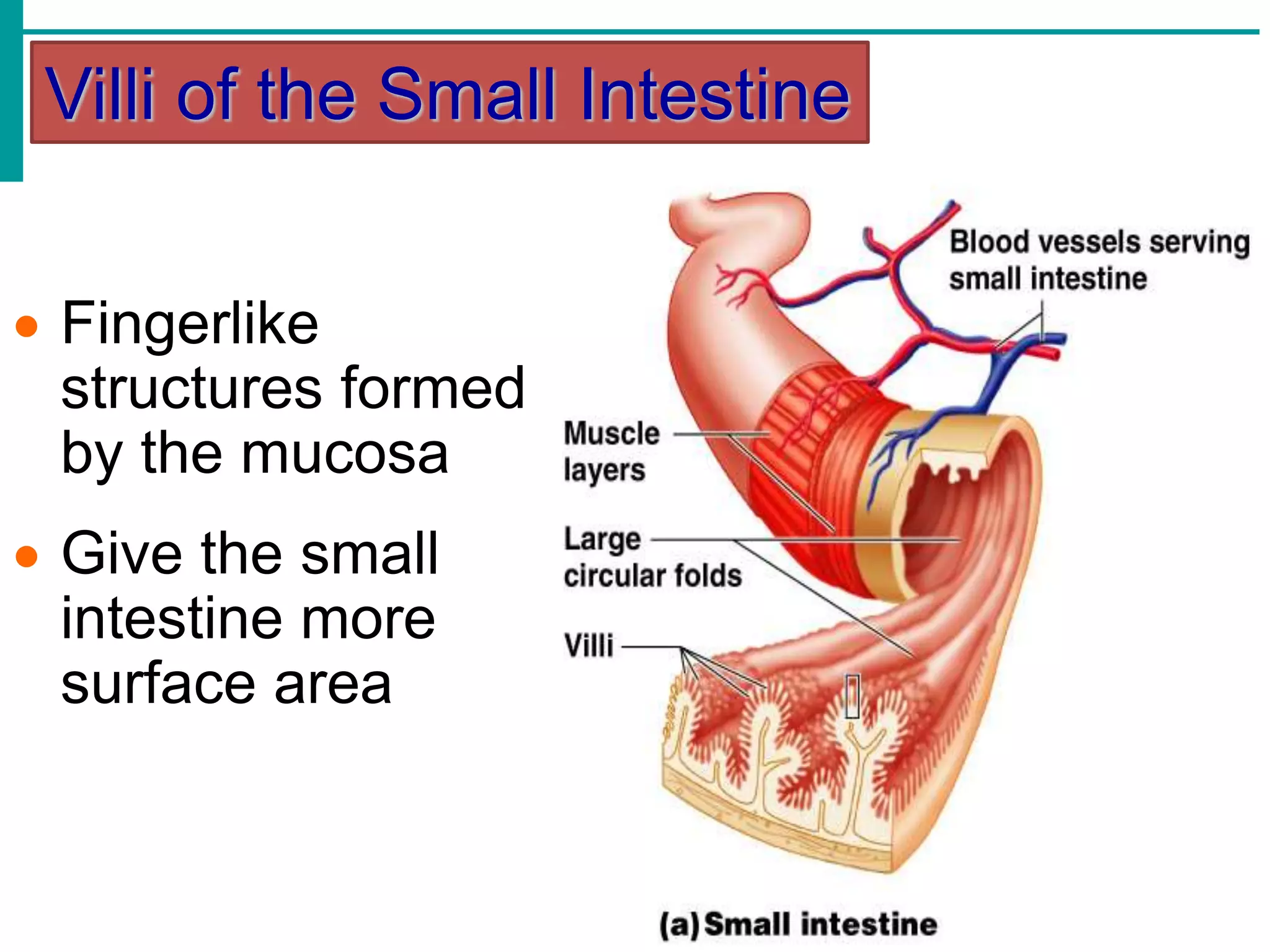
Villi of the Small Intestine
 Fingerlike
structures formed
by the mucosa
 Give the small
intestine more
surface area
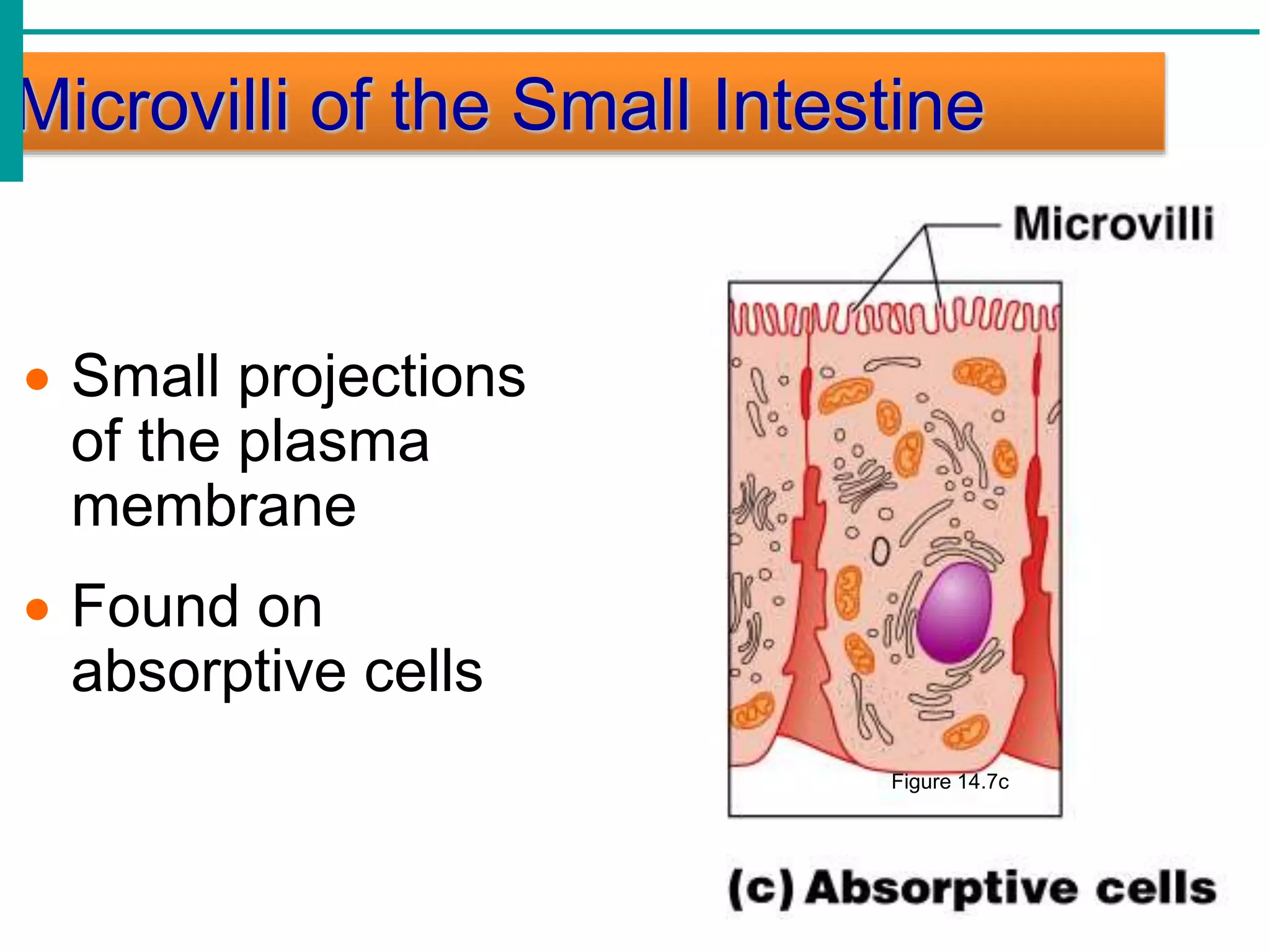
Microvilli of the Small Intestine
 Small projections
of the plasma
membrane
 Found on
absorptive cells
Figure 14.7c
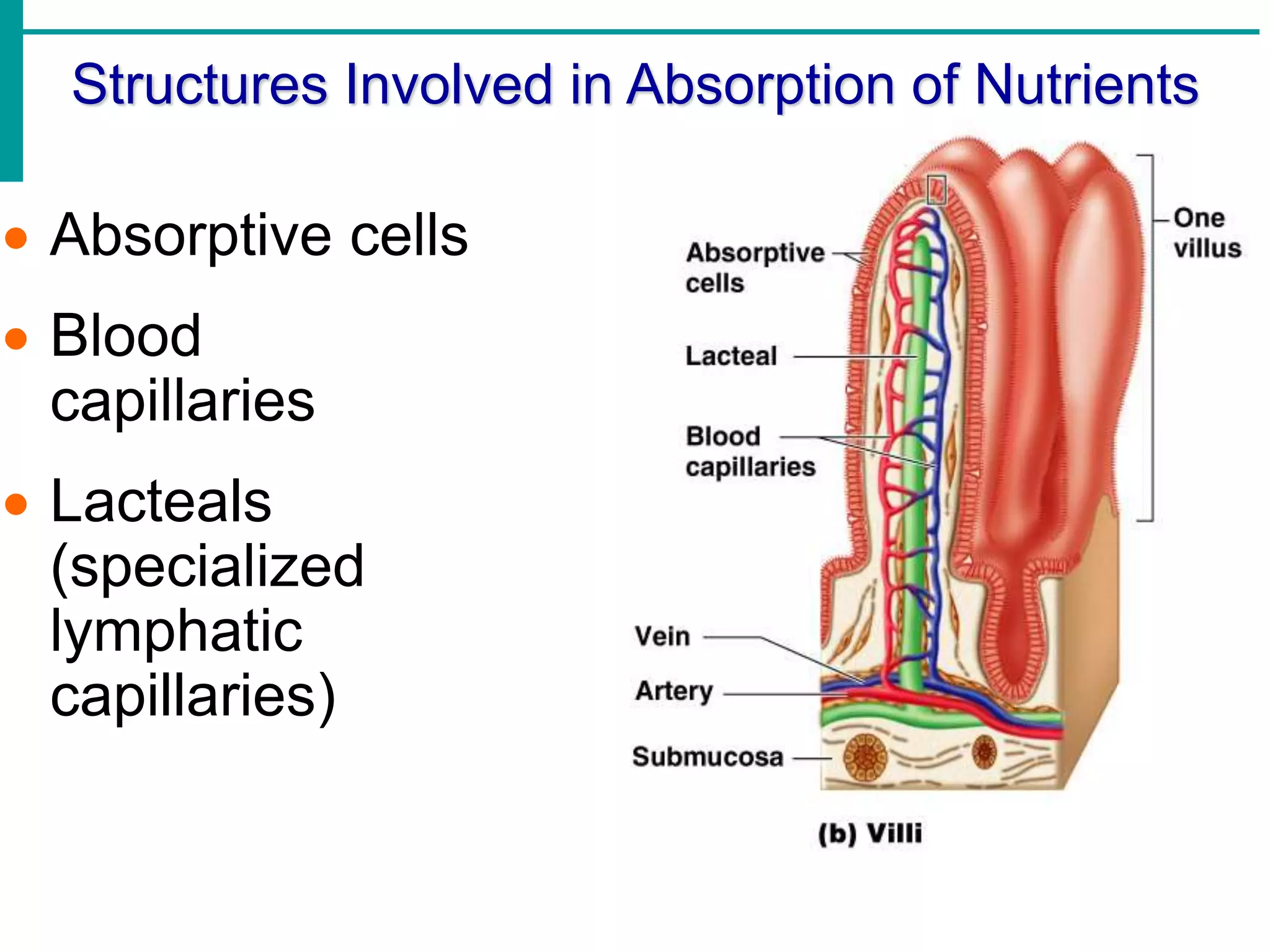
Structures Involved in Absorption of Nutrients
 Absorptive cells
 Blood
capillaries
 Lacteals
(specialized
lymphatic
capillaries)
Digestion in the Small Intestine
Pancreatic enzymes play the major digestive
function
 Help complete digestion of starch (pancreatic
amylase)
 Carry out about half of all protein digestion
(trypsin, etc.)
 Responsible for fat digestion (lipase)
 Digest nucleic acids (nucleases)
 Alkaline content neutralizes acidic chyme
Absorption in the Small Intestine
 Water is absorbed along the length of the small
intestine
 End products of digestion
 Most substances are absorbed by active
transport through cell membranes
 Lipids are absorbed by diffusion
 Substances are transported to the liver by the
hepatic portal vein or lymph
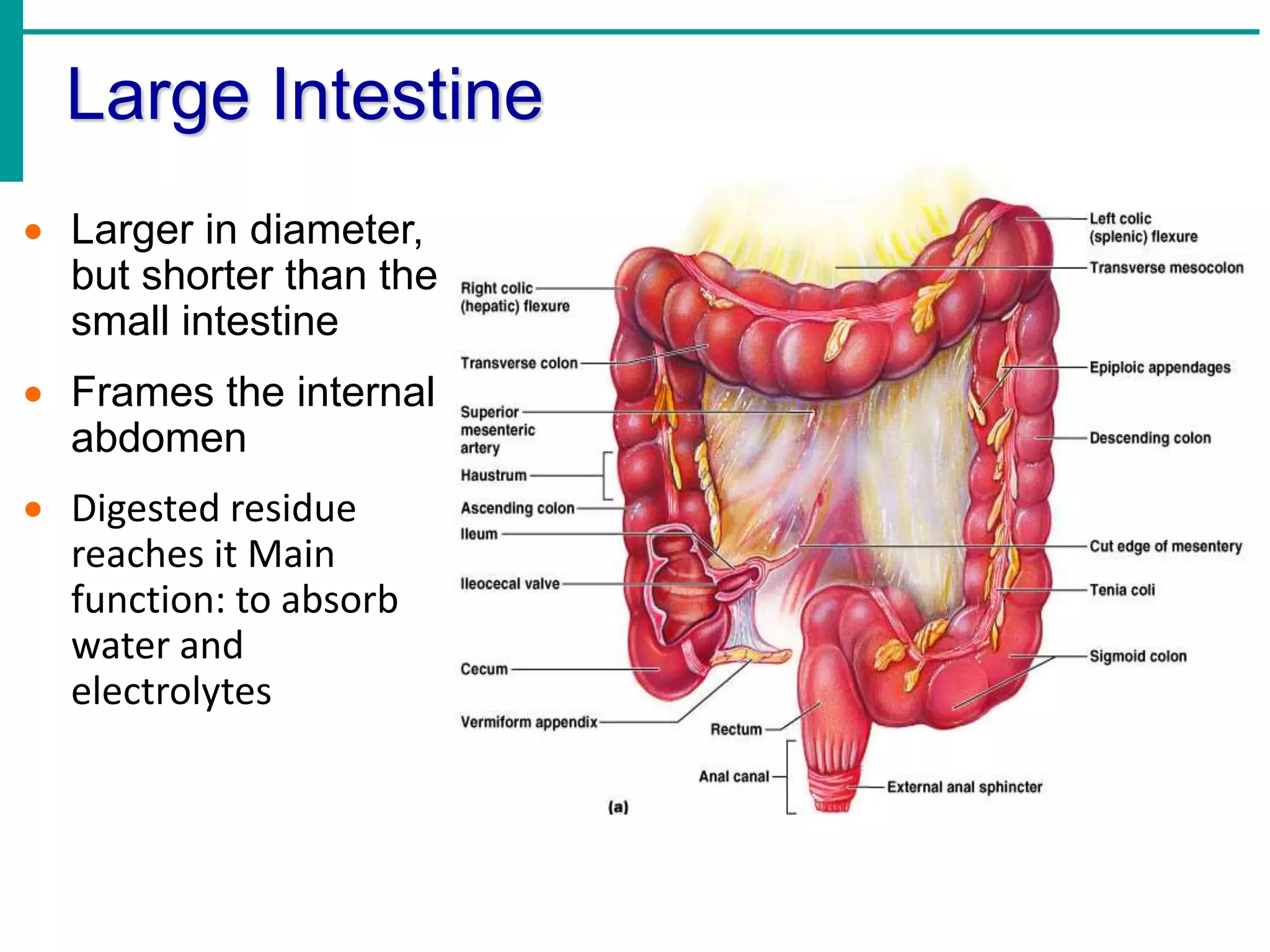
Large Intestine
 Larger in diameter,
but shorter than the
small intestine
 Frames the internal
abdomen
 Digested residue
reaches it Main
function: to absorb
water and
electrolytes
Structures of the Large Intestine
 Cecum – saclike first part of the large intestine
 Appendix
 Accumulation of lymphatic tissue that sometimes becomes
inflamed (appendicitis)
 Hangs from the cecum
 Colon
 Ascending
 Transverse
 Descending
 S-shaped sigmoidal
Rectum = Rectum is area for storage of feces
Leads to the anus, the external opening of the alimentary canal
Defecation
Functions of the Large Intestine
 Absorption of water
 Eliminates indigestible food from the
body as feces
 Does not participate in digestion of food
 Goblet cells produce mucus to act as a
lubricant
Food Breakdown and Absorption in
the Large Intestine
 No digestive enzymes are produced
 Resident bacteria digest remaining
nutrients
Produce some vitamin K and B
Release gases
 Water and vitamins K and B are absorbed
 Remaining materials are eliminated via
feces
Accessory Organs of the Digestive
System
Gallbladder
Liver
Pancreas
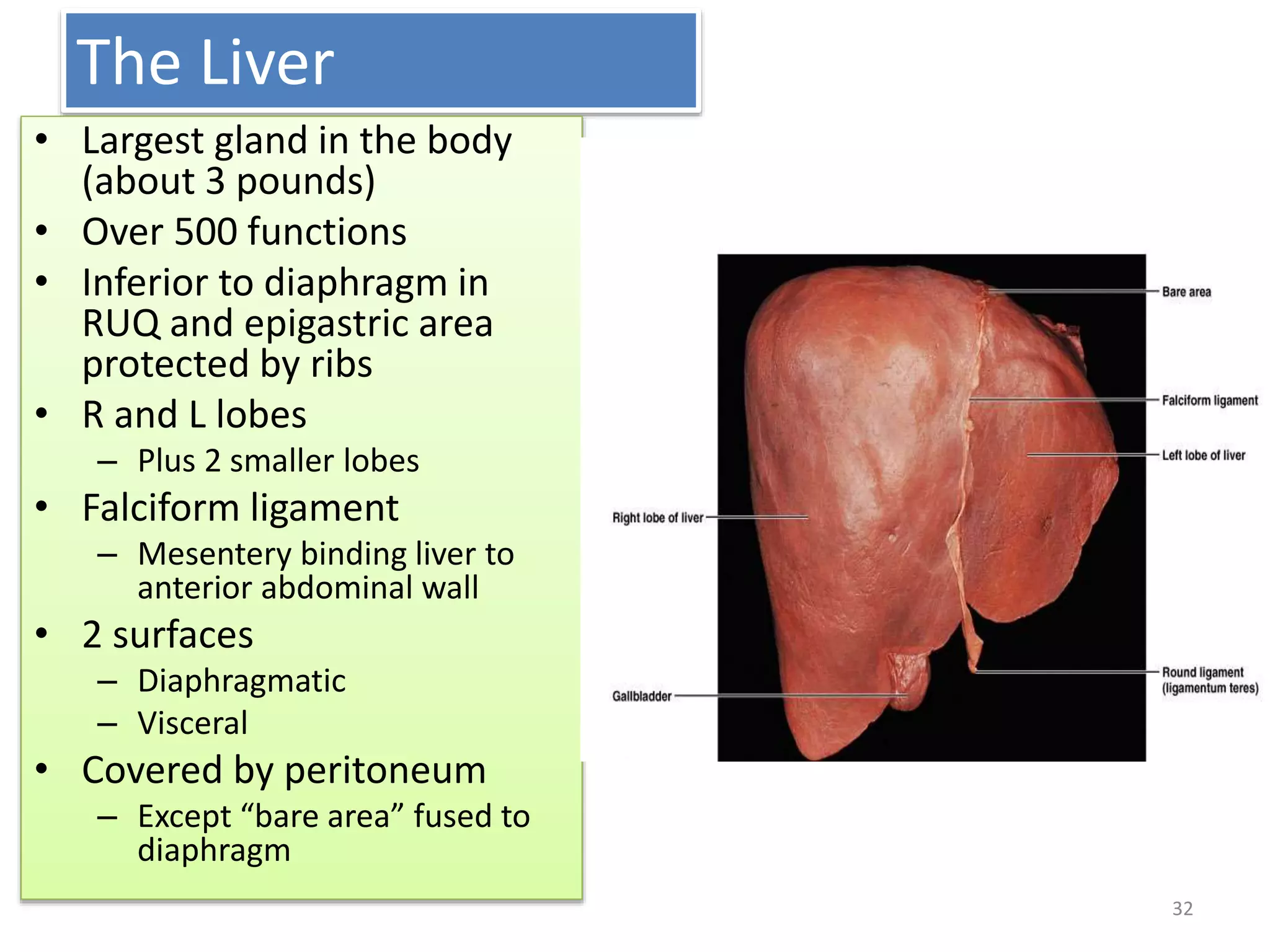
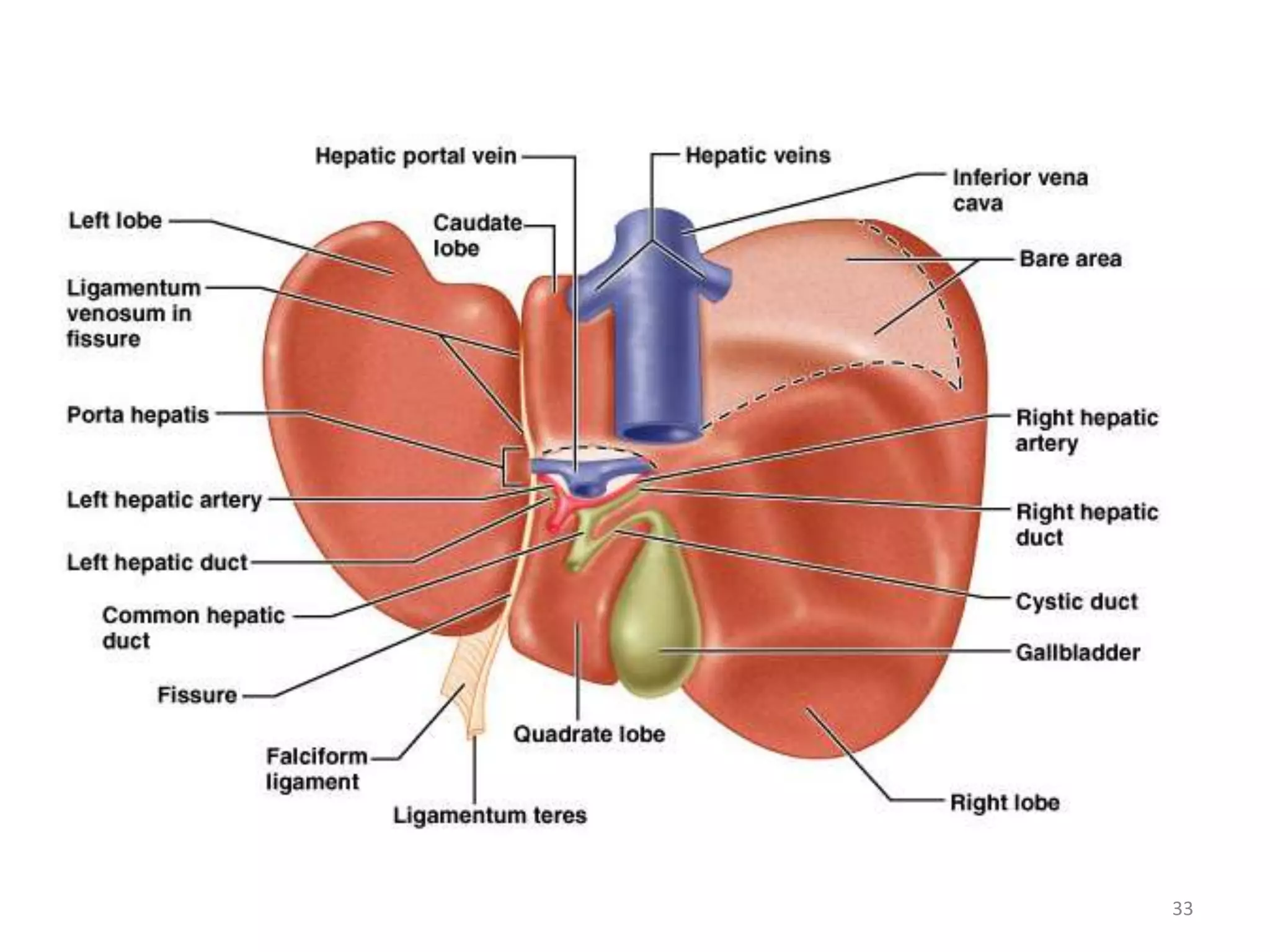
The Liver
• Largest gland in the body
(about 3 pounds)
• Over 500 functions
• Inferior to diaphragm in
RUQ and epigastric area
protected by ribs
• R and L lobes
– Plus 2 smaller lobes
• Falciform ligament
– Mesentery binding liver to
anterior abdominal wall
• 2 surfaces
– Diaphragmatic
– Visceral
• Covered by peritoneum
– Except “bare area” fused to
diaphragm
32
33
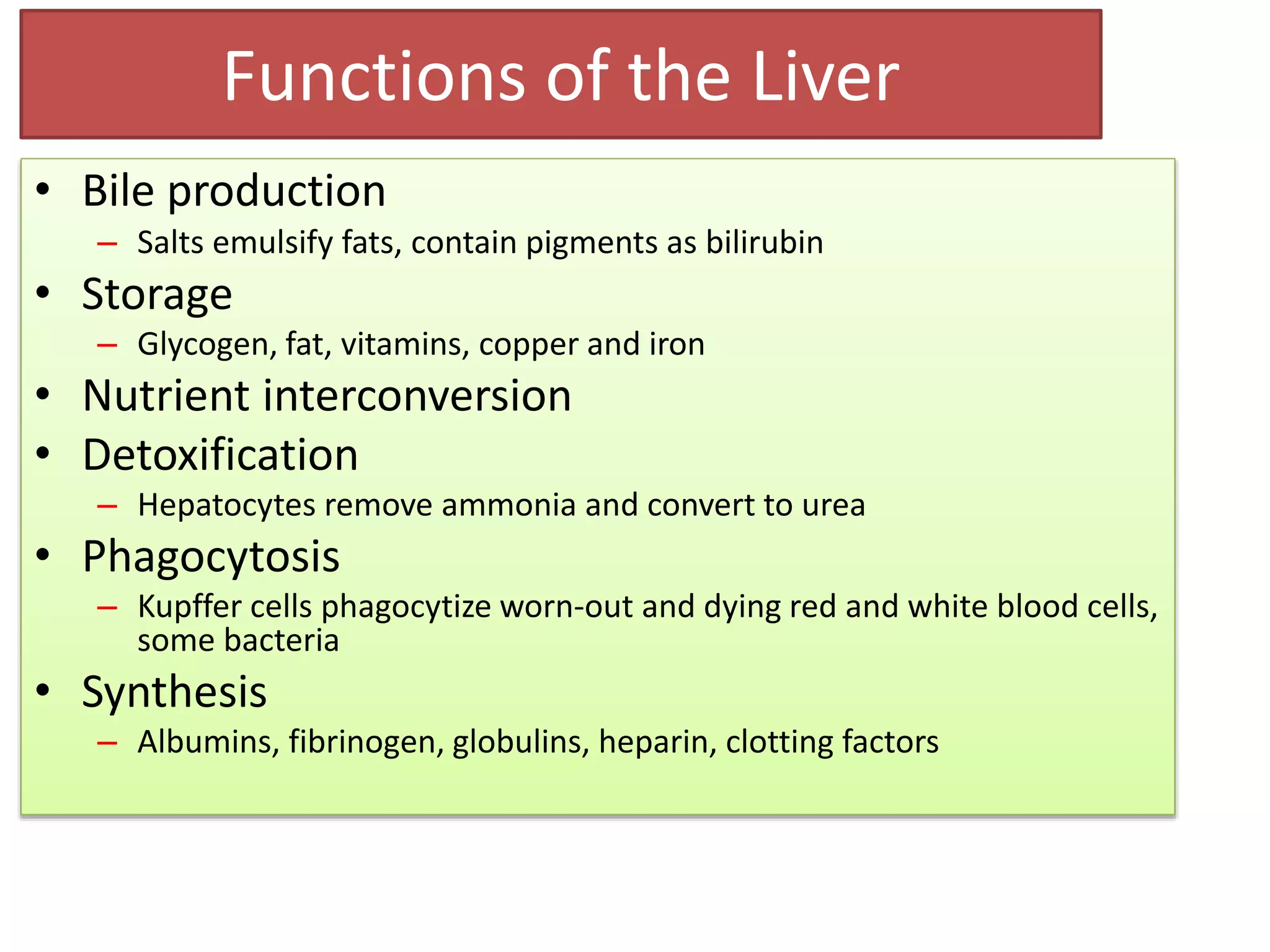
Functions of the Liver
• Bile production
– Salts emulsify fats, contain pigments as bilirubin
• Storage
– Glycogen, fat, vitamins, copper and iron
• Nutrient interconversion
• Detoxification
– Hepatocytes remove ammonia and convert to urea
• Phagocytosis
– Kupffer cells phagocytize worn-out and dying red and white blood cells,
some bacteria
• Synthesis
– Albumins, fibrinogen, globulins, heparin, clotting factors
Role of the Liver in Metabolism
 Several roles in digestion
 Detoxifies drugs and alcohol
 Degrades hormones
 Produce cholesterol, blood proteins
(albumin and clotting proteins)
 Plays a central role in metabolism
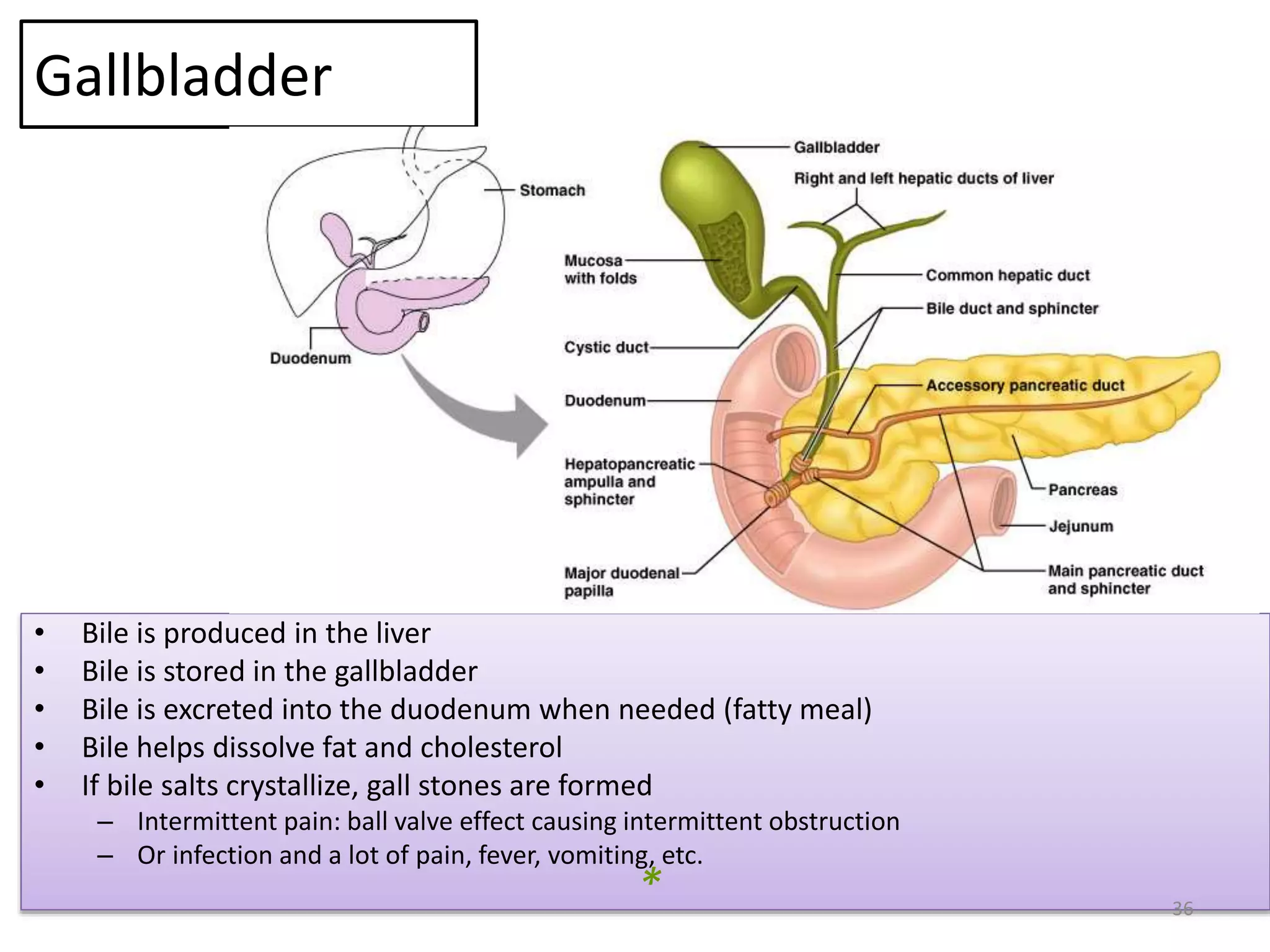
Gallbladder
• Bile is produced in the liver
• Bile is stored in the gallbladder
• Bile is excreted into the duodenum when needed (fatty meal)
• Bile helps dissolve fat and cholesterol
• If bile salts crystallize, gall stones are formed
– Intermittent pain: ball valve effect causing intermittent obstruction
– Or infection and a lot of pain, fever, vomiting, etc.
36
*
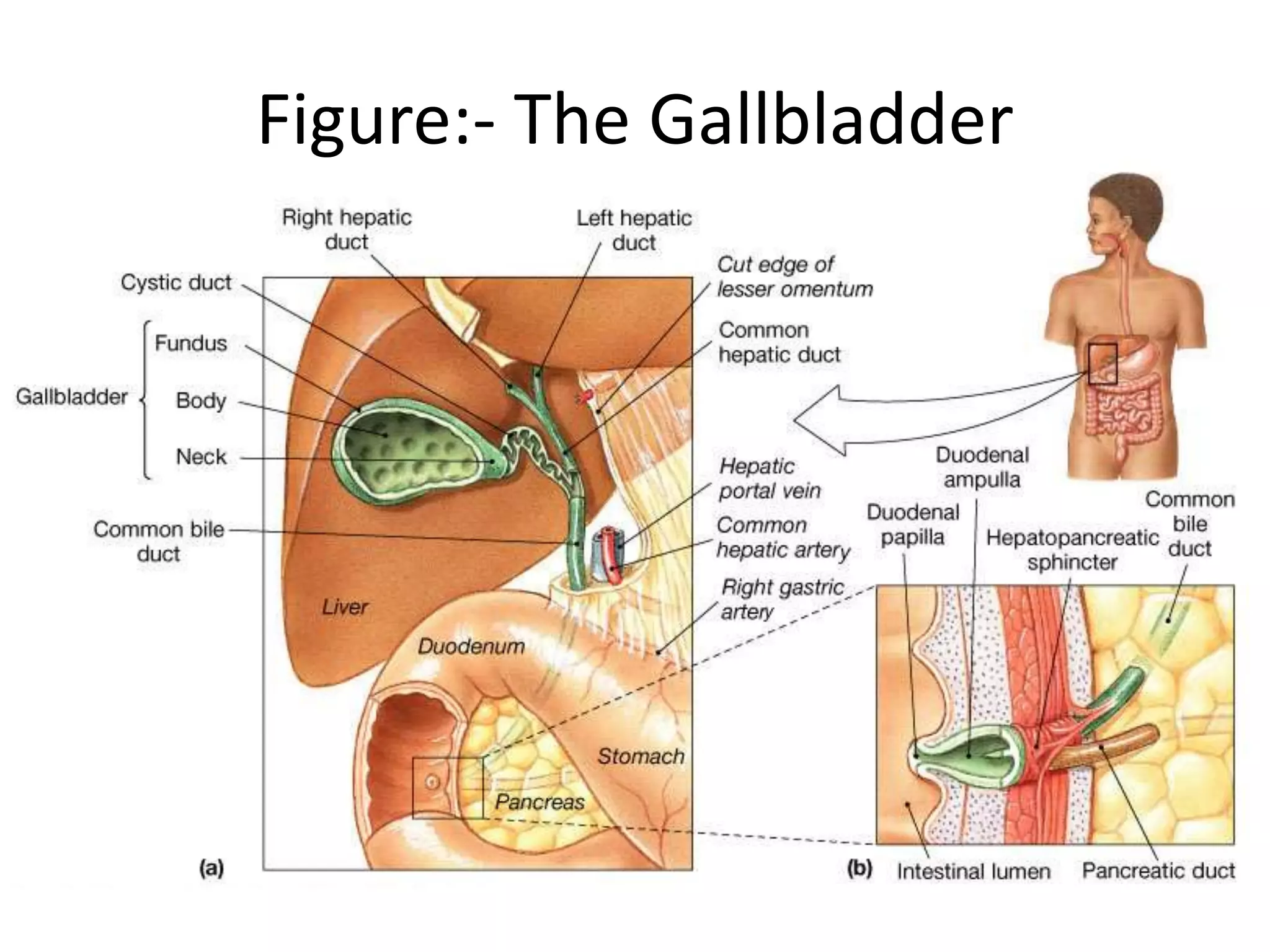
Figure:- The Gallbladder
Pancreas
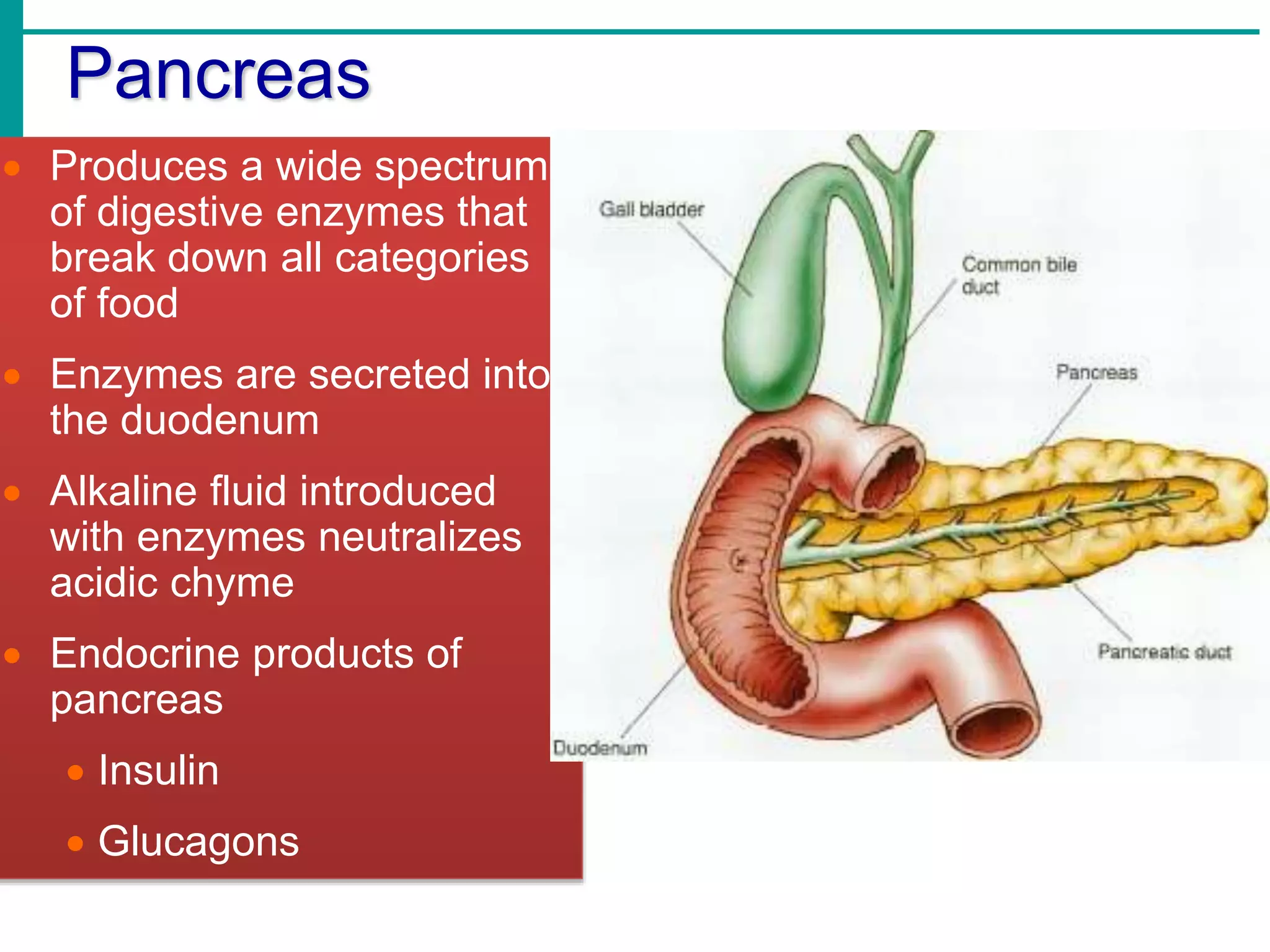
 Produces a wide spectrum
of digestive enzymes that
break down all categories
of food
 Enzymes are secreted into
the duodenum
 Alkaline fluid introduced
with enzymes neutralizes
acidic chyme
 Endocrine products of
pancreas
 Insulin
 Glucagons
Pancreas
• Anatomy
– Endocrine
• Pancreatic islets produce
insulin and glucagon
– Exocrine
• Acini produce digestive
enzymes
– Regions: Head, body, tail
• Secretions
– Pancreatic juice
(exocrine)
• Trypsin
• Chymotrypsin
• Carboxypeptidase
• Pancreatic amylase
• Pancreatic lipases
• Enzymes that reduce DNA
and ribonucleic acid
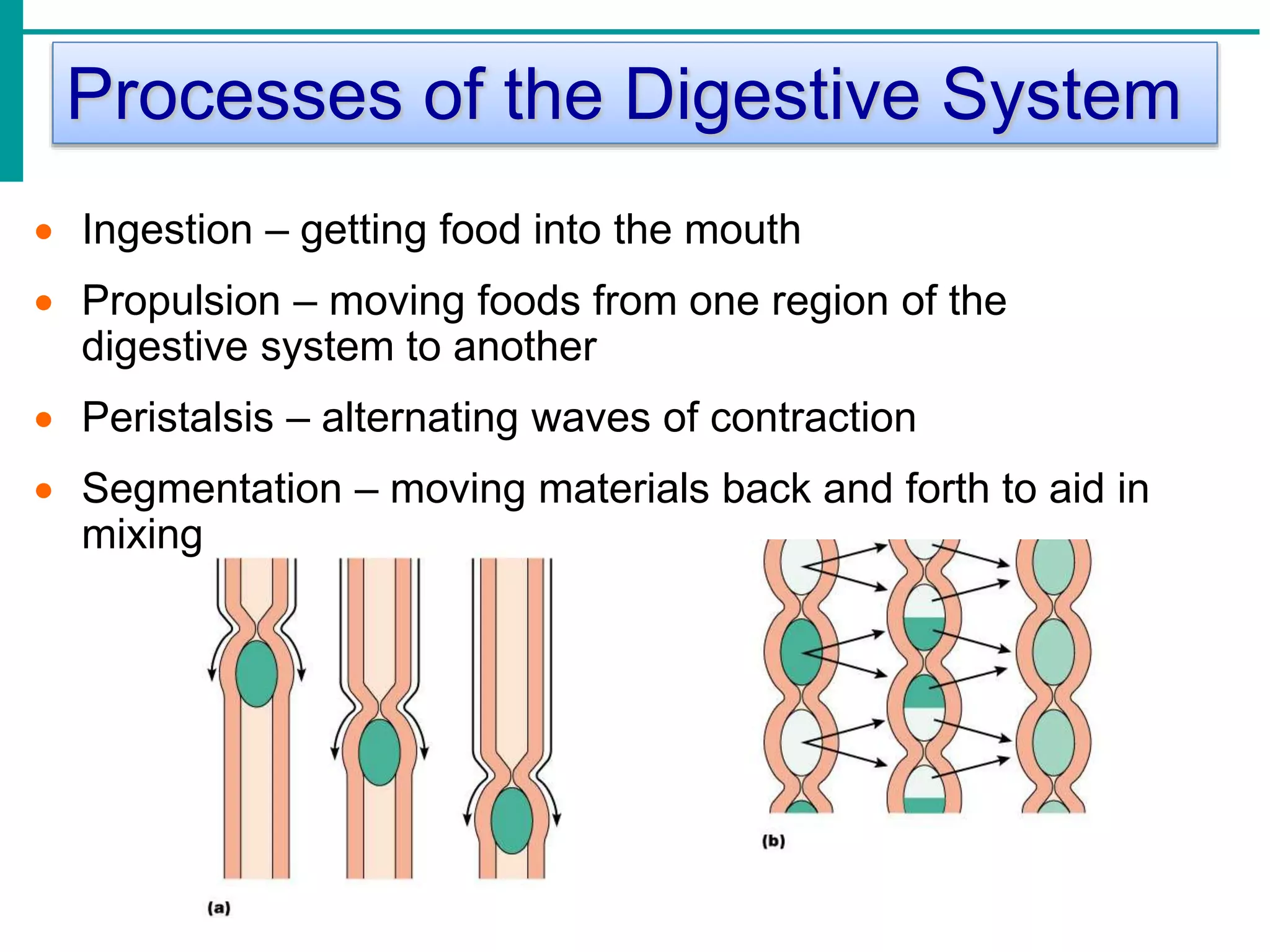
Processes of the Digestive System
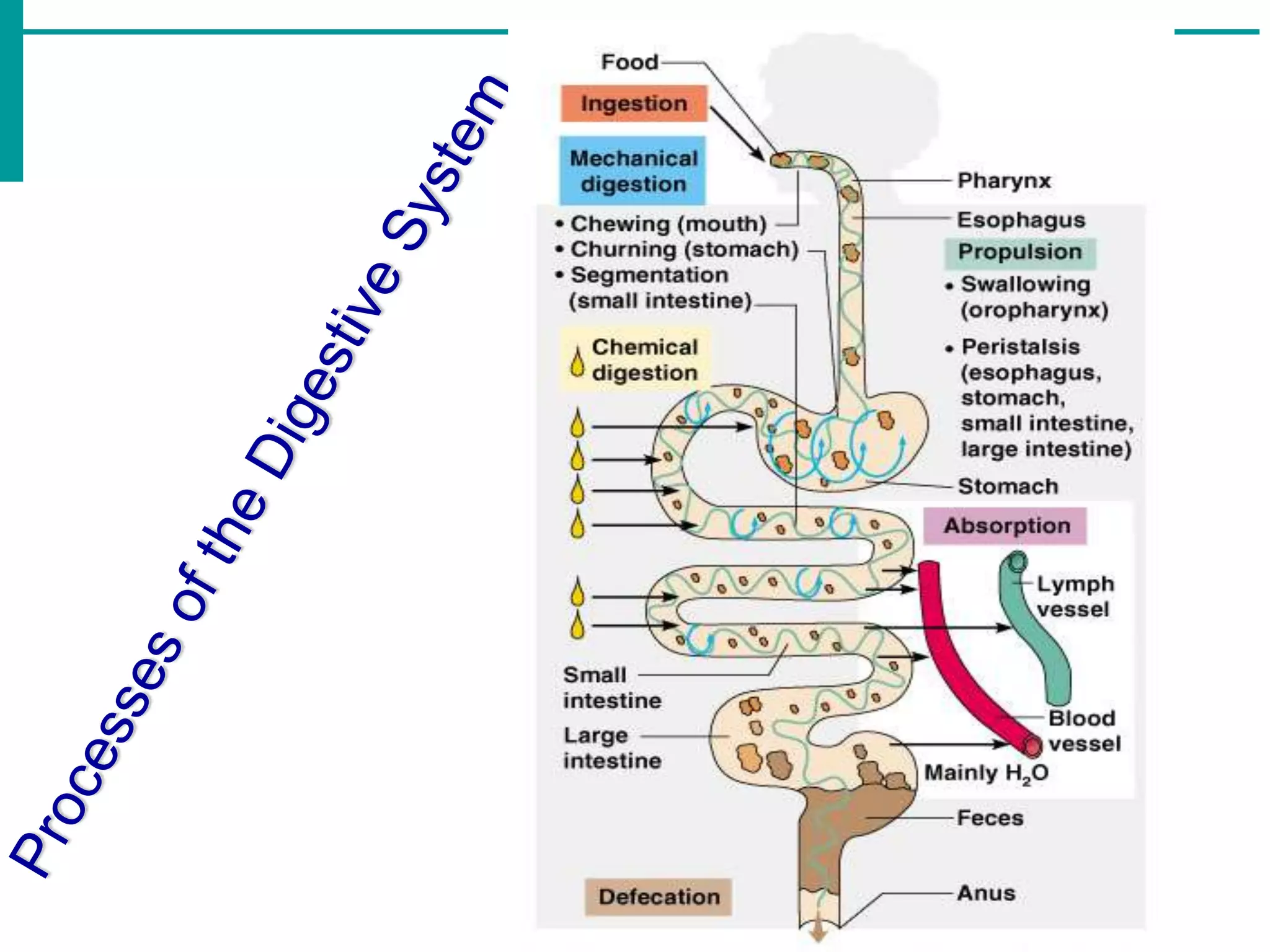
 Ingestion – getting food into the mouth
 Propulsion – moving foods from one region of the
digestive system to another
 Peristalsis – alternating waves of contraction
 Segmentation – moving materials back and forth to aid in
mixing
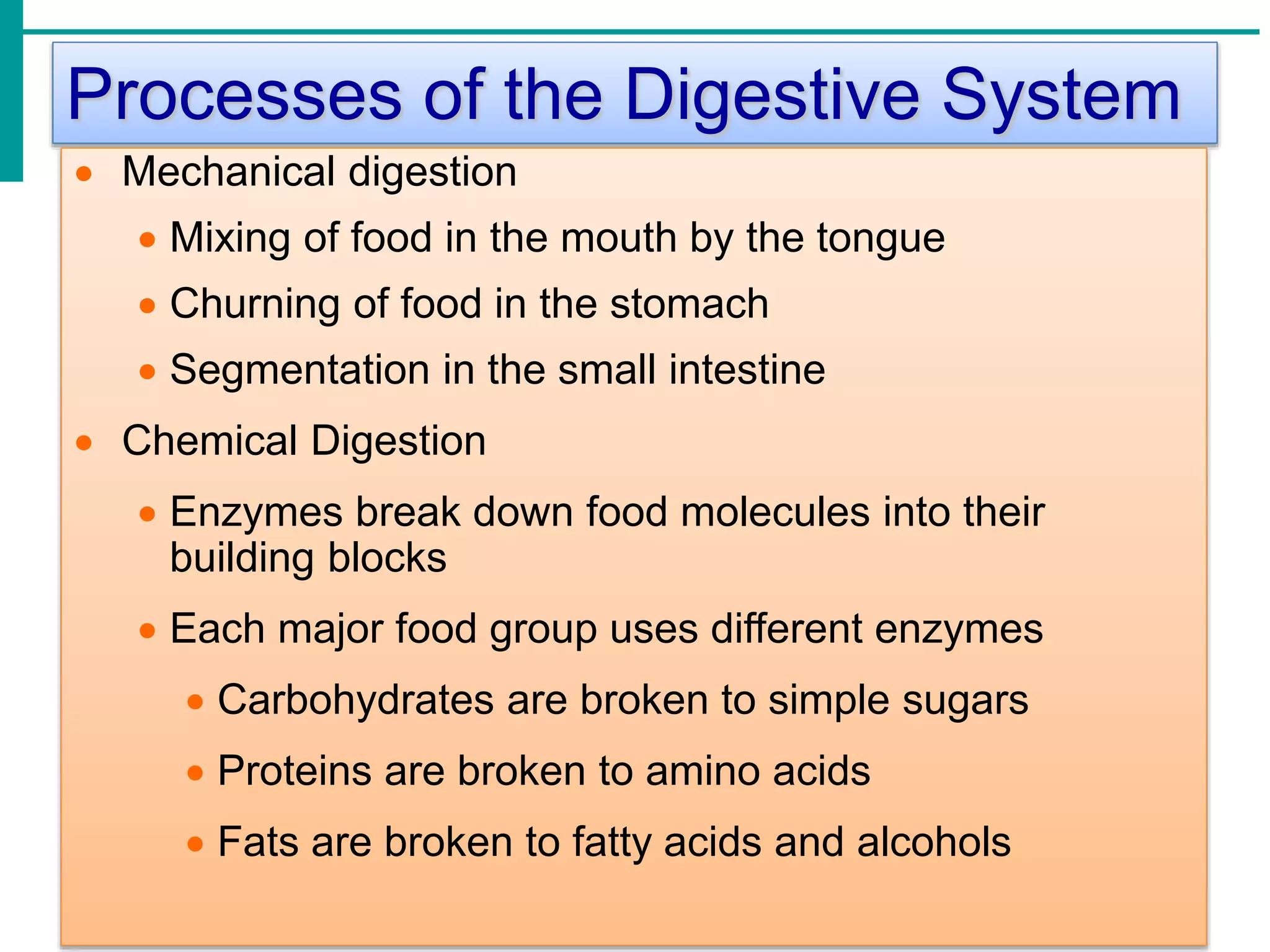
Processes of the Digestive System
 Mechanical digestion
 Mixing of food in the mouth by the tongue
 Churning of food in the stomach
 Segmentation in the small intestine
 Chemical Digestion
 Enzymes break down food molecules into their
building blocks
 Each major food group uses different enzymes
 Carbohydrates are broken to simple sugars
 Proteins are broken to amino acids
 Fats are broken to fatty acids and alcohols
Processes of the Digestive System
 Absorption
End products of digestion are absorbed in
the blood or lymph
Food must enter mucosal cells and then
into blood or lymph capillaries
 Defecation
Elimination of indigestible substances as
feces
DISORDERS OF THE
GASTROINTESTINAL SYSTEM
Disorders of the upper GI system
Disorders affecting Ingestion
• ANOREXIA: lack of appetite, could be from emotional or
physical factors
• lab tests may be done to assess nutritional status
• Medical treatment:supplements may be ordered, TPN or
enteral feedings
• Nursing Interventions:
– oral hygiene, clean room, determine cause of
nausea and treat, include family and
friends(socialization), respect likes and dislikes,
education
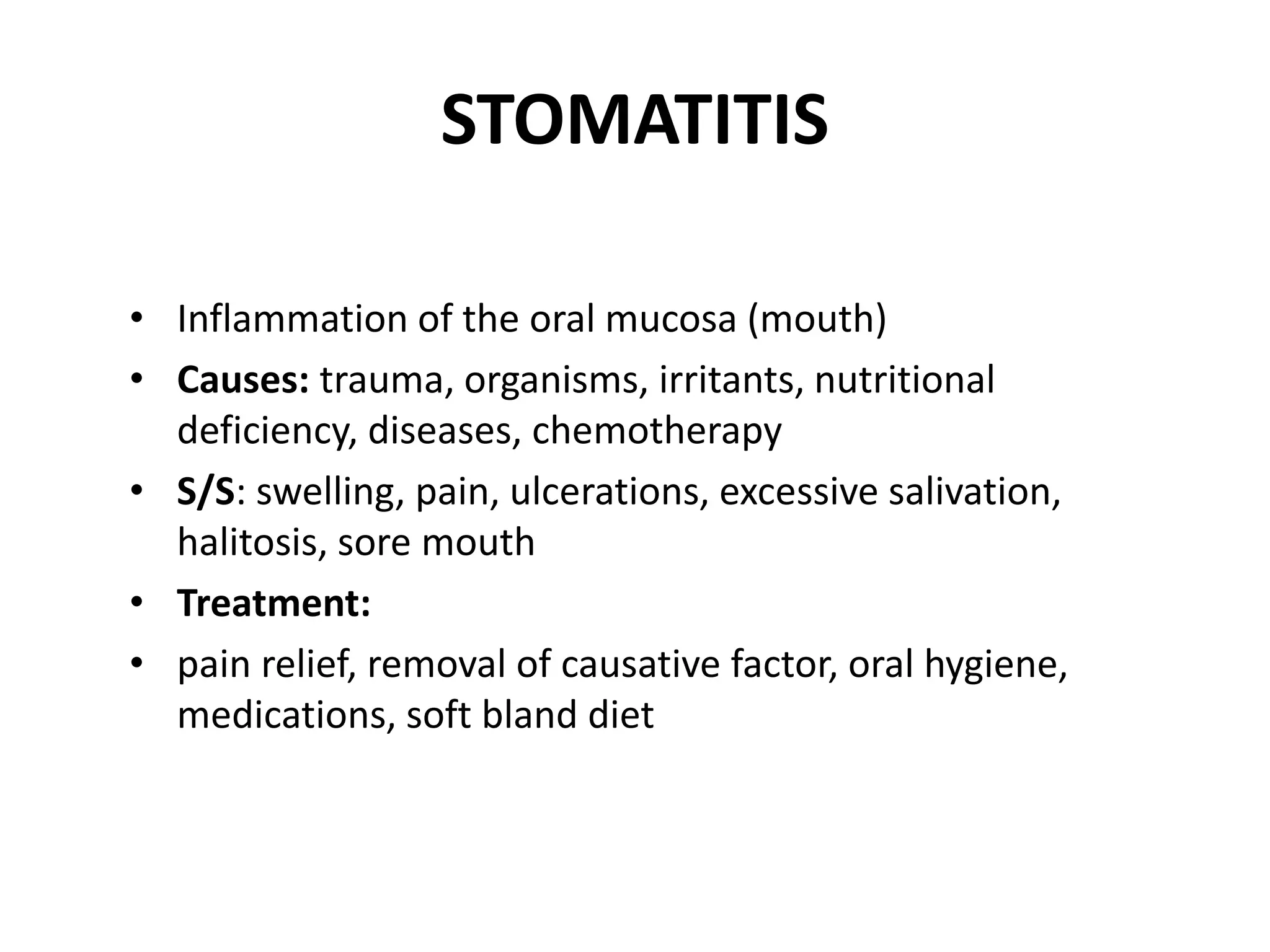
STOMATITIS
• Inflammation of the oral mucosa (mouth)
• Causes: trauma, organisms, irritants, nutritional
deficiency, diseases, chemotherapy
• S/S: swelling, pain, ulcerations, excessive salivation,
halitosis, sore mouth
• Treatment:
• pain relief, removal of causative factor, oral hygiene,
medications, soft bland diet
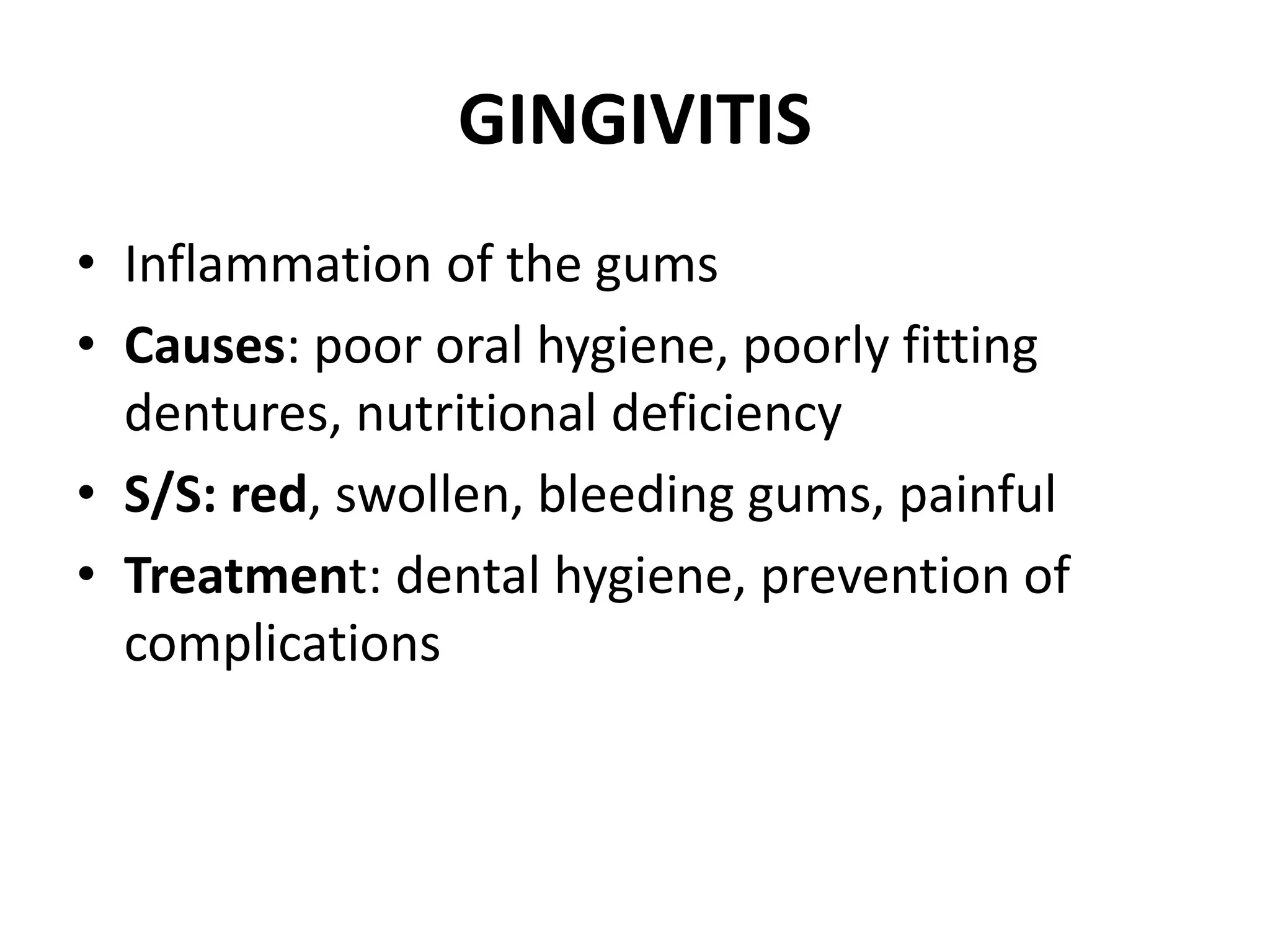
GINGIVITIS
• Inflammation of the gums
• Causes: poor oral hygiene, poorly fitting
dentures, nutritional deficiency
• S/S: red, swollen, bleeding gums, painful
• Treatment: dental hygiene, prevention of
complications
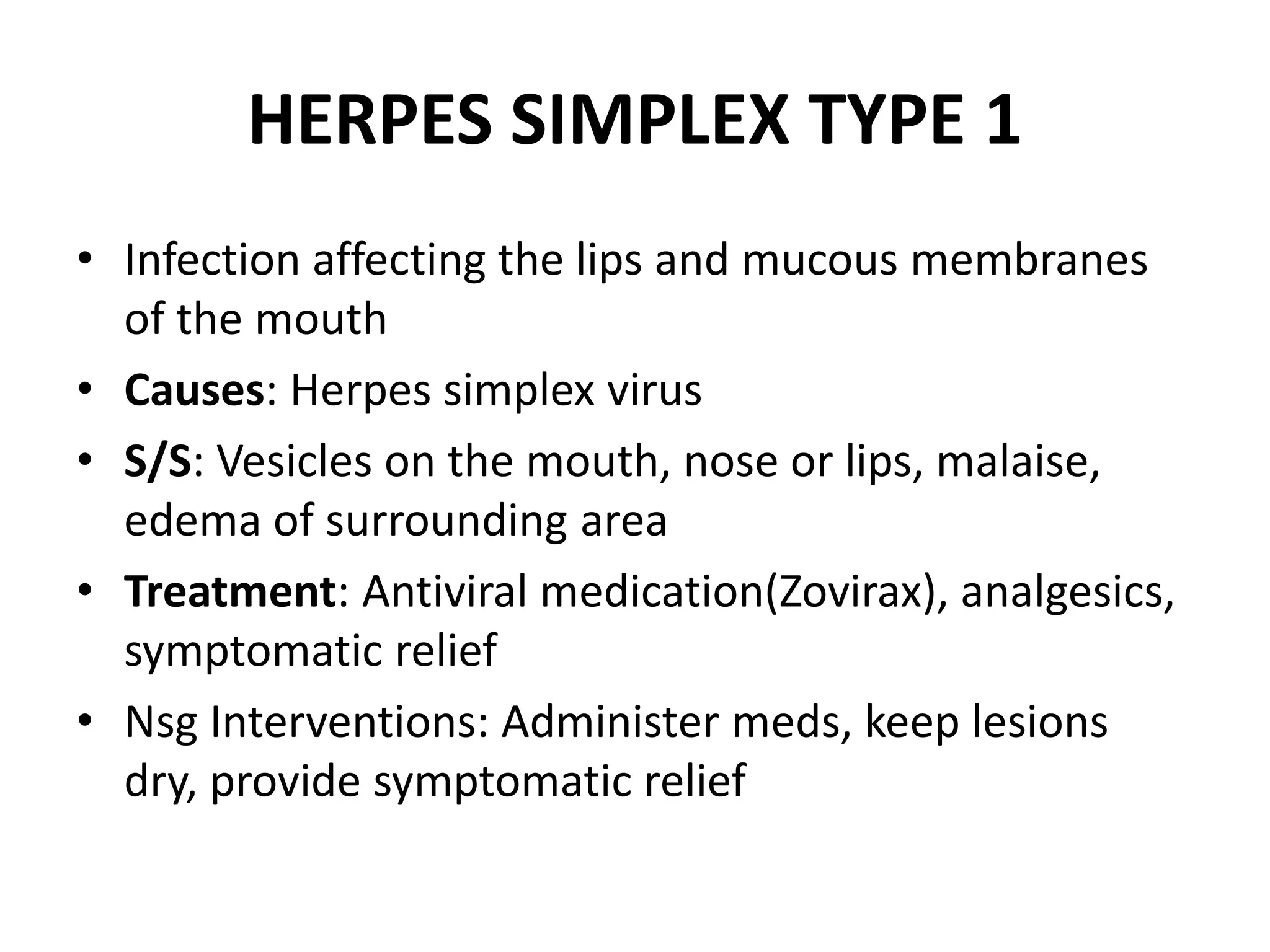
HERPES SIMPLEX TYPE 1
• Infection affecting the lips and mucous membranes
of the mouth
• Causes: Herpes simplex virus
• S/S: Vesicles on the mouth, nose or lips, malaise,
edema of surrounding area
• Treatment: Antiviral medication(Zovirax), analgesics,
symptomatic relief
• Nsg Interventions: Administer meds, keep lesions
dry, provide symptomatic relief
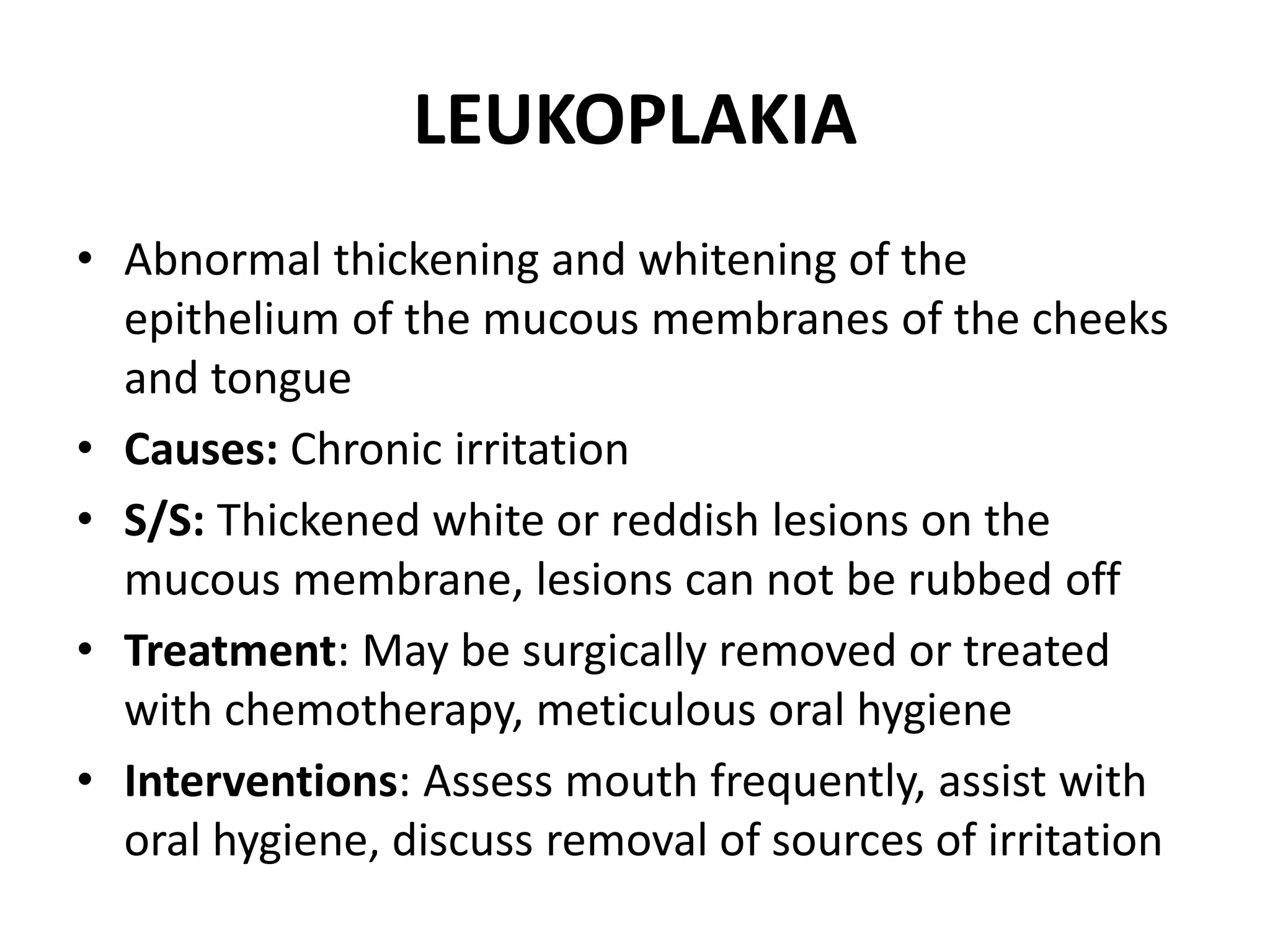
LEUKOPLAKIA
• Abnormal thickening and whitening of the
epithelium of the mucous membranes of the cheeks
and tongue
• Causes: Chronic irritation
• S/S: Thickened white or reddish lesions on the
mucous membrane, lesions can not be rubbed off
• Treatment: May be surgically removed or treated
with chemotherapy, meticulous oral hygiene
• Interventions: Assess mouth frequently, assist with
oral hygiene, discuss removal of sources of irritation
ORAL CANCER
• Malignant lesions may develop on the lips, oral cavity, tongue
and pharynx. Generally squamous cell carcinomas
• Causes: high alcohol consumption, tobacco use, external
irritants
• S/S: Leukoplakia, swelling, edema, numbness, pain
• Diagnosis: biopsy
• Treatment:
– Surgery
– Radiation or chemotherapy
• depends on the size and location and the lesion
• Interventions: consult MD for special mouth care, monitor
respiratory status, keep HOB elevated, administer pain med,
assess ability to swallow and talk, assess for infection at
incision site, education.
ESOPHAGITIS
• Inflammation or irritation of the esophagus
• Causes: Reflux of stomach contents, irritants, fungal
infections, trauma, malignancy, intubation
• S/S: heartburn, pain, dysphagia
• Treatment: treat underlying cause
• Interventions: soft bland diet, administer meds,
elevate HOB, observe for complications
NAUSEA AND VOMITING
• Nausea: unpleasant sensation usually preceding vomiting,
may have abdominal pain, pallor, sweating, clammy skin
• Causes: irritating food, infection, radiation, drugs,
hormonal changes, surgery, inner ear disorders, distention
of the GI tract
• Vomiting: forceful expulsions of stomach contents through
the mouth. Occurs when vomiting reflex in the brain is
stimulated.
• Projectile vomiting- is forceful ejection of stomach
contents.
• Regurgitation- gentle ejection of stomach contents without
nausea or retching
Complications and Treatment
• May lead to dehydration, metabolic
alkalosis, aspiration
• Treatment: Antiemetics( Phenergan,
Dramamine, Scopolamine patch Reglan), IV
fluids, NG tube, TPN
• Nursing care: through assessment, keep
patient comfortable, offer liquids, position
on side, suction setup in the room
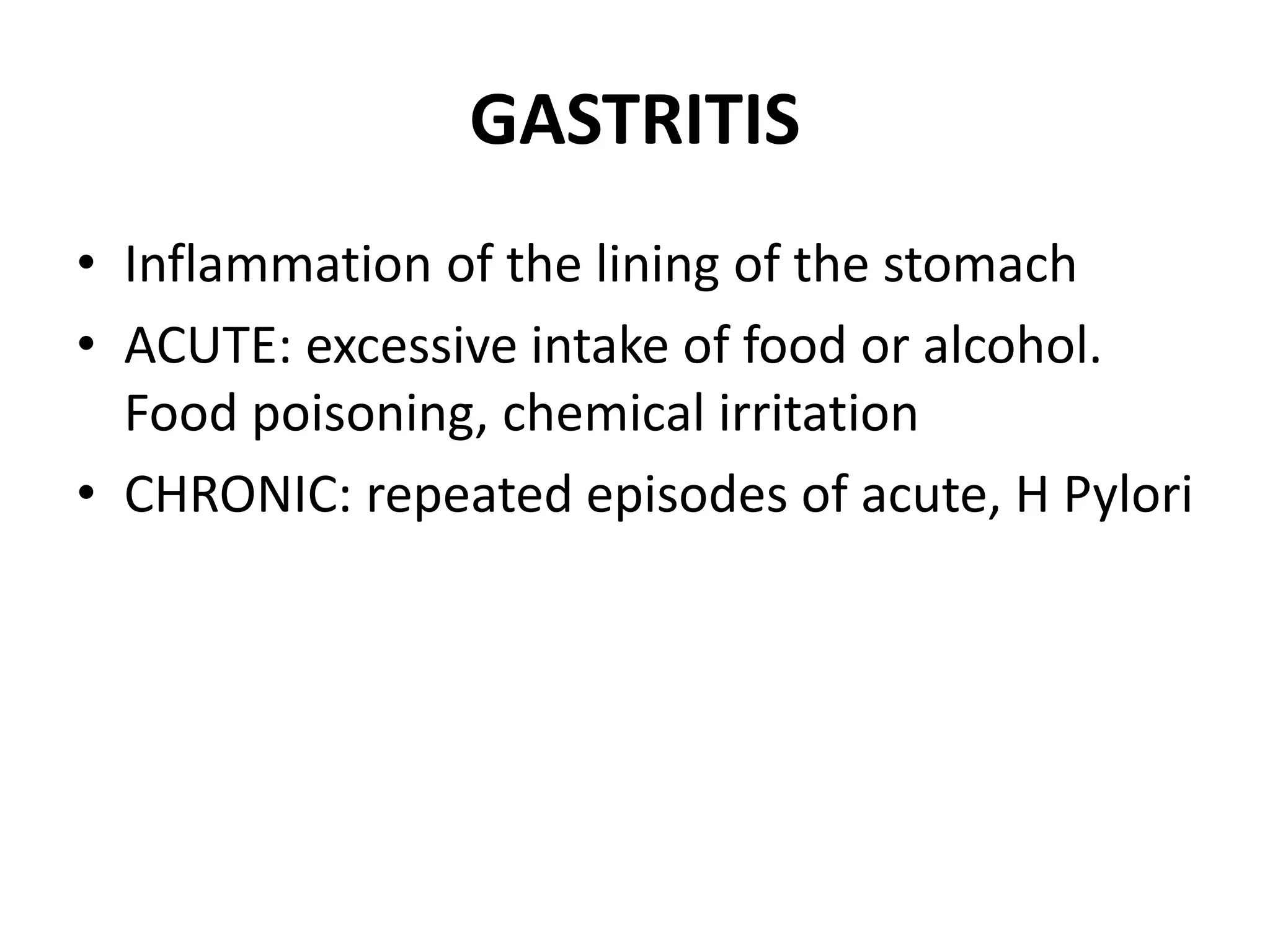
GASTRITIS
• Inflammation of the lining of the stomach
• ACUTE: excessive intake of food or alcohol.
Food poisoning, chemical irritation
• CHRONIC: repeated episodes of acute, H Pylori
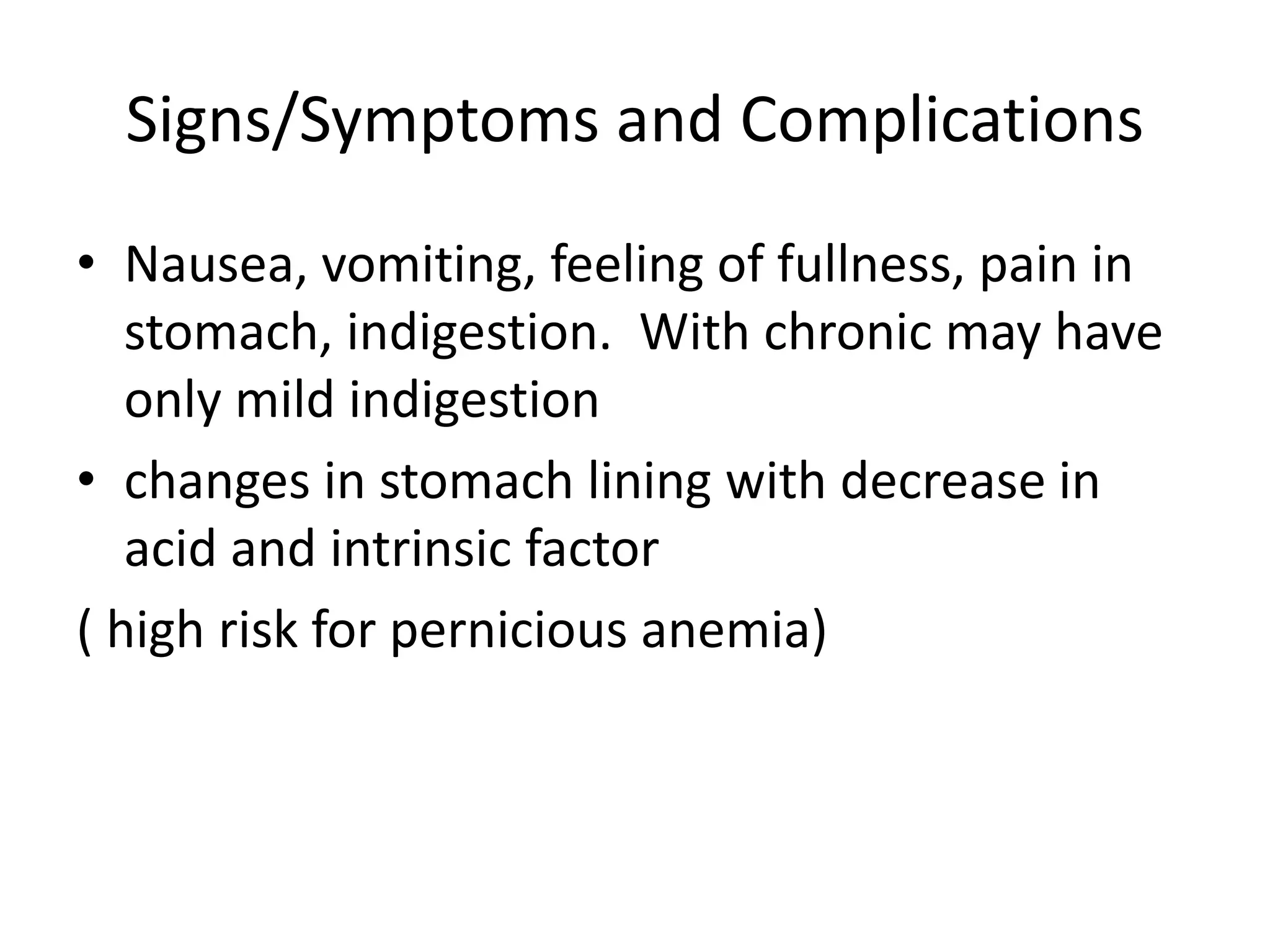
Signs/Symptoms and Complications
• Nausea, vomiting, feeling of fullness, pain in
stomach, indigestion. With chronic may have
only mild indigestion
• changes in stomach lining with decrease in
acid and intrinsic factor
( high risk for pernicious anemia)
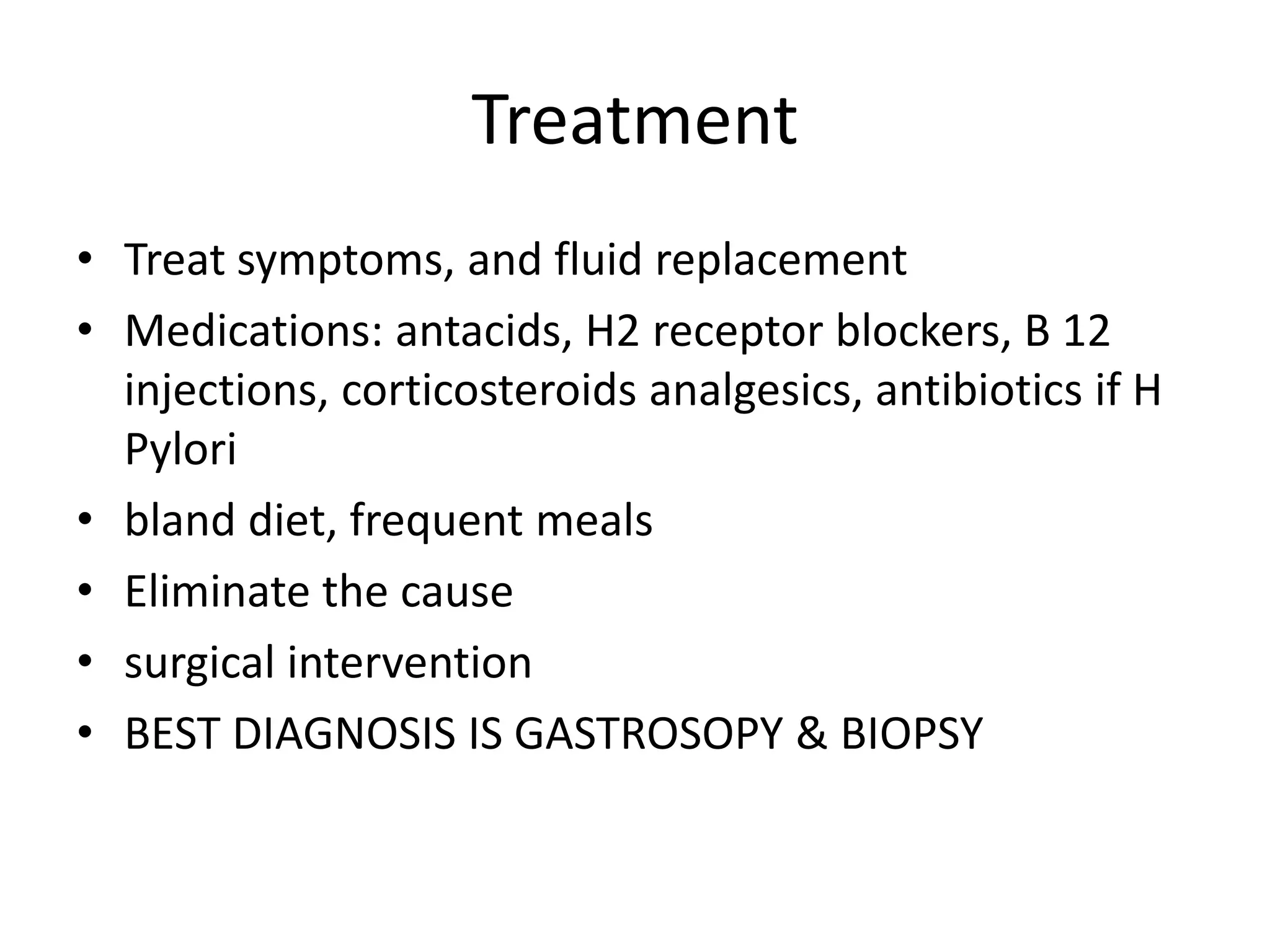
Treatment
• Treat symptoms, and fluid replacement
• Medications: antacids, H2 receptor blockers, B 12
injections, corticosteroids analgesics, antibiotics if H
Pylori
• bland diet, frequent meals
• Eliminate the cause
• surgical intervention
• BEST DIAGNOSIS IS GASTROSOPY & BIOPSY
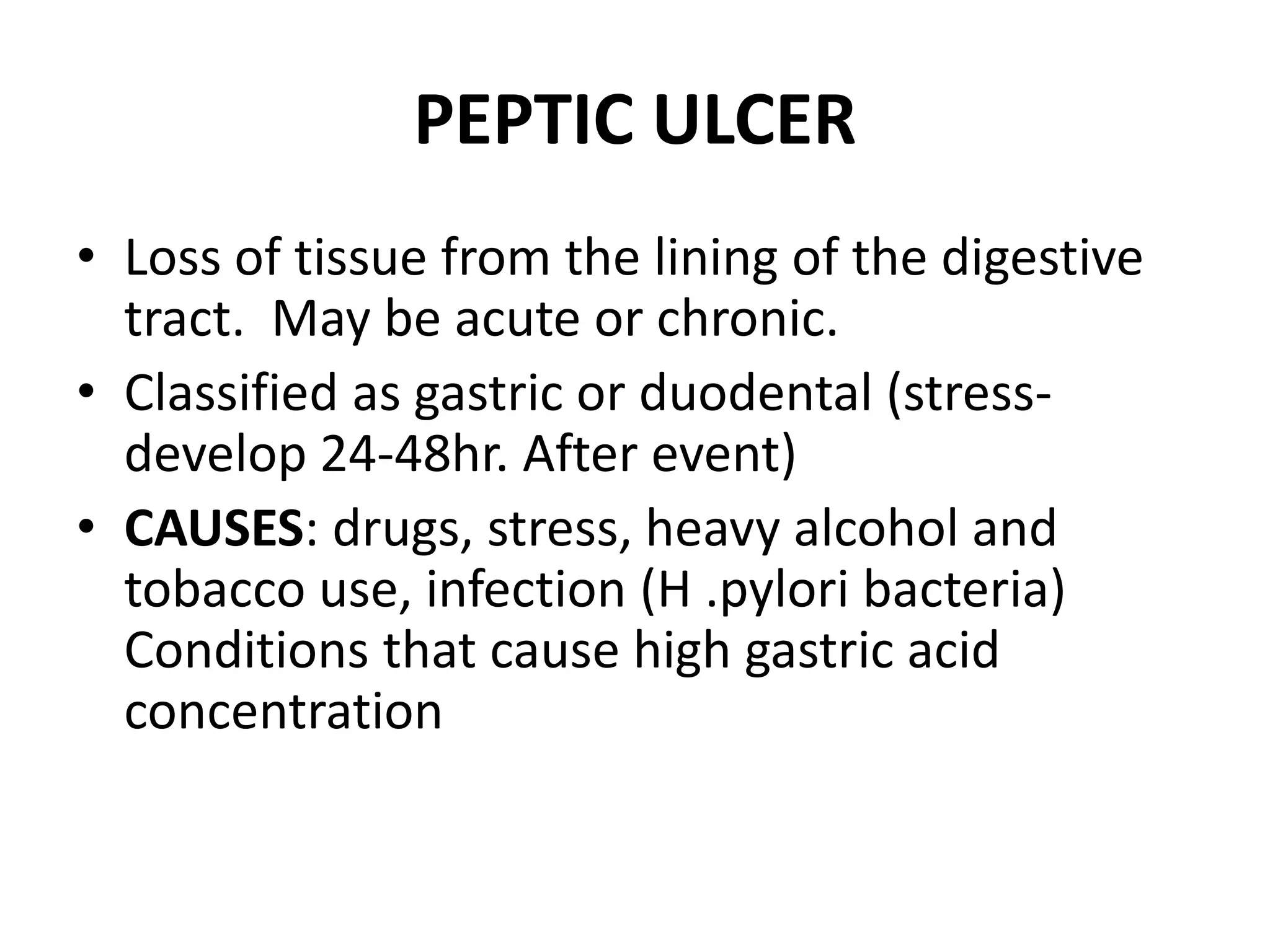
PEPTIC ULCER
• Loss of tissue from the lining of the digestive
tract. May be acute or chronic.
• Classified as gastric or duodental (stress-
develop 24-48hr. After event)
• CAUSES: drugs, stress, heavy alcohol and
tobacco use, infection (H .pylori bacteria)
Conditions that cause high gastric acid
concentration
TREATMENT
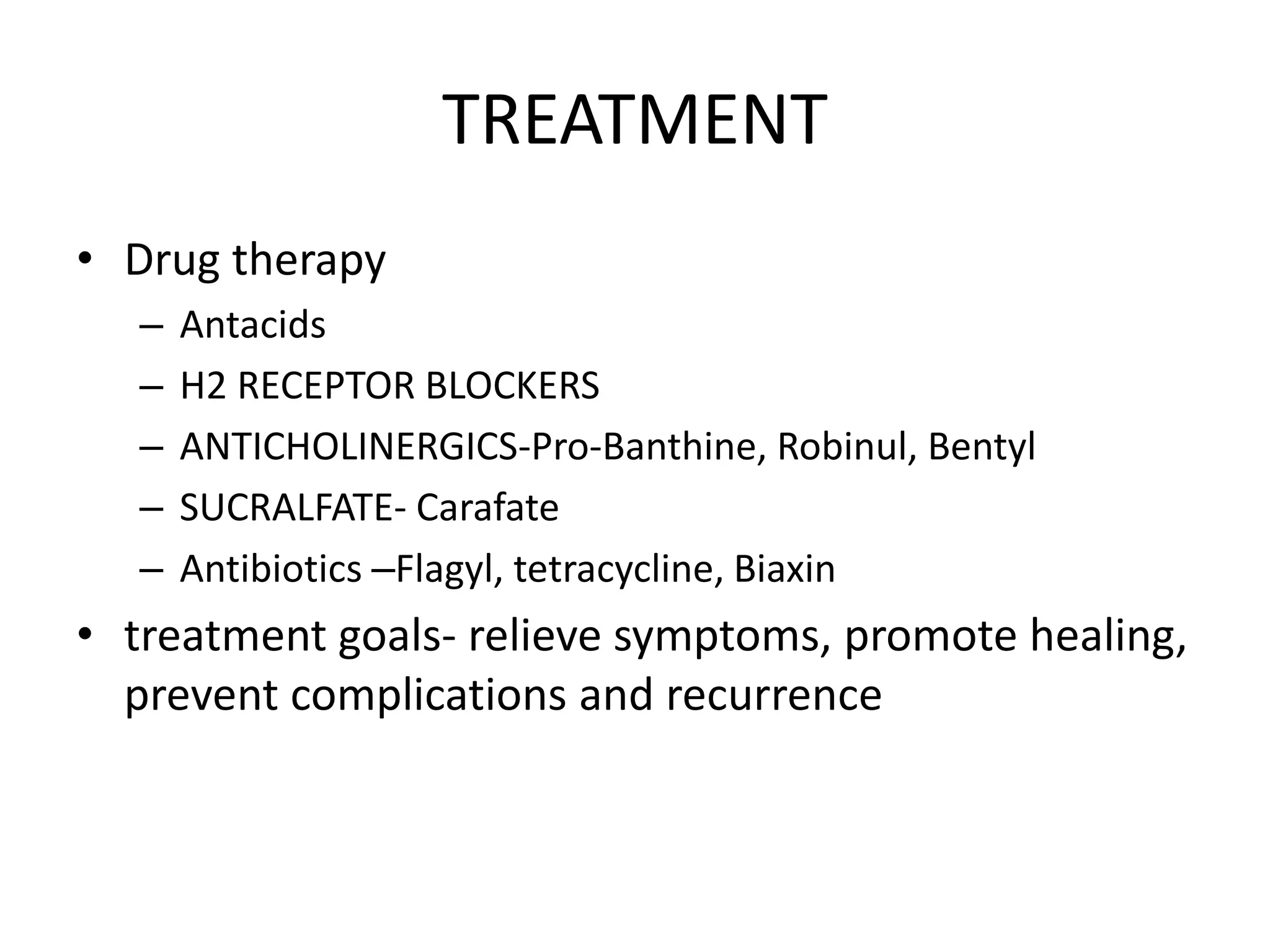
• Drug therapy
– Antacids
– H2 RECEPTOR BLOCKERS
– ANTICHOLINERGICS-Pro-Banthine, Robinul, Bentyl
– SUCRALFATE- Carafate
– Antibiotics –Flagyl, tetracycline, Biaxin
• treatment goals- relieve symptoms, promote healing,
prevent complications and recurrence
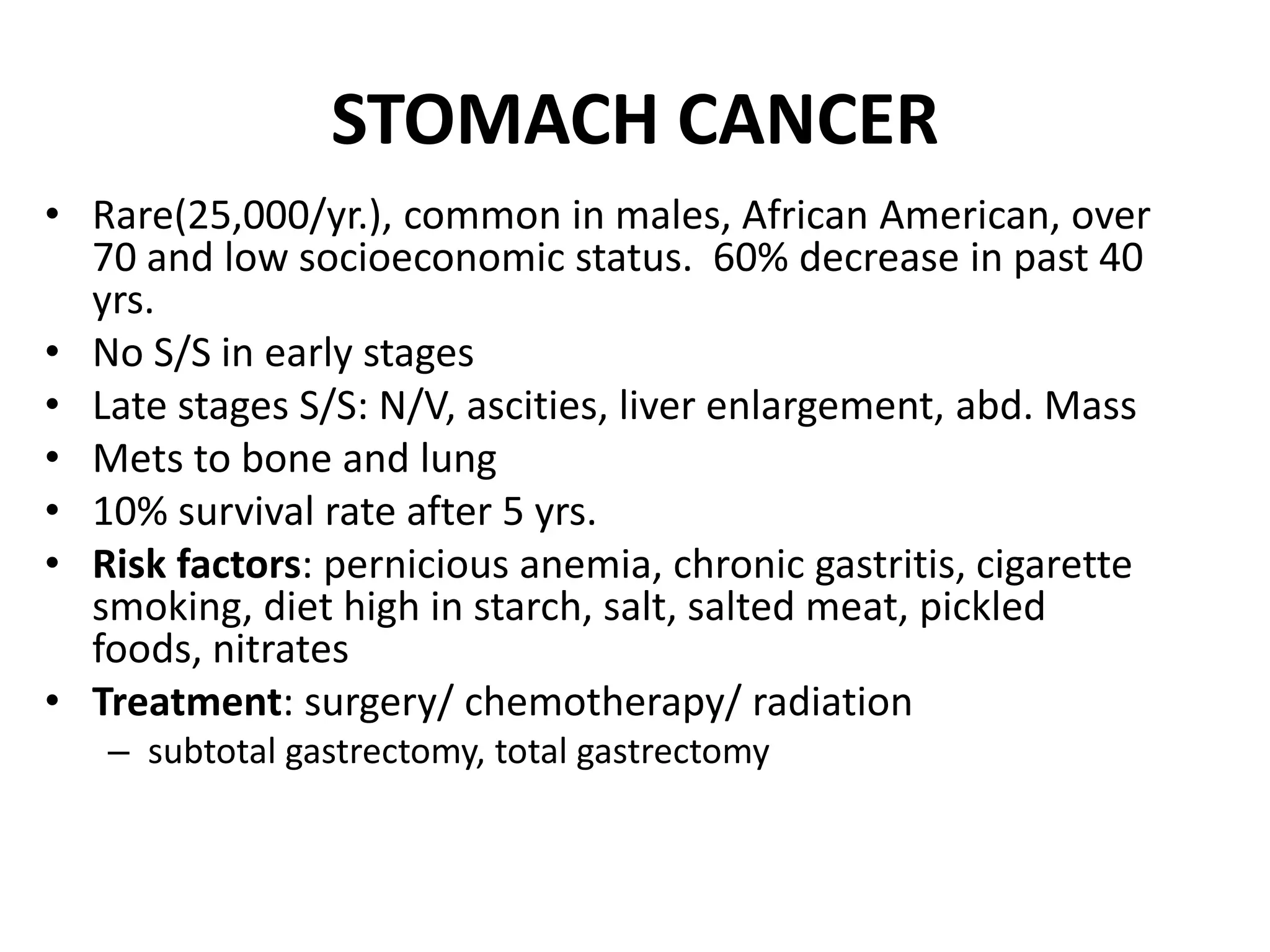
STOMACH CANCER
• Rare(25,000/yr.), common in males, African American, over
70 and low socioeconomic status. 60% decrease in past 40
yrs.
• No S/S in early stages
• Late stages S/S: N/V, ascities, liver enlargement, abd. Mass
• Mets to bone and lung
• 10% survival rate after 5 yrs.
• Risk factors: pernicious anemia, chronic gastritis, cigarette
smoking, diet high in starch, salt, salted meat, pickled
foods, nitrates
• Treatment: surgery/ chemotherapy/ radiation
– subtotal gastrectomy, total gastrectomy
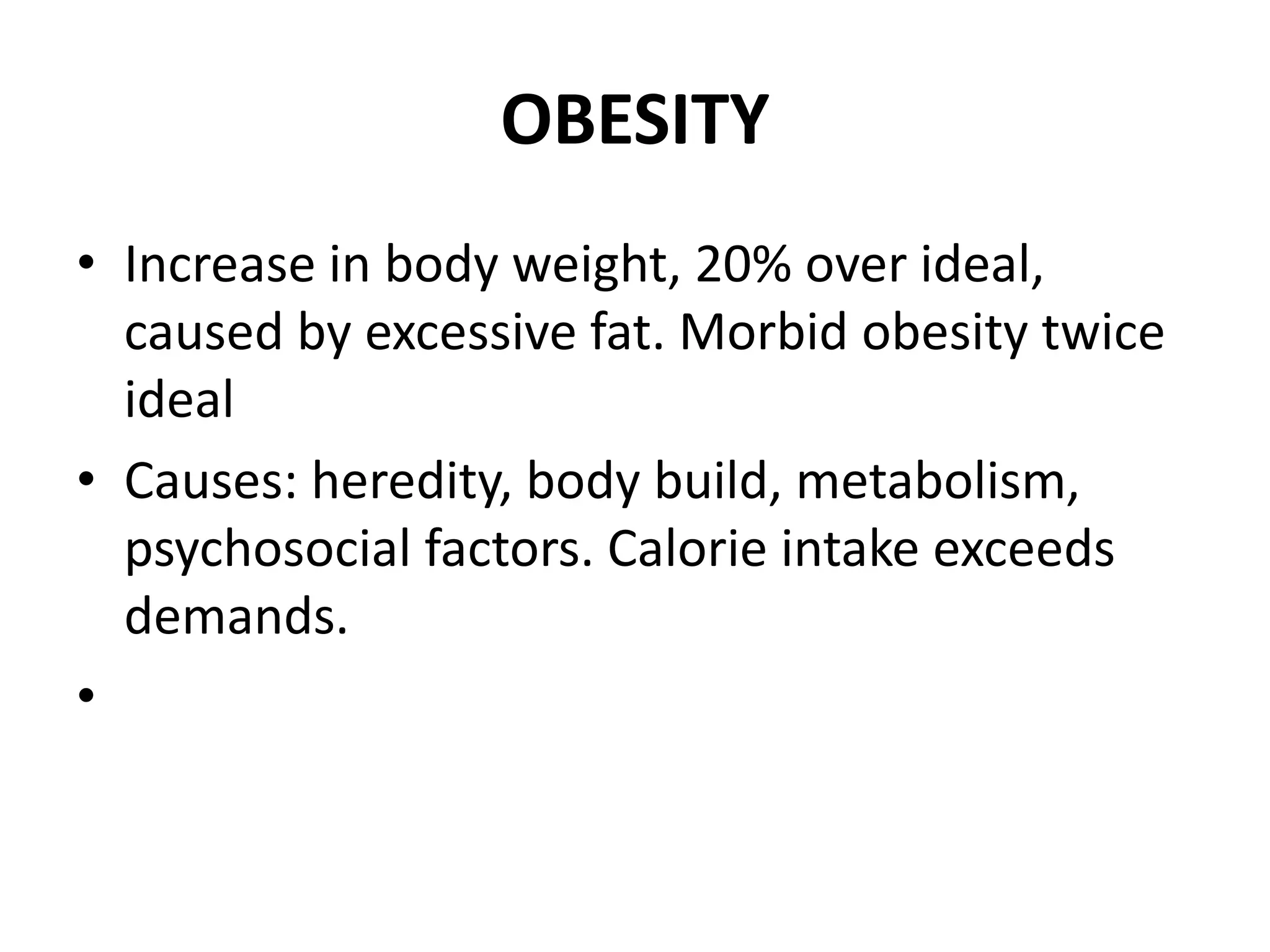
OBESITY
• Increase in body weight, 20% over ideal,
caused by excessive fat. Morbid obesity twice
ideal
• Causes: heredity, body build, metabolism,
psychosocial factors. Calorie intake exceeds
demands.
•
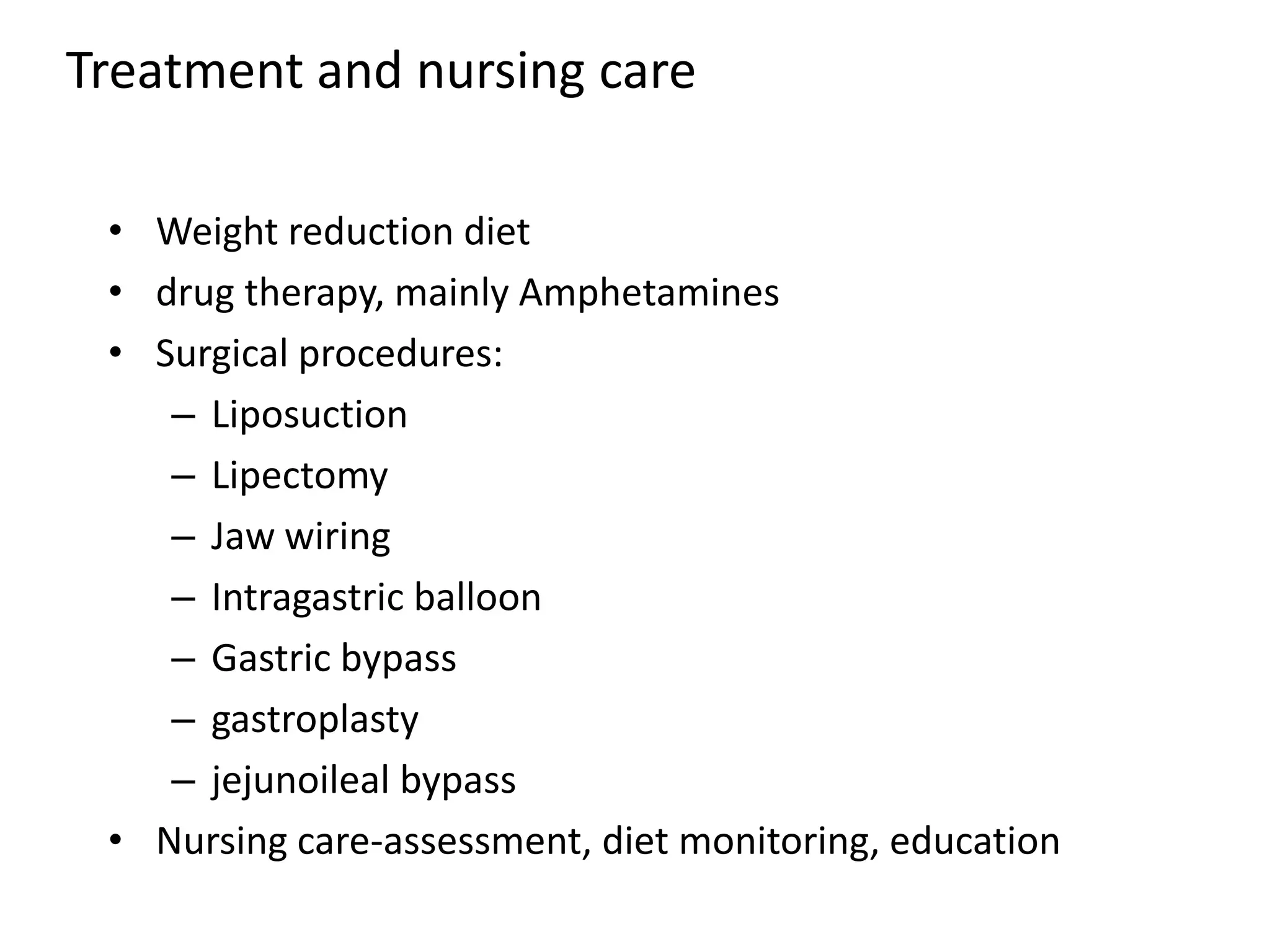
Treatment and nursing care
• Weight reduction diet
• drug therapy, mainly Amphetamines
• Surgical procedures:
– Liposuction
– Lipectomy
– Jaw wiring
– Intragastric balloon
– Gastric bypass
– gastroplasty
– jejunoileal bypass
• Nursing care-assessment, diet monitoring, education
DIRRHOEA
• The passage of loose liquid stools with
increased frequency, associated with
cramping, abd, pain
• Causes; (many), foods, allergies, infections,
stress, fecal impaction, tube feedings,
medications
• Complications- usually temporary/ can be
dehydration, malnutrition
Treatment/Nursing care
• Treatment; GI rest, antidiarrheal
drugs(Lomotil, Imodium, Kaolin, Aluminum
hydroxide)
• Nursing Care: help determine cause, assessVS,
weight, skin turgor, abdominal destention,
perianal irritation, skin integrity
CONSTIPATION
• HARD DRY INFREQUENT STOOLS PASSED WITH
DIFFICULTY
• Causes: (many),inactivity, ignored urge,
drugs,age related changes
• Complications: straining (Valsalva maneuver)
and fecal impaction
Treatment/Nursing care
• Laxatives, suppositorys, enemas for prompt
results
• stool softeners, increase fluids,dietary fiber
• Nursing care: assessment, monitor fluids and
diet, education, check for impaction
Thank
you…

digestive system and disorders

  • 1.
    Anatomy & PhysiologyOF HARISHANKAR SAHU B.PHARMA FINAL YEAR SRIP,KUMHARI BY- Digestive System
  • 2.
    Organs of theDigestive System  Mouth  teeth  Salivary glands  Pharynx  Esophagus  Stomach  Liver  Gallbladder (GB)  Pancreas  Small intestine  Large intestine  Rectum  Anus
  • 3.
    Main Functions Digesting food –Physical and chemical breakdown of large food into molecules: glucose, triglycerides, amino acids Absorbing nutrients – From intestines – Circulated through the body by cardiovascular system Eliminating waste – Any food that cannot be digested or absorbed is expelled
  • 4.
    Oral Cavity (mouth) •Roof is palate – Hard – bony anterior – Soft – flexible posterior • Hanging down from soft palate is uvula – Speech production – Location of gag reflex
  • 5.
    Oral Cavity • Cheeksare lateral walls • Lips are anterior opening • Entire cavity lined with mucous membrane
  • 6.
    Oral Cavity • Digestionbegins when food enters mouth – Mechanically broken up by chewing • Tongue moves food within mouth • Mixes with saliva – Digestive enzymes – Lubricates • Taste buds on tongue surface – Detect bitter, sweet, salty, sour flavors
  • 7.
    Processes of theMouth  Mastication (chewing) of food  Mixing masticated food with saliva  Initiation of swallowing by the tongue  Allowing for the sense of taste
  • 8.
    Salivary Glands • Producesaliva – Prevents bacterial infection – Lubrication – Contains salivary amylase • Breaks down starch
  • 9.
    Three pairs ofSalivary Glands • Parotid – lateral side of face, anterior to ear, drain by parotid duct to vestibule near 2nd upper molar • Submandibular – medial surface of mandible – drain near lingual frenulum drain posterior to lower molars • Sublingual – in floor of mouth - drain near frenulum
  • 10.
    Function  Mixture ofmucus and serous fluids  Helps to form a food bolus  Contains salivary amylase to begin starch digestion  Dissolves chemicals so they can be tasted
  • 11.
    Teeth  The roleis to masticate (chew) food  Humans have two sets of teeth 1. Deciduous (baby or milk) teeth  20 teeth are fully formed by age two 2. Permanent teeth  Replace deciduous teeth beginning between the ages of 6 to 12  A full set is 32 teeth, but some people do not have wisdom teeth
  • 12.
  • 13.
    Pharynx Anatomy  Nasopharynx– not part of the digestive system  Oropharynx – posterior to oral cavity  Laryngopharynx – below the oropharynx and connected to the esophagus
  • 14.
    Pharynx Function  Servesas a passageway for air and food  Food is propelled to the esophagus by two muscle layers  Longitudinal inner layer  Circular outer layer  Food movement is by alternating contractions of the muscle layers (peristalsis)
  • 15.
    Esophagus  10 incheslong in adults  Food enters from pharynx  Runs from pharynx to stomach through the diaphragm  Conducts food by peristalsis (slow rhythmic squeezing)  Passageway for food only (respiratory system branches off after the pharynx) Joins stomach at cardiac orifice* Cardiac sphincter at cardiac orifice to prevent regurgitation (food coming back up into esophagus)
  • 16.
    Stomach • Lies mostlyin LUQ – But pain can be epigastric or lower • Just inferior to (below) diaphragm • Anterior (in front of) spleen and pancreas • Tucked under left lower margin of liver • Anchored at both ends but mobile in between • Capacity: 1.5 L food; max capacity 4L (1 gallon) 16 epigastrium junction with esophagus funnel shaped contains pyloric sphincter dome
  • 17.
  • 18.
    Stomach • J-shaped; widestpart of alimentary canal • Temporary storage and mixing – 4 hours – Into “chyme” • Starts food breakdown – Pepsin (protein-digesting enzyme needing acid environment) – HCl (hydrochloric acid) helps kill bacteria – Stomach tolerates high acid content but esophagus doesn’t – why it hurts so much when stomach contents refluxes into esophagus (heartburn; GERD) • Most nutrients wait until get to small intestine to be absorbed; exceptions are: – Water, electrolytes, some drugs like aspirin and alcohol (absorbed through stomach) 18
  • 19.
    Stomach Functions  Actsas a storage tank for food  Site of food breakdown  Chemical breakdown of protein begins  Delivers chyme (processed food) to the small intestine  It secretes intrinsic factor which is necessary for the absorption of vit.B12
  • 20.
    Small intestine • Longestpart of alimentary canal (2.7- 5 m) • Site of greatest amount of digestion and absorption • Small intestine has 3 subdivisions – Duodenum – 5% of length – Jejunum – almost 40% – Ileum – almost 60% • Modifications – Circular folds or plicae circulares, villi, lacteal, microvilli • Cells of mucosa – Absorptive, goblet,granular, endocrine
  • 21.
    • Small intestinedesigned for absorption – Huge surface area because of great length – Structural modifications also increase absorptive area • Circular folds (plicae circulares) • Villi (fingerlike projections) 1 mm high – simple columnar epithelium: velvety • Microvilli * Absorptivie cell with microvilli to increase surface area & many mitochondria: nutrient uptake is energy- demanding
  • 22.
    Villi of theSmall Intestine  Fingerlike structures formed by the mucosa  Give the small intestine more surface area
  • 23.
    Microvilli of theSmall Intestine  Small projections of the plasma membrane  Found on absorptive cells Figure 14.7c
  • 24.
    Structures Involved inAbsorption of Nutrients  Absorptive cells  Blood capillaries  Lacteals (specialized lymphatic capillaries)
  • 25.
    Digestion in theSmall Intestine Pancreatic enzymes play the major digestive function  Help complete digestion of starch (pancreatic amylase)  Carry out about half of all protein digestion (trypsin, etc.)  Responsible for fat digestion (lipase)  Digest nucleic acids (nucleases)  Alkaline content neutralizes acidic chyme
  • 26.
    Absorption in theSmall Intestine  Water is absorbed along the length of the small intestine  End products of digestion  Most substances are absorbed by active transport through cell membranes  Lipids are absorbed by diffusion  Substances are transported to the liver by the hepatic portal vein or lymph
  • 27.
    Large Intestine  Largerin diameter, but shorter than the small intestine  Frames the internal abdomen  Digested residue reaches it Main function: to absorb water and electrolytes
  • 28.
    Structures of theLarge Intestine  Cecum – saclike first part of the large intestine  Appendix  Accumulation of lymphatic tissue that sometimes becomes inflamed (appendicitis)  Hangs from the cecum  Colon  Ascending  Transverse  Descending  S-shaped sigmoidal Rectum = Rectum is area for storage of feces Leads to the anus, the external opening of the alimentary canal Defecation
  • 29.
    Functions of theLarge Intestine  Absorption of water  Eliminates indigestible food from the body as feces  Does not participate in digestion of food  Goblet cells produce mucus to act as a lubricant
  • 30.
    Food Breakdown andAbsorption in the Large Intestine  No digestive enzymes are produced  Resident bacteria digest remaining nutrients Produce some vitamin K and B Release gases  Water and vitamins K and B are absorbed  Remaining materials are eliminated via feces
  • 31.
    Accessory Organs ofthe Digestive System Gallbladder Liver Pancreas
  • 32.
    The Liver • Largestgland in the body (about 3 pounds) • Over 500 functions • Inferior to diaphragm in RUQ and epigastric area protected by ribs • R and L lobes – Plus 2 smaller lobes • Falciform ligament – Mesentery binding liver to anterior abdominal wall • 2 surfaces – Diaphragmatic – Visceral • Covered by peritoneum – Except “bare area” fused to diaphragm 32
  • 33.
  • 34.
    Functions of theLiver • Bile production – Salts emulsify fats, contain pigments as bilirubin • Storage – Glycogen, fat, vitamins, copper and iron • Nutrient interconversion • Detoxification – Hepatocytes remove ammonia and convert to urea • Phagocytosis – Kupffer cells phagocytize worn-out and dying red and white blood cells, some bacteria • Synthesis – Albumins, fibrinogen, globulins, heparin, clotting factors
  • 35.
    Role of theLiver in Metabolism  Several roles in digestion  Detoxifies drugs and alcohol  Degrades hormones  Produce cholesterol, blood proteins (albumin and clotting proteins)  Plays a central role in metabolism
  • 36.
    Gallbladder • Bile isproduced in the liver • Bile is stored in the gallbladder • Bile is excreted into the duodenum when needed (fatty meal) • Bile helps dissolve fat and cholesterol • If bile salts crystallize, gall stones are formed – Intermittent pain: ball valve effect causing intermittent obstruction – Or infection and a lot of pain, fever, vomiting, etc. 36 *
  • 37.
  • 38.
    Pancreas  Produces awide spectrum of digestive enzymes that break down all categories of food  Enzymes are secreted into the duodenum  Alkaline fluid introduced with enzymes neutralizes acidic chyme  Endocrine products of pancreas  Insulin  Glucagons
  • 39.
    Pancreas • Anatomy – Endocrine •Pancreatic islets produce insulin and glucagon – Exocrine • Acini produce digestive enzymes – Regions: Head, body, tail • Secretions – Pancreatic juice (exocrine) • Trypsin • Chymotrypsin • Carboxypeptidase • Pancreatic amylase • Pancreatic lipases • Enzymes that reduce DNA and ribonucleic acid
  • 40.
    Processes of theDigestive System  Ingestion – getting food into the mouth  Propulsion – moving foods from one region of the digestive system to another  Peristalsis – alternating waves of contraction  Segmentation – moving materials back and forth to aid in mixing
  • 41.
    Processes of theDigestive System  Mechanical digestion  Mixing of food in the mouth by the tongue  Churning of food in the stomach  Segmentation in the small intestine  Chemical Digestion  Enzymes break down food molecules into their building blocks  Each major food group uses different enzymes  Carbohydrates are broken to simple sugars  Proteins are broken to amino acids  Fats are broken to fatty acids and alcohols
  • 42.
    Processes of theDigestive System  Absorption End products of digestion are absorbed in the blood or lymph Food must enter mucosal cells and then into blood or lymph capillaries  Defecation Elimination of indigestible substances as feces
  • 44.
  • 45.
    Disorders of theupper GI system Disorders affecting Ingestion • ANOREXIA: lack of appetite, could be from emotional or physical factors • lab tests may be done to assess nutritional status • Medical treatment:supplements may be ordered, TPN or enteral feedings • Nursing Interventions: – oral hygiene, clean room, determine cause of nausea and treat, include family and friends(socialization), respect likes and dislikes, education
  • 46.
    STOMATITIS • Inflammation ofthe oral mucosa (mouth) • Causes: trauma, organisms, irritants, nutritional deficiency, diseases, chemotherapy • S/S: swelling, pain, ulcerations, excessive salivation, halitosis, sore mouth • Treatment: • pain relief, removal of causative factor, oral hygiene, medications, soft bland diet
  • 47.
    GINGIVITIS • Inflammation ofthe gums • Causes: poor oral hygiene, poorly fitting dentures, nutritional deficiency • S/S: red, swollen, bleeding gums, painful • Treatment: dental hygiene, prevention of complications
  • 48.
    HERPES SIMPLEX TYPE1 • Infection affecting the lips and mucous membranes of the mouth • Causes: Herpes simplex virus • S/S: Vesicles on the mouth, nose or lips, malaise, edema of surrounding area • Treatment: Antiviral medication(Zovirax), analgesics, symptomatic relief • Nsg Interventions: Administer meds, keep lesions dry, provide symptomatic relief
  • 49.
    LEUKOPLAKIA • Abnormal thickeningand whitening of the epithelium of the mucous membranes of the cheeks and tongue • Causes: Chronic irritation • S/S: Thickened white or reddish lesions on the mucous membrane, lesions can not be rubbed off • Treatment: May be surgically removed or treated with chemotherapy, meticulous oral hygiene • Interventions: Assess mouth frequently, assist with oral hygiene, discuss removal of sources of irritation
  • 50.
    ORAL CANCER • Malignantlesions may develop on the lips, oral cavity, tongue and pharynx. Generally squamous cell carcinomas • Causes: high alcohol consumption, tobacco use, external irritants • S/S: Leukoplakia, swelling, edema, numbness, pain • Diagnosis: biopsy • Treatment: – Surgery – Radiation or chemotherapy • depends on the size and location and the lesion • Interventions: consult MD for special mouth care, monitor respiratory status, keep HOB elevated, administer pain med, assess ability to swallow and talk, assess for infection at incision site, education.
  • 51.
    ESOPHAGITIS • Inflammation orirritation of the esophagus • Causes: Reflux of stomach contents, irritants, fungal infections, trauma, malignancy, intubation • S/S: heartburn, pain, dysphagia • Treatment: treat underlying cause • Interventions: soft bland diet, administer meds, elevate HOB, observe for complications
  • 52.
    NAUSEA AND VOMITING •Nausea: unpleasant sensation usually preceding vomiting, may have abdominal pain, pallor, sweating, clammy skin • Causes: irritating food, infection, radiation, drugs, hormonal changes, surgery, inner ear disorders, distention of the GI tract • Vomiting: forceful expulsions of stomach contents through the mouth. Occurs when vomiting reflex in the brain is stimulated. • Projectile vomiting- is forceful ejection of stomach contents. • Regurgitation- gentle ejection of stomach contents without nausea or retching
  • 53.
    Complications and Treatment •May lead to dehydration, metabolic alkalosis, aspiration • Treatment: Antiemetics( Phenergan, Dramamine, Scopolamine patch Reglan), IV fluids, NG tube, TPN • Nursing care: through assessment, keep patient comfortable, offer liquids, position on side, suction setup in the room
  • 54.
    GASTRITIS • Inflammation ofthe lining of the stomach • ACUTE: excessive intake of food or alcohol. Food poisoning, chemical irritation • CHRONIC: repeated episodes of acute, H Pylori
  • 55.
    Signs/Symptoms and Complications •Nausea, vomiting, feeling of fullness, pain in stomach, indigestion. With chronic may have only mild indigestion • changes in stomach lining with decrease in acid and intrinsic factor ( high risk for pernicious anemia)
  • 56.
    Treatment • Treat symptoms,and fluid replacement • Medications: antacids, H2 receptor blockers, B 12 injections, corticosteroids analgesics, antibiotics if H Pylori • bland diet, frequent meals • Eliminate the cause • surgical intervention • BEST DIAGNOSIS IS GASTROSOPY & BIOPSY
  • 57.
    PEPTIC ULCER • Lossof tissue from the lining of the digestive tract. May be acute or chronic. • Classified as gastric or duodental (stress- develop 24-48hr. After event) • CAUSES: drugs, stress, heavy alcohol and tobacco use, infection (H .pylori bacteria) Conditions that cause high gastric acid concentration
  • 58.
    TREATMENT • Drug therapy –Antacids – H2 RECEPTOR BLOCKERS – ANTICHOLINERGICS-Pro-Banthine, Robinul, Bentyl – SUCRALFATE- Carafate – Antibiotics –Flagyl, tetracycline, Biaxin • treatment goals- relieve symptoms, promote healing, prevent complications and recurrence
  • 59.
    STOMACH CANCER • Rare(25,000/yr.),common in males, African American, over 70 and low socioeconomic status. 60% decrease in past 40 yrs. • No S/S in early stages • Late stages S/S: N/V, ascities, liver enlargement, abd. Mass • Mets to bone and lung • 10% survival rate after 5 yrs. • Risk factors: pernicious anemia, chronic gastritis, cigarette smoking, diet high in starch, salt, salted meat, pickled foods, nitrates • Treatment: surgery/ chemotherapy/ radiation – subtotal gastrectomy, total gastrectomy
  • 60.
    OBESITY • Increase inbody weight, 20% over ideal, caused by excessive fat. Morbid obesity twice ideal • Causes: heredity, body build, metabolism, psychosocial factors. Calorie intake exceeds demands. •
  • 61.
    Treatment and nursingcare • Weight reduction diet • drug therapy, mainly Amphetamines • Surgical procedures: – Liposuction – Lipectomy – Jaw wiring – Intragastric balloon – Gastric bypass – gastroplasty – jejunoileal bypass • Nursing care-assessment, diet monitoring, education
  • 62.
    DIRRHOEA • The passageof loose liquid stools with increased frequency, associated with cramping, abd, pain • Causes; (many), foods, allergies, infections, stress, fecal impaction, tube feedings, medications • Complications- usually temporary/ can be dehydration, malnutrition
  • 63.
    Treatment/Nursing care • Treatment;GI rest, antidiarrheal drugs(Lomotil, Imodium, Kaolin, Aluminum hydroxide) • Nursing Care: help determine cause, assessVS, weight, skin turgor, abdominal destention, perianal irritation, skin integrity
  • 64.
    CONSTIPATION • HARD DRYINFREQUENT STOOLS PASSED WITH DIFFICULTY • Causes: (many),inactivity, ignored urge, drugs,age related changes • Complications: straining (Valsalva maneuver) and fecal impaction
  • 65.
    Treatment/Nursing care • Laxatives,suppositorys, enemas for prompt results • stool softeners, increase fluids,dietary fiber • Nursing care: assessment, monitor fluids and diet, education, check for impaction
  • 66.