Biogeochemical Cycles
What IS a “biogeochemical cycle”?
 BIO = “life”
 GEO = “earth”
 CHEMICAL = “elements – C, O, N, P, S


• a cycling of nutrients (water, carbon, oxygen,
nitrogen, phosphorus, sulphur) from the abiotic
components of the ecosystem (water, air, soil,
rock) through the biotic components (plants,
animals, fungi, bacteria)
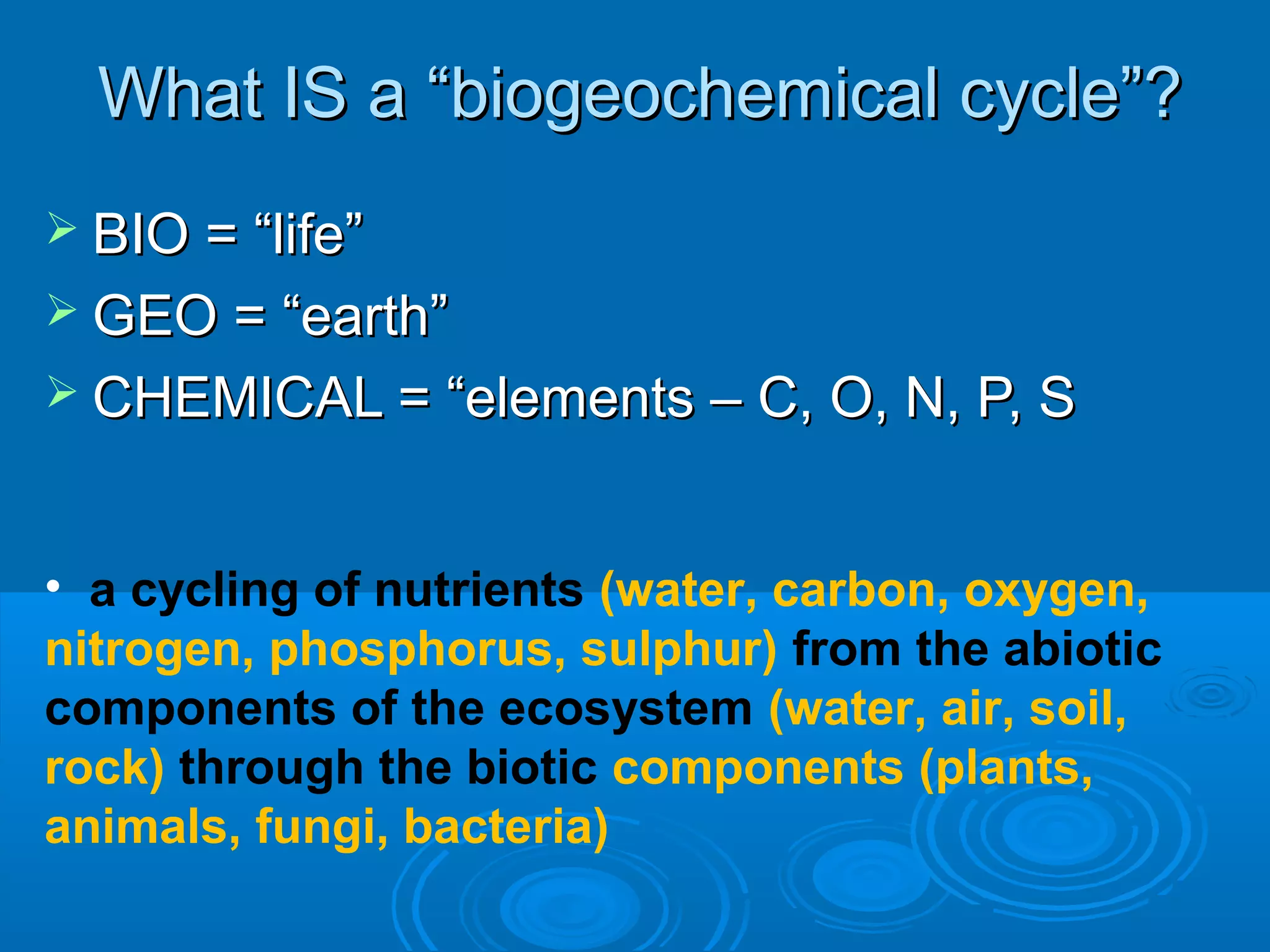
Two Secrets of Survival: Energy
   Flows and Matter Cycles
                  An ecosystem
                   survives by a
                   combination of
                   energy flow (from
                   Sun to Earth) and
                   matter cycling.
                  Remember: the
                   Earth is a
                   CLOSED system
                              Figure 3-14
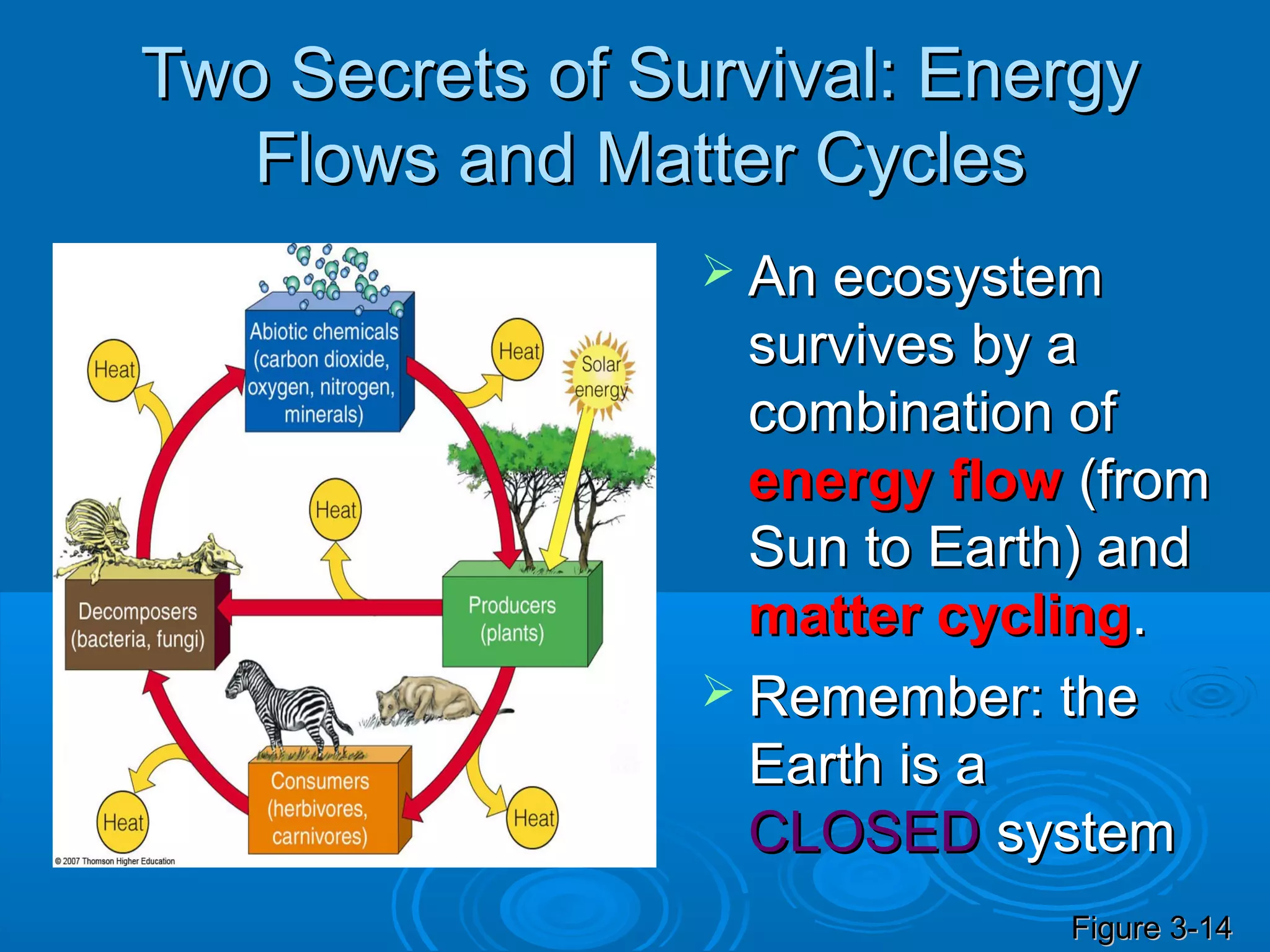
THE HYDROLOGIC (WATER) CYCLE


              Rain clouds
                                                  Condensation


                                                Transpiration Evaporation
            Precipitation               Transpiration
               to land                  from plants
Precipitation                                                              Precipitation
                                                          Evaporation
                                         Surface runoff    from land Evaporation
                               Runoff                                 from ocean   Precipitation
                                             (rapid)
                                                                                     to ocean


Infiltration and                                                 Surface
Percolation                                                       runoff
                                                                 (rapid)
                            Groundwater movement (slow)
                                                                      Ocean storage


                                                                                       Fig. 3-26, p. 72
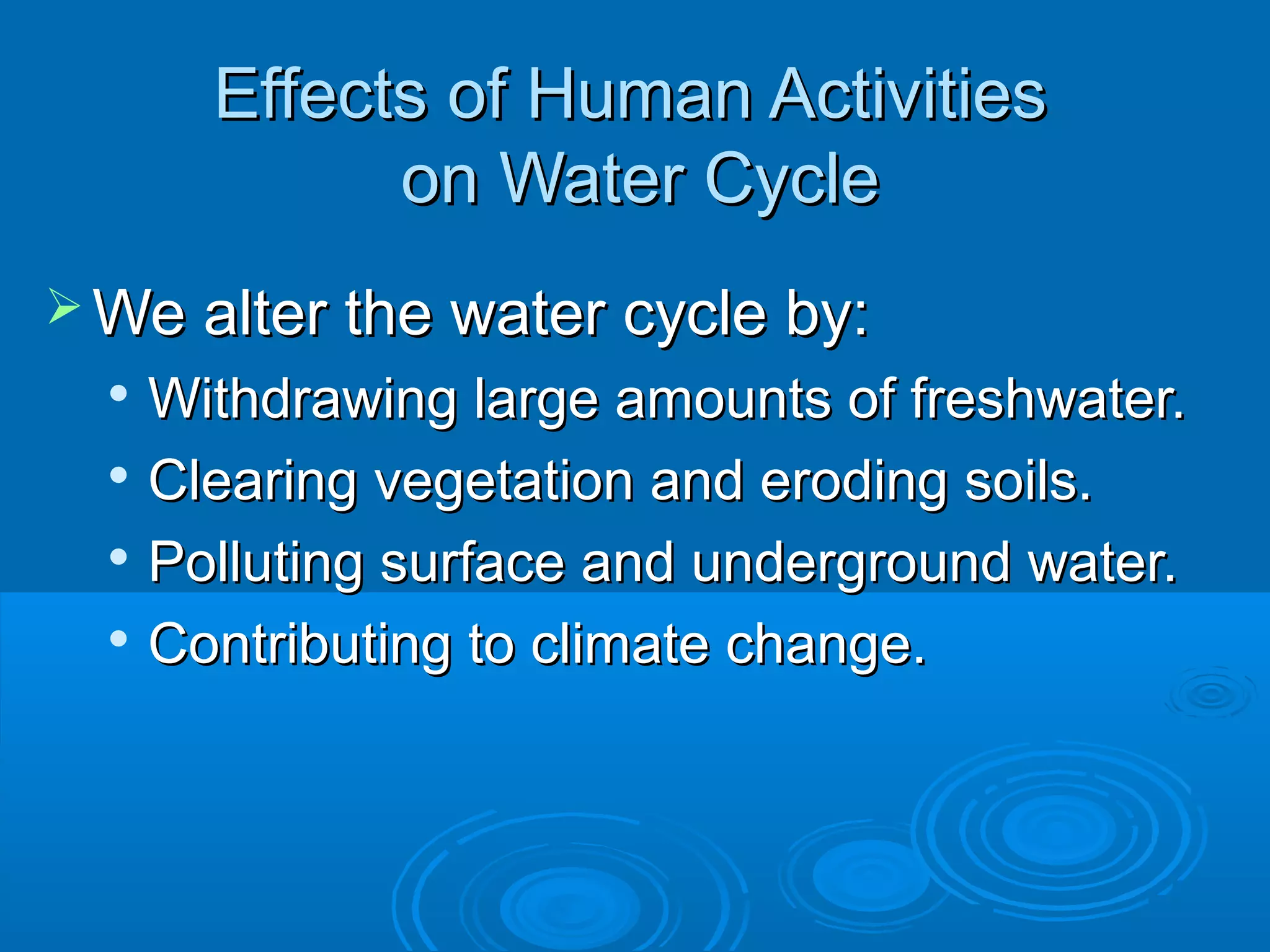
Effects of Human Activities
            on Water Cycle
 We alter the water cycle by:
  
    Withdrawing large amounts of freshwater.
  
    Clearing vegetation and eroding soils.
   Polluting surface and underground water.

   Contributing to climate change.
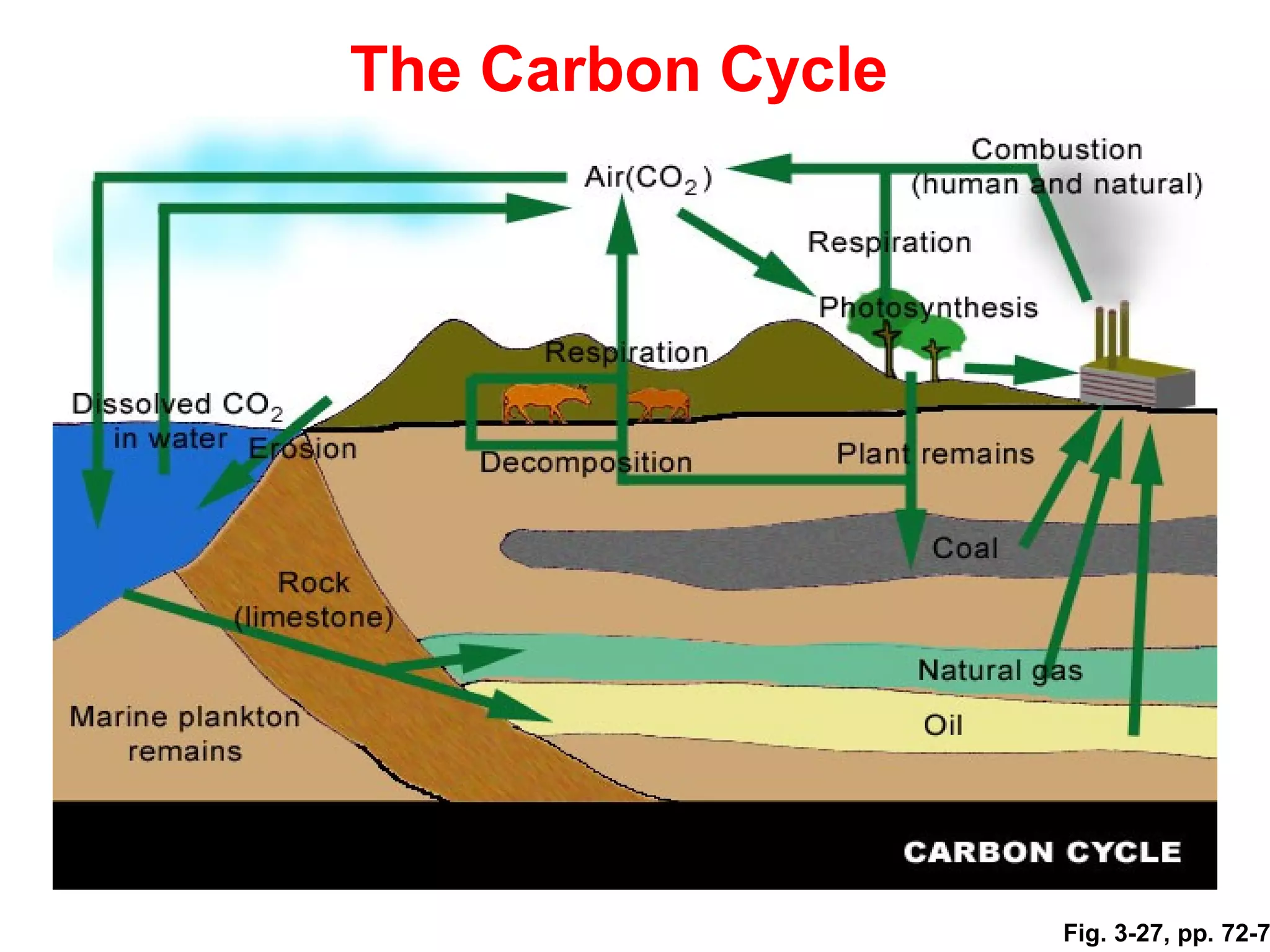
The Carbon Cycle


                   Fig. 3-27, pp. 72-7
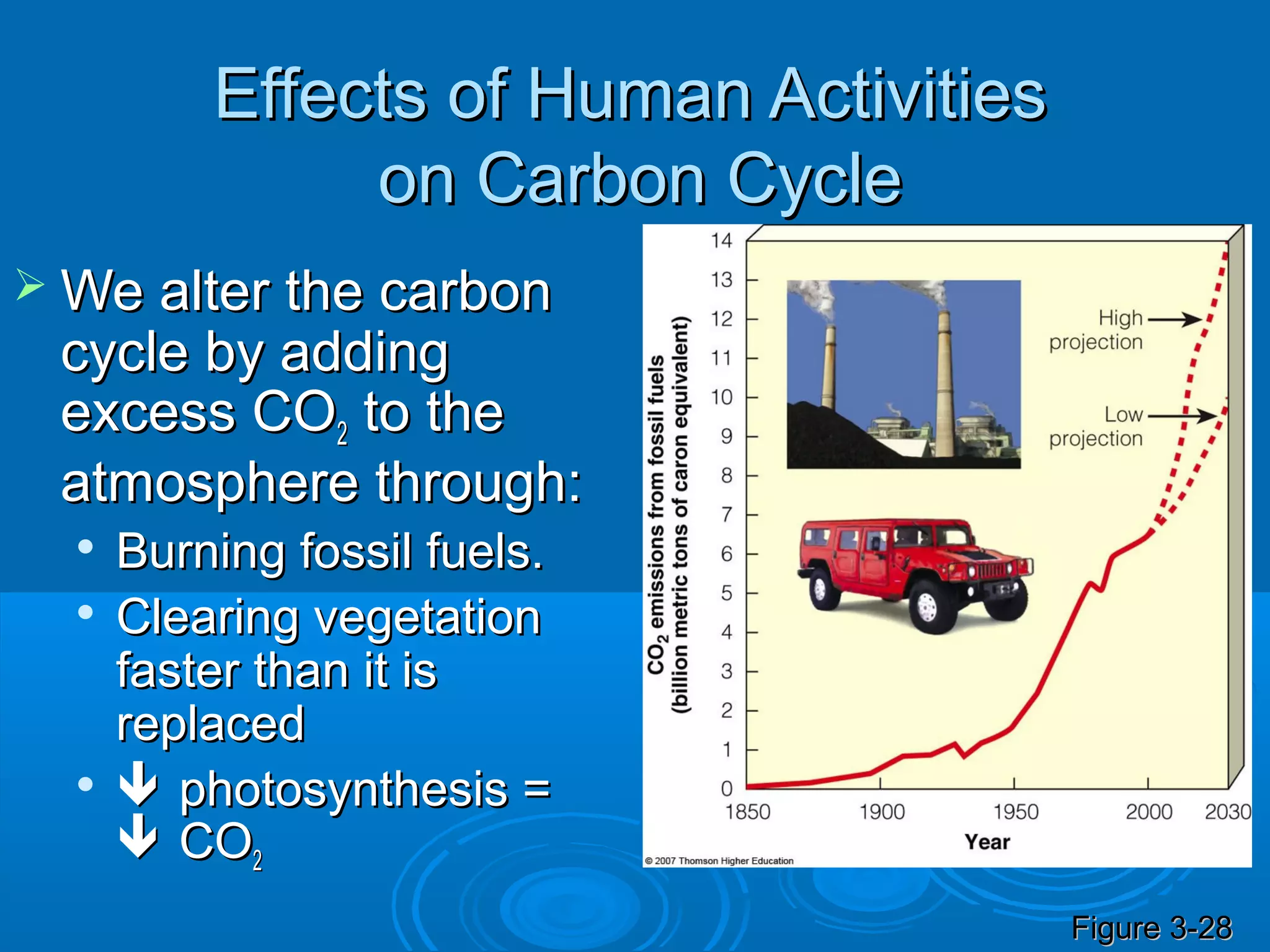
Effects of Human Activities
               on Carbon Cycle
 We alter the carbon
 cycle by adding
 excess CO2 to the
 atmosphere through:
     Burning fossil fuels.
     Clearing vegetation
      faster than it is
      replaced
  
       photosynthesis =
       CO2
                                        Figure 3-28
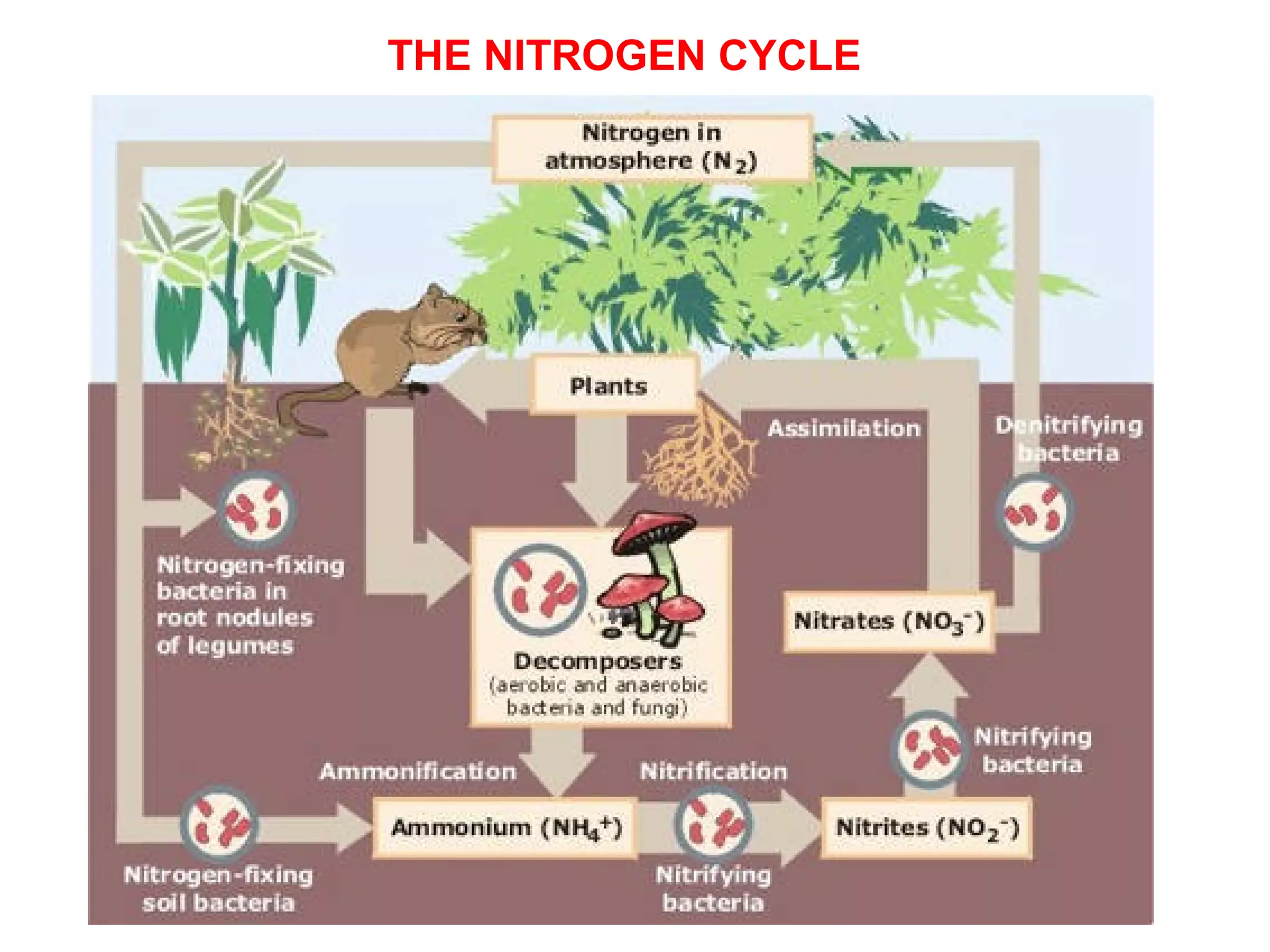
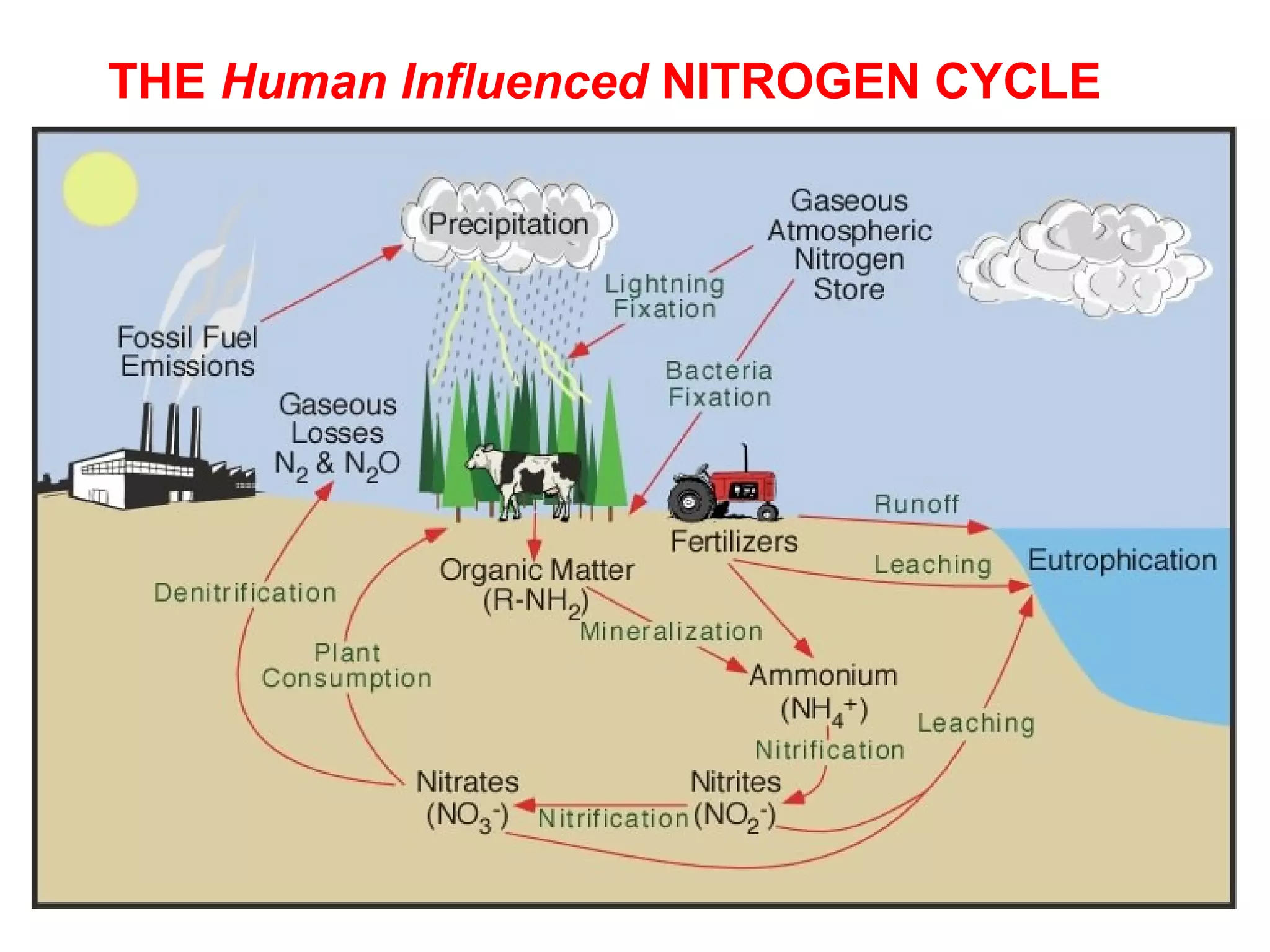
THE NITROGEN CYCLE
Effects of Human Activities
            on the Nitrogen Cycle
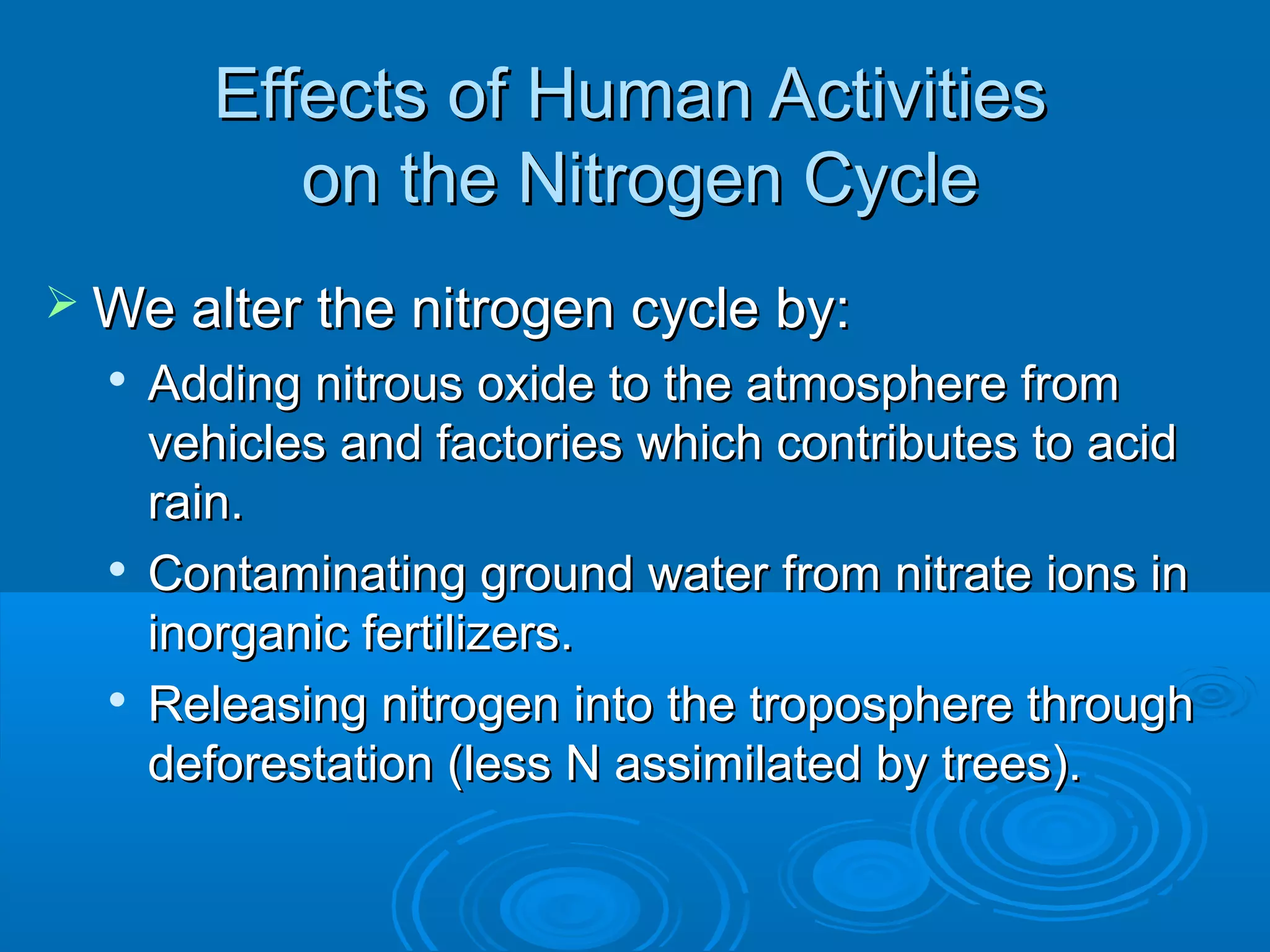
 We alter the nitrogen cycle by:
     Adding nitrous oxide to the atmosphere from
      vehicles and factories which contributes to acid
      rain.
     Contaminating ground water from nitrate ions in
      inorganic fertilizers.
     Releasing nitrogen into the troposphere through
      deforestation (less N assimilated by trees).
THE Human Influenced NITROGEN CYCLE
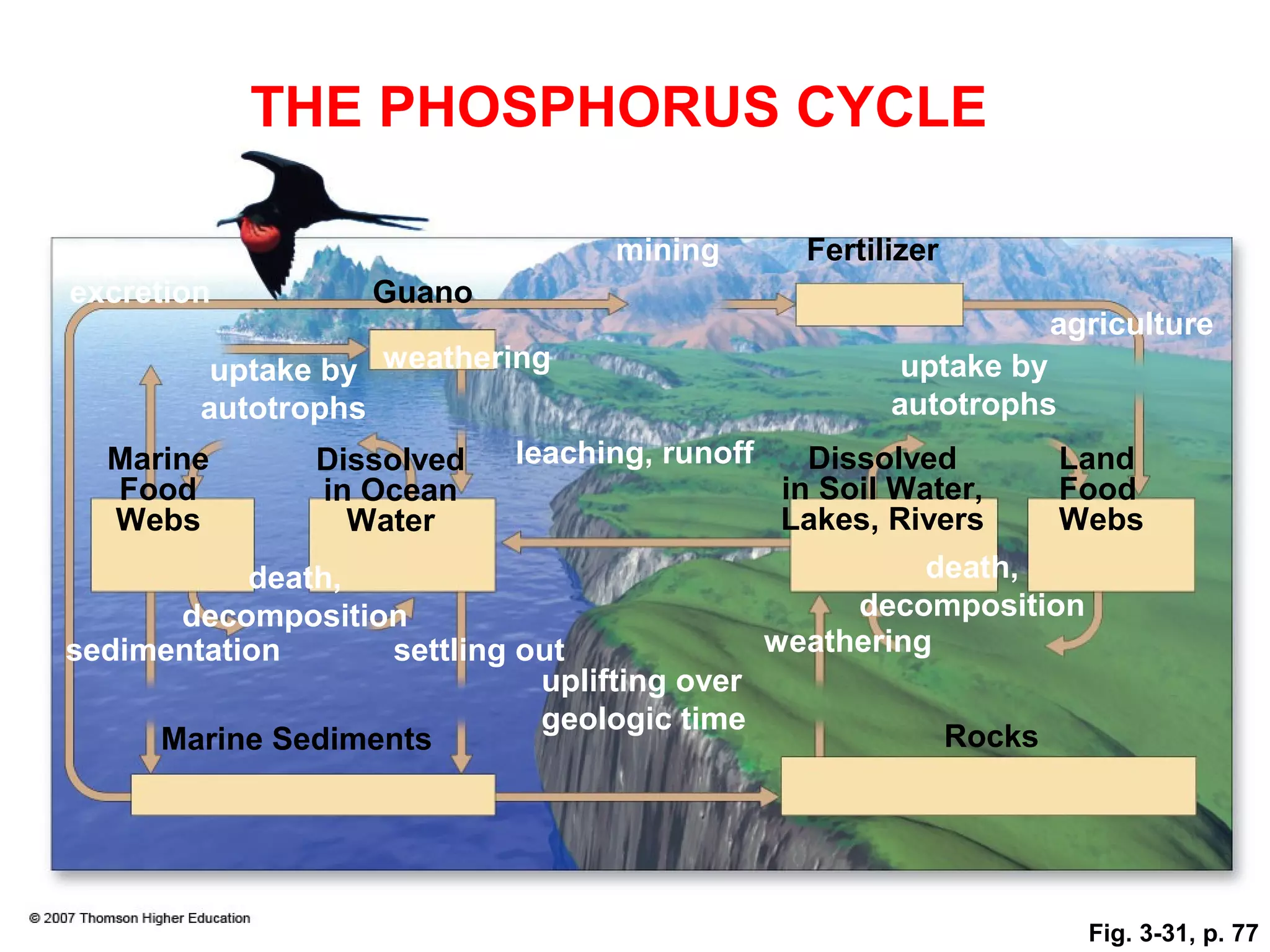
THE PHOSPHORUS CYCLE

                                   mining       Fertilizer
excretion          Guano
                                                               agriculture
         uptake by weathering                           uptake by
        autotrophs                                     autotrophs
  Marine       Dissolved     leaching, runoff    Dissolved        Land
   Food         in Ocean                       in Soil Water,     Food
   Webs           Water                        Lakes, Rivers      Webs
           death,                                        death,
       decomposition                                decomposition
sedimentation       settling out              weathering
                               uplifting over
                               geologic time
     Marine Sediments                                     Rocks


                                                                  Fig. 3-31, p. 77
Effects of Human Activities
      on the Phosphorous Cycle
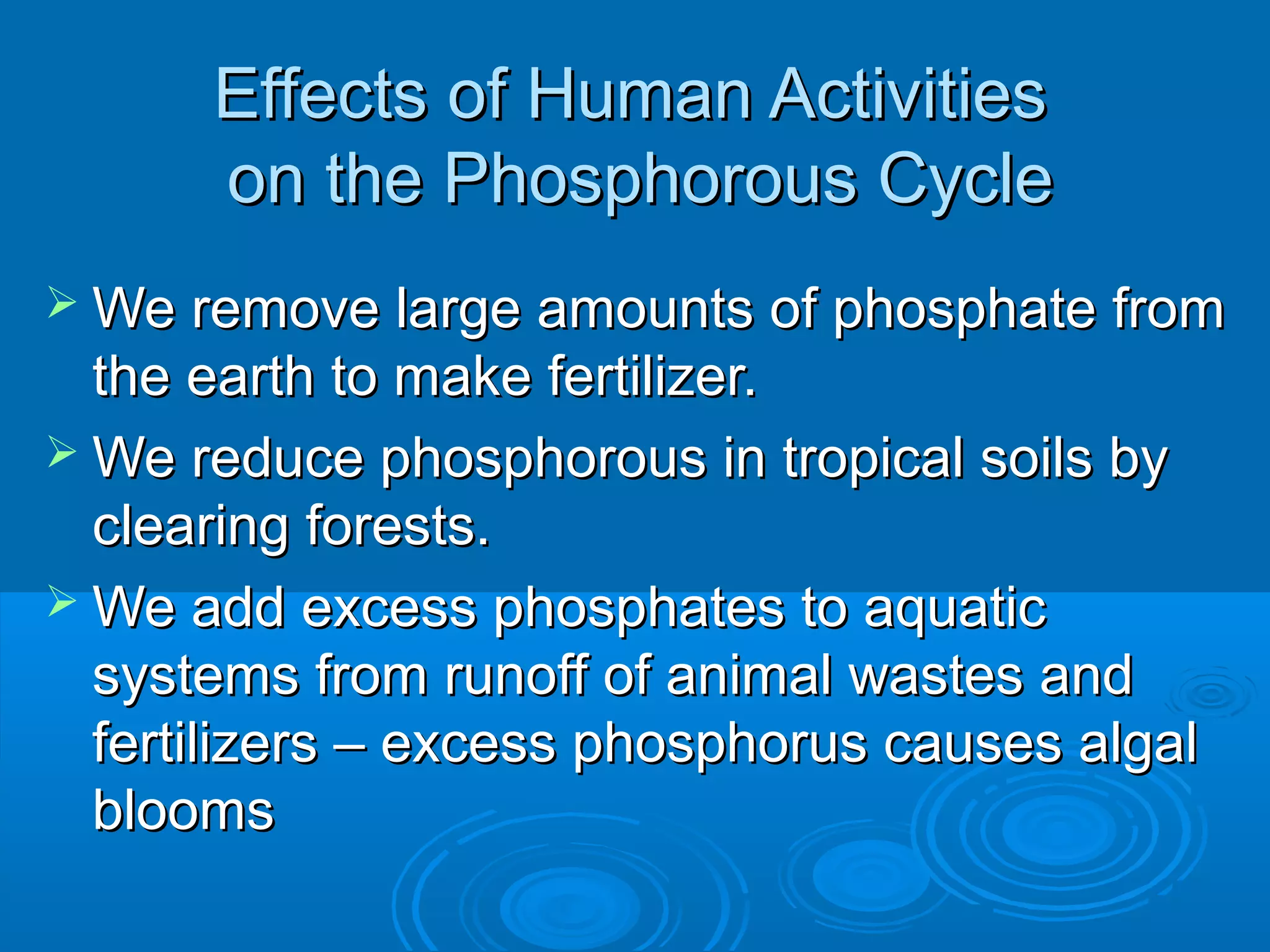
 We remove large amounts of phosphate from
  the earth to make fertilizer.
 We reduce phosphorous in tropical soils by
  clearing forests.
 We add excess phosphates to aquatic
  systems from runoff of animal wastes and
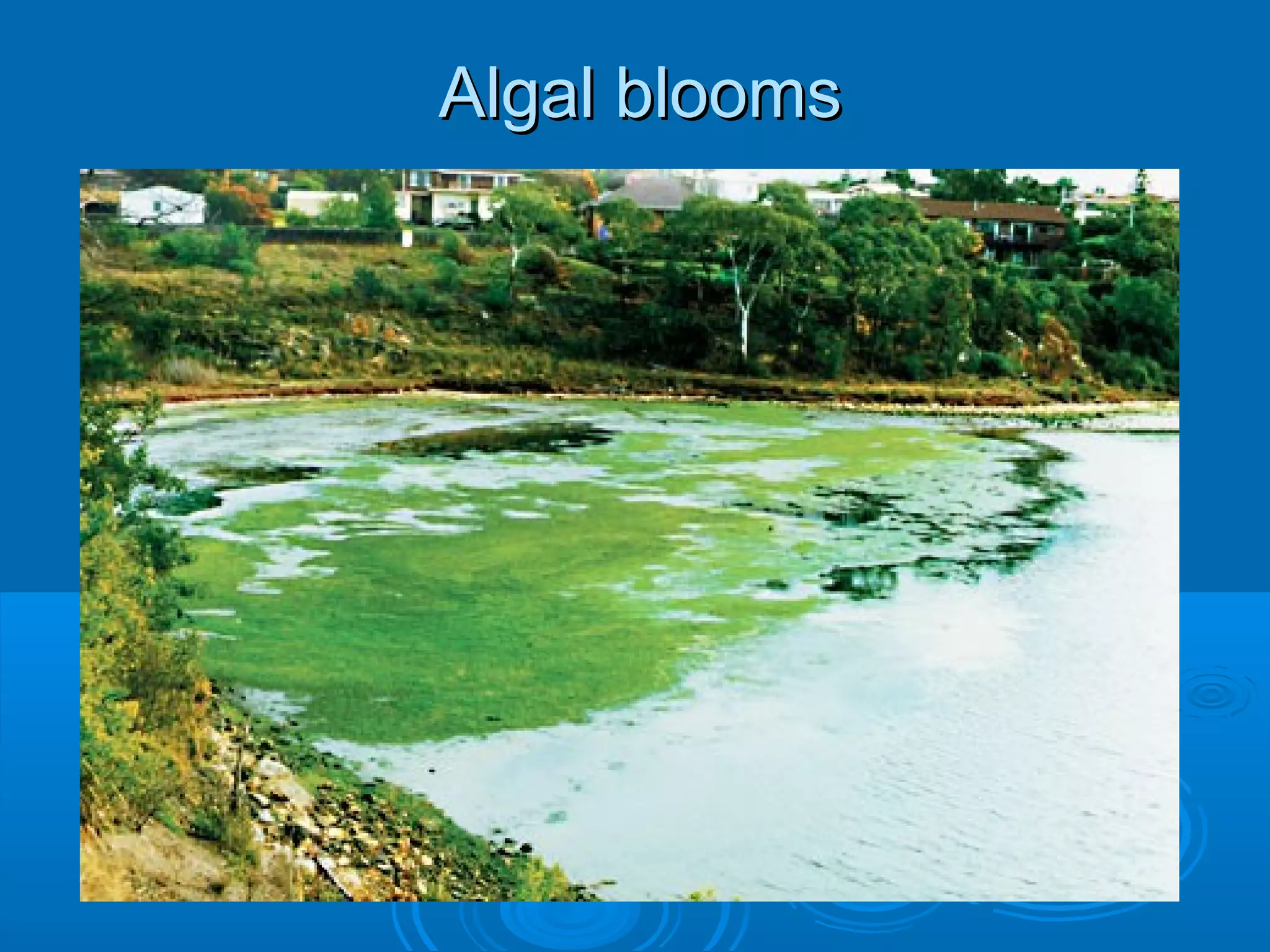
  fertilizers – excess phosphorus causes algal
  blooms
Algal blooms
Assignment: Put the 4 cycles
      together on one poster!
 Draw the hydrologic, carbon, nitrogen,
 phosporus and cycles onto one piece of
 poster paper.
 Include the required terminology
 Follow the criteria on the rubric provided
 Assessment will be done by performance
 (explanation of the cycles by the group)

Biogeochemical cycles

  • 1.
  • 2.
    What IS a“biogeochemical cycle”?  BIO = “life”  GEO = “earth”  CHEMICAL = “elements – C, O, N, P, S • a cycling of nutrients (water, carbon, oxygen, nitrogen, phosphorus, sulphur) from the abiotic components of the ecosystem (water, air, soil, rock) through the biotic components (plants, animals, fungi, bacteria)
  • 3.
    Two Secrets ofSurvival: Energy Flows and Matter Cycles  An ecosystem survives by a combination of energy flow (from Sun to Earth) and matter cycling.  Remember: the Earth is a CLOSED system Figure 3-14
  • 4.
    THE HYDROLOGIC (WATER)CYCLE Rain clouds Condensation Transpiration Evaporation Precipitation Transpiration to land from plants Precipitation Precipitation Evaporation Surface runoff from land Evaporation Runoff from ocean Precipitation (rapid) to ocean Infiltration and Surface Percolation runoff (rapid) Groundwater movement (slow) Ocean storage Fig. 3-26, p. 72
  • 5.
    Effects of HumanActivities on Water Cycle  We alter the water cycle by:  Withdrawing large amounts of freshwater.  Clearing vegetation and eroding soils.  Polluting surface and underground water.  Contributing to climate change.
  • 6.
    The Carbon Cycle Fig. 3-27, pp. 72-7
  • 7.
    Effects of HumanActivities on Carbon Cycle  We alter the carbon cycle by adding excess CO2 to the atmosphere through:  Burning fossil fuels.  Clearing vegetation faster than it is replaced   photosynthesis =  CO2 Figure 3-28
  • 8.
  • 9.
    Effects of HumanActivities on the Nitrogen Cycle  We alter the nitrogen cycle by:  Adding nitrous oxide to the atmosphere from vehicles and factories which contributes to acid rain.  Contaminating ground water from nitrate ions in inorganic fertilizers.  Releasing nitrogen into the troposphere through deforestation (less N assimilated by trees).
  • 10.
    THE Human InfluencedNITROGEN CYCLE
  • 11.
    THE PHOSPHORUS CYCLE mining Fertilizer excretion Guano agriculture uptake by weathering uptake by autotrophs autotrophs Marine Dissolved leaching, runoff Dissolved Land Food in Ocean in Soil Water, Food Webs Water Lakes, Rivers Webs death, death, decomposition decomposition sedimentation settling out weathering uplifting over geologic time Marine Sediments Rocks Fig. 3-31, p. 77
  • 12.
    Effects of HumanActivities on the Phosphorous Cycle  We remove large amounts of phosphate from the earth to make fertilizer.  We reduce phosphorous in tropical soils by clearing forests.  We add excess phosphates to aquatic systems from runoff of animal wastes and fertilizers – excess phosphorus causes algal blooms
  • 13.
  • 14.
    Assignment: Put the4 cycles together on one poster!  Draw the hydrologic, carbon, nitrogen, phosporus and cycles onto one piece of poster paper.  Include the required terminology  Follow the criteria on the rubric provided  Assessment will be done by performance (explanation of the cycles by the group)

Editor's Notes

  • #5 Figure 3.26 Natural capital: simplified model of the hydrologic cycle.
  • #7 Figure 3.27 Natural capital: simplified model of the global carbon cycle. Carbon moves through both marine ecosystems (left side) and terrestrial ecosystems (right side). Carbon reservoirs are shown as boxes; processes that change one form of carbon to another are shown in unboxed print. QUESTION: What are three ways in which your lifestyle directly or indirectly affects the carbon cycle? (From Cecie Starr, Biology: Concepts and Applications, 4th ed., Pacific Grove, Calif.: Brooks/Cole, © 2000)
  • #12 Figure 3.31 Natural capital: simplified model of the phosphorus cycle. Phosphorus reservoirs are shown as boxes; processes that change one form of phosphorus to another are shown in unboxed print. QUESTION: What are three ways in which your lifestyle directly or indirectly affects the phosphorus cycle? (From Cecie Starr and Ralph Taggart, Biology: The Unity and Diversity of Life, 9th ed., Belmont, Calif.: Wadsworth © 2001)