Cellular Ener g y
Needs
        Biology
    Mr. Hildebrandt
All Living Cells Need
Energy
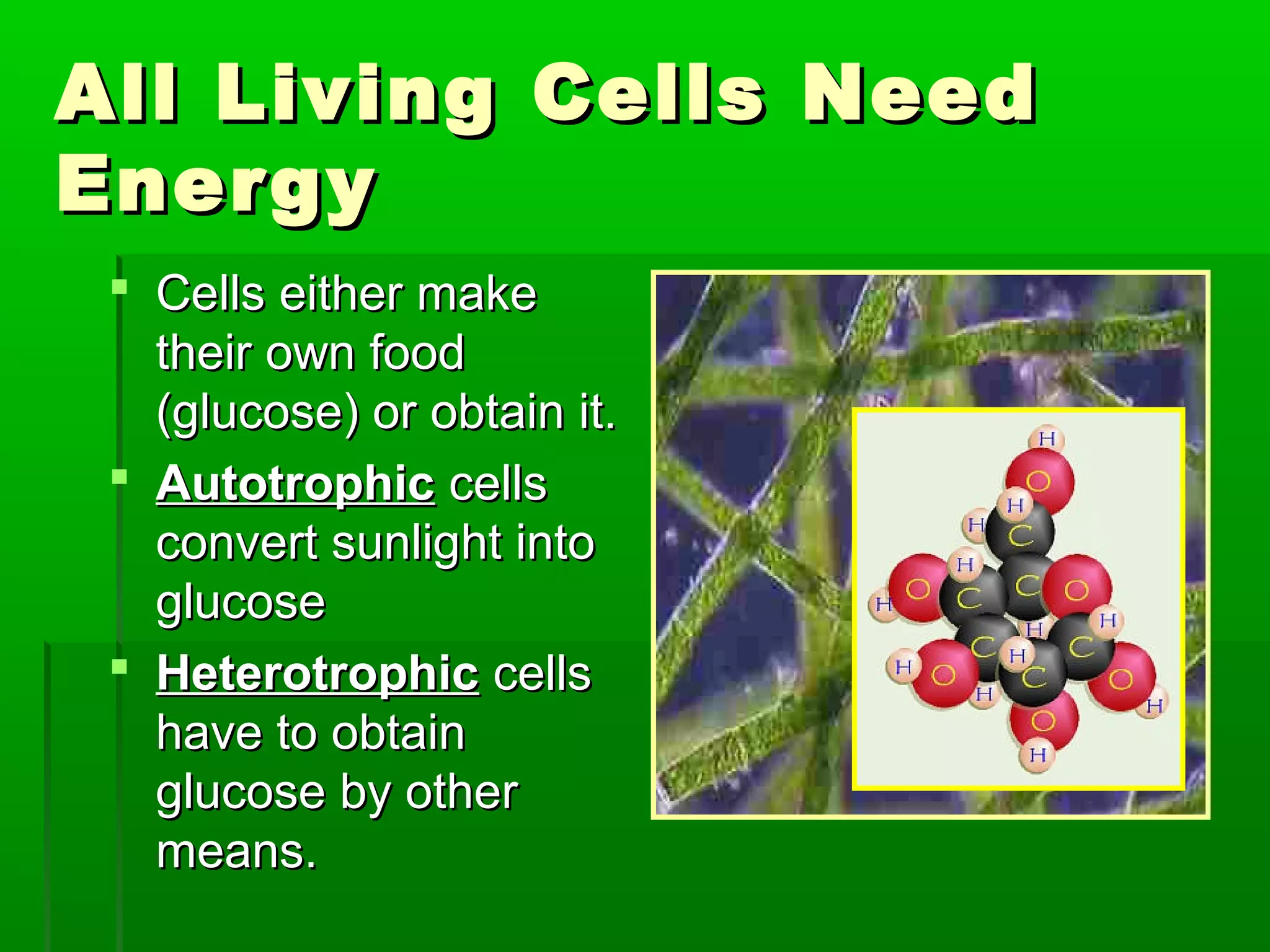
  Cells either make
   their own food
   (glucose) or obtain it.
  Autotrophic cells
   convert sunlight into
   glucose
  Heterotrophic cells
   have to obtain
   glucose by other
   means.
Energy Storage
Molecules
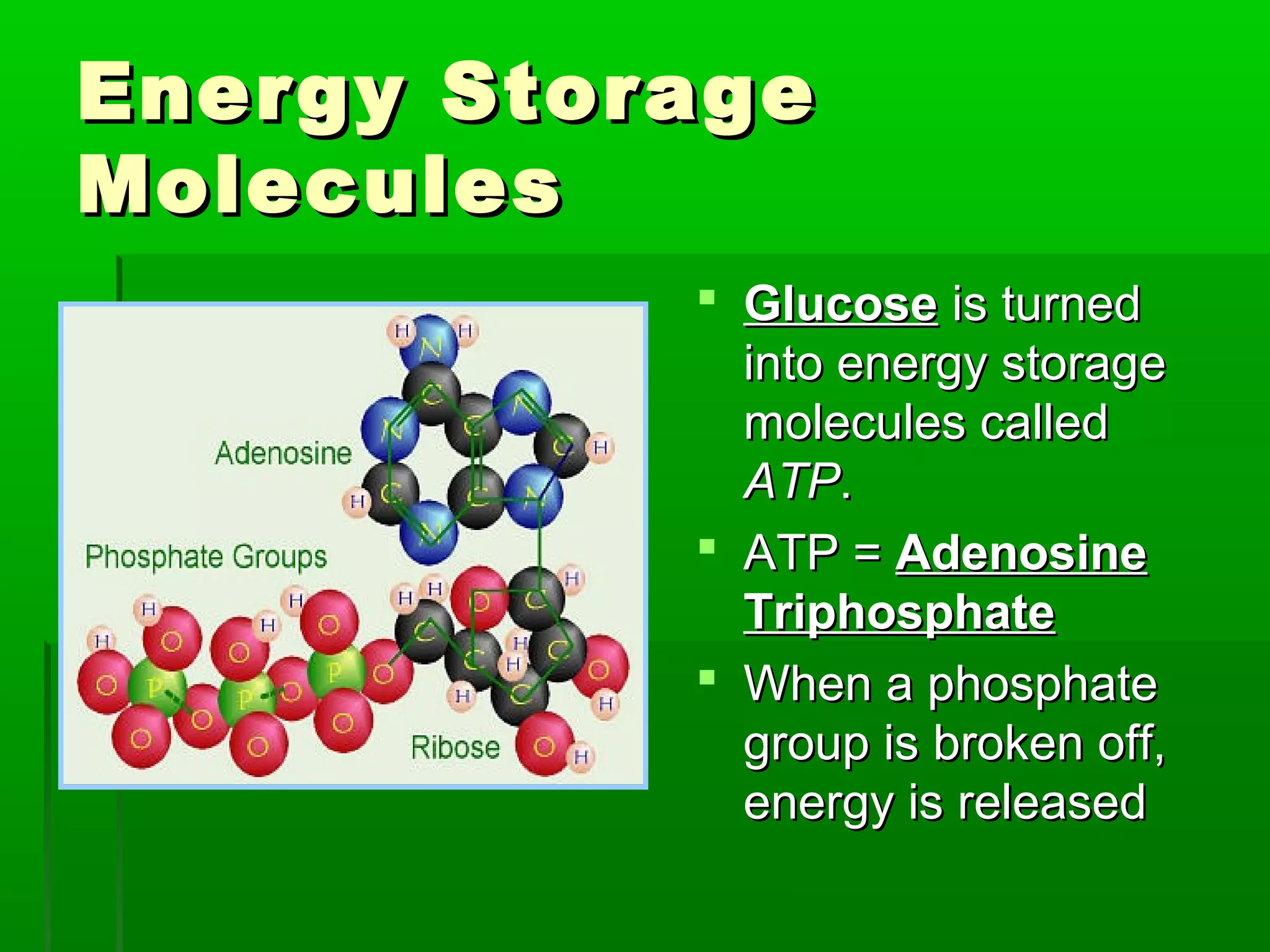
            Glucose is turned
             into energy storage
             molecules called
             ATP.
            ATP = Adenosine
             Triphosphate
            When a phosphate
             group is broken off,
             energy is released
Chemical Reactions
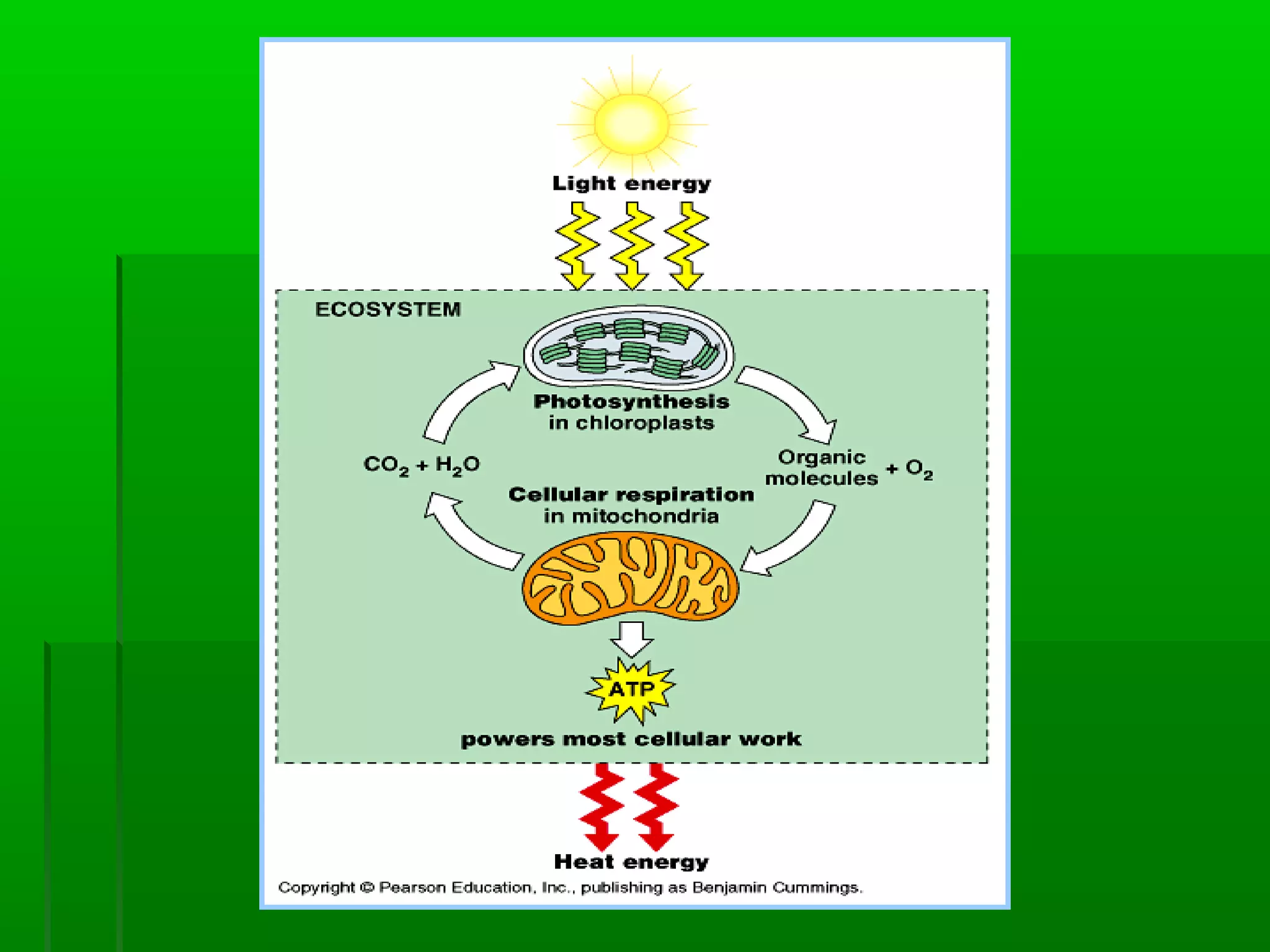
 Reactants – substances that enter a
  reaction. They are changed.
 Products – substances left after the
  reaction has taken place.
 Two chemical reactions are
  necessary for cells to produce
  energy: Photosynthesis & Cellular
  Respiration
Photosynthetic
Pigments
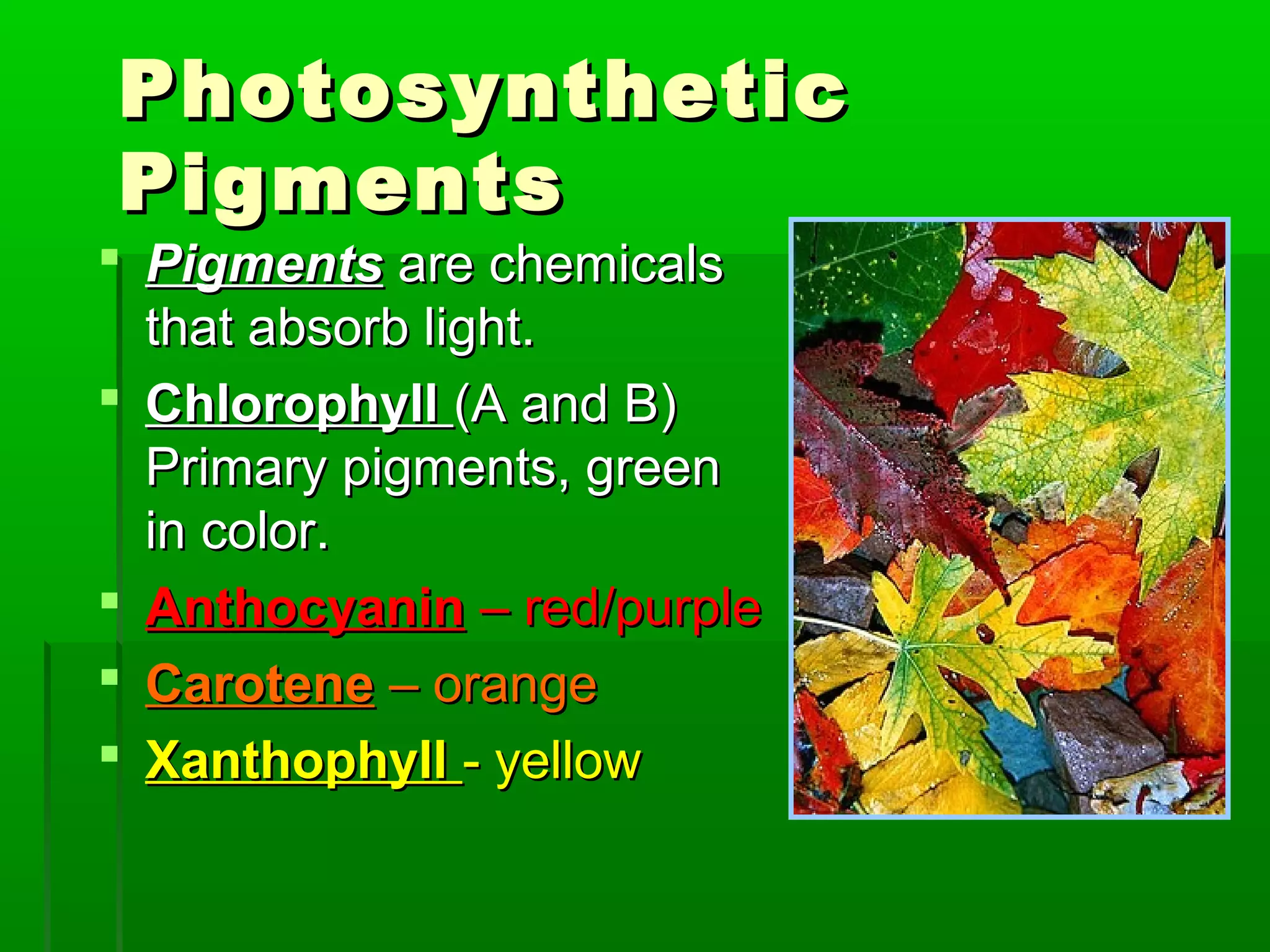
 Pigments are chemicals
  that absorb light.
 Chlorophyll (A and B)
  Primary pigments, green
  in color.
 Anthocyanin – red/purple
 Carotene – orange
 Xanthophyll - yellow
Photosynthesis
Explained
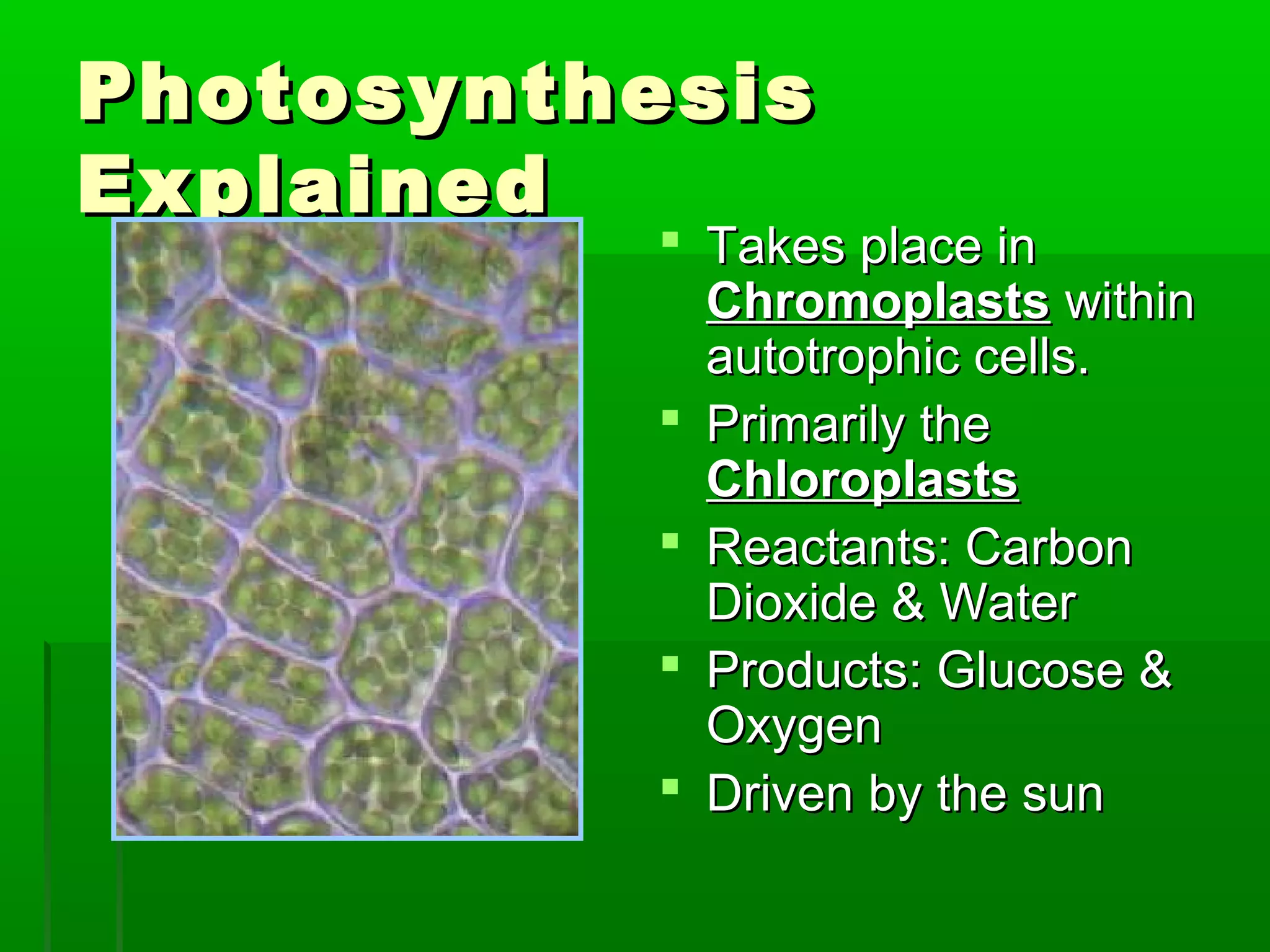
            Takes place in
             Chromoplasts within
             autotrophic cells.
            Primarily the
             Chloroplasts
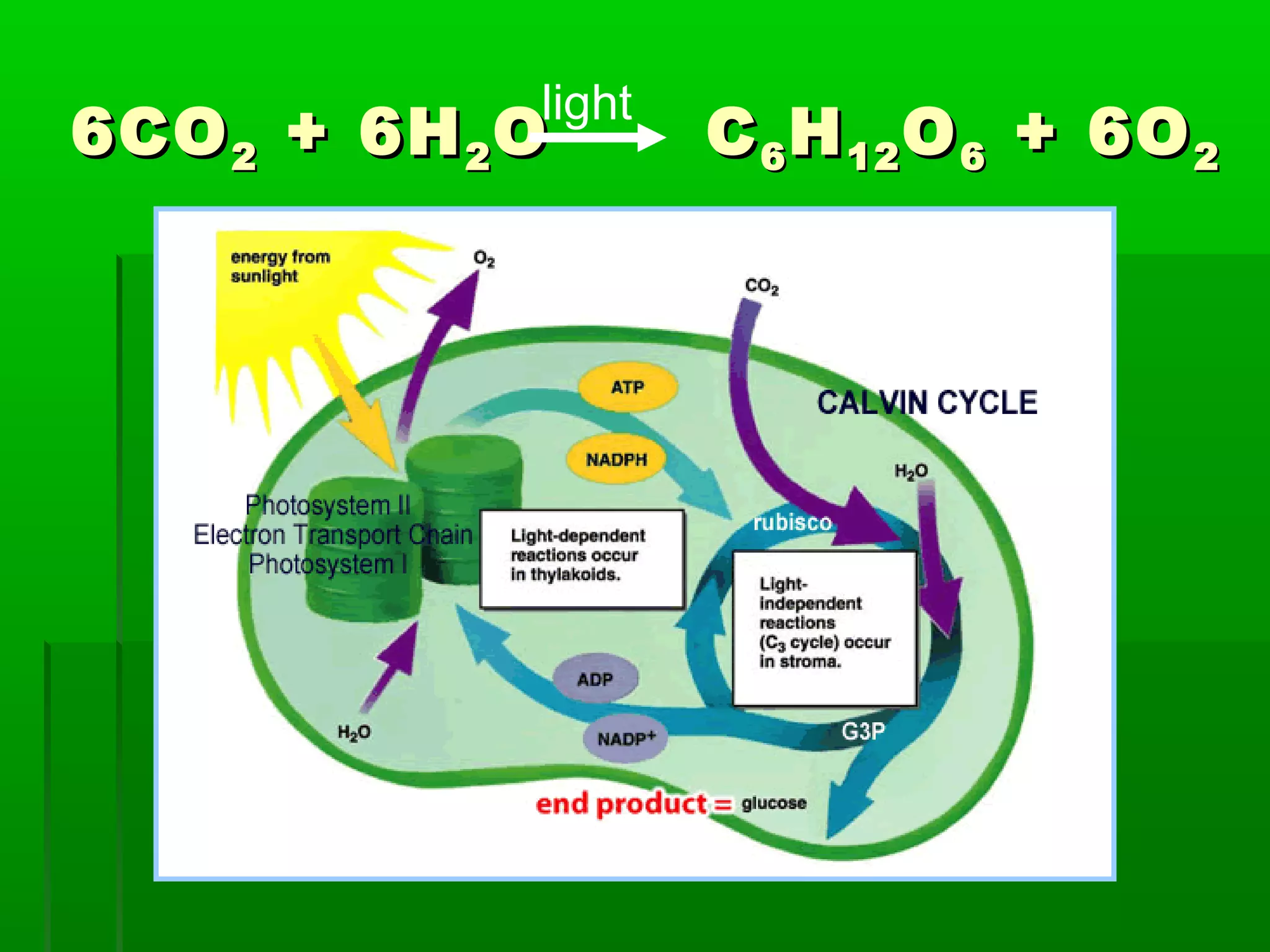
            Reactants: Carbon
             Dioxide & Water
            Products: Glucose &
             Oxygen
            Driven by the sun
light
6CO 2 + 6H 2 O       C 6 H 12 O 6 + 6O 2
Cellular Respiration
Explained
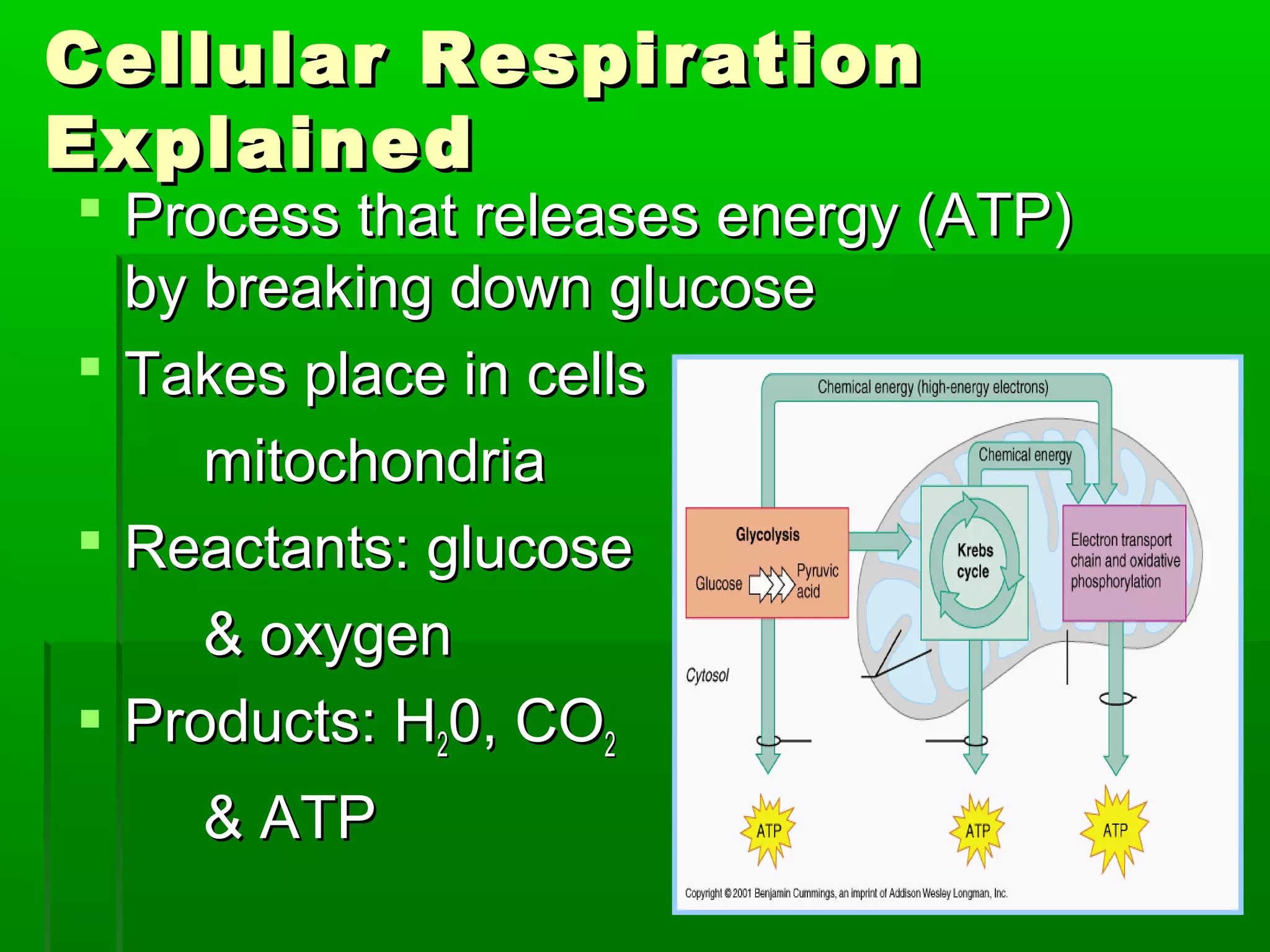
 Process that releases energy (ATP)
  by breaking down glucose
 Takes place in cells
     mitochondria
 Reactants: glucose
     & oxygen
 Products: H20, CO2
    & ATP
Types of Cellular
Respiration
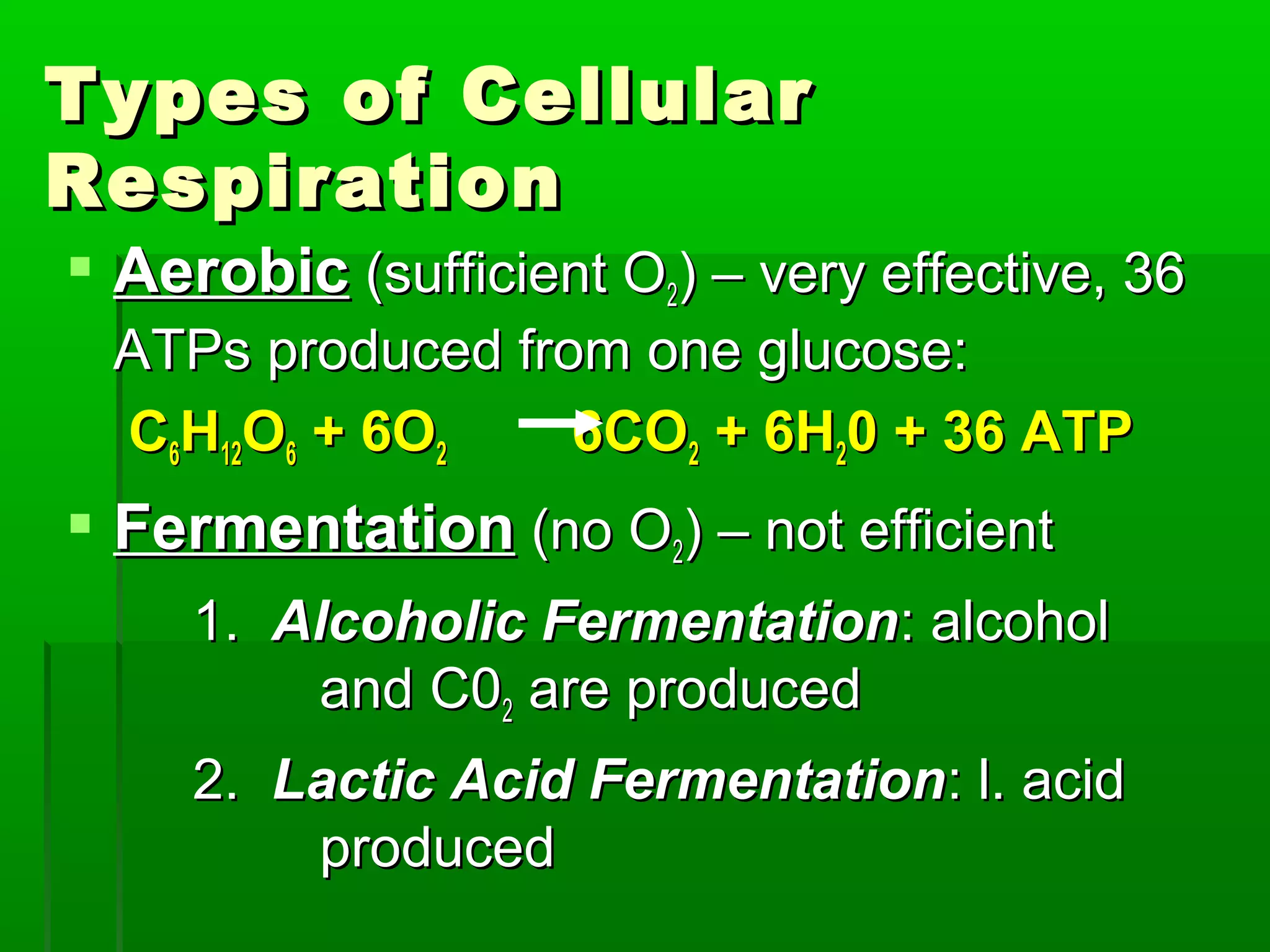
 Aerobic (sufficient O2) – very effective, 36
 ATPs produced from one glucose:
 C6H12O6 + 6O2    6CO2 + 6H20 + 36 ATP
 Fermentation (no O2) – not efficient
     1. Alcoholic Fermentation: alcohol
         and C02 are produced
     2. Lactic Acid Fermentation: l. acid
         produced

Cellular energy needs

  • 1.
    Cellular Ener gy Needs Biology Mr. Hildebrandt
  • 2.
    All Living CellsNeed Energy  Cells either make their own food (glucose) or obtain it.  Autotrophic cells convert sunlight into glucose  Heterotrophic cells have to obtain glucose by other means.
  • 3.
    Energy Storage Molecules  Glucose is turned into energy storage molecules called ATP.  ATP = Adenosine Triphosphate  When a phosphate group is broken off, energy is released
  • 4.
    Chemical Reactions  Reactants– substances that enter a reaction. They are changed.  Products – substances left after the reaction has taken place.  Two chemical reactions are necessary for cells to produce energy: Photosynthesis & Cellular Respiration
  • 6.
    Photosynthetic Pigments  Pigments arechemicals that absorb light.  Chlorophyll (A and B) Primary pigments, green in color.  Anthocyanin – red/purple  Carotene – orange  Xanthophyll - yellow
  • 7.
    Photosynthesis Explained  Takes place in Chromoplasts within autotrophic cells.  Primarily the Chloroplasts  Reactants: Carbon Dioxide & Water  Products: Glucose & Oxygen  Driven by the sun
  • 8.
    light 6CO 2 +6H 2 O C 6 H 12 O 6 + 6O 2
  • 9.
    Cellular Respiration Explained  Processthat releases energy (ATP) by breaking down glucose  Takes place in cells mitochondria  Reactants: glucose & oxygen  Products: H20, CO2 & ATP
  • 10.
    Types of Cellular Respiration Aerobic (sufficient O2) – very effective, 36 ATPs produced from one glucose: C6H12O6 + 6O2 6CO2 + 6H20 + 36 ATP  Fermentation (no O2) – not efficient 1. Alcoholic Fermentation: alcohol and C02 are produced 2. Lactic Acid Fermentation: l. acid produced