Presented by:-
Shrimali Neha
Roll No-214
M.sc sem-2
Paper:-CBO-405
Dept.of life
sciences
H.N.G.U,Patan
 INTRODUCTION.
 CLASSIFICATION OF TISSUES.
 SIMPLE TISSUE.
 COMPLEX TISSUE.
 REFRENCES.
 The perminanent Tissues may be
simple or complex. A simple tissue
is made up one type of cells forming
a uniform or homogeneous system
of cells.
 A Complex tissue is made up of
more than one type of cells working
together as a unit.
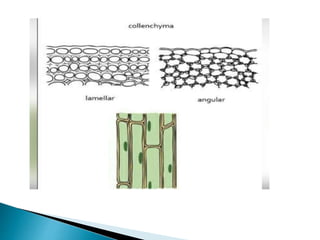
Three type of simple tisuue
1. PARENCHYMA
2. COLLEEN HUMAN
3. SCLERENCHYMA
 Parenchyma is the most basic type
of differentiated cell.it forms the
frame work of all plant organs and
occurs in the cortex pith and root
mesophyll of leaves ,pulp of fruits
and endosperm of seeds.
 These is maximum development of
inter cellular spaces in aquatic plants
and they form a connected system
throughout the entire plants . This
tissue is often known as Arenchyma
which help in circulation of air in
plants.
 SCLERENCHYMA is thick walled often
lignified parenchyma & prosenchymatous
cell.these cells are usually hard and
lignified with uniformly thick walls.
 Their principal function is to provide
mechanical support.the mature
sclerenchyma differs from parenchyma
and collenchyma.
 SCLERENCHYMA divided into fibres and
sclerosis
 Fibes are long ,narrow thick and lignified
sclerenchyma cell & sclereidsare spherical
oval,stellate,T-shaped or cylindrical in
shape.
 The finer originate variously .the
xylary fibres and the phloem fibres
are usually derived from the
procambium or vascular cambium.
 The fibers derived from the same
cambial initials may undergo
different amount of elongation
 Sclereids develop from parenchyma cell. in
leaves they may develop from the cells of
epidermis ,or spongy parenchyma.
 A number of recent investigation seems to
implicate factors that influence formation &
development of sclereids.
 Two Type of complex Tissues
 1- Xylem
 2-Phloem
 The vascular system of plant consist
of xylem the pricipal water
conducting tissue & phloem the
principal food conducting tissue
 Xylem is composed of several types of
living and non - living cells.The principal
cell types of xylem are tracheary elements
,tracheids & vessels.
 Vessels develop from a longitudinal file
of procambial or cambium cells in the
primary and secondary xylem
respectively.
 The phloem is placed outside the
cambium of the vascular bundles.
 The basic components of the phloem are
sieve elements companion cells phloem
parenchyma and phloem fibres.
 Anatomy of seed plants :-
P.C Pandey,
D.K.Jain
 A Text Book Of Angiosperms:-
B.P.Pandey
THANK YOU

Development of complex & simple tissue

  • 1.
    Presented by:- Shrimali Neha RollNo-214 M.sc sem-2 Paper:-CBO-405 Dept.of life sciences H.N.G.U,Patan
  • 2.
     INTRODUCTION.  CLASSIFICATIONOF TISSUES.  SIMPLE TISSUE.  COMPLEX TISSUE.  REFRENCES.
  • 3.
     The perminanentTissues may be simple or complex. A simple tissue is made up one type of cells forming a uniform or homogeneous system of cells.  A Complex tissue is made up of more than one type of cells working together as a unit.
  • 5.
    Three type ofsimple tisuue 1. PARENCHYMA 2. COLLEEN HUMAN 3. SCLERENCHYMA
  • 6.
     Parenchyma isthe most basic type of differentiated cell.it forms the frame work of all plant organs and occurs in the cortex pith and root mesophyll of leaves ,pulp of fruits and endosperm of seeds.
  • 7.
     These ismaximum development of inter cellular spaces in aquatic plants and they form a connected system throughout the entire plants . This tissue is often known as Arenchyma which help in circulation of air in plants.
  • 9.
     SCLERENCHYMA isthick walled often lignified parenchyma & prosenchymatous cell.these cells are usually hard and lignified with uniformly thick walls.  Their principal function is to provide mechanical support.the mature sclerenchyma differs from parenchyma and collenchyma.
  • 10.
     SCLERENCHYMA dividedinto fibres and sclerosis  Fibes are long ,narrow thick and lignified sclerenchyma cell & sclereidsare spherical oval,stellate,T-shaped or cylindrical in shape.
  • 11.
     The fineroriginate variously .the xylary fibres and the phloem fibres are usually derived from the procambium or vascular cambium.  The fibers derived from the same cambial initials may undergo different amount of elongation
  • 12.
     Sclereids developfrom parenchyma cell. in leaves they may develop from the cells of epidermis ,or spongy parenchyma.  A number of recent investigation seems to implicate factors that influence formation & development of sclereids.
  • 13.
     Two Typeof complex Tissues  1- Xylem  2-Phloem  The vascular system of plant consist of xylem the pricipal water conducting tissue & phloem the principal food conducting tissue
  • 14.
     Xylem iscomposed of several types of living and non - living cells.The principal cell types of xylem are tracheary elements ,tracheids & vessels.
  • 15.
     Vessels developfrom a longitudinal file of procambial or cambium cells in the primary and secondary xylem respectively.
  • 16.
     The phloemis placed outside the cambium of the vascular bundles.  The basic components of the phloem are sieve elements companion cells phloem parenchyma and phloem fibres.
  • 17.
     Anatomy ofseed plants :- P.C Pandey, D.K.Jain  A Text Book Of Angiosperms:- B.P.Pandey
  • 18.