STRUCTURAL VARIABILITIES IN
LEAVES
PRESENTED BY
GOHIL SANJAY B
M.Sc. Sem:-2
Subject:-Botany
Paper no:-CBO-405
DEPARTMENT OF LIFE
SCIENCE
H.N.G.U PATAN
CONTENTS
• Structural variability in leaves of –
1. Typha
2. Nymphea
3. Maize
TYPHA
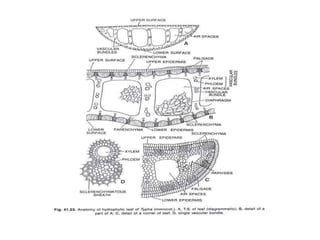
• Typha is a hydrophytes.
• Plants that grow in water or very wet places.
• They may be submerged or partly
submerged,floting or amphibious.
• Their structural adaptations are mainly due
to high water content and the definite supply
of oxygen.
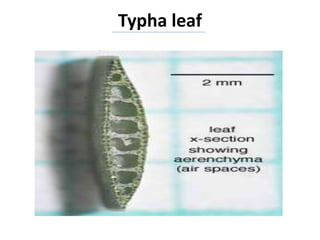
Typha leaf
Epidermis
• In aquatic plants the epidermis is not protective
but absorbs gases and nutrients directly from
the water.
• The epidermis in typical hydrophyte has an
extremely thin cuticle,and the thin cellulose wall
permit ready absorption from the surrounding
water.
• Commonly the chloroplast are found in
epidermal cells of leaves, especially when the
leaves are very thin;these chloroplasts utilize
the weak light under water for photosynthesis.
Lack of sclerenchyma:-
• Submerged plants usually have few or no
sclerenchymtous tissues and calls.
• The water it self gives support to the plant,and
protects it to some extent from injury.
• Thethick walls of tissues, their density and the
presence of collenchyma in some plants give
some rigidity.
Minimum development of vasculae
tissue:-
• The xylem shows the greatest reduction.
• In this plants, there is a well developed xylem
lacuma in the position of xylem.
• The lacunae resemble typical air-chambers.
• The phloem is fairly well developed as compared
with the xylem. The endodermis is usually
present around stele,but it is wekly developed.
Development of air-chamber:-
• Chambers and passages filled with gases are
commonly found in the leaves and stems or
hydrophytes.
• The air-chambers are large, usually regular,
intercellur spaces extending through the leaf
and often for long distances through the stem.
• The spaces are usually separated by partitions of
photosynthetic tissue.the carbon dioxide that is
given off in respiration is stored in these cavity
for photosynthesis.
Nymphea
• The phyllode is the most interesting
modification of petiole.
• The petiole becomes flattened and leaf like.
• The flattened petiole which looks like
ordinary leaf is called phyllode.
• Usually the phyllode is isolateral, so that,
both the surface are equally illuminated.
Epidermis:-
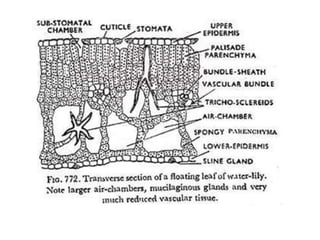
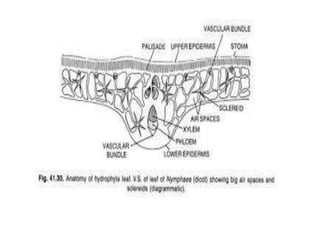
• It consists of a single row of cells covered
with well developed cuticle.
• Sunken stomata are present. The margin of
phyllode possess radicaly elongated
epidermal cells covered with thick cuticle.
• Below each stomata there lies a well defined
substomatal chamber for exchange of gasese.
Pallisade and parenchyma:-
• Just beneath the epidermis one or two layers
of pallisade parenchyma are present which
help in photosynthesis.
• The central region is occupied by thin-walled
living parenchyma cells having well
developed intercellular spaces among them.
Vascular system:-
• Just like in petiole the vascular bundles from a
ring and are arranged below the palisade tissue.
• The central and marginal vascular bundles are
sufficiently big in size.
• Each vascular bundle consit of xylem and
phloem.around the central and marginal
vascular bundles well developed sclerenchyma
is found.
• Vascular bundles are arranged in a complete
ring the central and marginal bundles are
bigger in size.
• Pallisade tissue is present
• Radically elongated epidermal cells are found
at the margins.
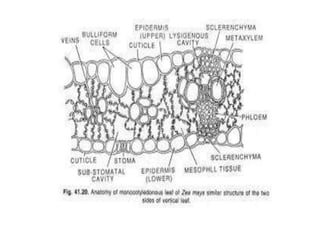
MAIZE
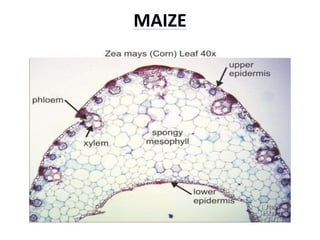
Epidermis:-
• The epidermis is found on both upper and lower
surfaces of the leafe. The epidermal layers are
uniseriate and composed of more or less oval
cells.
• The outer wall of the epidermal cells is
cuticularized.
• The upper epidermis my be easily identified due
to the presence of xylem.
Mesophyll:-
• As the leaf is isobilateral the mesophyll is not
differentiated into palisade and spongy
tissues.
• It is composed of compactly arranged
thinwalled, isodiametric chlorophyllous
intercellular spaces among them.
Vascular bundles:-
• The vascular bundles are collateral and closed as
found in monocotyledon.
• Most of the bundles are small in size but fairly
large bundles also occurs at regulsr intervals.
• The xylem is found toward upper side in the
bundles.sclerenchyma cell occur in patches on
both ends of the large vascular bundles which
give mechanical support to the leafe.
Reference
• B P Pandey:-plant Anatomy
Structural variabilities in leaves

Structural variabilities in leaves

  • 1.
    STRUCTURAL VARIABILITIES IN LEAVES PRESENTEDBY GOHIL SANJAY B M.Sc. Sem:-2 Subject:-Botany Paper no:-CBO-405 DEPARTMENT OF LIFE SCIENCE H.N.G.U PATAN
  • 2.
    CONTENTS • Structural variabilityin leaves of – 1. Typha 2. Nymphea 3. Maize
  • 3.
    TYPHA • Typha isa hydrophytes. • Plants that grow in water or very wet places. • They may be submerged or partly submerged,floting or amphibious. • Their structural adaptations are mainly due to high water content and the definite supply of oxygen.
  • 4.
  • 5.
    Epidermis • In aquaticplants the epidermis is not protective but absorbs gases and nutrients directly from the water. • The epidermis in typical hydrophyte has an extremely thin cuticle,and the thin cellulose wall permit ready absorption from the surrounding water. • Commonly the chloroplast are found in epidermal cells of leaves, especially when the leaves are very thin;these chloroplasts utilize the weak light under water for photosynthesis.
  • 6.
    Lack of sclerenchyma:- •Submerged plants usually have few or no sclerenchymtous tissues and calls. • The water it self gives support to the plant,and protects it to some extent from injury. • Thethick walls of tissues, their density and the presence of collenchyma in some plants give some rigidity.
  • 7.
    Minimum development ofvasculae tissue:- • The xylem shows the greatest reduction. • In this plants, there is a well developed xylem lacuma in the position of xylem. • The lacunae resemble typical air-chambers. • The phloem is fairly well developed as compared with the xylem. The endodermis is usually present around stele,but it is wekly developed.
  • 8.
    Development of air-chamber:- •Chambers and passages filled with gases are commonly found in the leaves and stems or hydrophytes. • The air-chambers are large, usually regular, intercellur spaces extending through the leaf and often for long distances through the stem. • The spaces are usually separated by partitions of photosynthetic tissue.the carbon dioxide that is given off in respiration is stored in these cavity for photosynthesis.
  • 10.
    Nymphea • The phyllodeis the most interesting modification of petiole. • The petiole becomes flattened and leaf like. • The flattened petiole which looks like ordinary leaf is called phyllode. • Usually the phyllode is isolateral, so that, both the surface are equally illuminated.
  • 12.
    Epidermis:- • It consistsof a single row of cells covered with well developed cuticle. • Sunken stomata are present. The margin of phyllode possess radicaly elongated epidermal cells covered with thick cuticle. • Below each stomata there lies a well defined substomatal chamber for exchange of gasese.
  • 13.
    Pallisade and parenchyma:- •Just beneath the epidermis one or two layers of pallisade parenchyma are present which help in photosynthesis. • The central region is occupied by thin-walled living parenchyma cells having well developed intercellular spaces among them.
  • 14.
    Vascular system:- • Justlike in petiole the vascular bundles from a ring and are arranged below the palisade tissue. • The central and marginal vascular bundles are sufficiently big in size. • Each vascular bundle consit of xylem and phloem.around the central and marginal vascular bundles well developed sclerenchyma is found.
  • 15.
    • Vascular bundlesare arranged in a complete ring the central and marginal bundles are bigger in size. • Pallisade tissue is present • Radically elongated epidermal cells are found at the margins.
  • 17.
  • 18.
    Epidermis:- • The epidermisis found on both upper and lower surfaces of the leafe. The epidermal layers are uniseriate and composed of more or less oval cells. • The outer wall of the epidermal cells is cuticularized. • The upper epidermis my be easily identified due to the presence of xylem.
  • 19.
    Mesophyll:- • As theleaf is isobilateral the mesophyll is not differentiated into palisade and spongy tissues. • It is composed of compactly arranged thinwalled, isodiametric chlorophyllous intercellular spaces among them.
  • 20.
    Vascular bundles:- • Thevascular bundles are collateral and closed as found in monocotyledon. • Most of the bundles are small in size but fairly large bundles also occurs at regulsr intervals. • The xylem is found toward upper side in the bundles.sclerenchyma cell occur in patches on both ends of the large vascular bundles which give mechanical support to the leafe.
  • 22.
    Reference • B PPandey:-plant Anatomy