Stomata
Dr. K. GANESH KUMARI
ASSISTANT PROFESSOR
DEPARTMENT OF BOTANY
SRIMAD ANDAVAN ARTS AND SCIENCE COLLEGE (AUTONOMOUS)
TRICHY - 5
Definition of Stomata
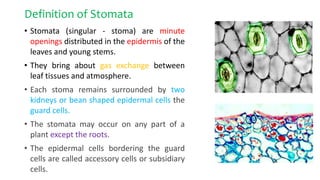
• Stomata (singular - stoma) are minute
openings distributed in the epidermis of the
leaves and young stems.
• They bring about gas exchange between
leaf tissues and atmosphere.
• Each stoma remains surrounded by two
kidneys or bean shaped epidermal cells the
guard cells.
• The stomata may occur on any part of a
plant except the roots.
• The epidermal cells bordering the guard
cells are called accessory cells or subsidiary
cells.
Cont…
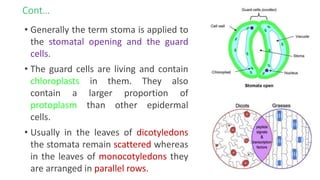
• Generally the term stoma is applied to
the stomatal opening and the guard
cells.
• The guard cells are living and contain
chloroplasts in them. They also
contain a larger proportion of
protoplasm than other epidermal
cells.
• Usually in the leaves of dicotyledons
the stomata remain scattered whereas
in the leaves of monocotyledons they
are arranged in parallel rows.
Distribution
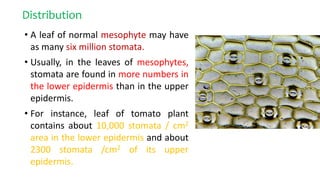
• A leaf of normal mesophyte may have
as many six million stomata.
• Usually, in the leaves of mesophytes,
stomata are found in more numbers in
the lower epidermis than in the upper
epidermis.
• For instance, leaf of tomato plant
contains about 10,000 stomata / cm2
area in the lower epidermis and about
2300 stomata /cm2 of its upper
epidermis.
Position of stomata
• In stomata, more number of stomata is seen
in the upper epidermis than the lower
epidermis.
• For example
• Leaf of wheat plant contains
– Lower epidermis - 1400 stomata / cm2
area.
- Upper epidermis – 3300 stomata / cm2
area.
• Woody plants – Lower epidermis of leaves
• Aquatic plants – Upper epidermis of
leaves
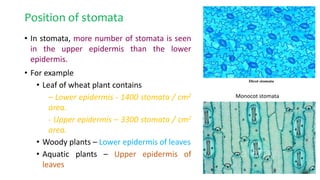
Monocot stomata
Size of the Stomata
• The size of the stomata varies
according to the plant species and
even among the stomata of a single
leaf.
• In general, size of the open stomata
is 27 - 45µ in length and 23 – 28µ in
width, and of closed stomata is 27 -
45µ in length and 10 - 33µ in width.
Types of stomata
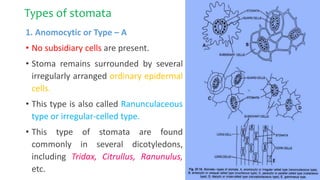
1. Anomocytic or Type – A
• No subsidiary cells are present.
• Stoma remains surrounded by several
irregularly arranged ordinary epidermal
cells.
• This type is also called Ranunculaceous
type or irregular-celled type.
• This type of stomata are found
commonly in several dicotyledons,
including Tridax, Citrullus, Ranunulus,
etc.
Cont…
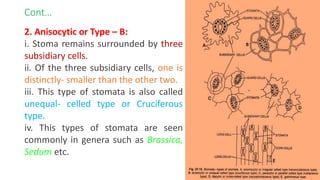
2. Anisocytic or Type – B:
i. Stoma remains surrounded by three
subsidiary cells.
ii. Of the three subsidiary cells, one is
distinctly- smaller than the other two.
iii. This type of stomata is also called
unequal- celled type or Cruciferous
type.
iv. This types of stomata are seen
commonly in genera such as Brassica,
Sedum etc.
Cont…
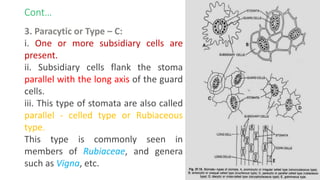
3. Paracytic or Type – C:
i. One or more subsidiary cells are
present.
ii. Subsidiary cells flank the stoma
parallel with the long axis of the guard
cells.
iii. This type of stomata are also called
parallel - celled type or Rubiaceous
type.
This type is commonly seen in
members of Rubiaceae, and genera
such as Vigna, etc.
Cont…
4. Diacytic or Type – D:
i. Stoma remains surrounded by a pair
of subsidiary cells.
ii. Common walls of subsidiary cells
remain at right angles to the long axis
of the guard cells.
iii. This type is also called cross-celled
type or Caryophyllaceous type.
This type of stomata are commonly
seen in Ocimum, Caryophyllaceae
(e.g., Dianthus), etc.
Cont…
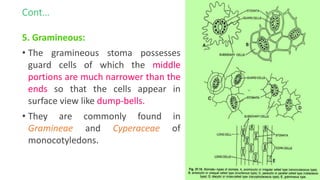
5. Gramineous:
• The gramineous stoma possesses
guard cells of which the middle
portions are much narrower than the
ends so that the cells appear in
surface view like dump-bells.
• They are commonly found in
Gramineae and Cyperaceae of
monocotyledons.
Cont…
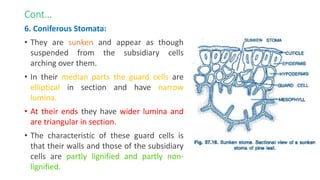
6. Coniferous Stomata:
• They are sunken and appear as though
suspended from the subsidiary cells
arching over them.
• In their median parts the guard cells are
elliptical in section and have narrow
lumina.
• At their ends they have wider lumina and
are triangular in section.
• The characteristic of these guard cells is
that their walls and those of the subsidiary
cells are partly lignified and partly non-
lignified.
Thank you

Stomata

  • 1.
    Stomata Dr. K. GANESHKUMARI ASSISTANT PROFESSOR DEPARTMENT OF BOTANY SRIMAD ANDAVAN ARTS AND SCIENCE COLLEGE (AUTONOMOUS) TRICHY - 5
  • 2.
    Definition of Stomata •Stomata (singular - stoma) are minute openings distributed in the epidermis of the leaves and young stems. • They bring about gas exchange between leaf tissues and atmosphere. • Each stoma remains surrounded by two kidneys or bean shaped epidermal cells the guard cells. • The stomata may occur on any part of a plant except the roots. • The epidermal cells bordering the guard cells are called accessory cells or subsidiary cells.
  • 3.
    Cont… • Generally theterm stoma is applied to the stomatal opening and the guard cells. • The guard cells are living and contain chloroplasts in them. They also contain a larger proportion of protoplasm than other epidermal cells. • Usually in the leaves of dicotyledons the stomata remain scattered whereas in the leaves of monocotyledons they are arranged in parallel rows.
  • 4.
    Distribution • A leafof normal mesophyte may have as many six million stomata. • Usually, in the leaves of mesophytes, stomata are found in more numbers in the lower epidermis than in the upper epidermis. • For instance, leaf of tomato plant contains about 10,000 stomata / cm2 area in the lower epidermis and about 2300 stomata /cm2 of its upper epidermis.
  • 5.
    Position of stomata •In stomata, more number of stomata is seen in the upper epidermis than the lower epidermis. • For example • Leaf of wheat plant contains – Lower epidermis - 1400 stomata / cm2 area. - Upper epidermis – 3300 stomata / cm2 area. • Woody plants – Lower epidermis of leaves • Aquatic plants – Upper epidermis of leaves Monocot stomata
  • 6.
    Size of theStomata • The size of the stomata varies according to the plant species and even among the stomata of a single leaf. • In general, size of the open stomata is 27 - 45µ in length and 23 – 28µ in width, and of closed stomata is 27 - 45µ in length and 10 - 33µ in width.
  • 7.
    Types of stomata 1.Anomocytic or Type – A • No subsidiary cells are present. • Stoma remains surrounded by several irregularly arranged ordinary epidermal cells. • This type is also called Ranunculaceous type or irregular-celled type. • This type of stomata are found commonly in several dicotyledons, including Tridax, Citrullus, Ranunulus, etc.
  • 8.
    Cont… 2. Anisocytic orType – B: i. Stoma remains surrounded by three subsidiary cells. ii. Of the three subsidiary cells, one is distinctly- smaller than the other two. iii. This type of stomata is also called unequal- celled type or Cruciferous type. iv. This types of stomata are seen commonly in genera such as Brassica, Sedum etc.
  • 9.
    Cont… 3. Paracytic orType – C: i. One or more subsidiary cells are present. ii. Subsidiary cells flank the stoma parallel with the long axis of the guard cells. iii. This type of stomata are also called parallel - celled type or Rubiaceous type. This type is commonly seen in members of Rubiaceae, and genera such as Vigna, etc.
  • 10.
    Cont… 4. Diacytic orType – D: i. Stoma remains surrounded by a pair of subsidiary cells. ii. Common walls of subsidiary cells remain at right angles to the long axis of the guard cells. iii. This type is also called cross-celled type or Caryophyllaceous type. This type of stomata are commonly seen in Ocimum, Caryophyllaceae (e.g., Dianthus), etc.
  • 11.
    Cont… 5. Gramineous: • Thegramineous stoma possesses guard cells of which the middle portions are much narrower than the ends so that the cells appear in surface view like dump-bells. • They are commonly found in Gramineae and Cyperaceae of monocotyledons.
  • 12.
    Cont… 6. Coniferous Stomata: •They are sunken and appear as though suspended from the subsidiary cells arching over them. • In their median parts the guard cells are elliptical in section and have narrow lumina. • At their ends they have wider lumina and are triangular in section. • The characteristic of these guard cells is that their walls and those of the subsidiary cells are partly lignified and partly non- lignified.
  • 13.