Gas chromatography
GC DERIVATIZATION 
contents 
 Derivatisation techniques: 
 Applications of gas chromatography
What is derivatization? 
• What is GC Derivatization? 
• Derivatization is the process of chemically modifying 
a compound to produce a new compound which has 
properties that are suitable for analysis using a GC.
Why Derivatize: 
 To permit analysis of compounds not directly amenable to 
analysis due to, for example, inadequate volatility or stability. 
 Improve chromatographic behavior or detectability. 
Many compounds do not produce a usable chromatograph 
(i.e.multiple peaks, or one big blob), or the sample of interest 
goes undetected. As a result it may be necessary to derivatize 
the compound before GC analysis is done. 
Derivatization is a useful tool allowing the use of GC and 
GC/MS to be done on samples that would otherwise not be 
possible in various areas of chemistry such as medical, 
forensic, and environmental.
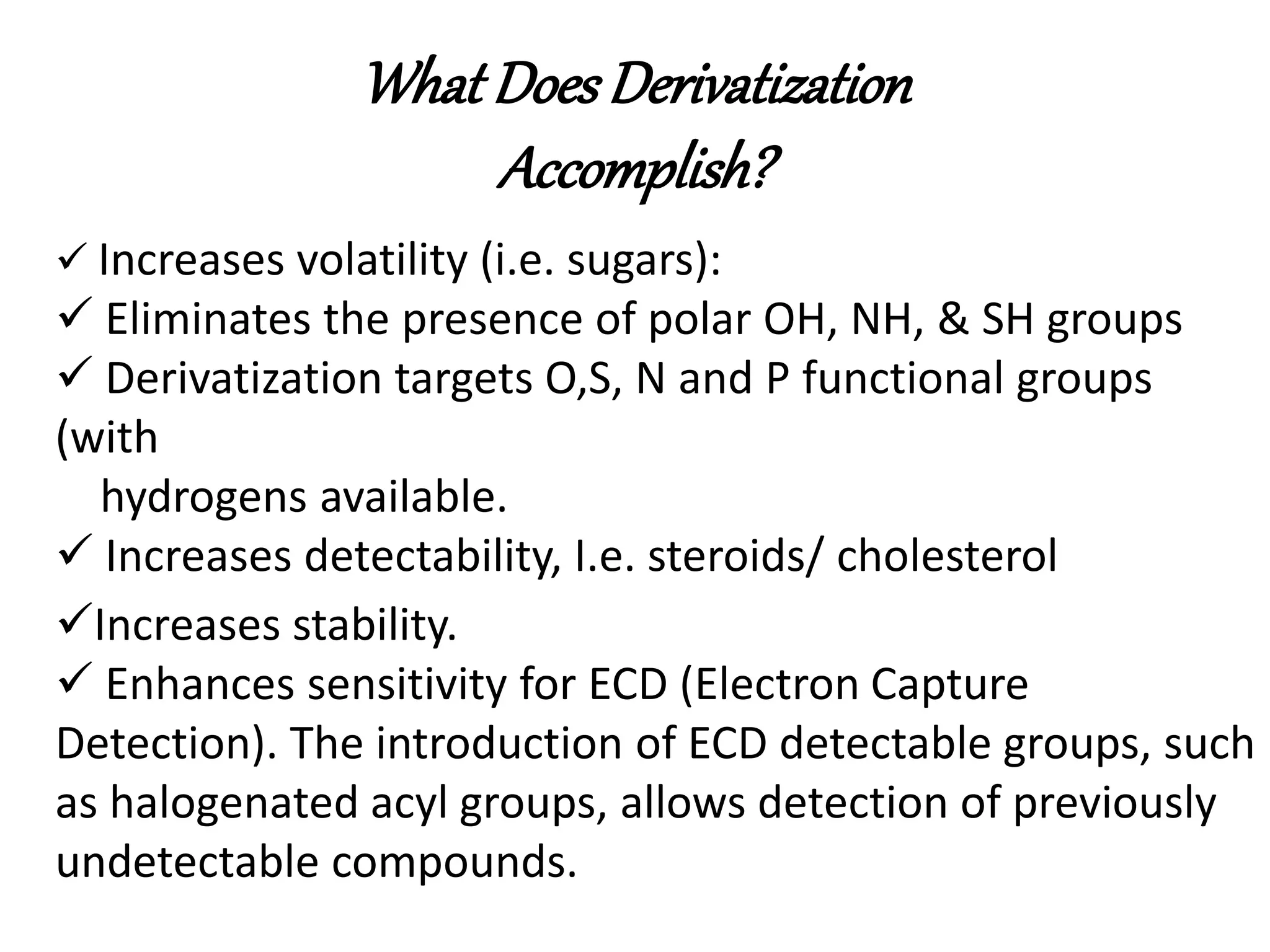
What Does Derivatization 
Accomplish? 
 Increases volatility (i.e. sugars): 
 Eliminates the presence of polar OH, NH, & SH groups 
 Derivatization targets O,S, N and P functional groups 
(with 
hydrogens available. 
 Increases detectability, I.e. steroids/ cholesterol 
Increases stability. 
 Enhances sensitivity for ECD (Electron Capture 
Detection). The introduction of ECD detectable groups, such 
as halogenated acyl groups, allows detection of previously 
undetectable compounds.
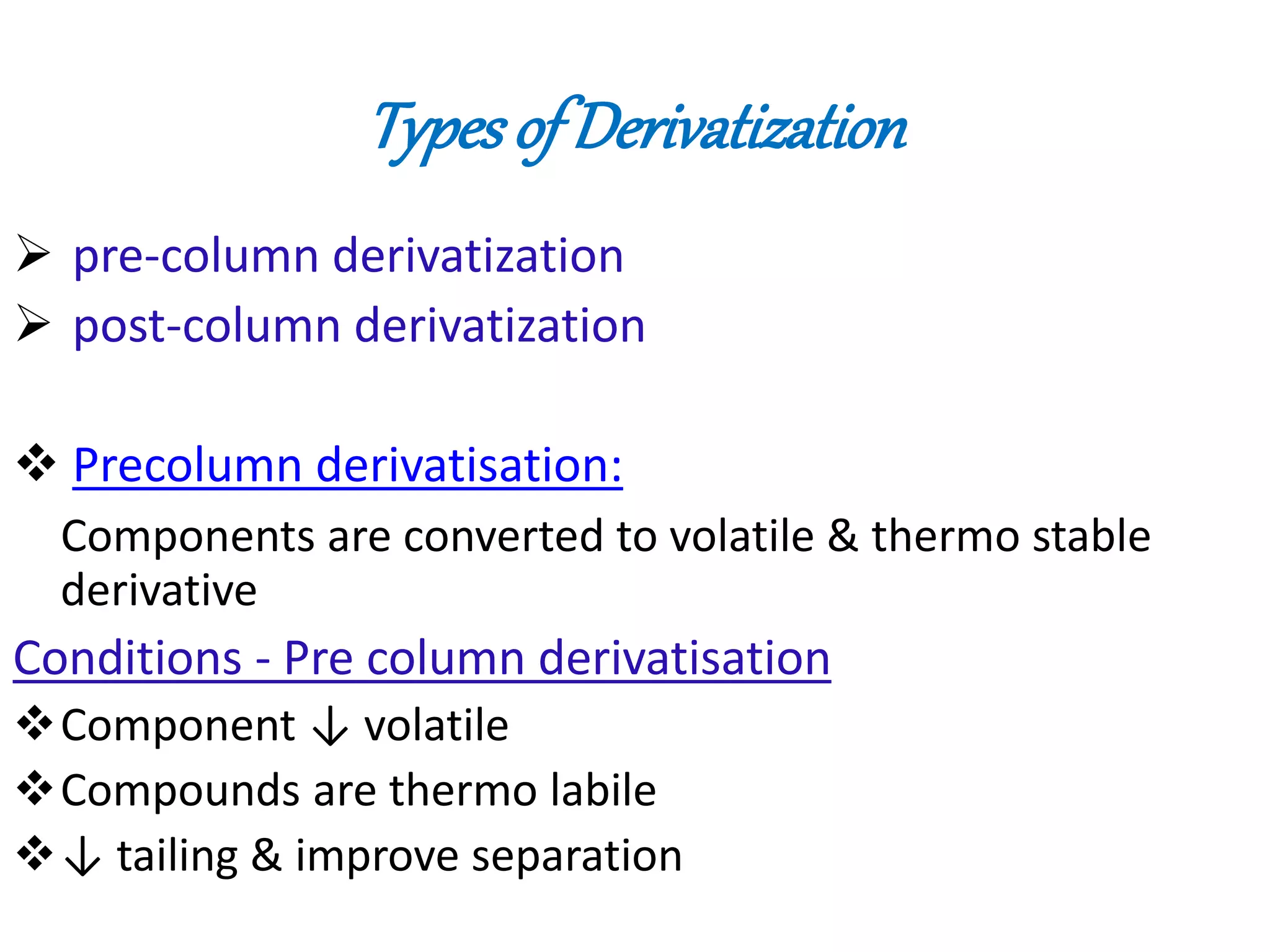
Types of Derivatization 
 pre-column derivatization 
 post-column derivatization 
 Precolumn derivatisation: 
Components are converted to volatile & thermo stable 
derivative 
Conditions - Pre column derivatisation 
Component ↓ volatile 
Compounds are thermo labile 
↓ tailing & improve separation
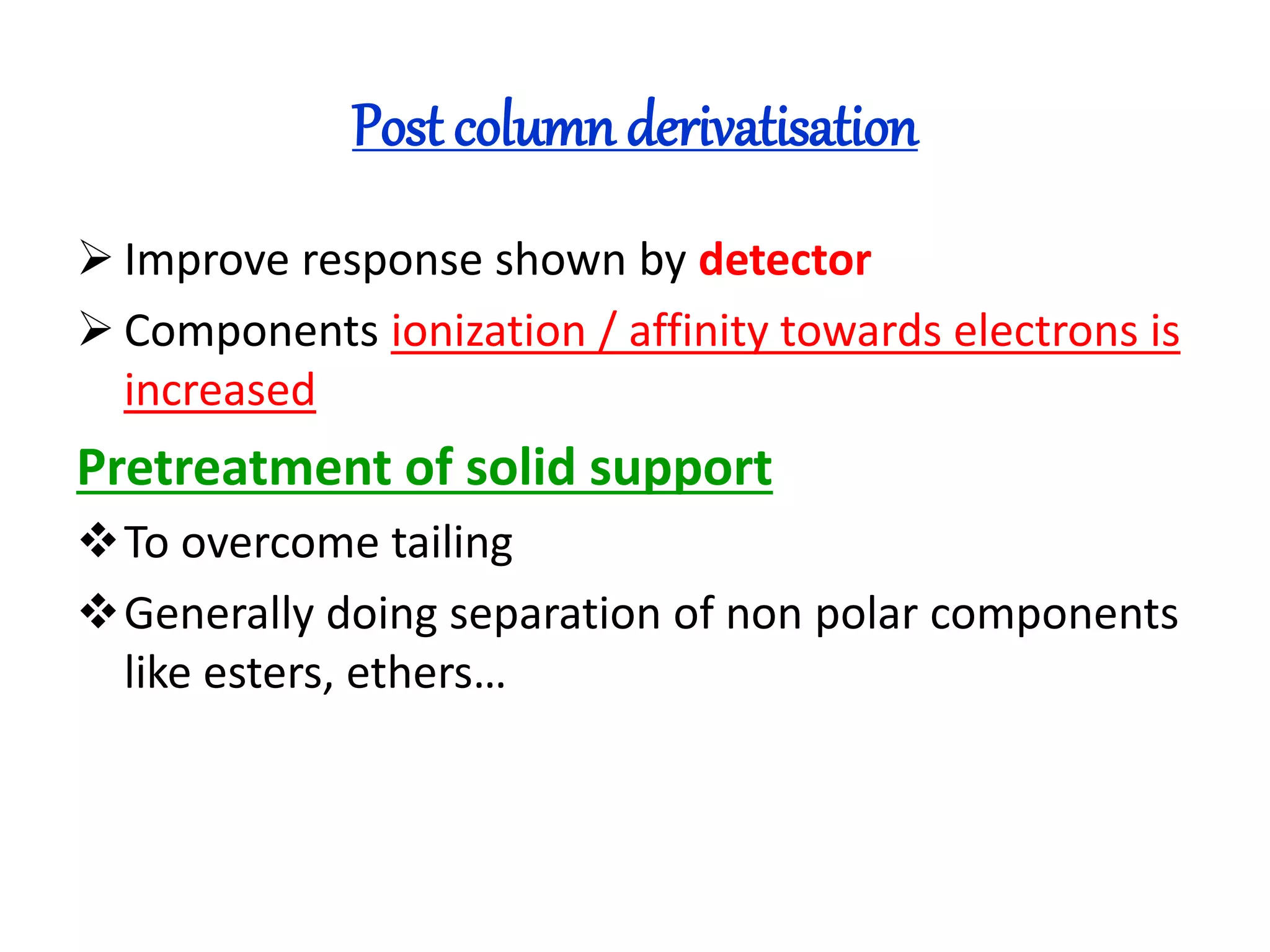
Post column derivatisation 
 Improve response shown by detector 
 Components ionization / affinity towards electrons is 
increased 
Pretreatment of solid support 
To overcome tailing 
Generally doing separation of non polar components 
like esters, ethers…
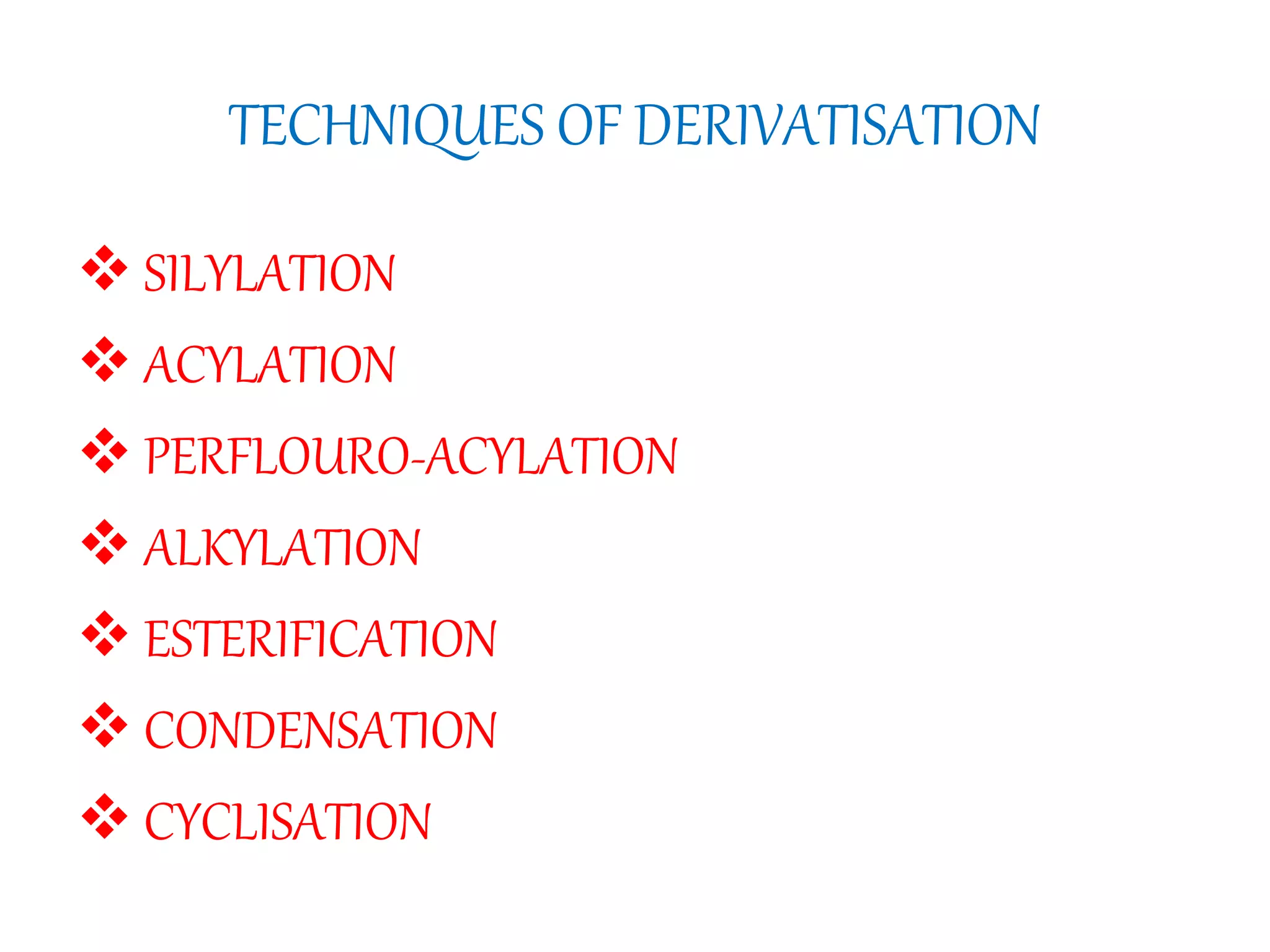
TECHNIQUES OF DERIVATISATION 
 SILYLATION 
 ACYLATION 
 PERFLOURO-ACYLATION 
 ALKYLATION 
 ESTERIFICATION 
 CONDENSATION 
 CYCLISATION
Acylation 
• Acylation reduces the polarity of amino, hydroxyl, and thiol 
groups and adds halogenated functionalities for ECD. In 
comparison to silylating reagents, the acylating reagents 
target highly polar, multifunctional compounds, such as 
carbohydrates and amino acids. 
• Acyl derivatives are formed with acyl anhydrides, acyl 
halides, and activated acyl amide reagents. 
• The anhydrides and acyl halides form acid by-products 
which must be removed before GC analysis.
CONT….. 
• Activated amide reagents, such as MBTFA, have the 
advantage of not yielding acid by-products. 
• Fluorinated acyl groups, going from trifluoracetyl to 
heptafluorobutyryl , can be used to increase retention 
times.
Acylating Reagents 
• 1. Fluorinated Anhydrides:- 
• TFAA- Trifluoroacetoic Anhydride 
• PFPA- Pentafluoropropionic Anhydride 
· Most commonly used reagents, as derivatives are suitable 
for both FID and ECD. 
• · Reacts with alcohols, amines, and phenols to produce 
stable and highly volatile derivatives 
• · The acid by-product should be removed, via a stream of 
nitrogen, before injection onto column. Bases, such as 
triethylamine, can be added as an acid receptor and 
promote reactivity 
• · Ability to adjust retention times for ECD
Conti… 
• 2. Fluoracylimidazoles 
• TFAI- Trifluoroacetylimidazole 
• PFPI- Pentafluoropropanylimidazole 
• HFBI- Heptafluorobutyrylimidazole 
• · Usually a better choice for making ECD derivatives 
• · React under mild conditions and their by-products, 
the imidazole, is not acidic so it will not harm column. 
• · Reagents are extremely sentive to water- will react 
violently to it. 
• · Works best with amines and hydroxy compounds
Cont.. 
• 3. MBTFA {N-methyl-bis(trifluoroacetamide)} 
• · Reacts with primary and secondary amines, slowly with 
hydroxyl groups and thiols. 
• · Conditions are mild and the by-products are relatively 
inert and are non acidic 
• 4. PFBCI- Pentafluorobenzoyl Chloride 
• · Phenols most receptive site 
• · Used for making derivatives of alcohols and secondary 
• amines. Secondary amines will react with this 
compound
Ex: 
1. Esterification with n-propanol, acidic catalyst and 
benzene for remove water azeotropically, the 
ester were acylated with acetic anhydride and 
finally derivatives extracted and diluted for GC.
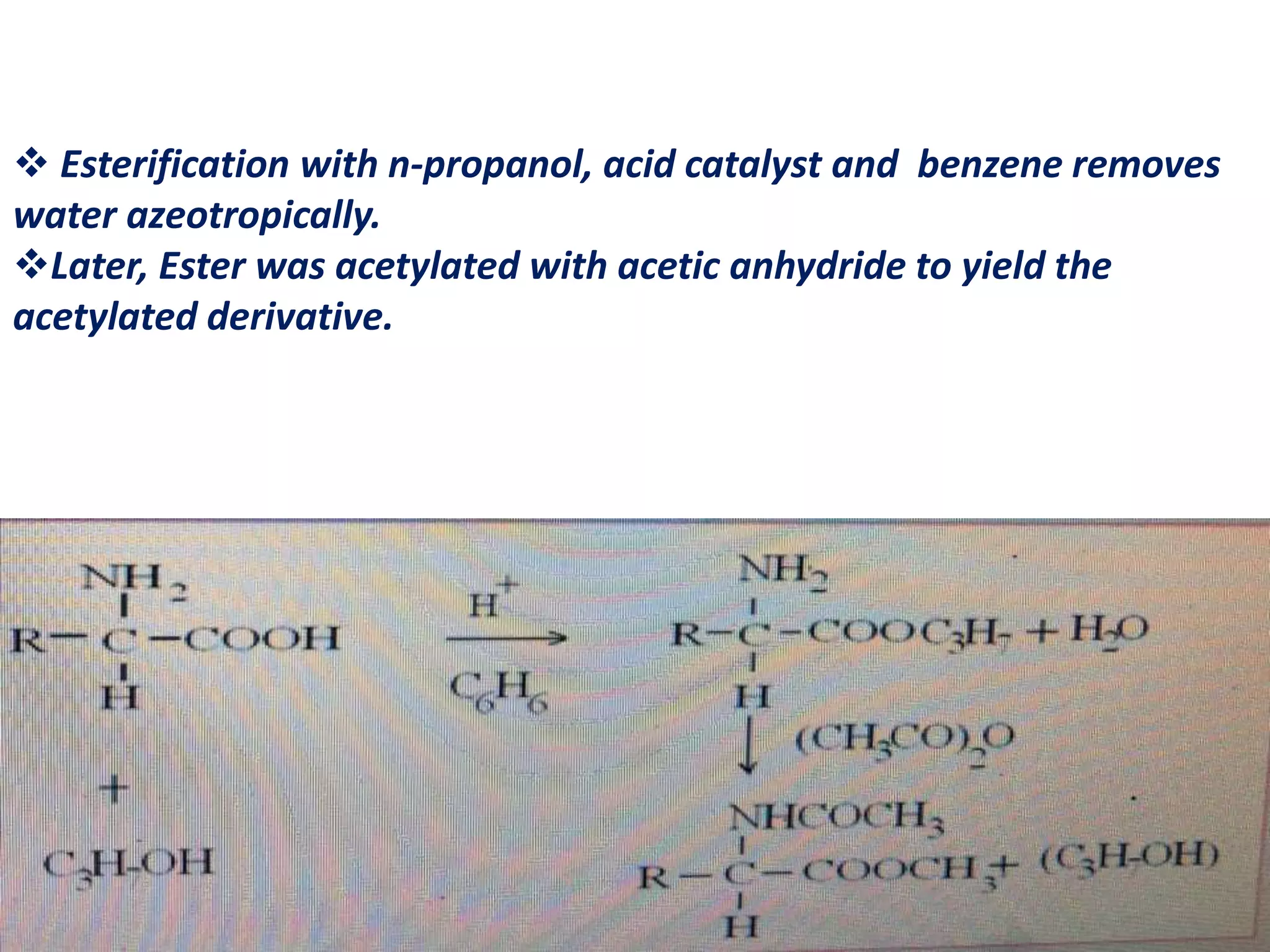
 Esterification with n-propanol, acid catalyst and benzene removes 
water azeotropically. 
Later, Ester was acetylated with acetic anhydride to yield the 
acetylated derivative.
Advantages and 
Disadvantages of 
Acylation 
• Advantages: Addition of halogenated carbons increased 
detectability by ECD. 
• Derivatives are hydrolytically stable. 
• Increased sensitivity by adding molecular weight 
• Acylation can be used as a first step to activate carboxylic 
acids prior to esterfication (alkylation).
Disadvantages 
•Acylation derivatives can be difficult to prepare. 
• Reaction products (acid by-products) often need to be 
removed before analysis. 
• Acylation reagents are moisture sensitive. 
• Reagents are hazardous and odorous.
perflouro-Acylation 
•This group increases the mol.wt of the sample relative to the 
analogous hydrocarbon. 
•Best method to increase the retention time. 
•Eg. 
• N-Triflouro acetic anhydride 
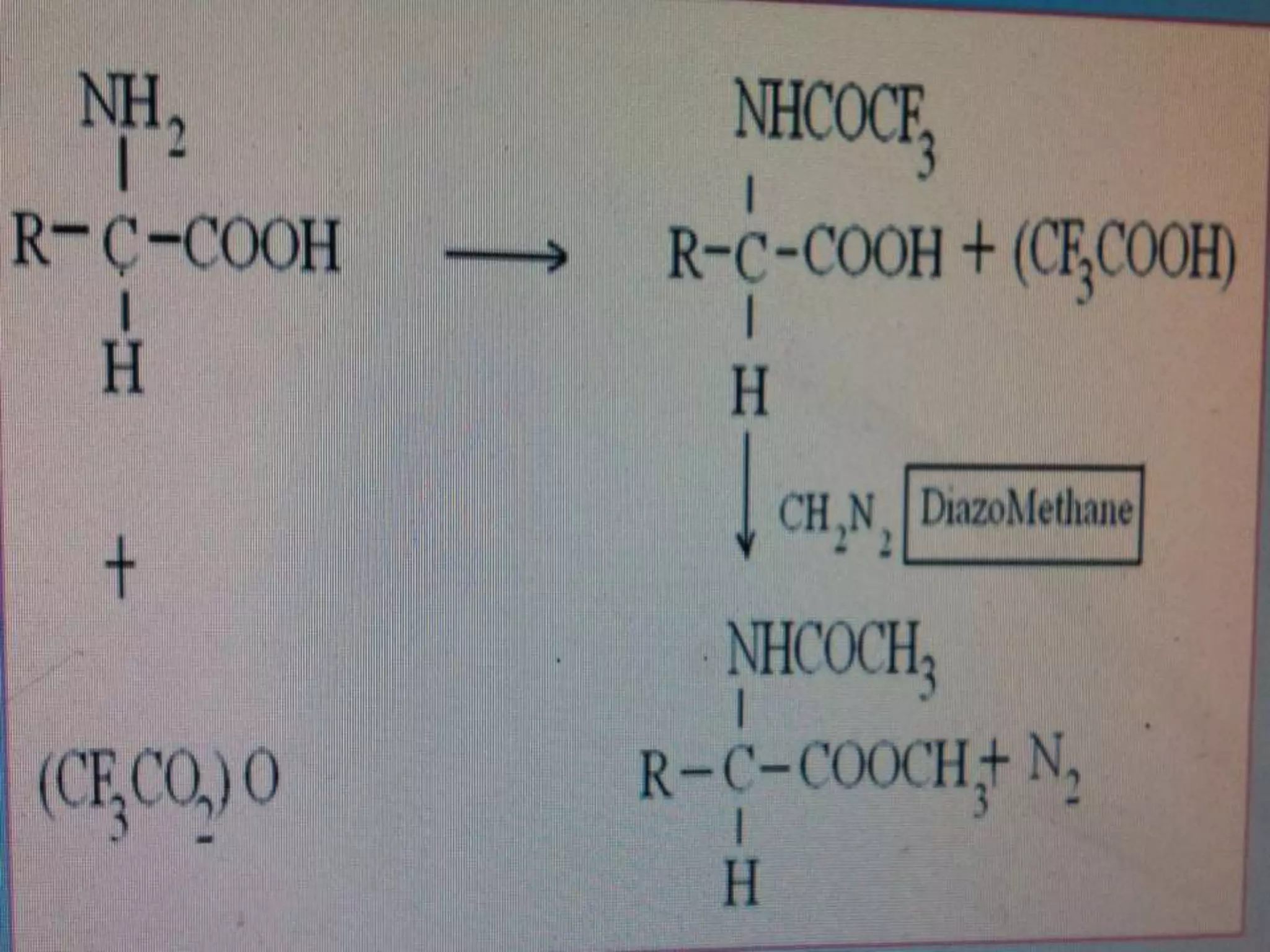
• Direct acylation with Triflouro acetic anhydride in 
triflouro acetic acid followed by methylation with 
diazomethane in methanol.
Alkylation 
• Alkylation reduces molecular polarity by replacing active 
hydrogens with an alkyl group. These reagents are used to 
modify compounds with acidic hydrogens, such as 
carboxylic acids and phenols. These reagents make esters, 
ethers, alkyl amines and alkyl amides. 
• Reagents containing fluorinated benzoyl groups can be used 
for ECD. 
• The principal reaction employed for preparation of these 
derivatives is nucleophilic displacement. 
• Alkylation is used to modify compounds with acidic 
hydrogens, such as carboxylic acids and phenols.
• Alkylation can be used alone to form esters, ethers and 
amides- or they can be used in conjunction with acylation 
or silylation. 
•It is generally used to convert organic acids into esters. As 
the acidity of the active hydrogen decreases, the strength of 
the alkylating reagent 
must be increased. The harsher the reaction conditions or 
reagents, the more limited the selectivity and applicability of 
this method.
Alkylating Reagents 
1. DMF (dialkylacetals) 
· These reagents work quickly, derivatizing upon dissolution. 
Suitable for flash alkylation, where derivatization takes place 
in the injection port. 
· The different alkyl homolgues allow formation of a variety of 
esters. polarity and volatility of the samples can be adjusted, 
thereby changing retention time. 
· They will react with water to give the corresponding alcohol. 
Traces of water will not affect the reaction as long as you 
have an excess of acid.
2. TBH (tetrabutylammonium hydroxide) 
· Froms butyl ester, which will allow longer retention times 
· Used most commonly for low molecular weight acids 
3. BF3 in methanol or butanol 
· Convenient and inexpensive method for forming esters 
4. PFBBr (Pentafluorobenzyl bromide) 
Esterifies phenols, thiols, and carboxylic acids
·Eg: The imide nucleus is present in no. of pharmaceuticals 
agents like anticonvulsants and barbiturates. 
The most common derivative is methyl imide, which can be 
formed on column by using trimethyl ammonium 
hydroxide.[TMAH]
Cont… 
•Alkyl esters have excellent stability and can be 
isolated and stored for long periods of time. 
• A two step approach is commonly used in 
derivatization of aminoacids, where multiple functional 
groups on these compounds may 
necessitate protection during derivatization.
Advantages 
Wide range of alkylation reagents available 
Reaction conditions can vary from strongly acidic and 
strongly basic. 
Some reactions can be done in aqueous solutions. 
Alkylation derivatives are generally stable. 
Disadvantages 
Limited to amines and acidic hydroxyls. 
Reaction conditions are frequently severe. 
Reagents are often toxic.
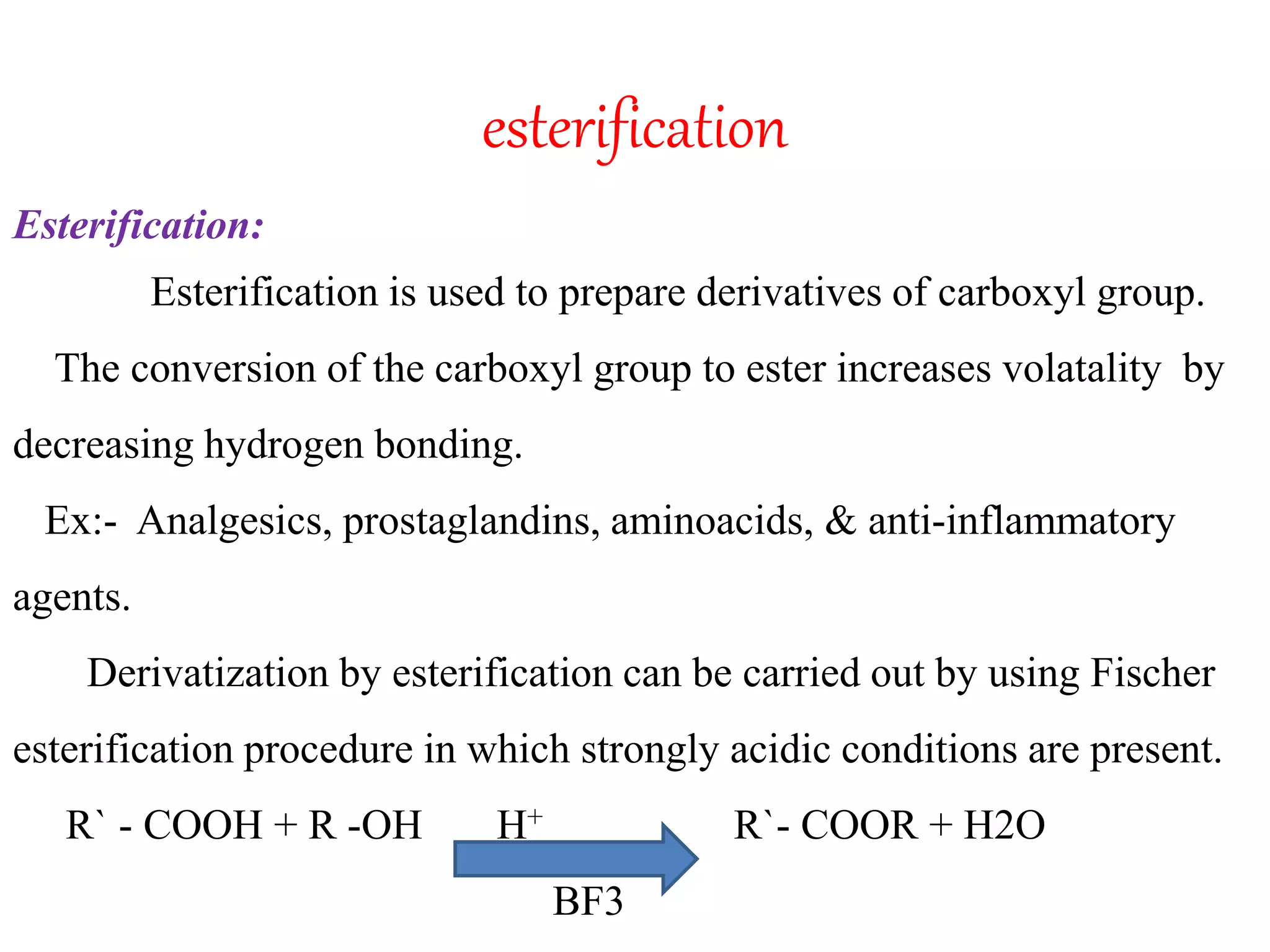
esterification 
Esterification: 
Esterification is used to prepare derivatives of carboxyl group. 
The conversion of the carboxyl group to ester increases volatality by 
decreasing hydrogen bonding. 
Ex:- Analgesics, prostaglandins, aminoacids, & anti-inflammatory 
agents. 
Derivatization by esterification can be carried out by using Fischer 
esterification procedure in which strongly acidic conditions are present. 
R` - COOH + R -OH H+ R`- COOR + H2O 
BF3
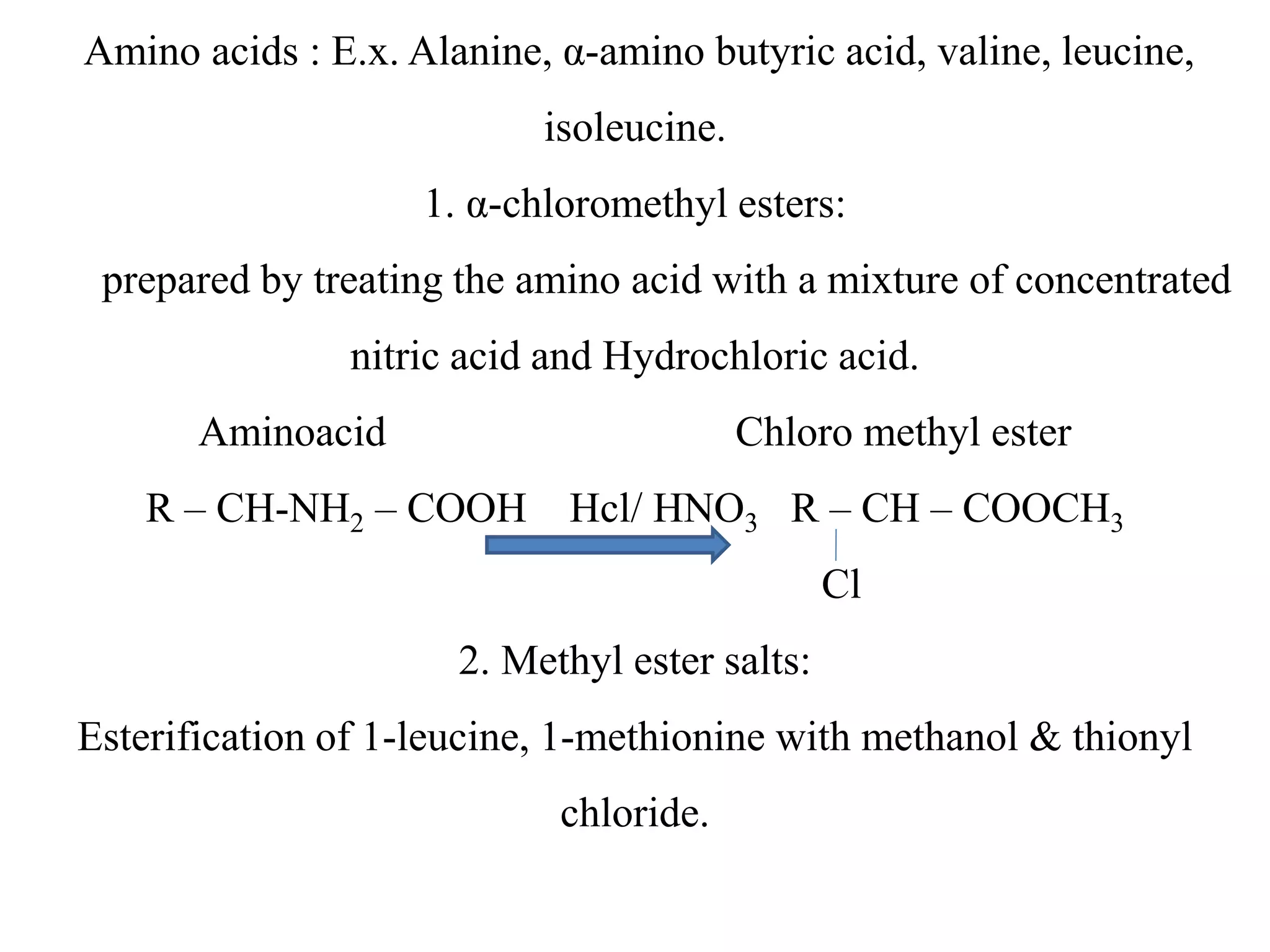
Amino acids : E.x. Alanine, α-amino butyric acid, valine, leucine, 
isoleucine. 
1. α-chloromethyl esters: 
prepared by treating the amino acid with a mixture of concentrated 
nitric acid and Hydrochloric acid. 
Aminoacid Chloro methyl ester 
R – CH-NH2 – COOH Hcl/ HNO3 R – CH – COOCH3 
Cl 
2. Methyl ester salts: 
Esterification of 1-leucine, 1-methionine with methanol & thionyl 
chloride.
Silylation 
• Silylation produces silyl derivatives which are more volatile, 
less stable, and more thermally stable. 
• Replaces active hydrogens with a TMS (trimethylsilyl group). 
• Silylation occurs through nucleophilic attack (SN2). The 
better the leaving group, the better the siliylation. 
• Silylation reagents will react with water and alcohols first. 
Care must be taken to ensure that both sample and solvents 
are dry. 
• Solvents should be as pure as possible. This will eliminate 
excessive peaks. Try using as little solvent as possible as this 
will prevent a large solvent peak.
 Pyridine is the most commonly used solvent. Although 
pyridine may produce peak tailing, it is an acid scavanger and 
will drive the reaction forward. 
In many cases, the need for a solvent is eliminated with 
silylating reagents. (If a sample readily dissolves in the 
reagent, it usually a sign that the derivatization is complete). 
.
 Ease of reactivity of functional groups towards silylation. 
Many reagents require heating (not in excess of 60 degrees C 
for about 10-15 minutes, to prevent breakdown). 
Hindered products may require long term heating
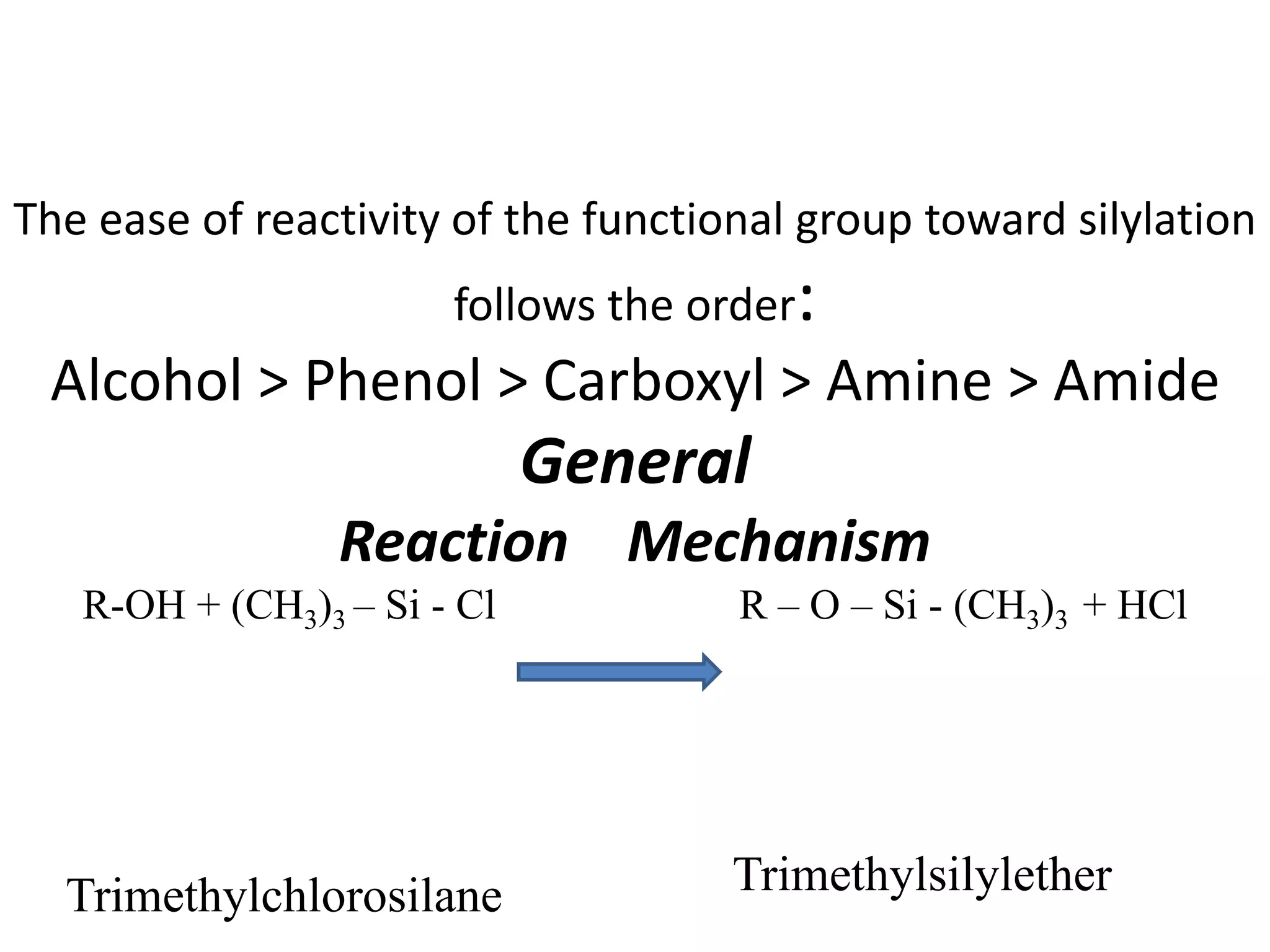
The ease of reactivity of the functional group toward silylation 
follows the order: 
Alcohol > Phenol > Carboxyl > Amine > Amide 
General 
Reaction Mechanism 
R-OH + (CH3)3 – Si - Cl R – O – Si - (CH3)3 + HCl 
Trimethylchlorosilane Trimethylsilylether
Silylating Reagents 
1. HMDS (Hexamethyldisilane). 
· Weak donor, as it has symmetry 
· If used will attack only easily silylated hydroxyl groups 
· Sometimes found in combination with TMCS 
2. TMCS (Trimethylchlorosilane). 
· Weak donor, again not commonly used 
· Often found as a catalyst to increase TMS donor potential 
· Bad by-product, HCL 
3. TMSI (Trimethylsilylimidazole). 
· Not a weak donor, but it is selective (will not target N 
compounds) 
· Reacts readily with hydroxyls but not with amines 
· Since it is selective, it will target the hydroxyls in wet sugars. 
It will derivatize the acid sites of amino acids, and will leave 
the amino group free for fluorinated derivatization (ECD)
4. BSA (Bistrimethylsilylacetamide). 
· First widely used silylating reagent 
· Strong silylating reagent- acetamide is a good leaving group. 
Reacts under mild conditions and produces relatively stable 
by-products 
· Drawbacks: by-product, TMS-acetamide, will sometimes 
produce peaks that overlap those of other volatile derivatives. 
BSA mixtures also oxidize to form silicon dioxide, which can 
foul FID detectors 
TMS-DEA (Trimethylsilyldiethylamine). 
· Reagent is used for derivatizing amino acids and carboxylic 
acids 
· Targets hindered compounds
5. BSTFA (Bistrimethylsilyltrifluoroacetamide) 
· Developed by Gerhke in 1968 
· Reacts similiarly to BSA but the leaving group is 
trifluoroacetamide, so it acts faster and more completely than 
BSA 
· BSTFA is highly volatile, and produces by-products that are 
more volatile than BSA by-products, thus there is little 
interference 
with early eluting peaks 
· It can act as its own solvent 
· Combustion product silicon trifluoride, does not foul 
detectors
Advantages and Disadvantages of Silylation 
Advantages 
• Ability to silylate a wide variety of compounds 
• Large number of silylating reagents available. 
• Easily prepared. 
Disadvantages 
• Silylation Reagents are moisture sensitive 
• Must use aprotic (no protons available) organic 
solvents
Condensation: 
If ketone or aldehyde is present in a sample, it is frequently 
derivatized to prevent hydrogen bonding due to enolization & helps in 
resolution from an interfering substance. 
The most commonly used reagent is methoxylamine to protect 
enolizable ketogroups in steroids by formation of methoximes. 
Cyclization: 
Cyclization is performed on compounds containing two functional 
groups in close proximity so that 5 or 6 membered Heterocyclic rings 
can be formed.
• Heterocycles formed are ketals, boronates, triazines & 
phosphites. 
E.g: Cyclization of α – OH ketones (present in corticosteroids) 
with formaldehyde forms bismethylene dioxy derivatives 
which are thermally stable & permit resolution of 
corticosterone from a mixture of steroids.
applications 
Qualitative analysis: 
Retention time data should be useful for 
identification of mixtures. 
Comparing the retention time of the sample as 
well as the standard. 
Checking the purity of a compound: compar the 
standard and sample. 
Additional peaks are obtained…..impurities are 
present….compound is not pure.
Quantitative analysis: 
Direct comparison method: 
-comparing the area of the peak, peak height, width 
of peak. 
Calibration curves: 
-standards of varying concentration are used 
determine peak areas . 
oInternal standard method: 
-A known concentration of the internal standard is 
added separately to the standard solution 
-The peak area ratio of sample and internal 
standard….unknown concentration is easily determined .
Elemental analysis 
Determination of C,H ,O ,S and N . 
Determination of mixture of drugs 
Isolation and identification of drugs 
Isolation and identification of mixture of components(amino 
acids ,plant extracts ,volatile oils) 
GS-MS is one of the most powerful tool in siological and 
chemical studies. 
Other app… like 
Analysis of dairy prod.., aldehydes, ketones etc.. Which are 
present in pharm..,Rancidity in fatty acids. 
Assay of drugs, purity of compounds, determination of 
foreign or related compounds.
references 
Fundamental analytical chemistry : skoog, west, 
holler , Internet source 
www.pharmainfo.net 
www.onlinelibrary.wiely.com 
Helenet digital libray

Derivitization of gc

  • 1.
  • 2.
    GC DERIVATIZATION contents  Derivatisation techniques:  Applications of gas chromatography
  • 3.
    What is derivatization? • What is GC Derivatization? • Derivatization is the process of chemically modifying a compound to produce a new compound which has properties that are suitable for analysis using a GC.
  • 4.
    Why Derivatize: To permit analysis of compounds not directly amenable to analysis due to, for example, inadequate volatility or stability.  Improve chromatographic behavior or detectability. Many compounds do not produce a usable chromatograph (i.e.multiple peaks, or one big blob), or the sample of interest goes undetected. As a result it may be necessary to derivatize the compound before GC analysis is done. Derivatization is a useful tool allowing the use of GC and GC/MS to be done on samples that would otherwise not be possible in various areas of chemistry such as medical, forensic, and environmental.
  • 5.
    What Does Derivatization Accomplish?  Increases volatility (i.e. sugars):  Eliminates the presence of polar OH, NH, & SH groups  Derivatization targets O,S, N and P functional groups (with hydrogens available.  Increases detectability, I.e. steroids/ cholesterol Increases stability.  Enhances sensitivity for ECD (Electron Capture Detection). The introduction of ECD detectable groups, such as halogenated acyl groups, allows detection of previously undetectable compounds.
  • 6.
    Types of Derivatization  pre-column derivatization  post-column derivatization  Precolumn derivatisation: Components are converted to volatile & thermo stable derivative Conditions - Pre column derivatisation Component ↓ volatile Compounds are thermo labile ↓ tailing & improve separation
  • 7.
    Post column derivatisation  Improve response shown by detector  Components ionization / affinity towards electrons is increased Pretreatment of solid support To overcome tailing Generally doing separation of non polar components like esters, ethers…
  • 8.
    TECHNIQUES OF DERIVATISATION  SILYLATION  ACYLATION  PERFLOURO-ACYLATION  ALKYLATION  ESTERIFICATION  CONDENSATION  CYCLISATION
  • 9.
    Acylation • Acylationreduces the polarity of amino, hydroxyl, and thiol groups and adds halogenated functionalities for ECD. In comparison to silylating reagents, the acylating reagents target highly polar, multifunctional compounds, such as carbohydrates and amino acids. • Acyl derivatives are formed with acyl anhydrides, acyl halides, and activated acyl amide reagents. • The anhydrides and acyl halides form acid by-products which must be removed before GC analysis.
  • 10.
    CONT….. • Activatedamide reagents, such as MBTFA, have the advantage of not yielding acid by-products. • Fluorinated acyl groups, going from trifluoracetyl to heptafluorobutyryl , can be used to increase retention times.
  • 11.
    Acylating Reagents •1. Fluorinated Anhydrides:- • TFAA- Trifluoroacetoic Anhydride • PFPA- Pentafluoropropionic Anhydride · Most commonly used reagents, as derivatives are suitable for both FID and ECD. • · Reacts with alcohols, amines, and phenols to produce stable and highly volatile derivatives • · The acid by-product should be removed, via a stream of nitrogen, before injection onto column. Bases, such as triethylamine, can be added as an acid receptor and promote reactivity • · Ability to adjust retention times for ECD
  • 12.
    Conti… • 2.Fluoracylimidazoles • TFAI- Trifluoroacetylimidazole • PFPI- Pentafluoropropanylimidazole • HFBI- Heptafluorobutyrylimidazole • · Usually a better choice for making ECD derivatives • · React under mild conditions and their by-products, the imidazole, is not acidic so it will not harm column. • · Reagents are extremely sentive to water- will react violently to it. • · Works best with amines and hydroxy compounds
  • 13.
    Cont.. • 3.MBTFA {N-methyl-bis(trifluoroacetamide)} • · Reacts with primary and secondary amines, slowly with hydroxyl groups and thiols. • · Conditions are mild and the by-products are relatively inert and are non acidic • 4. PFBCI- Pentafluorobenzoyl Chloride • · Phenols most receptive site • · Used for making derivatives of alcohols and secondary • amines. Secondary amines will react with this compound
  • 14.
    Ex: 1. Esterificationwith n-propanol, acidic catalyst and benzene for remove water azeotropically, the ester were acylated with acetic anhydride and finally derivatives extracted and diluted for GC.
  • 15.
     Esterification withn-propanol, acid catalyst and benzene removes water azeotropically. Later, Ester was acetylated with acetic anhydride to yield the acetylated derivative.
  • 16.
    Advantages and Disadvantagesof Acylation • Advantages: Addition of halogenated carbons increased detectability by ECD. • Derivatives are hydrolytically stable. • Increased sensitivity by adding molecular weight • Acylation can be used as a first step to activate carboxylic acids prior to esterfication (alkylation).
  • 17.
    Disadvantages •Acylation derivativescan be difficult to prepare. • Reaction products (acid by-products) often need to be removed before analysis. • Acylation reagents are moisture sensitive. • Reagents are hazardous and odorous.
  • 18.
    perflouro-Acylation •This groupincreases the mol.wt of the sample relative to the analogous hydrocarbon. •Best method to increase the retention time. •Eg. • N-Triflouro acetic anhydride • Direct acylation with Triflouro acetic anhydride in triflouro acetic acid followed by methylation with diazomethane in methanol.
  • 20.
    Alkylation • Alkylationreduces molecular polarity by replacing active hydrogens with an alkyl group. These reagents are used to modify compounds with acidic hydrogens, such as carboxylic acids and phenols. These reagents make esters, ethers, alkyl amines and alkyl amides. • Reagents containing fluorinated benzoyl groups can be used for ECD. • The principal reaction employed for preparation of these derivatives is nucleophilic displacement. • Alkylation is used to modify compounds with acidic hydrogens, such as carboxylic acids and phenols.
  • 21.
    • Alkylation canbe used alone to form esters, ethers and amides- or they can be used in conjunction with acylation or silylation. •It is generally used to convert organic acids into esters. As the acidity of the active hydrogen decreases, the strength of the alkylating reagent must be increased. The harsher the reaction conditions or reagents, the more limited the selectivity and applicability of this method.
  • 22.
    Alkylating Reagents 1.DMF (dialkylacetals) · These reagents work quickly, derivatizing upon dissolution. Suitable for flash alkylation, where derivatization takes place in the injection port. · The different alkyl homolgues allow formation of a variety of esters. polarity and volatility of the samples can be adjusted, thereby changing retention time. · They will react with water to give the corresponding alcohol. Traces of water will not affect the reaction as long as you have an excess of acid.
  • 23.
    2. TBH (tetrabutylammoniumhydroxide) · Froms butyl ester, which will allow longer retention times · Used most commonly for low molecular weight acids 3. BF3 in methanol or butanol · Convenient and inexpensive method for forming esters 4. PFBBr (Pentafluorobenzyl bromide) Esterifies phenols, thiols, and carboxylic acids
  • 24.
    ·Eg: The imidenucleus is present in no. of pharmaceuticals agents like anticonvulsants and barbiturates. The most common derivative is methyl imide, which can be formed on column by using trimethyl ammonium hydroxide.[TMAH]
  • 25.
    Cont… •Alkyl estershave excellent stability and can be isolated and stored for long periods of time. • A two step approach is commonly used in derivatization of aminoacids, where multiple functional groups on these compounds may necessitate protection during derivatization.
  • 26.
    Advantages Wide rangeof alkylation reagents available Reaction conditions can vary from strongly acidic and strongly basic. Some reactions can be done in aqueous solutions. Alkylation derivatives are generally stable. Disadvantages Limited to amines and acidic hydroxyls. Reaction conditions are frequently severe. Reagents are often toxic.
  • 27.
    esterification Esterification: Esterificationis used to prepare derivatives of carboxyl group. The conversion of the carboxyl group to ester increases volatality by decreasing hydrogen bonding. Ex:- Analgesics, prostaglandins, aminoacids, & anti-inflammatory agents. Derivatization by esterification can be carried out by using Fischer esterification procedure in which strongly acidic conditions are present. R` - COOH + R -OH H+ R`- COOR + H2O BF3
  • 28.
    Amino acids :E.x. Alanine, α-amino butyric acid, valine, leucine, isoleucine. 1. α-chloromethyl esters: prepared by treating the amino acid with a mixture of concentrated nitric acid and Hydrochloric acid. Aminoacid Chloro methyl ester R – CH-NH2 – COOH Hcl/ HNO3 R – CH – COOCH3 Cl 2. Methyl ester salts: Esterification of 1-leucine, 1-methionine with methanol & thionyl chloride.
  • 29.
    Silylation • Silylationproduces silyl derivatives which are more volatile, less stable, and more thermally stable. • Replaces active hydrogens with a TMS (trimethylsilyl group). • Silylation occurs through nucleophilic attack (SN2). The better the leaving group, the better the siliylation. • Silylation reagents will react with water and alcohols first. Care must be taken to ensure that both sample and solvents are dry. • Solvents should be as pure as possible. This will eliminate excessive peaks. Try using as little solvent as possible as this will prevent a large solvent peak.
  • 30.
     Pyridine isthe most commonly used solvent. Although pyridine may produce peak tailing, it is an acid scavanger and will drive the reaction forward. In many cases, the need for a solvent is eliminated with silylating reagents. (If a sample readily dissolves in the reagent, it usually a sign that the derivatization is complete). .
  • 31.
     Ease ofreactivity of functional groups towards silylation. Many reagents require heating (not in excess of 60 degrees C for about 10-15 minutes, to prevent breakdown). Hindered products may require long term heating
  • 32.
    The ease ofreactivity of the functional group toward silylation follows the order: Alcohol > Phenol > Carboxyl > Amine > Amide General Reaction Mechanism R-OH + (CH3)3 – Si - Cl R – O – Si - (CH3)3 + HCl Trimethylchlorosilane Trimethylsilylether
  • 33.
    Silylating Reagents 1.HMDS (Hexamethyldisilane). · Weak donor, as it has symmetry · If used will attack only easily silylated hydroxyl groups · Sometimes found in combination with TMCS 2. TMCS (Trimethylchlorosilane). · Weak donor, again not commonly used · Often found as a catalyst to increase TMS donor potential · Bad by-product, HCL 3. TMSI (Trimethylsilylimidazole). · Not a weak donor, but it is selective (will not target N compounds) · Reacts readily with hydroxyls but not with amines · Since it is selective, it will target the hydroxyls in wet sugars. It will derivatize the acid sites of amino acids, and will leave the amino group free for fluorinated derivatization (ECD)
  • 34.
    4. BSA (Bistrimethylsilylacetamide). · First widely used silylating reagent · Strong silylating reagent- acetamide is a good leaving group. Reacts under mild conditions and produces relatively stable by-products · Drawbacks: by-product, TMS-acetamide, will sometimes produce peaks that overlap those of other volatile derivatives. BSA mixtures also oxidize to form silicon dioxide, which can foul FID detectors TMS-DEA (Trimethylsilyldiethylamine). · Reagent is used for derivatizing amino acids and carboxylic acids · Targets hindered compounds
  • 35.
    5. BSTFA (Bistrimethylsilyltrifluoroacetamide) · Developed by Gerhke in 1968 · Reacts similiarly to BSA but the leaving group is trifluoroacetamide, so it acts faster and more completely than BSA · BSTFA is highly volatile, and produces by-products that are more volatile than BSA by-products, thus there is little interference with early eluting peaks · It can act as its own solvent · Combustion product silicon trifluoride, does not foul detectors
  • 36.
    Advantages and Disadvantagesof Silylation Advantages • Ability to silylate a wide variety of compounds • Large number of silylating reagents available. • Easily prepared. Disadvantages • Silylation Reagents are moisture sensitive • Must use aprotic (no protons available) organic solvents
  • 37.
    Condensation: If ketoneor aldehyde is present in a sample, it is frequently derivatized to prevent hydrogen bonding due to enolization & helps in resolution from an interfering substance. The most commonly used reagent is methoxylamine to protect enolizable ketogroups in steroids by formation of methoximes. Cyclization: Cyclization is performed on compounds containing two functional groups in close proximity so that 5 or 6 membered Heterocyclic rings can be formed.
  • 38.
    • Heterocycles formedare ketals, boronates, triazines & phosphites. E.g: Cyclization of α – OH ketones (present in corticosteroids) with formaldehyde forms bismethylene dioxy derivatives which are thermally stable & permit resolution of corticosterone from a mixture of steroids.
  • 39.
    applications Qualitative analysis: Retention time data should be useful for identification of mixtures. Comparing the retention time of the sample as well as the standard. Checking the purity of a compound: compar the standard and sample. Additional peaks are obtained…..impurities are present….compound is not pure.
  • 40.
    Quantitative analysis: Directcomparison method: -comparing the area of the peak, peak height, width of peak. Calibration curves: -standards of varying concentration are used determine peak areas . oInternal standard method: -A known concentration of the internal standard is added separately to the standard solution -The peak area ratio of sample and internal standard….unknown concentration is easily determined .
  • 41.
    Elemental analysis Determinationof C,H ,O ,S and N . Determination of mixture of drugs Isolation and identification of drugs Isolation and identification of mixture of components(amino acids ,plant extracts ,volatile oils) GS-MS is one of the most powerful tool in siological and chemical studies. Other app… like Analysis of dairy prod.., aldehydes, ketones etc.. Which are present in pharm..,Rancidity in fatty acids. Assay of drugs, purity of compounds, determination of foreign or related compounds.
  • 42.
    references Fundamental analyticalchemistry : skoog, west, holler , Internet source www.pharmainfo.net www.onlinelibrary.wiely.com Helenet digital libray