DEFIBRILLATION,
CARDIOVERSION AND
PACING
By: dr ismah, A&E department
1
2
3
4
5
6
Defibrillation
History
1900 defibrillation discovery
1947 human defibrillation
1967 successful outside hospital defibrillation
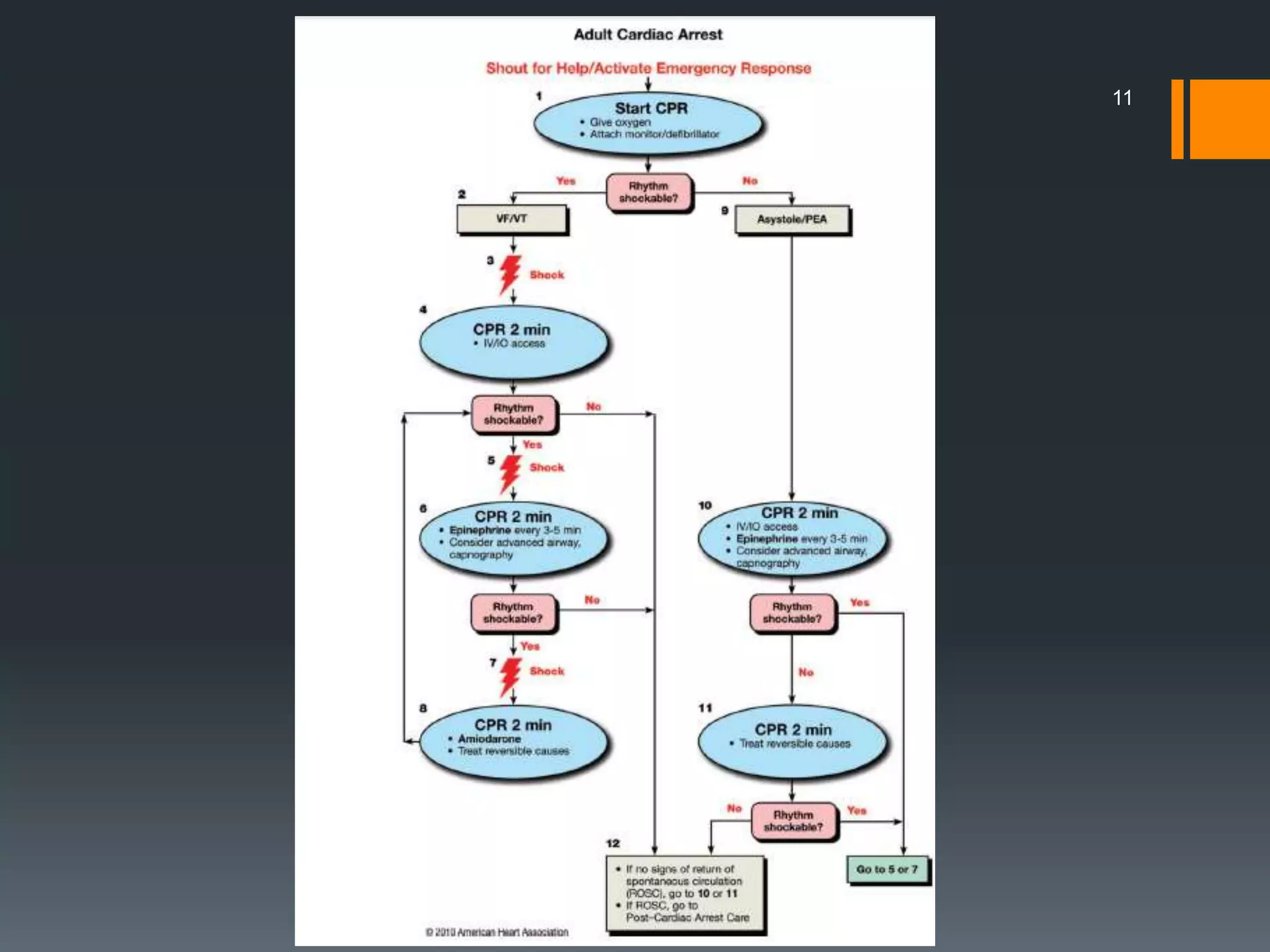
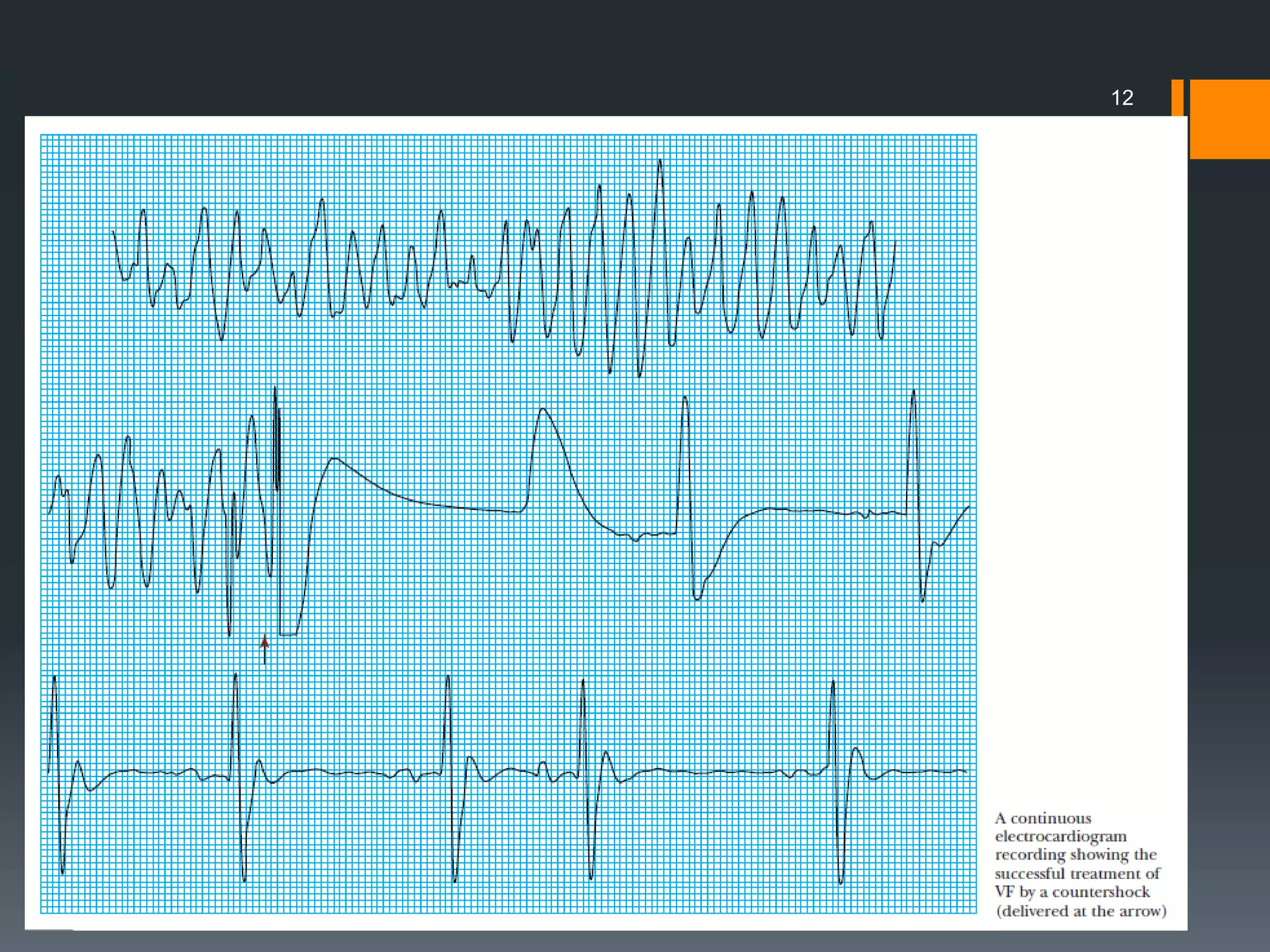
For VF or pulseless VT
Defibrillation (shock success)  termination of
VF for at least 5s following shock
7
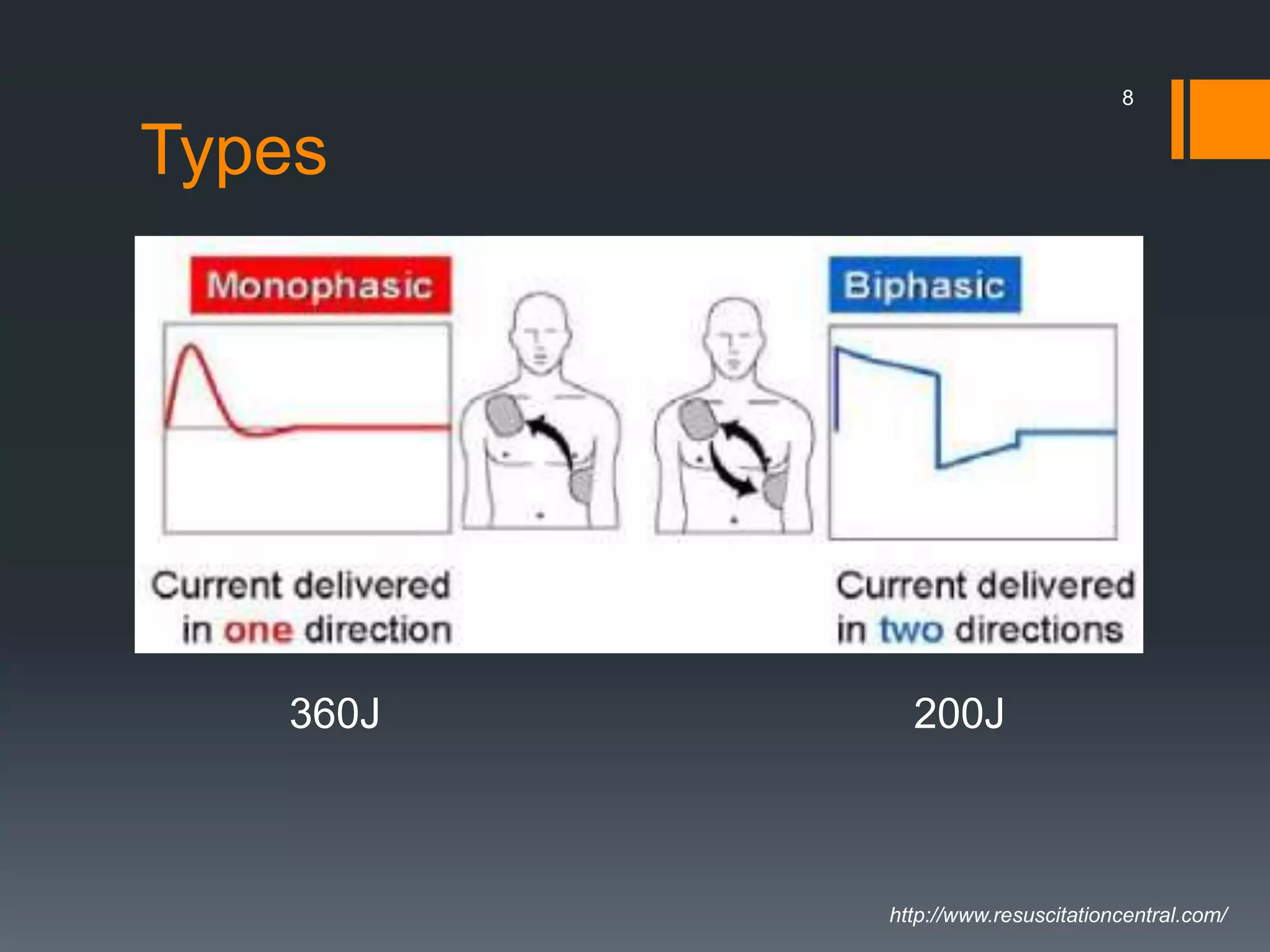
Types
8
http://www.resuscitationcentral.com/
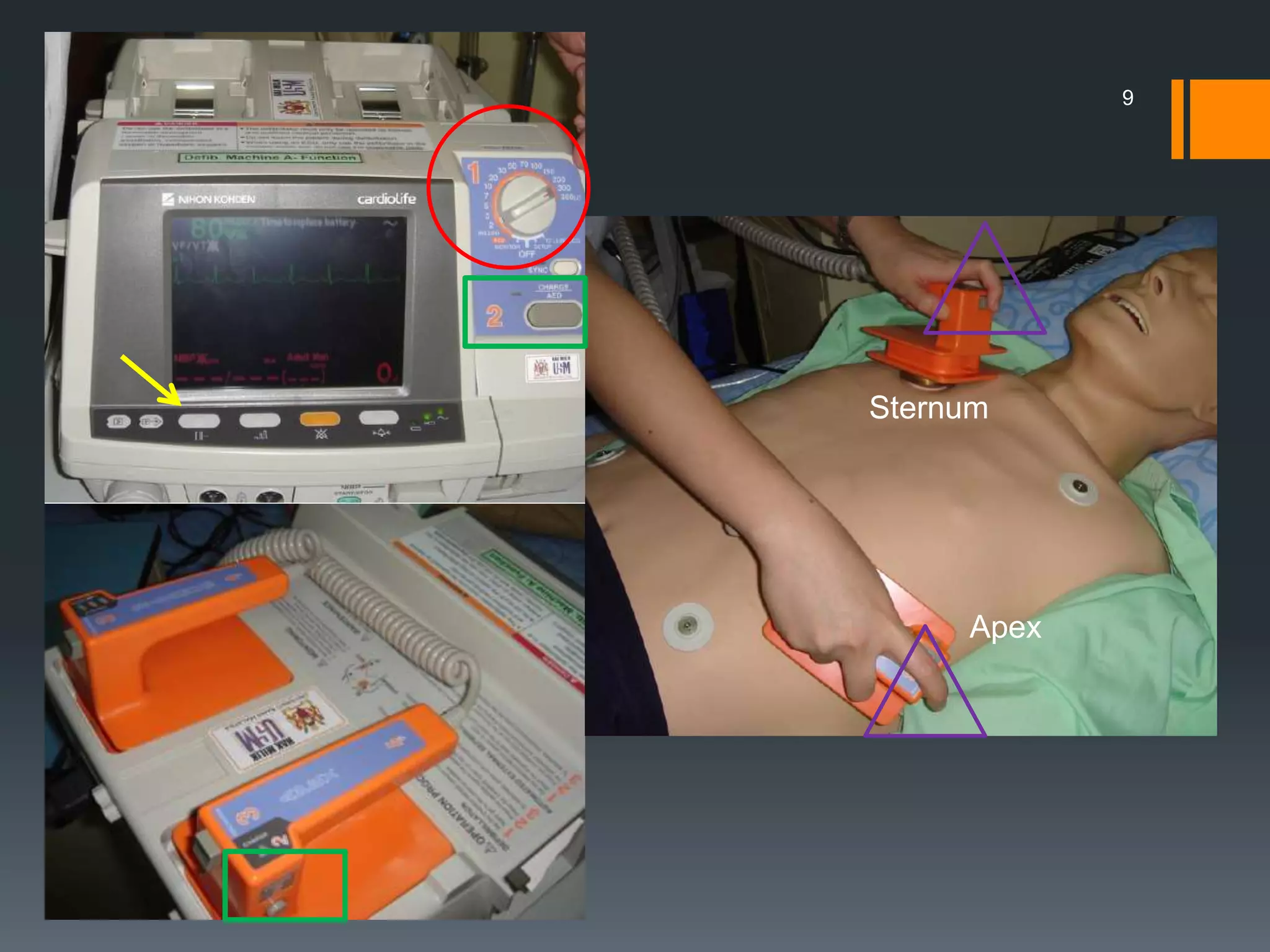
360J 200J
9
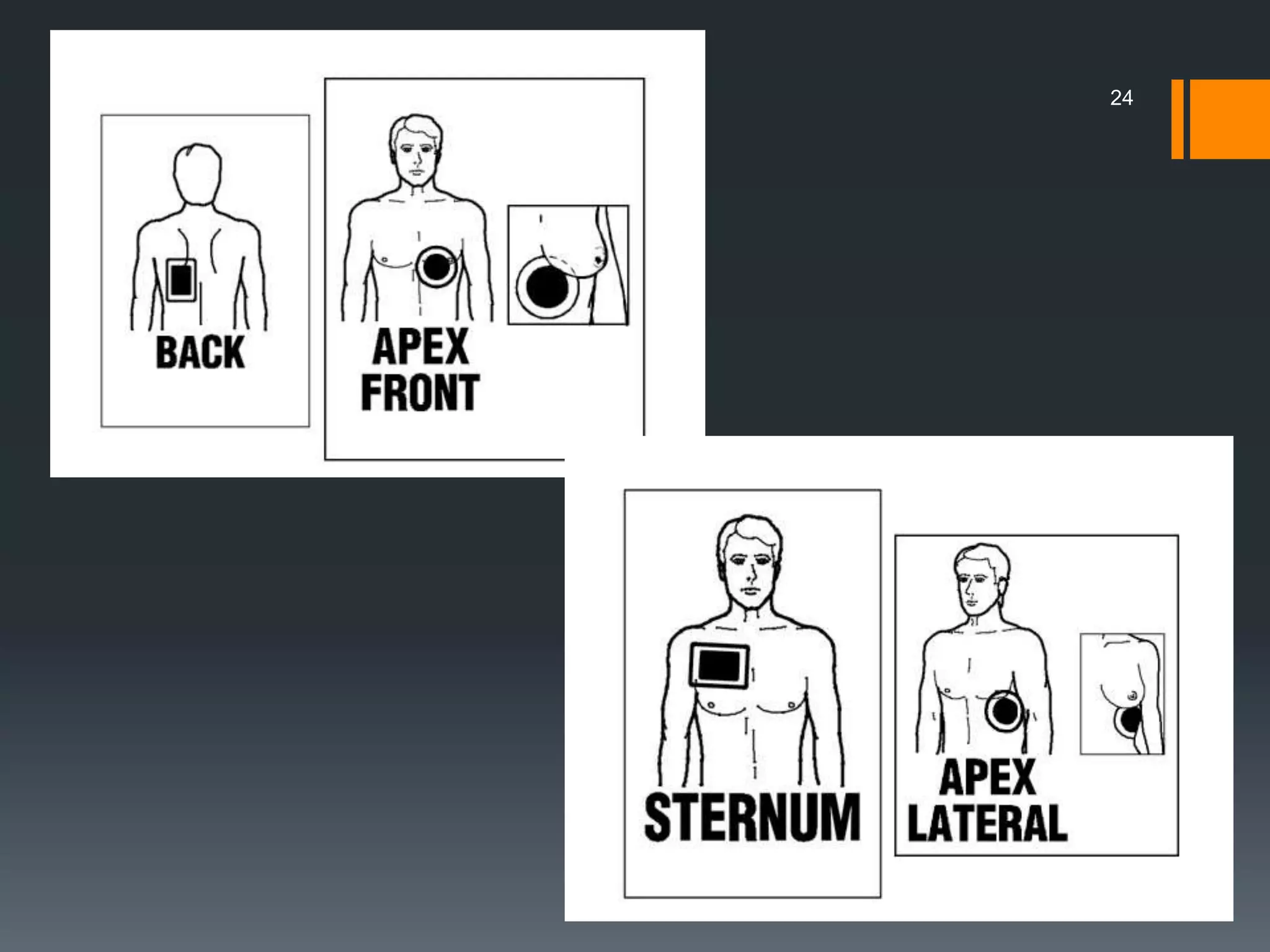
Sternum
Apex
10
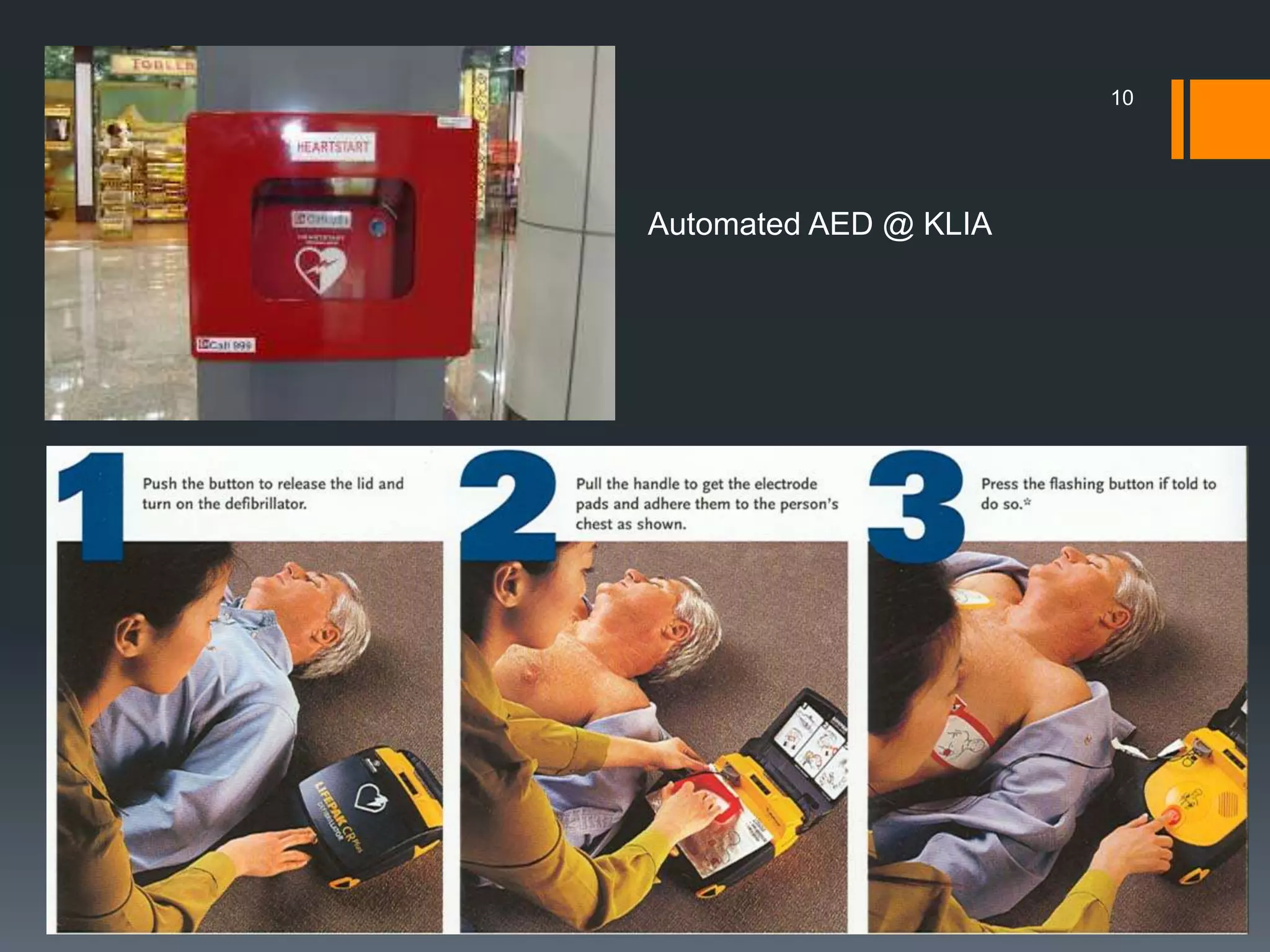
Automated AED @ KLIA
11
12
Cardioversion
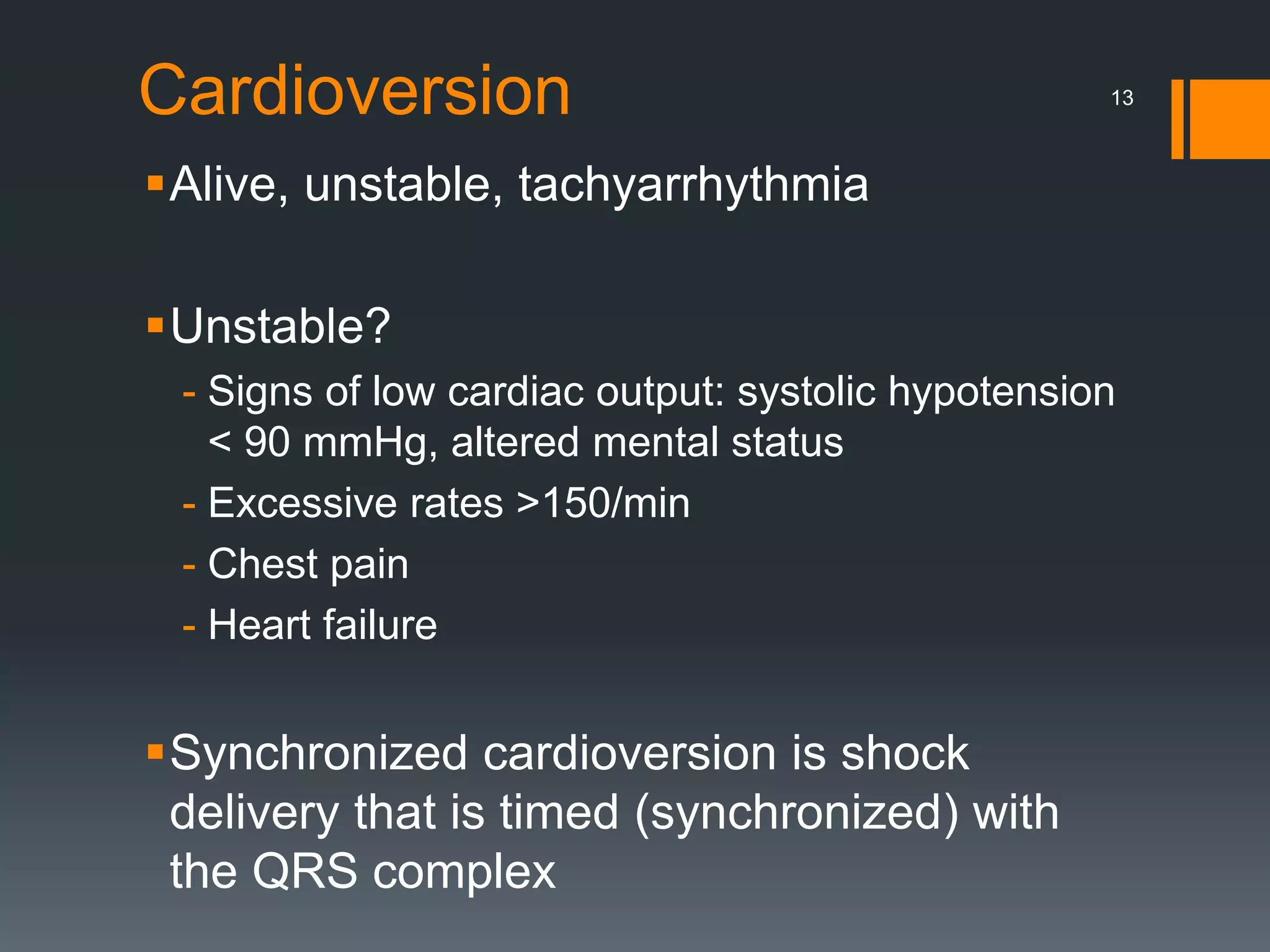
Alive, unstable, tachyarrhythmia
Unstable?
- Signs of low cardiac output: systolic hypotension
< 90 mmHg, altered mental status
- Excessive rates >150/min
- Chest pain
- Heart failure
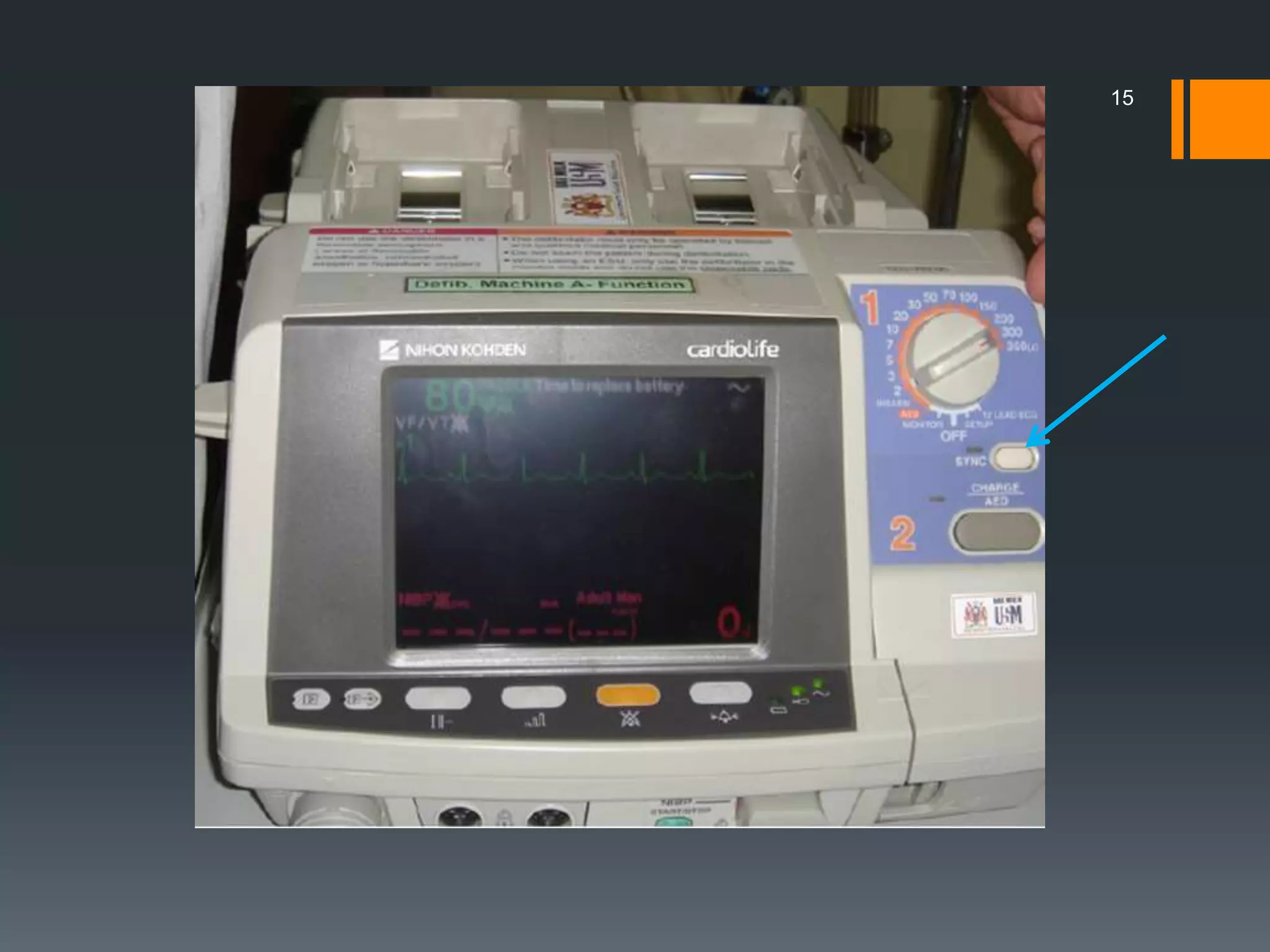
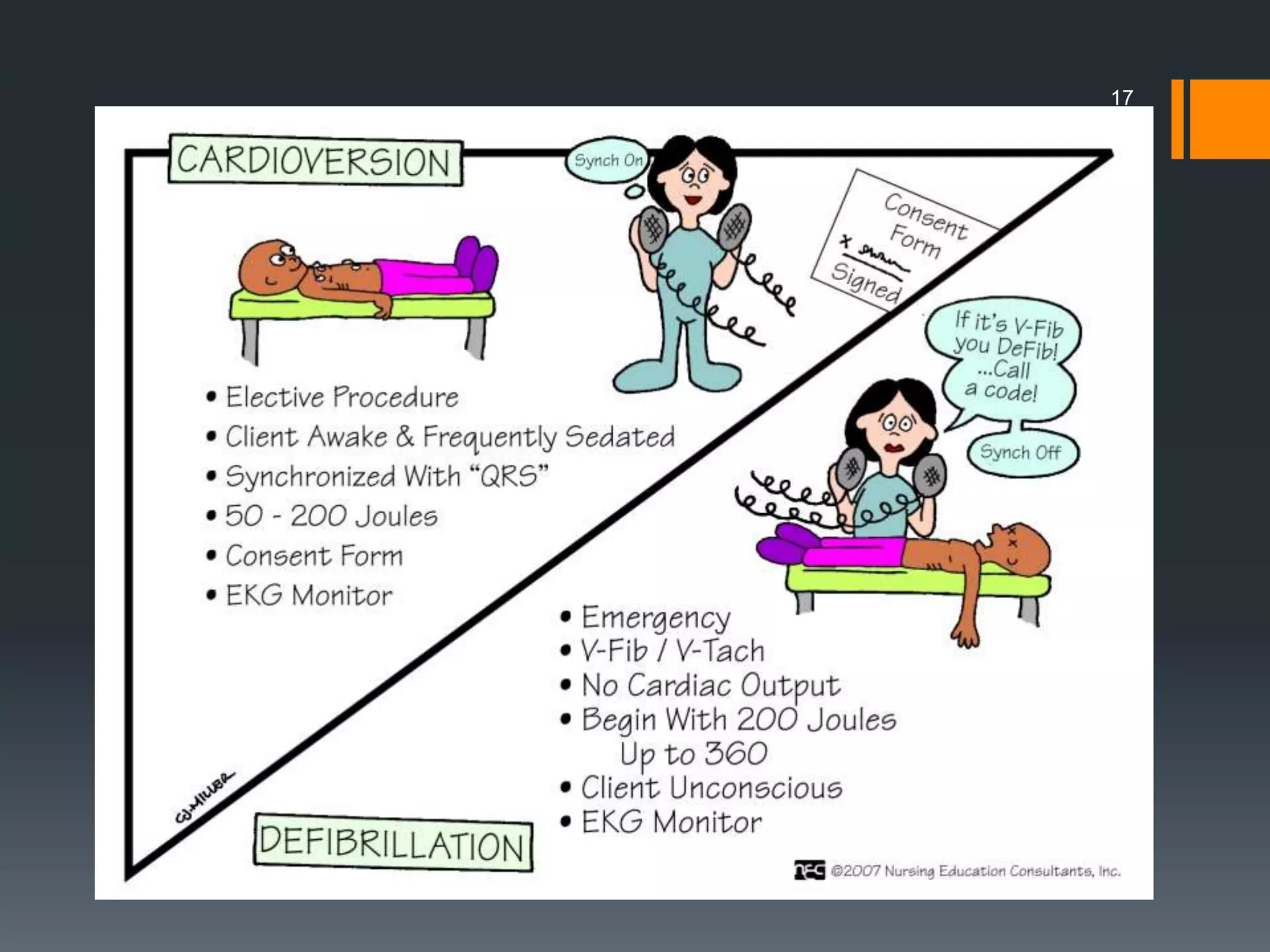
Synchronized cardioversion is shock
delivery that is timed (synchronized) with
the QRS complex
13
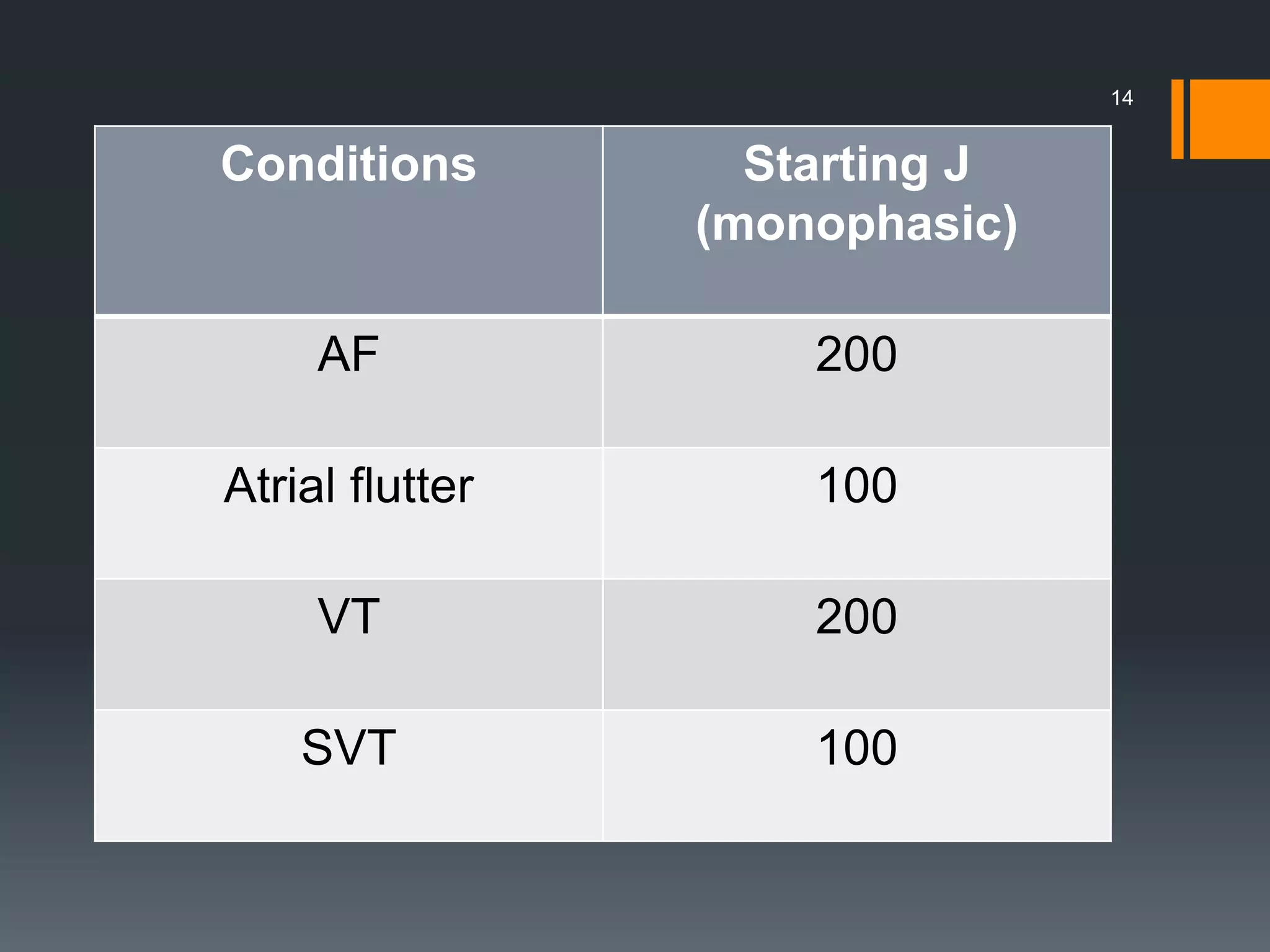
Conditions Starting J
(monophasic)
AF 200
Atrial flutter 100
VT 200
SVT 100
14
15
16
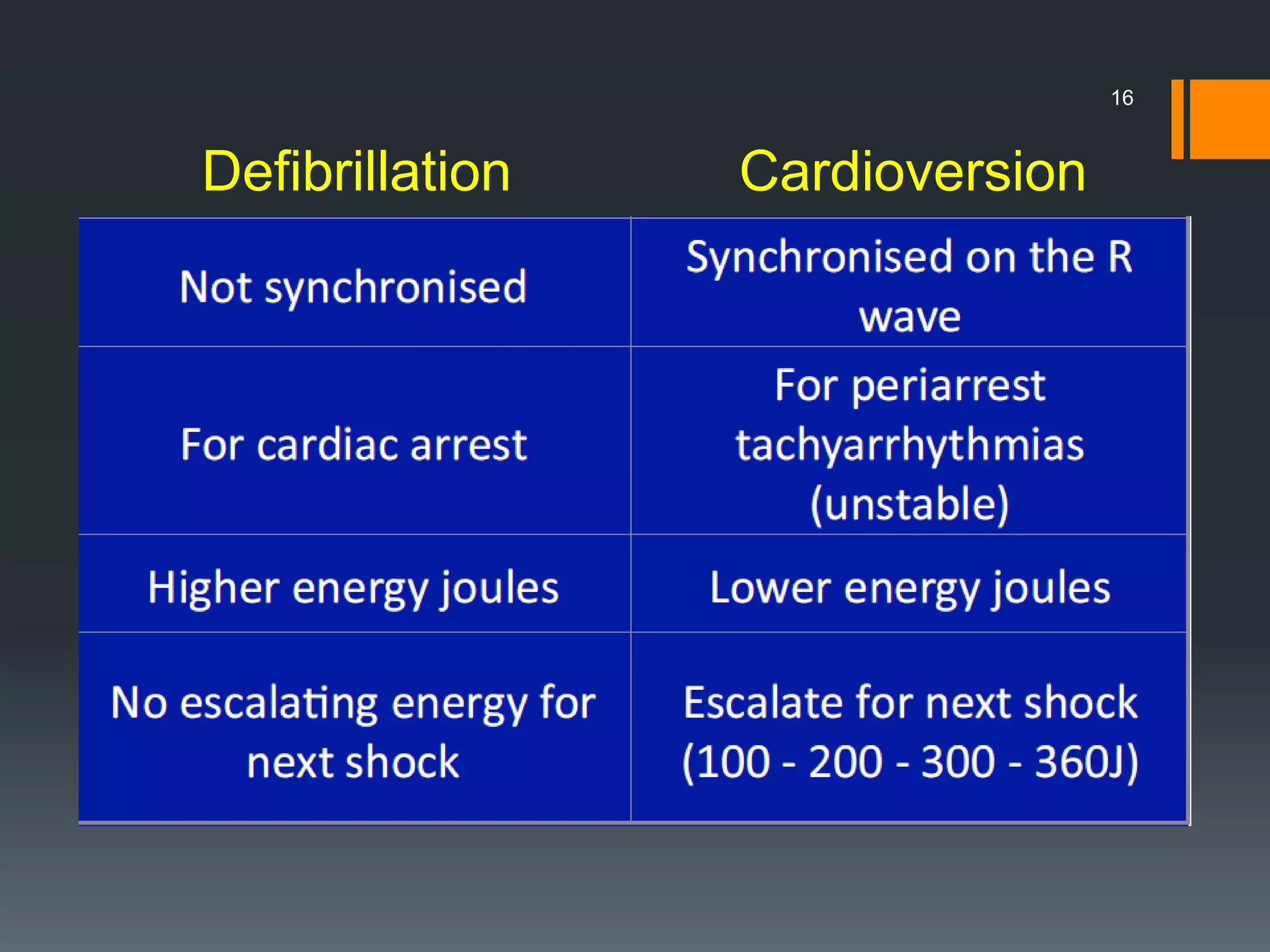
Defibrillation Cardioversion
17
Pacing
Unstable, bradyarrhythmias/bradycardia
Symptomatic sinus bradycardia
Heart block
- Complete heart block
- Mobitz type II 2nd degree heart block
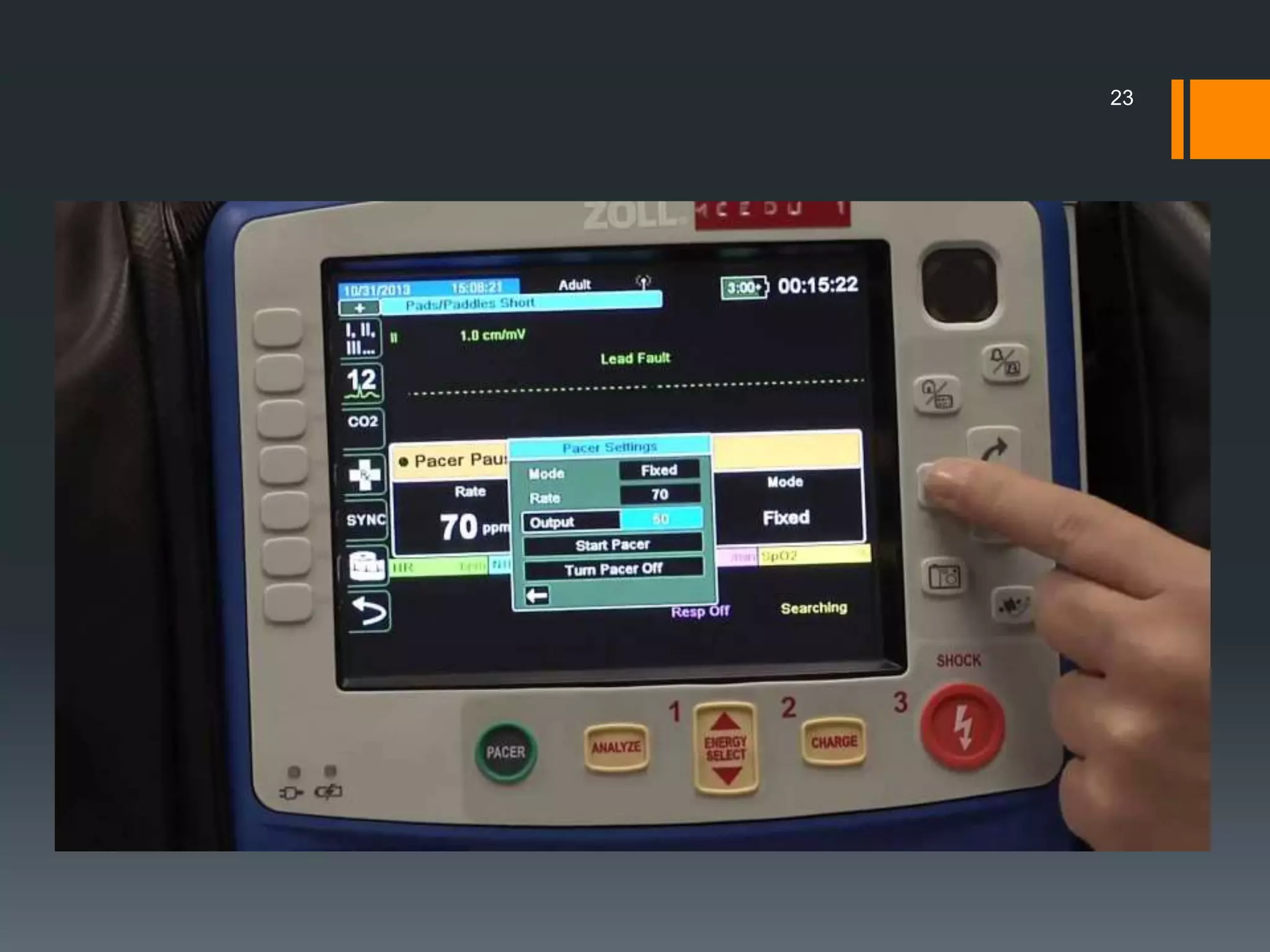
Transcutaneous/transvenous pacing
18
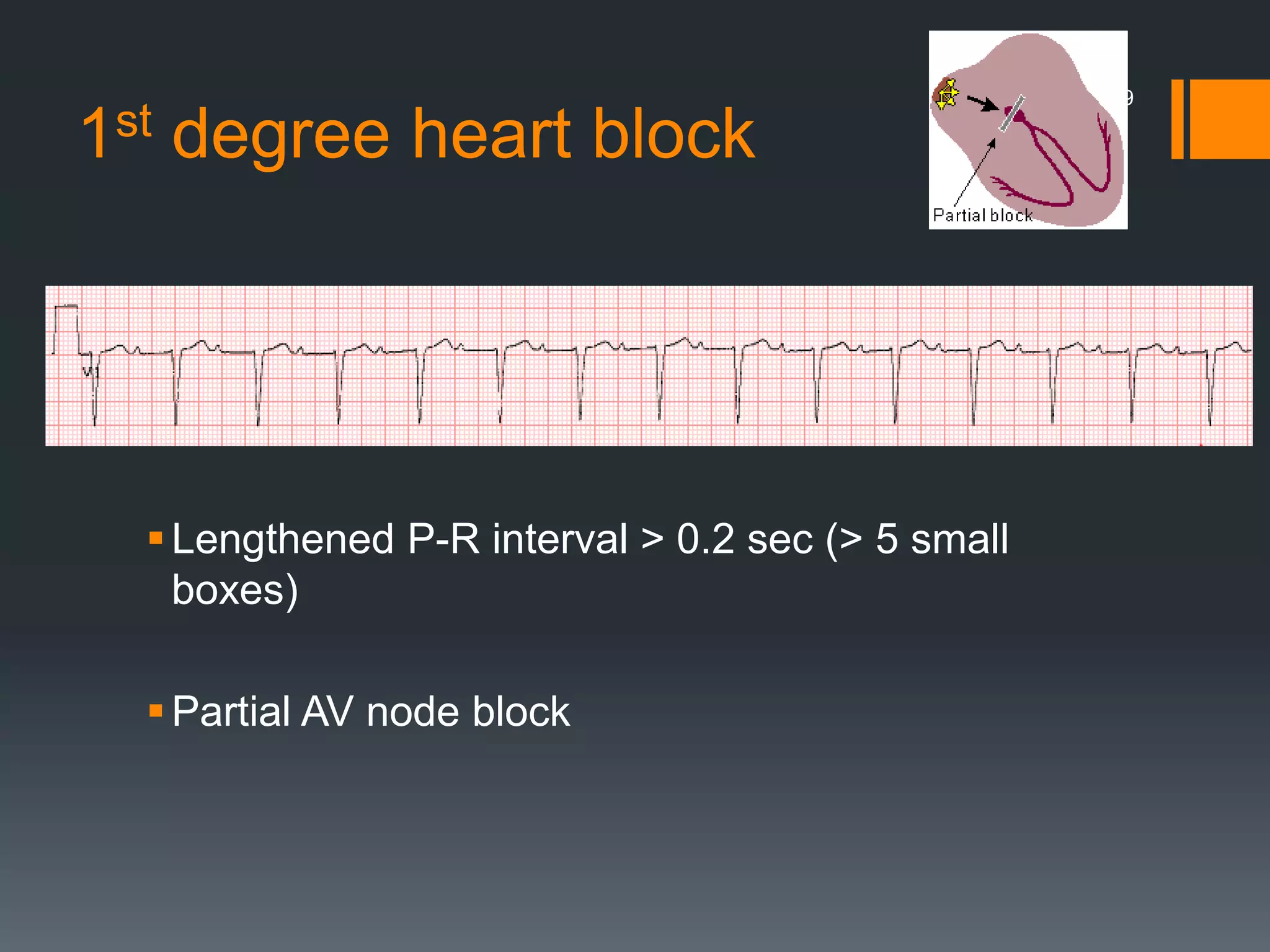
1st degree heart block
Lengthened P-R interval > 0.2 sec (> 5 small
boxes)
Partial AV node block
19
2nd Degree Heart Block
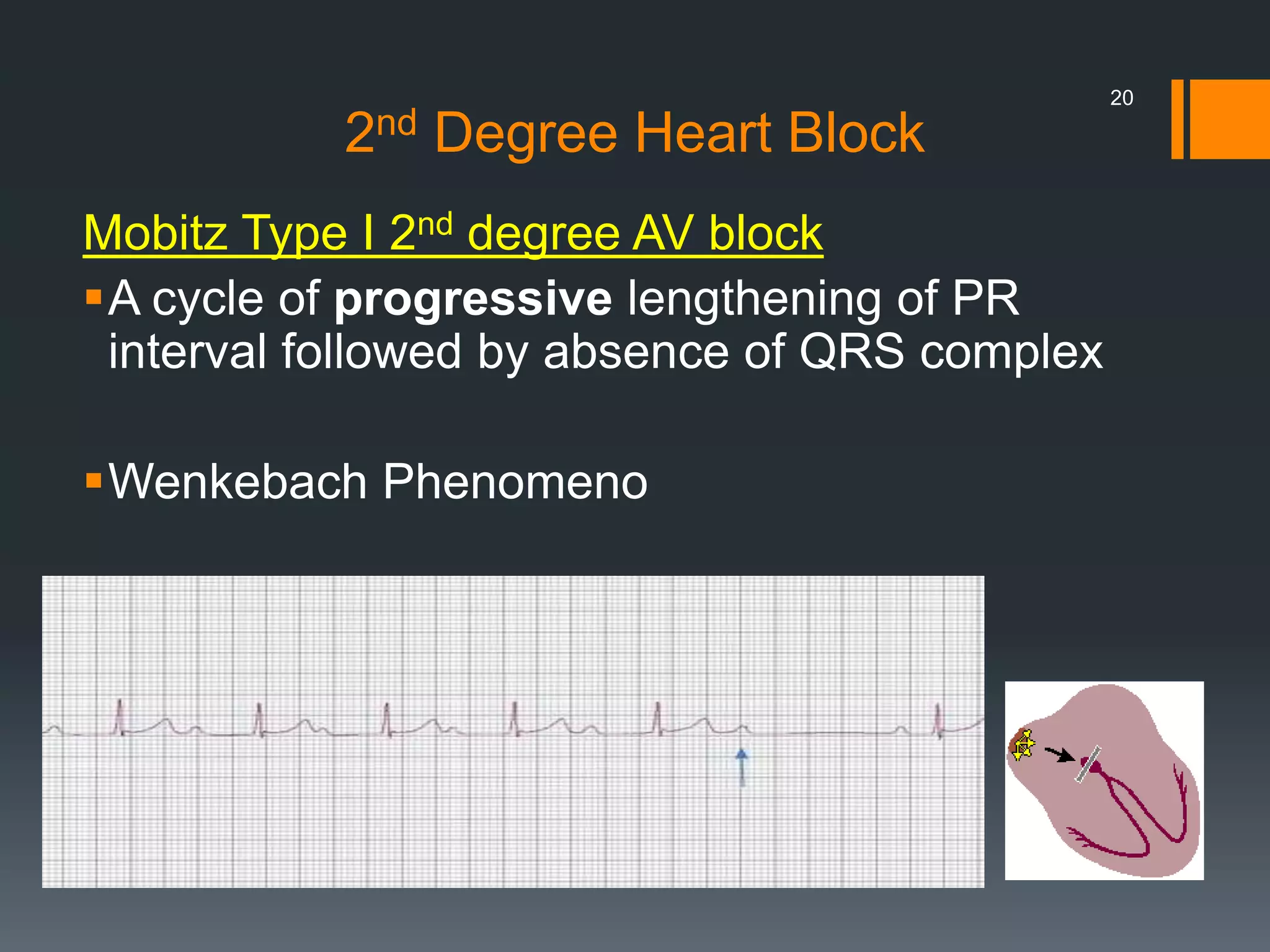
Mobitz Type I 2nd degree AV block
A cycle of progressive lengthening of PR
interval followed by absence of QRS complex
Wenkebach Phenomeno
20
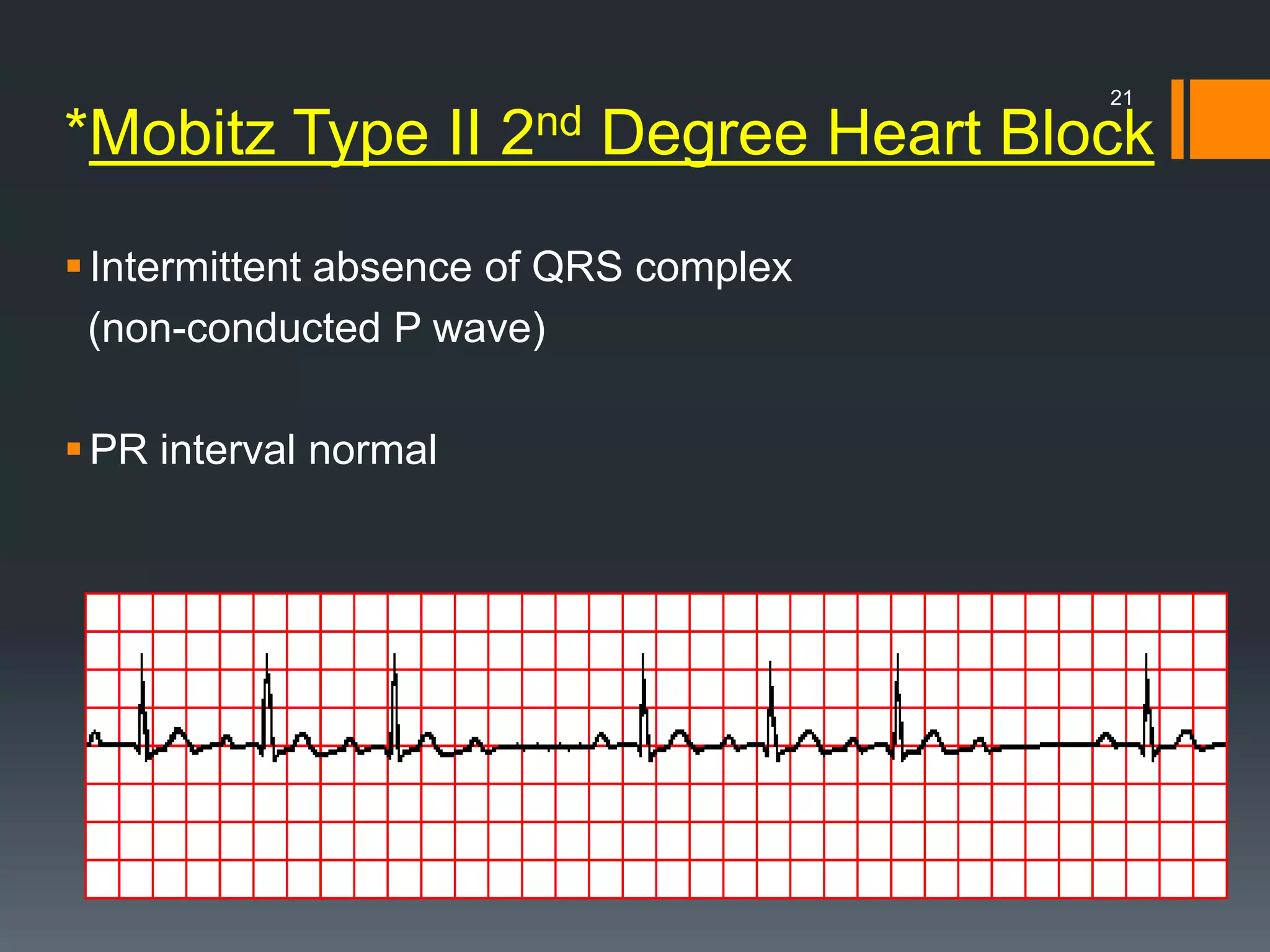
*Mobitz Type II 2nd Degree Heart Block
Intermittent absence of QRS complex
(non-conducted P wave)
PR interval normal
21
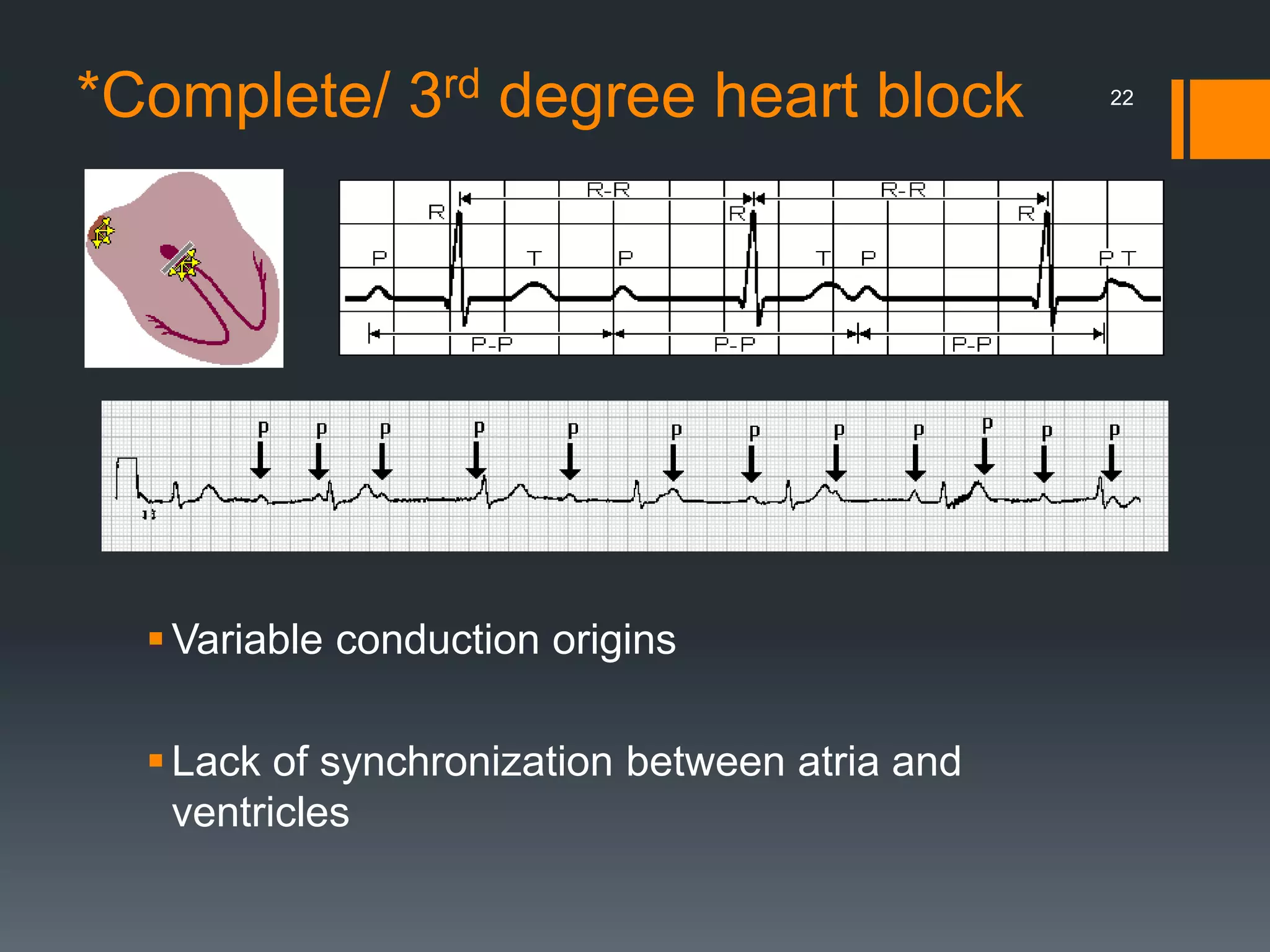
*Complete/ 3rd degree heart block
Variable conduction origins
Lack of synchronization between atria and
ventricles
22
23
24
Take home message
Recognize ECG findings
Indications for defibrillation, cardioversion and
pacing
How to do it
25
Thank you
Ref:
1. Tintinallis Emergency Medicine Manual, 7th Edition
2. AHA ACLS 2010; Electrical therapy
3. Basic and Advanced Life Support 2005 by K.S.Chew,
emergency department USM
4. ECG Teaching by Dr Effa, cardiologist, Medical faculty
UiTM
5. http://www.ecglibrary.com
26

Defibrillation, cardioversion and pacing

Editor's Notes

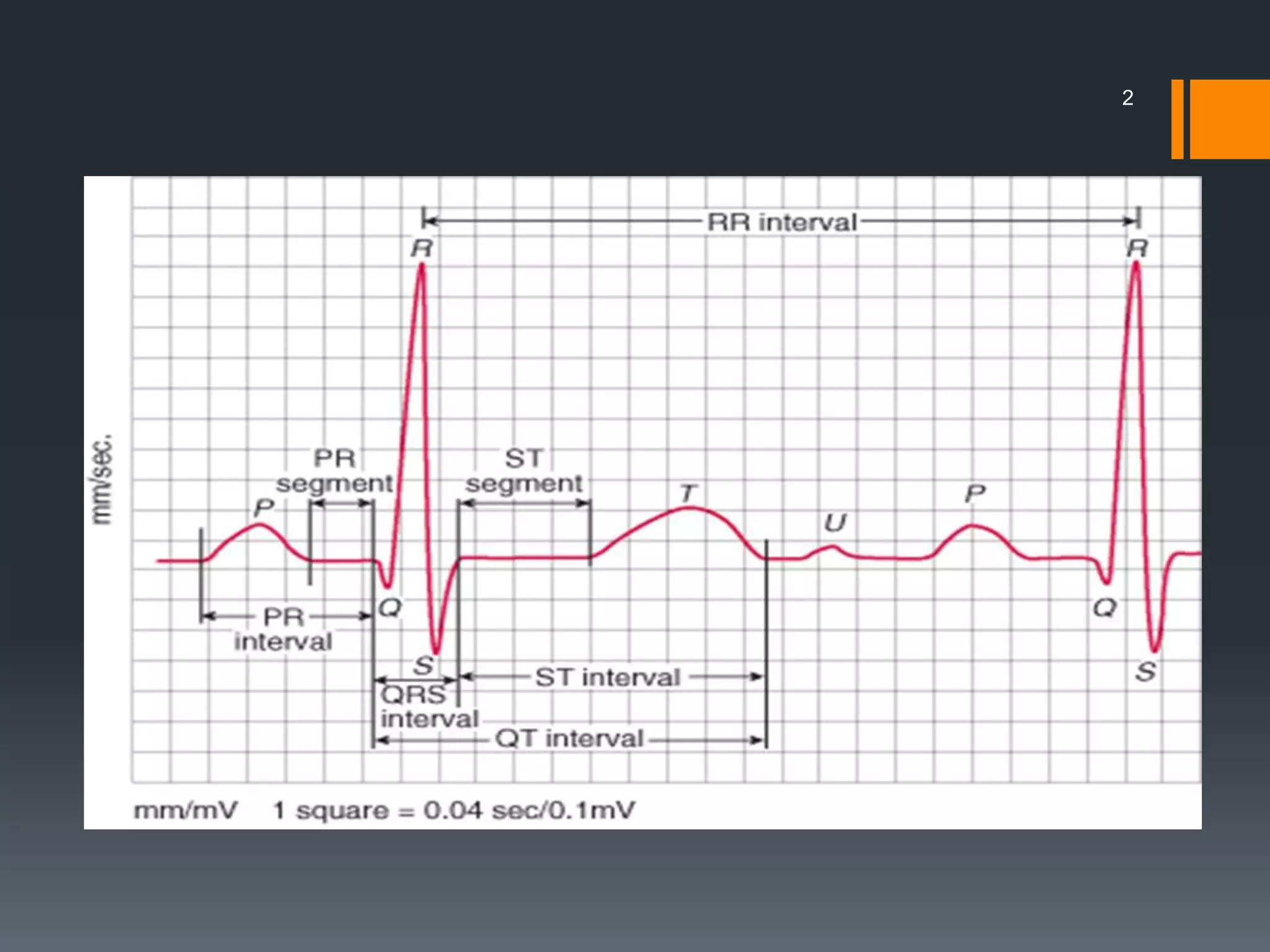
  • #3 Normal ecg
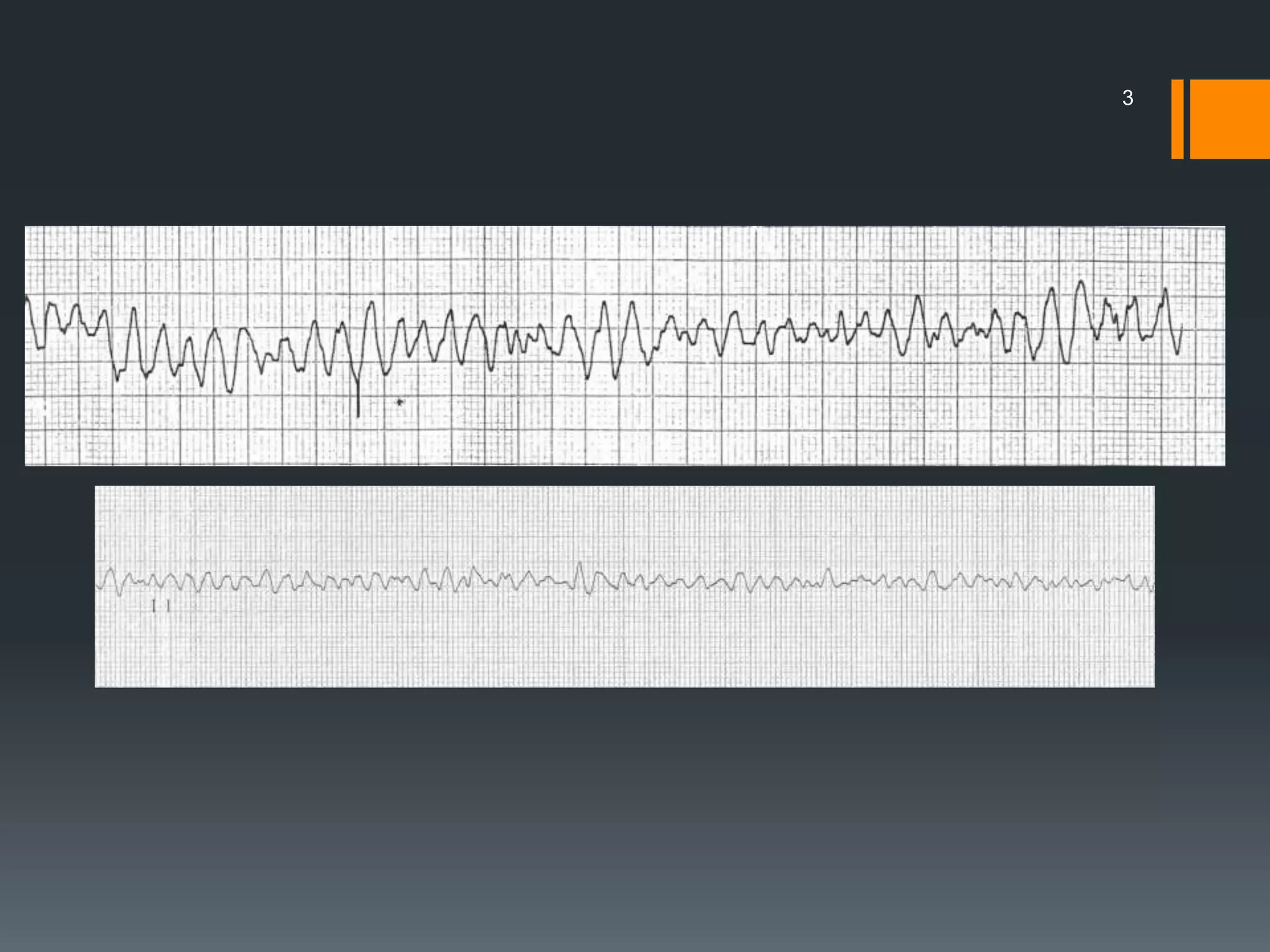
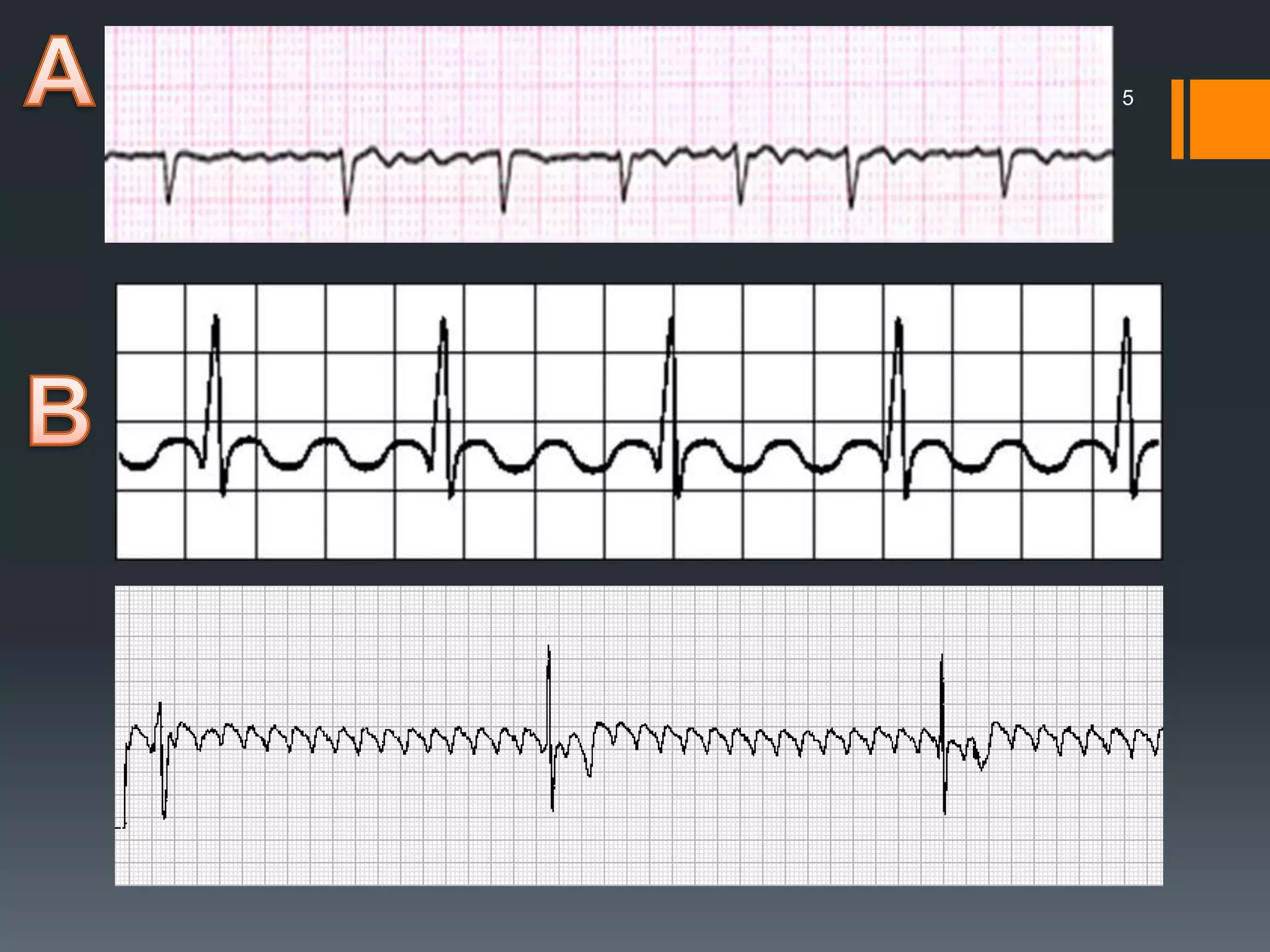
  • #4 VF: Chaotic irregular deflections of varying amplitude No identifiable P waves, QRS complexes, or T waves Rate 150 to 500 per minute
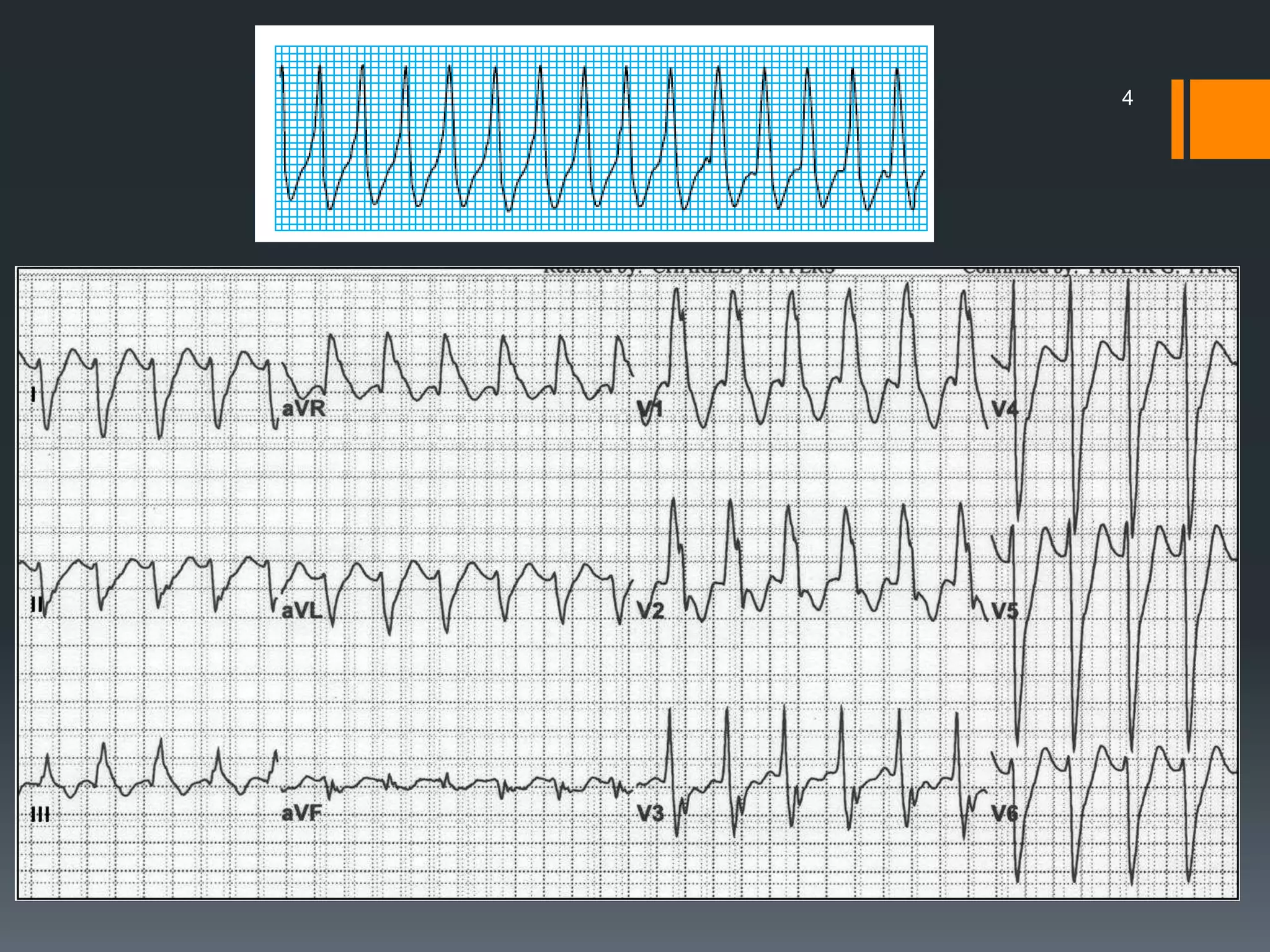
  • #5 VT: Wide QRS complex Tachycardia AV dissociation
  • #6 Tachyarrhythmia:- AF: absence P wave, irregular rhythm Atrial flutter: saw tooth
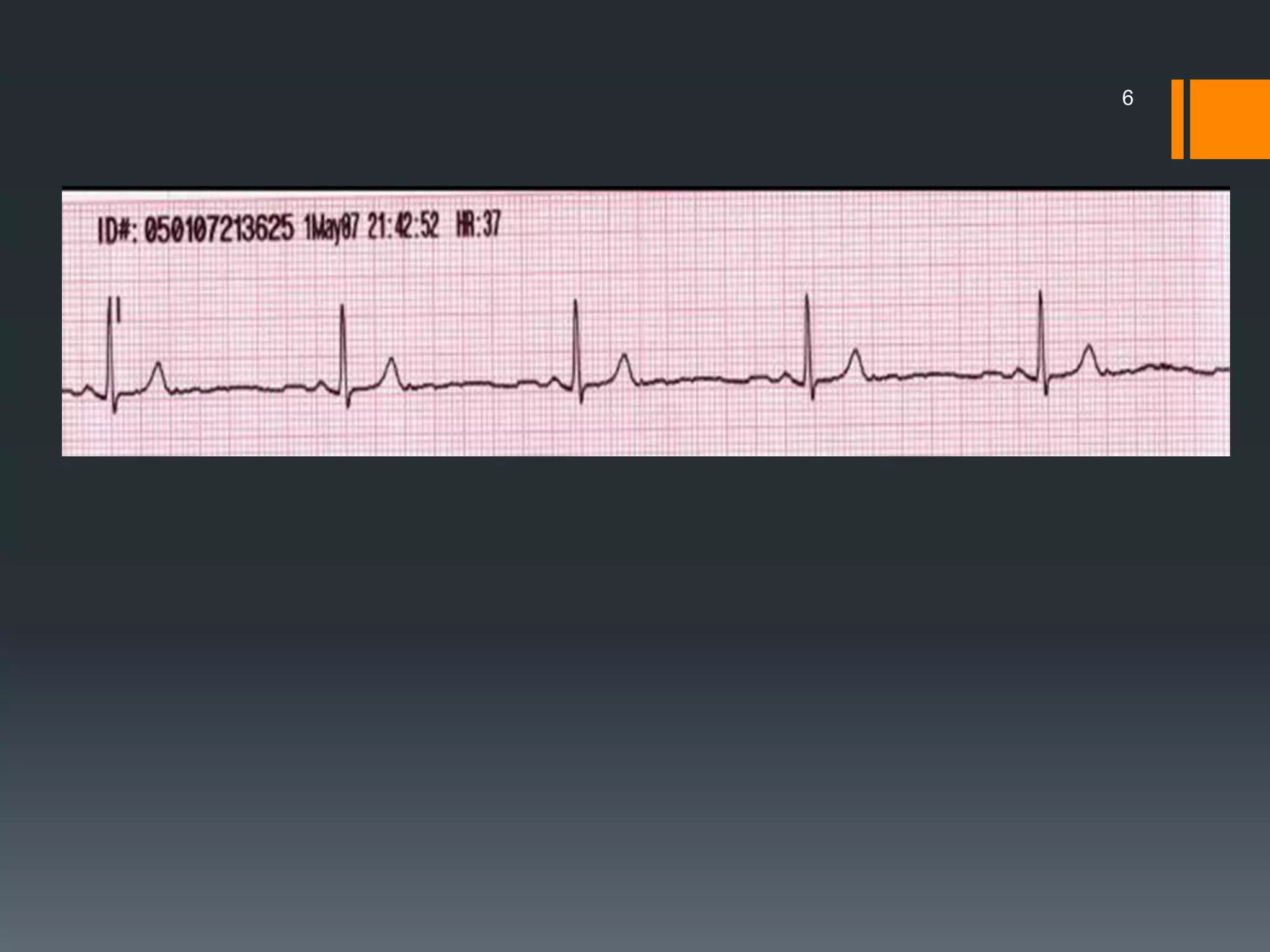
  • #7 Sinus bradycardia
  • #9 Children: 2-4 J/kg
  • #10 Off O2: prevent burn Pictures credit to: Basic and Advanced Life Support 2005 by K.S.Chew, emergency department USM
  • #15 Cardioversion up to 3X Treat U/L cause Failed 1st cardioversion  proceed IV amiodarone 300 mg loading over 20 min then try 2nd cardioversion
  • #19 HR<40 Give atropine(0.5mg, max total 3mg)/adrenaline while preparing pacing