UNIT III
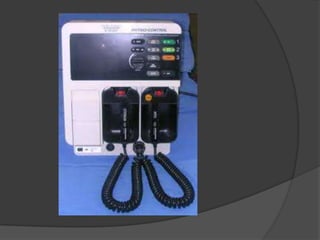
 A defibrillator is an electronic device that
  creates a sustained myocardial
  depolarization of a patients heart in
  order to stop ventricular fibrillation or
  atrial fibrillation
 Ventricular fibrillation is a cardiac
  emergency resulting from asynchronous
  contraction of heart muscle
 It may be due to coronary occlusion,
  electric shock or abnormalities of body
  chemistry
 This results in fall of CO and leads to
  death
 Ventricular fibrillation can be converted
  to a more efficient rhythm by applying a
  high voltage shock to the heart
 This sudden voltage then responds to
  normal physiological pulse and the
  rhythm is restored
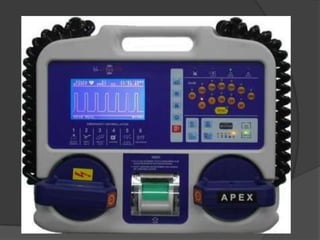
 The instrument for administrating the
  electronic shock is called
  DEFIBRILLATOR
 80 % of patients can be recovered from
  cardiac arrest using defib with in one
  min of attack
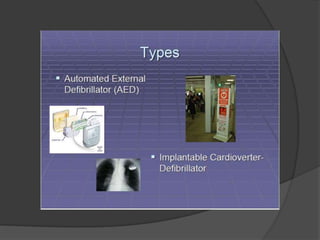
TYPES
 INTERNAL
 EXTERNAL
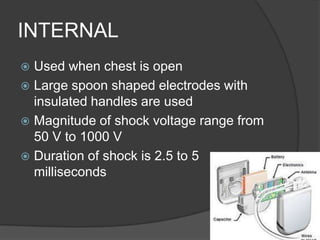
INTERNAL
 Used when chest is open
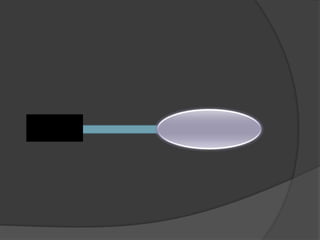
 Large spoon shaped electrodes with
  insulated handles are used
 Magnitude of shock voltage range from
  50 V to 1000 V
 Duration of shock is 2.5 to 5
  milliseconds
EXTERNAL DEFIB
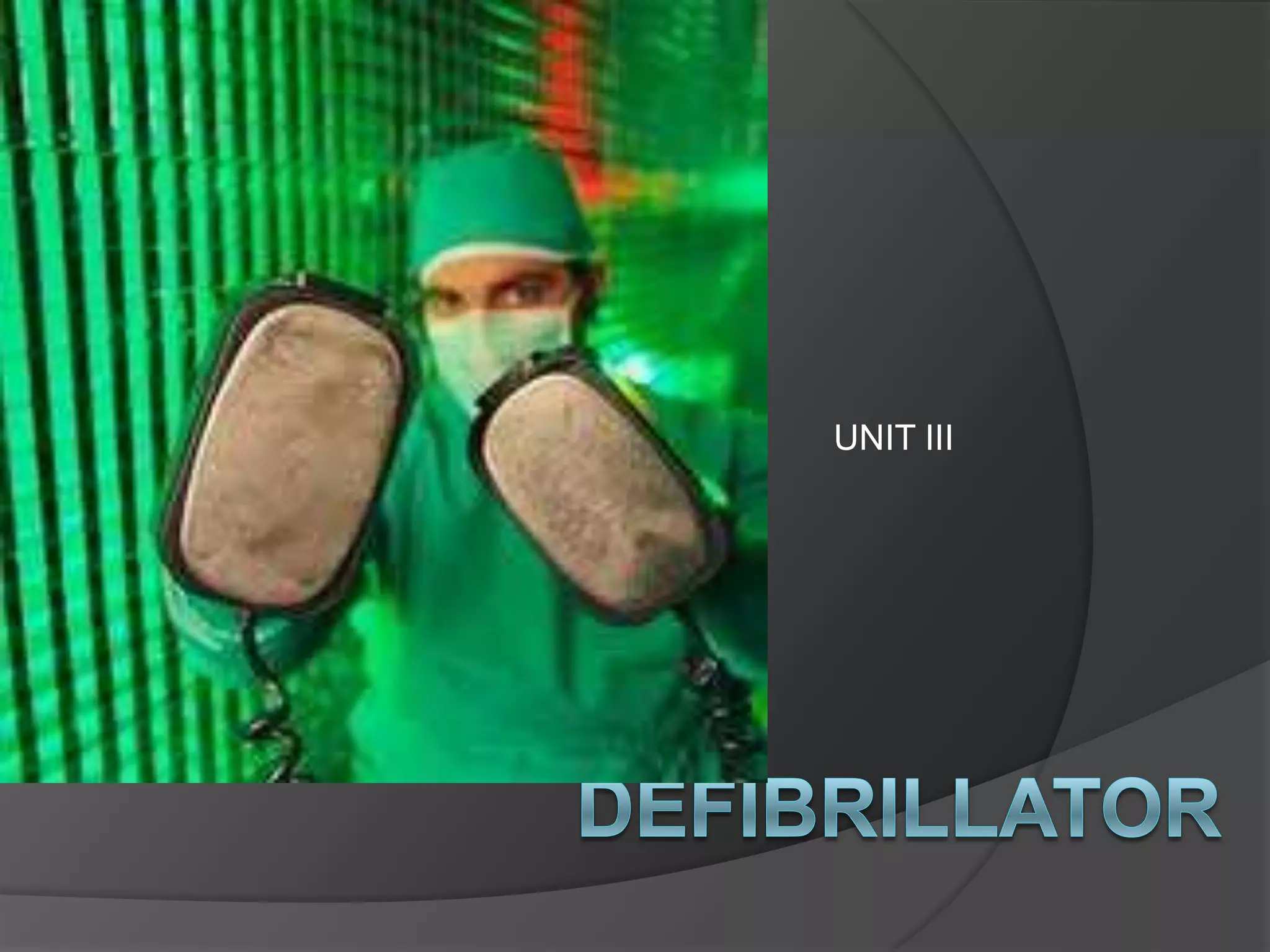
   Used on the chest using paddle shaped
    electrodes
   Bottom of the electrode consists of copper
    disc
   3-5 cm for kids and 8-10 cm diameter for
    adults
   Insulated handles
   Voltage range from 1000V to 6000 V
   Electrode gel is applied
   Duration 1 to 5 milliseconds
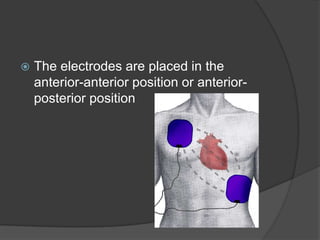
   The electrodes are placed in the
    anterior-anterior position or anterior-
    posterior position
CLASSIFICATION
   Depending on the nature of voltage
    applied the difibs can be classified in to
    6 types
     AC Defibrillator
     DC Defibrillator
     Synchronized Defibrillator
     Square pulse Defibrillator
     Double square pulse Defibrillator
     Biphasic DC Defibrillator
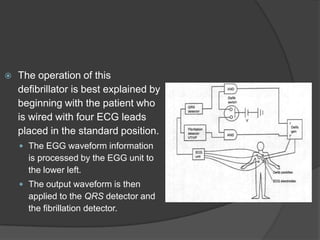
   The operation of this
    defibrillator is best explained by
    beginning with the patient who
    is wired with four ECG leads
    placed in the standard position.
     The EGG waveform information
      is processed by the EGG unit to
      the lower left.
     The output waveform is then
      applied to the QRS detector and
      the fibrillation detector.
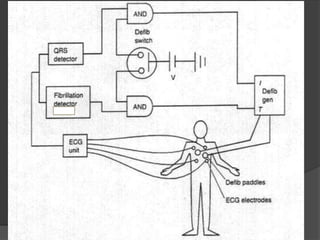
   If the QRS is present, a signal will be applied
    to the upper lead of the upper AND gate.
     Then if the attendant pushes the defib switch,
      placing a signal on the lower lead also, the
      AND gate will deliver an inhibiting signal to the
      defibrillator pulse generator.
      ○ An AND gate generates an output signal only
        when stimulus is present on both the upper and
        the lower input terminals.
   If there is no QRS and the fibrillation detector
    delivers a stimulating pulse to the lower lead
    of the lower AND gate, then when the
    attendant activates the defib switch, a stimulus
    will be put on both terminals of that gate, and
    its output will trigger the defibrillator.
     Thus, the defibrillator will deliver a therapeutic current
      pulse through the large electrodes on the sternum and
      apex to the patient’s chest.
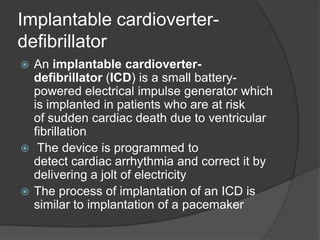
Implantable cardioverter-
defibrillator
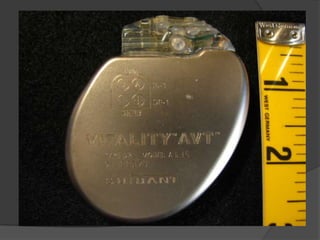
 An implantable cardioverter-
  defibrillator (ICD) is a small battery-
  powered electrical impulse generator which
  is implanted in patients who are at risk
  of sudden cardiac death due to ventricular
  fibrillation
 The device is programmed to
  detect cardiac arrhythmia and correct it by
  delivering a jolt of electricity
 The process of implantation of an ICD is
  similar to implantation of a pacemaker
Defibrillater
Defibrillater

Defibrillater

  • 1.
  • 2.
     A defibrillatoris an electronic device that creates a sustained myocardial depolarization of a patients heart in order to stop ventricular fibrillation or atrial fibrillation  Ventricular fibrillation is a cardiac emergency resulting from asynchronous contraction of heart muscle
  • 5.
     It maybe due to coronary occlusion, electric shock or abnormalities of body chemistry  This results in fall of CO and leads to death  Ventricular fibrillation can be converted to a more efficient rhythm by applying a high voltage shock to the heart
  • 6.
     This suddenvoltage then responds to normal physiological pulse and the rhythm is restored  The instrument for administrating the electronic shock is called DEFIBRILLATOR  80 % of patients can be recovered from cardiac arrest using defib with in one min of attack
  • 7.
  • 8.
    INTERNAL  Used whenchest is open  Large spoon shaped electrodes with insulated handles are used  Magnitude of shock voltage range from 50 V to 1000 V  Duration of shock is 2.5 to 5 milliseconds
  • 10.
    EXTERNAL DEFIB  Used on the chest using paddle shaped electrodes  Bottom of the electrode consists of copper disc  3-5 cm for kids and 8-10 cm diameter for adults  Insulated handles  Voltage range from 1000V to 6000 V  Electrode gel is applied  Duration 1 to 5 milliseconds
  • 11.
    The electrodes are placed in the anterior-anterior position or anterior- posterior position
  • 12.
    CLASSIFICATION  Depending on the nature of voltage applied the difibs can be classified in to 6 types  AC Defibrillator  DC Defibrillator  Synchronized Defibrillator  Square pulse Defibrillator  Double square pulse Defibrillator  Biphasic DC Defibrillator
  • 13.
    The operation of this defibrillator is best explained by beginning with the patient who is wired with four ECG leads placed in the standard position.  The EGG waveform information is processed by the EGG unit to the lower left.  The output waveform is then applied to the QRS detector and the fibrillation detector.
  • 15.
    If the QRS is present, a signal will be applied to the upper lead of the upper AND gate.  Then if the attendant pushes the defib switch, placing a signal on the lower lead also, the AND gate will deliver an inhibiting signal to the defibrillator pulse generator. ○ An AND gate generates an output signal only when stimulus is present on both the upper and the lower input terminals.
  • 16.
    If there is no QRS and the fibrillation detector delivers a stimulating pulse to the lower lead of the lower AND gate, then when the attendant activates the defib switch, a stimulus will be put on both terminals of that gate, and its output will trigger the defibrillator.  Thus, the defibrillator will deliver a therapeutic current pulse through the large electrodes on the sternum and apex to the patient’s chest.
  • 17.
    Implantable cardioverter- defibrillator  Animplantable cardioverter- defibrillator (ICD) is a small battery- powered electrical impulse generator which is implanted in patients who are at risk of sudden cardiac death due to ventricular fibrillation  The device is programmed to detect cardiac arrhythmia and correct it by delivering a jolt of electricity  The process of implantation of an ICD is similar to implantation of a pacemaker