Case example
• D, a ten-year-old, arrived in the eye clinic complaining his
vision was deteriorating. He was a bright boy and his family
looked worried. He had thorough medical assessments, and
was found to have reduced distance vision (6/18 in both
eyes). No medical cause for this sight loss was found.
1
• He attended the eye clinic with his mother and father. It
transpired his parents were divorced and had remarried. D
lived with the stepfather he did not care for, and a new baby
half-sister. Towards the end of the consultation, the mother
volunteered that her father had a neurological disease. On
airing these difficult emotional issues, D then said “I see
better”. He left the clinic with his vision normal and age-
appropriate.
By: Ismah Haron
2
• Somatoform disorder
- Pain disorder
- Undifferentiated somatoform disorder
- Somatoform disorder not otherwise
specific (NOS)
• Psychosomatic disorder
OUTLINE
PAIN DISORDER
• Definition:
Preoccupation with pain in the absence of
physical disease. The pain doesn’t follow a
neuroanatomic distribution. [1]
• Epidemiology:
1 month prevalence is 0.15-1.26%, >Female [2]
3
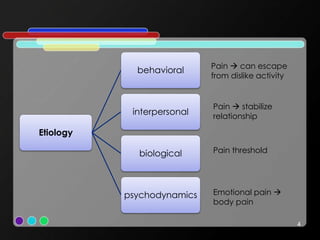
Etiology
behavioral
interpersonal
biological
psychodynamics
4
Pain  can escape
from dislike activity
Pain  stabilize
relationship
Pain threshold
Emotional pain 
body pain
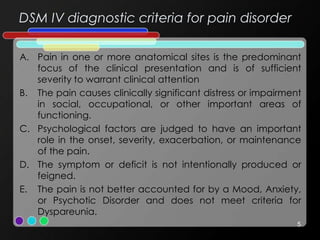
DSM IV diagnostic criteria for pain disorder
A. Pain in one or more anatomical sites is the predominant
focus of the clinical presentation and is of sufficient
severity to warrant clinical attention
B. The pain causes clinically significant distress or impairment
in social, occupational, or other important areas of
functioning.
C. Psychological factors are judged to have an important
role in the onset, severity, exacerbation, or maintenance
of the pain.
D. The symptom or deficit is not intentionally produced or
feigned.
E. The pain is not better accounted for by a Mood, Anxiety,
or Psychotic Disorder and does not meet criteria for
Dyspareunia.
5
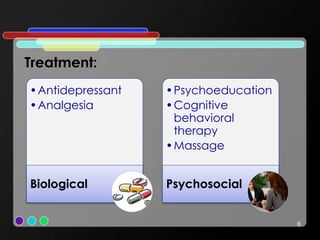
•Antidepressant
•Analgesia
Biological
•Psychoeducation
•Cognitive
behavioral
therapy
•Massage
Psychosocial
6
Treatment:
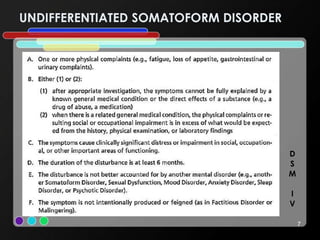
UNDIFFERENTIATED SOMATOFORM DISORDER
7
D
S
M
I
V
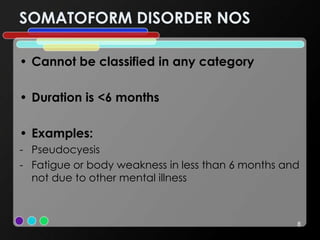
SOMATOFORM DISORDER NOS
• Cannot be classified in any category
• Duration is <6 months
• Examples:
- Pseudocyesis
- Fatigue or body weakness in less than 6 months and
not due to other mental illness
8
PSYCHOSOMATIC DISORDER
Definition
Prevalence
Classification
Diagnosis
Etiology
Treatment
9
1. Psychological
factor  medical
condition
2. Physical illness 
emotional/ mental
disorder
Psyche (mind)
& Soma (body)
12.5% [3]
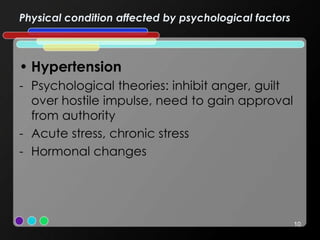
Physical condition affected by psychological factors
10
• Hypertension
- Psychological theories: inhibit anger, guilt
over hostile impulse, need to gain approval
from authority
- Acute stress, chronic stress
- Hormonal changes
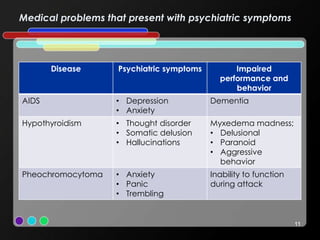
Medical problems that present with psychiatric symptoms
Disease Psychiatric symptoms Impaired
performance and
behavior
AIDS • Depression
• Anxiety
Dementia
Hypothyroidism • Thought disorder
• Somatic delusion
• Hallucinations
Myxedema madness;
• Delusional
• Paranoid
• Aggressive
behavior
Pheochromocytoma • Anxiety
• Panic
• Trembling
Inability to function
during attack
11
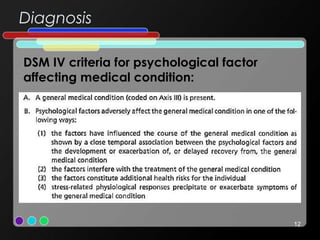
Diagnosis
12
DSM IV criteria for psychological factor
affecting medical condition:
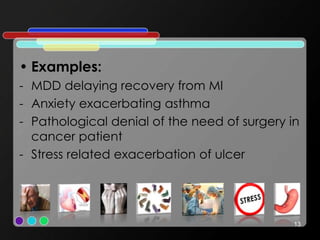
• Examples:
- MDD delaying recovery from MI
- Anxiety exacerbating asthma
- Pathological denial of the need of surgery in
cancer patient
- Stress related exacerbation of ulcer
13
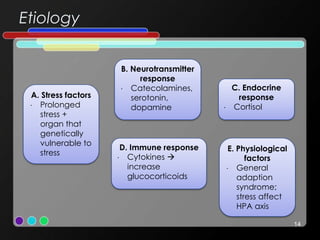
Etiology
14
A. Stress factors
 Prolonged
stress +
organ that
genetically
vulnerable to
stress
B. Neurotransmitter
response
 Catecolamines,
serotonin,
dopamine
C. Endocrine
response
 Cortisol
D. Immune response
 Cytokines 
increase
glucocorticoids
E. Physiological
factors
 General
adaption
syndrome;
stress affect
HPA axis
Treatment
• Collaborative approach
• Biological
• Psychosocial
- Supportive psychotherapy
- Dynamic insight oriented psychotherapy
- Group therapy
- Family therapy
- Cognitive behavioral therapy
15
Case example
• D, a ten-year-old, arrived in the eye clinic complaining his
vision was deteriorating. He was a bright boy and his family
looked worried. He had thorough medical assessments, and
was found to have reduced distance vision (6/18 in both
eyes). No medical cause for this sight loss was found.
16
• He attended the eye clinic with his mother and father. It
transpired his parents were divorced and had remarried. D
lived with the stepfather he did not care for, and a new baby
half-sister. Towards the end of the consultation, the mother
volunteered that her father had a neurological disease. On
airing these difficult emotional issues, D then said “I see
better”. He left the clinic with his vision normal and age-
appropriate.
SUMMARY
• Pain disorder
- Preoccupation with pain in the absence of physical
disease.
- Treatment
• Undifferentiated somatoform disorder (≥6 months)
vs. somatoform disorder NOS (<6 months)
• Psychosomatic disorder
- Mind & body
17
Biological
Psychosocial
THANK YOU
References:
1. KAPLAN & SADOCK; Pocket Handbook of Clinical Psychiatry 5th Edition
2. LIU, L., BI, B., QIN, X., WEI, S., WANG, W., LI, Y., JIN, Q., AI, L., PHILLIPS, M. R.
& DONG, G. 2012. The prevalence of somatoform disorders in internal
medicine outpatient departments of 23 general hospitals in Shenyang,
China. General Hospital Psychiatry
3. HIDAYAT, D., INGKIRIWANG, E., ANDRI, A., ASNAWI, E., WIDYA, R. S. &
SUSANTO, D. H. 2011. The Usage of Two Minutes Method (M2M) to
Determine Mental Disorder Prevalence in Primary Care. Journal of the
Indonesian Medical Association, 60.
4. DSM IV TR
18

Somatoform disorder & psychosomatic disorder

  • 1.
    Case example • D,a ten-year-old, arrived in the eye clinic complaining his vision was deteriorating. He was a bright boy and his family looked worried. He had thorough medical assessments, and was found to have reduced distance vision (6/18 in both eyes). No medical cause for this sight loss was found. 1 • He attended the eye clinic with his mother and father. It transpired his parents were divorced and had remarried. D lived with the stepfather he did not care for, and a new baby half-sister. Towards the end of the consultation, the mother volunteered that her father had a neurological disease. On airing these difficult emotional issues, D then said “I see better”. He left the clinic with his vision normal and age- appropriate.
  • 2.
    By: Ismah Haron 2 •Somatoform disorder - Pain disorder - Undifferentiated somatoform disorder - Somatoform disorder not otherwise specific (NOS) • Psychosomatic disorder OUTLINE
  • 3.
    PAIN DISORDER • Definition: Preoccupationwith pain in the absence of physical disease. The pain doesn’t follow a neuroanatomic distribution. [1] • Epidemiology: 1 month prevalence is 0.15-1.26%, >Female [2] 3
  • 4.
    Etiology behavioral interpersonal biological psychodynamics 4 Pain  canescape from dislike activity Pain  stabilize relationship Pain threshold Emotional pain  body pain
  • 5.
    DSM IV diagnosticcriteria for pain disorder A. Pain in one or more anatomical sites is the predominant focus of the clinical presentation and is of sufficient severity to warrant clinical attention B. The pain causes clinically significant distress or impairment in social, occupational, or other important areas of functioning. C. Psychological factors are judged to have an important role in the onset, severity, exacerbation, or maintenance of the pain. D. The symptom or deficit is not intentionally produced or feigned. E. The pain is not better accounted for by a Mood, Anxiety, or Psychotic Disorder and does not meet criteria for Dyspareunia. 5
  • 6.
  • 7.
  • 8.
    SOMATOFORM DISORDER NOS •Cannot be classified in any category • Duration is <6 months • Examples: - Pseudocyesis - Fatigue or body weakness in less than 6 months and not due to other mental illness 8
  • 9.
    PSYCHOSOMATIC DISORDER Definition Prevalence Classification Diagnosis Etiology Treatment 9 1. Psychological factor medical condition 2. Physical illness  emotional/ mental disorder Psyche (mind) & Soma (body) 12.5% [3]
  • 10.
    Physical condition affectedby psychological factors 10 • Hypertension - Psychological theories: inhibit anger, guilt over hostile impulse, need to gain approval from authority - Acute stress, chronic stress - Hormonal changes
  • 11.
    Medical problems thatpresent with psychiatric symptoms Disease Psychiatric symptoms Impaired performance and behavior AIDS • Depression • Anxiety Dementia Hypothyroidism • Thought disorder • Somatic delusion • Hallucinations Myxedema madness; • Delusional • Paranoid • Aggressive behavior Pheochromocytoma • Anxiety • Panic • Trembling Inability to function during attack 11
  • 12.
    Diagnosis 12 DSM IV criteriafor psychological factor affecting medical condition:
  • 13.
    • Examples: - MDDdelaying recovery from MI - Anxiety exacerbating asthma - Pathological denial of the need of surgery in cancer patient - Stress related exacerbation of ulcer 13
  • 14.
    Etiology 14 A. Stress factors Prolonged stress + organ that genetically vulnerable to stress B. Neurotransmitter response  Catecolamines, serotonin, dopamine C. Endocrine response  Cortisol D. Immune response  Cytokines  increase glucocorticoids E. Physiological factors  General adaption syndrome; stress affect HPA axis
  • 15.
    Treatment • Collaborative approach •Biological • Psychosocial - Supportive psychotherapy - Dynamic insight oriented psychotherapy - Group therapy - Family therapy - Cognitive behavioral therapy 15
  • 16.
    Case example • D,a ten-year-old, arrived in the eye clinic complaining his vision was deteriorating. He was a bright boy and his family looked worried. He had thorough medical assessments, and was found to have reduced distance vision (6/18 in both eyes). No medical cause for this sight loss was found. 16 • He attended the eye clinic with his mother and father. It transpired his parents were divorced and had remarried. D lived with the stepfather he did not care for, and a new baby half-sister. Towards the end of the consultation, the mother volunteered that her father had a neurological disease. On airing these difficult emotional issues, D then said “I see better”. He left the clinic with his vision normal and age- appropriate.
  • 17.
    SUMMARY • Pain disorder -Preoccupation with pain in the absence of physical disease. - Treatment • Undifferentiated somatoform disorder (≥6 months) vs. somatoform disorder NOS (<6 months) • Psychosomatic disorder - Mind & body 17 Biological Psychosocial
  • 18.
    THANK YOU References: 1. KAPLAN& SADOCK; Pocket Handbook of Clinical Psychiatry 5th Edition 2. LIU, L., BI, B., QIN, X., WEI, S., WANG, W., LI, Y., JIN, Q., AI, L., PHILLIPS, M. R. & DONG, G. 2012. The prevalence of somatoform disorders in internal medicine outpatient departments of 23 general hospitals in Shenyang, China. General Hospital Psychiatry 3. HIDAYAT, D., INGKIRIWANG, E., ANDRI, A., ASNAWI, E., WIDYA, R. S. & SUSANTO, D. H. 2011. The Usage of Two Minutes Method (M2M) to Determine Mental Disorder Prevalence in Primary Care. Journal of the Indonesian Medical Association, 60. 4. DSM IV TR 18

Editor's Notes

  • #2 Diagnosis: psychosomatic disorder Ddx: Myopia? (rabun jauh) Lazy eye (amblyopia) Personality trait (narcissistic, attention seeker?)
  • #6 Specify either acute (<6 months) or chronic (≥6 months), pain disorder associated with psychological factor and general medical condition or only with psychological factor.
  • #7 Avoid opioid (risk of abuse) CBT: To recognize what seems to make the pain worse To develop ways of coping with the painful body sensations To keep yourself more active, even if you still have the pain
  • #17 Diagnosis: psychosomatic disorder Ddx: Myopia? (rabun jauh) Lazy eye (amblyopia) Personality trait (narcissistic, attention seeker?)