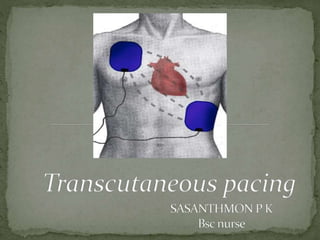
 Transcutaneous Pacing (TCP) is a
temporary means of pacing a
patient's heart during an emergency
and stabilizing the patient until a
more permanent means of pacing
is achieved. It is accomplished by
delivering pulses of electric current
through the patient's chest,
stimulating the heart to contract.
• Transcutaneous cardiac pacing is
indicated primarily for the treatment of
bradycardia and various types of heart
blocks
• Intermittent overdrive pacing can also be
used as an antitachycardic treatment for
various atrial and ventricular
tachycardia's
 Keep patient hemodynamically stable
 Until underlying problem resolved
 Untill permanent pacing strategy applied.
GOALS
• VF
 Awake, hemodynamically stable patients
 Severe hypothermia
 Non-intact skin at the site of pads placement
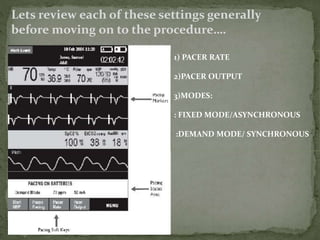
1) PACER RATE
2)PACER OUTPUT
3)MODES:
: FIXED MODE/ASYNCHRONOUS
:DEMAND MODE/ SYNCHRONOUS
Lets review each of these settings generally
before moving on to the procedure….
 Amount of energy required to initiate a
depolarization … for the myocardial cells to
„capture‟ the impulse and depolarize.
 It is measured in milliamps (MA)
 Capture means-patients myocardial cells capture
the impulse delivered by the pacemaker; pacer
spike followed by a QRS associated with a pulse
The required heart rate per minute
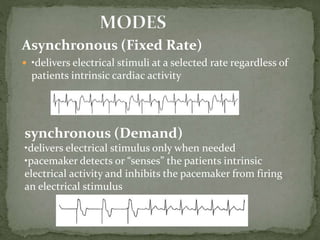
Asynchronous (Fixed Rate)
 •delivers electrical stimuli at a selected rate regardless of
patients intrinsic cardiac activity
synchronous (Demand)
•delivers electrical stimulus only when needed
•pacemaker detects or “senses” the patients intrinsic
electrical activity and inhibits the pacemaker from firing
an electrical stimulus
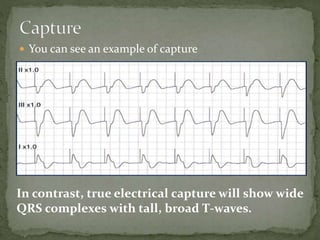
 You can see an example of capture
In contrast, true electrical capture will show wide
QRS complexes with tall, broad T-waves.
 Apply the pacing pads(anterio-posterior or anterio-lateral)
 Consider sedation
Avoid placing the pads directly over an AICD or transdermal
drug patches
 Turn on the monitor and set it to "pacing mode“
 Select the pacing rate using the rate button (generally 60-
70 bpm is adequate)
 Increase current output from minimal until capture is
achieved
(Mechanical /electrical capture of the ventricles is evidenced by
signs of improved cardiac output, including a palpable pulse, rise
in blood pressure, improved level of consciousness, improved
skin color and temperature)
 Start pacing by pressing” start pacing button”
( Confirm mechanical capture with pulse or ultrasound)
 Asses patient :
 pulse
 Signs of improved mental status, blood
pressure & O2 SAT
 Evaluate every 30 minutes to avoid skin burns and
change the pad place after few hours
 Assure adequate sedation/analgesics if
hemodynamics allows
 Treat arrhythmia and plan for definitive
management
Transcutaneous pacing

Transcutaneous pacing

  • 2.
     Transcutaneous Pacing(TCP) is a temporary means of pacing a patient's heart during an emergency and stabilizing the patient until a more permanent means of pacing is achieved. It is accomplished by delivering pulses of electric current through the patient's chest, stimulating the heart to contract.
  • 3.
    • Transcutaneous cardiacpacing is indicated primarily for the treatment of bradycardia and various types of heart blocks • Intermittent overdrive pacing can also be used as an antitachycardic treatment for various atrial and ventricular tachycardia's
  • 4.
     Keep patienthemodynamically stable  Until underlying problem resolved  Untill permanent pacing strategy applied. GOALS • VF  Awake, hemodynamically stable patients  Severe hypothermia  Non-intact skin at the site of pads placement
  • 5.
    1) PACER RATE 2)PACEROUTPUT 3)MODES: : FIXED MODE/ASYNCHRONOUS :DEMAND MODE/ SYNCHRONOUS Lets review each of these settings generally before moving on to the procedure….
  • 6.
     Amount ofenergy required to initiate a depolarization … for the myocardial cells to „capture‟ the impulse and depolarize.  It is measured in milliamps (MA)  Capture means-patients myocardial cells capture the impulse delivered by the pacemaker; pacer spike followed by a QRS associated with a pulse The required heart rate per minute
  • 7.
    Asynchronous (Fixed Rate) •delivers electrical stimuli at a selected rate regardless of patients intrinsic cardiac activity synchronous (Demand) •delivers electrical stimulus only when needed •pacemaker detects or “senses” the patients intrinsic electrical activity and inhibits the pacemaker from firing an electrical stimulus
  • 8.
     You cansee an example of capture In contrast, true electrical capture will show wide QRS complexes with tall, broad T-waves.
  • 9.
     Apply thepacing pads(anterio-posterior or anterio-lateral)  Consider sedation Avoid placing the pads directly over an AICD or transdermal drug patches  Turn on the monitor and set it to "pacing mode“  Select the pacing rate using the rate button (generally 60- 70 bpm is adequate)  Increase current output from minimal until capture is achieved (Mechanical /electrical capture of the ventricles is evidenced by signs of improved cardiac output, including a palpable pulse, rise in blood pressure, improved level of consciousness, improved skin color and temperature)  Start pacing by pressing” start pacing button” ( Confirm mechanical capture with pulse or ultrasound)
  • 10.
     Asses patient:  pulse  Signs of improved mental status, blood pressure & O2 SAT  Evaluate every 30 minutes to avoid skin burns and change the pad place after few hours  Assure adequate sedation/analgesics if hemodynamics allows  Treat arrhythmia and plan for definitive management