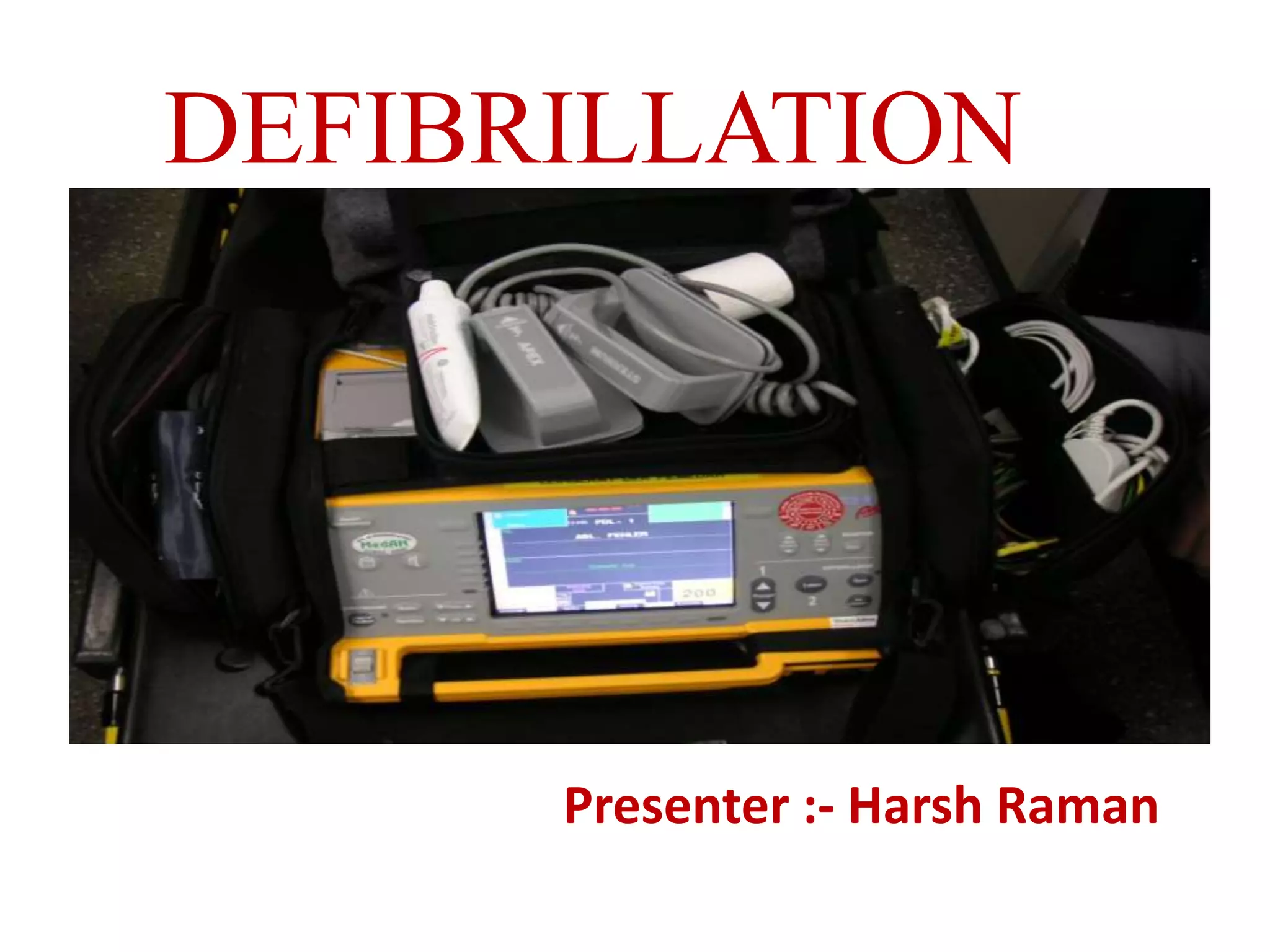
DEFIBRILLATION
Presenter :- Harsh Raman
DEFINITION
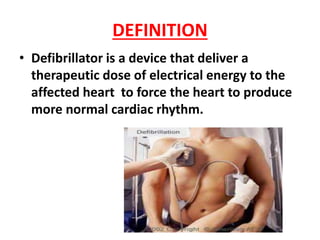
• Defibrillator is a device that deliver a
therapeutic dose of electrical energy to the
affected heart to force the heart to produce
more normal cardiac rhythm.
Need for a Defibrillator :-
Defibrillation is the definitive treatment for the
life threatening cardiac arrhythmias
• ventricular fibrillation
• pulse less ventricular tachycardia
• Pulse less electrical activity (PEA)
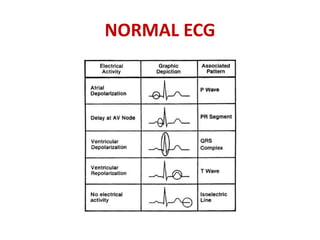
NORMAL ECG
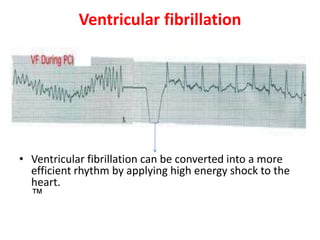
Ventricular fibrillation
• Ventricular fibrillation can be converted into a more
efficient rhythm by applying high energy shock to the
heart.
™
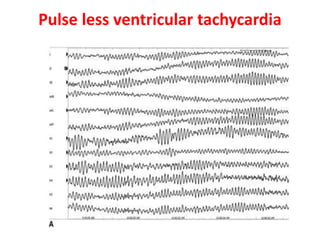
Pulse less ventricular tachycardia
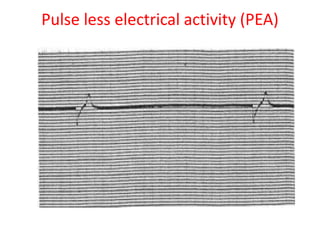
Pulse less electrical activity (PEA)
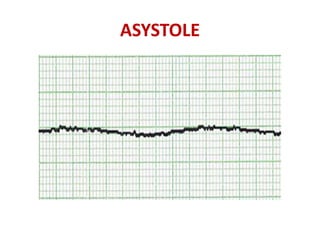
ASYSTOLE
CAUSE OF VENTRICULAR
FIBRILATTION
• Ventricular fibrillation results from:
-Coronary occlusion
-Electrical shock
-Abnormalities of body chemistry™
• This irregular contraction of the muscle fibers
causes non effective blood pumping and that
results in a steep fall of cardiac output.
PRINCIPLE OF DEFIBRILLATOR
• Energy storage capacitor is charged at
relatively slow rate from AC line.
• Energy stored in capacitor is then delivered at
a relatively rapid rate to chest of the patient.
• Simple arrangement involve the discharge of
capacitor energy
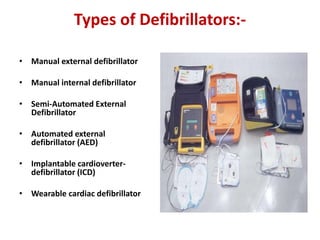
Types of Defibrillators:-
• Manual external defibrillator
• Manual internal defibrillator
• Semi-Automated External
Defibrillator
• Automated external
defibrillator (AED)
• Implantable cardioverter-
defibrillator (ICD)
• Wearable cardiac defibrillator
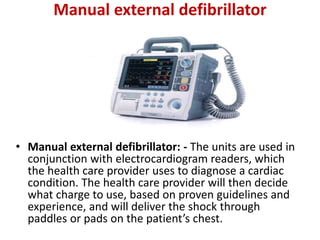
Manual external defibrillator
• Manual external defibrillator: - The units are used in
conjunction with electrocardiogram readers, which
the health care provider uses to diagnose a cardiac
condition. The health care provider will then decide
what charge to use, based on proven guidelines and
experience, and will deliver the shock through
paddles or pads on the patient’s chest.
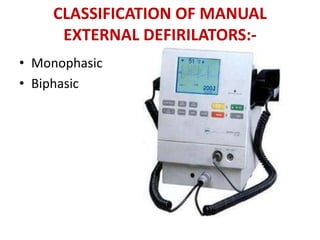
CLASSIFICATION OF MANUAL
EXTERNAL DEFIRILATORS:-
• Monophasic
• Biphasic
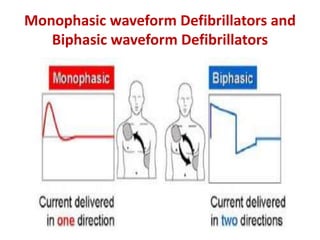
Monophasic waveform Defibrillators and
Biphasic waveform Defibrillators
Paddle placement
• Anterior-lateral > most convenient.
• Anterior-posterior
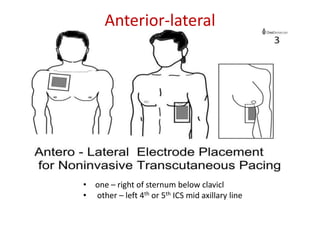
Anterior-lateral
• one – right of sternum below clavicl
• other – left 4th or 5th ICS mid axillary line
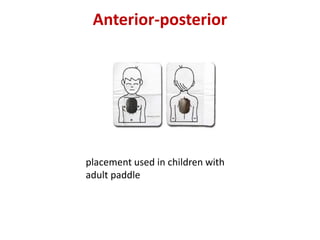
Anterior-posterior
placement used in children with
adult paddle
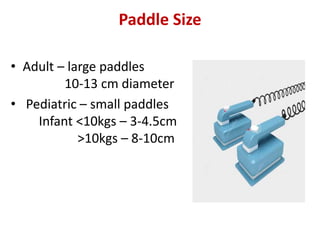
Paddle Size
• Adult – large paddles
10-13 cm diameter
• Pediatric – small paddles
Infant <10kgs – 3-4.5cm
>10kgs – 8-10cm
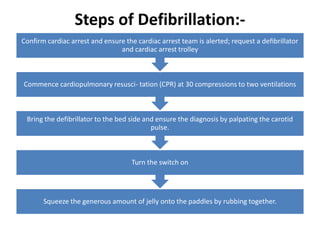
Steps of Defibrillation:-
Squeeze the generous amount of jelly onto the paddles by rubbing together.
Turn the switch on
Bring the defibrillator to the bed side and ensure the diagnosis by palpating the carotid
pulse.
Commence cardiopulmonary resusci- tation (CPR) at 30 compressions to two ventilations
Confirm cardiac arrest and ensure the cardiac arrest team is alerted; request a defibrillator
and cardiac arrest trolley
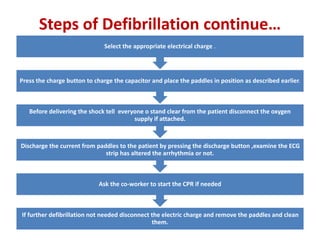
Steps of Defibrillation continue…
If further defibrillation not needed disconnect the electric charge and remove the paddles and clean
them.
Ask the co-worker to start the CPR if needed
Discharge the current from paddles to the patient by pressing the discharge button ,examine the ECG
strip has altered the arrhythmia or not.
Before delivering the shock tell everyone o stand clear from the patient disconnect the oxygen
supply if attached.
Press the charge button to charge the capacitor and place the paddles in position as described earlier.
Select the appropriate electrical charge .
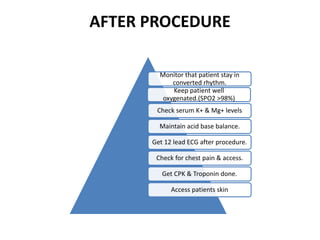
AFTER PROCEDURE
Monitor that patient stay in
converted rhythm.
Keep patient well
oxygenated.(SPO2 >98%)
Check serum K+ & Mg+ levels
Maintain acid base balance.
Get 12 lead ECG after procedure.
Check for chest pain & access.
Get CPK & Troponin done.
Access patients skin
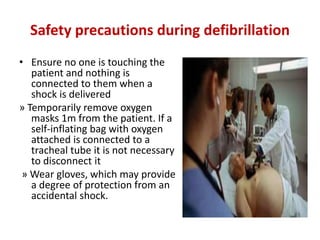
Safety precautions during defibrillation
• Ensure no one is touching the
patient and nothing is
connected to them when a
shock is delivered
» Temporarily remove oxygen
masks 1m from the patient. If a
self-inflating bag with oxygen
attached is connected to a
tracheal tube it is not necessary
to disconnect it
» Wear gloves, which may provide
a degree of protection from an
accidental shock.
Defibrilation

Defibrilation

  • 1.
  • 2.
    DEFINITION • Defibrillator isa device that deliver a therapeutic dose of electrical energy to the affected heart to force the heart to produce more normal cardiac rhythm.
  • 3.
    Need for aDefibrillator :- Defibrillation is the definitive treatment for the life threatening cardiac arrhythmias • ventricular fibrillation • pulse less ventricular tachycardia • Pulse less electrical activity (PEA)
  • 4.
  • 5.
    Ventricular fibrillation • Ventricularfibrillation can be converted into a more efficient rhythm by applying high energy shock to the heart. ™
  • 6.
  • 7.
    Pulse less electricalactivity (PEA)
  • 8.
  • 9.
    CAUSE OF VENTRICULAR FIBRILATTION •Ventricular fibrillation results from: -Coronary occlusion -Electrical shock -Abnormalities of body chemistry™ • This irregular contraction of the muscle fibers causes non effective blood pumping and that results in a steep fall of cardiac output.
  • 10.
    PRINCIPLE OF DEFIBRILLATOR •Energy storage capacitor is charged at relatively slow rate from AC line. • Energy stored in capacitor is then delivered at a relatively rapid rate to chest of the patient. • Simple arrangement involve the discharge of capacitor energy
  • 11.
    Types of Defibrillators:- •Manual external defibrillator • Manual internal defibrillator • Semi-Automated External Defibrillator • Automated external defibrillator (AED) • Implantable cardioverter- defibrillator (ICD) • Wearable cardiac defibrillator
  • 12.
    Manual external defibrillator •Manual external defibrillator: - The units are used in conjunction with electrocardiogram readers, which the health care provider uses to diagnose a cardiac condition. The health care provider will then decide what charge to use, based on proven guidelines and experience, and will deliver the shock through paddles or pads on the patient’s chest.
  • 13.
    CLASSIFICATION OF MANUAL EXTERNALDEFIRILATORS:- • Monophasic • Biphasic
  • 14.
    Monophasic waveform Defibrillatorsand Biphasic waveform Defibrillators
  • 15.
    Paddle placement • Anterior-lateral> most convenient. • Anterior-posterior
  • 16.
    Anterior-lateral • one –right of sternum below clavicl • other – left 4th or 5th ICS mid axillary line
  • 17.
    Anterior-posterior placement used inchildren with adult paddle
  • 18.
    Paddle Size • Adult– large paddles 10-13 cm diameter • Pediatric – small paddles Infant <10kgs – 3-4.5cm >10kgs – 8-10cm
  • 19.
    Steps of Defibrillation:- Squeezethe generous amount of jelly onto the paddles by rubbing together. Turn the switch on Bring the defibrillator to the bed side and ensure the diagnosis by palpating the carotid pulse. Commence cardiopulmonary resusci- tation (CPR) at 30 compressions to two ventilations Confirm cardiac arrest and ensure the cardiac arrest team is alerted; request a defibrillator and cardiac arrest trolley
  • 20.
    Steps of Defibrillationcontinue… If further defibrillation not needed disconnect the electric charge and remove the paddles and clean them. Ask the co-worker to start the CPR if needed Discharge the current from paddles to the patient by pressing the discharge button ,examine the ECG strip has altered the arrhythmia or not. Before delivering the shock tell everyone o stand clear from the patient disconnect the oxygen supply if attached. Press the charge button to charge the capacitor and place the paddles in position as described earlier. Select the appropriate electrical charge .
  • 21.
    AFTER PROCEDURE Monitor thatpatient stay in converted rhythm. Keep patient well oxygenated.(SPO2 >98%) Check serum K+ & Mg+ levels Maintain acid base balance. Get 12 lead ECG after procedure. Check for chest pain & access. Get CPK & Troponin done. Access patients skin
  • 22.
    Safety precautions duringdefibrillation • Ensure no one is touching the patient and nothing is connected to them when a shock is delivered » Temporarily remove oxygen masks 1m from the patient. If a self-inflating bag with oxygen attached is connected to a tracheal tube it is not necessary to disconnect it » Wear gloves, which may provide a degree of protection from an accidental shock.