QUALITATIVE RESEARCH METHODOLOGY 
DATA AND DATA COLLECTION METHODS 
Presented by: 
Rizky Amelia 140221807915 
Yuni Wahyuningsih 140221807458
OUTLINE: 
• DATA 
• DATA COLLECTION METHODS 
• 1. INTERVIEWS 
• 2. INTROSPECTIVE METHOD 
– Think-aloud 
– Retrospective 
– Diary studies 
• 3. Questionnaires 
• 4. OBSERVATIONS 
• 5. Documents 
• 6. Production task
DATA 
• Data refers to the rough materials 
researchers collect from the world 
they are studying. 
Data is both the evidence and the 
clues.
1. INTERVIEWS: 
An interview is a purposeful interaction in 
which one person obtains information from 
another. 
Advantages and disadvantages 
INTERVIEWS 
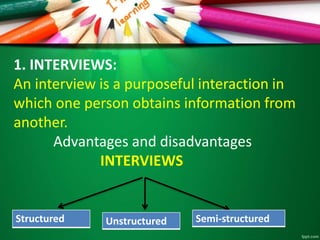
Structured Unstructured Semi-structured
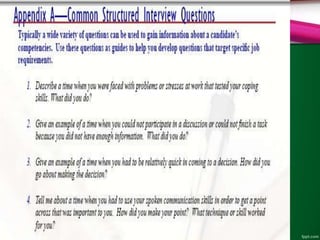
1. Structured Interview 
It is a formal interview in which 
researchers has specified a set of 
planned questions that elicits the 
same questions from the interviewees. 
2. Unstructured Interview 
It is an informal interview that allows 
researchers to obtain more complex 
or personal information.
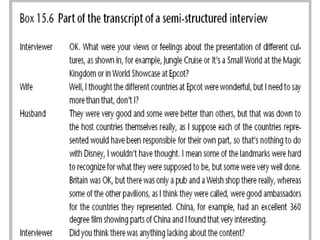
3. Semi-structured Interview 
• The interview in which the 
interviewer has general idea or 
framework, but does not enter the 
interview with a list of predetermined 
questions.
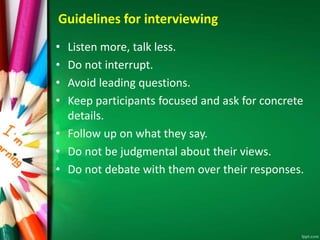
Guidelines for interviewing 
• Listen more, talk less. 
• Do not interrupt. 
• Avoid leading questions. 
• Keep participants focused and ask for concrete 
details. 
• Follow up on what they say. 
• Do not be judgmental about their views. 
• Do not debate with them over their responses.
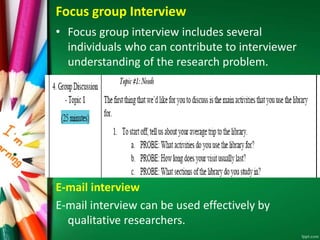
Focus group Interview 
• Focus group interview includes several 
individuals who can contribute to interviewer 
understanding of the research problem. 
E-mail interview 
E-mail interview can be used effectively by 
qualitative researchers.
Collecting the Data in Interviews: 
• Taking notes during the interview 
• Writing notes after the interview 
• Audio- or videotaping the interview
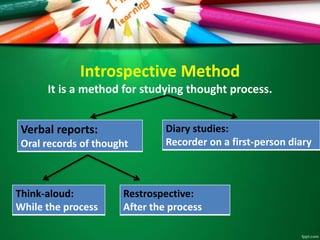
Introspective Method 
It is a method for studying thought process. 
Verbal reports: 
Oral records of thought 
Think-aloud: 
While the process 
Diary studies: 
Recorder on a first-person diary 
Restrospective: 
After the process
Introspective method 
• It is a method for studying thought processes, designed 
to help researchers to derive insights into the mental 
process underlying observable behavior. 
• cognitive psychology
• Verbal reports is the oral record of thoughts. 
• think aloud  the learners are asked to 
verbalize their thought processes while they are 
involved in processing language. 
• reading a text or writing an essay. 
• Restrospective  the learners to verbalize their 
thought processes immediately after they 
process the language. 
• listening and speaking task.
Example of verbal reports: 
• SESILIA: At times I had the curious feeling 
that he was trying to make up his mind 
about me, asking himself if I were friend or 
foe. (0.1) Foe. Lawan katanya friend 
mungkin, (0.5). Foe, foe, foe, foe, foe, foe. 
(0.2) Ya, he eh, (musuh).
The general strategies used by Block in verbal reports: 
1. Anticipate content 
“I guess the story will be about how you go about talking to 
babies” 
2. Recognize text structure 
“This is an example of what baby talk is”. 
3. Integrate information 
“Oh, this connects with the sentence just before”. 
4. Question information in the text 
“Why is (baby talk among adults) usually limited to lovers?” 
5. Interpret the text 
“I think that’s why some people doing this”.
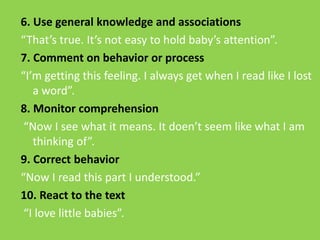
6. Use general knowledge and associations 
“That’s true. It’s not easy to hold baby’s attention”. 
7. Comment on behavior or process 
“I’m getting this feeling. I always get when I read like I lost 
a word”. 
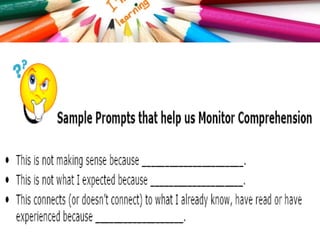
8. Monitor comprehension 
“Now I see what it means. It doen’t seem like what I am 
thinking of”. 
9. Correct behavior 
“Now I read this part I understood.” 
10. React to the text 
“I love little babies”.
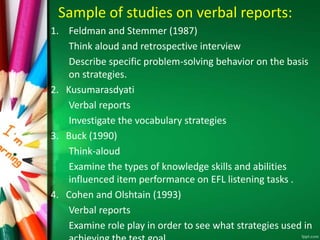
Sample of studies on verbal reports: 
1. Feldman and Stemmer (1987) 
Think aloud and retrospective interview 
Describe specific problem-solving behavior on the basis 
on strategies. 
2. Kusumarasdyati 
Verbal reports 
Investigate the vocabulary strategies 
3. Buck (1990) 
Think-aloud 
Examine the types of knowledge skills and abilities 
influenced item performance on EFL listening tasks . 
4. Cohen and Olshtain (1993) 
Verbal reports 
Examine role play in order to see what strategies used in 
achieving the test goal.
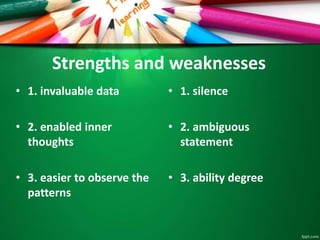
Strengths and weaknesses 
• 1. invaluable data 
• 2. enabled inner 
thoughts 
• 3. easier to observe the 
patterns 
• 1. silence 
• 2. ambiguous 
statement 
• 3. ability degree
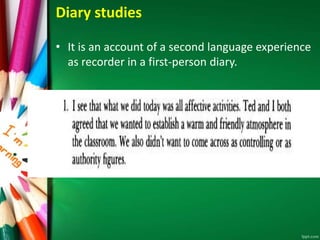
Diary studies 
• It is an account of a second language experience 
as recorder in a first-person diary.
Strengths and weaknesses 
• Provide information and 
perspectives 
• allow researchers to see 
factors identified by 
teachers and learners 
• more accessible 
• data triangulation 
• involve a small number 
• Based on subjective data 
• it is questioned how one 
can analyze all of the 
processes involved in 
their own language 
learning and teaching 
experiences.
3. Questionnaires 
• It is a written collection of self-report questions to 
be answered by selected group of research 
participants. 
Guidelines for developing and presenting 
questionnaires: 
1. avoid a sloppy presentation. 
2. carefully proofread. 
3. avoid a lengthy questionnaire. 
4. do not ask unnecessary questions. 
5. be clear. 
6. an “other comments” section. 
7. Put their names or not.
Several advantages of questionnaires: 
• The knowledge needed is controlled by the questions. 
• It can be used on a small scale, in-house, and on a large 
scale. 
• Data can be gathered in several different time slots. 
• Self-completion questionnaires allow access to outside 
contexts.
Types of questionnaires: 
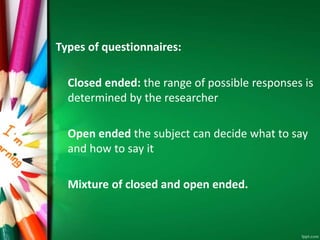
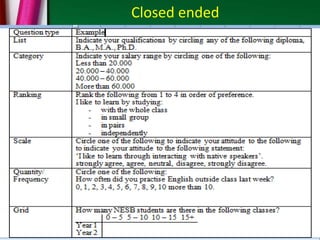
Closed ended: the range of possible responses is 
determined by the researcher 
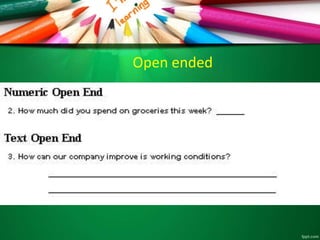
Open ended the subject can decide what to say 
and how to say it 
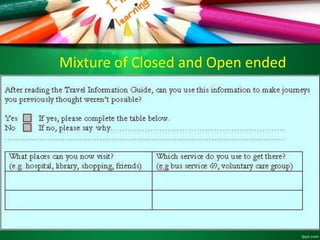
Mixture of closed and open ended.
Closed ended
Open ended
Mixture of Closed and Open ended
• Question wording 
Example: 
Would you prefer a short, non-award course with part-day 
release and one evening per week attendance with 
financial reimbursement for travel or longer, non-award 
course with full-day release, or the whole course designed 
on part-time release without evening attendance?
• Pre-test the Questionnaire 
• With a small number of interviews 
• can reveal unanticipated problems 
• can help us see if the interviewees understand our 
questions and give useful answers.
4. OBSERVATIONS 
What is Observing? 
• Gathering data from natural situation 
• Obtaining data by watching participant
What is the purpose of observing? 
Understanding the natural environment 
as live by participant.
What is Observation’s Characteristics? 
• Non interventionist
What is Observing’s Type? 
1. Participant Observation 
2. Nonparticipant Observation 
3. Recording Observations/ Fieldnotes
What is Participant Observation? 
The observer becomes a part of and a participant in 
the situation being observed. 
The researcher participates in the situation while 
observing and collecting the data.
Participant Observation 
Advantage 
• It allows the researcher to 
gain insights and develop 
relationships with participants 
that would not be possible if 
the researcher observed but 
did not participate. 
Disadvantage 
• The researcher may lose 
objectivity and become 
emotionally involved with 
participants, For instance, or 
may have difficulty 
participating and collecting 
data at the same time.
Nonparticipant Observation 
The observer does not directly involve in the situation 
being observed. 
The researcher observes and records behavior but does 
not interact or participate in the life of the setting 
understudy.
Nonparticipant Observation 
Advantage 
Nonparticipant observers are 
less intrusive and less likely to 
become emotionally involved 
with participants 
Disadvantage 
Nonparticipant observers may 
have more difficulty obtaining 
reliable information about 
participants’ opinions, 
attitudes, and emotional states 
than participant observer do
What is Recording Observation/Fieldnotes? 
A method to document your observation. 
Qualitative research material gathered, recorded, and 
compiled during the course of study.
What is Field Notes? 
• Qualitative research material gathered, recorded, and 
compiled (usually on site) during the course of the 
study 
• It describes, as accurately and as comprehensively as 
possible 
• It should be as extensive, clear, and detailed as 
possible.
Files notes’ type 
Descriptive Information 
1. Descriptive information 
Reflective Information 
2. observer thought or 
comment
What is Document? 
• Materials such as photographs, videos, films, memos, 
letters, diaries, clinical case records, and memorabilia 
of all sorts
Document’s type according to Bogdan (1998: 134) 
1. Personal Document (Intimate Diaries, Personal Letter, 
Autobiography) 
2. Official Documents (Internal Document, External 
Communication, Student Record and Personal Files) 
3. Popular Culture Documents (video, educational 
feature films, rock and roll, magazine, television, 
romance novels, and advertisement)
Production Task 
• Task produce by participant 
• For example, the Interview Test of English 
as a Second Language (ITSEL) to know 
twenty target grammatical items.
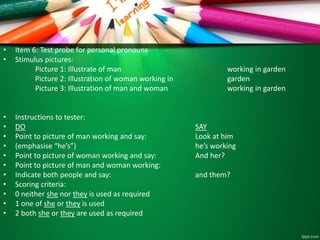
• Item 6: Test probe for personal pronouns 
• Stimulus pictures: 
Picture 1: Illustrate of man working in garden 
Picture 2: Illustration of woman working in garden 
Picture 3: Illustration of man and woman working in garden 
• Instructions to tester: 
• DO SAY 
• Point to picture of man working and say: Look at him 
• (emphasise “he’s”) he’s working 
• Point to picture of woman working and say: And her? 
• Point to picture of man and woman working: 
• Indicate both people and say: and them? 
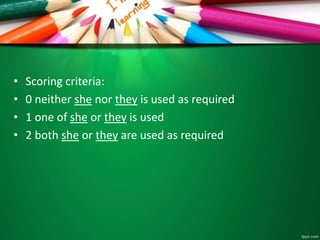
• Scoring criteria: 
• 0 neither she nor they is used as required 
• 1 one of she or they is used 
• 2 both she or they are used as required
• DO SAY 
• Point to picture of man working and say: Look at him 
• (emphasise “he’s”) he’s working 
• Point to picture of woman working and say: And her? 
• Point to picture of man and woman working: 
• Indicate both people and say: and them?
• Scoring criteria: 
• 0 neither she nor they is used as required 
• 1 one of she or they is used 
• 2 both she or they are used as required
• TABLE 7.1 HYPOTHESISED ORDER OF ACQUISITION ACCORDING 
TO THE INTERVIEW TEST OF ENGLISH FOR MIGRANTS 
• Grammatical item Rank 
• Nouns 1 
• Verb 2 
• Adjectives 3 
• Verb be 4 
• Possessive pronouns 5 
• Personal pronouns 6
• Adverb of time 7 
• Request 8 
• Simple present 9 
• Futures 10 
• Wh- questions 11 
• Present continuous 12 
• Directions 13 
• Possessive adjective 14 
• Comparatives 15
• Offers 16 
• Simple future 17 
• Simple past 18 
• Infinitives/ gerunds 19 
• 1st conditional 20
Advice on how to keep the data: 
• well-organized; 
• Develop a plan; 
• Back up the files; 
• chronologically; 
• Inquire about a software program
References: 
Bogdan, R. C., and Biklen S. K. 1998. Qualitative Research in Education: An Introduction toTheory and 
Methods (3rd edition). Boston: Allyn and Bacon. 
Dornyei, Z. 2011. Research Methods in Applied Linguistics: Quantitative, Qualitative, and Mixed 
Methodology. Great Clarendon Street, Oxford: Oxford University Press. 
Gay, R. L., Mills, G. E. And Airasian, P. 2006. Educational Research: Competencies 
for Analysis and Application (9th edition). Upper Saddle River, NJ: Pearson Education. 
Harrell, M. C. Bradley, M. A. 2009. Data Collection Methods: Semi-Structured Interviews and Focus 
Groups. Santa Monica: RAND Corporation. 125. (Online), 
(http://www.rand.org/content/dam/rand/pubs/technical_reports/2009/RAND_TR718.pdf), 
accessed on October 7. 2014. 
Interviewing in Qualitative Research. 320. (Online), 
(http://www.comp.dit.ie/dgordon/Podcasts/Interviews/chap15.pdf), accessed on October 
7. 2014. 
Kentucky Department Education. Sample Prompts for a Think Aloud. 2. 
(http://education.ky.gov/curriculum/lit/Documents/RF_LS_6_Handouts.pdf), accessed on 
October 6. 2014.
McDonough, J. and McDonough, S. 1997. Research Methods for English Language Teachers. London: 
Arnold. 
McKay, S. L. 2006. Researching Second Language Classrooms. New Jersey: Lawrence 
Erlbaum Associates. 
Numrich, C. 1996. On Becoming a Language Teacher: Insights from Diary Studies. 
TESOL Quarterly, (Online) 30 (1): 131-153. 
(http://linksprogram.gmu.edu/tutorcorner/NCLC495Readings/on_becoming_a_l 
anguage_teacher.pdf), accessed on October 4. 2014. 
Nunan, D. 1992. Research Methods in Language Learning. Cambridge: Cambridge 
University Press. 
United States Department of State Bureau of Human Resources. 2005. Conducting 
Effective Structured Interviews.Washington, D. C. (Online), 9. 
(http://www.state.gov/documents/organization/107843.pdf) accessed on October 7. 2014. 
Unstructured Methods of Asking Questions. 27. (Online), 
(http://labspace.open.ac.uk/file.php/2538/!via/oucontent/course/167/deh313_ 
1blk3.4.pdf), accessed on October 7. 2014.
Data and data collection in qualitative research