



Bismillahirrohmanirrohim 
Hi, I’m Kiky. 
WELCOME!
CONCEPT OF LANGUAGE LEARNING 
14. Psychological Approaches to Language and Learning 
Sterns, H.H. 1983. Foundation Concepts of Language 
Teaching. London: Oxford University Press. 
Presented by: 
Rizky Amelia (140221807915)
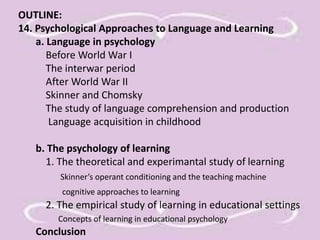
OUTLINE: 
14. Psychological Approaches to Language and Learning 
a. Language in psychology 
Before World War I 
The interwar period 
After World War II 
Skinner and Chomsky 
The study of language comprehension and production 
Language acquisition in childhood 
b. The psychology of learning 
1. The theoretical and experimantal study of learning 
Skinner’s operant conditioning and the teaching machine 
cognitive approaches to learning 
2. The empirical study of learning in educational settings 
Concepts of learning in educational psychology 
Conclusion
Questions: 
1. Is there any correlation between psychology and 
language learning? 
2. Do you think learning is a matter of habit or 
cognition? 
3. What do you know about psychology and 
development? Have you heard about Skinner’s and 
Chomsky’s arguments? 
4. What are the concepts of learning in educational 
psychology?
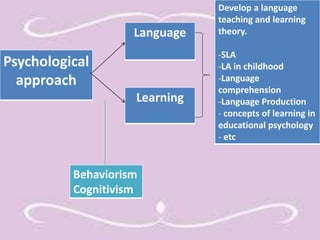
Language 
Learning 
Psychological 
approach 
Develop a language 
teaching and learning 
theory. 
-SLA 
-LA in childhood 
-Language 
comprehension 
-Language Production 
- concepts of learning in 
educational psychology 
- etc 
Behaviorism 
Cognitivism
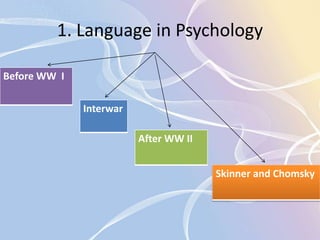
1. Language in Psychology 
Before WW I 
Interwar 
Skinner and Chomsky 
After WW II
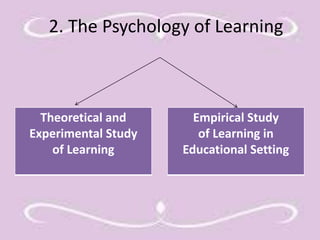
2. The Psychology of Learning 
Theoretical and 
Experimental Study 
of Learning 
Empirical Study 
of Learning in 
Educational Setting
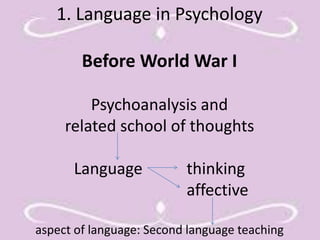
1. Language in Psychology 
Before World War I 
Psychoanalysis and 
related school of thoughts 
Language thinking 
affective 
aspect of language: Second language teaching
The Interwar Period 
Verbal behavior 
Stimuli (habits)  Responses (skills)
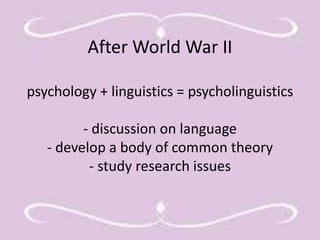
After World War II 
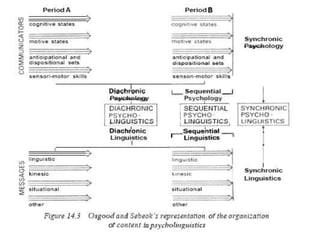
psychology + linguistics = psycholinguistics 
- discussion on language 
- develop a body of common theory 
- study research issues
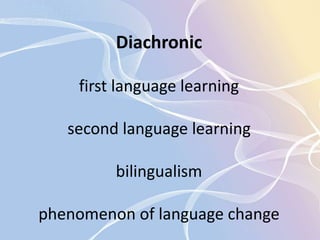
Diachronic 
first language learning 
second language learning 
bilingualism 
phenomenon of language change
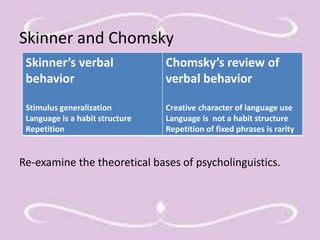
Skinner and Chomsky 
Skinner’s verbal 
behavior 
Stimulus generalization 
Language is a habit structure 
Repetition 
Chomsky’s review of 
verbal behavior 
Creative character of language use 
Language is not a habit structure 
Repetition of fixed phrases is rarity 
Re-examine the theoretical bases of psycholinguistics.
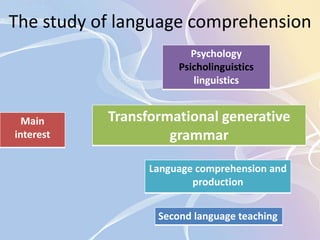
The study of language comprehension 
Psychology 
Psicholinguistics 
linguistics 
Main 
interest 
Transformational generative 
grammar 
Language comprehension and 
production 
Second language teaching
Language Acquisition in Childhood 
McLaughlin (1978) 
the language acquisition processes: 
1. taking linguistics and behavior into account 
2. reflecting the child’s changing experiences with 
linguistic and nonlinguistic environment 
3. gradual and reflects the child’s cognitive growth 
4. communicative skills through interaction with social 
environment.
The Psychology of Learning 
Learning is importance to general and theoretical 
psychology 
Learning is actually has been approach in two 
ways: 
1. The theoretical and experimantal study of 
learning 
2. The empirical study of learning in educational 
settings
1. The theoretical and experimantal study 
of learning 
a. Skinner’s operant conditioning and the 
teaching machine 
b. cognitive approaches to learning
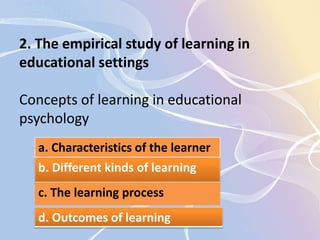
2. The empirical study of learning in 
educational settings 
Concepts of learning in educational 
psychology 
a. Characteristics of the learner 
b. Different kinds of learning 
c. The learning process 
d. Outcomes of learning
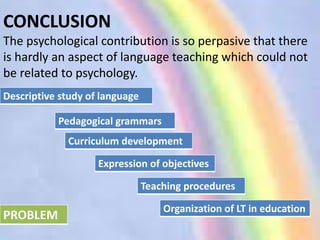
CONCLUSION 
The psychological contribution is so perpasive that there 
is hardly an aspect of language teaching which could not 
be related to psychology. 
Descriptive study of language 
Curriculum development 
Expression of objectives 
Teaching procedures 
Organization of LT in education 
Pedagogical grammars 
PROBLEM

Psychological approaches to language and learning, Stern

  • 1.
  • 3.
    CONCEPT OF LANGUAGELEARNING 14. Psychological Approaches to Language and Learning Sterns, H.H. 1983. Foundation Concepts of Language Teaching. London: Oxford University Press. Presented by: Rizky Amelia (140221807915)
  • 4.
    OUTLINE: 14. PsychologicalApproaches to Language and Learning a. Language in psychology Before World War I The interwar period After World War II Skinner and Chomsky The study of language comprehension and production Language acquisition in childhood b. The psychology of learning 1. The theoretical and experimantal study of learning Skinner’s operant conditioning and the teaching machine cognitive approaches to learning 2. The empirical study of learning in educational settings Concepts of learning in educational psychology Conclusion
  • 5.
    Questions: 1. Isthere any correlation between psychology and language learning? 2. Do you think learning is a matter of habit or cognition? 3. What do you know about psychology and development? Have you heard about Skinner’s and Chomsky’s arguments? 4. What are the concepts of learning in educational psychology?
  • 6.
    Language Learning Psychological approach Develop a language teaching and learning theory. -SLA -LA in childhood -Language comprehension -Language Production - concepts of learning in educational psychology - etc Behaviorism Cognitivism
  • 7.
    1. Language inPsychology Before WW I Interwar Skinner and Chomsky After WW II
  • 8.
    2. The Psychologyof Learning Theoretical and Experimental Study of Learning Empirical Study of Learning in Educational Setting
  • 10.
    1. Language inPsychology Before World War I Psychoanalysis and related school of thoughts Language thinking affective aspect of language: Second language teaching
  • 11.
    The Interwar Period Verbal behavior Stimuli (habits)  Responses (skills)
  • 12.
    After World WarII psychology + linguistics = psycholinguistics - discussion on language - develop a body of common theory - study research issues
  • 15.
    Diachronic first languagelearning second language learning bilingualism phenomenon of language change
  • 16.
    Skinner and Chomsky Skinner’s verbal behavior Stimulus generalization Language is a habit structure Repetition Chomsky’s review of verbal behavior Creative character of language use Language is not a habit structure Repetition of fixed phrases is rarity Re-examine the theoretical bases of psycholinguistics.
  • 17.
    The study oflanguage comprehension Psychology Psicholinguistics linguistics Main interest Transformational generative grammar Language comprehension and production Second language teaching
  • 18.
    Language Acquisition inChildhood McLaughlin (1978) the language acquisition processes: 1. taking linguistics and behavior into account 2. reflecting the child’s changing experiences with linguistic and nonlinguistic environment 3. gradual and reflects the child’s cognitive growth 4. communicative skills through interaction with social environment.
  • 19.
    The Psychology ofLearning Learning is importance to general and theoretical psychology Learning is actually has been approach in two ways: 1. The theoretical and experimantal study of learning 2. The empirical study of learning in educational settings
  • 20.
    1. The theoreticaland experimantal study of learning a. Skinner’s operant conditioning and the teaching machine b. cognitive approaches to learning
  • 21.
    2. The empiricalstudy of learning in educational settings Concepts of learning in educational psychology a. Characteristics of the learner b. Different kinds of learning c. The learning process d. Outcomes of learning
  • 22.
    CONCLUSION The psychologicalcontribution is so perpasive that there is hardly an aspect of language teaching which could not be related to psychology. Descriptive study of language Curriculum development Expression of objectives Teaching procedures Organization of LT in education Pedagogical grammars PROBLEM