• Data Analysis in Qualitative Research
Dr. Preeti Tiwari
Qualitative Research
• A form of social inquiry that focuses on the way

people interpret and make sense of their experiences
and the world in which they live.
• Qualitative research is a type of scientific research.
 Seeks answers to a question
 Collects evidence
 Produces findings that were not determined in
advance
• Qualitative research involves the use of qualitative
data such as :-
 Interviews
 Participant observation data
• To understand and explain social phenomena
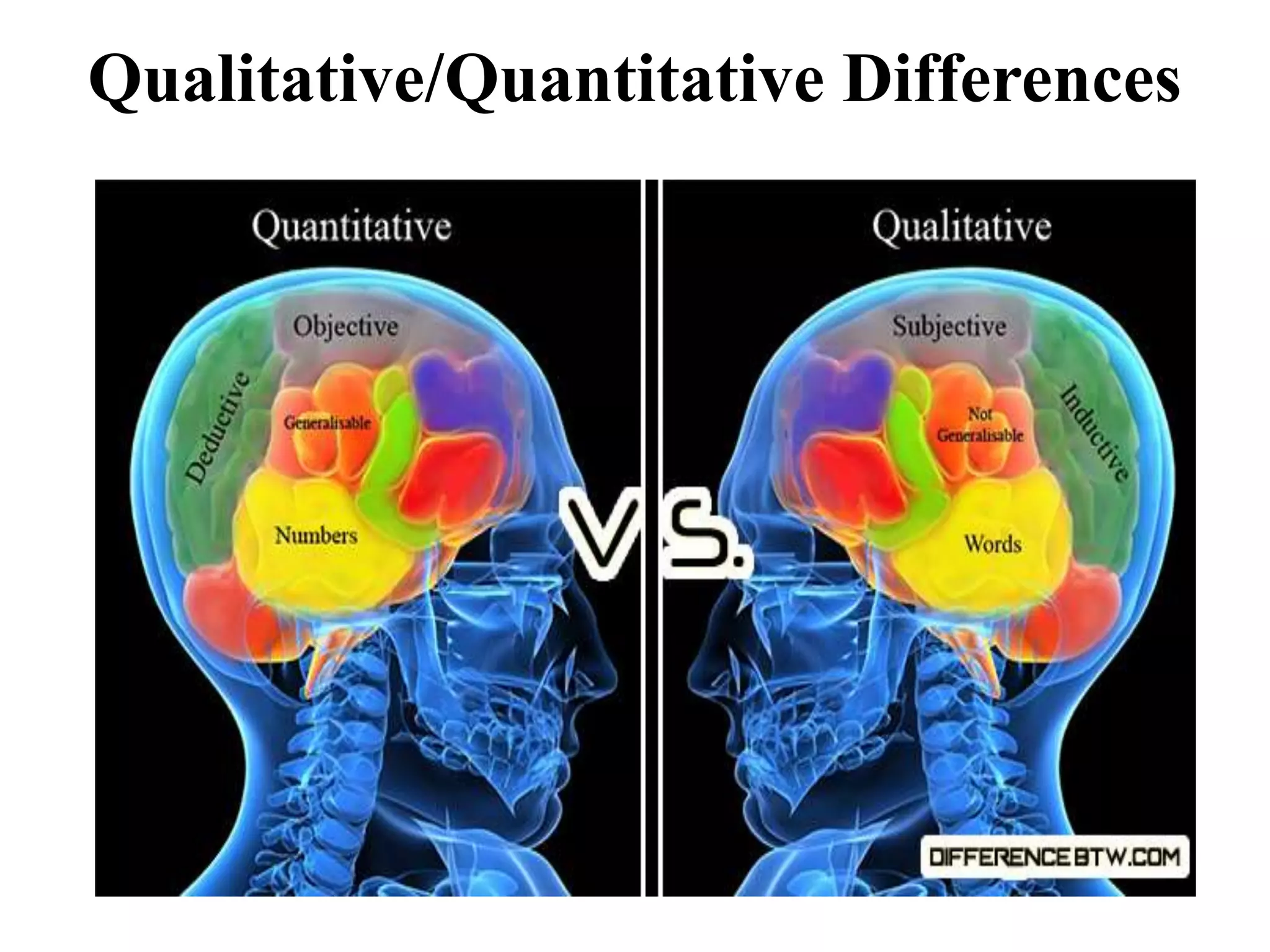
Qualitative/Quantitative Differences
Qualitative
• The aim is a detailed
description.
• Researcher may only
know roughly in
advance what he/she is
looking for.
• The design emerges as
the study unfolds.
• Researcher is the data
gathering instrument.
Quantitative
• The aim is to classify features, count
them, and construct statistical models
in an attempt to explain what is
observed.
• Researcher knows clearly in advance
what he/she is looking for.
• All aspects of the study are carefully
designed before data is collected.
• Researcher questionnaires or
equipment to collect numerical data.
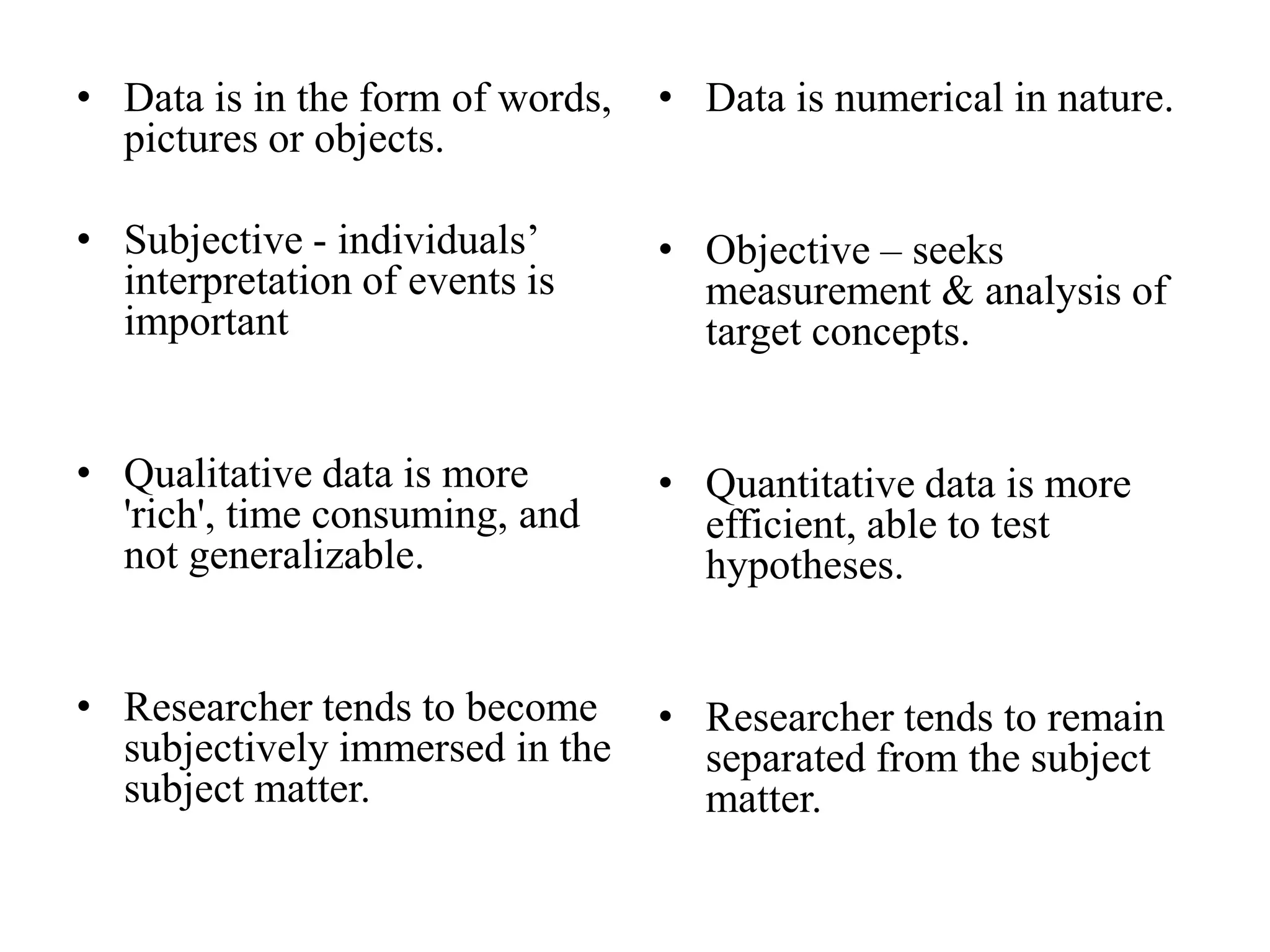
• Data is in the form of words,
pictures or objects.
• Subjective - individuals’
interpretation of events is
important
• Qualitative data is more
'rich', time consuming, and
not generalizable.
• Researcher tends to become
subjectively immersed in the
subject matter.
• Data is numerical in nature.
• Objective – seeks
measurement & analysis of
target concepts.
• Quantitative data is more
efficient, able to test
hypotheses.
• Researcher tends to remain
separated from the subject
matter.
Main Types of Qualitative Research
• Case Study
 Attempts to shed light on a case by studying in depth
a single case
 The case can be an individual person, an event, a
group, or an institution.
• Grounded Theory
 When new aspect has to be discovered
 Based on new area where theories are non existing or
rare
• Phenomenology
• Study of perception of individuals about
1. Taken for granted assumptions
2. Usual ways of perceiving
3. Conventional wisdom
4. Gaining insights into peoples motivations and
actions
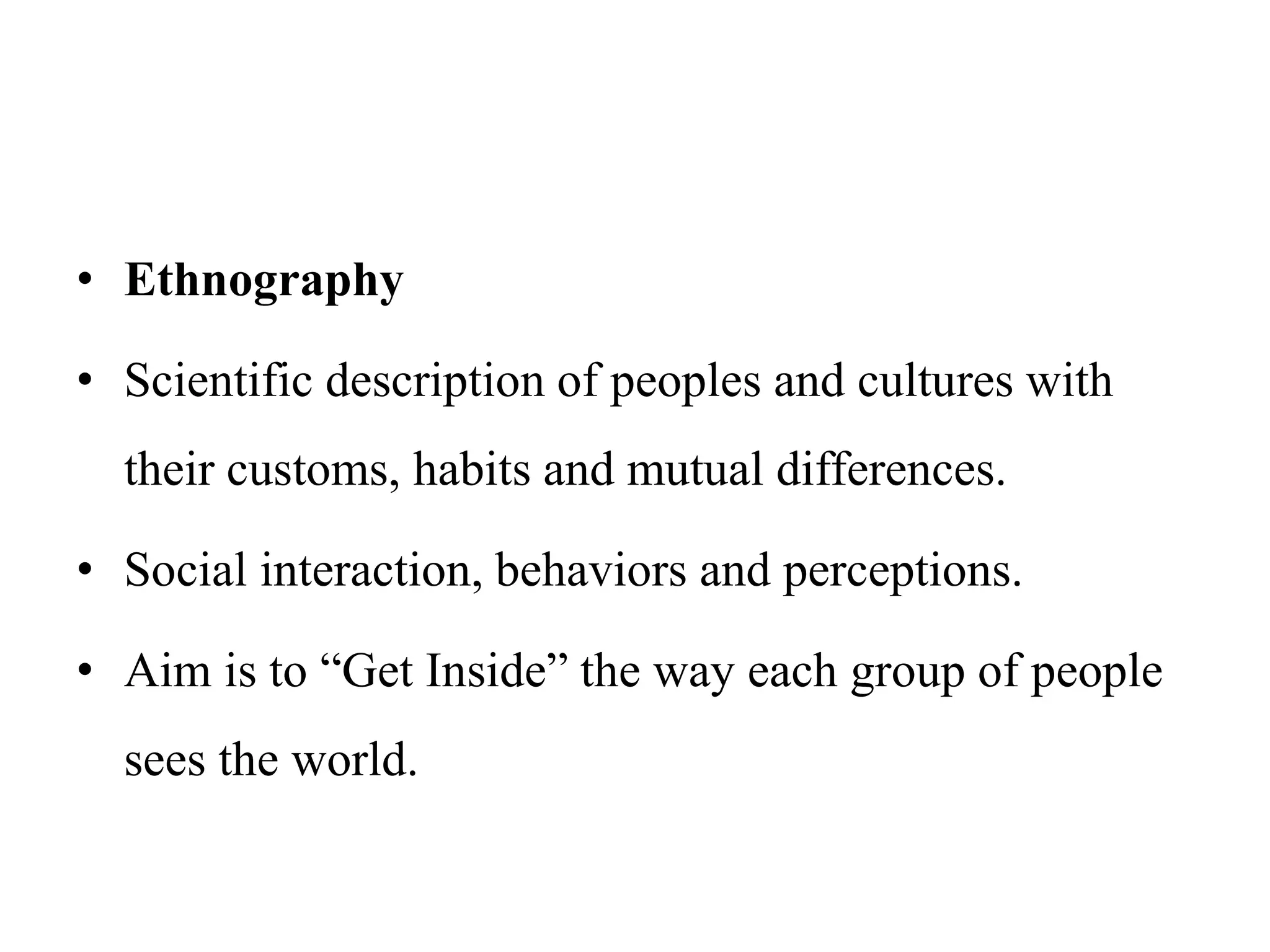
• Ethnography
• Scientific description of peoples and cultures with
their customs, habits and mutual differences.
• Social interaction, behaviors and perceptions.
• Aim is to “Get Inside” the way each group of people
sees the world.
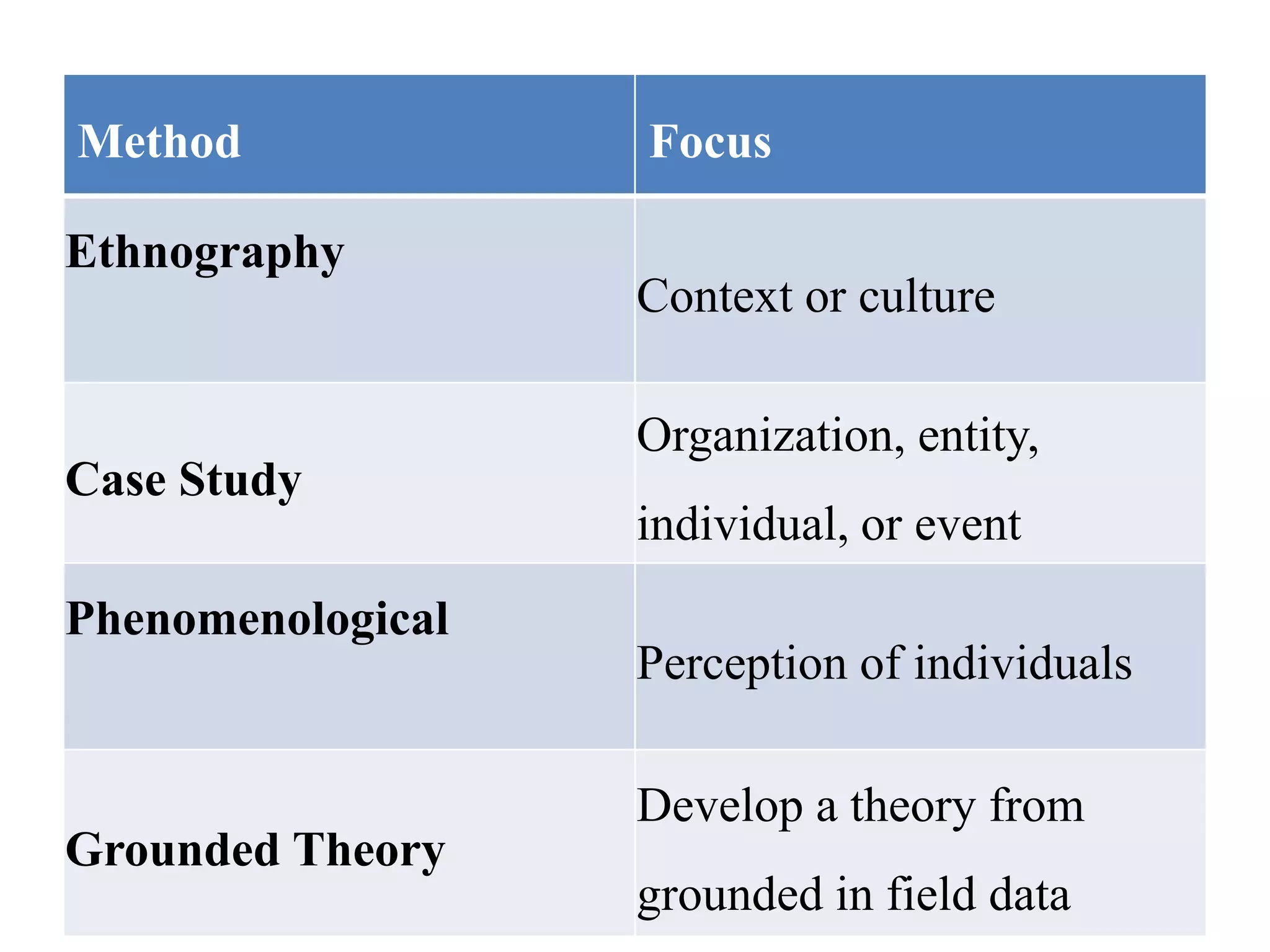
Method Focus
Ethnography
Context or culture
Case Study
Organization, entity,
individual, or event
Phenomenological
Perception of individuals
Grounded Theory
Develop a theory from
grounded in field data
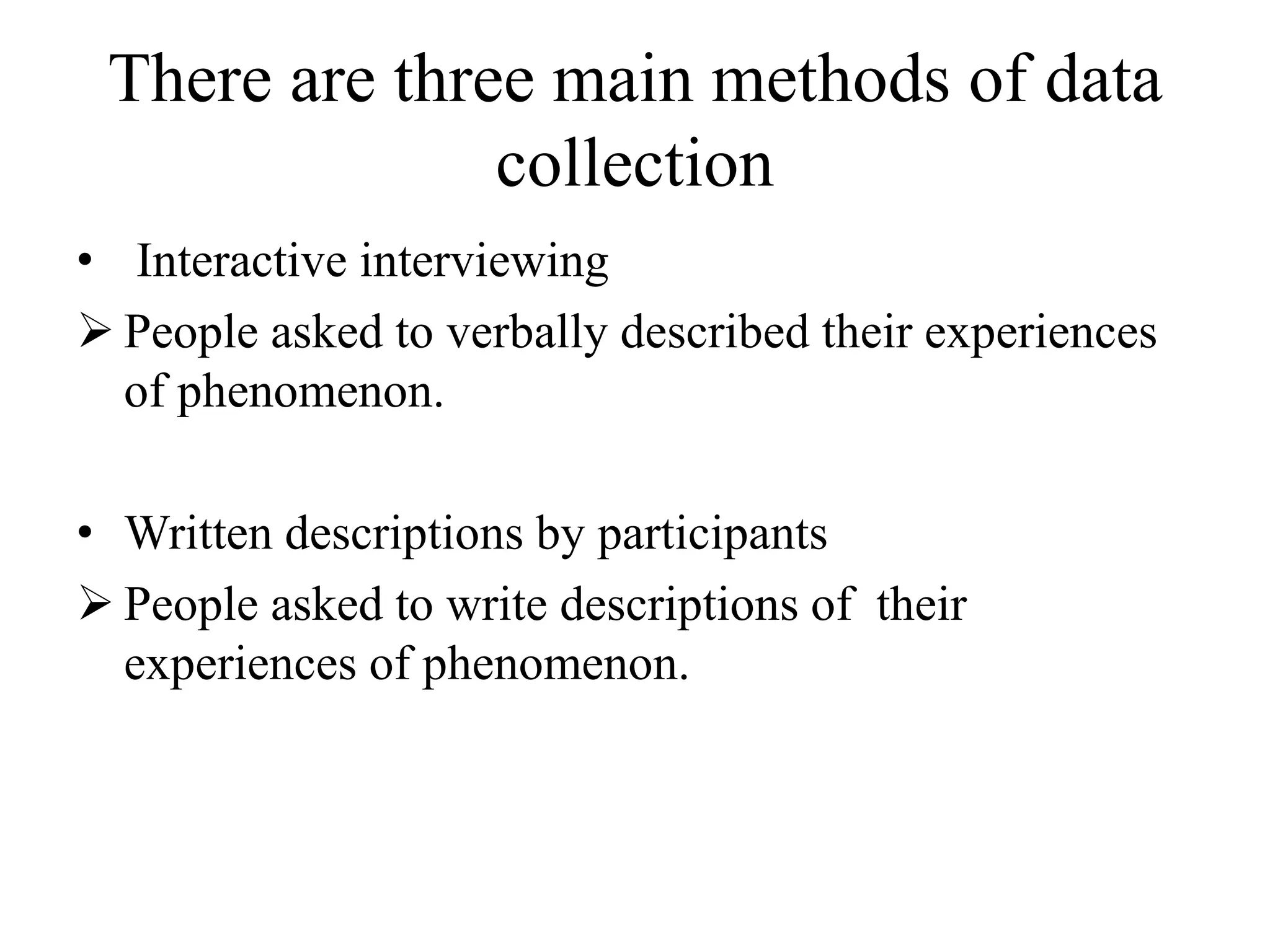
There are three main methods of data
collection
• Interactive interviewing
 People asked to verbally described their experiences
of phenomenon.
• Written descriptions by participants
 People asked to write descriptions of their
experiences of phenomenon.
• Observation
 Descriptive observations of verbal and non-verbal
behavior.
Qualitative research methods
• Focus groups
 Effective in eliciting data on the cultural norms of a group
 Generating broad overviews of issues of concern to the
cultural groups or subgroups represented.
• A focus group is a small group of six to ten people led
through an open discussion by a skilled moderator.
• The ideal amount of - 45 to 90 minutes..
• Focus groups are structured around a set of carefully
predetermined questions.
• It takes more than one focus group on any one topic to produce
valid results
• when no new information - you’ve reached a point of
saturation.
There are three types of focus group
questions:
• 1. Engagement questions: introduce participants to and make
them comfortable with the topic of discussion
• 2. Exploration questions: get to the meat of the discussion
• 3. Exit question: check to see if anything was missed in the
discussion
• ƒRun a tape recorder during the session ƒ
• Take notes in case the recorder fails or the tape is inaudible ƒ
Note/record body language or other subtle but relevant clues ƒ
• Allow the moderator to do all the talking during the group
• In-depth interviews –
 Optimal for collecting data on individuals’ personal
histories, perspectives, and experiences.
 Particularly - exploring sensitive topics
• Participant observation
 Appropriate for collecting data on naturally occurring
behaviors in their usual contexts.
 Analysis begins when the data is first collected and is
used to guide decisions related to further data collection.
Qualitative Coding & Analysis
• Open coding (OAS)
 First level of coding
 Distinct concepts and categories in the data
 Which will form the basic units of analysis.
 In other words, breaking down the data into first
level concepts, or master headings, and second-level
categories, or subheadings.
Axial coding
• Use own concepts and categories while re-reading the
text to
 Confirm that your concepts and categories accurately
represent interview responses
 Explore how your concepts and categories are related.
 What are the associated effects or consequences?
Selective coding
• The central category around which final analysis will
be based
 Explicating the story line: analytic description of the
core category
 Relating other categories to the core
 Validating the story line
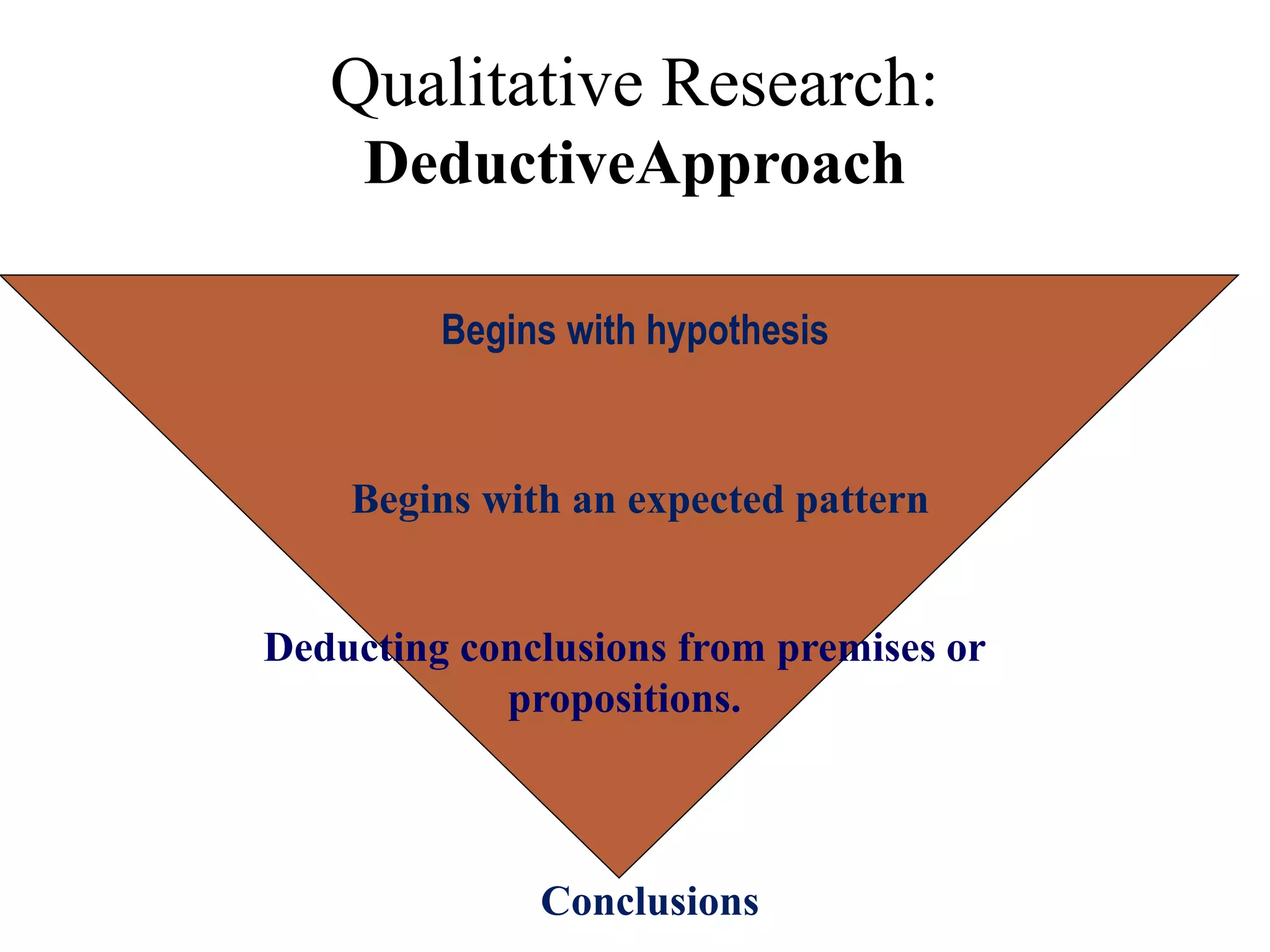
Qualitative Research:
DeductiveApproach
Begins with hypothesis
Begins with an expected pattern
Deducting conclusions from premises or
propositions.
Conclusions
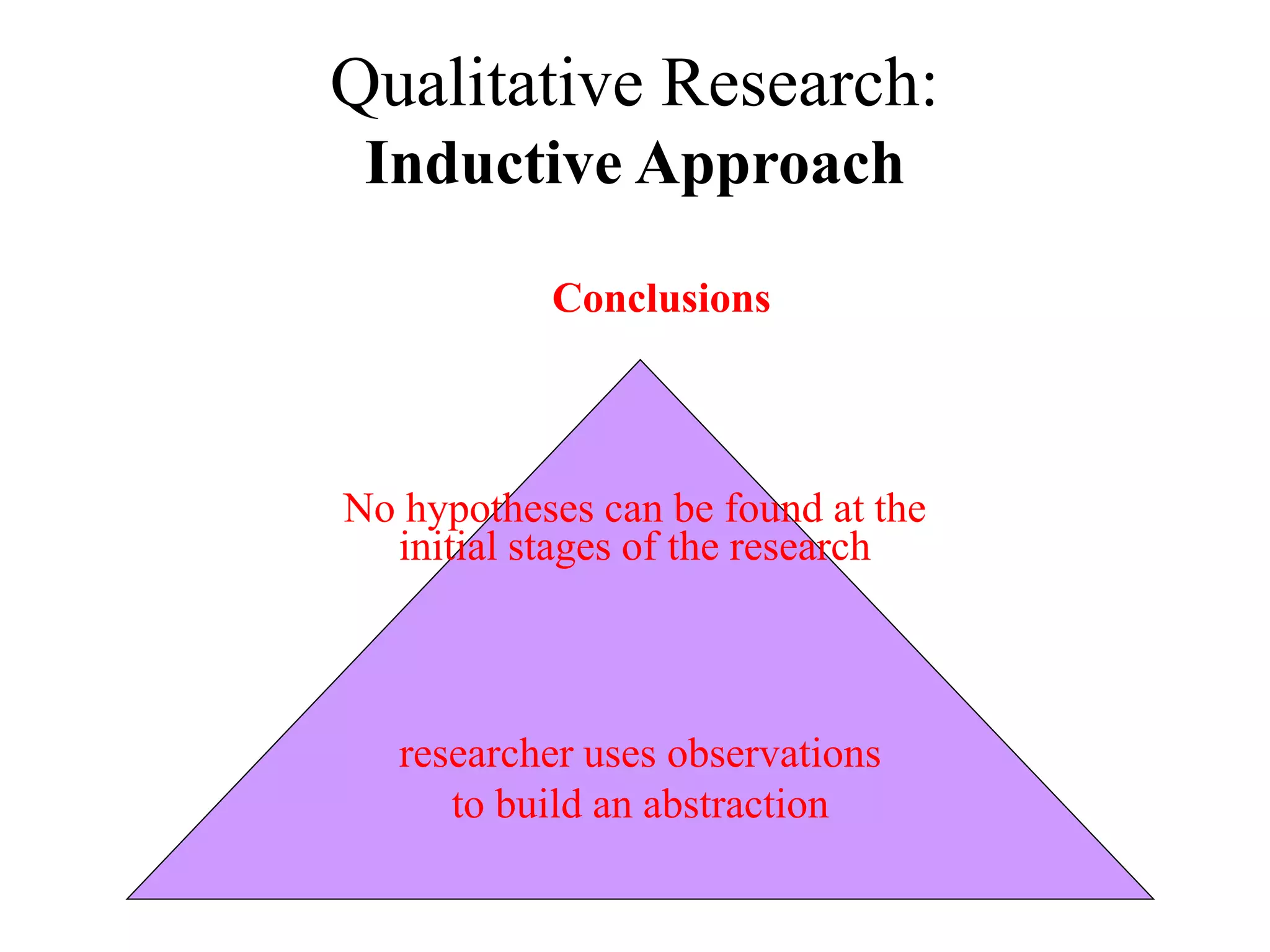
Qualitative Research:
Inductive Approach
Conclusions
No hypotheses can be found at the
initial stages of the research
researcher uses observations
to build an abstraction
Qualitative Research Analysis
• Preparing and organizing the data
 Organize the data
 Store originals and copies separately
 Check for any missing data and trace it
• Becoming comfortable with your data
• Memos:
 This is the first set of interpretation.
 This includes researcher’s notes.
• Coding:
 ‘De-construction’ of data in qualitative research.
 Coding is the process of breaking down data to
smaller units, understanding these units and putting
them back together in new ways
• Themes:
 This is at the later stage of research
 This is ‘construction’ in qualitative research.
Triangulation
• Method to enhance the validity & reliability of
qualitative research
• Enhances accuracy of interpretation
• Confirms that the data collected is not due to
chance or circumstances
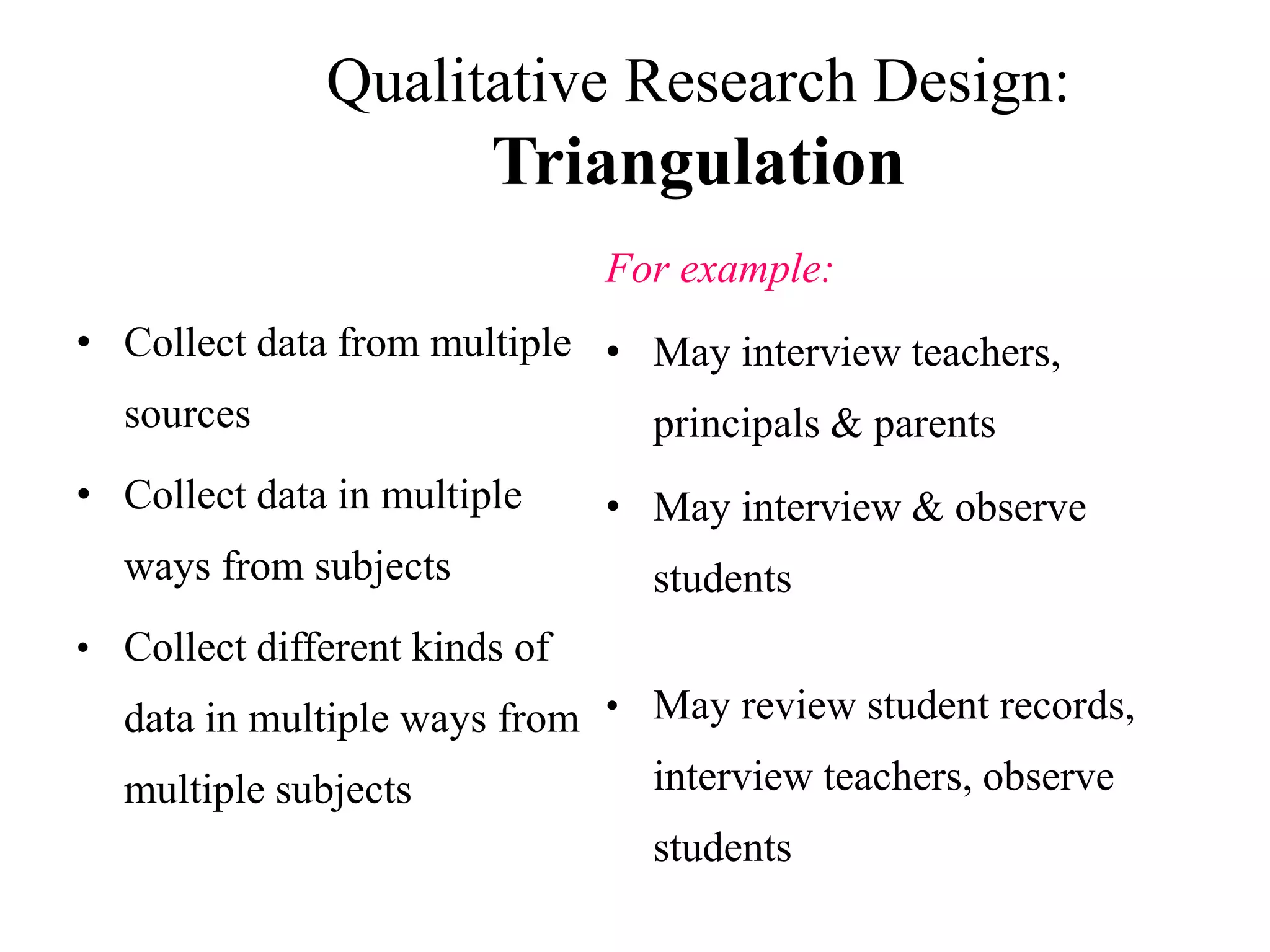
Qualitative Research Design:
Triangulation
• Collect data from multiple
sources
• Collect data in multiple
ways from subjects
• Collect different kinds of
data in multiple ways from
multiple subjects
For example:
• May interview teachers,
principals & parents
• May interview & observe
students
• May review student records,
interview teachers, observe
students
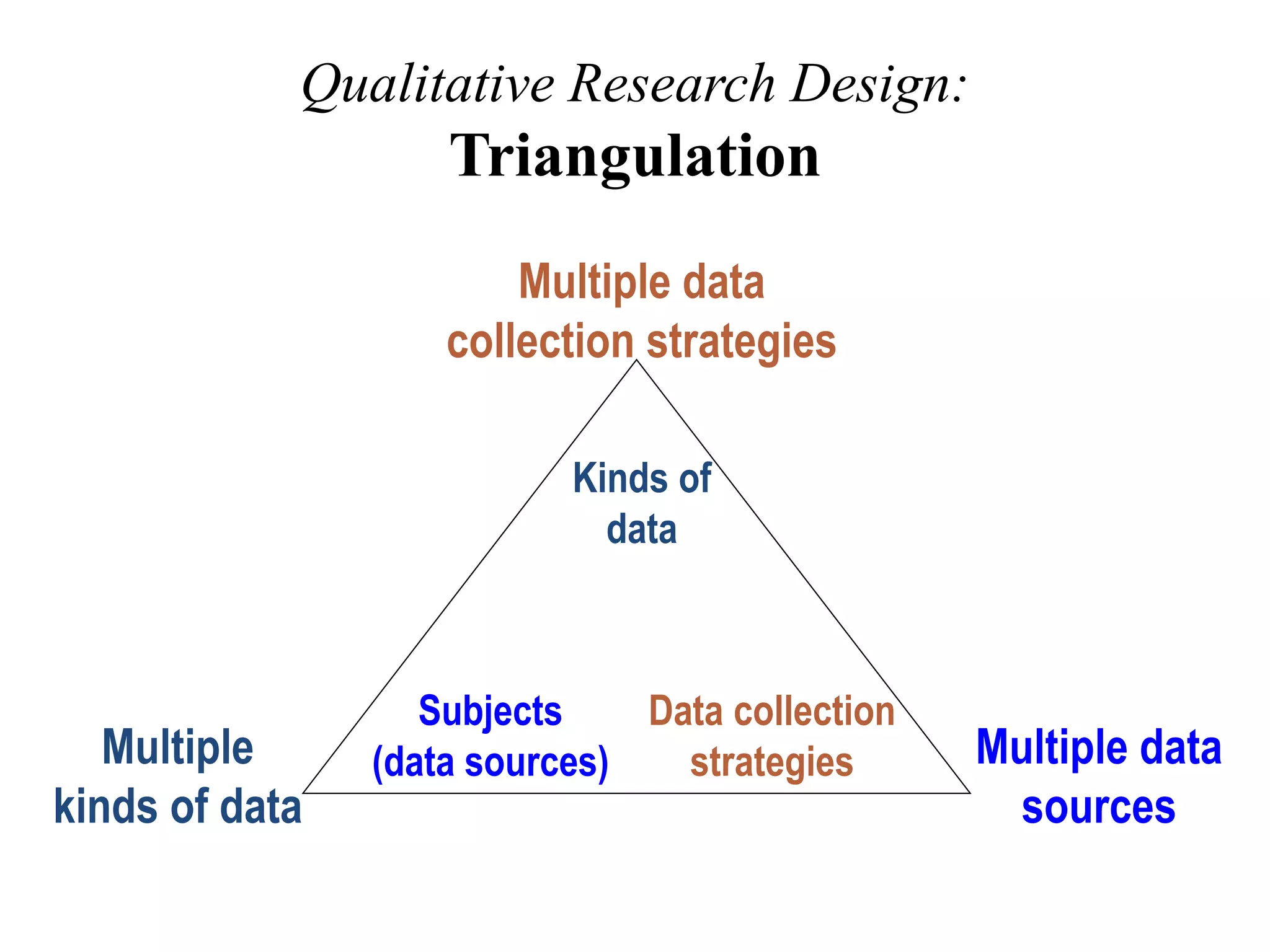
Multiple data
sources
Multiple
kinds of data
Multiple data
collection strategies
Subjects
(data sources)
Data collection
strategies
Kinds of
data
Qualitative Research Design:
Triangulation
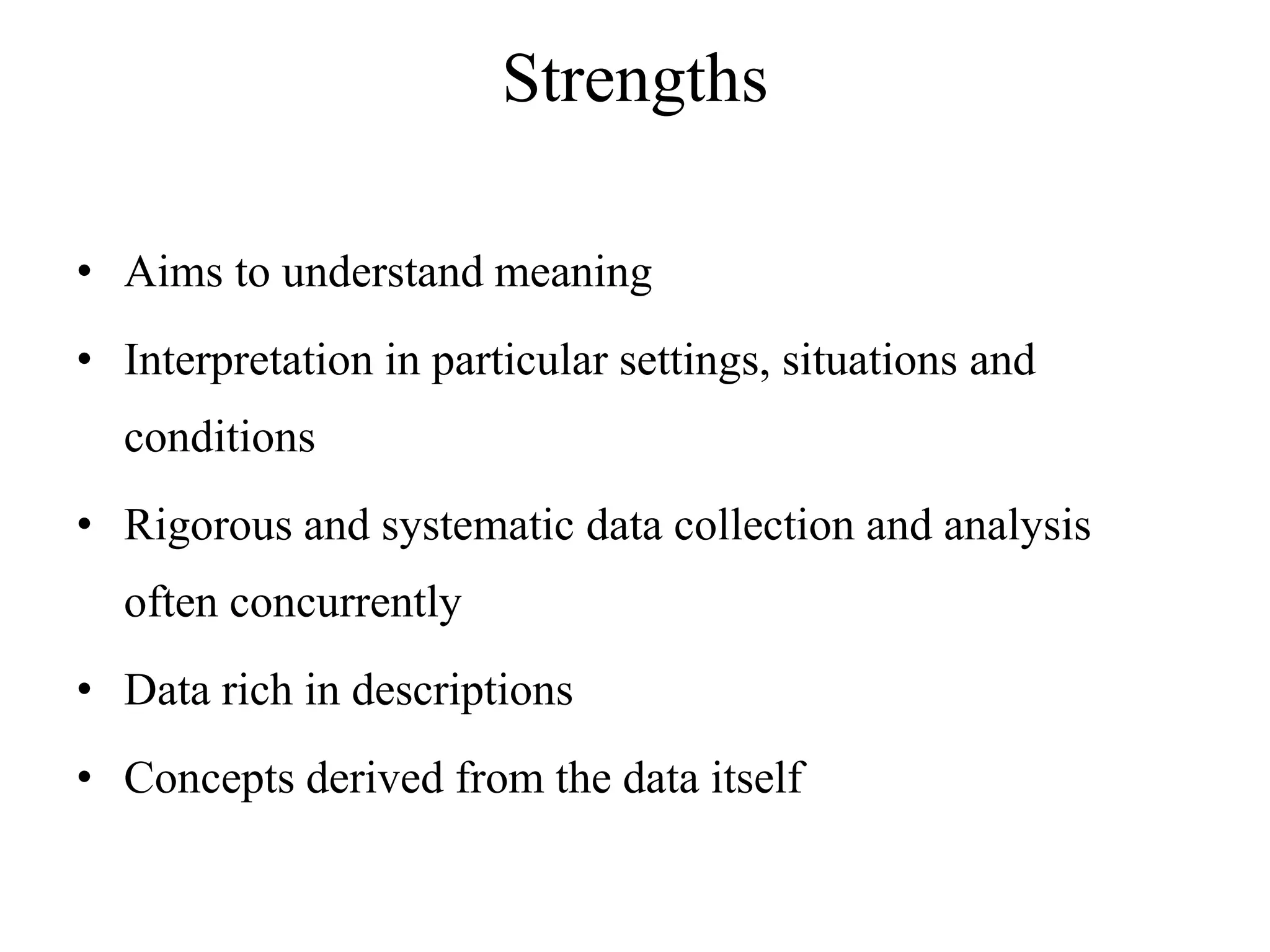
Strengths
• Aims to understand meaning
• Interpretation in particular settings, situations and
conditions
• Rigorous and systematic data collection and analysis
often concurrently
• Data rich in descriptions
• Concepts derived from the data itself
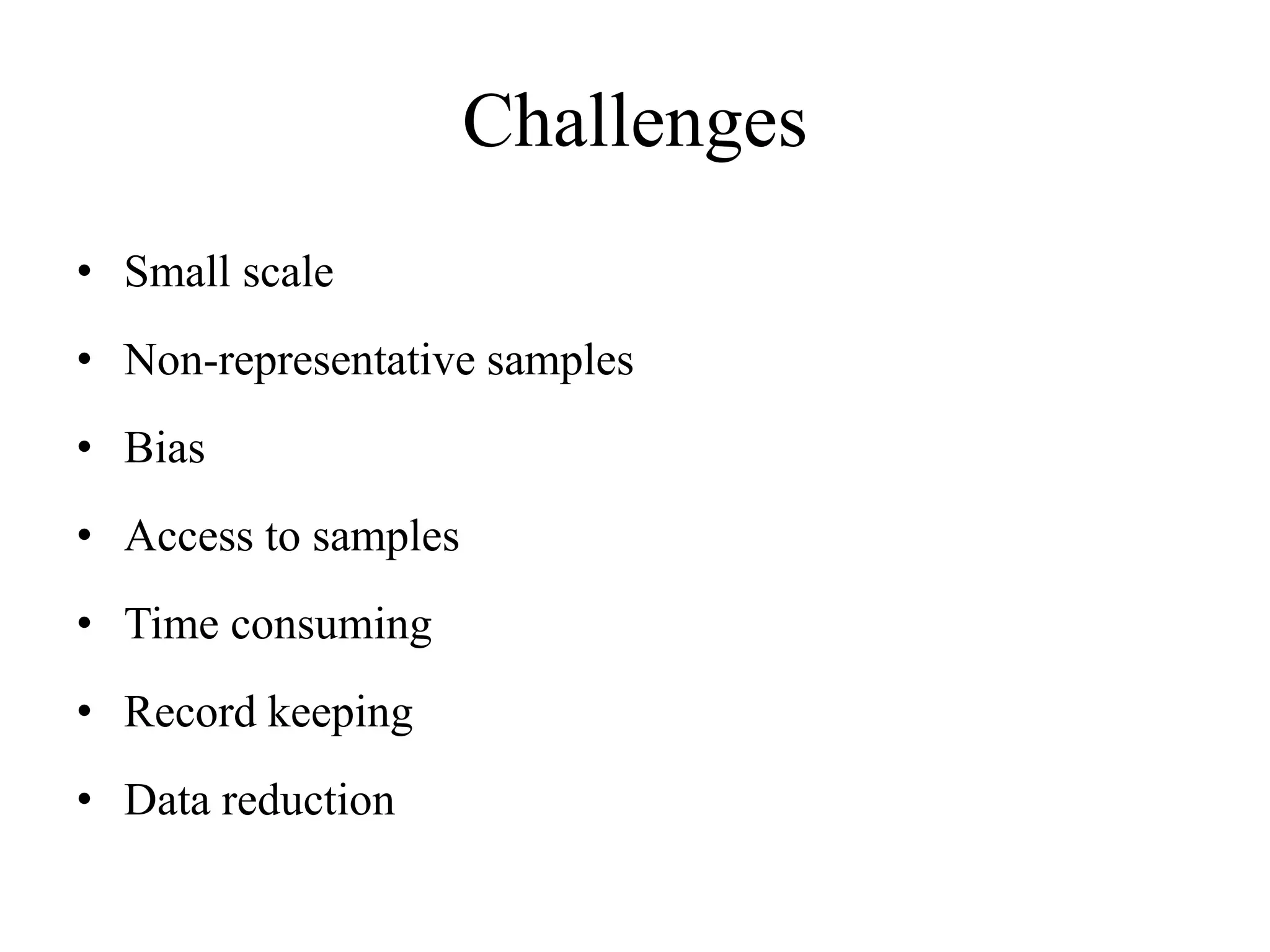
Challenges
• Small scale
• Non-representative samples
• Bias
• Access to samples
• Time consuming
• Record keeping
• Data reduction
Challenges
• Relationships between the researcher and the
researched
• Subjectivity
• Reliability
• Verification
• Difficulty in studying large populations
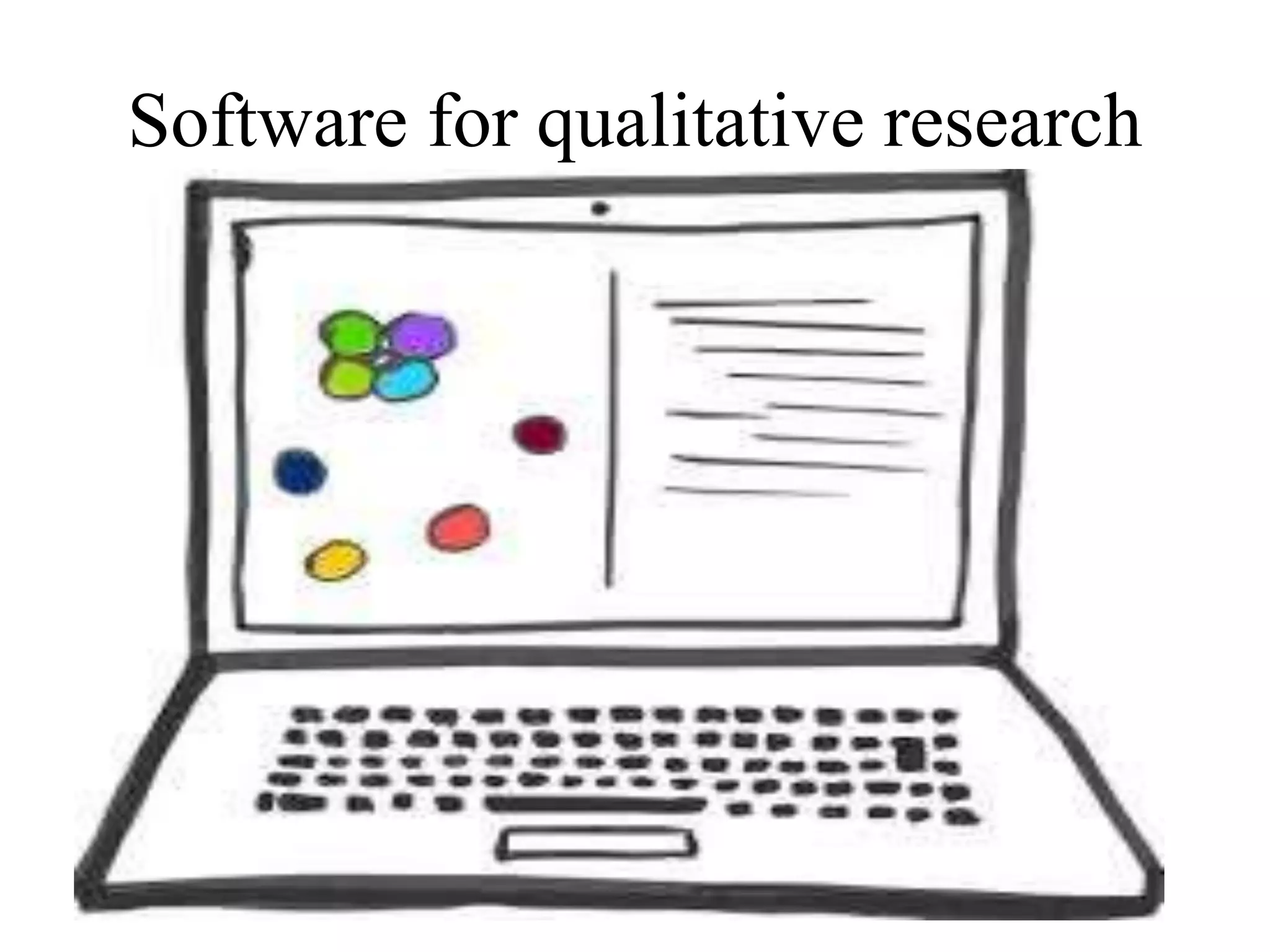
Software for qualitative research
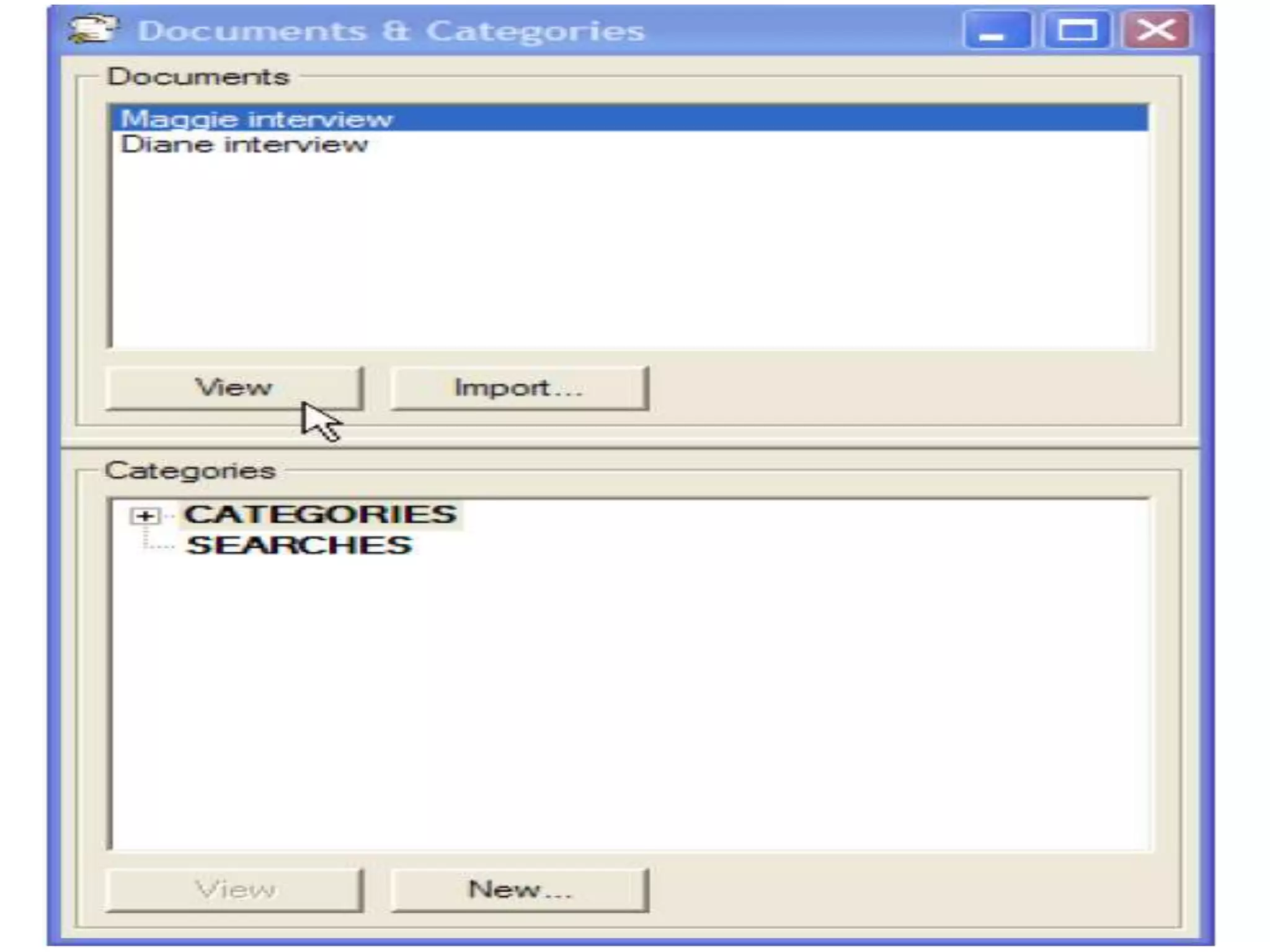
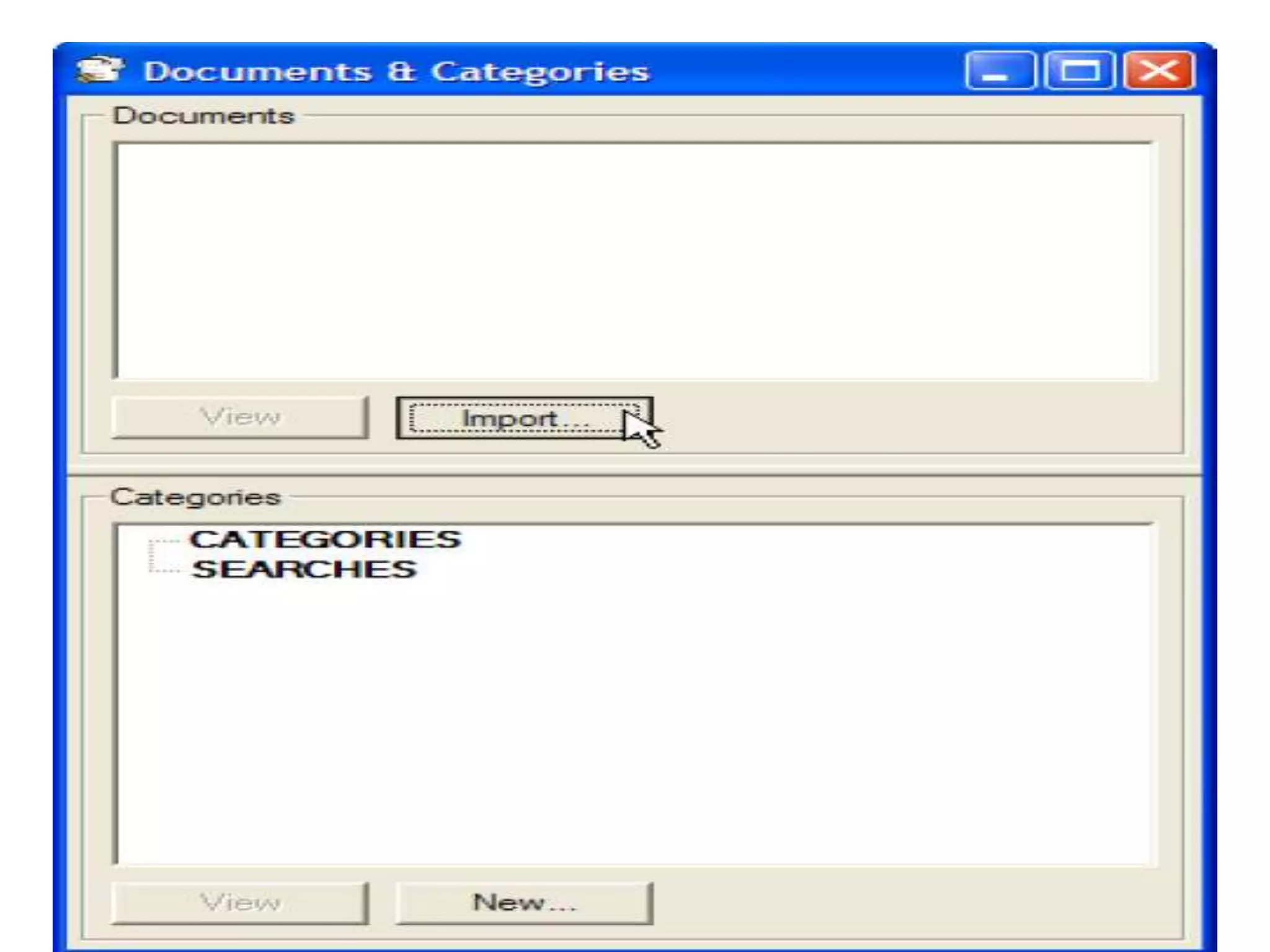
Weft QDA
• Weft QDA is a software tool for the analysis of textual
data such as interview transcripts, documents and field
notes.
• It's available free under a public domain license.
• version 0.9.4
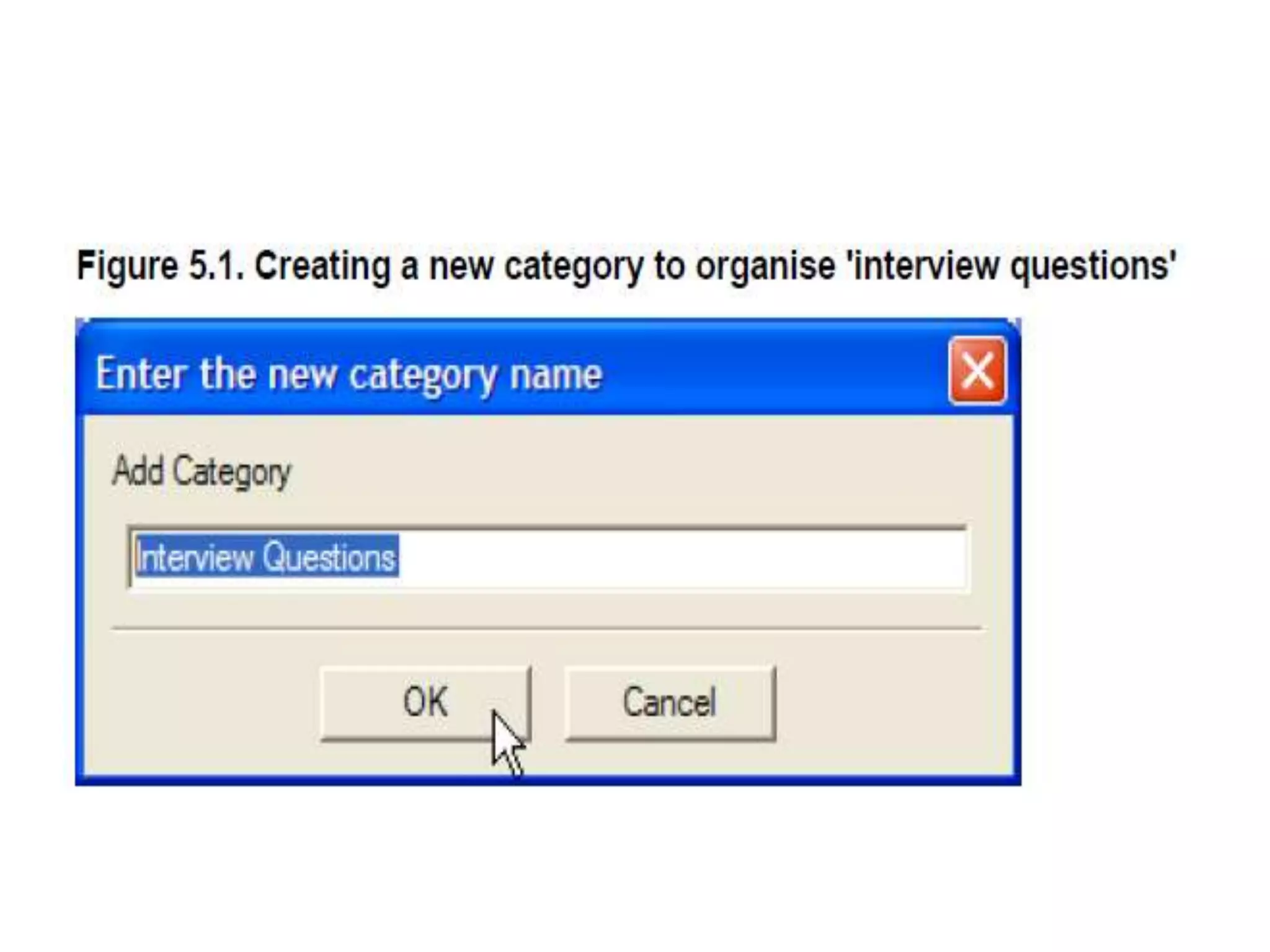
How to use it
Qualitative research - type of data, analysis of qualitative data, software for qualitative data analysis

Qualitative research - type of data, analysis of qualitative data, software for qualitative data analysis

  • 1.
    • Data Analysisin Qualitative Research Dr. Preeti Tiwari
  • 2.
    Qualitative Research • Aform of social inquiry that focuses on the way people interpret and make sense of their experiences and the world in which they live.
  • 3.
    • Qualitative researchis a type of scientific research.  Seeks answers to a question  Collects evidence  Produces findings that were not determined in advance
  • 4.
    • Qualitative researchinvolves the use of qualitative data such as :-  Interviews  Participant observation data • To understand and explain social phenomena
  • 5.
  • 6.
    Qualitative • The aimis a detailed description. • Researcher may only know roughly in advance what he/she is looking for. • The design emerges as the study unfolds. • Researcher is the data gathering instrument. Quantitative • The aim is to classify features, count them, and construct statistical models in an attempt to explain what is observed. • Researcher knows clearly in advance what he/she is looking for. • All aspects of the study are carefully designed before data is collected. • Researcher questionnaires or equipment to collect numerical data.
  • 7.
    • Data isin the form of words, pictures or objects. • Subjective - individuals’ interpretation of events is important • Qualitative data is more 'rich', time consuming, and not generalizable. • Researcher tends to become subjectively immersed in the subject matter. • Data is numerical in nature. • Objective – seeks measurement & analysis of target concepts. • Quantitative data is more efficient, able to test hypotheses. • Researcher tends to remain separated from the subject matter.
  • 8.
    Main Types ofQualitative Research • Case Study  Attempts to shed light on a case by studying in depth a single case  The case can be an individual person, an event, a group, or an institution.
  • 9.
    • Grounded Theory When new aspect has to be discovered  Based on new area where theories are non existing or rare
  • 10.
    • Phenomenology • Studyof perception of individuals about 1. Taken for granted assumptions 2. Usual ways of perceiving 3. Conventional wisdom 4. Gaining insights into peoples motivations and actions
  • 11.
    • Ethnography • Scientificdescription of peoples and cultures with their customs, habits and mutual differences. • Social interaction, behaviors and perceptions. • Aim is to “Get Inside” the way each group of people sees the world.
  • 12.
    Method Focus Ethnography Context orculture Case Study Organization, entity, individual, or event Phenomenological Perception of individuals Grounded Theory Develop a theory from grounded in field data
  • 13.
    There are threemain methods of data collection • Interactive interviewing  People asked to verbally described their experiences of phenomenon. • Written descriptions by participants  People asked to write descriptions of their experiences of phenomenon.
  • 14.
    • Observation  Descriptiveobservations of verbal and non-verbal behavior.
  • 15.
    Qualitative research methods •Focus groups  Effective in eliciting data on the cultural norms of a group  Generating broad overviews of issues of concern to the cultural groups or subgroups represented.
  • 16.
    • A focusgroup is a small group of six to ten people led through an open discussion by a skilled moderator. • The ideal amount of - 45 to 90 minutes..
  • 17.
    • Focus groupsare structured around a set of carefully predetermined questions. • It takes more than one focus group on any one topic to produce valid results • when no new information - you’ve reached a point of saturation.
  • 18.
    There are threetypes of focus group questions: • 1. Engagement questions: introduce participants to and make them comfortable with the topic of discussion • 2. Exploration questions: get to the meat of the discussion • 3. Exit question: check to see if anything was missed in the discussion
  • 19.
    • ƒRun atape recorder during the session ƒ • Take notes in case the recorder fails or the tape is inaudible ƒ Note/record body language or other subtle but relevant clues ƒ • Allow the moderator to do all the talking during the group
  • 20.
    • In-depth interviews–  Optimal for collecting data on individuals’ personal histories, perspectives, and experiences.  Particularly - exploring sensitive topics
  • 21.
    • Participant observation Appropriate for collecting data on naturally occurring behaviors in their usual contexts.  Analysis begins when the data is first collected and is used to guide decisions related to further data collection.
  • 22.
    Qualitative Coding &Analysis • Open coding (OAS)  First level of coding  Distinct concepts and categories in the data  Which will form the basic units of analysis.  In other words, breaking down the data into first level concepts, or master headings, and second-level categories, or subheadings.
  • 23.
    Axial coding • Useown concepts and categories while re-reading the text to  Confirm that your concepts and categories accurately represent interview responses  Explore how your concepts and categories are related.  What are the associated effects or consequences?
  • 24.
    Selective coding • Thecentral category around which final analysis will be based  Explicating the story line: analytic description of the core category  Relating other categories to the core  Validating the story line
  • 25.
    Qualitative Research: DeductiveApproach Begins withhypothesis Begins with an expected pattern Deducting conclusions from premises or propositions. Conclusions
  • 26.
    Qualitative Research: Inductive Approach Conclusions Nohypotheses can be found at the initial stages of the research researcher uses observations to build an abstraction
  • 27.
    Qualitative Research Analysis •Preparing and organizing the data  Organize the data  Store originals and copies separately  Check for any missing data and trace it • Becoming comfortable with your data
  • 28.
    • Memos:  Thisis the first set of interpretation.  This includes researcher’s notes. • Coding:  ‘De-construction’ of data in qualitative research.  Coding is the process of breaking down data to smaller units, understanding these units and putting them back together in new ways
  • 29.
    • Themes:  Thisis at the later stage of research  This is ‘construction’ in qualitative research.
  • 30.
    Triangulation • Method toenhance the validity & reliability of qualitative research • Enhances accuracy of interpretation • Confirms that the data collected is not due to chance or circumstances
  • 31.
    Qualitative Research Design: Triangulation •Collect data from multiple sources • Collect data in multiple ways from subjects • Collect different kinds of data in multiple ways from multiple subjects For example: • May interview teachers, principals & parents • May interview & observe students • May review student records, interview teachers, observe students
  • 32.
    Multiple data sources Multiple kinds ofdata Multiple data collection strategies Subjects (data sources) Data collection strategies Kinds of data Qualitative Research Design: Triangulation
  • 33.
    Strengths • Aims tounderstand meaning • Interpretation in particular settings, situations and conditions • Rigorous and systematic data collection and analysis often concurrently • Data rich in descriptions • Concepts derived from the data itself
  • 34.
    Challenges • Small scale •Non-representative samples • Bias • Access to samples • Time consuming • Record keeping • Data reduction
  • 35.
    Challenges • Relationships betweenthe researcher and the researched • Subjectivity • Reliability • Verification • Difficulty in studying large populations
  • 36.
  • 37.
    Weft QDA • WeftQDA is a software tool for the analysis of textual data such as interview transcripts, documents and field notes. • It's available free under a public domain license. • version 0.9.4
  • 38.