SURVEY RESEARCH METHODOLOGY
BY
IRSHAD NAREJO
DEFINITION
Survey studies are usually used to find the
fact by collecting the data directly from
population or sample.
A means of gathering information by asking a
set of questions to a sample of respondents
who represent a population with specific
characteristics
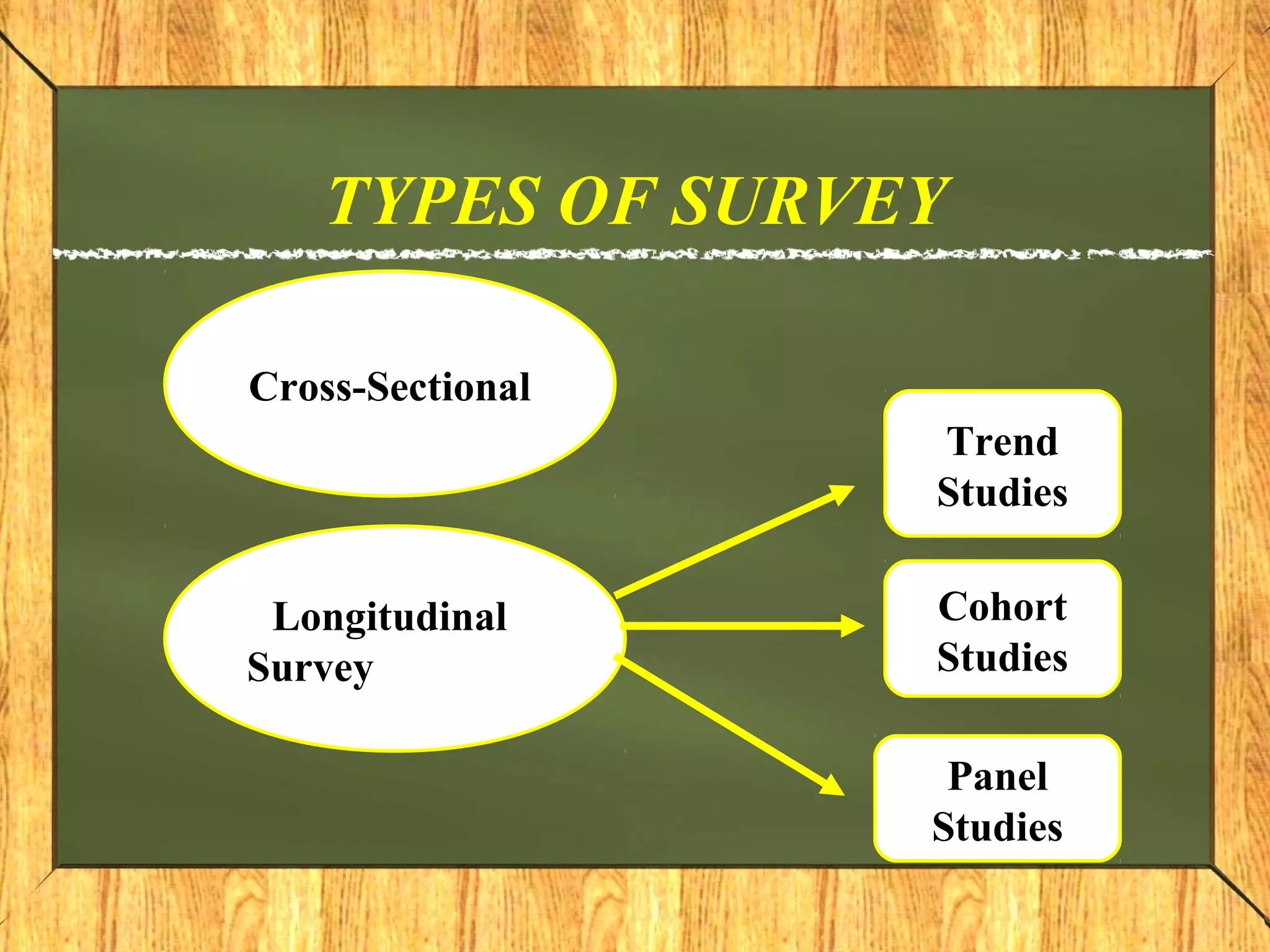
TYPES OF SURVEY
Cross-Sectional
Longitudinal
Survey
Cohort
Studies
Trend
Studies
Panel
Studies
STEPS
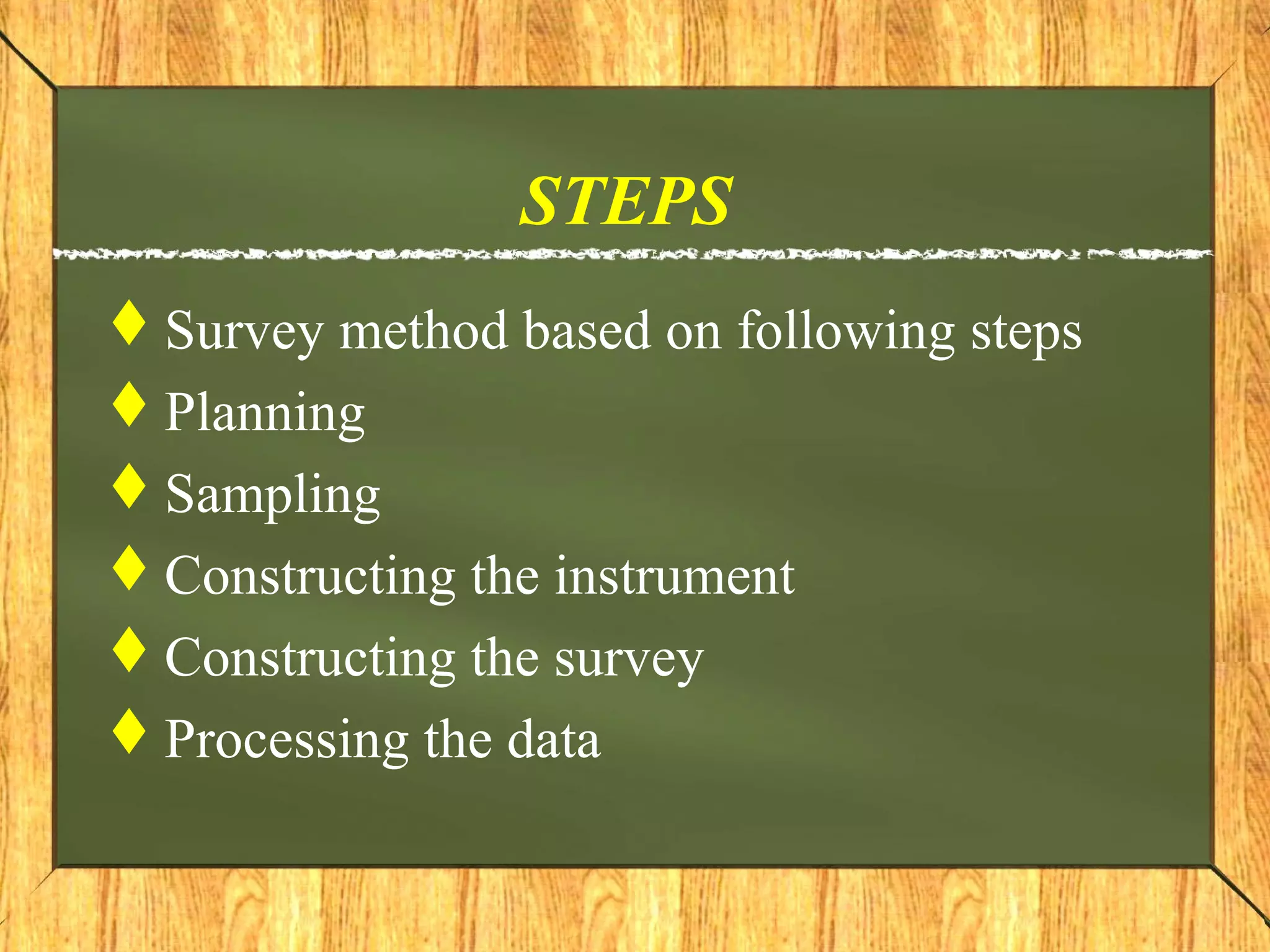
Survey method based on following steps
Planning
Sampling
Constructing the instrument
Constructing the survey
Processing the data
PLANNING
Survey research begins with a question that
the researcher believes can be answered
most appropriately by means of the survey
method.
 The researcher needs to decide on the data-
gathering technique that will be used.
SAMPLING
The researcher must make decisions about
the sampling procedure that will be used
and the size of the sample to survey.
If one is to generalize the sample findings
to the population, it is essential that the
sample selected be representative of that
population.
CONSTRUCTING THE INSTRUMENT
 A major task in survey research is the
construction of the instrument that will be
used to gather the data from the sample.
CONDUCTING THE SURVEY
 Once the data-gathering instrument is
prepared, it must be field-tested to determine
if it will be provide the desired data.
Also included in this step would be training
of the users of the instrument, interviewing
subjects or distributing questionnaires to
them, and verifying the accuracy of the data
gathered.
PROCESSING THE DATA
The last step includes:
 Coding the data,
 Statistical analysis,
Interpreting the results
 Reporting the findings.
VALIDITY
Validity is the extent to which the survey information
is relevant to the conclusion being drawn and is
sufficiently accurate and complete to support the
conclusion.
RELIABILITY
Reliability, is the degree to which the questions used
in a survey elicit the same type of information each
time they are used under the same conditions.
LIMITATIONS
 It is charged that survey information touches
only the surface of the research field and does
not make a deeper thrust into it.
Sometimes if sample information's have not
been collected very carefully, the magnitude
of sampling error may be too large to render
the sample results reasonably accurate.
.
It is also charged with demanding of more
time, effort and money.
Insecurity limiting access to the population
of concern.
The lack of funding necessary to carry out
a survey.
ETHICS IN SURVEY METHOD
No harm is done to any survey respondent,
No survey respondent is unduly pressured or
made to feel obligated to participate in a survey.
Respondents should be informed about the
purpose of the survey and have the option not to
participate or not to disclose information that he
or she feels not comfortable with
The names and addresses of survey
respondents should not be made available
to anyone outside those involved in the
survey after the responses have been entered
into the computer
No individual suffers any adverse
consequences as a result of the survey.
Tools
Questionnaire Questionnaires are usually
paper-and-pencil instruments that the
respondent completes.
Mailed Questionnaire
Web Survey
Group Administered Questionnaire
Household Drop-off Survey Questionnaire
Mailed Questionnaire
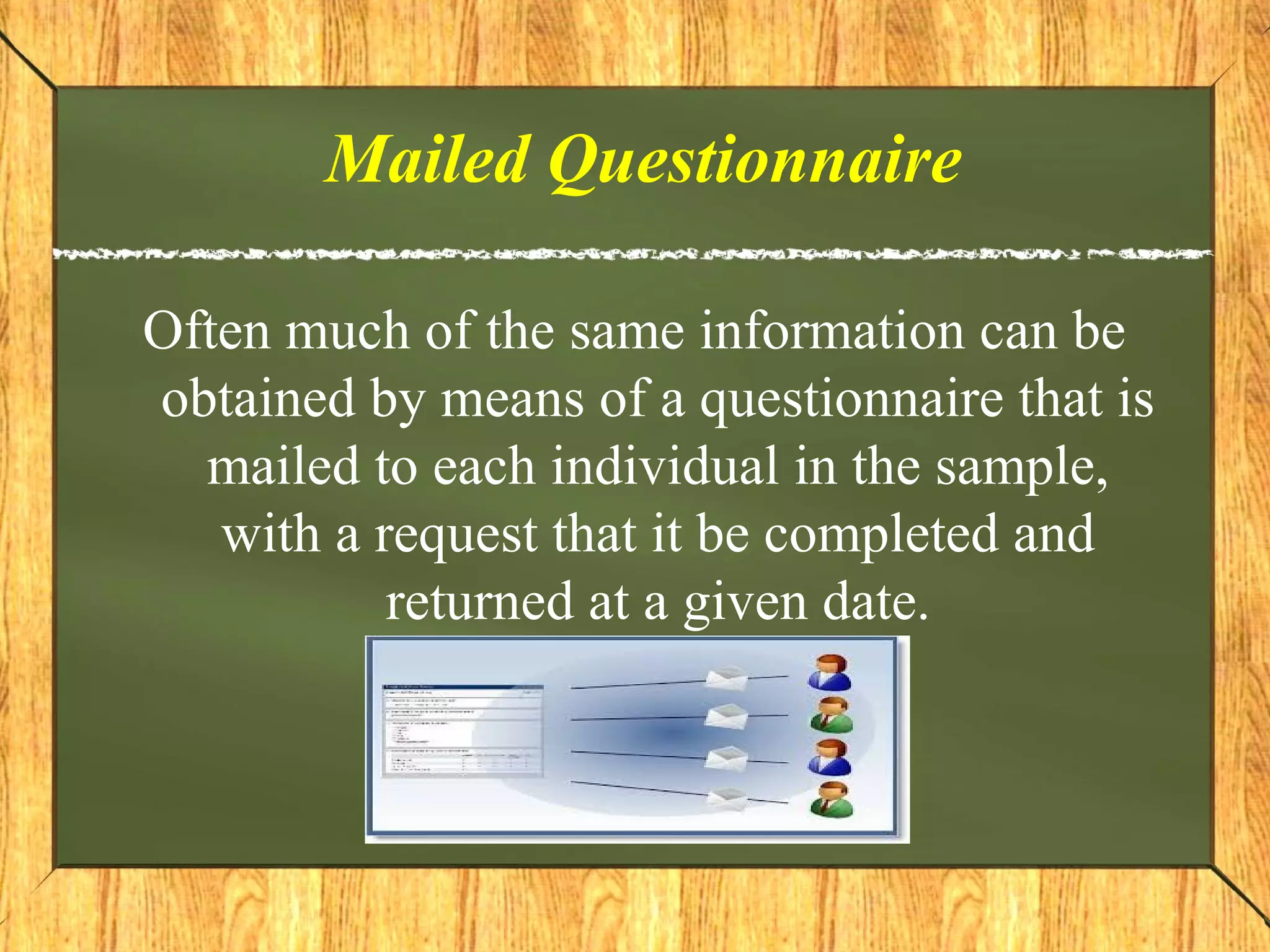
Often much of the same information can be
obtained by means of a questionnaire that is
mailed to each individual in the sample,
with a request that it be completed and
returned at a given date.
WebSurvey
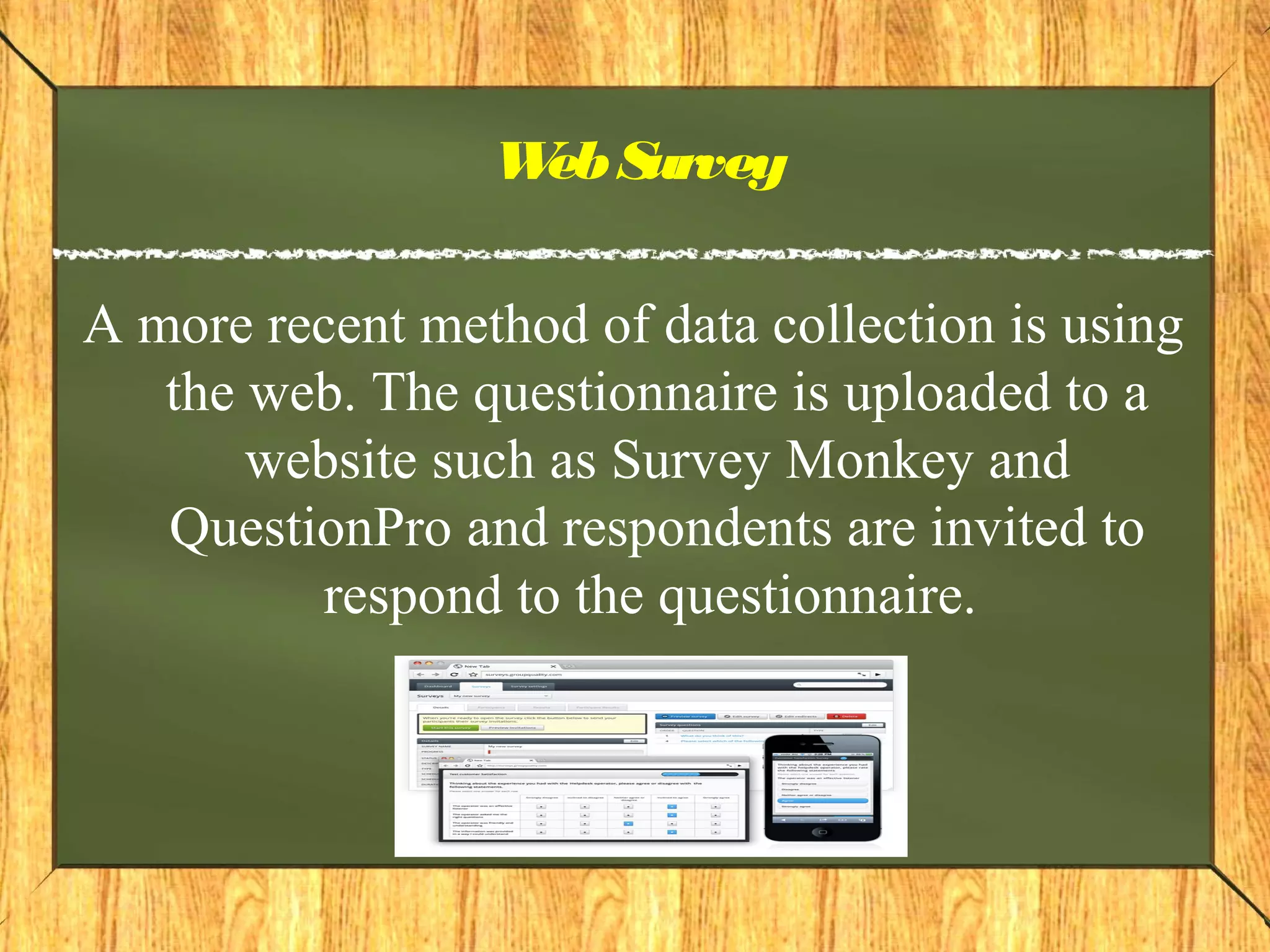
A more recent method of data collection is using
the web. The questionnaire is uploaded to a
website such as Survey Monkey and
QuestionPro and respondents are invited to
respond to the questionnaire.
GroupAdministeredQuestionnaire
This questionnaire is administered
to a group of people at a certain
place for a specific purpose.
HouseholdDrop-off SurveyQuestionnaire
In this approach, a researcher goes to the
respondent's home or business and hands the
respondent the instrument.
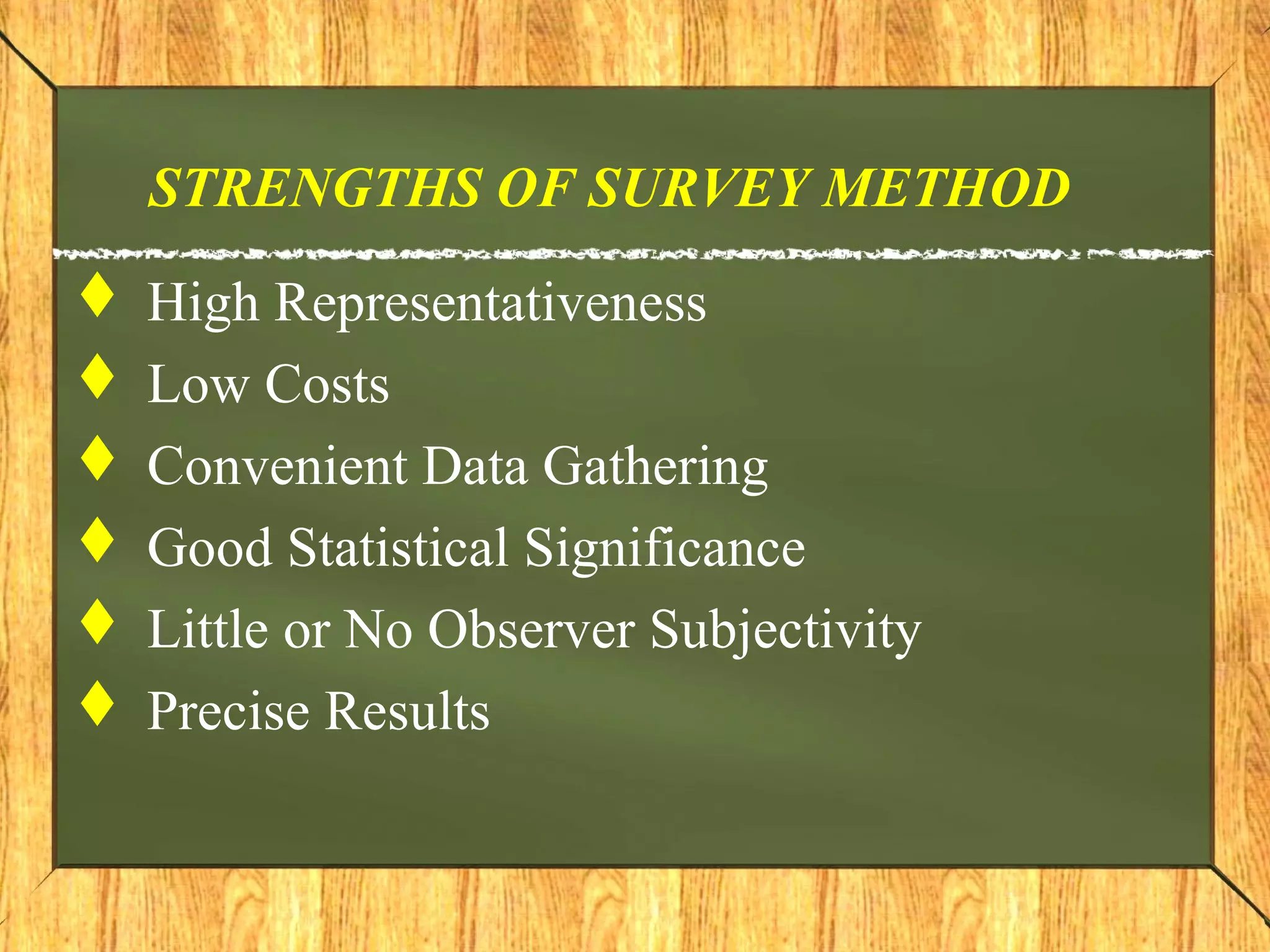
STRENGTHS OF SURVEY METHOD
 High Representativeness
 Low Costs
 Convenient Data Gathering
 Good Statistical Significance
 Little or No Observer Subjectivity
 Precise Results
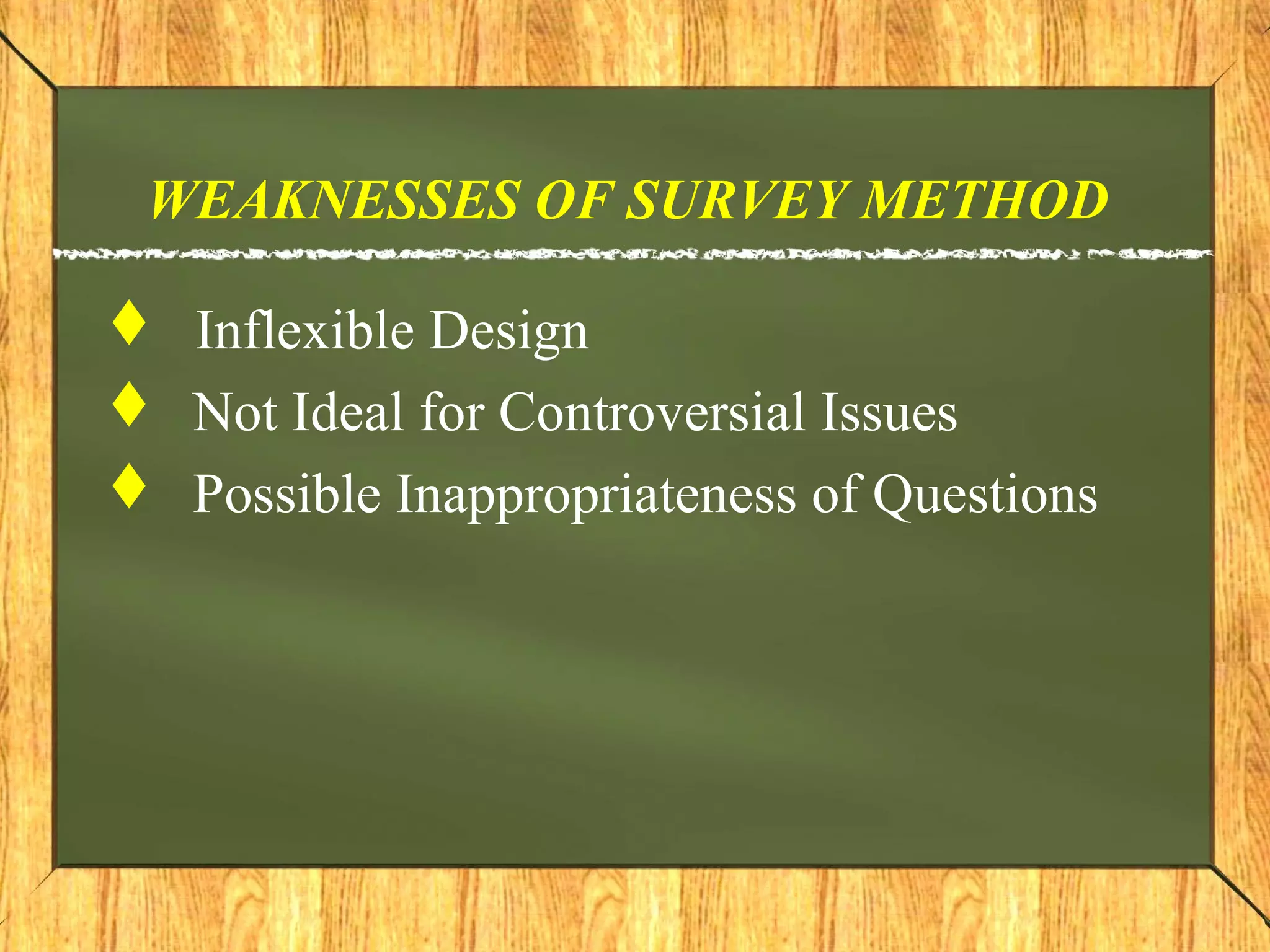
WEAKNESSES OF SURVEY METHOD
 Inflexible Design
 Not Ideal for Controversial Issues
 Possible Inappropriateness of Questions
Thank
You !!

Survey Research Methodology

  • 1.
  • 2.
    DEFINITION Survey studies areusually used to find the fact by collecting the data directly from population or sample. A means of gathering information by asking a set of questions to a sample of respondents who represent a population with specific characteristics
  • 3.
  • 4.
    STEPS Survey method basedon following steps Planning Sampling Constructing the instrument Constructing the survey Processing the data
  • 5.
    PLANNING Survey research beginswith a question that the researcher believes can be answered most appropriately by means of the survey method.  The researcher needs to decide on the data- gathering technique that will be used.
  • 6.
    SAMPLING The researcher mustmake decisions about the sampling procedure that will be used and the size of the sample to survey. If one is to generalize the sample findings to the population, it is essential that the sample selected be representative of that population.
  • 7.
    CONSTRUCTING THE INSTRUMENT A major task in survey research is the construction of the instrument that will be used to gather the data from the sample.
  • 8.
    CONDUCTING THE SURVEY Once the data-gathering instrument is prepared, it must be field-tested to determine if it will be provide the desired data. Also included in this step would be training of the users of the instrument, interviewing subjects or distributing questionnaires to them, and verifying the accuracy of the data gathered.
  • 9.
    PROCESSING THE DATA Thelast step includes:  Coding the data,  Statistical analysis, Interpreting the results  Reporting the findings.
  • 10.
    VALIDITY Validity is theextent to which the survey information is relevant to the conclusion being drawn and is sufficiently accurate and complete to support the conclusion. RELIABILITY Reliability, is the degree to which the questions used in a survey elicit the same type of information each time they are used under the same conditions.
  • 11.
    LIMITATIONS  It ischarged that survey information touches only the surface of the research field and does not make a deeper thrust into it. Sometimes if sample information's have not been collected very carefully, the magnitude of sampling error may be too large to render the sample results reasonably accurate.
  • 12.
    . It is alsocharged with demanding of more time, effort and money. Insecurity limiting access to the population of concern. The lack of funding necessary to carry out a survey.
  • 13.
    ETHICS IN SURVEYMETHOD No harm is done to any survey respondent, No survey respondent is unduly pressured or made to feel obligated to participate in a survey. Respondents should be informed about the purpose of the survey and have the option not to participate or not to disclose information that he or she feels not comfortable with
  • 14.
    The names andaddresses of survey respondents should not be made available to anyone outside those involved in the survey after the responses have been entered into the computer No individual suffers any adverse consequences as a result of the survey.
  • 15.
    Tools Questionnaire Questionnaires areusually paper-and-pencil instruments that the respondent completes. Mailed Questionnaire Web Survey Group Administered Questionnaire Household Drop-off Survey Questionnaire
  • 16.
    Mailed Questionnaire Often muchof the same information can be obtained by means of a questionnaire that is mailed to each individual in the sample, with a request that it be completed and returned at a given date.
  • 17.
    WebSurvey A more recentmethod of data collection is using the web. The questionnaire is uploaded to a website such as Survey Monkey and QuestionPro and respondents are invited to respond to the questionnaire.
  • 18.
    GroupAdministeredQuestionnaire This questionnaire isadministered to a group of people at a certain place for a specific purpose. HouseholdDrop-off SurveyQuestionnaire In this approach, a researcher goes to the respondent's home or business and hands the respondent the instrument.
  • 19.
    STRENGTHS OF SURVEYMETHOD  High Representativeness  Low Costs  Convenient Data Gathering  Good Statistical Significance  Little or No Observer Subjectivity  Precise Results
  • 20.
    WEAKNESSES OF SURVEYMETHOD  Inflexible Design  Not Ideal for Controversial Issues  Possible Inappropriateness of Questions
  • 21.