TEACHING READING 
Extensive vs Intensive Reading 
Reading Sequences 
Presented by: 
Group 3 
Areta Puspa 140221807130 
Muhammad Hidayat 140221807305 
Rizky Amelia 140221807915 
T E F L 
Graduate Program in English Language Teaching 
State University of Malang 
2014
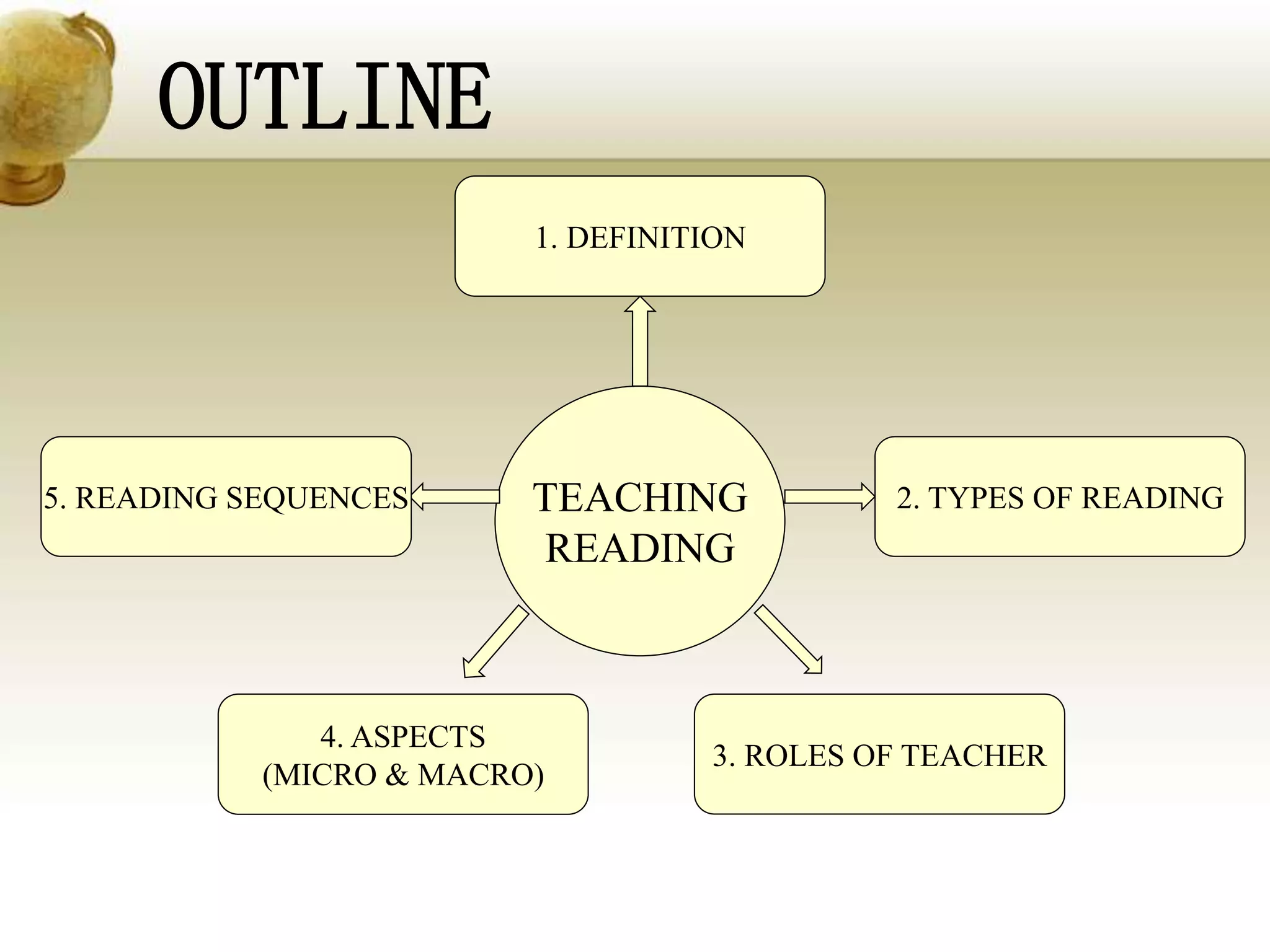
OUTLINE 
1. DEFINITION 
TEACHING 
READING 
2. TYPES OF READING 
3. ROLES OF TEACHER 
5. READING SEQUENCES 
4. ASPECTS 
(MICRO & MACRO)
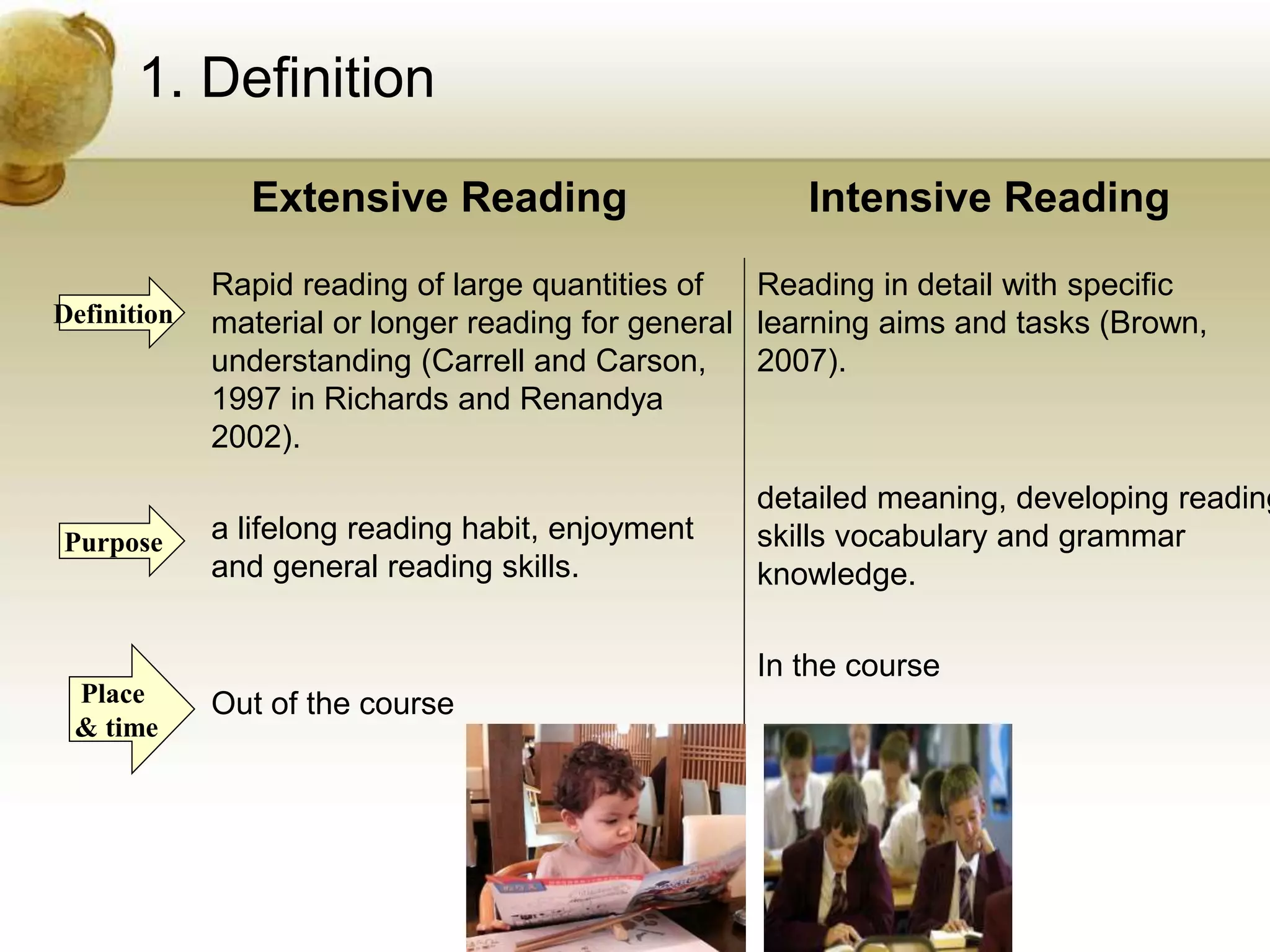
1. Definition 
Extensive Reading 
Rapid reading of large quantities of 
material or longer reading for general 
understanding (Carrell and Carson, 
1997 in Richards and Renandya 
2002). 
a lifelong reading habit, enjoyment 
and general reading skills. 
Out of the course 
Intensive Reading 
Reading in detail with specific 
learning aims and tasks (Brown, 
2007). 
detailed meaning, developing reading 
skills vocabulary and grammar 
knowledge. 
In the course 
Definition 
Purpose 
Place 
& time
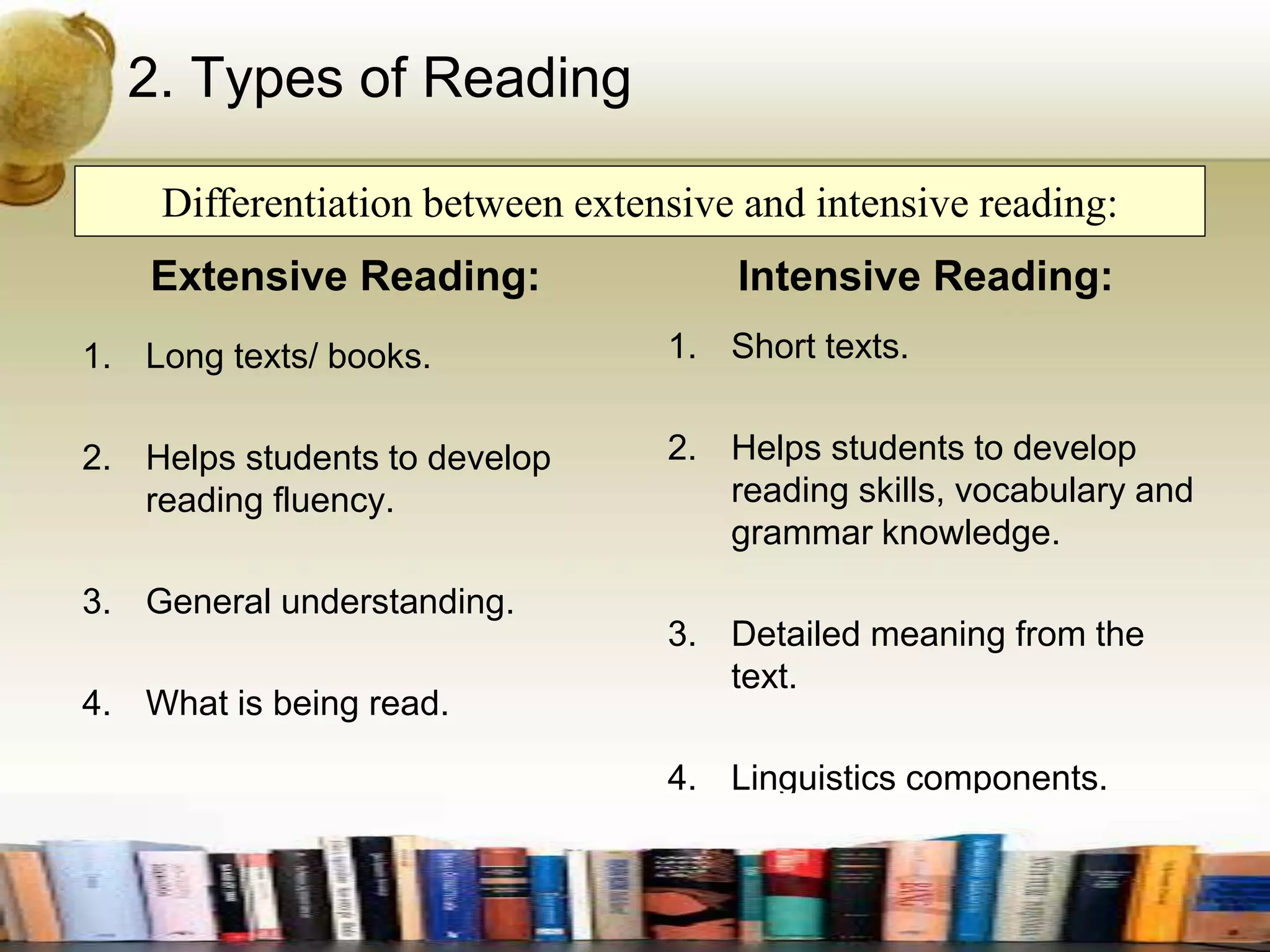
2. Types of Reading 
Differentiation between extensive and intensive reading: 
Extensive Reading: 
1. Long texts/ books. 
2. Helps students to develop 
reading fluency. 
3. General understanding. 
4. What is being read. 
Intensive Reading: 
1. Short texts. 
2. Helps students to develop 
reading skills, vocabulary and 
grammar knowledge. 
3. Detailed meaning from the 
text. 
4. Linguistics components.
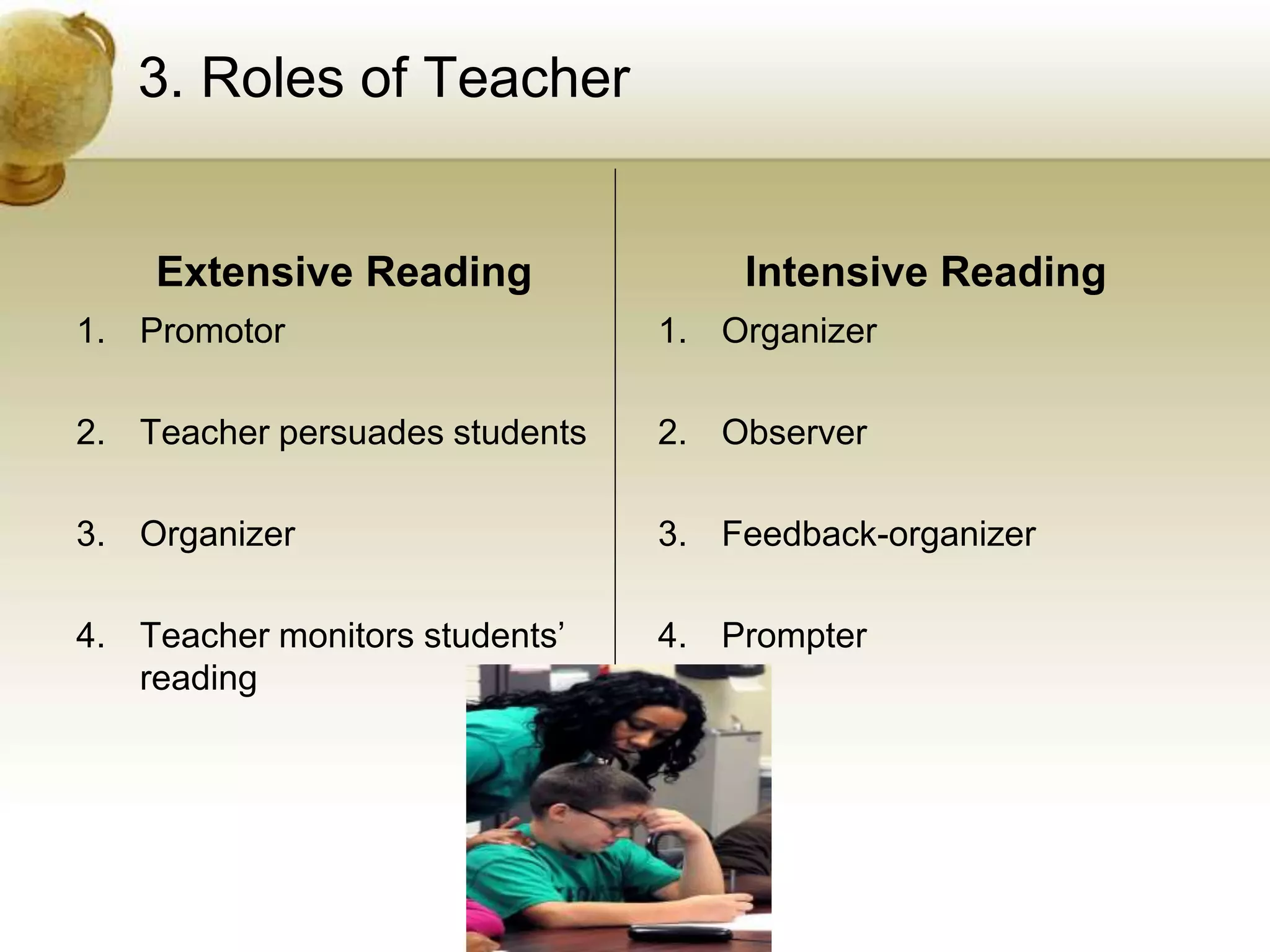
3. Roles of Teacher 
Extensive Reading 
1. Promotor 
2. Teacher persuades students 
3. Organizer 
4. Teacher monitors students’ 
reading 
Intensive Reading 
1. Organizer 
2. Observer 
3. Feedback-organizer 
4. Prompter
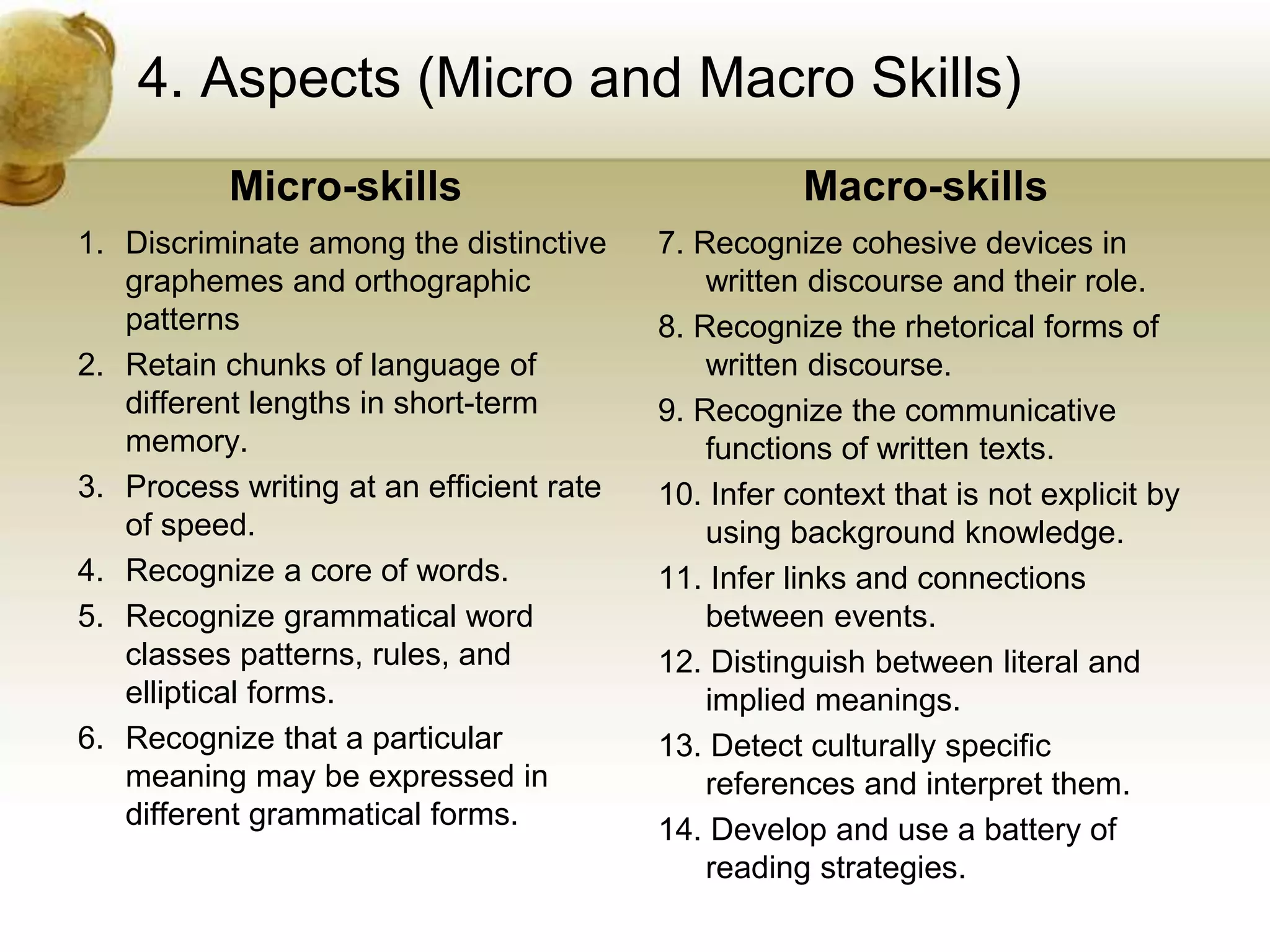
4. Aspects (Micro and Macro Skills) 
Micro-skills 
1. Discriminate among the distinctive 
graphemes and orthographic 
patterns 
2. Retain chunks of language of 
different lengths in short-term 
memory. 
3. Process writing at an efficient rate 
of speed. 
4. Recognize a core of words. 
5. Recognize grammatical word 
classes patterns, rules, and 
elliptical forms. 
6. Recognize that a particular 
meaning may be expressed in 
different grammatical forms. 
Macro-skills 
7. Recognize cohesive devices in 
written discourse and their role. 
8. Recognize the rhetorical forms of 
written discourse. 
9. Recognize the communicative 
functions of written texts. 
10. Infer context that is not explicit by 
using background knowledge. 
11. Infer links and connections 
between events. 
12. Distinguish between literal and 
implied meanings. 
13. Detect culturally specific 
references and interpret them. 
14. Develop and use a battery of 
reading strategies.
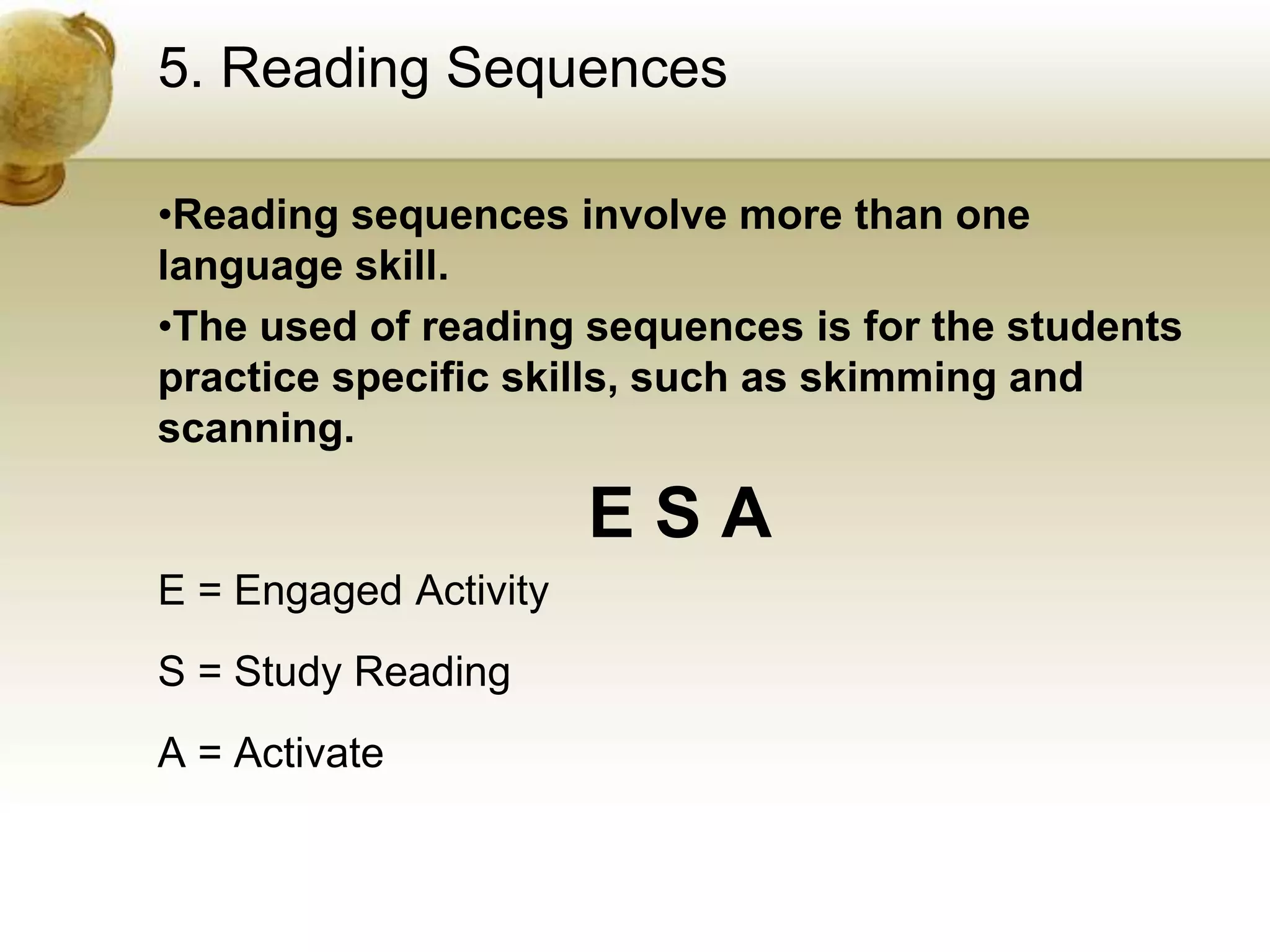
5. Reading Sequences 
•Reading sequences involve more than one 
language skill. 
•The used of reading sequences is for the students 
practice specific skills, such as skimming and 
scanning. 
E S A 
E = Engaged Activity 
S = Study Reading 
A = Activate
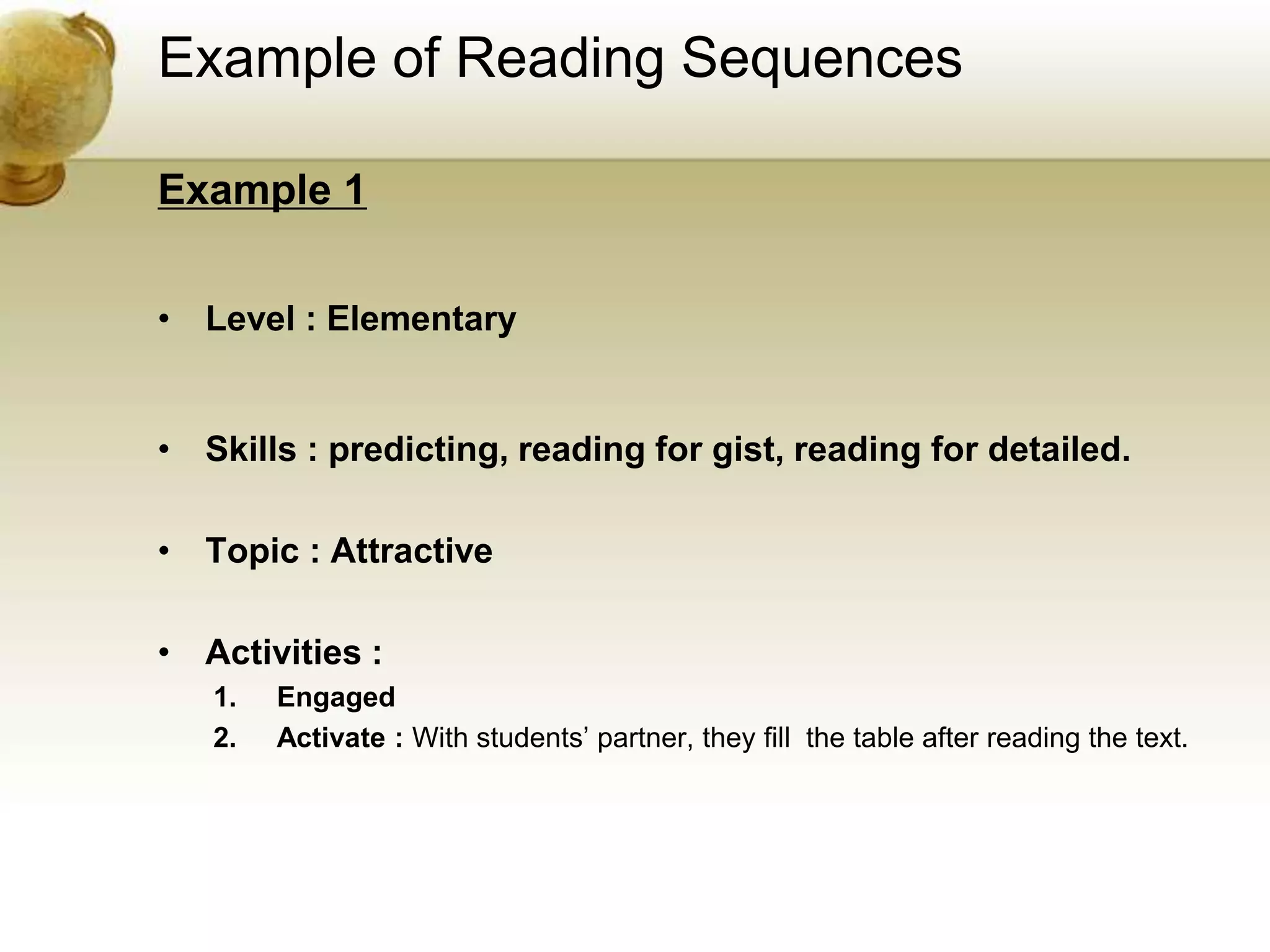
Example of Reading Sequences 
Example 1 
• Level : Elementary 
• Skills : predicting, reading for gist, reading for detailed. 
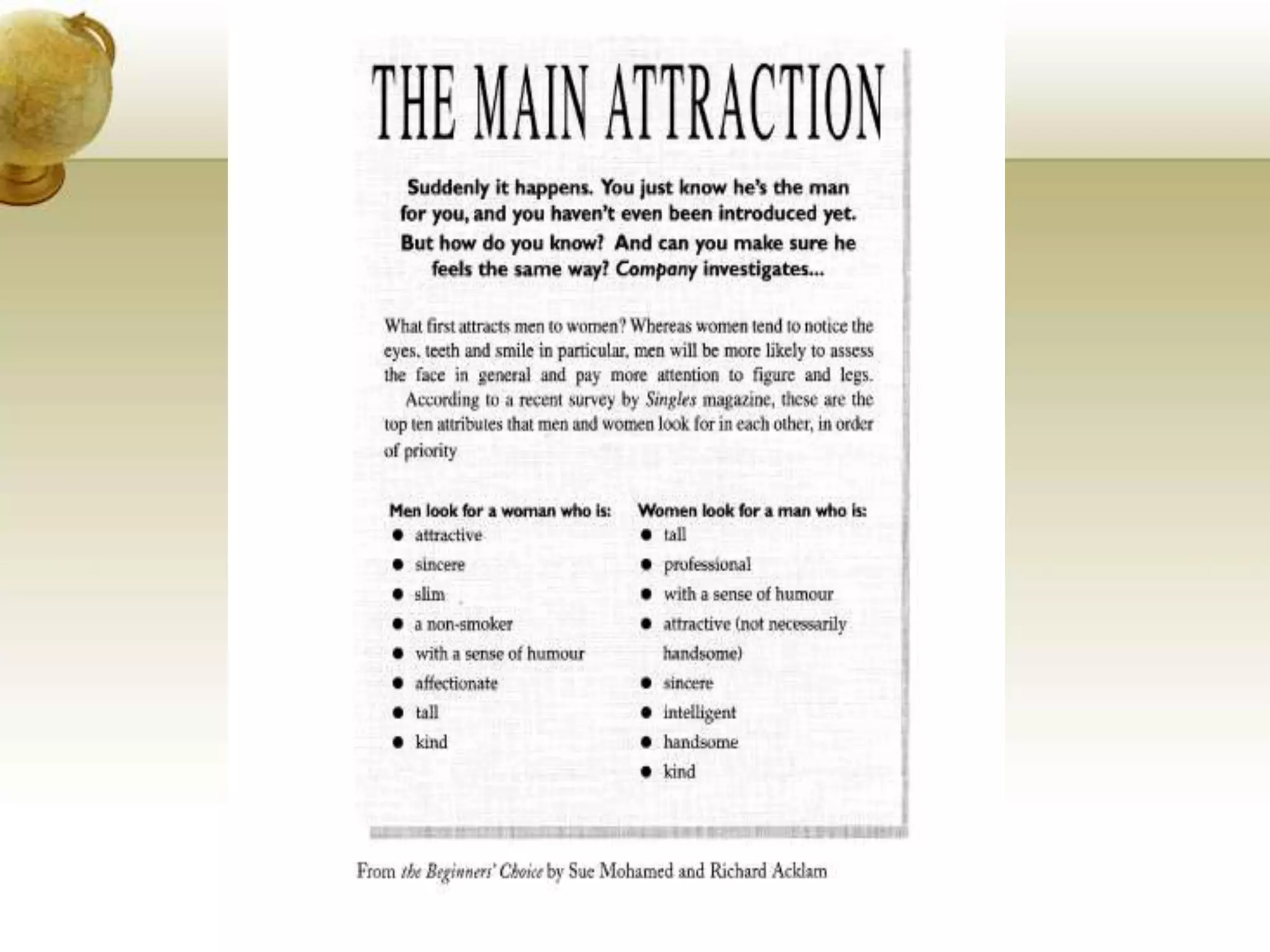
• Topic : Attractive 
• Activities : 
1. Engaged 
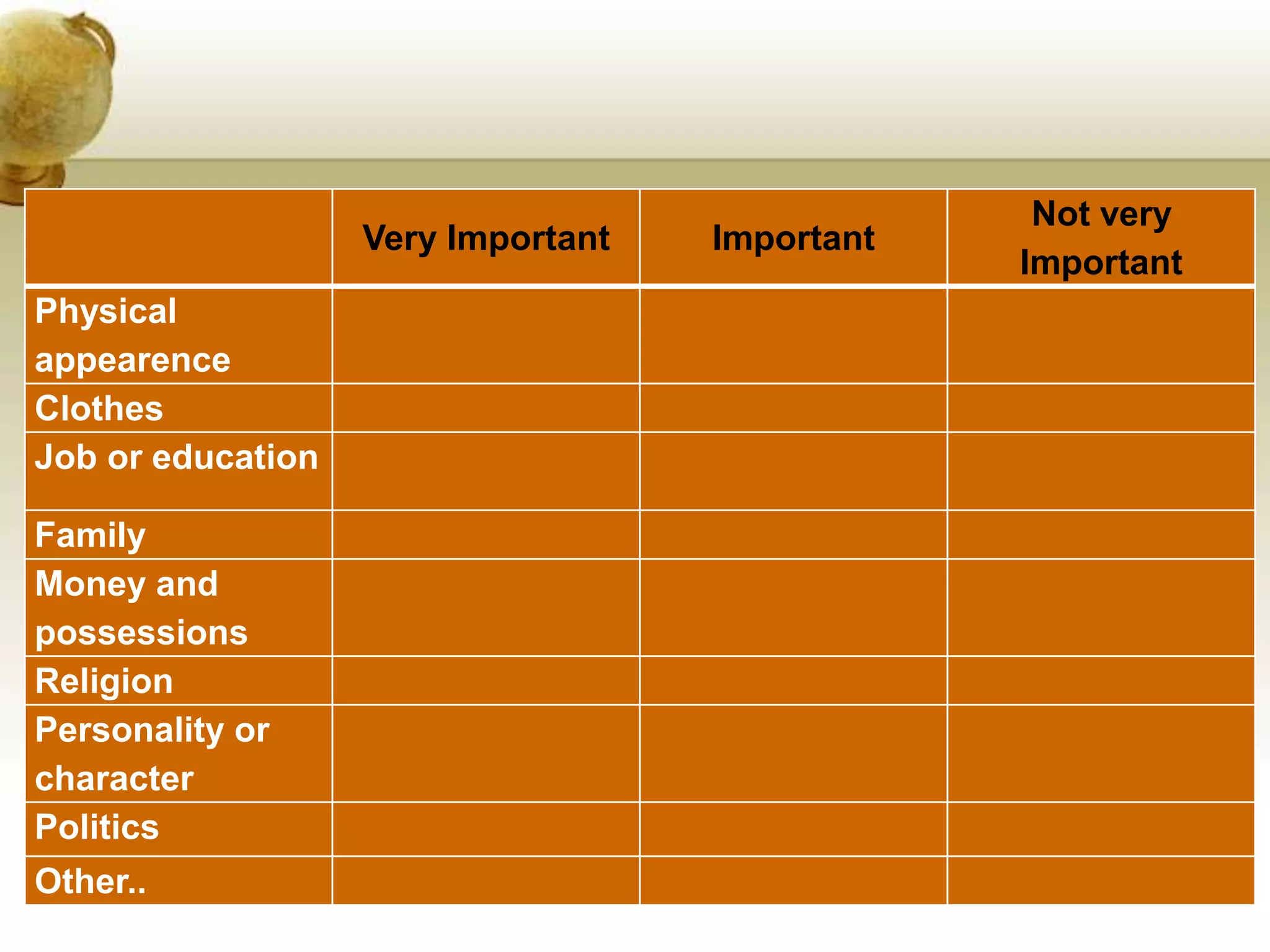
2. Activate : With students’ partner, they fill the table after reading the text.
Very Important Important 
Not very 
Important 
Physical 
appearence 
Clothes 
Job or education 
Family 
Money and 
possessions 
Religion 
Personality or 
character 
Politics 
Other..
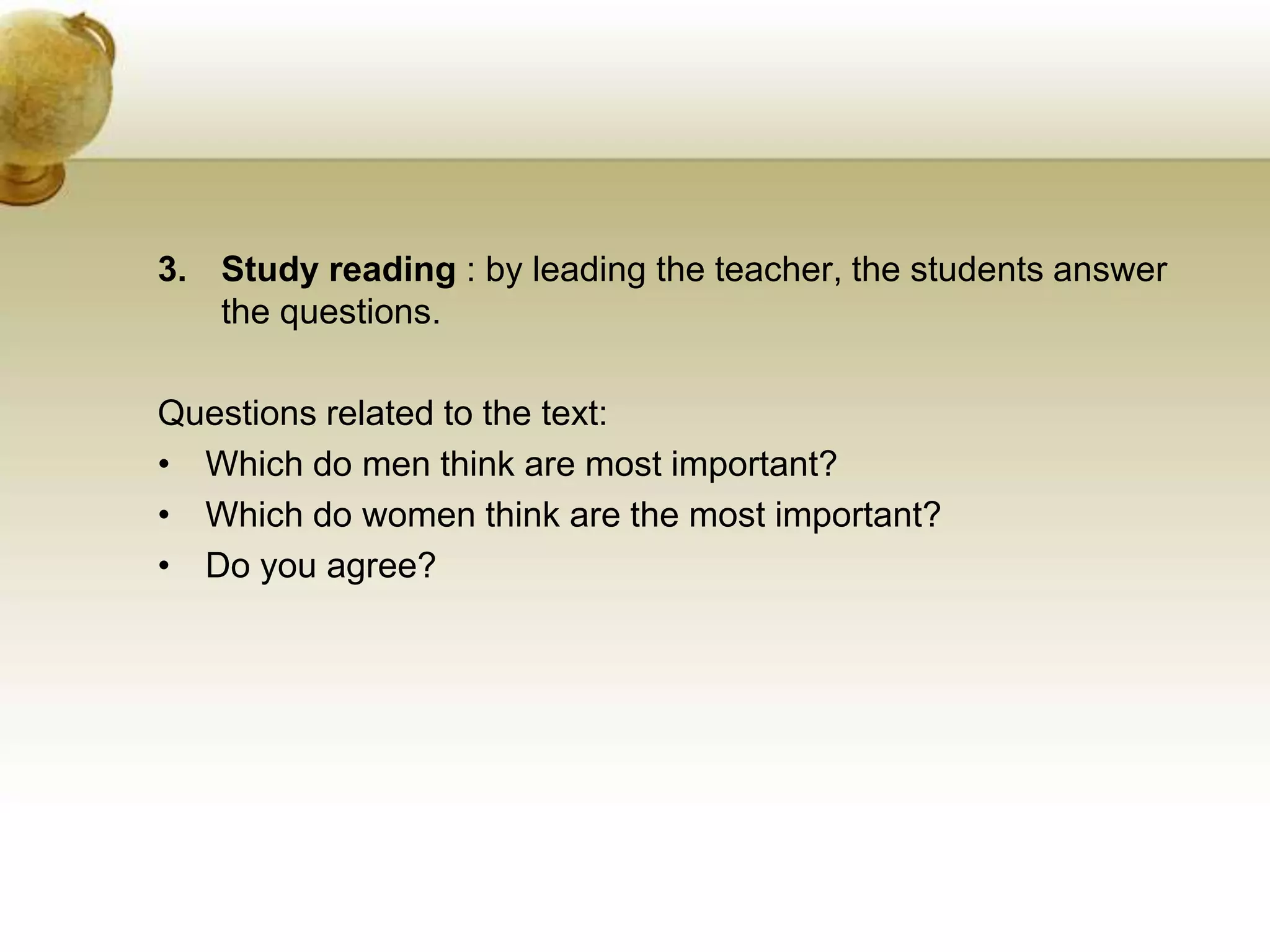
3. Study reading : by leading the teacher, the students answer 
the questions. 
Questions related to the text: 
• Which do men think are most important? 
• Which do women think are the most important? 
• Do you agree?
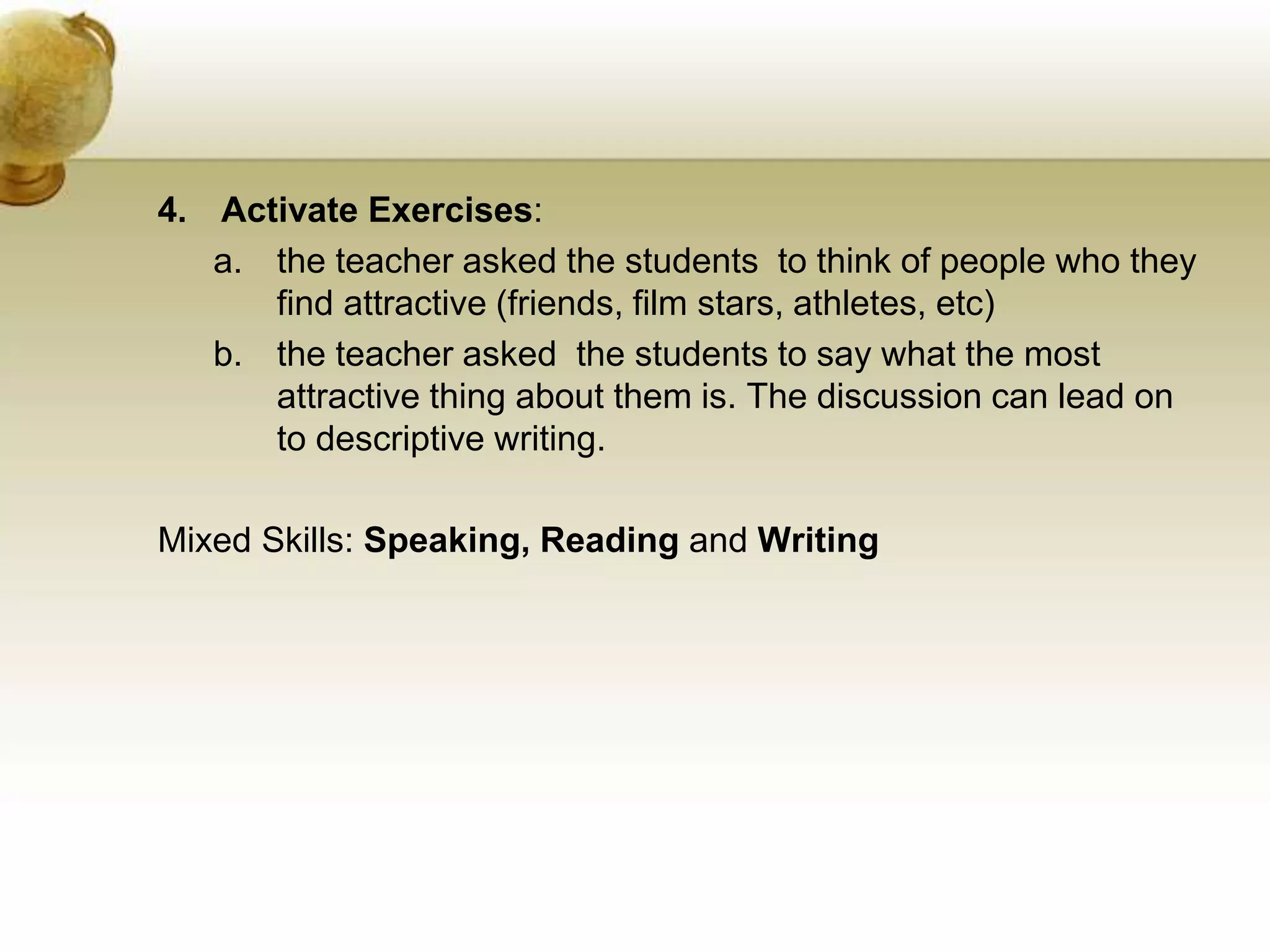
4. Activate Exercises: 
a. the teacher asked the students to think of people who they 
find attractive (friends, film stars, athletes, etc) 
b. the teacher asked the students to say what the most 
attractive thing about them is. The discussion can lead on 
to descriptive writing. 
Mixed Skills: Speaking, Reading and Writing
Example 2 
• Level : Intermediate 
• Skills : predicting, reading for gist, reading for detailed 
comprehension 
• Activities : 
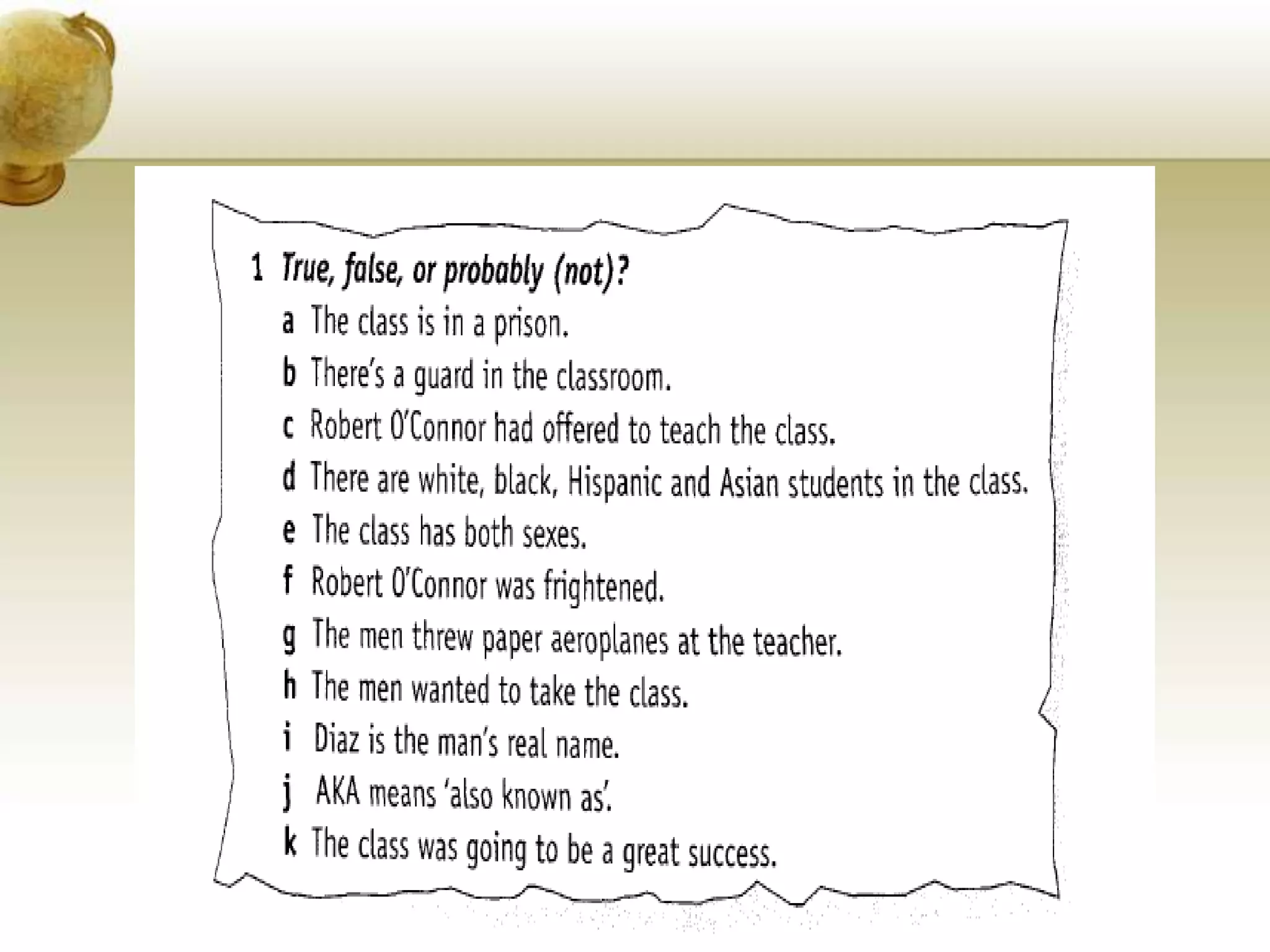
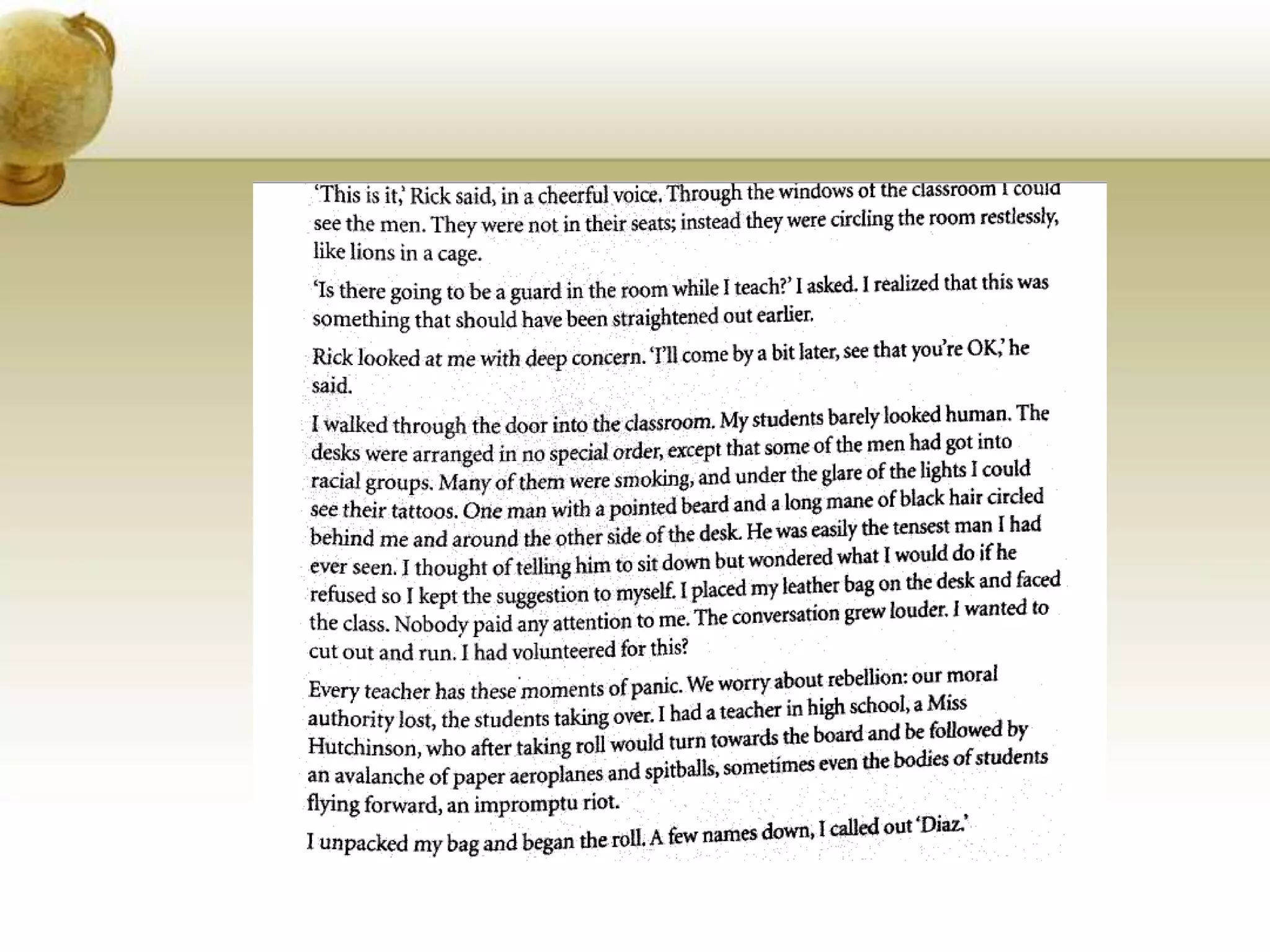
1. Enganged 
2. Activate 
3. Study Reading
4. Activate Exercises: The teacher asks the students to discuss 
the text endless 
• Mixing skills: Speaking, Listening, Reading.
CONLUSION: 
1. As teachers, we need to be involved in both extensive and 
intensive reading to get maximum benefits from students’ 
reading. 
2. It is important to note that these strategies to teach readings 
should not be considered as being in opposition, but 
simultaneously both serve different but complementary 
purposes. 
3. The purpose of reading sequences is involving students in 
more than one language skill such as speaking, reading, and 
listening, speaking, and writing.
References: 
Brown, D. H. 2007. Teaching by Principles. An 
Interactive Approach to Language Pedagogy. San 
Francisco: Addison Wesly Longman, Inc. 
Harmer, J. 2007. How to Teach English. Edinburgh 
Gate: Pearson Education Limited. 
Harmer, J. 2007. The Practice of English Language 
Teaching. Edinburgh Gate: Pearson Education 
Limited. 
Richards, J. C and Renandya, W. A. 2002. 
Methodology in Language Teaching. an Anthology of 
Current Practice. Cambridge: Cambridge University 
Press.
Teaching Reading Extensive vs intensive reading, and reading sequence

Teaching Reading Extensive vs intensive reading, and reading sequence

  • 1.
    TEACHING READING Extensivevs Intensive Reading Reading Sequences Presented by: Group 3 Areta Puspa 140221807130 Muhammad Hidayat 140221807305 Rizky Amelia 140221807915 T E F L Graduate Program in English Language Teaching State University of Malang 2014
  • 2.
    OUTLINE 1. DEFINITION TEACHING READING 2. TYPES OF READING 3. ROLES OF TEACHER 5. READING SEQUENCES 4. ASPECTS (MICRO & MACRO)
  • 3.
    1. Definition ExtensiveReading Rapid reading of large quantities of material or longer reading for general understanding (Carrell and Carson, 1997 in Richards and Renandya 2002). a lifelong reading habit, enjoyment and general reading skills. Out of the course Intensive Reading Reading in detail with specific learning aims and tasks (Brown, 2007). detailed meaning, developing reading skills vocabulary and grammar knowledge. In the course Definition Purpose Place & time
  • 4.
    2. Types ofReading Differentiation between extensive and intensive reading: Extensive Reading: 1. Long texts/ books. 2. Helps students to develop reading fluency. 3. General understanding. 4. What is being read. Intensive Reading: 1. Short texts. 2. Helps students to develop reading skills, vocabulary and grammar knowledge. 3. Detailed meaning from the text. 4. Linguistics components.
  • 6.
    3. Roles ofTeacher Extensive Reading 1. Promotor 2. Teacher persuades students 3. Organizer 4. Teacher monitors students’ reading Intensive Reading 1. Organizer 2. Observer 3. Feedback-organizer 4. Prompter
  • 7.
    4. Aspects (Microand Macro Skills) Micro-skills 1. Discriminate among the distinctive graphemes and orthographic patterns 2. Retain chunks of language of different lengths in short-term memory. 3. Process writing at an efficient rate of speed. 4. Recognize a core of words. 5. Recognize grammatical word classes patterns, rules, and elliptical forms. 6. Recognize that a particular meaning may be expressed in different grammatical forms. Macro-skills 7. Recognize cohesive devices in written discourse and their role. 8. Recognize the rhetorical forms of written discourse. 9. Recognize the communicative functions of written texts. 10. Infer context that is not explicit by using background knowledge. 11. Infer links and connections between events. 12. Distinguish between literal and implied meanings. 13. Detect culturally specific references and interpret them. 14. Develop and use a battery of reading strategies.
  • 8.
    5. Reading Sequences •Reading sequences involve more than one language skill. •The used of reading sequences is for the students practice specific skills, such as skimming and scanning. E S A E = Engaged Activity S = Study Reading A = Activate
  • 9.
    Example of ReadingSequences Example 1 • Level : Elementary • Skills : predicting, reading for gist, reading for detailed. • Topic : Attractive • Activities : 1. Engaged 2. Activate : With students’ partner, they fill the table after reading the text.
  • 10.
    Very Important Important Not very Important Physical appearence Clothes Job or education Family Money and possessions Religion Personality or character Politics Other..
  • 12.
    3. Study reading: by leading the teacher, the students answer the questions. Questions related to the text: • Which do men think are most important? • Which do women think are the most important? • Do you agree?
  • 13.
    4. Activate Exercises: a. the teacher asked the students to think of people who they find attractive (friends, film stars, athletes, etc) b. the teacher asked the students to say what the most attractive thing about them is. The discussion can lead on to descriptive writing. Mixed Skills: Speaking, Reading and Writing
  • 14.
    Example 2 •Level : Intermediate • Skills : predicting, reading for gist, reading for detailed comprehension • Activities : 1. Enganged 2. Activate 3. Study Reading
  • 17.
    4. Activate Exercises:The teacher asks the students to discuss the text endless • Mixing skills: Speaking, Listening, Reading.
  • 18.
    CONLUSION: 1. Asteachers, we need to be involved in both extensive and intensive reading to get maximum benefits from students’ reading. 2. It is important to note that these strategies to teach readings should not be considered as being in opposition, but simultaneously both serve different but complementary purposes. 3. The purpose of reading sequences is involving students in more than one language skill such as speaking, reading, and listening, speaking, and writing.
  • 19.
    References: Brown, D.H. 2007. Teaching by Principles. An Interactive Approach to Language Pedagogy. San Francisco: Addison Wesly Longman, Inc. Harmer, J. 2007. How to Teach English. Edinburgh Gate: Pearson Education Limited. Harmer, J. 2007. The Practice of English Language Teaching. Edinburgh Gate: Pearson Education Limited. Richards, J. C and Renandya, W. A. 2002. Methodology in Language Teaching. an Anthology of Current Practice. Cambridge: Cambridge University Press.

Editor's Notes

  • #3 插入您所在国家/地区的地图。