





CONCEPT OF LANGUAGE 
LEARNING 
15. Development of a Psychological Perspective 
in Language Teaching: A Selective Review 
Stern, H.H. 1983. Foundation Concepts of 
Language Teaching. London: Oxford 
University Press. 
Presented by: 
Rizky Amelia 
(140221807915)
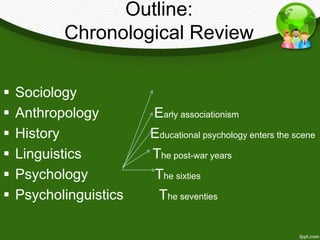
Outline: 
Chronological Review 
 Sociology 
 Anthropology Early associationism 
 History Educational psychology enters the scene 
 Linguistics The post-war years 
 Psychology The sixties 
 Psycholinguistics The seventies
a. Early Associationism 
Sweet interprets language learning in terms of 
associationism 
He derived six principles of associative learning. 
Sweet and Palmer did not ignore the psychology 
of the learner and language learning.
b. Educational psychology enters the scene 
Several studies during the interwar years: 
Huse (1931) Critical work 
Findlay (1932) Modest beginning 
Brachfeld (1936) Learning language and psychology 
Stengel (1939) Emotional resistences in adults learners
c. The post-war years: 
turning to psychology for answers 
Scott (1946): psychology is supportive 
Carroll (1953): Language is a system of well-learned 
habitual responses. 
Psychological issues: 
1950s: optimal age for second language learner 
1960s: second language learning 
Did not develop, said to be oversimplified
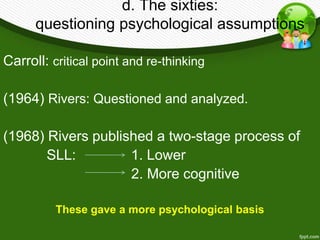
d. The sixties: 
questioning psychological assumptions 
Carroll: critical point and re-thinking 
(1964) Rivers: Questioned and analyzed. 
(1968) Rivers published a two-stage process of 
SLL: 1. Lower 
2. More cognitive 
These gave a more psychological basis
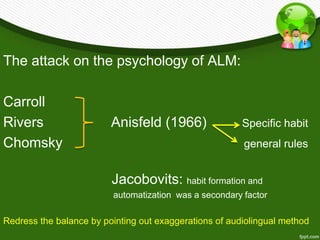
The attack on the psychology of ALM: 
Carroll 
Rivers Anisfeld (1966) Specific habit 
Chomsky general rules 
Jacobovits: habit formation and 
automatization was a secondary factor 
Redress the balance by pointing out exaggerations of audiolingual method
e. The seventies: 
fresh theorizing and empirical reserach 
Inconclusive arguments and debates 
Research on what was needed 
Annual meeting 
Outstanding enquiry 
Serious attempts to study through the debate to advance
Conclusion: 
1. Teaching theory has been in contact with 
psychology, and more recently with 
psycholinguistics. 
2. Psychology clearly directs our attention to the 
individual person as a language user and 
language learner. 
3. The answers to the debates may be undefinitive, 
but they have given us a more differentiated 
understanding of the issues.
Conclusion: 
4. All chronological events which brought intelectual 
conflict and disorientation somehow give 
improvement concepts to psychology in language 
teaching theory. 
5. The theoretical review on this chapter makes us 
realize that it is right the once a task is done, it 
does not mean that it is already complete.
Reference: 
Stern, H.H. 1983. Foundation Concepts of 
Language Teaching. London: Oxford 
University Press.
Development of a Psychological Perspective in Language Teaching: A Selective ReviewPowerpoint chapter 15 foundation

Development of a Psychological Perspective in Language Teaching: A Selective ReviewPowerpoint chapter 15 foundation

  • 1.
    CONCEPT OF LANGUAGE LEARNING 15. Development of a Psychological Perspective in Language Teaching: A Selective Review Stern, H.H. 1983. Foundation Concepts of Language Teaching. London: Oxford University Press. Presented by: Rizky Amelia (140221807915)
  • 2.
    Outline: Chronological Review  Sociology  Anthropology Early associationism  History Educational psychology enters the scene  Linguistics The post-war years  Psychology The sixties  Psycholinguistics The seventies
  • 3.
    a. Early Associationism Sweet interprets language learning in terms of associationism He derived six principles of associative learning. Sweet and Palmer did not ignore the psychology of the learner and language learning.
  • 4.
    b. Educational psychologyenters the scene Several studies during the interwar years: Huse (1931) Critical work Findlay (1932) Modest beginning Brachfeld (1936) Learning language and psychology Stengel (1939) Emotional resistences in adults learners
  • 5.
    c. The post-waryears: turning to psychology for answers Scott (1946): psychology is supportive Carroll (1953): Language is a system of well-learned habitual responses. Psychological issues: 1950s: optimal age for second language learner 1960s: second language learning Did not develop, said to be oversimplified
  • 6.
    d. The sixties: questioning psychological assumptions Carroll: critical point and re-thinking (1964) Rivers: Questioned and analyzed. (1968) Rivers published a two-stage process of SLL: 1. Lower 2. More cognitive These gave a more psychological basis
  • 7.
    The attack onthe psychology of ALM: Carroll Rivers Anisfeld (1966) Specific habit Chomsky general rules Jacobovits: habit formation and automatization was a secondary factor Redress the balance by pointing out exaggerations of audiolingual method
  • 8.
    e. The seventies: fresh theorizing and empirical reserach Inconclusive arguments and debates Research on what was needed Annual meeting Outstanding enquiry Serious attempts to study through the debate to advance
  • 9.
    Conclusion: 1. Teachingtheory has been in contact with psychology, and more recently with psycholinguistics. 2. Psychology clearly directs our attention to the individual person as a language user and language learner. 3. The answers to the debates may be undefinitive, but they have given us a more differentiated understanding of the issues.
  • 10.
    Conclusion: 4. Allchronological events which brought intelectual conflict and disorientation somehow give improvement concepts to psychology in language teaching theory. 5. The theoretical review on this chapter makes us realize that it is right the once a task is done, it does not mean that it is already complete.
  • 11.
    Reference: Stern, H.H.1983. Foundation Concepts of Language Teaching. London: Oxford University Press.