Dairy Cow Nutrition
Feeding ruminant animals
at different life stages
Stages of A Dairy Cow
 Calf
 Heifer
 Dry Cow
 Close-up Cow
 Lactating Cow
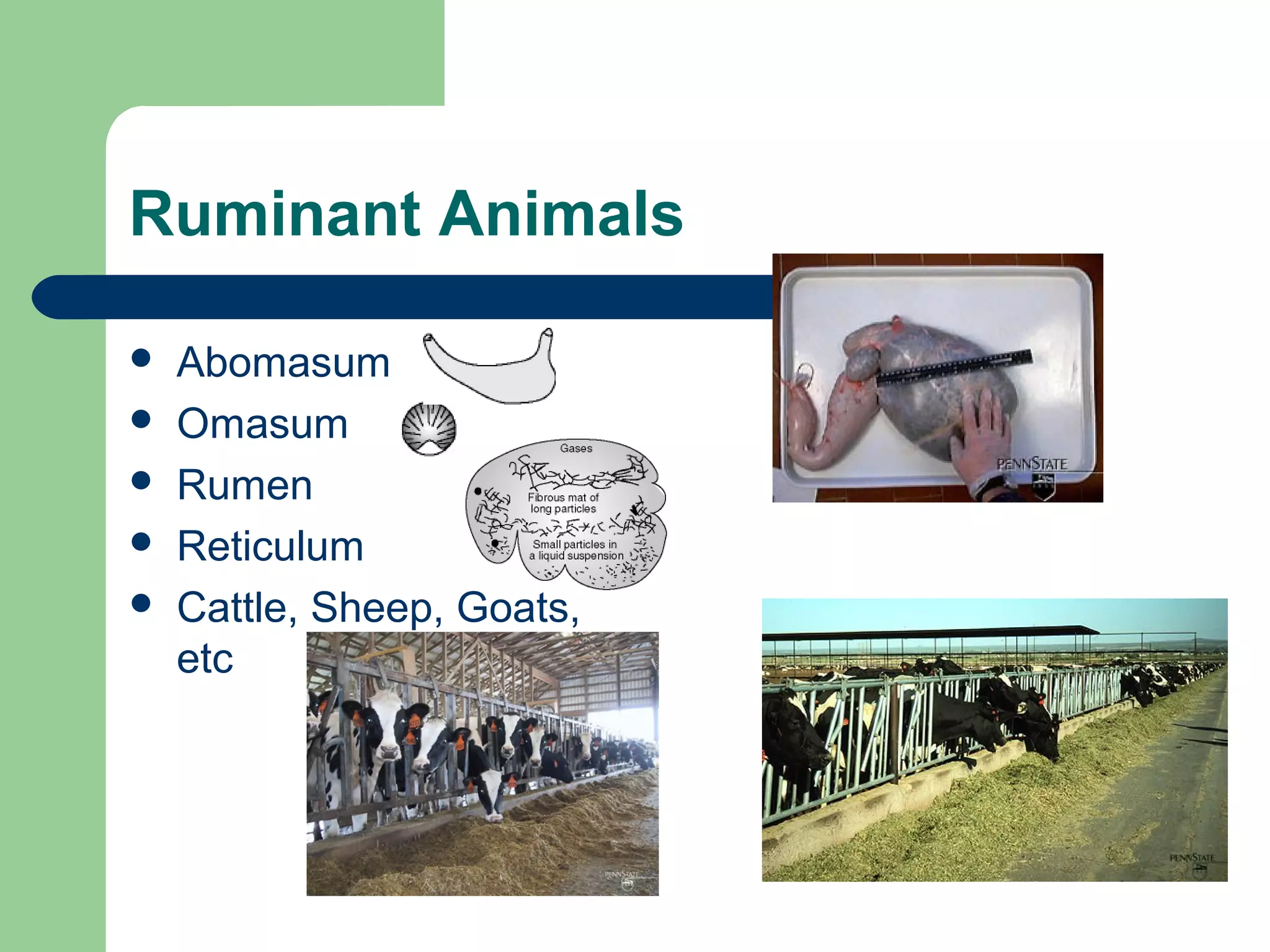
Ruminant Animals
 Abomasum
 Omasum
 Rumen
 Reticulum
 Cattle, Sheep, Goats,
etc
Digestive system
Calf Nutrition
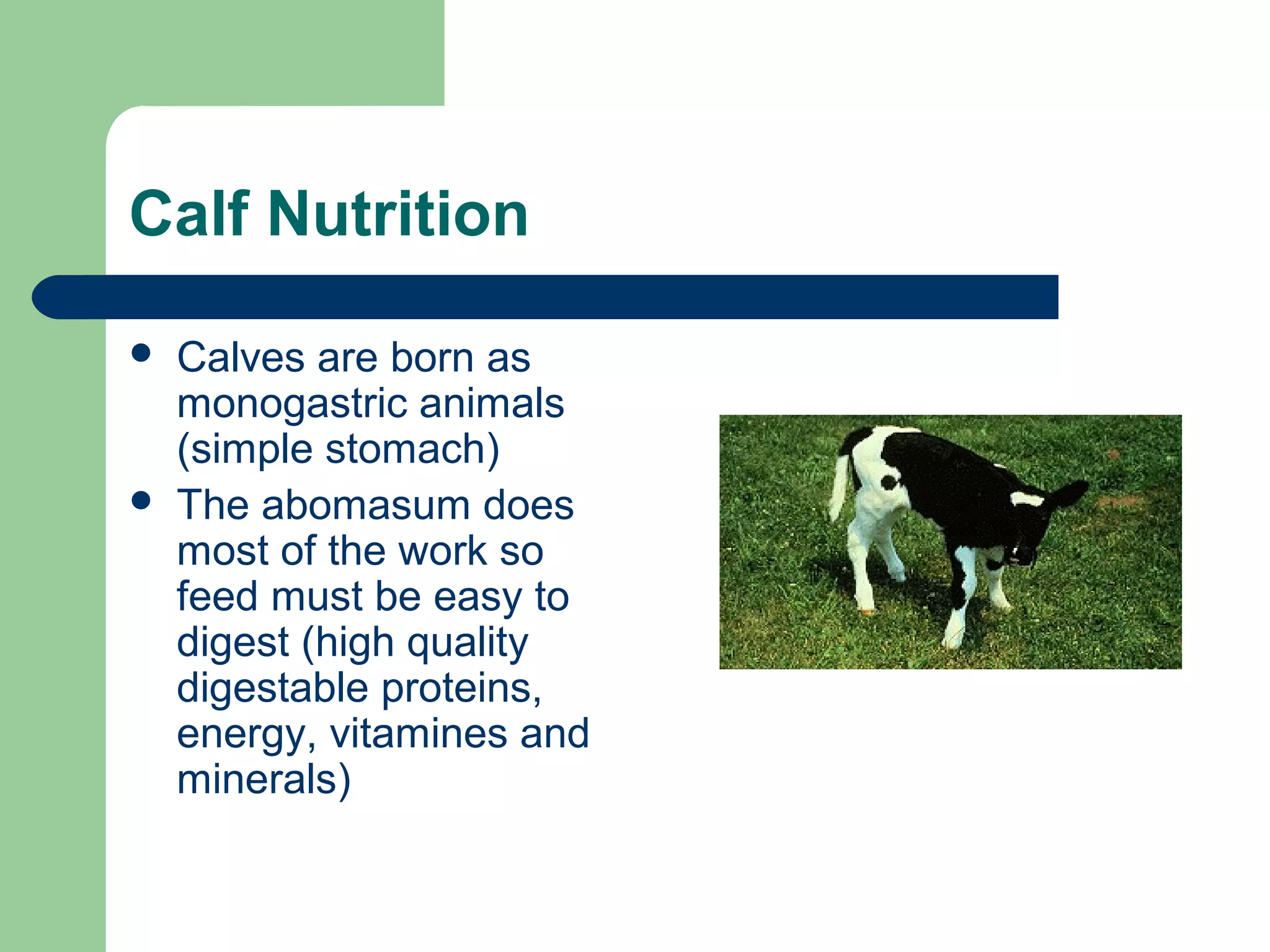
 Calves are born as
monogastric animals
(simple stomach)
 The abomasum does
most of the work so
feed must be easy to
digest (high quality
digestable proteins,
energy, vitamines and
minerals)
Calf Nutrition
 Energy is important first two
weeks because can not
digest starch, sugar or
unsaturated fats.
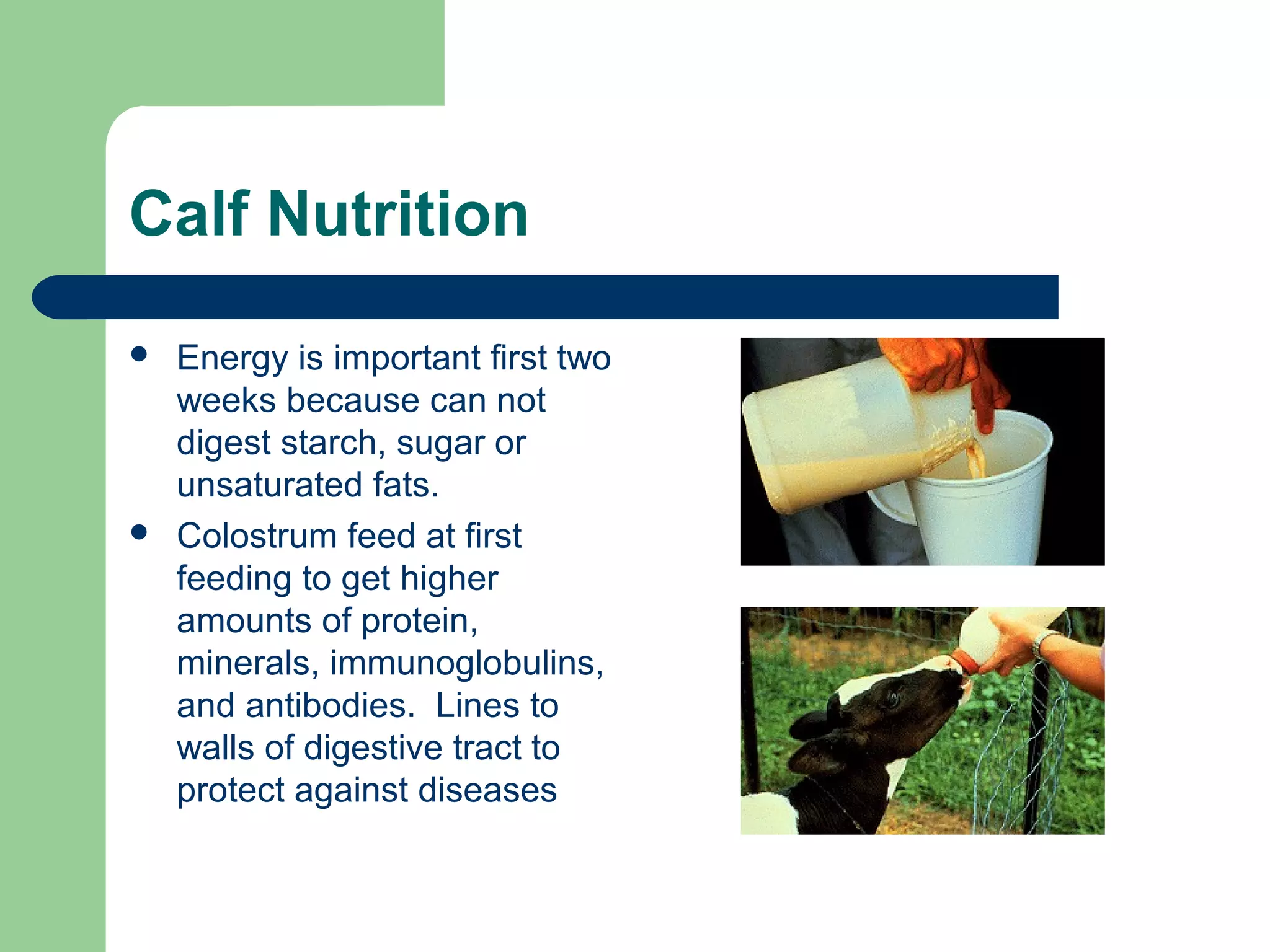
 Colostrum feed at first
feeding to get higher
amounts of protein,
minerals, immunoglobulins,
and antibodies. Lines to
walls of digestive tract to
protect against diseases
Calf Nutrition
 Grains (Dry Matter)
stimulate production of
VFAs in rumen (acetic,
propionic, butyric)
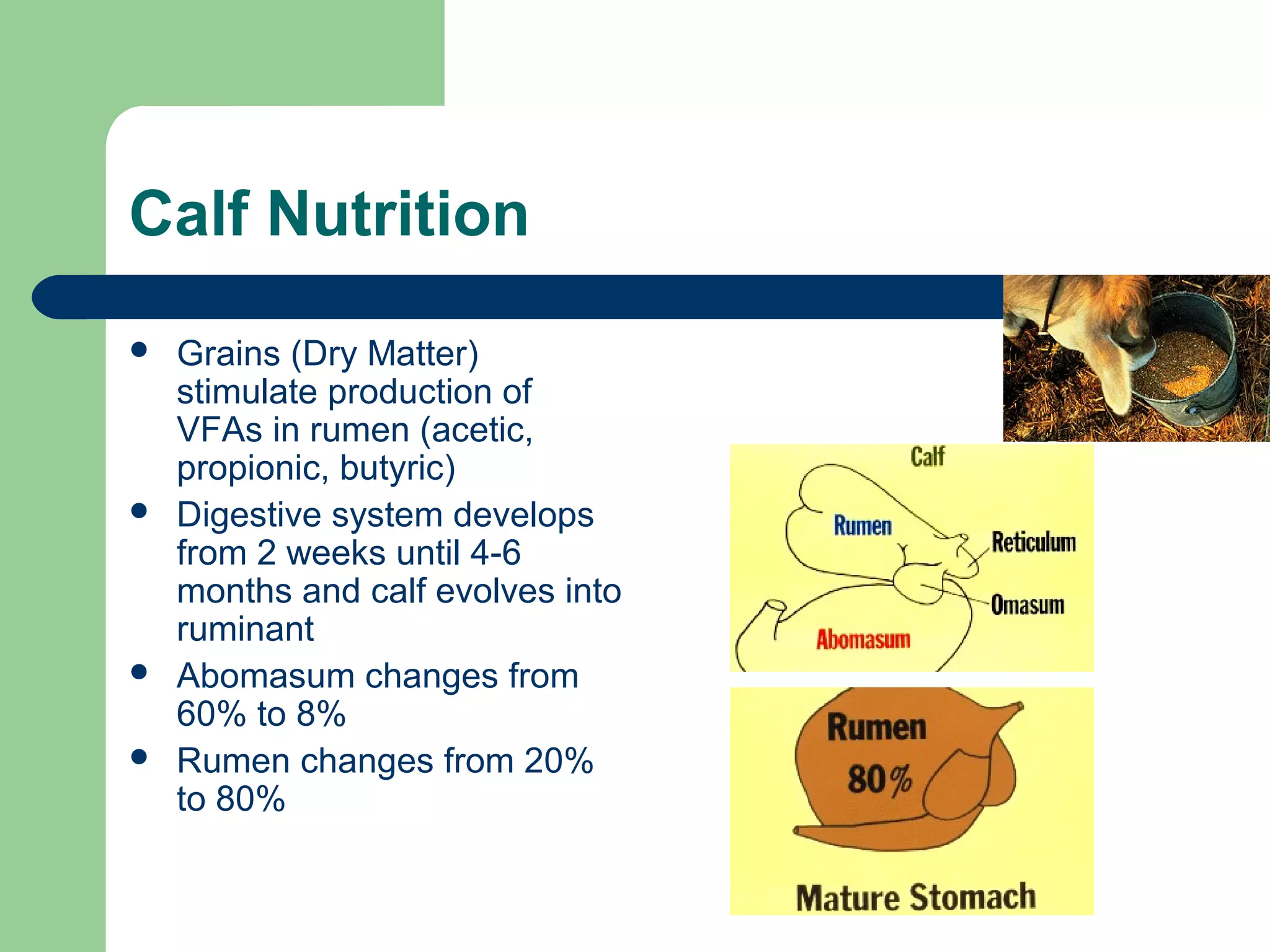
 Digestive system develops
from 2 weeks until 4-6
months and calf evolves into
ruminant
 Abomasum changes from
60% to 8%
 Rumen changes from 20%
to 80%
Heifer Nutrition
 Nutrition is important at this
time because reproduction
depends on sound, healthy
animals.
 If underfed, diseased or
have parasites then puberty
is delayed. Low energy will
lead to ovarian inactivity.
Low protein will cause
irregular or silent heats.
 30-40% of adult weight at
breeding age (13-15
months)
Heifer Nutrition
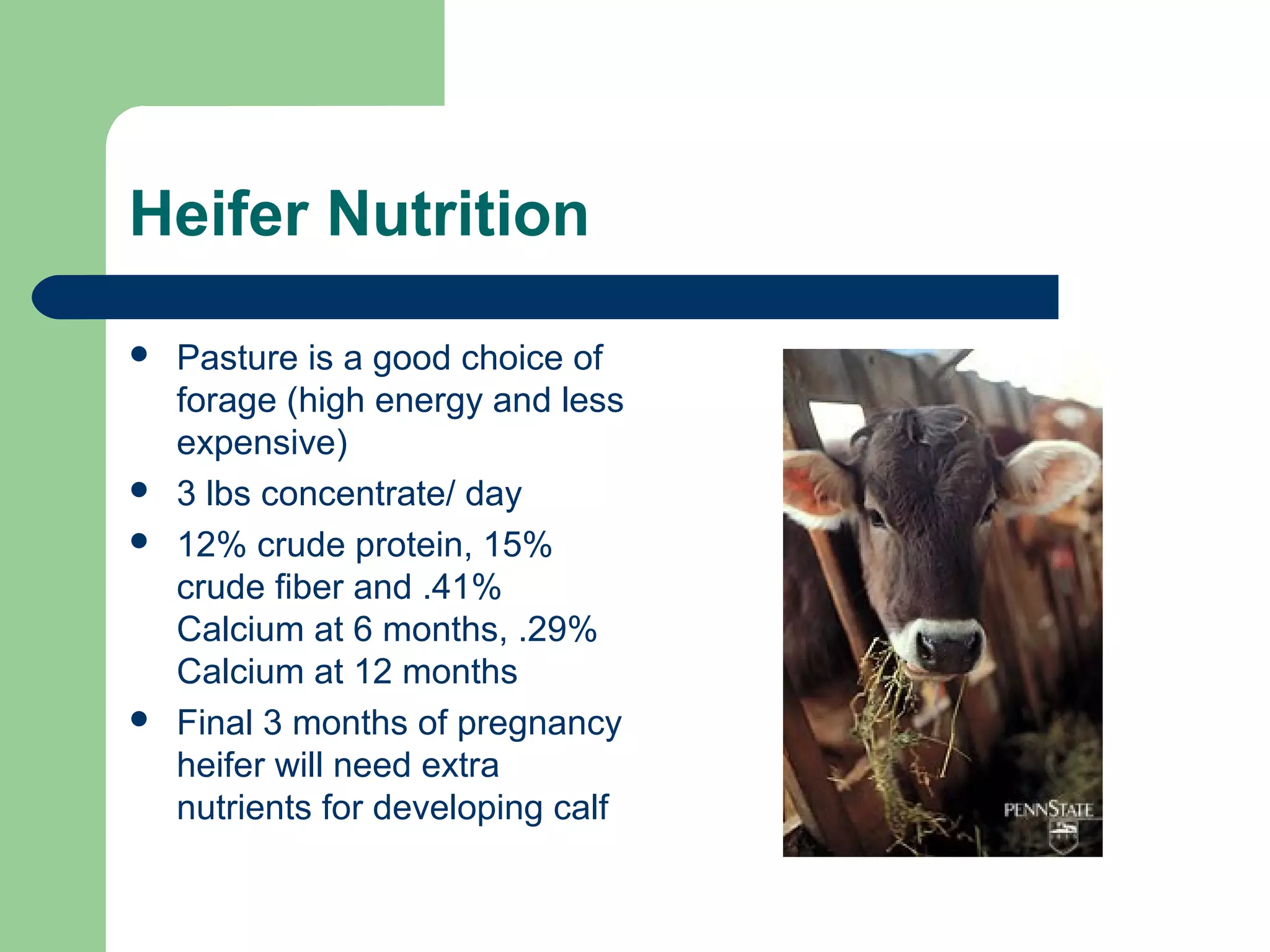
 Pasture is a good choice of
forage (high energy and less
expensive)
 3 lbs concentrate/ day
 12% crude protein, 15%
crude fiber and .41%
Calcium at 6 months, .29%
Calcium at 12 months
 Final 3 months of pregnancy
heifer will need extra
nutrients for developing calf
Dry Cow Nutrition
 Low energy diet (less expensive)
 Pasture often used
 Important for successful lactation to follow
 Restore body energy and nutrient reserves
 Want to maintain 3+ to 4- body condition
score
Close-up cows
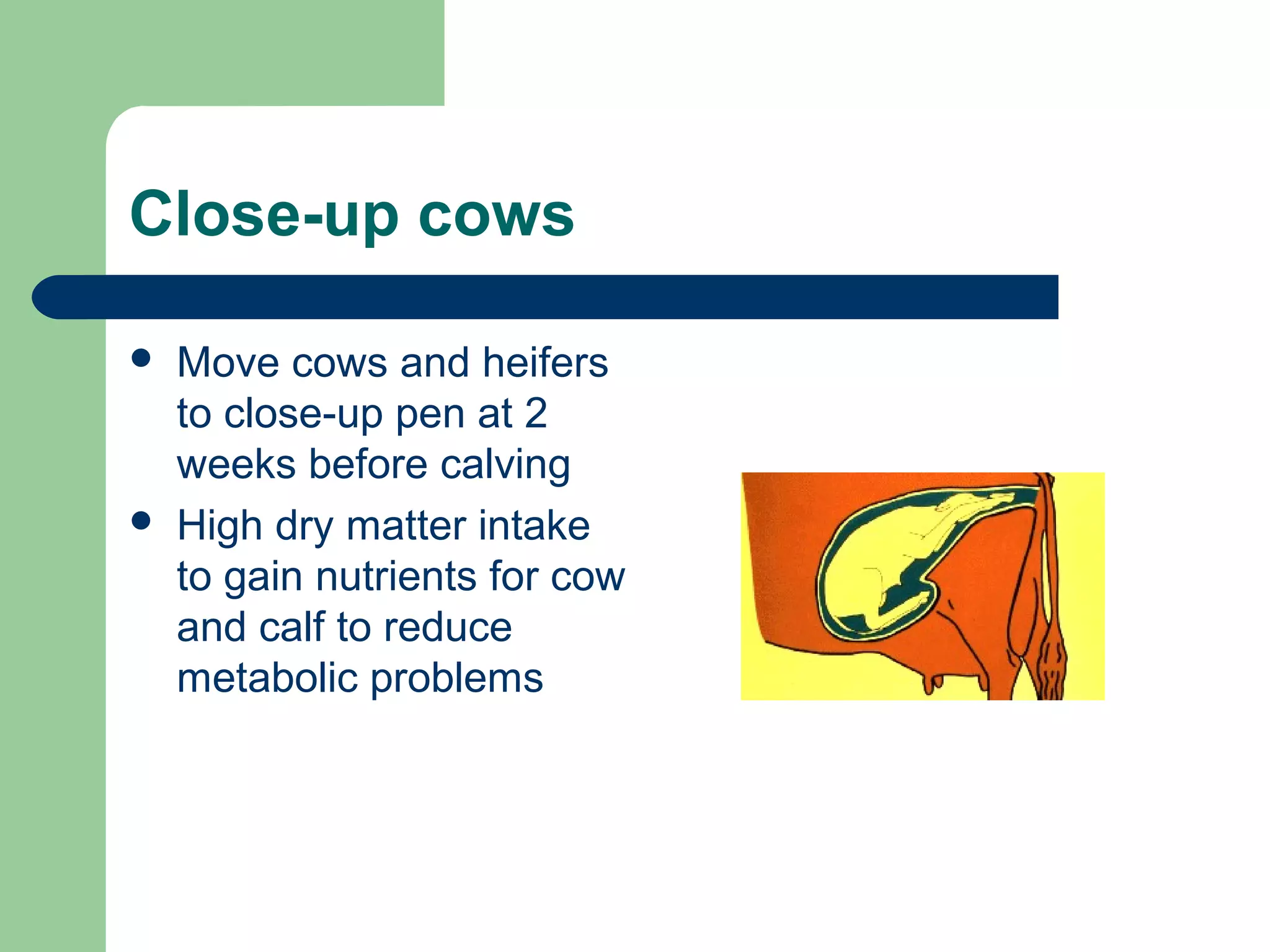
 Move cows and heifers
to close-up pen at 2
weeks before calving
 High dry matter intake
to gain nutrients for cow
and calf to reduce
metabolic problems
Close-up Cows
 Low energy with adequate
levels of minerals vitamines
and protein and watch
forage levels (<50% DM)
 Decrease metabolic
problems and maintain
condition while not lactating
Decrease Calcium to begin to
use stored Ca to prepare for
lactation changes
Lactating Cows
 Highest energy diet
(most expensive)
 Supports not only
growth, reproduction
and maintenance but
also production
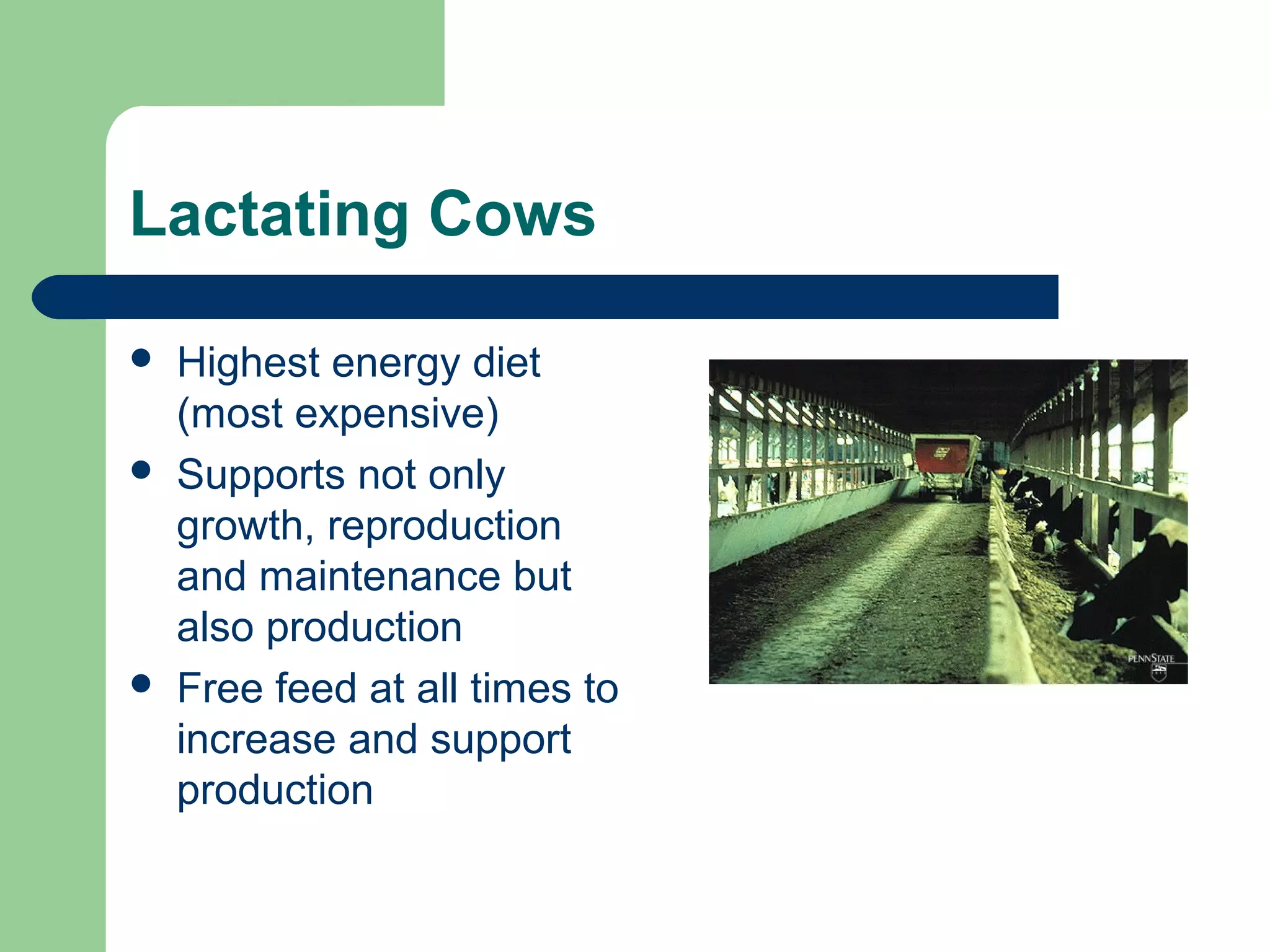
 Free feed at all times to
increase and support
production
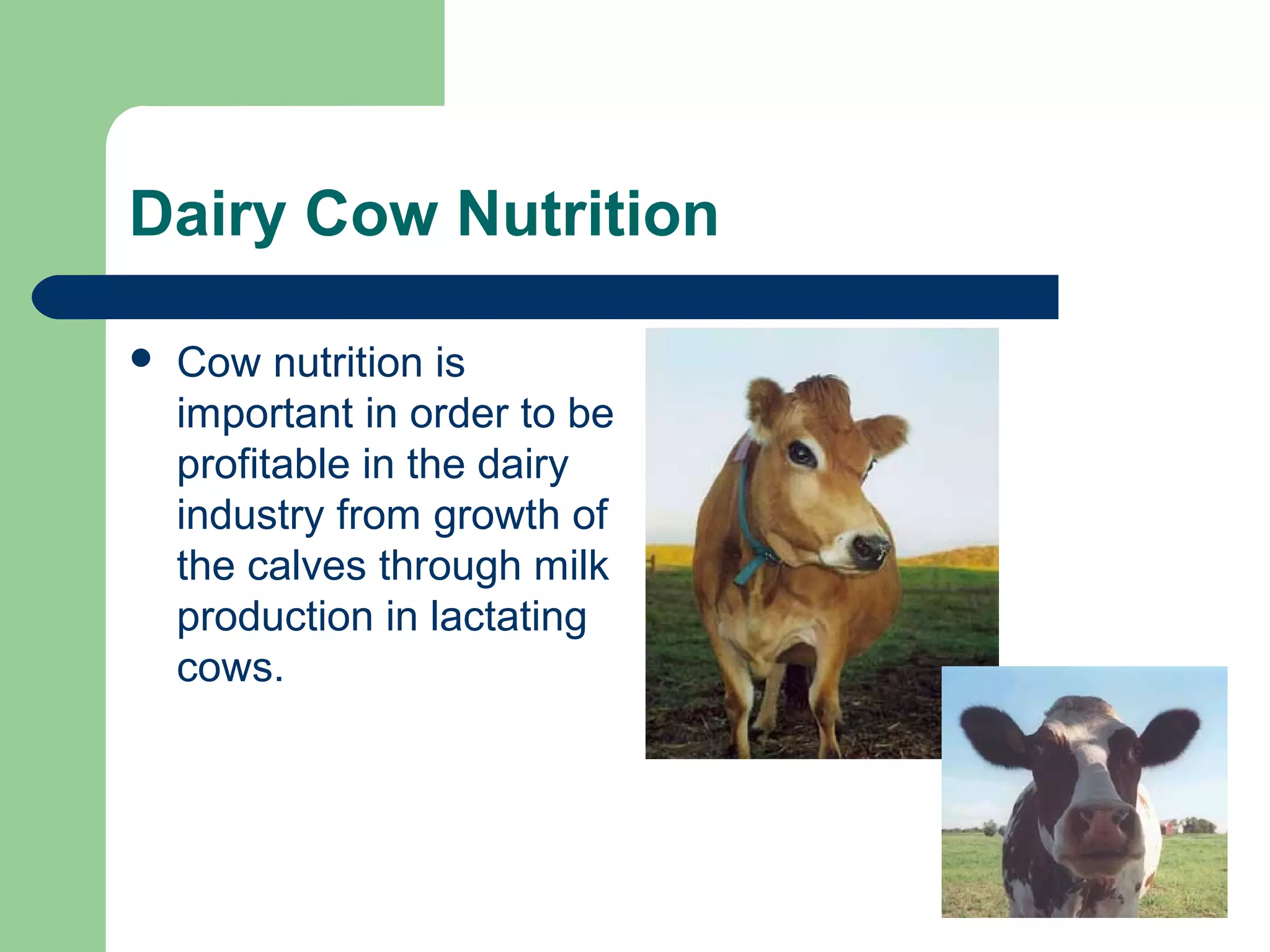
Dairy Cow Nutrition
 Cow nutrition is
important in order to be
profitable in the dairy
industry from growth of
the calves through milk
production in lactating
cows.

Dairy cow nutrition

  • 1.
    Dairy Cow Nutrition Feedingruminant animals at different life stages
  • 2.
    Stages of ADairy Cow  Calf  Heifer  Dry Cow  Close-up Cow  Lactating Cow
  • 3.
    Ruminant Animals  Abomasum Omasum  Rumen  Reticulum  Cattle, Sheep, Goats, etc
  • 4.
  • 5.
    Calf Nutrition  Calvesare born as monogastric animals (simple stomach)  The abomasum does most of the work so feed must be easy to digest (high quality digestable proteins, energy, vitamines and minerals)
  • 6.
    Calf Nutrition  Energyis important first two weeks because can not digest starch, sugar or unsaturated fats.  Colostrum feed at first feeding to get higher amounts of protein, minerals, immunoglobulins, and antibodies. Lines to walls of digestive tract to protect against diseases
  • 7.
    Calf Nutrition  Grains(Dry Matter) stimulate production of VFAs in rumen (acetic, propionic, butyric)  Digestive system develops from 2 weeks until 4-6 months and calf evolves into ruminant  Abomasum changes from 60% to 8%  Rumen changes from 20% to 80%
  • 8.
    Heifer Nutrition  Nutritionis important at this time because reproduction depends on sound, healthy animals.  If underfed, diseased or have parasites then puberty is delayed. Low energy will lead to ovarian inactivity. Low protein will cause irregular or silent heats.  30-40% of adult weight at breeding age (13-15 months)
  • 9.
    Heifer Nutrition  Pastureis a good choice of forage (high energy and less expensive)  3 lbs concentrate/ day  12% crude protein, 15% crude fiber and .41% Calcium at 6 months, .29% Calcium at 12 months  Final 3 months of pregnancy heifer will need extra nutrients for developing calf
  • 10.
    Dry Cow Nutrition Low energy diet (less expensive)  Pasture often used  Important for successful lactation to follow  Restore body energy and nutrient reserves  Want to maintain 3+ to 4- body condition score
  • 11.
    Close-up cows  Movecows and heifers to close-up pen at 2 weeks before calving  High dry matter intake to gain nutrients for cow and calf to reduce metabolic problems
  • 12.
    Close-up Cows  Lowenergy with adequate levels of minerals vitamines and protein and watch forage levels (<50% DM)  Decrease metabolic problems and maintain condition while not lactating Decrease Calcium to begin to use stored Ca to prepare for lactation changes
  • 13.
    Lactating Cows  Highestenergy diet (most expensive)  Supports not only growth, reproduction and maintenance but also production  Free feed at all times to increase and support production
  • 14.
    Dairy Cow Nutrition Cow nutrition is important in order to be profitable in the dairy industry from growth of the calves through milk production in lactating cows.