Guided by
Dr.T.Venu
Pyelonephritis
Presented by
J. Vishnu
RT/2016/604
Contents
11/15/2016Pyelonephritis2
 Introduction
 Epidemiology
 Etiology
 Pathophysiology
 Signs and symptoms
 Diagnosis
 Prevention
 Conclusion
 Reference
Introduction
11/15/2016Pyelonephritis3
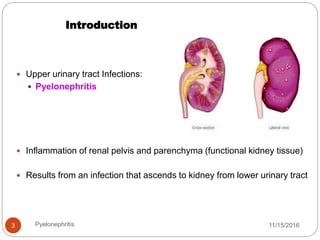
 Upper urinary tract Infections:
 Pyelonephritis
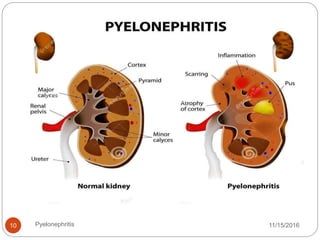
 Inflammation of renal pelvis and parenchyma (functional kidney tissue)
 Results from an infection that ascends to kidney from lower urinary tract
Epidemiology
11/15/2016Pyelonephritis4
 Pyelonephritis is significantly more common in females than in
males
 15-17 cases per 10,000 females in a year
 3-4 cases per 10,000 males per year
 Acute pyelonephritis develops in 20-30% of pregnant women
 An estimated 50 % of women report having had a UTI at some
point in their lives.
Epidemiology
11/15/2016Pyelonephritis5
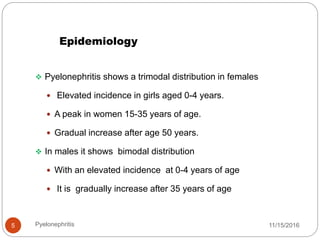
 Pyelonephritis shows a trimodal distribution in females
 Elevated incidence in girls aged 0-4 years.
 A peak in women 15-35 years of age.
 Gradual increase after age 50 years.
 In males it shows bimodal distribution
 With an elevated incidence at 0-4 years of age
 It is gradually increase after 35 years of age
Etiology
11/15/2016Pyelonephritis6
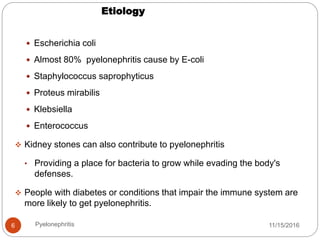
 Escherichia coli
 Almost 80% pyelonephritis cause by E-coli
 Staphylococcus saprophyticus
 Proteus mirabilis
 Klebsiella
 Enterococcus
 Kidney stones can also contribute to pyelonephritis
• Providing a place for bacteria to grow while evading the body's
defenses.
 People with diabetes or conditions that impair the immune system are
more likely to get pyelonephritis.
Pathophysiology
11/15/2016Pyelonephritis7
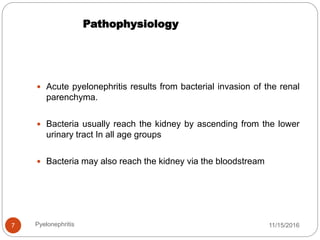
 Acute pyelonephritis results from bacterial invasion of the renal
parenchyma.
 Bacteria usually reach the kidney by ascending from the lower
urinary tract In all age groups
 Bacteria may also reach the kidney via the bloodstream
Pathophysiology
11/15/2016Pyelonephritis8
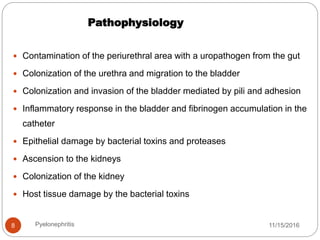
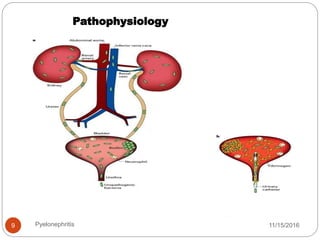
 Contamination of the periurethral area with a uropathogen from the gut
 Colonization of the urethra and migration to the bladder
 Colonization and invasion of the bladder mediated by pili and adhesion
 Inflammatory response in the bladder and fibrinogen accumulation in the
catheter
 Epithelial damage by bacterial toxins and proteases
 Ascension to the kidneys
 Colonization of the kidney
 Host tissue damage by the bacterial toxins
Pathophysiology
11/15/2016Pyelonephritis9
11/15/2016Pyelonephritis10
What happens to the kidney?
11/15/2016Pyelonephritis11
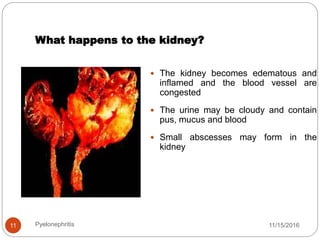
 The kidney becomes edematous and
inflamed and the blood vessel are
congested
 The urine may be cloudy and contain
pus, mucus and blood
 Small abscesses may form in the
kidney
Symptoms of Pyelonephritis
11/15/2016Pyelonephritis12
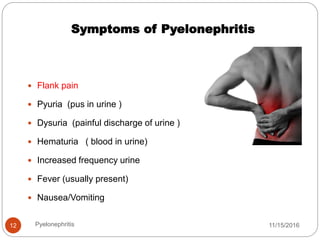
 Flank pain
 Pyuria (pus in urine )
 Dysuria (painful discharge of urine )
 Hematuria ( blood in urine)
 Increased frequency urine
 Fever (usually present)
 Nausea/Vomiting
Diagnosis pyelonephritis
11/15/2016Pyelonephritis13
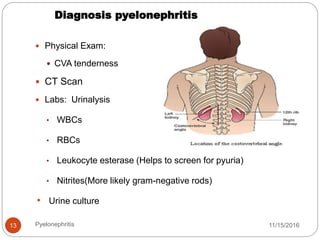
 Physical Exam:
 CVA tenderness
 CT Scan
 Labs: Urinalysis
• WBCs
• RBCs
• Leukocyte esterase (Helps to screen for pyuria)
• Nitrites(More likely gram-negative rods)
• Urine culture
Prevention
11/15/2016Pyelonephritis14
 Increase fluid intake to at least 6- 8 glasses per day to maintain
bladder hygiene.
 Personal hygiene
 Women should avoid prolonged sitting in wet clothes
 Do not postpone urination when feel the urge to urinate
 Empty your bladder completely when urinate
Conclusion
11/15/2016Pyelonephritis15
 It is a most common disease for females of 15-35 year age group
 It is mainly caused by the bacterial infection
 Biggest bugs for Pyelonephritis are E. coli (80% )
 It is preventable disease
Reference
11/15/2016Pyelonephritis16
 Czaja CA, Scholes D, Hooton TM, Stamm WE. Population-based
epidemiologic analysis of acute pyelonephritis. Clin Infect Dis. 2007 , 273-
80.
 Ramakrishnan K, Scheid DC. Diagnosis and management of acute
pyelonephritis in adults. Am Fam Physician. 2005 ,933-42.
 Craig WD, Wagner BJ, Travis MD. Pyelonephritis: radiologic-pathologic
review. Radiographics.2008 ,255-77.
 Johnson PT, Horton KM, Fishman EK. Optimizing detectability of renal
pathology with MDCT: protocols, pearls, and pitfalls.2010;101-12.
11/15/2016Pyelonephritis17

pyelonephirits

  • 1.
  • 2.
    Contents 11/15/2016Pyelonephritis2  Introduction  Epidemiology Etiology  Pathophysiology  Signs and symptoms  Diagnosis  Prevention  Conclusion  Reference
  • 3.
    Introduction 11/15/2016Pyelonephritis3  Upper urinarytract Infections:  Pyelonephritis  Inflammation of renal pelvis and parenchyma (functional kidney tissue)  Results from an infection that ascends to kidney from lower urinary tract
  • 4.
    Epidemiology 11/15/2016Pyelonephritis4  Pyelonephritis issignificantly more common in females than in males  15-17 cases per 10,000 females in a year  3-4 cases per 10,000 males per year  Acute pyelonephritis develops in 20-30% of pregnant women  An estimated 50 % of women report having had a UTI at some point in their lives.
  • 5.
    Epidemiology 11/15/2016Pyelonephritis5  Pyelonephritis showsa trimodal distribution in females  Elevated incidence in girls aged 0-4 years.  A peak in women 15-35 years of age.  Gradual increase after age 50 years.  In males it shows bimodal distribution  With an elevated incidence at 0-4 years of age  It is gradually increase after 35 years of age
  • 6.
    Etiology 11/15/2016Pyelonephritis6  Escherichia coli Almost 80% pyelonephritis cause by E-coli  Staphylococcus saprophyticus  Proteus mirabilis  Klebsiella  Enterococcus  Kidney stones can also contribute to pyelonephritis • Providing a place for bacteria to grow while evading the body's defenses.  People with diabetes or conditions that impair the immune system are more likely to get pyelonephritis.
  • 7.
    Pathophysiology 11/15/2016Pyelonephritis7  Acute pyelonephritisresults from bacterial invasion of the renal parenchyma.  Bacteria usually reach the kidney by ascending from the lower urinary tract In all age groups  Bacteria may also reach the kidney via the bloodstream
  • 8.
    Pathophysiology 11/15/2016Pyelonephritis8  Contamination ofthe periurethral area with a uropathogen from the gut  Colonization of the urethra and migration to the bladder  Colonization and invasion of the bladder mediated by pili and adhesion  Inflammatory response in the bladder and fibrinogen accumulation in the catheter  Epithelial damage by bacterial toxins and proteases  Ascension to the kidneys  Colonization of the kidney  Host tissue damage by the bacterial toxins
  • 9.
  • 10.
  • 11.
    What happens tothe kidney? 11/15/2016Pyelonephritis11  The kidney becomes edematous and inflamed and the blood vessel are congested  The urine may be cloudy and contain pus, mucus and blood  Small abscesses may form in the kidney
  • 12.
    Symptoms of Pyelonephritis 11/15/2016Pyelonephritis12 Flank pain  Pyuria (pus in urine )  Dysuria (painful discharge of urine )  Hematuria ( blood in urine)  Increased frequency urine  Fever (usually present)  Nausea/Vomiting
  • 13.
    Diagnosis pyelonephritis 11/15/2016Pyelonephritis13  PhysicalExam:  CVA tenderness  CT Scan  Labs: Urinalysis • WBCs • RBCs • Leukocyte esterase (Helps to screen for pyuria) • Nitrites(More likely gram-negative rods) • Urine culture
  • 14.
    Prevention 11/15/2016Pyelonephritis14  Increase fluidintake to at least 6- 8 glasses per day to maintain bladder hygiene.  Personal hygiene  Women should avoid prolonged sitting in wet clothes  Do not postpone urination when feel the urge to urinate  Empty your bladder completely when urinate
  • 15.
    Conclusion 11/15/2016Pyelonephritis15  It isa most common disease for females of 15-35 year age group  It is mainly caused by the bacterial infection  Biggest bugs for Pyelonephritis are E. coli (80% )  It is preventable disease
  • 16.
    Reference 11/15/2016Pyelonephritis16  Czaja CA,Scholes D, Hooton TM, Stamm WE. Population-based epidemiologic analysis of acute pyelonephritis. Clin Infect Dis. 2007 , 273- 80.  Ramakrishnan K, Scheid DC. Diagnosis and management of acute pyelonephritis in adults. Am Fam Physician. 2005 ,933-42.  Craig WD, Wagner BJ, Travis MD. Pyelonephritis: radiologic-pathologic review. Radiographics.2008 ,255-77.  Johnson PT, Horton KM, Fishman EK. Optimizing detectability of renal pathology with MDCT: protocols, pearls, and pitfalls.2010;101-12.
  • 17.