PRESENTED BY: SONIA DAGAR
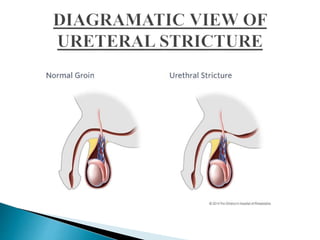
 A urethral stricture is characterized by a narrowing of
the urethral lumen, causing functional obstruction.
 Most common cause of urethral stricture is
ureteropelvic junction (UPJ) obstruction, which is
characterized by a congenital or acquired narrowing
at the level of UPJ.
 After treatment for another urological condition,
pelvic radiation therapy or urinary diversion surgery
may develop ureteral stricture.
 External traumatic injury can cause strictures.
 In children, congenital anomalies may result in
strictures.
 It may occur after passage of kidney stones or as
result of certain cancers.
 pelvic fractures
 catheter insertion
 radiation
 surgery performed on the prostate
 benign prostatic hyperplasia
 a tumor located in close proximity to the urethra
 untreated or repetitive urinary tract infections
 the sexually transmitted infections (STIs) gonorrhea
or chlamydia.
1) Iatrogenic: such as those caused by catheterization,
instrumentation, and prior hypospadias repair.
2) Infectious or inflammatory: caused by
gonorrhoea or lichen sclerosis.
3) Traumatic stricture: including
straddle injuries or pelvic fractures
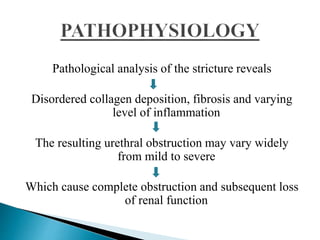
Pathological analysis of the stricture reveals
Disordered collagen deposition, fibrosis and varying
level of inflammation
The resulting urethral obstruction may vary widely
from mild to severe
Which cause complete obstruction and subsequent loss
of renal function
 Blood in the semen
 Bloody or dark urine
 Decreased urine output
 Decreased urinary stream
 Difficulty urinating
 Discharge from the urethra
 Frequent or urgent urination
 Urinary retention
 Distended (enlarge) bladder
 Incontinence
 Painful urination (dysuria)
 Pain in the lower abdomen
 Pelvic pain
 Slow urine stream
 Spraying of urine stream
 Enlarged or tender lymph nodes in the groin area
 Enlarged or tender prostate
 Hardness on the under surface of the penis
 Redness or swelling of the penis
 A detailed patient history and physical examination
 Urinalysis
 Urine culture and sensitivities
 Serum electrolyte with serum blood urea nitrogen and
creatinine
 Ureteroscopy
 Renal ultrasonography
 Computed tomography
 Interavenous pyelography
 Retrograde pyelography
 Nuclear medicine diuretic scan
1) Balloon dilation
2) Endoureterotomy
3) Ureteral metal stents
4) Transureteroureterostomy
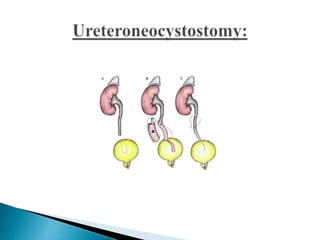
5) Ureteroneocystostomy
1) Balloon dilation:
 Followed by stent placement for 4-6 weeks.
2) Endoureterotomy:
 Is to open a stricture in a ureter.
 Ureteral incisions can be performed with an
endoscopic cold knife.
3) Ureteral metal stents:
 it have been used to treat end stage malignant
disease, provide proximal decompression.
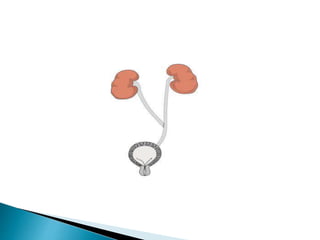
 It is a urinary reconstruction technique that is used to
join one ureter to the other across the midline.
 TUU is also used in undiversion procedures when the
surgeon wants to avoid the pelvis because or previous
trauma, surgery or radiation therapy.
THANK YOU

Ureteral stricture

  • 1.
  • 3.
     A urethralstricture is characterized by a narrowing of the urethral lumen, causing functional obstruction.  Most common cause of urethral stricture is ureteropelvic junction (UPJ) obstruction, which is characterized by a congenital or acquired narrowing at the level of UPJ.
  • 4.
     After treatmentfor another urological condition, pelvic radiation therapy or urinary diversion surgery may develop ureteral stricture.  External traumatic injury can cause strictures.  In children, congenital anomalies may result in strictures.  It may occur after passage of kidney stones or as result of certain cancers.  pelvic fractures
  • 5.
     catheter insertion radiation  surgery performed on the prostate  benign prostatic hyperplasia  a tumor located in close proximity to the urethra  untreated or repetitive urinary tract infections  the sexually transmitted infections (STIs) gonorrhea or chlamydia.
  • 6.
    1) Iatrogenic: suchas those caused by catheterization, instrumentation, and prior hypospadias repair. 2) Infectious or inflammatory: caused by gonorrhoea or lichen sclerosis. 3) Traumatic stricture: including straddle injuries or pelvic fractures
  • 7.
    Pathological analysis ofthe stricture reveals Disordered collagen deposition, fibrosis and varying level of inflammation The resulting urethral obstruction may vary widely from mild to severe Which cause complete obstruction and subsequent loss of renal function
  • 8.
     Blood inthe semen  Bloody or dark urine  Decreased urine output  Decreased urinary stream  Difficulty urinating  Discharge from the urethra  Frequent or urgent urination  Urinary retention  Distended (enlarge) bladder
  • 9.
     Incontinence  Painfulurination (dysuria)  Pain in the lower abdomen  Pelvic pain  Slow urine stream  Spraying of urine stream  Enlarged or tender lymph nodes in the groin area  Enlarged or tender prostate  Hardness on the under surface of the penis  Redness or swelling of the penis
  • 10.
     A detailedpatient history and physical examination  Urinalysis  Urine culture and sensitivities  Serum electrolyte with serum blood urea nitrogen and creatinine  Ureteroscopy  Renal ultrasonography  Computed tomography  Interavenous pyelography  Retrograde pyelography  Nuclear medicine diuretic scan
  • 11.
    1) Balloon dilation 2)Endoureterotomy 3) Ureteral metal stents 4) Transureteroureterostomy 5) Ureteroneocystostomy
  • 12.
    1) Balloon dilation: Followed by stent placement for 4-6 weeks. 2) Endoureterotomy:  Is to open a stricture in a ureter.  Ureteral incisions can be performed with an endoscopic cold knife. 3) Ureteral metal stents:  it have been used to treat end stage malignant disease, provide proximal decompression.
  • 13.
     It isa urinary reconstruction technique that is used to join one ureter to the other across the midline.  TUU is also used in undiversion procedures when the surgeon wants to avoid the pelvis because or previous trauma, surgery or radiation therapy.
  • 16.