Cystitis
The acute and chronic form
Made easy
THE CASE
• 55 yrs old poorly controlled diabetic
female presented with burning pain
at micturition , excessive need to
urinate but each time she goes , she
was passing only small amount of
cloudy coloured urine that has a fishy
odour
Case highlights
• 55 yrs old poorly contolled diabetic
female presented with burning pain
at micturition , excessive need to
urinate but each time she goes , she
was passing only small amount of
cloudy coloured urine that has a
fishy odour
So what to do
• Extended history
• Physical examination including the vital
signs ( fever , tachycardia ) and searching
for suprapubic tenderness
• Urinalysis to look for the microorganism
that caused the trouble
• Complete blood picture will reveal
leukocytosis
• Urine culture that takes a day or two
What can cause the trouble ?
• Bacterial cystitis :
1. E.coli
2. Proteus
3. Klebsiella
• Tuberculous cystitis
• Fungal cystitis ( candida albicans)
Immunesuppressed and those on long term ABCs
• Schistosomal cystitis
• Viruses , chlamydia , mycoplasma
• Other non infectious causes : drugs (cyclophosphamide)
and radiation ( radiation cystitis)
Predisposing factors5
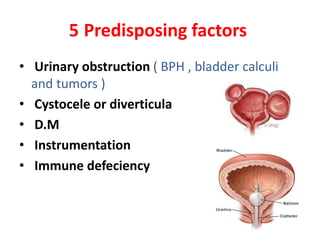
• Urinary obstruction ( BPH , bladder calculi
and tumors )
• Cystocele or diverticula
• D.M
• Instrumentation
• Immune defeciency
Grossly , what to see ?
• Hyperemia of the mucosa
• Hemorrhagic cystitis : (after Radio,Chemo or Adeno)
• Suppurative cystitis : large amounts of suppurative
exudate
• Ulcerative cystitis : large mucosal ulcers and
sometimes ulceration of entire bladder mucosa !
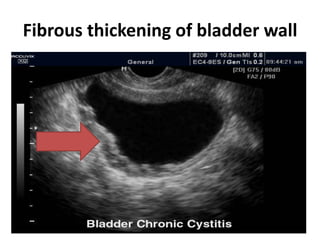
• IF the infection persists Chronic cystitis that’s
seen as Red , Friable , Granular mucosa ANOTHER
association is the fibrosing thickening and inelasticity
of bladder wall
Post-radiotherapy hemorragic cystitis
Fibrous thickening of bladder wall
Microscopically there is :
• acute cystitis acute infammation
• chronic cystitis chronic inflammatory
cells ( ? ) with fibrosis
• two variants of
chronic cystitis :
1. Follicular cystitis
2. Eosinophilic cystitis
Schistosomal cystitis
• Caused by S. Hematobuim
• Eggs (by anastomosis) travel from sup. Rect. V.
to the veins of bladder wall , these eggs are
irritating so causing granulomatous cystitis
with eosinphilic infiltrate and fibrosis
• These granulomas are seen as minute
granules hence the name (sand grain cystitis)
• The eggs die and calcify
What are the complications ?
• extensive fibrosis ( that may impinge on
ureteric orifices to cause hydronephrosis
• CA bladder (squamous type) :
Schistosomal
cystitis
Squamous
metaplasia
Carcinoma
Special forms of cystitis
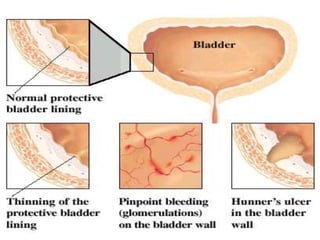
1. Interstitial cystitis (Hunner ulcer) :
• painful form of chronic cystitis (very painful)
• most frequently in women
• Cystoscopy shows : fissures and punctate
hemorrhages in the mucosa , sometimes with
chronic mucosal ulcers
• mast cell infiltrate is characteristic
• Maybe of autoimmune origin
Special forms of cystitis
2. Malakoplakia :
• Macroscopically : soft , yellow , slightly raised
mucosal plaques 3-4 cm in diameter
• Microscopically : infiltration by large foamy
macrophages with debris of bacterial origin
(E.coli)
• Michaelis – Gutmann bodies (laminated
mineralized concretions) are typically present
• Occurs in increased frequency in immune
suppressed transplant recipients
Special forms of cystitis
3. Polypoid cystitis :
• Results from irritation of bladder mucosa by
indwelling catheters
• Submucosal Edema causes broad , bulbous ,
polypoid projections
Review
• cystitis is either infectious or non infectious
• 5 predisposing factors for cystitis
• The acute form seen grossly : hyperemia,
hemorrhagic cystitis , suppurative cystitis and
ulcerative cystitis microscopically : acute
inflammation.
• The chronic form grossly : red , friable , granular
ulcerated mucosa, and fibrous thickening and
inelasticity of wall , microscopically : chronic cell
infiltrate and fibrosis
Review
• schistosomal cystitis : S. hematobium
• Eggs in the walls causing granulomas,
eosinophilic infiltrate, fibrosis
• granulomas look like sand grains
• 2 complications ( extensive fibrosis impenge
ureters causing hydronephosis , and squamous
metaplasia and carcinoma of bladder )
Cystitis made easy

Cystitis made easy

  • 1.
    Cystitis The acute andchronic form Made easy
  • 3.
    THE CASE • 55yrs old poorly controlled diabetic female presented with burning pain at micturition , excessive need to urinate but each time she goes , she was passing only small amount of cloudy coloured urine that has a fishy odour
  • 4.
    Case highlights • 55yrs old poorly contolled diabetic female presented with burning pain at micturition , excessive need to urinate but each time she goes , she was passing only small amount of cloudy coloured urine that has a fishy odour
  • 5.
    So what todo • Extended history • Physical examination including the vital signs ( fever , tachycardia ) and searching for suprapubic tenderness • Urinalysis to look for the microorganism that caused the trouble • Complete blood picture will reveal leukocytosis • Urine culture that takes a day or two
  • 6.
    What can causethe trouble ? • Bacterial cystitis : 1. E.coli 2. Proteus 3. Klebsiella • Tuberculous cystitis • Fungal cystitis ( candida albicans) Immunesuppressed and those on long term ABCs • Schistosomal cystitis • Viruses , chlamydia , mycoplasma • Other non infectious causes : drugs (cyclophosphamide) and radiation ( radiation cystitis)
  • 7.
    Predisposing factors5 • Urinaryobstruction ( BPH , bladder calculi and tumors ) • Cystocele or diverticula • D.M • Instrumentation • Immune defeciency
  • 8.
    Grossly , whatto see ? • Hyperemia of the mucosa • Hemorrhagic cystitis : (after Radio,Chemo or Adeno) • Suppurative cystitis : large amounts of suppurative exudate • Ulcerative cystitis : large mucosal ulcers and sometimes ulceration of entire bladder mucosa ! • IF the infection persists Chronic cystitis that’s seen as Red , Friable , Granular mucosa ANOTHER association is the fibrosing thickening and inelasticity of bladder wall
  • 9.
  • 10.
  • 11.
    Microscopically there is: • acute cystitis acute infammation • chronic cystitis chronic inflammatory cells ( ? ) with fibrosis • two variants of chronic cystitis : 1. Follicular cystitis 2. Eosinophilic cystitis
  • 12.
    Schistosomal cystitis • Causedby S. Hematobuim • Eggs (by anastomosis) travel from sup. Rect. V. to the veins of bladder wall , these eggs are irritating so causing granulomatous cystitis with eosinphilic infiltrate and fibrosis • These granulomas are seen as minute granules hence the name (sand grain cystitis) • The eggs die and calcify
  • 13.
    What are thecomplications ? • extensive fibrosis ( that may impinge on ureteric orifices to cause hydronephrosis • CA bladder (squamous type) : Schistosomal cystitis Squamous metaplasia Carcinoma
  • 17.
    Special forms ofcystitis 1. Interstitial cystitis (Hunner ulcer) : • painful form of chronic cystitis (very painful) • most frequently in women • Cystoscopy shows : fissures and punctate hemorrhages in the mucosa , sometimes with chronic mucosal ulcers • mast cell infiltrate is characteristic • Maybe of autoimmune origin
  • 19.
    Special forms ofcystitis 2. Malakoplakia : • Macroscopically : soft , yellow , slightly raised mucosal plaques 3-4 cm in diameter • Microscopically : infiltration by large foamy macrophages with debris of bacterial origin (E.coli) • Michaelis – Gutmann bodies (laminated mineralized concretions) are typically present • Occurs in increased frequency in immune suppressed transplant recipients
  • 21.
    Special forms ofcystitis 3. Polypoid cystitis : • Results from irritation of bladder mucosa by indwelling catheters • Submucosal Edema causes broad , bulbous , polypoid projections
  • 22.
    Review • cystitis iseither infectious or non infectious • 5 predisposing factors for cystitis • The acute form seen grossly : hyperemia, hemorrhagic cystitis , suppurative cystitis and ulcerative cystitis microscopically : acute inflammation. • The chronic form grossly : red , friable , granular ulcerated mucosa, and fibrous thickening and inelasticity of wall , microscopically : chronic cell infiltrate and fibrosis
  • 23.
    Review • schistosomal cystitis: S. hematobium • Eggs in the walls causing granulomas, eosinophilic infiltrate, fibrosis • granulomas look like sand grains • 2 complications ( extensive fibrosis impenge ureters causing hydronephosis , and squamous metaplasia and carcinoma of bladder )