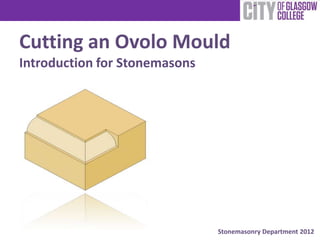
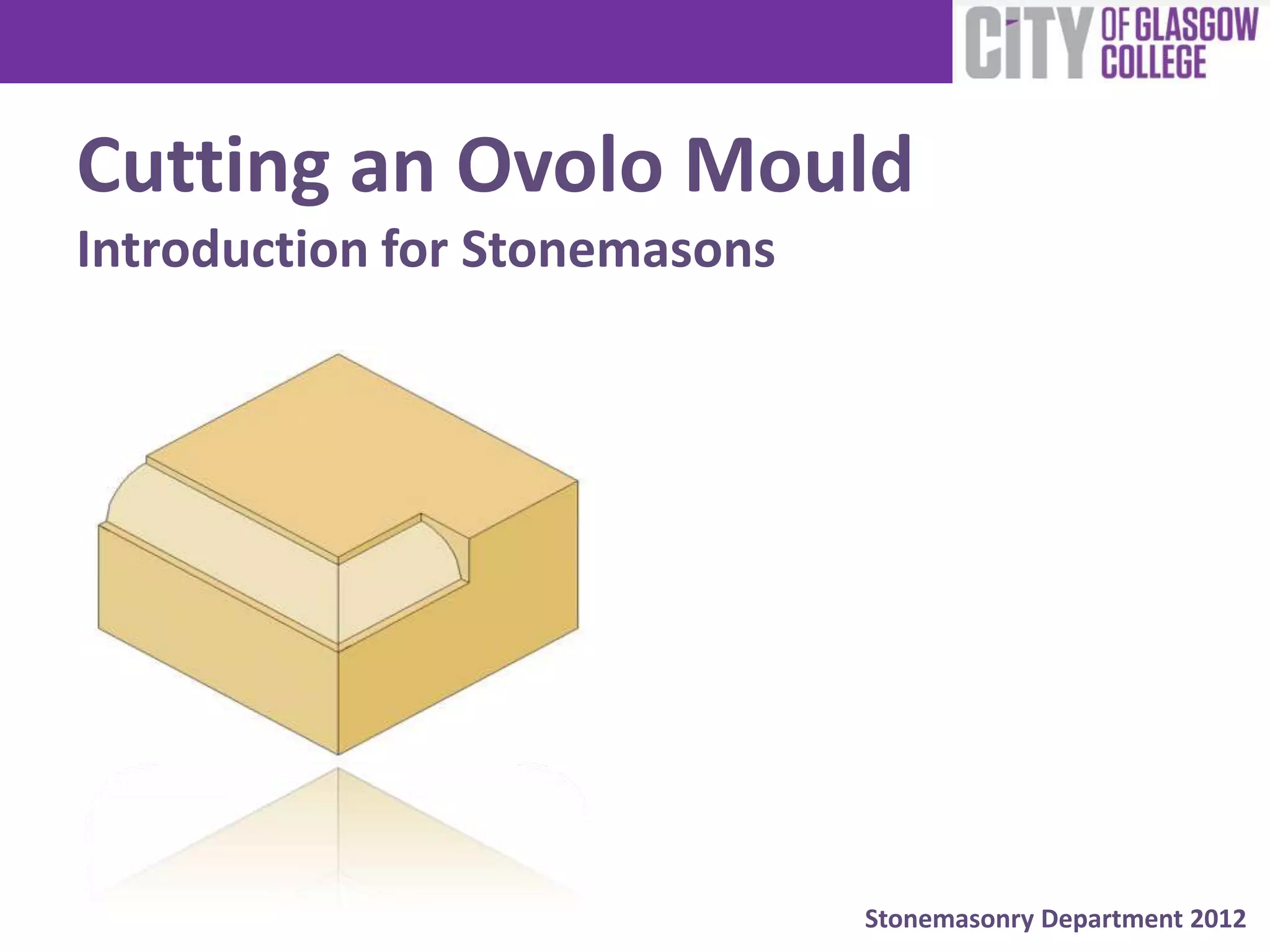
Cutting an Ovolo Mould
Introduction for Stonemasons


                               Stonemasonry Department 2012
Mould Recognition
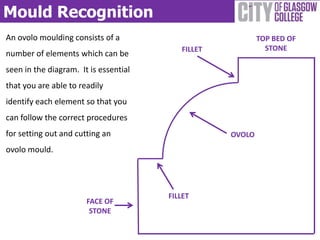
An ovolo moulding consists of a                            TOP BED OF
                                          FILLET             STONE
number of elements which can be
seen in the diagram. It is essential
that you are able to readily
identify each element so that you
can follow the correct procedures
for setting out and cutting an                     OVOLO
ovolo mould.


                                       FILLET
                       FACE OF
                        STONE
Roman Mould Development
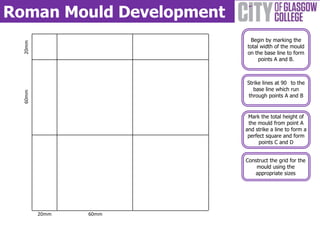
                           Begin by marking the
                          total width of the mould
                          on the base line to form
                               points A and B.


  A        140mm     B
Roman Mould Development
                           Begin by marking the
                          total width of the mould
                          on the base line to form
                               points A and B.


                          Strike lines at 90 to the
                             base line which run
                           through points A and B
  140mm


          A   140mm   B
Roman Mould Development
          C           D
                           Begin by marking the
                          total width of the mould
                          on the base line to form
                               points A and B.


                          Strike lines at 90 to the
                             base line which run
                           through points A and B
  140mm


                           Mark the total height of
                           the mould from point A
                          and strike a line to form a
                           perfect square and form
                                points C and D


          A   140mm   B
Roman Mould Development
                           Begin by marking the
  20mm


                          total width of the mould
                          on the base line to form
                               points A and B.


                          Strike lines at 90 to the
                             base line which run
  60mm


                           through points A and B


                           Mark the total height of
                           the mould from point A
                          and strike a line to form a
                           perfect square and form
                                points C and D


                          Construct the grid for the
                              mould using the
                             appropriate sizes


         20mm   60mm
Roman Mould Development
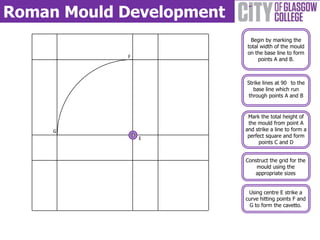
                           Begin by marking the
                          total width of the mould
                          on the base line to form
            F
                               points A and B.


                          Strike lines at 90 to the
                             base line which run
                           through points A and B


                           Mark the total height of
                           the mould from point A
     G                    and strike a line to form a
                E          perfect square and form
                                points C and D


                          Construct the grid for the
                              mould using the
                             appropriate sizes


                           Using centre E strike a
                          curve hitting points F and
                            G to form the cavetto.
Roman Mould Development
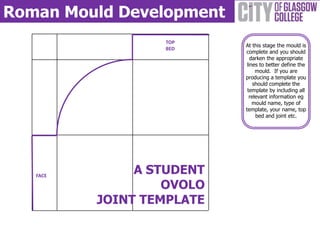
                  TOP
                           At this stage the mould is
                  BED
                           complete and you should
                              darken the appropriate
                            lines to better define the
                                mould. If you are
                           producing a template you
                               should complete the
                            template by including all
                             relevant information eg
                               mould name, type of
                           template, your name, top
                                bed and joint etc.


   FACE
               A STUDENT
                   OVOLO
          JOINT TEMPLATE
Cutting an Ovolo
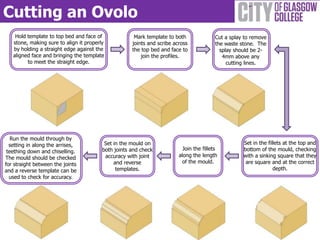
    Hold template to top bed and face of              Mark template to both              Cut a splay to remove
   stone, making sure to align it properly           joints and scribe across            the waste stone. The
   by holding a straight edge against the            the top bed and face to               splay should be 2-
   aligned face and bringing the template                join the profiles.                 4mm above any
         to meet the straight edge.                                                           cutting lines.


   Run the mould through by
  setting in along the arrises,           Set in the mould on                                       Set in the fillets at the top and
                                         both joints and check             Join the fillets         bottom of the mould, checking
 teething down and chiselling.
The mould should be checked               accuracy with joint            along the length           with a sinking square that they
for straight between the joints               and reverse                  of the mould.             are square and at the correct
and a reverse template can be                  templates.                                                         depth.
  used to check for accuracy.
Marking a Mitre
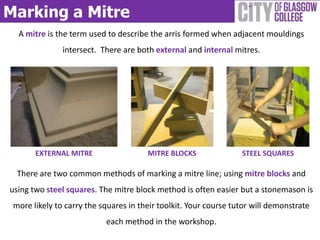
  A mitre is the term used to describe the arris formed when adjacent mouldings
               intersect. There are both external and internal mitres.


       EXTERNAL MITRE                  MITRE BLOCKS               STEEL SQUARES

  There are two common methods of marking a mitre line; using mitre blocks and
using two steel squares. The mitre block method is often easier but a stonemason is
 more likely to carry the squares in their toolkit. Your course tutor will demonstrate
                           each method in the workshop.
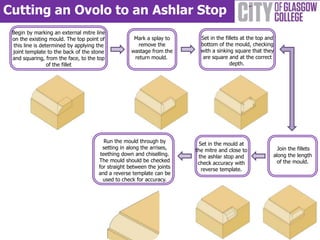
Cutting an Ovolo to an Ashlar Stop
 Begin by marking an external mitre line
 on the existing mould. The top point of             Mark a splay to      Set in the fillets at the top and
  this line is determined by applying the             remove the          bottom of the mould, checking
 joint template to the back of the stone            wastage from the      with a sinking square that they
 and squaring, from the face, to the top             return mould.         are square and at the correct
                  of the fillet                                                        depth.


                                         Run the mould through by         Set in the mould at
                                        setting in along the arrises,   the mitre and close to              Join the fillets
                                       teething down and chiselling.     the ashlar stop and              along the length
                                      The mould should be checked        check accuracy with                of the mould.
                                      for straight between the joints      reverse template.
                                      and a reverse template can be
                                        used to check for accuracy.
Developed by The Stonemasonry Department
          City of Glasgow College
                    2012

Cutting an ovolo mould

  • 1.
    Cutting an OvoloMould Introduction for Stonemasons Stonemasonry Department 2012
  • 2.
    Mould Recognition An ovolomoulding consists of a TOP BED OF FILLET STONE number of elements which can be seen in the diagram. It is essential that you are able to readily identify each element so that you can follow the correct procedures for setting out and cutting an OVOLO ovolo mould. FILLET FACE OF STONE
  • 3.
    Roman Mould Development Begin by marking the total width of the mould on the base line to form points A and B. A 140mm B
  • 4.
    Roman Mould Development Begin by marking the total width of the mould on the base line to form points A and B. Strike lines at 90 to the base line which run through points A and B 140mm A 140mm B
  • 5.
    Roman Mould Development C D Begin by marking the total width of the mould on the base line to form points A and B. Strike lines at 90 to the base line which run through points A and B 140mm Mark the total height of the mould from point A and strike a line to form a perfect square and form points C and D A 140mm B
  • 6.
    Roman Mould Development Begin by marking the 20mm total width of the mould on the base line to form points A and B. Strike lines at 90 to the base line which run 60mm through points A and B Mark the total height of the mould from point A and strike a line to form a perfect square and form points C and D Construct the grid for the mould using the appropriate sizes 20mm 60mm
  • 7.
    Roman Mould Development Begin by marking the total width of the mould on the base line to form F points A and B. Strike lines at 90 to the base line which run through points A and B Mark the total height of the mould from point A G and strike a line to form a E perfect square and form points C and D Construct the grid for the mould using the appropriate sizes Using centre E strike a curve hitting points F and G to form the cavetto.
  • 8.
    Roman Mould Development TOP At this stage the mould is BED complete and you should darken the appropriate lines to better define the mould. If you are producing a template you should complete the template by including all relevant information eg mould name, type of template, your name, top bed and joint etc. FACE A STUDENT OVOLO JOINT TEMPLATE
  • 9.
    Cutting an Ovolo Hold template to top bed and face of Mark template to both Cut a splay to remove stone, making sure to align it properly joints and scribe across the waste stone. The by holding a straight edge against the the top bed and face to splay should be 2- aligned face and bringing the template join the profiles. 4mm above any to meet the straight edge. cutting lines. Run the mould through by setting in along the arrises, Set in the mould on Set in the fillets at the top and both joints and check Join the fillets bottom of the mould, checking teething down and chiselling. The mould should be checked accuracy with joint along the length with a sinking square that they for straight between the joints and reverse of the mould. are square and at the correct and a reverse template can be templates. depth. used to check for accuracy.
  • 10.
    Marking a Mitre A mitre is the term used to describe the arris formed when adjacent mouldings intersect. There are both external and internal mitres. EXTERNAL MITRE MITRE BLOCKS STEEL SQUARES There are two common methods of marking a mitre line; using mitre blocks and using two steel squares. The mitre block method is often easier but a stonemason is more likely to carry the squares in their toolkit. Your course tutor will demonstrate each method in the workshop.
  • 11.
    Cutting an Ovoloto an Ashlar Stop Begin by marking an external mitre line on the existing mould. The top point of Mark a splay to Set in the fillets at the top and this line is determined by applying the remove the bottom of the mould, checking joint template to the back of the stone wastage from the with a sinking square that they and squaring, from the face, to the top return mould. are square and at the correct of the fillet depth. Run the mould through by Set in the mould at setting in along the arrises, the mitre and close to Join the fillets teething down and chiselling. the ashlar stop and along the length The mould should be checked check accuracy with of the mould. for straight between the joints reverse template. and a reverse template can be used to check for accuracy.
  • 12.
    Developed by TheStonemasonry Department City of Glasgow College 2012