A Presentation on:
 FIBER GLASS
PRODUCTION
             -Group ‘E’
               FY MBA
Introduction
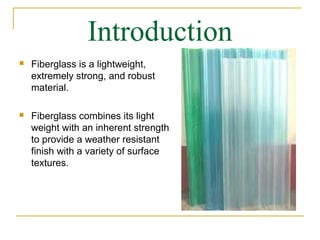
   Fiberglass is a lightweight,
    extremely strong, and robust
    material.

   Fiberglass combines its light
    weight with an inherent strength
    to provide a weather resistant
    finish with a variety of surface
    textures.
   There are 4 methods by which fiberglass can be
    made. They are:

       Fiberglass hand lay-up operation
       Fiberglass spray lay-up operation
       Pultrusion operation
       Chopped strand mat
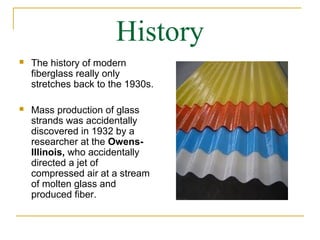
History
   The history of modern
    fiberglass really only
    stretches back to the 1930s.

   Mass production of glass
    strands was accidentally
    discovered in 1932 by a
    researcher at the Owens-
    Illinois, who accidentally
    directed a jet of
    compressed air at a stream
    of molten glass and
    produced fiber.
Continue…
   A suitable resin for combining the fiberglass with a
    plastic was developed in 1936.

   During the Second World War, it was developed as a
    replacement for the molded plywood used in aircraft.
Company Profile
   The company, MAHAVIR ENTERPRISE, is engaged in
    supplying high quality Fiberglass Sheets :

               1. Designer Fiberglass Sheet
               2. Plain Fiberglass Sheet


   This company deals with the sheets which are used only for
    shedding and roofing purposes.
Some Facts about MAHAVIR ENT.

   Year of Establishment   : 1990

   Legal Status of Firm    : Sole Proprietorship
   Nature of Business      : Manufacturer

   Number of Employees : 11 to 25 people

   Turnover                : US$ 0.25-1 Million
                                (Rs.1-4 crores Approx.)
Inputs
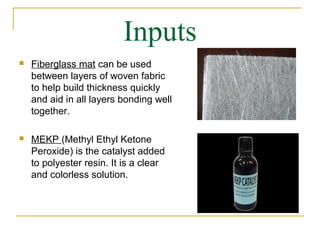
   Fiberglass mat can be used
    between layers of woven fabric
    to help build thickness quickly
    and aid in all layers bonding well
    together.

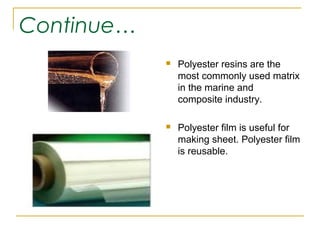
   MEKP (Methyl Ethyl Ketone
    Peroxide) is the catalyst added
    to polyester resin. It is a clear
    and colorless solution.
Continue…
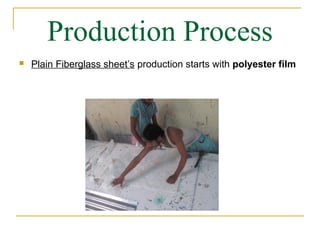
               Polyester resins are the
                most commonly used matrix
                in the marine and
                composite industry.

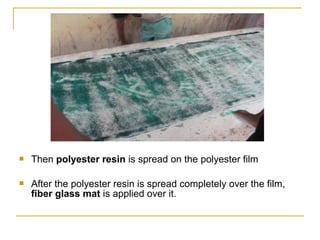
               Polyester film is useful for
                making sheet. Polyester film
                is reusable.
Production Process
   Plain Fiberglass sheet’s production starts with polyester film
   Then polyester resin is spread on the polyester film

   After the polyester resin is spread completely over the film,
    fiber glass mat is applied over it.
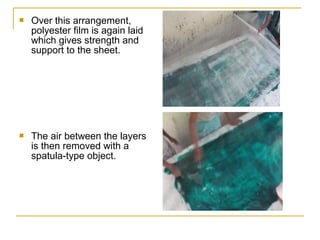
   Over this arrangement,
    polyester film is again laid
    which gives strength and
    support to the sheet.


   The air between the layers
    is then removed with a
    spatula-type object.
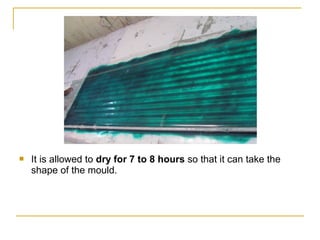
   It is allowed to dry for 7 to 8 hours so that it can take the
    shape of the mould.
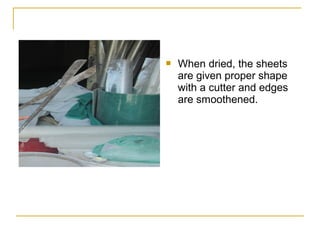
   When dried, the sheets
    are given proper shape
    with a cutter and edges
    are smoothened.
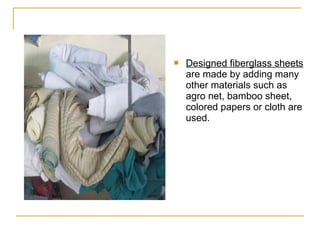
   Designed fiberglass sheets
    are made by adding many
    other materials such as
    agro net, bamboo sheet,
    colored papers or cloth are
    used.
Output


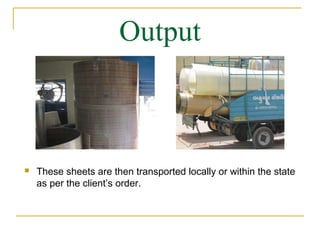
   These sheets are then transported locally or within the state
    as per the client’s order.
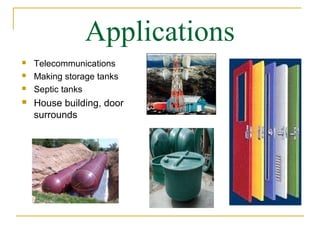
Applications
   Telecommunications
   Making storage tanks
   Septic tanks
   House building, door
    surrounds
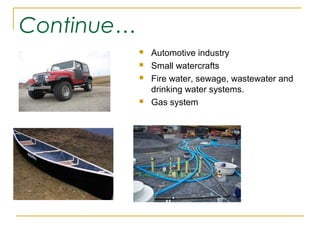
Continue…
               Automotive industry
               Small watercrafts
               Fire water, sewage, wastewater and
                drinking water systems.
               Gas system
Health Problems
   Workers are more likely to get affected by exposure to
    fiberglass. Some of the problems are:

       1.   A rash can appear on skin.
       2.   Eyes may become red and irritated.
       3.   Temporary stomach irritation.
       4.   Soreness in the nose and throat.

   Smaller fibers have the ability to reach the lower part of the
    lungs increasing the chance of adverse health effects.
Steps to reduce exposure
   Wear loose fitting, long-sleeved clothing and gloves.
   Wear a mask over the nose and mouth to prevent breathing
    in the fibers.
   Wear goggles or safety glasses with side shields to
    protect the eyes.
   Open a window or a door to increase ventilation and
    reduce dust levels.
   Use a shop vacuum after wetting the dust and fibers.
Conclusion
Fiberglass ppt

Fiberglass ppt

  • 1.
    A Presentation on: FIBER GLASS PRODUCTION -Group ‘E’ FY MBA
  • 2.
    Introduction  Fiberglass is a lightweight, extremely strong, and robust material.  Fiberglass combines its light weight with an inherent strength to provide a weather resistant finish with a variety of surface textures.
  • 3.
    There are 4 methods by which fiberglass can be made. They are:  Fiberglass hand lay-up operation  Fiberglass spray lay-up operation  Pultrusion operation  Chopped strand mat
  • 4.
    History  The history of modern fiberglass really only stretches back to the 1930s.  Mass production of glass strands was accidentally discovered in 1932 by a researcher at the Owens- Illinois, who accidentally directed a jet of compressed air at a stream of molten glass and produced fiber.
  • 5.
    Continue…  A suitable resin for combining the fiberglass with a plastic was developed in 1936.  During the Second World War, it was developed as a replacement for the molded plywood used in aircraft.
  • 6.
    Company Profile  The company, MAHAVIR ENTERPRISE, is engaged in supplying high quality Fiberglass Sheets : 1. Designer Fiberglass Sheet 2. Plain Fiberglass Sheet  This company deals with the sheets which are used only for shedding and roofing purposes.
  • 7.
    Some Facts aboutMAHAVIR ENT.  Year of Establishment : 1990  Legal Status of Firm : Sole Proprietorship  Nature of Business : Manufacturer  Number of Employees : 11 to 25 people  Turnover : US$ 0.25-1 Million (Rs.1-4 crores Approx.)
  • 8.
    Inputs  Fiberglass mat can be used between layers of woven fabric to help build thickness quickly and aid in all layers bonding well together.  MEKP (Methyl Ethyl Ketone Peroxide) is the catalyst added to polyester resin. It is a clear and colorless solution.
  • 9.
    Continue…  Polyester resins are the most commonly used matrix in the marine and composite industry.  Polyester film is useful for making sheet. Polyester film is reusable.
  • 10.
    Production Process  Plain Fiberglass sheet’s production starts with polyester film
  • 11.
    Then polyester resin is spread on the polyester film  After the polyester resin is spread completely over the film, fiber glass mat is applied over it.
  • 12.
    Over this arrangement, polyester film is again laid which gives strength and support to the sheet.  The air between the layers is then removed with a spatula-type object.
  • 13.
    It is allowed to dry for 7 to 8 hours so that it can take the shape of the mould.
  • 14.
    When dried, the sheets are given proper shape with a cutter and edges are smoothened.
  • 15.
    Designed fiberglass sheets are made by adding many other materials such as agro net, bamboo sheet, colored papers or cloth are used.
  • 17.
    Output  These sheets are then transported locally or within the state as per the client’s order.
  • 18.
    Applications  Telecommunications  Making storage tanks  Septic tanks  House building, door surrounds
  • 19.
    Continue…  Automotive industry  Small watercrafts  Fire water, sewage, wastewater and drinking water systems.  Gas system
  • 20.
    Health Problems  Workers are more likely to get affected by exposure to fiberglass. Some of the problems are: 1. A rash can appear on skin. 2. Eyes may become red and irritated. 3. Temporary stomach irritation. 4. Soreness in the nose and throat.  Smaller fibers have the ability to reach the lower part of the lungs increasing the chance of adverse health effects.
  • 21.
    Steps to reduceexposure  Wear loose fitting, long-sleeved clothing and gloves.  Wear a mask over the nose and mouth to prevent breathing in the fibers.  Wear goggles or safety glasses with side shields to protect the eyes.  Open a window or a door to increase ventilation and reduce dust levels.  Use a shop vacuum after wetting the dust and fibers.
  • 22.