PRESENTATION
ON
HEART FAILURE
Prepred by:
Mr. Sagar Masne
F.y. Msc (N)
MEDICAL SURGICAL
NURSING NUNURSING
REVIEW OF ANATOMY AND
PHYSIOLOGY……
INTRODUCTION
• Heart failure is often referred as
congestive heart failure (CHF).
Occurs when heart is unable to pump
sufficiently to maintained blood flow
to meets the body needs
This condition results of -
• SYSTOLIC DYSFUNCTIONS OR
• DIASTOLIC DYSFUNCTIONS.
INCIDENCE
• More than 20 million people have heart
failure worldwide
• Prevalence of heart failure in India due to
coronary heart disease, hypertension, obesity,
diabetes and rheumatic heart disease to range
From 1.3 to 4.6 million, with an annual
incidence of 491 600-1.8 million.
• Heart failure is the leading cause of
hospitalization in people older than 65
CLASSIFICATION
1.Left sided v/s right sided
heart failure
2. Forward v/s backward failure
3. High output v/s low output
failure
4. Acute v/s chronic failure
LHF
• In left sided heart failure, left ventricle cardiac
output is less then volume received from
pulmonary circulation; blood accumulates in the
left ventricle, left atrium.
• pulmonary congestion forcing fluid from
pulmonary capillaries into pulmonary tissue and
alveoli causing pulmonary interstitial edema and
impaired gas exchange.
RHF
• In right sided heart failure right ventricle cardiac
output is less then volume received from the
peripheral venous circulation, blood
accumulates in RA, RV and peripheral venous
system.
• Increased venous pressure lead to JVD and
increased capillary hydrostatic pressure
throughout the venous system
FORVWARD V/S BACKWORD
• In forward failure decresed cardiac output
results in inadequate tissue perfusion
• In backward failure blood remains in ventricles
after systole, increasing atrial and venous
pressure; rises in venous pressure forces fluid
out of capillary membrane into extra cellular
spaces.
HIGH/LOW OUTPUT
• High output failure occurs in response to
condition that causes the heart to work harder to
supply blood; the increase oxygen demand can
only met only with an increase in cardiac output.
• Low output failure occurs in response to high BP
of hypovolemia which results in impaired
peripheral circulation and vasoconstrictions.
ACUTE V/S CHRONIC
• Acute failure occurs in response to a sudden
decrease in cardiac output which results in rapid
decrease in tissue perfusion.
• So chronic failure, body adjusts to decrease in
cardiac output through compensatory
mechanism which results in systemic
congestion.
ETIOLOGY
The incidence of heart failure increases with
advancing age and coronary artery disease
• Diabetes
• Cigarette Smoking
• Obesity
• Elevated Total Cholesterol
• Abnormally High Or Low Hematocrit Level
• Proteinuria
Common Precipitating Causes Of Heart Failure Are As
Follows
• Anaemia
• Infection
CONT……
• Thyrotoxicosis
• Hypothyroidisms
• Arrhythmias
• Bacterial Endocarditis
• Valvular Dysfunction
• Pulmonary Embolism
• Pulmonary Disease
• Pagats Disease
• Nutritional Deficiencies
• Hypovolemia
CLINICAL PICTURE:
IN LEFT SIDED HEART FAILURE
IN RIGHT SIDED HEART FAILURE
BIVENTRICULAR FAILURE
• DULLNESS
• PLEURAL EFFUSION
Common sign and symptoms of
heart failure
DIAGNOSTIC ASESSMENT
• History collection
• Physical examination
• ABG analysis
• Serum chemistries
• Liver profile
• Chest X ray
• Hemodynamic monitoring
• 12 leads ECG
• Nuclear imaging studies
• Cardiac catheterization
• 2D echocardiogram
MEDICAL MANAGEMENET
-Acute Decompensation
-Chronic management
-Lifestyle
-Medication
-Minimally invasive therapies
PHARMACOLOGICAL MANAGMENT
•DIGOXIN
•BETA BLOCKER
•INOTROPES
•ARBS
•ACE INHIBITORS
•WATER PILLS
DIGOXIN
• Exerts a direct and beneficial effect on the
myocardial contraction in the failing heart.
• Improved cardiac output enhances kidney
perfusion, which may create a mild dieresis
of sodium and water
• DOSE: 0.125-0.25 mg PO/IV qDay; higher
doses including 0.375-0.5 mg/day rarely
needed
BETA-BLOCKERS TO TREAT CHF
• Coreg (carvedilol)—6.25-50 mg; one 3.125, 6.25,
12.5 or 25-mg tablet 2x/day with food.
INOTROPES
• Agent such as dopamine, dobutamine and
amrinone may be ordered for clients with very
low output heart failure.
• These medications facilitate myocardial
contractility and enhance stroke volume.
• dopamine given in small doses(< 4 ug/kg/min)
ACE INHIBITORS
• ACE inhibitors can raise potassium levels
• Accupril (quinapril)—20-40 mg; one 10 or 20
mg tablet 2x/day on an empty stomach, 1 hour
before or 2 hours after a meal or with a light,
low-fat meal.
• Altace (ramipril)—10 mg; one 5 mg capsule
2x/day with or without food. Swallow capsule
whole.
WATER PILLS
• There are many brands of diuretics. Some are
taken once a day. Others are taken 2 times a day.
The most common types are:
• Thiazides. Chlorothiazide (Diuril),
chlorthalidone (Hygroton), indapamide (Lozol),
hydrochlorothiazide (Esidrix, HydroDiuril), and
metolazone (Mykrox, Zaroxolyn)
• Loop diuretics. Bumentanide (Bumex),
furosemide (Lasix), and torasemide (Demadex)
SURGICAL MANAGEMENT
HEART TRANSPLANTATION:
 When the heart is irreversibly managed and no
longer functions adequately and when the
client is at risk of dying, cardiac
transplantation and use of an artificial heart to
assist or replace the failing heart are measures
 A heart transplant, or a cardiac
transplant, is a surgical transplant procedure
performed on patients with end-stage heart
failure or severe coronary artery disease when
other medical or surgical treatments have
failed of last resort.
CONTAINDICATION
Absolute contraindications:
• Advanced kidney, lung, or liver disease
• Active cancer if it is likely to impact the survival
of the patient
• Life-threatening diseases including acute
infection or systemic disease such as systemic
lupus erythematosus, sarcoidosis, or amyloidosis
Vascular disease of the neck and leg arteries.
• High pulmonary vascular resistance - over 5 or 6
Wood units.
Relative contraindications
• Insulin-dependent diabetes with severe organ
dysfunction
• Recent thromboembolism such as stroke
• Severe obesity
• Age over 65 years (some variation between
centers) - older patients are usually evaluated on
an individual basis.
• Active substance abuse, such as alcohol,
recreational drugs or tobacco smoking (which
increases the chance of lung disease)
HEART TRANSPLANTATION
Pre-operative
• A typical heart transplantation begins when a
suitable donor heart is identified. The heart
comes from a recently deceased or brain dead
donor, also called a beating heart cadaver.
• . The patient is also given immunosuppressant
medication so that the patient's immune system
does not reject the new heart.
PROCEDURE
•ORTHOTOPIC
PROCEDURE
•HETEROTOPIC
PROCEDURE
Post-operative
• The patient is taken to the ICU to recover where
they are started on immunosuppressants. When
they are stable, they may move to a special
recovery unit for rehabilitation.
• The duration of in-hospital, post-transplant care
depends on the patient's general health, how
well the heart is working, and the patient's
ability to look after the new heart
CARDIOMYOPLASTY
• Cardiomyoplasty is a surgical procedure in
which healthy muscle from another part of the
body is wrapped around the heart to provide
support for the failing heart.
• Most often the latissimus dorsi muscle is used
for this purpose.
• A special pacemaker is implanted to make the
skeletal muscle contract. Cardiomyoplasty is
related to damaged myocardium remodeling.
VENTRICULAR ASSIST DEVICE (VAD):
It is a Electromechanical device for assisting
cardiac circulation, which is used either to
partially or to completely replace the function of
a failing heart.
The function of VADs is different from that
of artificial cardiac pacemakers; some are for
short-term use, typically for patients recovering
from myocardial infarction (heart attack) and
for patients recovering from cardiac surgery
CARDIAC RESYNCHRONIZATION
THERAPY
Cardiac Resynchronization
Therapy (CRT).
• It resynchronizes the contractions of the
heart’s ventricles by sending tiny electrical
impulses to the heart muscle, which can help
the heart pump blood throughout the body
more efficiently.
• CRT defibrillators (CRT-D) also incorporate
the additional function of an implantable
cardioverter-defibrillator, to quickly
terminate an abnormally fast, life-threatening
heart rhythm.
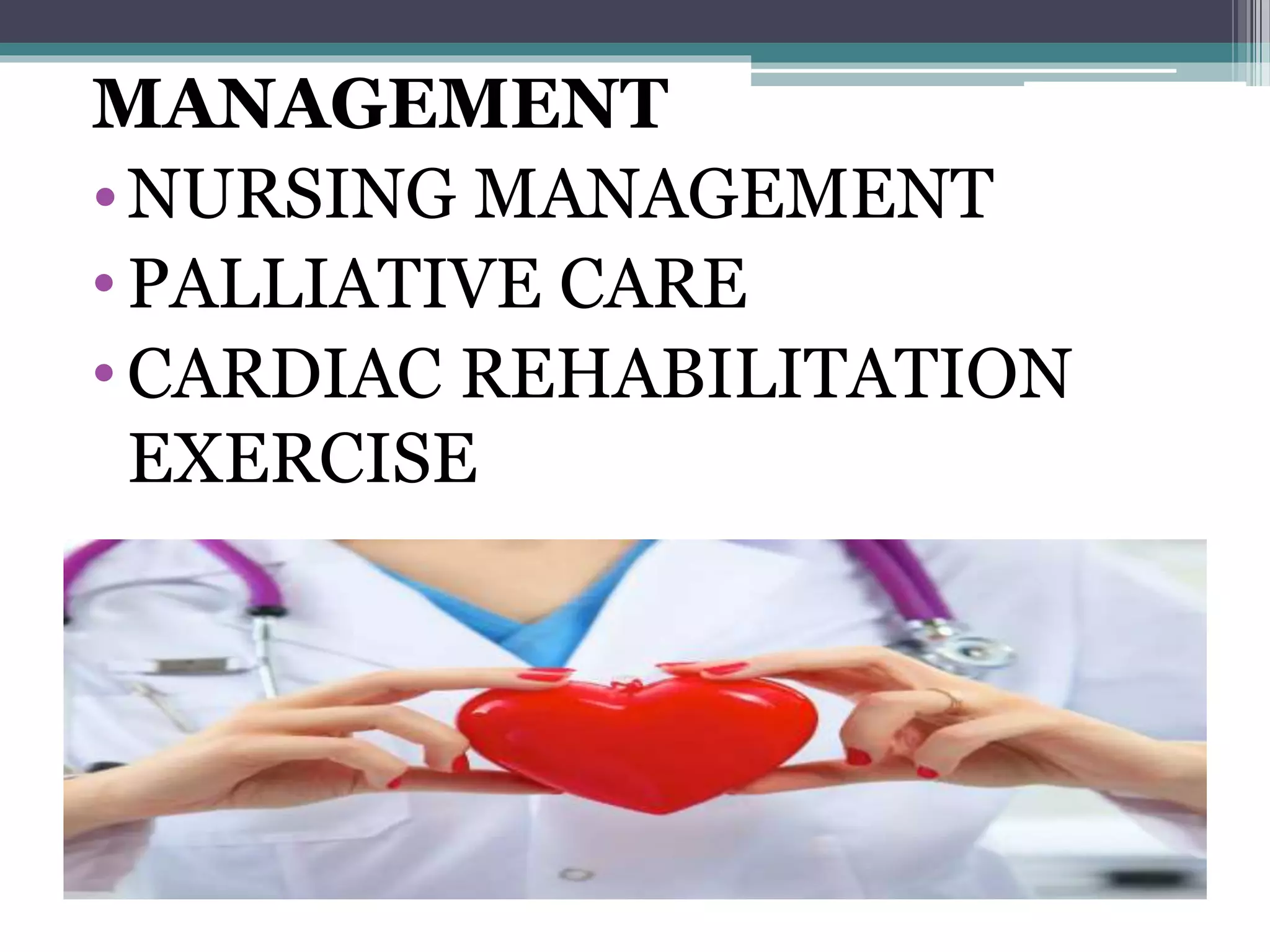
MANAGEMENT
•NURSING MANAGEMENT
• PALLIATIVE CARE
• CARDIAC REHABILITATION
EXERCISE
NURSING MANAGEMENT :
• The objective of nursing intervention will be:
• 1. Improving cardiac output
• 2. Improving gas exchange
• 3. Restoring fluid volume balance
• 4. Improving activity tolerance
• 5. Supporting the patient experiencing
hopelessness and
• 6. Educating the patient and family regarding
care.
PALLIATIVE CARE
• Fatigue and Breathlessness
• Fatigue and breathlessness are common
problems at the end of life.
• Other symptoms may include tightness in the
chest, feeling as if you are not getting enough air,
or even feeling like you're being smothered.
• Family or caregivers can help by:
• Encouraging the person to sit upright
• Increasing the airflow in a room by using a fan
or opening a window
• Helping the person relax and not panic
Eating and Digestive Symptoms
• Symptoms of fatigue, shortness of breath, loss of
appetite, and nausea can make it hard for people
with heart failure to TAKE IN ENOUGH
CALORIES AND NUTRIENTS.
• Wasting of muscles and weight loss are part of
the natural disease process. It can help to eat
several small meals.
• CHOOSING FOODS that are appealing and
EASY TO DIGEST can make it easier to eat.
• Caregivers should NOT FORCE A PERSON
WITH HEART FAILURE TO EAT.
Other Symptoms
• Anxiety, fear, and sadness are common among
people with end-stage heart failure.
• Family and caregivers should look for signs of
these problems. Asking the person about his or
her feelings and fears can make it easier to
discuss them.
• Morphine can also help with fearfulness and
anxiety. Certain antidepressants may also be
useful.
RESEARCH
• Daily vitamin D supplements significantly
improve cardiac function in patients with
chronic heart failure, according to a recent
study presented at the American College of
Cardiology’s 65h Annual Scientific Sessions in
Chicago.
• Also published in the Journal of the American
College of Cardiology, this study tested the
effects of vitamin D supplementation on heart
failure
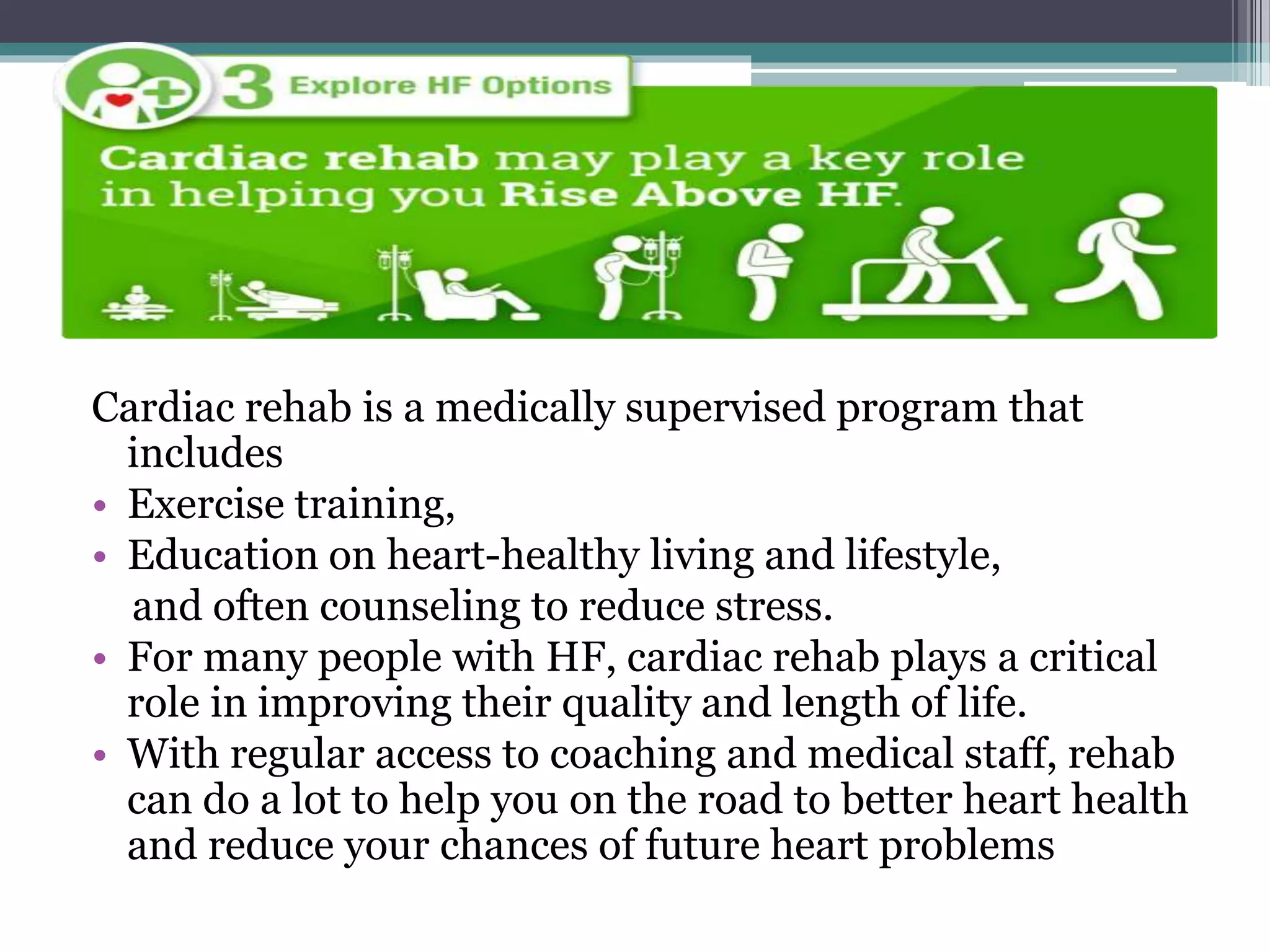
Cardiac rehab is a medically supervised program that
includes
• Exercise training,
• Education on heart-healthy living and lifestyle,
and often counseling to reduce stress.
• For many people with HF, cardiac rehab plays a critical
role in improving their quality and length of life.
• With regular access to coaching and medical staff, rehab
can do a lot to help you on the road to better heart health
and reduce your chances of future heart problems
REHAB TEAM
CONCLUSION
• Living with HF is a challenge to the sufferers of
this condition. It also represents a significant
burden for the caregivers. The effective
management of HF is achieved through optimal
medical therapy.
• Brunner and Suddarth’s. Textbook of
medical surgical nursing. 12th ed. New Delhi:
wolters kluwar publication; p. 825-39
• Joyce M Black, Jane Hokanson Hawks.
Medical surgical nursing: clinical management
for positive outcome. 8th ed. New Delhi: elsevier
publication; 2009. p. 1430-49
Heart failure

Heart failure

  • 1.
    PRESENTATION ON HEART FAILURE Prepred by: Mr.Sagar Masne F.y. Msc (N) MEDICAL SURGICAL NURSING NUNURSING
  • 2.
    REVIEW OF ANATOMYAND PHYSIOLOGY……
  • 3.
    INTRODUCTION • Heart failureis often referred as congestive heart failure (CHF). Occurs when heart is unable to pump sufficiently to maintained blood flow to meets the body needs This condition results of - • SYSTOLIC DYSFUNCTIONS OR • DIASTOLIC DYSFUNCTIONS.
  • 4.
    INCIDENCE • More than20 million people have heart failure worldwide • Prevalence of heart failure in India due to coronary heart disease, hypertension, obesity, diabetes and rheumatic heart disease to range From 1.3 to 4.6 million, with an annual incidence of 491 600-1.8 million. • Heart failure is the leading cause of hospitalization in people older than 65
  • 5.
    CLASSIFICATION 1.Left sided v/sright sided heart failure 2. Forward v/s backward failure 3. High output v/s low output failure 4. Acute v/s chronic failure
  • 6.
    LHF • In leftsided heart failure, left ventricle cardiac output is less then volume received from pulmonary circulation; blood accumulates in the left ventricle, left atrium. • pulmonary congestion forcing fluid from pulmonary capillaries into pulmonary tissue and alveoli causing pulmonary interstitial edema and impaired gas exchange.
  • 7.
    RHF • In rightsided heart failure right ventricle cardiac output is less then volume received from the peripheral venous circulation, blood accumulates in RA, RV and peripheral venous system. • Increased venous pressure lead to JVD and increased capillary hydrostatic pressure throughout the venous system
  • 8.
    FORVWARD V/S BACKWORD •In forward failure decresed cardiac output results in inadequate tissue perfusion • In backward failure blood remains in ventricles after systole, increasing atrial and venous pressure; rises in venous pressure forces fluid out of capillary membrane into extra cellular spaces.
  • 9.
    HIGH/LOW OUTPUT • Highoutput failure occurs in response to condition that causes the heart to work harder to supply blood; the increase oxygen demand can only met only with an increase in cardiac output. • Low output failure occurs in response to high BP of hypovolemia which results in impaired peripheral circulation and vasoconstrictions.
  • 10.
    ACUTE V/S CHRONIC •Acute failure occurs in response to a sudden decrease in cardiac output which results in rapid decrease in tissue perfusion. • So chronic failure, body adjusts to decrease in cardiac output through compensatory mechanism which results in systemic congestion.
  • 11.
    ETIOLOGY The incidence ofheart failure increases with advancing age and coronary artery disease • Diabetes • Cigarette Smoking • Obesity • Elevated Total Cholesterol • Abnormally High Or Low Hematocrit Level • Proteinuria Common Precipitating Causes Of Heart Failure Are As Follows • Anaemia • Infection
  • 12.
    CONT…… • Thyrotoxicosis • Hypothyroidisms •Arrhythmias • Bacterial Endocarditis • Valvular Dysfunction • Pulmonary Embolism • Pulmonary Disease • Pagats Disease • Nutritional Deficiencies • Hypovolemia
  • 14.
    CLINICAL PICTURE: IN LEFTSIDED HEART FAILURE
  • 15.
    IN RIGHT SIDEDHEART FAILURE
  • 16.
  • 17.
    Common sign andsymptoms of heart failure
  • 18.
    DIAGNOSTIC ASESSMENT • Historycollection • Physical examination • ABG analysis • Serum chemistries • Liver profile • Chest X ray • Hemodynamic monitoring • 12 leads ECG • Nuclear imaging studies • Cardiac catheterization • 2D echocardiogram
  • 19.
    MEDICAL MANAGEMENET -Acute Decompensation -Chronicmanagement -Lifestyle -Medication -Minimally invasive therapies
  • 20.
  • 21.
    DIGOXIN • Exerts adirect and beneficial effect on the myocardial contraction in the failing heart. • Improved cardiac output enhances kidney perfusion, which may create a mild dieresis of sodium and water • DOSE: 0.125-0.25 mg PO/IV qDay; higher doses including 0.375-0.5 mg/day rarely needed
  • 22.
    BETA-BLOCKERS TO TREATCHF • Coreg (carvedilol)—6.25-50 mg; one 3.125, 6.25, 12.5 or 25-mg tablet 2x/day with food.
  • 23.
    INOTROPES • Agent suchas dopamine, dobutamine and amrinone may be ordered for clients with very low output heart failure. • These medications facilitate myocardial contractility and enhance stroke volume. • dopamine given in small doses(< 4 ug/kg/min)
  • 24.
    ACE INHIBITORS • ACEinhibitors can raise potassium levels • Accupril (quinapril)—20-40 mg; one 10 or 20 mg tablet 2x/day on an empty stomach, 1 hour before or 2 hours after a meal or with a light, low-fat meal. • Altace (ramipril)—10 mg; one 5 mg capsule 2x/day with or without food. Swallow capsule whole.
  • 25.
    WATER PILLS • Thereare many brands of diuretics. Some are taken once a day. Others are taken 2 times a day. The most common types are: • Thiazides. Chlorothiazide (Diuril), chlorthalidone (Hygroton), indapamide (Lozol), hydrochlorothiazide (Esidrix, HydroDiuril), and metolazone (Mykrox, Zaroxolyn) • Loop diuretics. Bumentanide (Bumex), furosemide (Lasix), and torasemide (Demadex)
  • 26.
    SURGICAL MANAGEMENT HEART TRANSPLANTATION: When the heart is irreversibly managed and no longer functions adequately and when the client is at risk of dying, cardiac transplantation and use of an artificial heart to assist or replace the failing heart are measures  A heart transplant, or a cardiac transplant, is a surgical transplant procedure performed on patients with end-stage heart failure or severe coronary artery disease when other medical or surgical treatments have failed of last resort.
  • 27.
    CONTAINDICATION Absolute contraindications: • Advancedkidney, lung, or liver disease • Active cancer if it is likely to impact the survival of the patient • Life-threatening diseases including acute infection or systemic disease such as systemic lupus erythematosus, sarcoidosis, or amyloidosis Vascular disease of the neck and leg arteries. • High pulmonary vascular resistance - over 5 or 6 Wood units.
  • 28.
    Relative contraindications • Insulin-dependentdiabetes with severe organ dysfunction • Recent thromboembolism such as stroke • Severe obesity • Age over 65 years (some variation between centers) - older patients are usually evaluated on an individual basis. • Active substance abuse, such as alcohol, recreational drugs or tobacco smoking (which increases the chance of lung disease)
  • 29.
    HEART TRANSPLANTATION Pre-operative • Atypical heart transplantation begins when a suitable donor heart is identified. The heart comes from a recently deceased or brain dead donor, also called a beating heart cadaver. • . The patient is also given immunosuppressant medication so that the patient's immune system does not reject the new heart.
  • 30.
  • 31.
    Post-operative • The patientis taken to the ICU to recover where they are started on immunosuppressants. When they are stable, they may move to a special recovery unit for rehabilitation. • The duration of in-hospital, post-transplant care depends on the patient's general health, how well the heart is working, and the patient's ability to look after the new heart
  • 32.
    CARDIOMYOPLASTY • Cardiomyoplasty isa surgical procedure in which healthy muscle from another part of the body is wrapped around the heart to provide support for the failing heart. • Most often the latissimus dorsi muscle is used for this purpose. • A special pacemaker is implanted to make the skeletal muscle contract. Cardiomyoplasty is related to damaged myocardium remodeling.
  • 33.
  • 34.
    It is aElectromechanical device for assisting cardiac circulation, which is used either to partially or to completely replace the function of a failing heart. The function of VADs is different from that of artificial cardiac pacemakers; some are for short-term use, typically for patients recovering from myocardial infarction (heart attack) and for patients recovering from cardiac surgery
  • 35.
  • 36.
    Cardiac Resynchronization Therapy (CRT). •It resynchronizes the contractions of the heart’s ventricles by sending tiny electrical impulses to the heart muscle, which can help the heart pump blood throughout the body more efficiently. • CRT defibrillators (CRT-D) also incorporate the additional function of an implantable cardioverter-defibrillator, to quickly terminate an abnormally fast, life-threatening heart rhythm.
  • 37.
    MANAGEMENT •NURSING MANAGEMENT • PALLIATIVECARE • CARDIAC REHABILITATION EXERCISE
  • 38.
    NURSING MANAGEMENT : •The objective of nursing intervention will be: • 1. Improving cardiac output • 2. Improving gas exchange • 3. Restoring fluid volume balance • 4. Improving activity tolerance • 5. Supporting the patient experiencing hopelessness and • 6. Educating the patient and family regarding care.
  • 39.
    PALLIATIVE CARE • Fatigueand Breathlessness • Fatigue and breathlessness are common problems at the end of life. • Other symptoms may include tightness in the chest, feeling as if you are not getting enough air, or even feeling like you're being smothered. • Family or caregivers can help by: • Encouraging the person to sit upright • Increasing the airflow in a room by using a fan or opening a window • Helping the person relax and not panic
  • 40.
    Eating and DigestiveSymptoms • Symptoms of fatigue, shortness of breath, loss of appetite, and nausea can make it hard for people with heart failure to TAKE IN ENOUGH CALORIES AND NUTRIENTS. • Wasting of muscles and weight loss are part of the natural disease process. It can help to eat several small meals. • CHOOSING FOODS that are appealing and EASY TO DIGEST can make it easier to eat. • Caregivers should NOT FORCE A PERSON WITH HEART FAILURE TO EAT.
  • 41.
    Other Symptoms • Anxiety,fear, and sadness are common among people with end-stage heart failure. • Family and caregivers should look for signs of these problems. Asking the person about his or her feelings and fears can make it easier to discuss them. • Morphine can also help with fearfulness and anxiety. Certain antidepressants may also be useful.
  • 42.
    RESEARCH • Daily vitaminD supplements significantly improve cardiac function in patients with chronic heart failure, according to a recent study presented at the American College of Cardiology’s 65h Annual Scientific Sessions in Chicago. • Also published in the Journal of the American College of Cardiology, this study tested the effects of vitamin D supplementation on heart failure
  • 43.
    Cardiac rehab isa medically supervised program that includes • Exercise training, • Education on heart-healthy living and lifestyle, and often counseling to reduce stress. • For many people with HF, cardiac rehab plays a critical role in improving their quality and length of life. • With regular access to coaching and medical staff, rehab can do a lot to help you on the road to better heart health and reduce your chances of future heart problems
  • 44.
  • 46.
    CONCLUSION • Living withHF is a challenge to the sufferers of this condition. It also represents a significant burden for the caregivers. The effective management of HF is achieved through optimal medical therapy.
  • 47.
    • Brunner andSuddarth’s. Textbook of medical surgical nursing. 12th ed. New Delhi: wolters kluwar publication; p. 825-39 • Joyce M Black, Jane Hokanson Hawks. Medical surgical nursing: clinical management for positive outcome. 8th ed. New Delhi: elsevier publication; 2009. p. 1430-49