- MR. MIGRON RUBIN
Introduction
Endocarditis or infective endocarditis involves endocardium layer.
Endocardium is inner layer of heart. Endocarditis is uncommon in people
with healthy hearts.
Definition
 Endocarditis is infection of endocardial layer of heart.
Risk factors
 Previous history of endocarditis
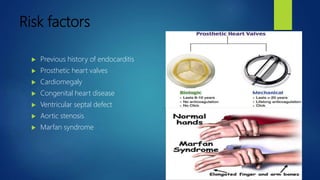
 Prosthetic heart valves
 Cardiomegaly
 Congenital heart disease
 Ventricular septal defect
 Aortic stenosis
 Marfan syndrome
Etiology
 Staphylococcus aureus
 Streptococcus viridans
 Coxsackie B Virus
 Candida albicans
Pathophysiology
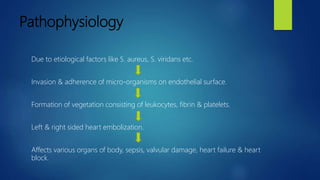
Due to etiological factors like S. aureus, S. viridans etc.
Invasion & adherence of micro-organisms on endothelial surface.
Formation of vegetation consisting of leukocytes, fibrin & platelets.
Left & right sided heart embolization.
Affects various organs of body, sepsis, valvular damage, heart failure & heart
block.
Clinical Manifestations
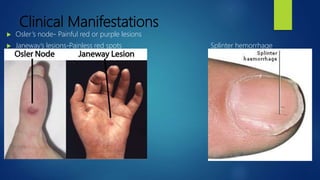
 Osler’s node- Painful red or purple lesions
 Janeway’s lesions-Painless red spots Splinter hemorrhage
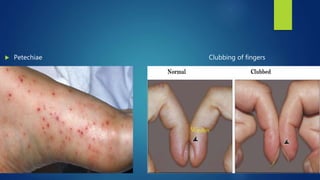
 Petechiae Clubbing of fingers
 Low grade fever & chills
 Headache
 Malaise
 Fatigue
 Arthralgia
 Backache
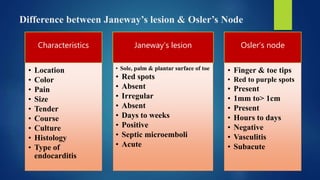
Difference between Janeway’s lesion & Osler’s Node
Characteristics
• Location
• Color
• Pain
• Size
• Tender
• Course
• Culture
• Histology
• Type of
endocarditis
Janeway’s lesion
• Sole, palm & plantar surface of toe
• Red spots
• Absent
• Irregular
• Absent
• Days to weeks
• Positive
• Septic microemboli
• Acute
Osler’s node
• Finger & toe tips
• Red to purple spots
• Present
• 1mm to> 1cm
• Present
• Hours to days
• Negative
• Vasculitis
• Subacute
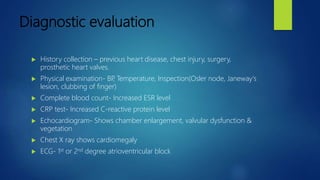
Diagnostic evaluation
 History collection – previous heart disease, chest injury, surgery,
prosthetic heart valves.
 Physical examination- BP, Temperature, Inspection(Osler node, Janeway's
lesion, clubbing of finger)
 Complete blood count- Increased ESR level
 CRP test- Increased C-reactive protein level
 Echocardiogram- Shows chamber enlargement, valvular dysfunction &
vegetation
 Chest X ray shows cardiomegaly
 ECG- 1st or 2nd degree atrioventricular block
Management
i. MEDICAL MANAGEMENT
A. Pharmacological Management
 Administration of antibiotics- Benzyl Penicillin I/V 1.2 gm 4 hourly
 Gentamycin I/V 1mg/kg TDS
 Antipyretics- Inj. Paracetamol TDS
 Fungal endocarditis requires specific anti-fungal treatment, such as
amphotericin B.
 Non-pharmacological Management:-
 Monitor vitals frequently and respond to the changes.
 Provide adequate rest to avoid exertion.
 Ensure adequate nutritional intake.
B. SURGICAL MANAGEMENT:-
 Surgical debridement of infected area
 Replacement of the valve with a mechanical or bio prosthetic artificial
heart valve.
 II. Nursing Management
Diagnosis topics-
 Decreased cardiac output related to valvular insufficiency & fluid overload.
 Risk for Ineffective Tissue Perfusion related to Thrombus embolism /
vegetation valve endocarditis.
 Acute pain related to inflammation of endocardium and tissue ischemia.
 Activity intolerance related to Inflammation possibly evidenced by
generalized weakness & arthralgia.
Endocarditis

Endocarditis

  • 1.
  • 2.
    Introduction Endocarditis or infectiveendocarditis involves endocardium layer. Endocardium is inner layer of heart. Endocarditis is uncommon in people with healthy hearts.
  • 3.
    Definition  Endocarditis isinfection of endocardial layer of heart.
  • 4.
    Risk factors  Previoushistory of endocarditis  Prosthetic heart valves  Cardiomegaly  Congenital heart disease  Ventricular septal defect  Aortic stenosis  Marfan syndrome
  • 5.
    Etiology  Staphylococcus aureus Streptococcus viridans  Coxsackie B Virus  Candida albicans
  • 6.
    Pathophysiology Due to etiologicalfactors like S. aureus, S. viridans etc. Invasion & adherence of micro-organisms on endothelial surface. Formation of vegetation consisting of leukocytes, fibrin & platelets. Left & right sided heart embolization. Affects various organs of body, sepsis, valvular damage, heart failure & heart block.
  • 7.
    Clinical Manifestations  Osler’snode- Painful red or purple lesions  Janeway’s lesions-Painless red spots Splinter hemorrhage
  • 8.
  • 9.
     Low gradefever & chills  Headache  Malaise  Fatigue  Arthralgia  Backache
  • 10.
    Difference between Janeway’slesion & Osler’s Node Characteristics • Location • Color • Pain • Size • Tender • Course • Culture • Histology • Type of endocarditis Janeway’s lesion • Sole, palm & plantar surface of toe • Red spots • Absent • Irregular • Absent • Days to weeks • Positive • Septic microemboli • Acute Osler’s node • Finger & toe tips • Red to purple spots • Present • 1mm to> 1cm • Present • Hours to days • Negative • Vasculitis • Subacute
  • 11.
    Diagnostic evaluation  Historycollection – previous heart disease, chest injury, surgery, prosthetic heart valves.  Physical examination- BP, Temperature, Inspection(Osler node, Janeway's lesion, clubbing of finger)  Complete blood count- Increased ESR level  CRP test- Increased C-reactive protein level  Echocardiogram- Shows chamber enlargement, valvular dysfunction & vegetation  Chest X ray shows cardiomegaly  ECG- 1st or 2nd degree atrioventricular block
  • 12.
    Management i. MEDICAL MANAGEMENT A.Pharmacological Management  Administration of antibiotics- Benzyl Penicillin I/V 1.2 gm 4 hourly  Gentamycin I/V 1mg/kg TDS  Antipyretics- Inj. Paracetamol TDS  Fungal endocarditis requires specific anti-fungal treatment, such as amphotericin B.  Non-pharmacological Management:-  Monitor vitals frequently and respond to the changes.  Provide adequate rest to avoid exertion.  Ensure adequate nutritional intake.
  • 13.
    B. SURGICAL MANAGEMENT:- Surgical debridement of infected area  Replacement of the valve with a mechanical or bio prosthetic artificial heart valve.
  • 14.
     II. NursingManagement Diagnosis topics-  Decreased cardiac output related to valvular insufficiency & fluid overload.  Risk for Ineffective Tissue Perfusion related to Thrombus embolism / vegetation valve endocarditis.  Acute pain related to inflammation of endocardium and tissue ischemia.  Activity intolerance related to Inflammation possibly evidenced by generalized weakness & arthralgia.