
Presented by :-
Kanchan sharma
Msc(n) 1st year
Medical surgical department
INTRODUCTION
 Congestive heart failure is an older term for
heart failure .
 It is still used interchangeably by some to
indicate heart failure in general .
 The newer term heart failure is preferred
because volume overload or congestion either
in the lungs or periphery is not present in
everyone with heart failure or at all times .
DEFINITION
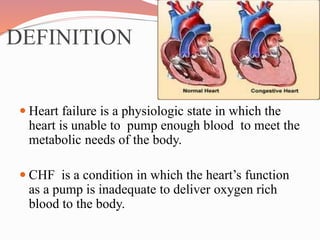
 Heart failure is a physiologic state in which the
heart is unable to pump enough blood to meet the
metabolic needs of the body.
 CHF is a condition in which the heart’s function
as a pump is inadequate to deliver oxygen rich
blood to the body.
Incidence:-
 Five millions Americans have Congestive heart failure.
 550,000 New cases every year
 800,000 Patients with Congestive heart failure
hospitalized every year
 250,000 die every year
 50% Patients die with in five years
 150% increase in the last 20 year
 2.6% total population has this disease
 Incidence and associated morbidity and mortality is
expected to increase in future
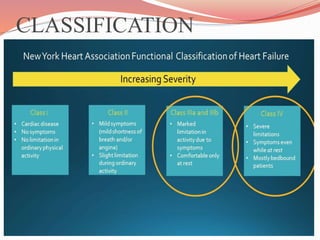
CLASSIFICATION

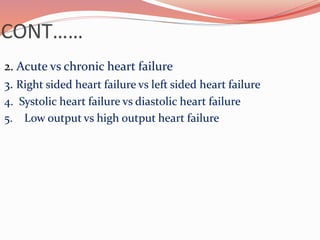
CONT……
2. Acute vs chronic heart failure
3. Right sided heart failure vs left sided heart failure
4. Systolic heart failure vs diastolic heart failure
5. Low output vs high output heart failure
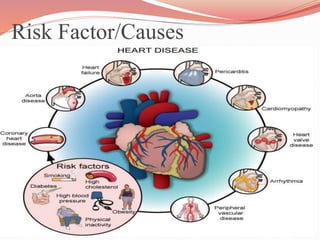
Risk Factor/Causes
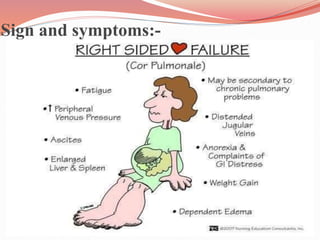
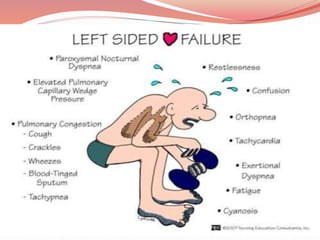
Sign and symptoms:-
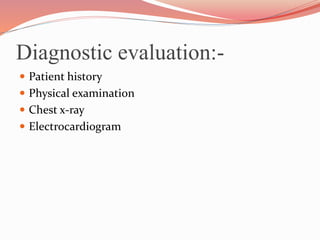
Diagnostic evaluation:-
 Patient history
 Physical examination
 Chest x-ray
 Electrocardiogram
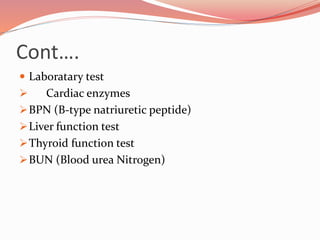
Cont….
 Laboratary test
 Cardiac enzymes
BPN (B-type natriuretic peptide)
Liver function test
Thyroid function test
BUN (Blood urea Nitrogen)
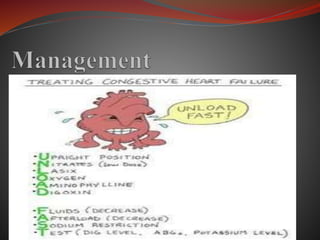
Pharmacologic therapy
1.ANGIOTENSIN – CONVERTING ENZYME
INHIBITORS:
• ACE inhibitors slow the progression of HF
improve exercise tolerance & decrease the
number of hospitalizations for HF .
• Drug:- Captopril 6.25mg tid and lisinopril
2.5-5mg daily
• Side effect- hypotension,
hyperkalemia,cough
3. BETA - BLOCKERS
Beta blockers directly block the negative
effects of the SNS on the failing heart , such
as increased HR.
E.G :- metoprolol 12.5mg daily
• Side effects- hypotension, bradycardia,
fatigue , fluid retention , worsening heart
failure.
2. ANGIOTENSIN II RECEPTOR
BLOCKERS :
 Prevent action of angiotensin II & produce
vasodilation & increased salt and water
exretion .
 DRUG : Valsartan 20-40mg bid , Losartan
20-50 mg daily
 Side effect- hypotension, hyperkalaemia
4. Diuretics
Thiazides:-
Hydro chlorothiazide 25-100mg once or twice
plus loop diuretic
metolozone 2.5-10mg once + loop diuretic
• LOOP DIURETICS :- Furosemide (Lasix) ,
Torsemide
Less effective for hypertension
5.DIGITALIS
 Digitalis medicines strengthen the force of the
heartbeat by increasing the amount of calcium
in the heart's cells.
 As calcium builds up in the cells, it causes a
stronger heartbeat.
 It control the irregular heart rhythm.
SURGICAL MANAGEMENT
 Implantable Cardioverter-Defibrillator
(ICD)
 Heart transplantation
 Percutaneous coronary intervention (PCI)
(also referred to as angioplasty)
 Coronary artery bypass
 Valve replacement
Diet management
 Provide low sodium diet 2-3g/day. The purpose of
restrict sodium is to decrease the amount of
circulating blood volume which decreases myocardial
work.
 Avoid drining of excessive amount of fluid to reduce
the symptoms of pulmonary congestion
 Avoid alcohol consumption
 Avoid smoking
Nursing management
 Nursing assessment
 Note report of sleep disturbance due to shortness of breath
 Ask patient about edema, abdominal symptoms ,alter
mental status, and ativity that causing fatigue.
 Auscultate lungs to detect crackles and wheeze.
 Document heart rate and rhythm.
 Assess sensorium and LOC
 Measure intake and output to detect the oliguria or anuria .
 Nursing diagnose :-
1. Decrease cardiac output r/t impaired contractility &
increased preload & afterload .
Goal : to improve cardiac output
 Intervention:-
 Assist patient in resting position
 Administer oxygen
 Promote low sodium diet and adequate fluid intake
 Keep patient Warm and change position frequently to
stimulate circulation and reduce skin breakdown.
2. Impaired gas exchange related to fluid in alveoli.
 Goal: to maintain gas exhanges
 Intervention:-
 Provide comfortable position to the patient.
 Provide Suctioning to remove secretions.
 Administer oxygen therapy
3.Fluid volume excess related to sodium & water
retention .
Goal :- to maintain fluid volume
Intervention-
 Administer diuretic early in the morning so that
diuresis does not disturb nighttime rest.
 Monitor fluid status regularly, auscultate the lungs
 Provide low sodium diet
4. Activity intolerance related to oxygen supply &
demand imbalance.
Goal :- promoting activity tolerance
Intervention:-
 Monitor patient response to activity.
 Encourage the patient to perform activity more slowly
than usual.
 Identify the barrier that could limit the patient’s ability
to perform an activity.
Congestive heart failure

Congestive heart failure

  • 1.
    Presented by :- Kanchansharma Msc(n) 1st year Medical surgical department
  • 2.
    INTRODUCTION  Congestive heartfailure is an older term for heart failure .  It is still used interchangeably by some to indicate heart failure in general .  The newer term heart failure is preferred because volume overload or congestion either in the lungs or periphery is not present in everyone with heart failure or at all times .
  • 3.
    DEFINITION  Heart failureis a physiologic state in which the heart is unable to pump enough blood to meet the metabolic needs of the body.  CHF is a condition in which the heart’s function as a pump is inadequate to deliver oxygen rich blood to the body.
  • 4.
    Incidence:-  Five millionsAmericans have Congestive heart failure.  550,000 New cases every year  800,000 Patients with Congestive heart failure hospitalized every year  250,000 die every year  50% Patients die with in five years  150% increase in the last 20 year  2.6% total population has this disease  Incidence and associated morbidity and mortality is expected to increase in future
  • 5.
  • 6.
    CONT…… 2. Acute vschronic heart failure 3. Right sided heart failure vs left sided heart failure 4. Systolic heart failure vs diastolic heart failure 5. Low output vs high output heart failure
  • 7.
  • 8.
  • 10.
    Diagnostic evaluation:-  Patienthistory  Physical examination  Chest x-ray  Electrocardiogram
  • 11.
    Cont….  Laboratary test Cardiac enzymes BPN (B-type natriuretic peptide) Liver function test Thyroid function test BUN (Blood urea Nitrogen)
  • 13.
    Pharmacologic therapy 1.ANGIOTENSIN –CONVERTING ENZYME INHIBITORS: • ACE inhibitors slow the progression of HF improve exercise tolerance & decrease the number of hospitalizations for HF . • Drug:- Captopril 6.25mg tid and lisinopril 2.5-5mg daily • Side effect- hypotension, hyperkalemia,cough
  • 14.
    3. BETA -BLOCKERS Beta blockers directly block the negative effects of the SNS on the failing heart , such as increased HR. E.G :- metoprolol 12.5mg daily • Side effects- hypotension, bradycardia, fatigue , fluid retention , worsening heart failure.
  • 15.
    2. ANGIOTENSIN IIRECEPTOR BLOCKERS :  Prevent action of angiotensin II & produce vasodilation & increased salt and water exretion .  DRUG : Valsartan 20-40mg bid , Losartan 20-50 mg daily  Side effect- hypotension, hyperkalaemia
  • 16.
    4. Diuretics Thiazides:- Hydro chlorothiazide25-100mg once or twice plus loop diuretic metolozone 2.5-10mg once + loop diuretic • LOOP DIURETICS :- Furosemide (Lasix) , Torsemide Less effective for hypertension
  • 17.
    5.DIGITALIS  Digitalis medicinesstrengthen the force of the heartbeat by increasing the amount of calcium in the heart's cells.  As calcium builds up in the cells, it causes a stronger heartbeat.  It control the irregular heart rhythm.
  • 18.
    SURGICAL MANAGEMENT  ImplantableCardioverter-Defibrillator (ICD)  Heart transplantation  Percutaneous coronary intervention (PCI) (also referred to as angioplasty)  Coronary artery bypass  Valve replacement
  • 19.
    Diet management  Providelow sodium diet 2-3g/day. The purpose of restrict sodium is to decrease the amount of circulating blood volume which decreases myocardial work.  Avoid drining of excessive amount of fluid to reduce the symptoms of pulmonary congestion  Avoid alcohol consumption  Avoid smoking
  • 20.
    Nursing management  Nursingassessment  Note report of sleep disturbance due to shortness of breath  Ask patient about edema, abdominal symptoms ,alter mental status, and ativity that causing fatigue.  Auscultate lungs to detect crackles and wheeze.  Document heart rate and rhythm.  Assess sensorium and LOC  Measure intake and output to detect the oliguria or anuria .
  • 21.
     Nursing diagnose:- 1. Decrease cardiac output r/t impaired contractility & increased preload & afterload . Goal : to improve cardiac output  Intervention:-  Assist patient in resting position  Administer oxygen  Promote low sodium diet and adequate fluid intake  Keep patient Warm and change position frequently to stimulate circulation and reduce skin breakdown.
  • 22.
    2. Impaired gasexchange related to fluid in alveoli.  Goal: to maintain gas exhanges  Intervention:-  Provide comfortable position to the patient.  Provide Suctioning to remove secretions.  Administer oxygen therapy
  • 23.
    3.Fluid volume excessrelated to sodium & water retention . Goal :- to maintain fluid volume Intervention-  Administer diuretic early in the morning so that diuresis does not disturb nighttime rest.  Monitor fluid status regularly, auscultate the lungs  Provide low sodium diet
  • 24.
    4. Activity intolerancerelated to oxygen supply & demand imbalance. Goal :- promoting activity tolerance Intervention:-  Monitor patient response to activity.  Encourage the patient to perform activity more slowly than usual.  Identify the barrier that could limit the patient’s ability to perform an activity.