Communications
  in different
   situations


 Chapter 8
The different kind of
communication skill is required as
     per the situation and the
  functions of the organizations.
Communication takes on different
  characteristics as the situation
              changes
              Chapter 8
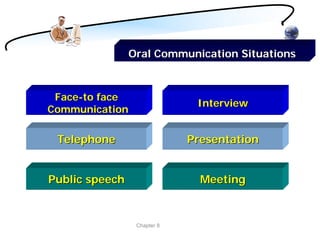
Oral Communication Situations


 Face-to face
                              Interview
Communication

 Telephone                   Presentation


Public speech                  Meeting


                 Chapter 8
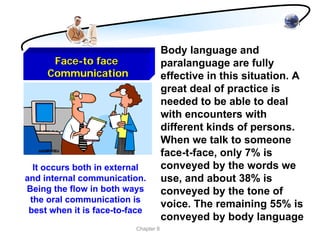
Body language and
      Face-to face                    paralanguage are fully
     Communication                    effective in this situation. A
                                      great deal of practice is
                                      needed to be able to deal
                                      with encounters with
                                      different kinds of persons.
                                      When we talk to someone
                                      face-t-face, only 7% is
  It occurs both in external          conveyed by the words we
and internal communication.           use, and about 38% is
Being the flow in both ways           conveyed by the tone of
 the oral communication is
                                      voice. The remaining 55% is
 best when it is face-to-face
                                      conveyed by body language
                          Chapter 8
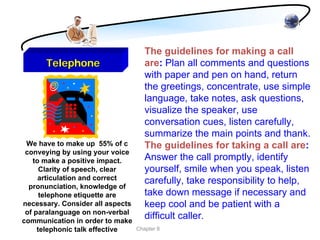
The guidelines for making a call
      Telephone                      are: Plan all comments and questions
                                     with paper and pen on hand, return
                                     the greetings, concentrate, use simple
                                     language, take notes, ask questions,
                                     visualize the speaker, use
                                     conversation cues, listen carefully,
                                     summarize the main points and thank.
 We have to make up 55% of c         The guidelines for taking a call are:
 conveying by using your voice
   to make a positive impact.        Answer the call promptly, identify
      Clarity of speech, clear       yourself, smile when you speak, listen
     articulation and correct        carefully, take responsibility to help,
  pronunciation, knowledge of
      telephone etiquette are        take down message if necessary and
necessary. Consider all aspects      keep cool and be patient with a
 of paralanguage on non-verbal
communication in order to make
                                     difficult caller.
     telephonic talk effective    Chapter 8
Presentation          It is formal, prepared to
                        talk on a specific topic,
                               delivered to a
                           knowledgeable and
                       interested audience and
  It is made to             has a face-to-face
internal and as         setting. Visual aids are
well as external          used to enhance the
     audience                 presentations.
                   Chapter 8
It is followed by
                                    applause rather than by
   Public Speech                      questions from the
                                            audience


  It is a face-to-face setting, but the
 distance between the speaker and
 the audience is great. Its purpose
 may be to entertain, to encourage,
  to inspire. Feedback is very little
and much depends on the speaker’s
skill in using gestures and using the
              microphone.

                        Chapter 8
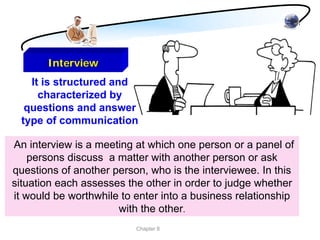
Interview
    It is structured and
      characterized by
   questions and answer
  type of communication

An interview is a meeting at which one person or a panel of
    persons discuss a matter with another person or ask
questions of another person, who is the interviewee. In this
situation each assesses the other in order to judge whether
it would be worthwhile to enter into a business relationship
                      with the other.
                          Chapter 8
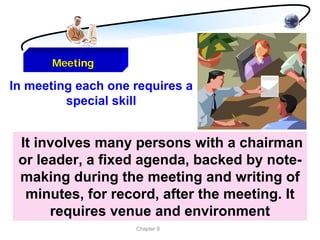
Meeting

In meeting each one requires a
         special skill


 It involves many persons with a chairman
 or leader, a fixed agenda, backed by note-
 making during the meeting and writing of
  minutes, for record, after the meeting. It
      requires venue and environment
                    Chapter 8
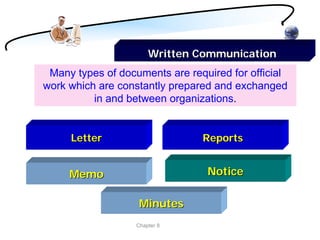
Written Communication
 Many types of documents are required for official
work which are constantly prepared and exchanged
          in and between organizations.


     Letter                     Reports


     Memo                        Notice

                    Minutes
                   Chapter 8
Letter


It is the most widely used
       form of written
 communication having a
       complex layout

         Chapter 8
Memo

 Memorandum is the common form of
communication within the organization
 usually called a memo used in many
    situations both for one-to-one
 communications as well as for giving
  information to a group of persons

               Chapter 8
Notice
       A notice is used when many people in the
organization have to be given the same information. It
is the mist common method of mass communication
 within the organization. A notice should be short; its
 language should be simple, and the type should be
    large and well spaced for easy reading. It must
  include the points : 1. whom the notice is for 2. the
   reason for the notice 3. the details of the event 4.
          whom to call for more information?

                       Chapter 8
Report

     A report is used for presenting
  information. Report writing requires
careful research, collection and analysis
 of data, well-organized presentation of
        the findings, conclusions,
  recommendations and suggestions

                 Chapter 8
Minutes

  Minutes are the written record of decisions
taken at a meeting. Different bodies have their
     own convention of are recording the
 discussion and then decisions. Minutes may
  be written by hand or typed and pasted in a
  minute book, or typed and filed in a minute
       file. Minutes are legal documents

                   Chapter 8

Communication in Different situations.

  • 1.
    Communications indifferent situations Chapter 8
  • 2.
    The different kindof communication skill is required as per the situation and the functions of the organizations. Communication takes on different characteristics as the situation changes Chapter 8
  • 3.
    Oral Communication Situations Face-to face Interview Communication Telephone Presentation Public speech Meeting Chapter 8
  • 4.
    Body language and Face-to face paralanguage are fully Communication effective in this situation. A great deal of practice is needed to be able to deal with encounters with different kinds of persons. When we talk to someone face-t-face, only 7% is It occurs both in external conveyed by the words we and internal communication. use, and about 38% is Being the flow in both ways conveyed by the tone of the oral communication is voice. The remaining 55% is best when it is face-to-face conveyed by body language Chapter 8
  • 5.
    The guidelines formaking a call Telephone are: Plan all comments and questions with paper and pen on hand, return the greetings, concentrate, use simple language, take notes, ask questions, visualize the speaker, use conversation cues, listen carefully, summarize the main points and thank. We have to make up 55% of c The guidelines for taking a call are: conveying by using your voice to make a positive impact. Answer the call promptly, identify Clarity of speech, clear yourself, smile when you speak, listen articulation and correct carefully, take responsibility to help, pronunciation, knowledge of telephone etiquette are take down message if necessary and necessary. Consider all aspects keep cool and be patient with a of paralanguage on non-verbal communication in order to make difficult caller. telephonic talk effective Chapter 8
  • 6.
    Presentation It is formal, prepared to talk on a specific topic, delivered to a knowledgeable and interested audience and It is made to has a face-to-face internal and as setting. Visual aids are well as external used to enhance the audience presentations. Chapter 8
  • 7.
    It is followedby applause rather than by Public Speech questions from the audience It is a face-to-face setting, but the distance between the speaker and the audience is great. Its purpose may be to entertain, to encourage, to inspire. Feedback is very little and much depends on the speaker’s skill in using gestures and using the microphone. Chapter 8
  • 8.
    Interview It is structured and characterized by questions and answer type of communication An interview is a meeting at which one person or a panel of persons discuss a matter with another person or ask questions of another person, who is the interviewee. In this situation each assesses the other in order to judge whether it would be worthwhile to enter into a business relationship with the other. Chapter 8
  • 9.
    Meeting In meeting eachone requires a special skill It involves many persons with a chairman or leader, a fixed agenda, backed by note- making during the meeting and writing of minutes, for record, after the meeting. It requires venue and environment Chapter 8
  • 10.
    Written Communication Manytypes of documents are required for official work which are constantly prepared and exchanged in and between organizations. Letter Reports Memo Notice Minutes Chapter 8
  • 11.
    Letter It is themost widely used form of written communication having a complex layout Chapter 8
  • 12.
    Memo Memorandum isthe common form of communication within the organization usually called a memo used in many situations both for one-to-one communications as well as for giving information to a group of persons Chapter 8
  • 13.
    Notice A notice is used when many people in the organization have to be given the same information. It is the mist common method of mass communication within the organization. A notice should be short; its language should be simple, and the type should be large and well spaced for easy reading. It must include the points : 1. whom the notice is for 2. the reason for the notice 3. the details of the event 4. whom to call for more information? Chapter 8
  • 14.
    Report A report is used for presenting information. Report writing requires careful research, collection and analysis of data, well-organized presentation of the findings, conclusions, recommendations and suggestions Chapter 8
  • 15.
    Minutes Minutesare the written record of decisions taken at a meeting. Different bodies have their own convention of are recording the discussion and then decisions. Minutes may be written by hand or typed and pasted in a minute book, or typed and filed in a minute file. Minutes are legal documents Chapter 8