Communication Structure in a Group Divye Bokdia IIT Guwahati
Affective or “liking ”  structure Sociometric methods to find out the structure. Personal Interview to plot the “affective links” between all the members.
Communication Structure Who communicate in small group and with whom  officially and unofficially . Channel of communication in a group often reflects the structure.
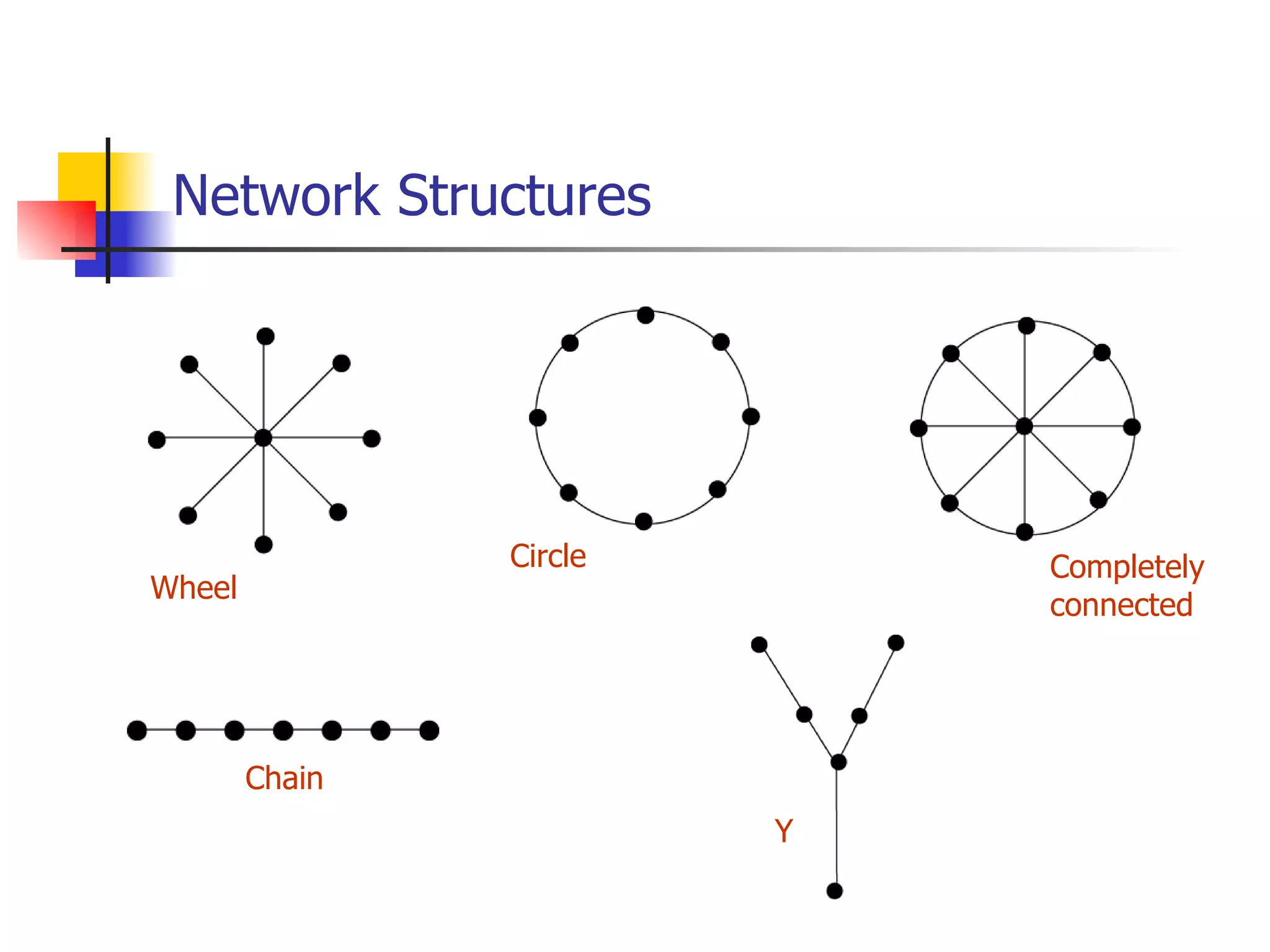
Network Structures Wheel Circle Chain Y Completely  connected
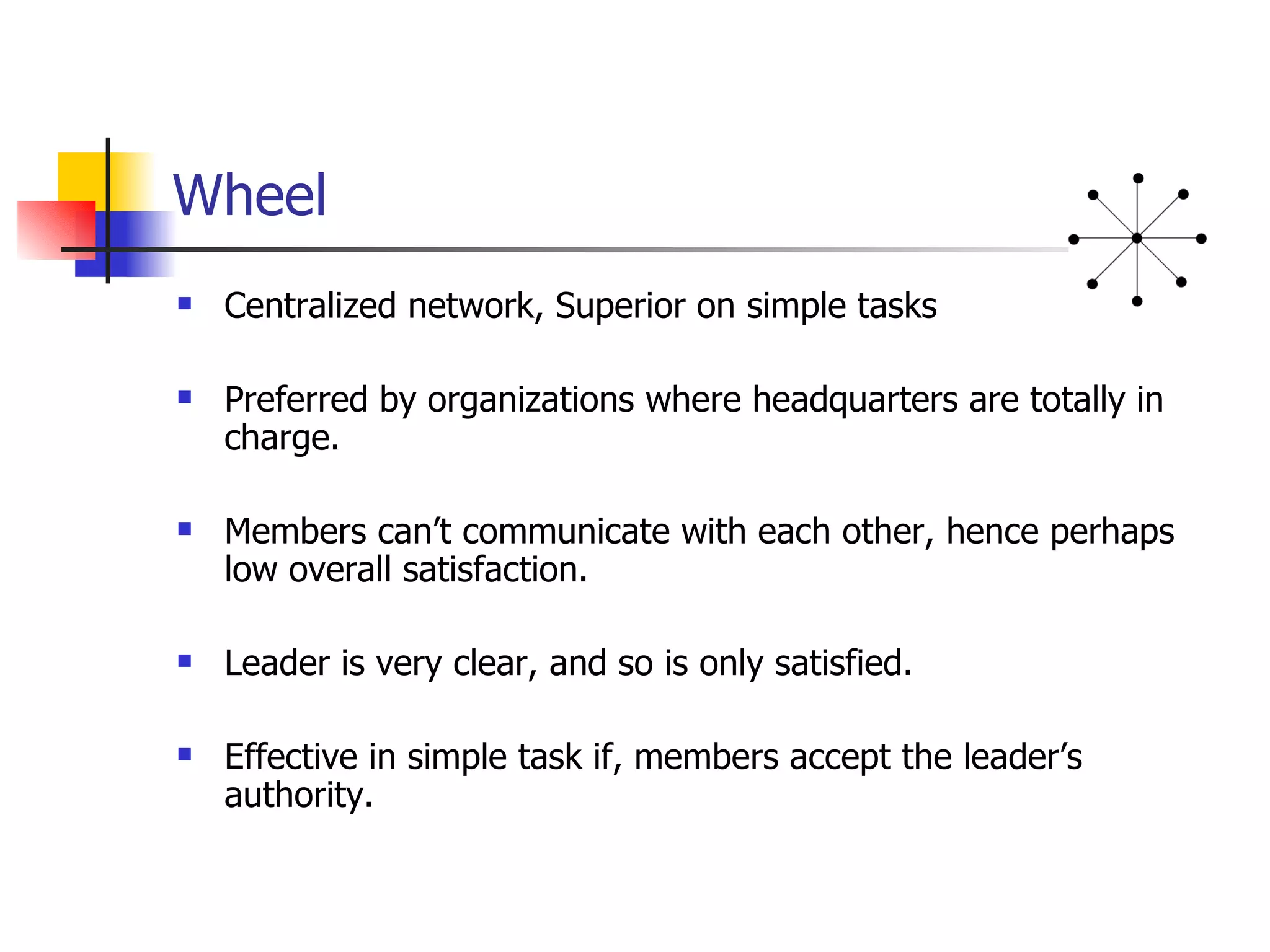
Wheel Centralized network, Superior on simple tasks Preferred by organizations where headquarters are totally in charge. Members can’t communicate with each other, hence perhaps low overall satisfaction. Leader is very clear, and so is only satisfied. Effective in simple task if, members accept the leader’s authority.
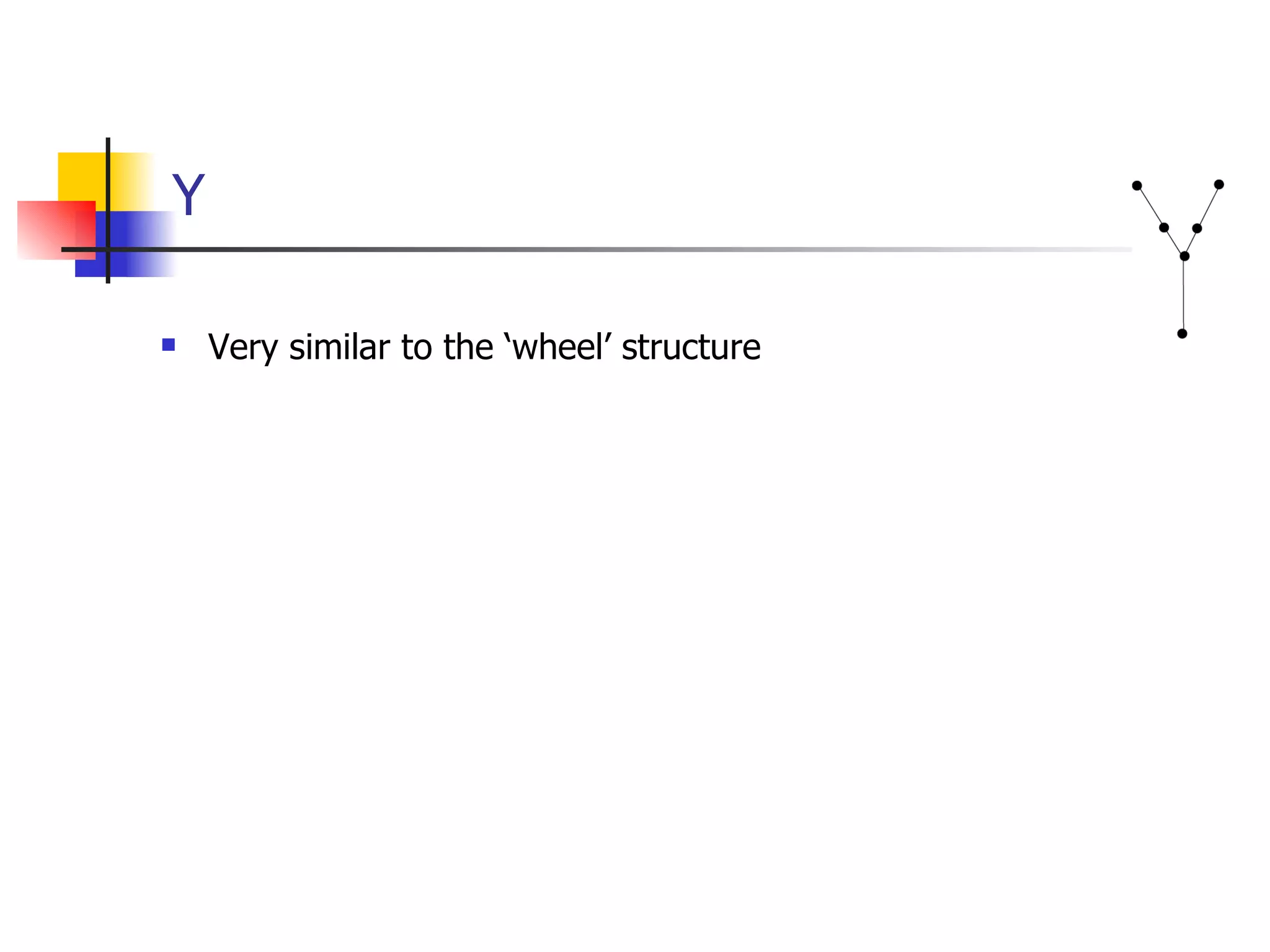
Y Very similar to the ‘wheel’ structure
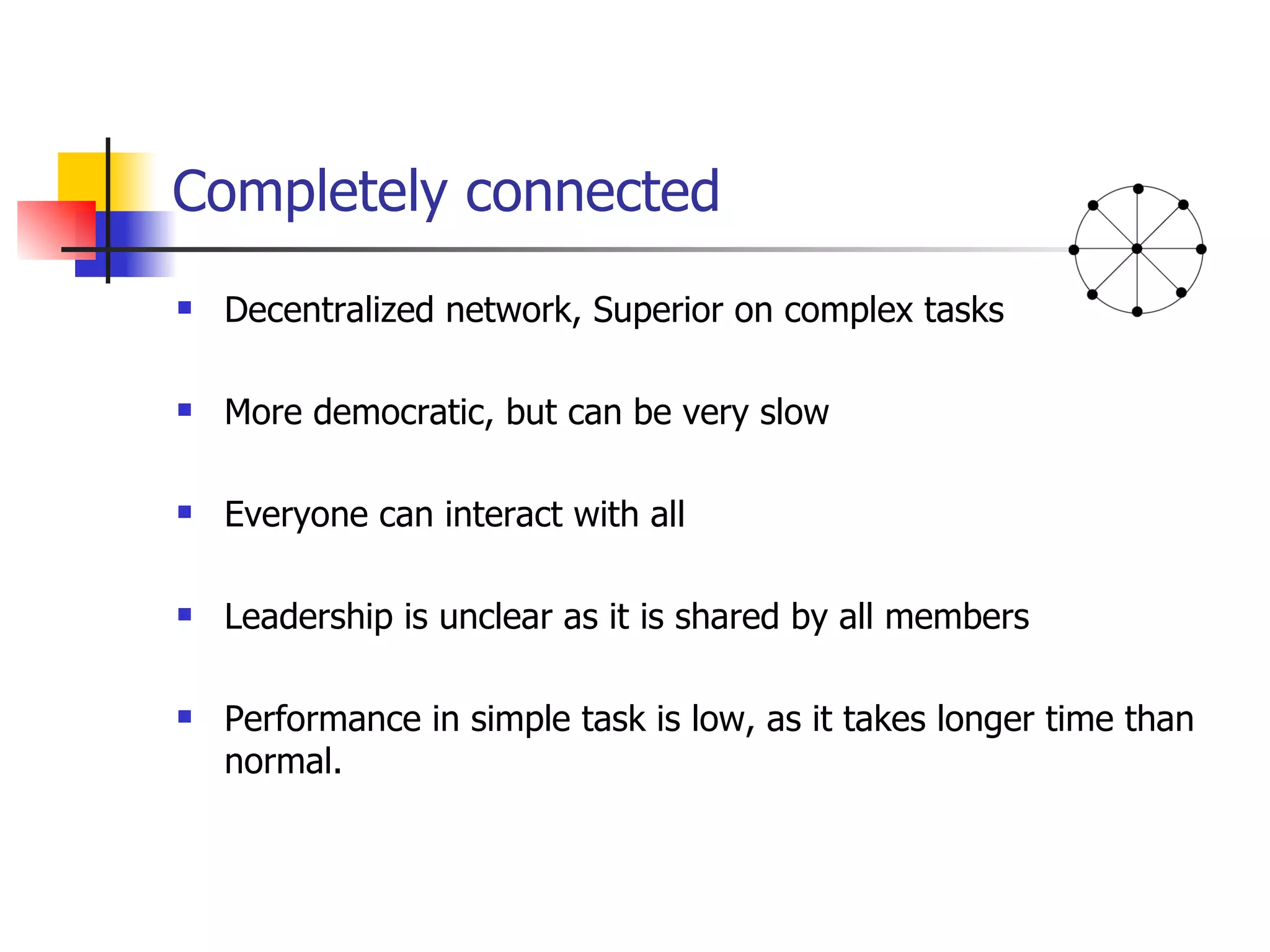
Completely connected   Decentralized network, Superior on complex tasks More democratic, but can be very slow Everyone can interact with all Leadership is unclear as it is shared by all members Performance in simple task is low, as it takes longer time than normal.
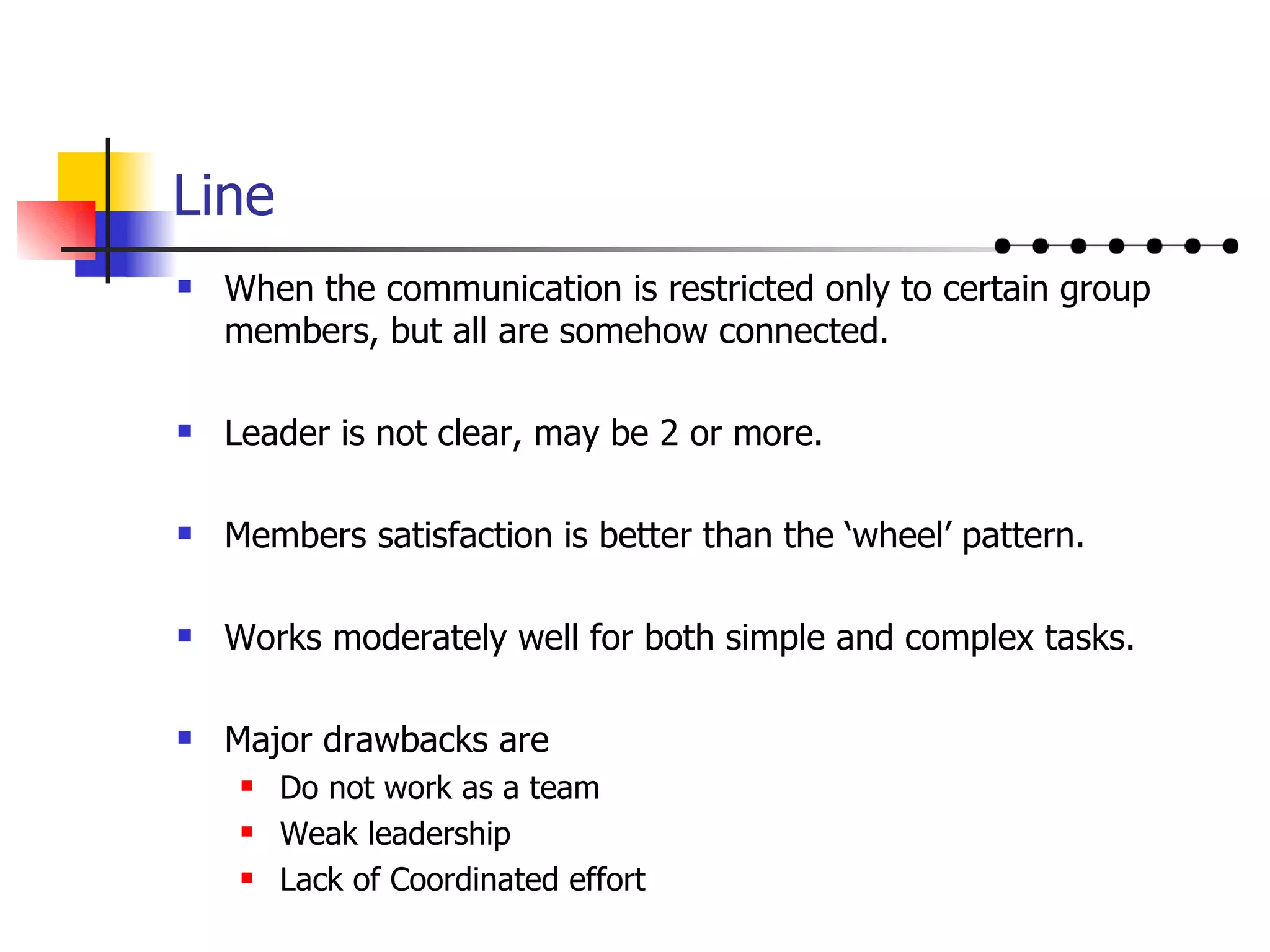
Line When the communication is restricted only to certain group members, but all are somehow connected. Leader is not clear, may be 2 or more. Members satisfaction is better than the ‘wheel’ pattern. Works moderately well for both simple and complex tasks. Major drawbacks are  Do not work as a team Weak leadership Lack of Coordinated effort
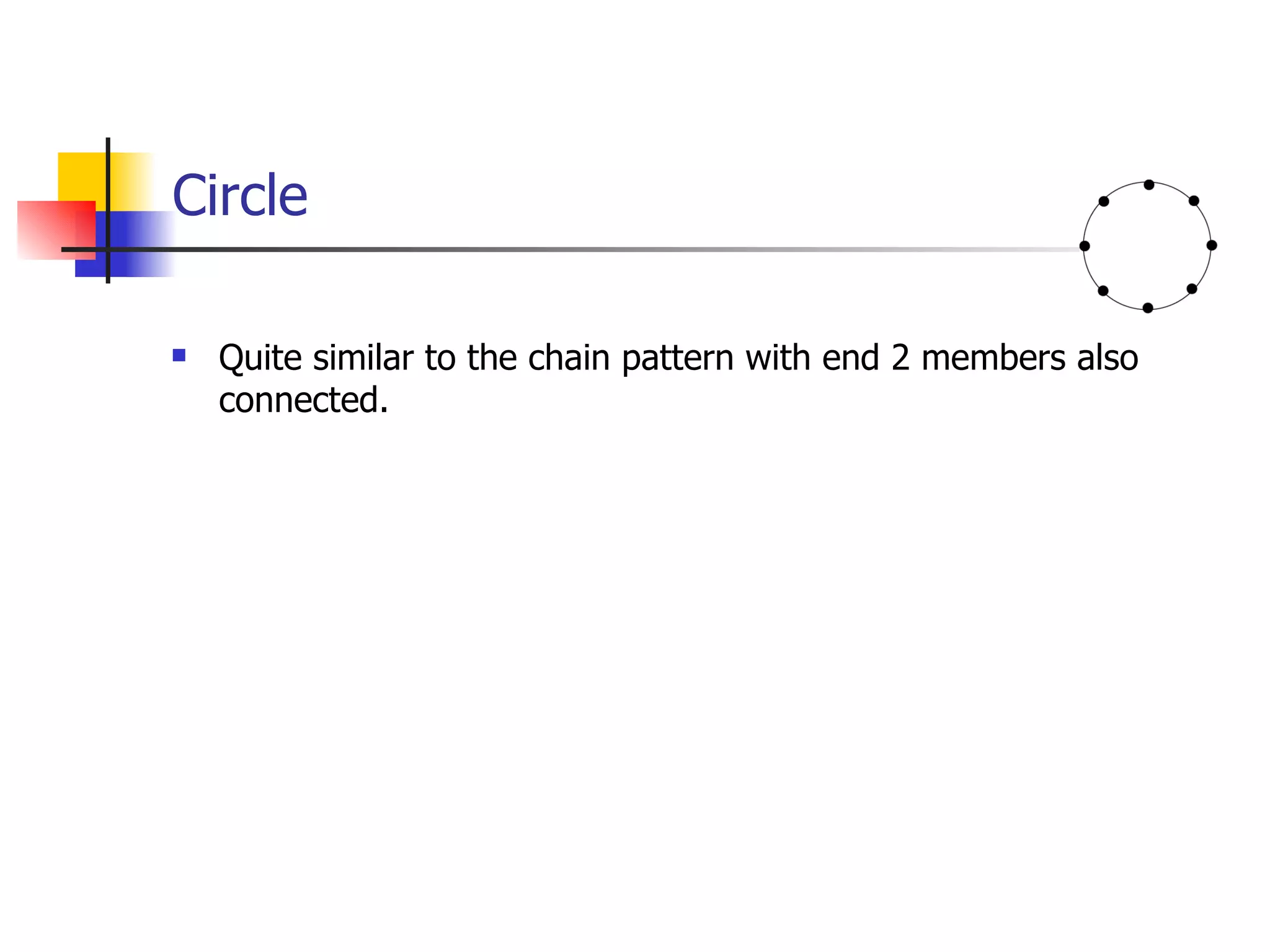
Circle Quite similar to the chain pattern with end 2 members also connected.
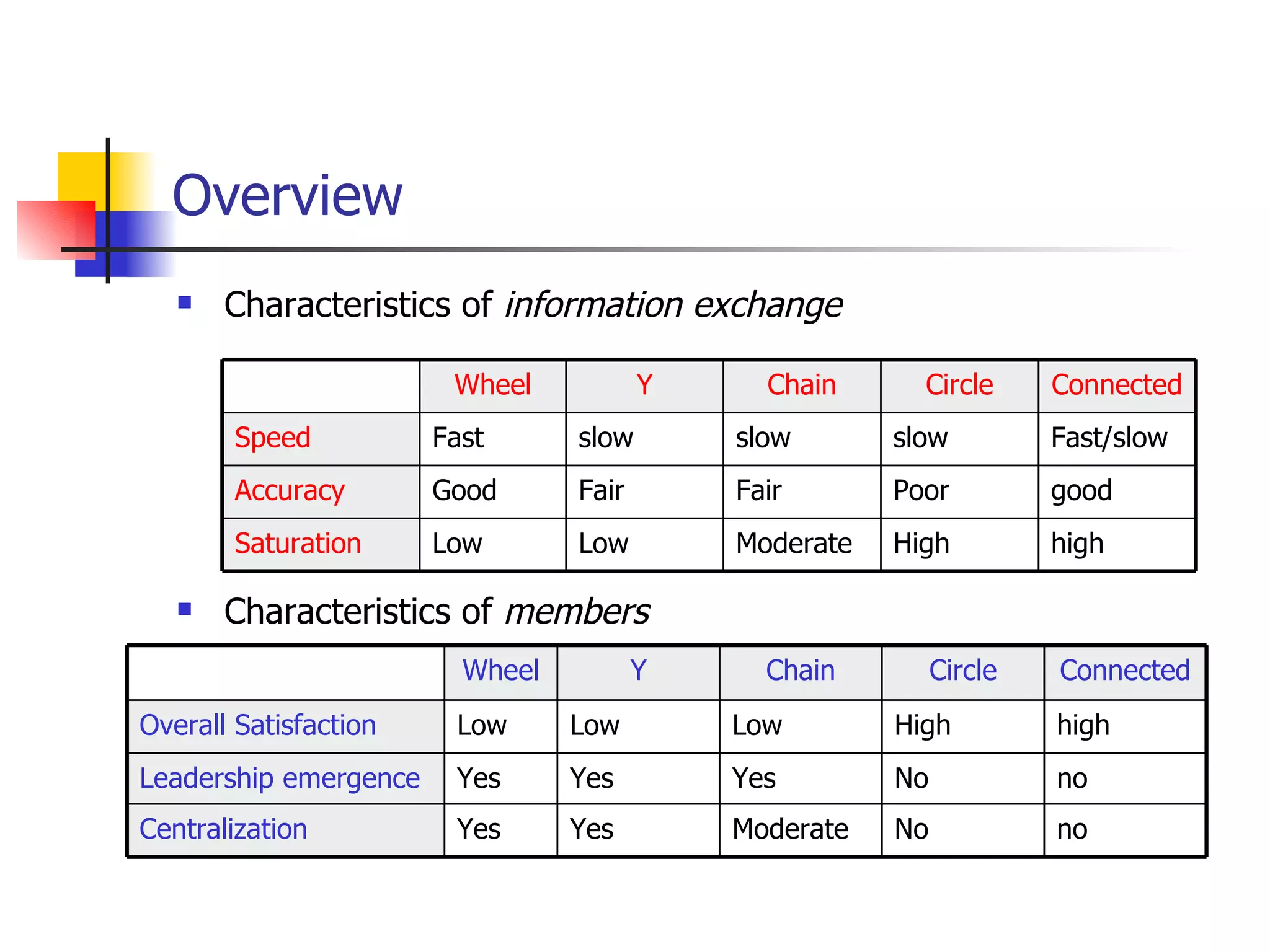
Overview Characteristics of  information exchange Characteristics of  members high High Moderate Low Low Saturation good Poor Fair Fair Good Accuracy Fast/slow slow slow slow Fast Speed Connected Circle Chain Y Wheel no No Moderate Yes Yes Centralization no No Yes Yes Yes Leadership emergence high High Low Low Low Overall Satisfaction Connected Circle Chain Y Wheel
Thanks

Communication Structure in a Group

  • 1.
    Communication Structure ina Group Divye Bokdia IIT Guwahati
  • 2.
    Affective or “liking” structure Sociometric methods to find out the structure. Personal Interview to plot the “affective links” between all the members.
  • 3.
    Communication Structure Whocommunicate in small group and with whom officially and unofficially . Channel of communication in a group often reflects the structure.
  • 4.
    Network Structures WheelCircle Chain Y Completely connected
  • 5.
    Wheel Centralized network,Superior on simple tasks Preferred by organizations where headquarters are totally in charge. Members can’t communicate with each other, hence perhaps low overall satisfaction. Leader is very clear, and so is only satisfied. Effective in simple task if, members accept the leader’s authority.
  • 6.
    Y Very similarto the ‘wheel’ structure
  • 7.
    Completely connected Decentralized network, Superior on complex tasks More democratic, but can be very slow Everyone can interact with all Leadership is unclear as it is shared by all members Performance in simple task is low, as it takes longer time than normal.
  • 8.
    Line When thecommunication is restricted only to certain group members, but all are somehow connected. Leader is not clear, may be 2 or more. Members satisfaction is better than the ‘wheel’ pattern. Works moderately well for both simple and complex tasks. Major drawbacks are Do not work as a team Weak leadership Lack of Coordinated effort
  • 9.
    Circle Quite similarto the chain pattern with end 2 members also connected.
  • 10.
    Overview Characteristics of information exchange Characteristics of members high High Moderate Low Low Saturation good Poor Fair Fair Good Accuracy Fast/slow slow slow slow Fast Speed Connected Circle Chain Y Wheel no No Moderate Yes Yes Centralization no No Yes Yes Yes Leadership emergence high High Low Low Low Overall Satisfaction Connected Circle Chain Y Wheel
  • 11.