Interpersonal
Communication


Chapter 11
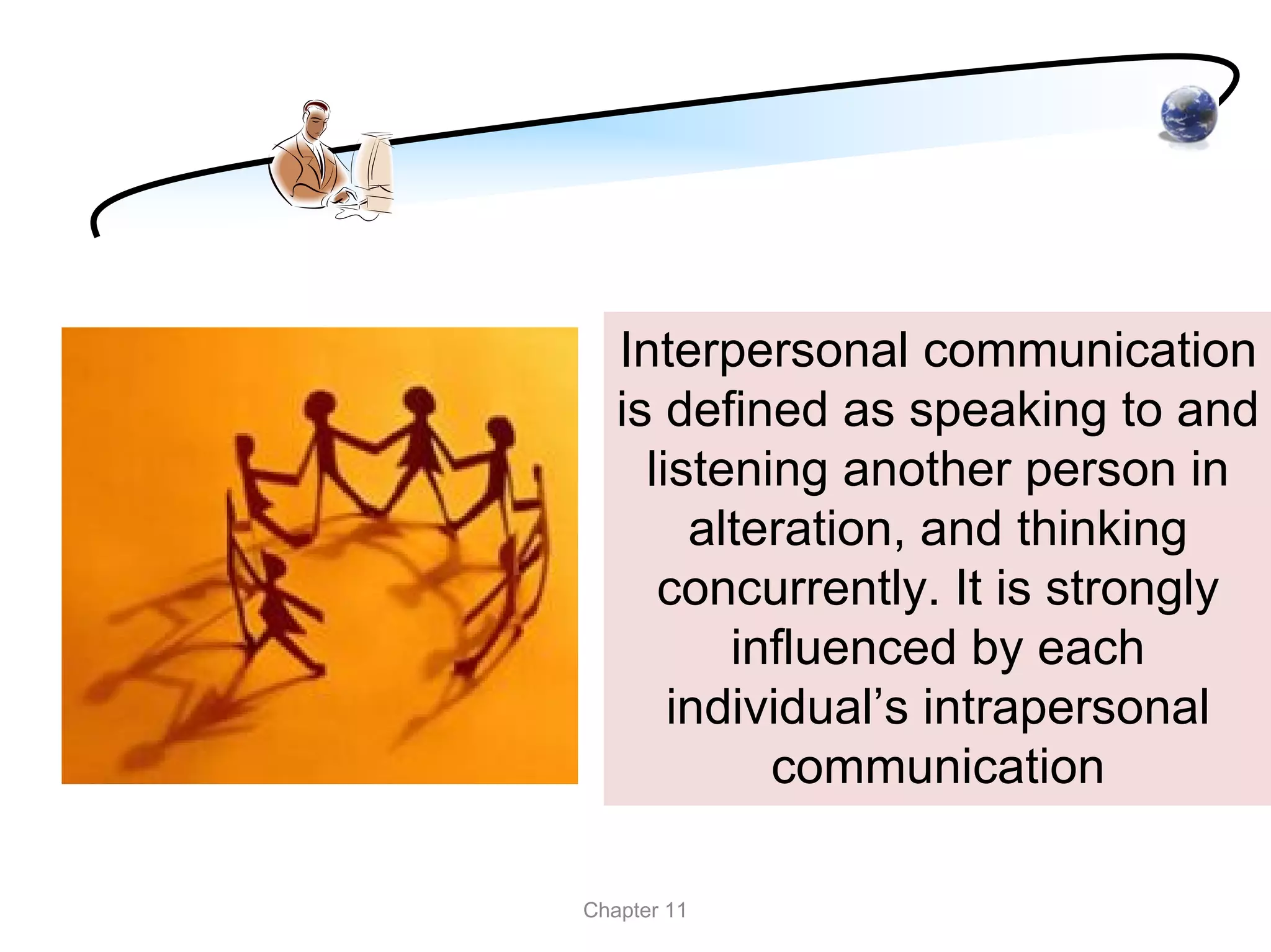
Interpersonal communication
   is defined as speaking to and
     listening another person in
        alteration, and thinking
      concurrently. It is strongly
          influenced by each
       individual’s intrapersonal
            communication

Chapter 11
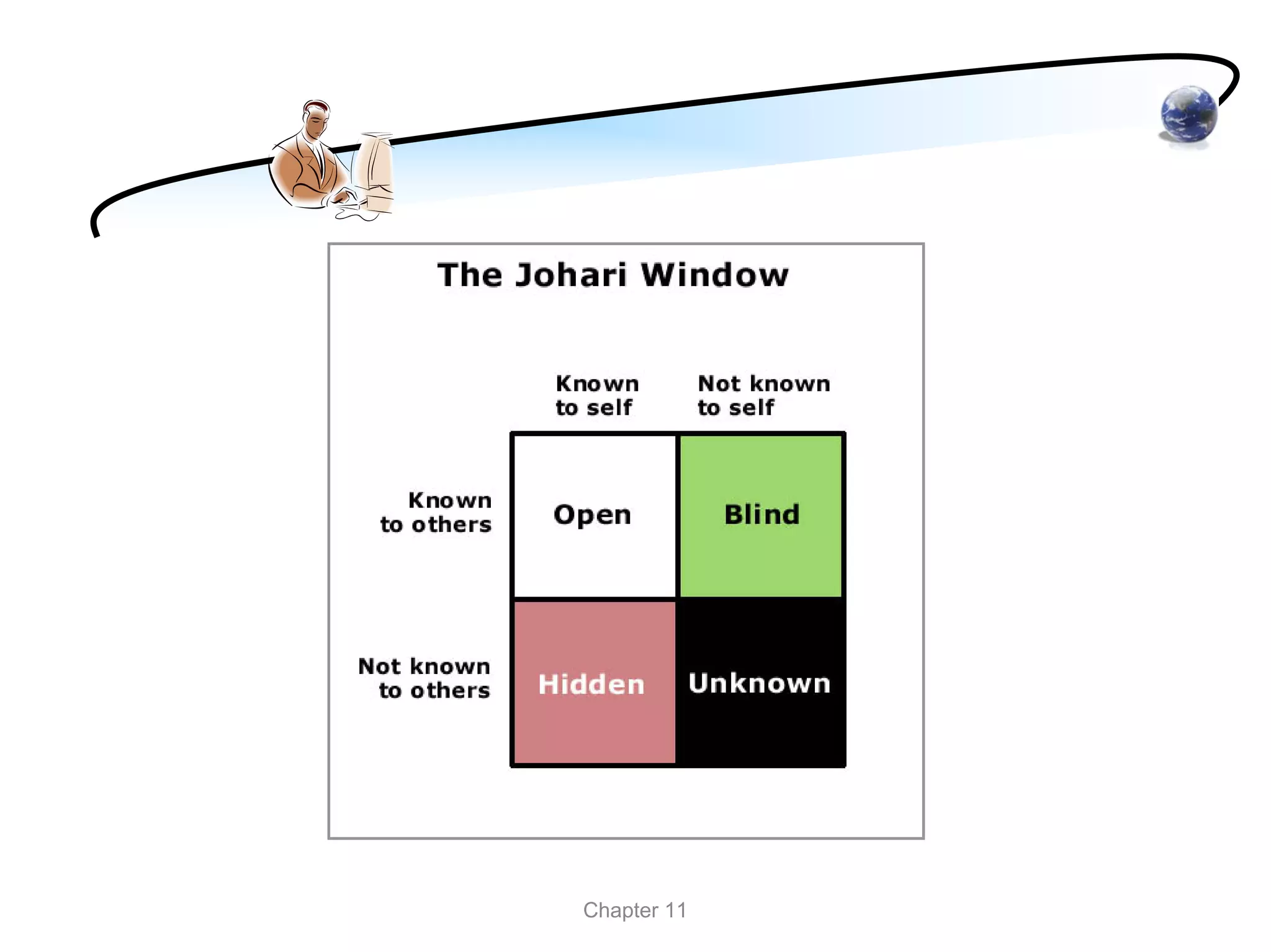
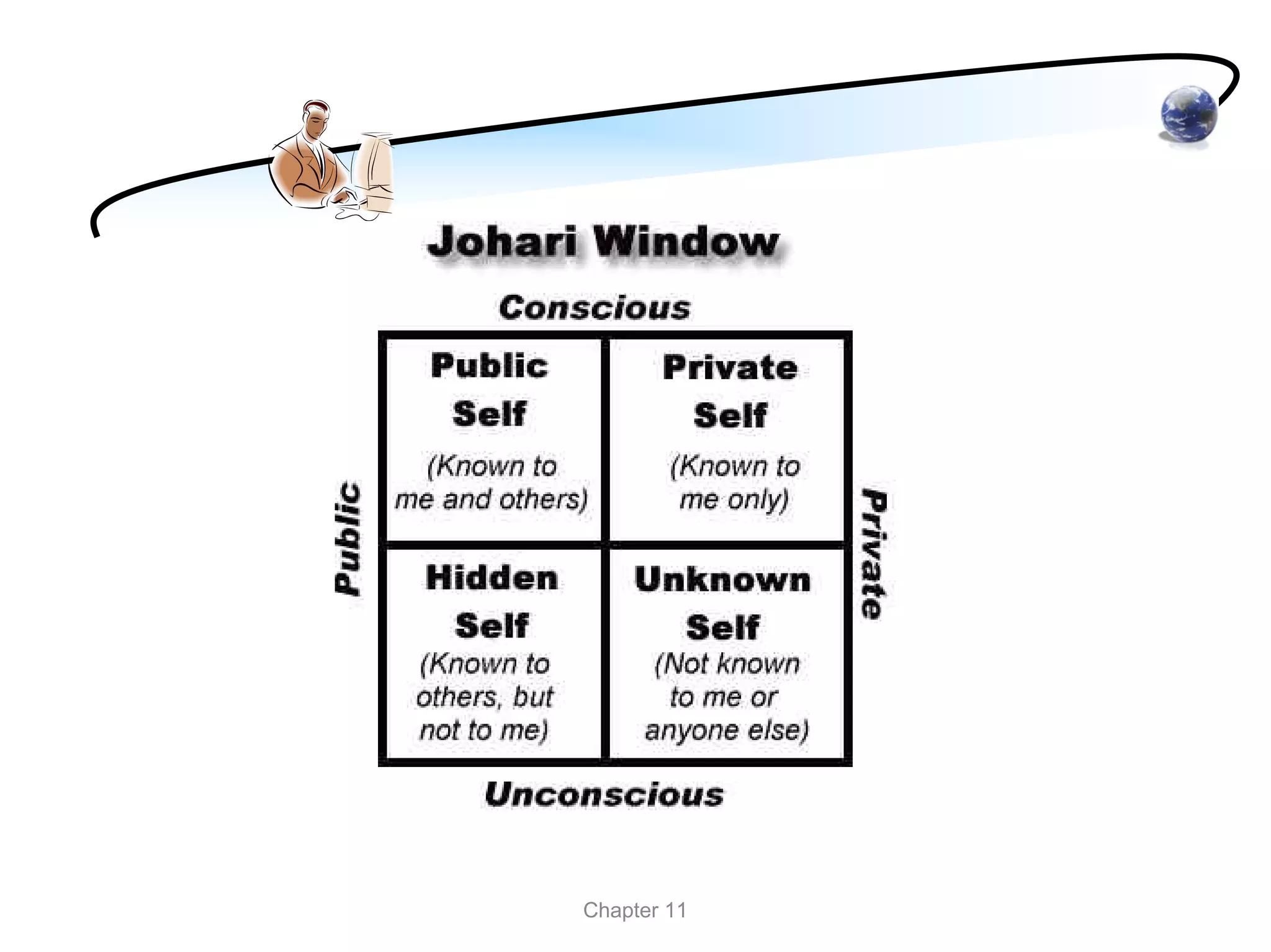
The useful model, the Johari
 Window (indicates the relationship
      between intrapersonal and
interpersonal communication) shows
    the four aspects of a person’s
 awareness: open, hidden, blind and
              unknown.


              Chapter 11
Chapter 11
Chapter 11
As acquaintance and trust between
   you and me grows, I may feel
comfortable about disclosing more
personal details about myself. This
 process is called self-disclosure


               Chapter 11
Communication skills


         There are 4 verbal communication skills; two are
    encoding skills: speaking and writing; two are decoding
    skills: listening and reading. The fifth is the intrapersonal
    skill is crucial to both encoding and decoding: thought or
     reasoning and competence in dealing with emotion or
        feeling. Language skill affects a person’s ability to
      analyze one’s own purposes and intentions and the
       ability to express oneself. Our communication skills
     deficiencies also limit the ideas that are available to us
                      and limit our ability to think.


                              Chapter 11
Skills for interpersonal communication


     The skills needed for interpersonal
 communication are self-awareness, control
over oneself, speaking clearly and pleasantly,
  good manners and etiquettes, Listening,
 understanding of non-verbal behavior and
                  feedback


                   Chapter 11
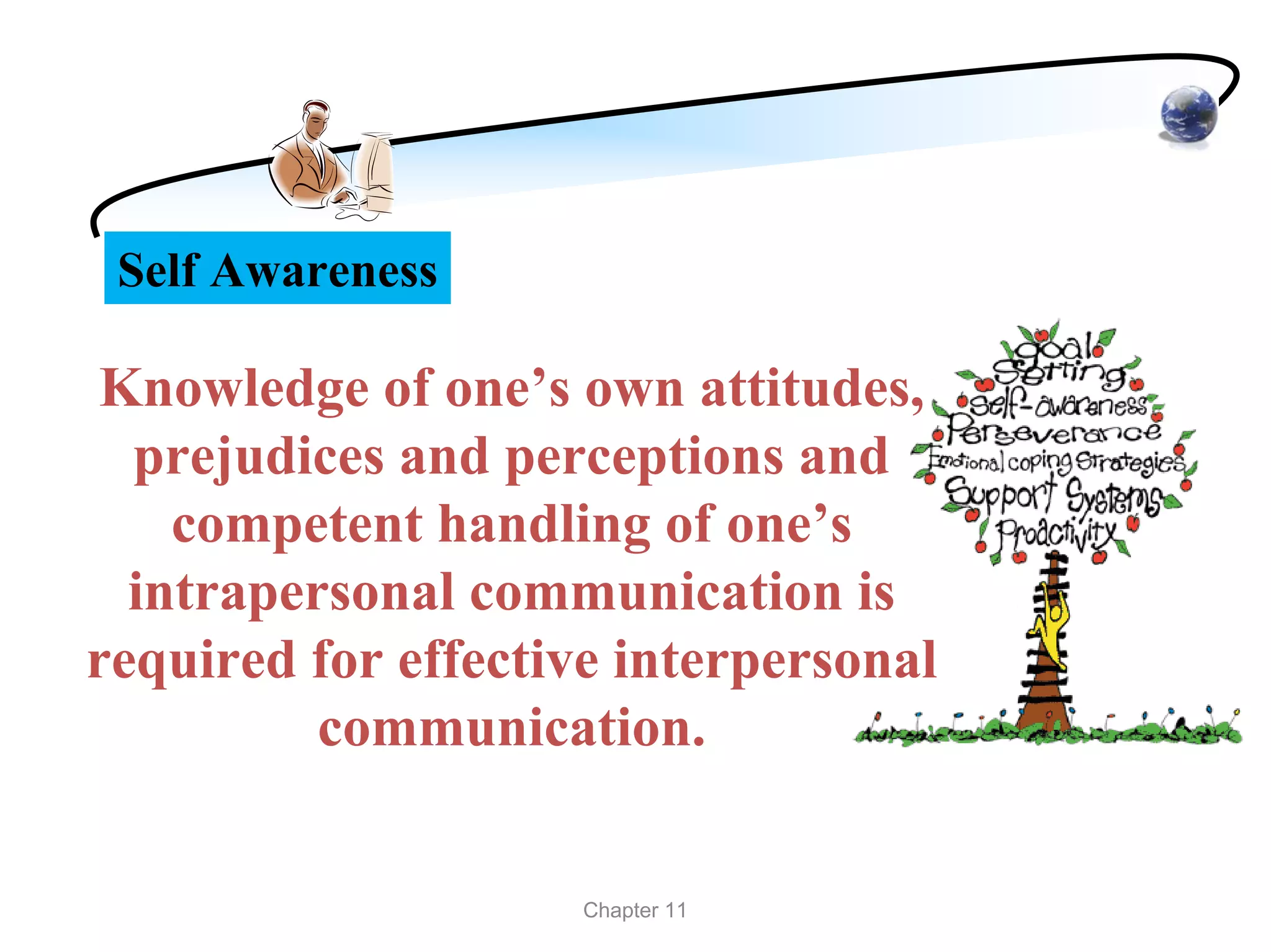
Self Awareness

 Knowledge of one’s own attitudes,
  prejudices and perceptions and
    competent handling of one’s
  intrapersonal communication is
required for effective interpersonal
          communication.


                     Chapter 11
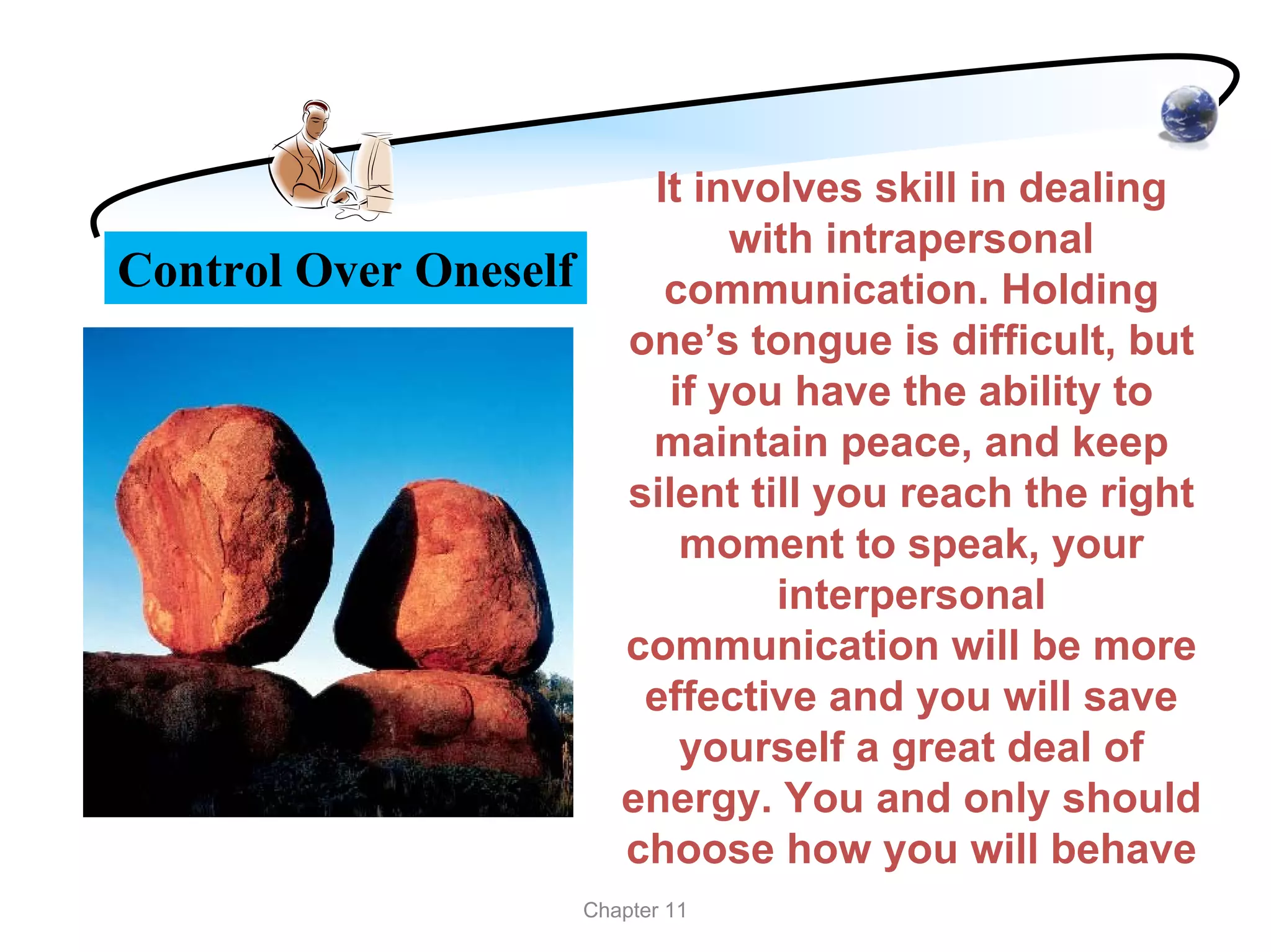
It involves skill in dealing
                                 with intrapersonal
Control Over Oneself        communication. Holding
                          one’s tongue is difficult, but
                             if you have the ability to
                           maintain peace, and keep
                          silent till you reach the right
                              moment to speak, your
                                   interpersonal
                          communication will be more
                           effective and you will save
                              yourself a great deal of
                          energy. You and only should
                          choose how you will behave
                       Chapter 11
Speaking clearly & Pleasantly
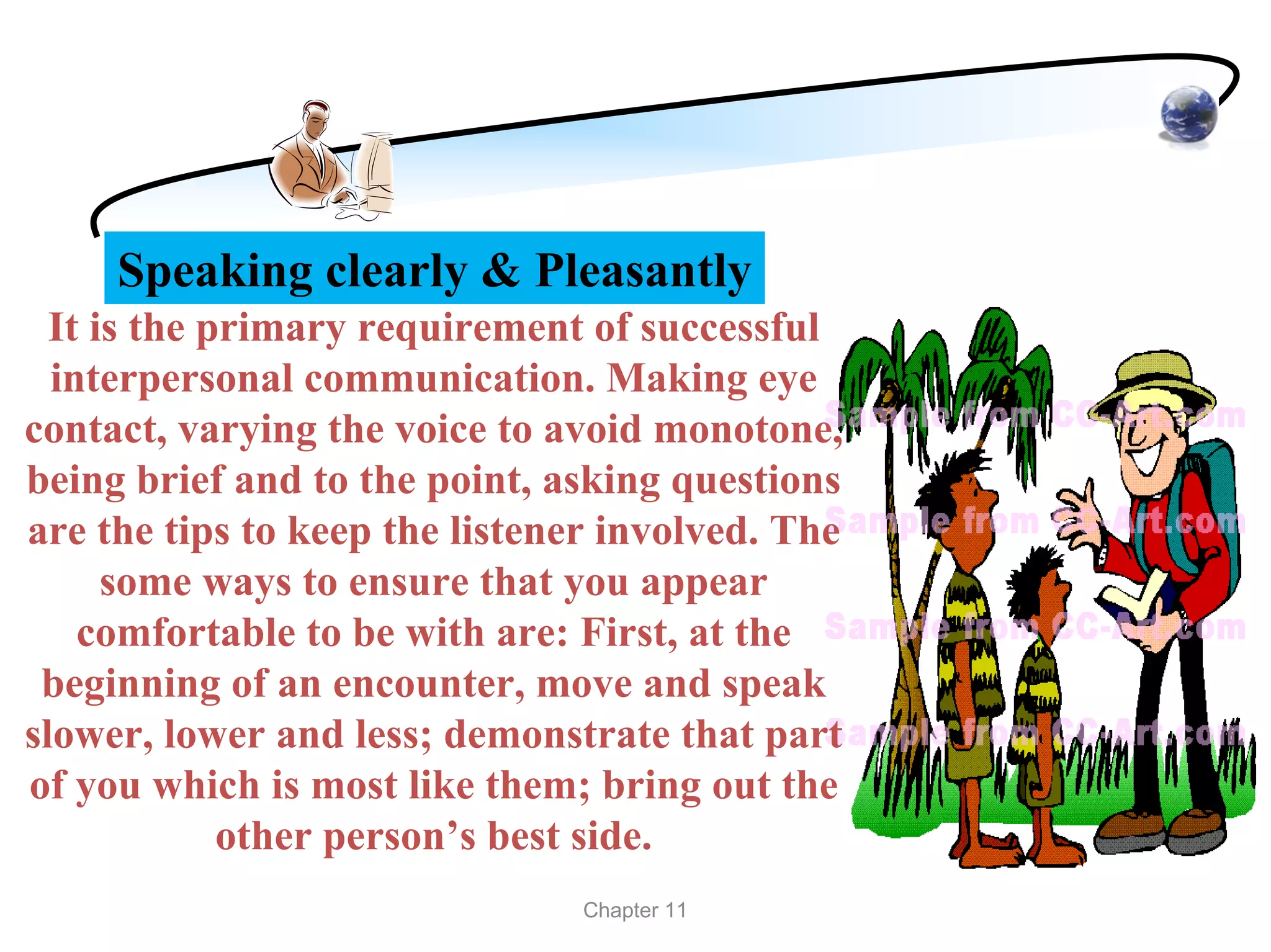
  It is the primary requirement of successful
  interpersonal communication. Making eye
contact, varying the voice to avoid monotone,
being brief and to the point, asking questions
are the tips to keep the listener involved. The
      some ways to ensure that you appear
    comfortable to be with are: First, at the
 beginning of an encounter, move and speak
slower, lower and less; demonstrate that part
of you which is most like them; bring out the
             other person’s best side.
                                Chapter 11
Good Manners and Etiquettes
 Knowledge and
   practice of
 proper etiquette
     result in
    successful
  conversation
                   Chapter 11
Introduction
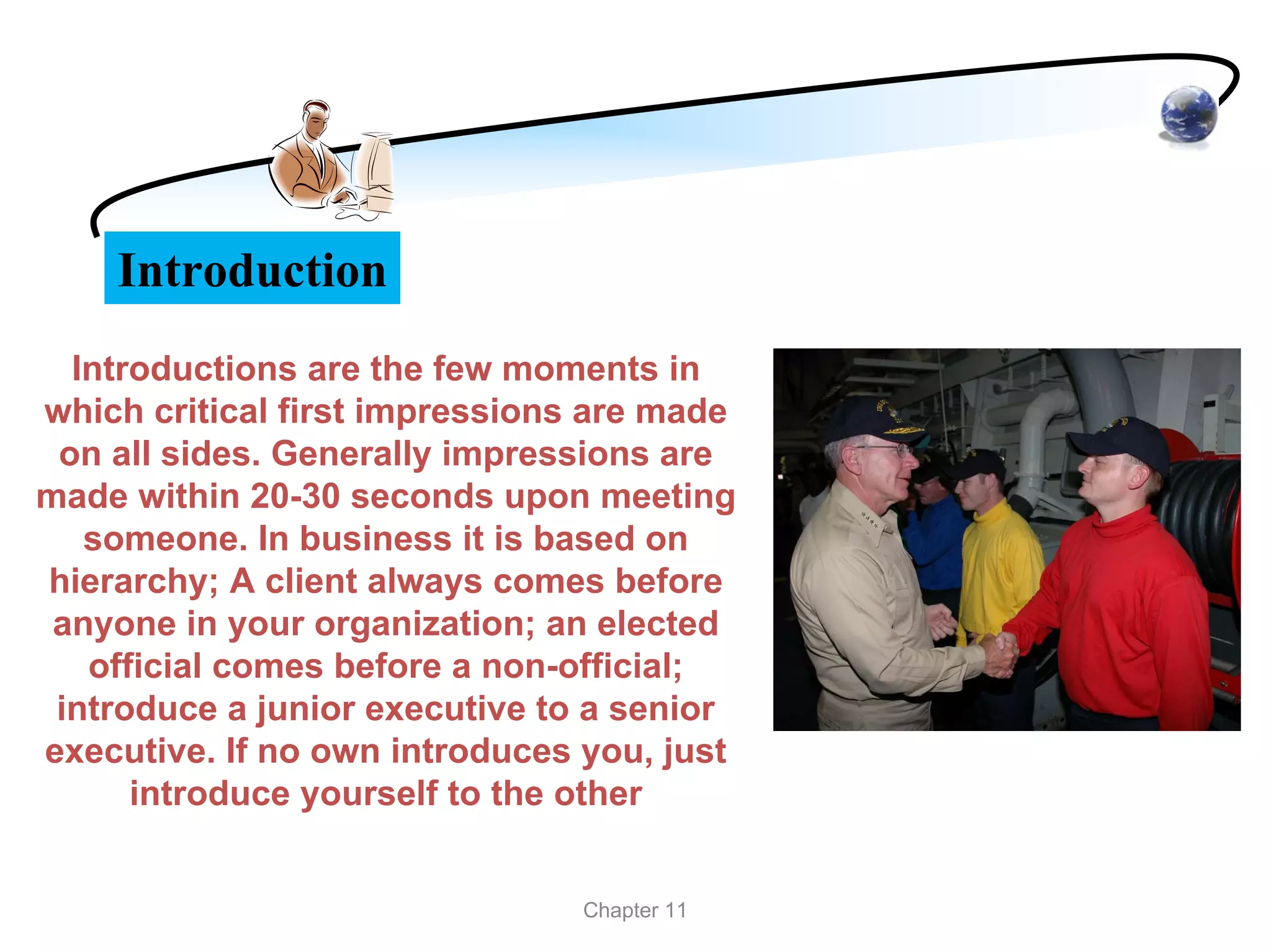
  Introductions are the few moments in
which critical first impressions are made
 on all sides. Generally impressions are
made within 20-30 seconds upon meeting
   someone. In business it is based on
hierarchy; A client always comes before
 anyone in your organization; an elected
   official comes before a non-official;
 introduce a junior executive to a senior
executive. If no own introduces you, just
      introduce yourself to the other


                                Chapter 11
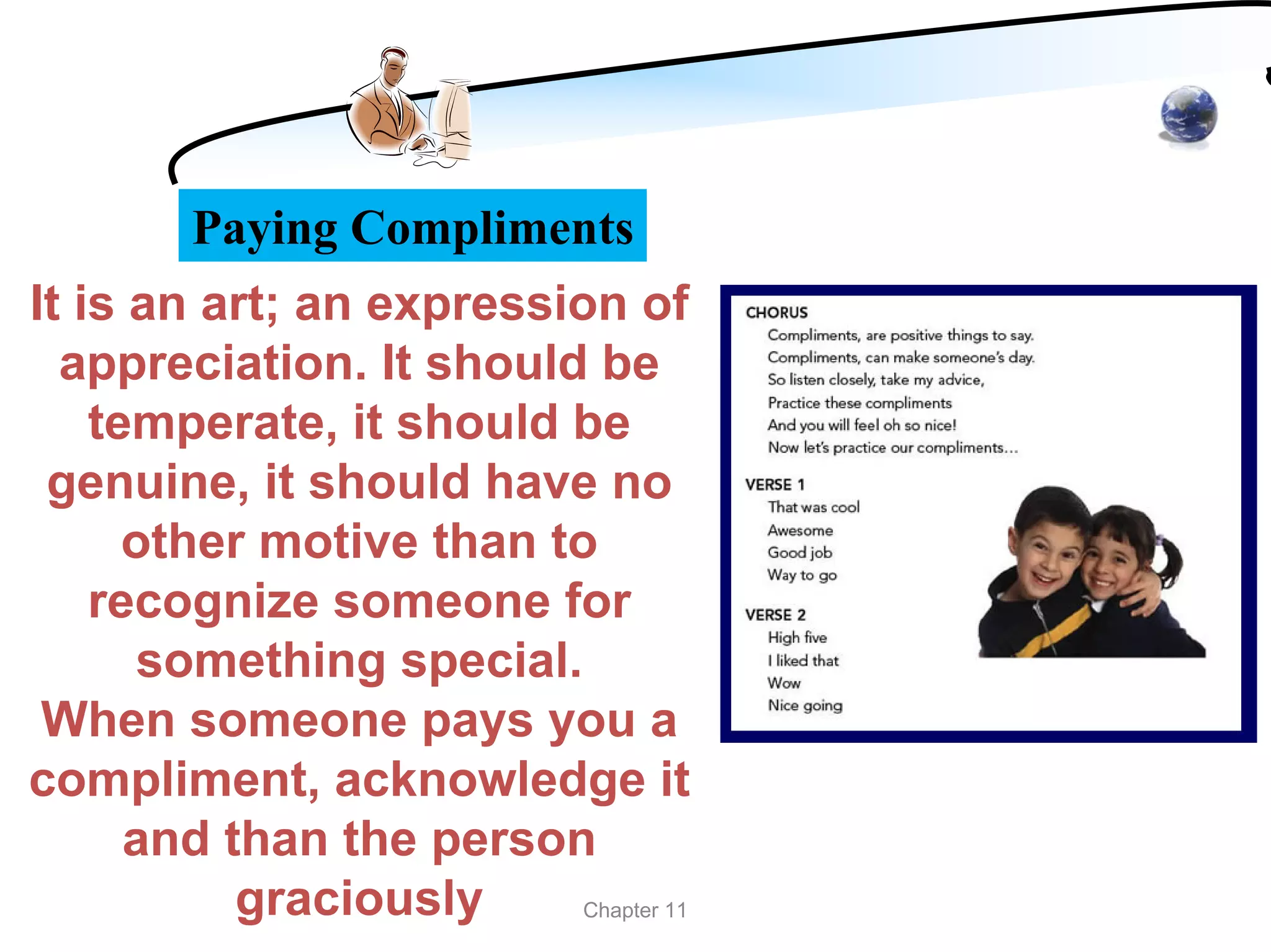
Paying Compliments
It is an art; an expression of
  appreciation. It should be
    temperate, it should be
 genuine, it should have no
      other motive than to
    recognize someone for
       something special.
 When someone pays you a
compliment, acknowledge it
      and than the person
           graciously     Chapter 11
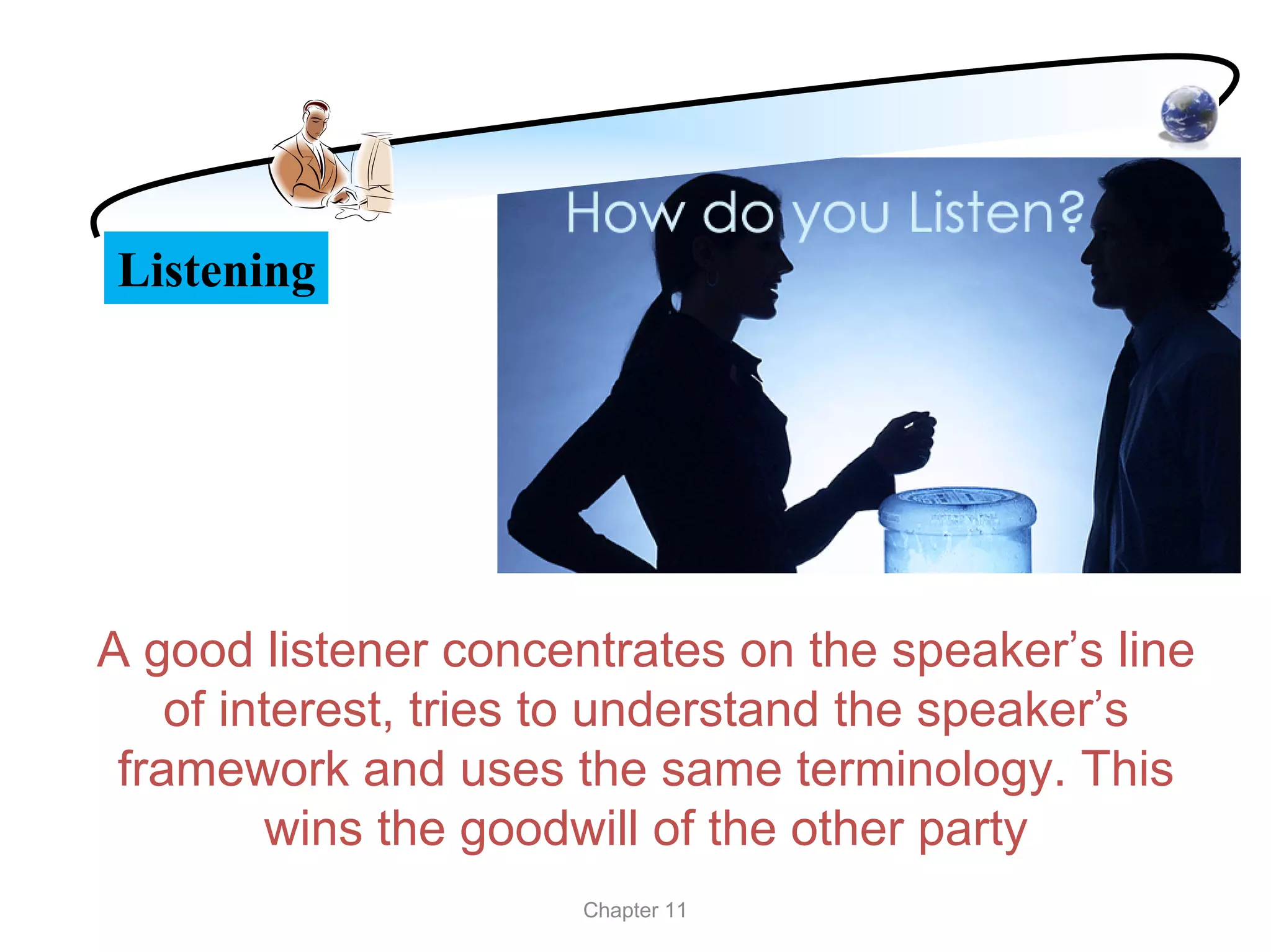
Listening


A good listener concentrates on the speaker’s line
    of interest, tries to understand the speaker’s
 framework and uses the same terminology. This
          wins the goodwill of the other party
                      Chapter 11
Understanding of non-verbal behavior

                 Ability to sense the feelings
                behind words from the body
              language develops with practice.
              We must listen with eyes as well
               as the ears. Good interpersonal
                skill depends a great deal on
               control and command of one’s
                        body language
                    Chapter 11
Being the most delicate and difficult skills of
             interpersonal communication, it requires
Feedback   tact, honesty and self-control. Give feedback
            immediately or soon after the event; give it
           in a positive manner; be specific, not general
            or vague; give feedback only on the aspects
           which the person can control and correct; be
                 sure of your own motive inn giving
             feedback. While accepting feedback seek
                and receive it with genuine desire to
                  improve; be non-defensive; listen
           attentively; if vague feedback is offered, seek
            clarification and ask for specific instances;
                  think over the received feedback
                     Chapter 11
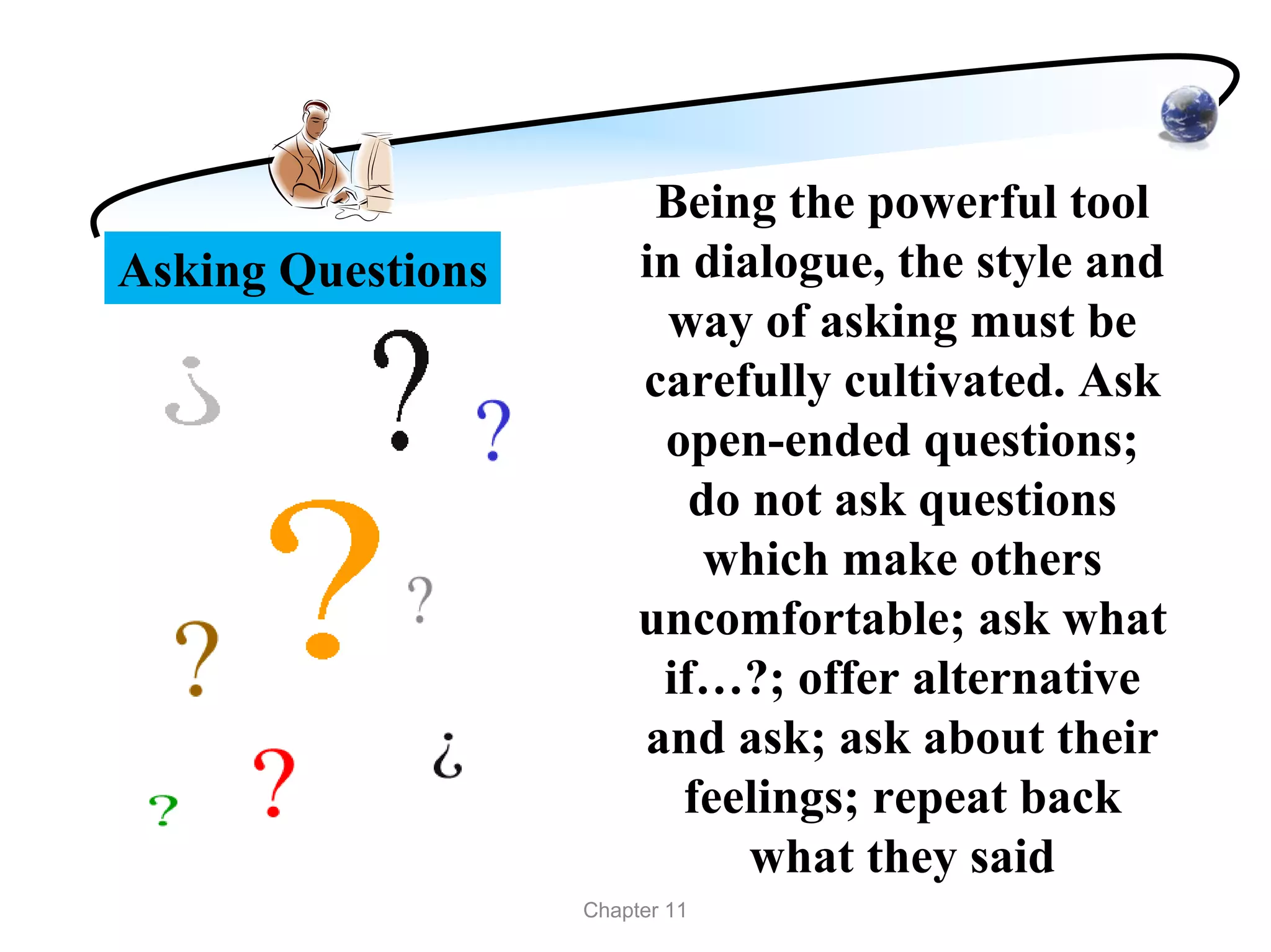
Being the powerful tool
Asking Questions        in dialogue, the style and
                          way of asking must be
                        carefully cultivated. Ask
                         open-ended questions;
                           do not ask questions
                            which make others
                        uncomfortable; ask what
                         if…?; offer alternative
                        and ask; ask about their
                          feelings; repeat back
                              what they said
                   Chapter 11
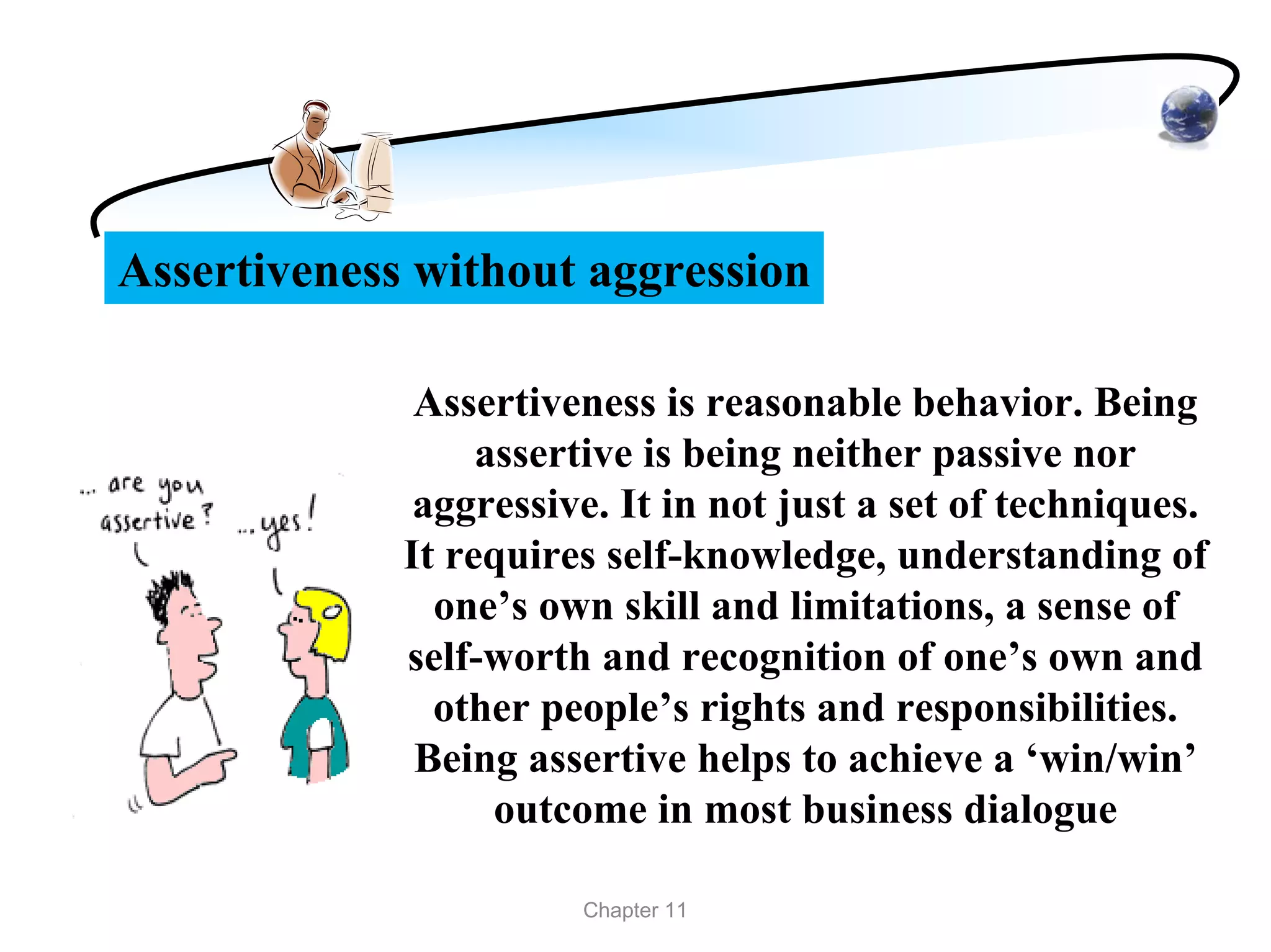
Assertiveness without aggression

              Assertiveness is reasonable behavior. Being
                  assertive is being neither passive nor
              aggressive. It in not just a set of techniques.
             It requires self-knowledge, understanding of
               one’s own skill and limitations, a sense of
             self-worth and recognition of one’s own and
               other people’s rights and responsibilities.
              Being assertive helps to achieve a ‘win/win’
                   outcome in most business dialogue

                       Chapter 11
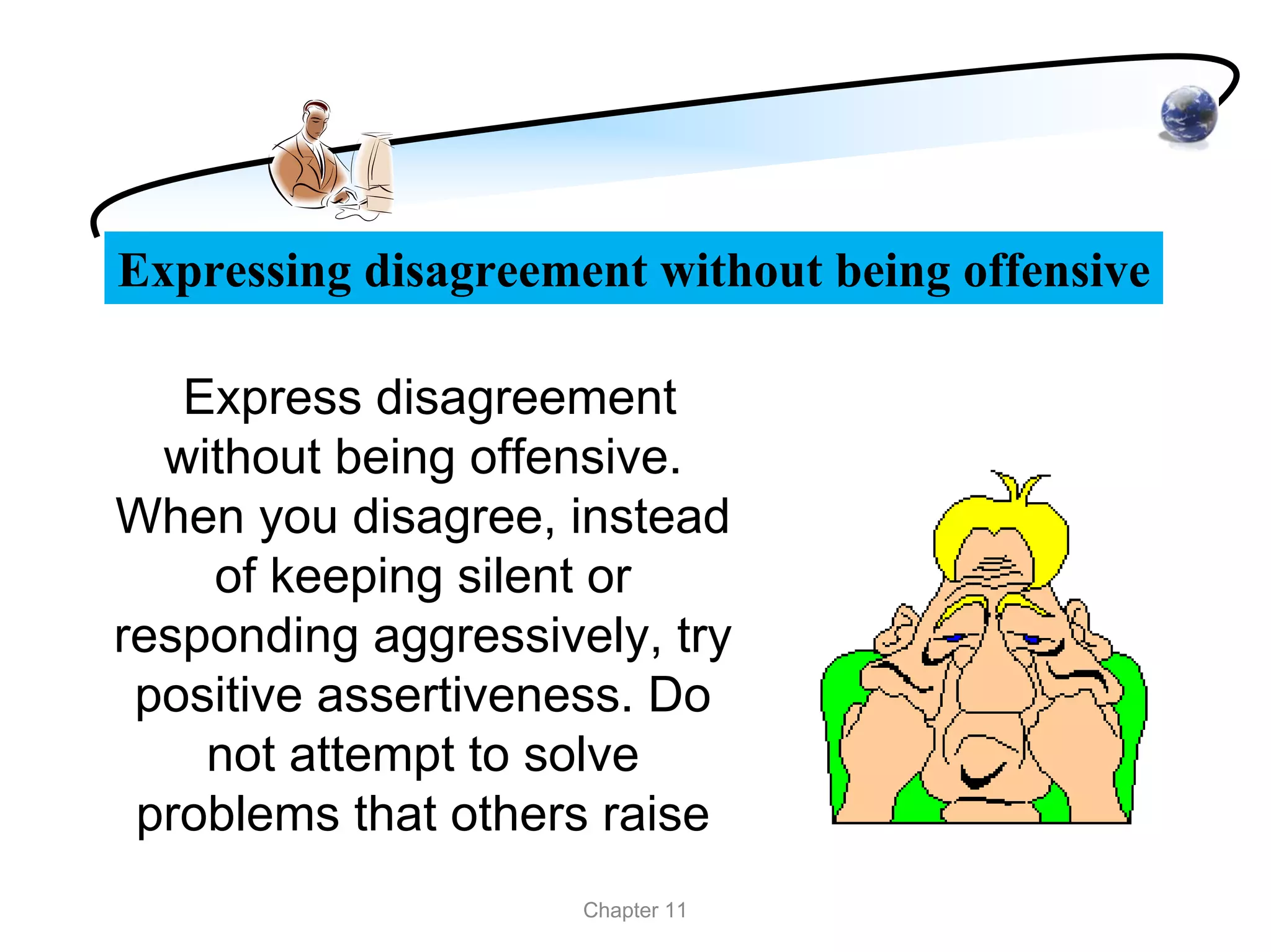
Expressing disagreement without being offensive

   Express disagreement
  without being offensive.
When you disagree, instead
    of keeping silent or
responding aggressively, try
 positive assertiveness. Do
    not attempt to solve
 problems that others raise
                     Chapter 11
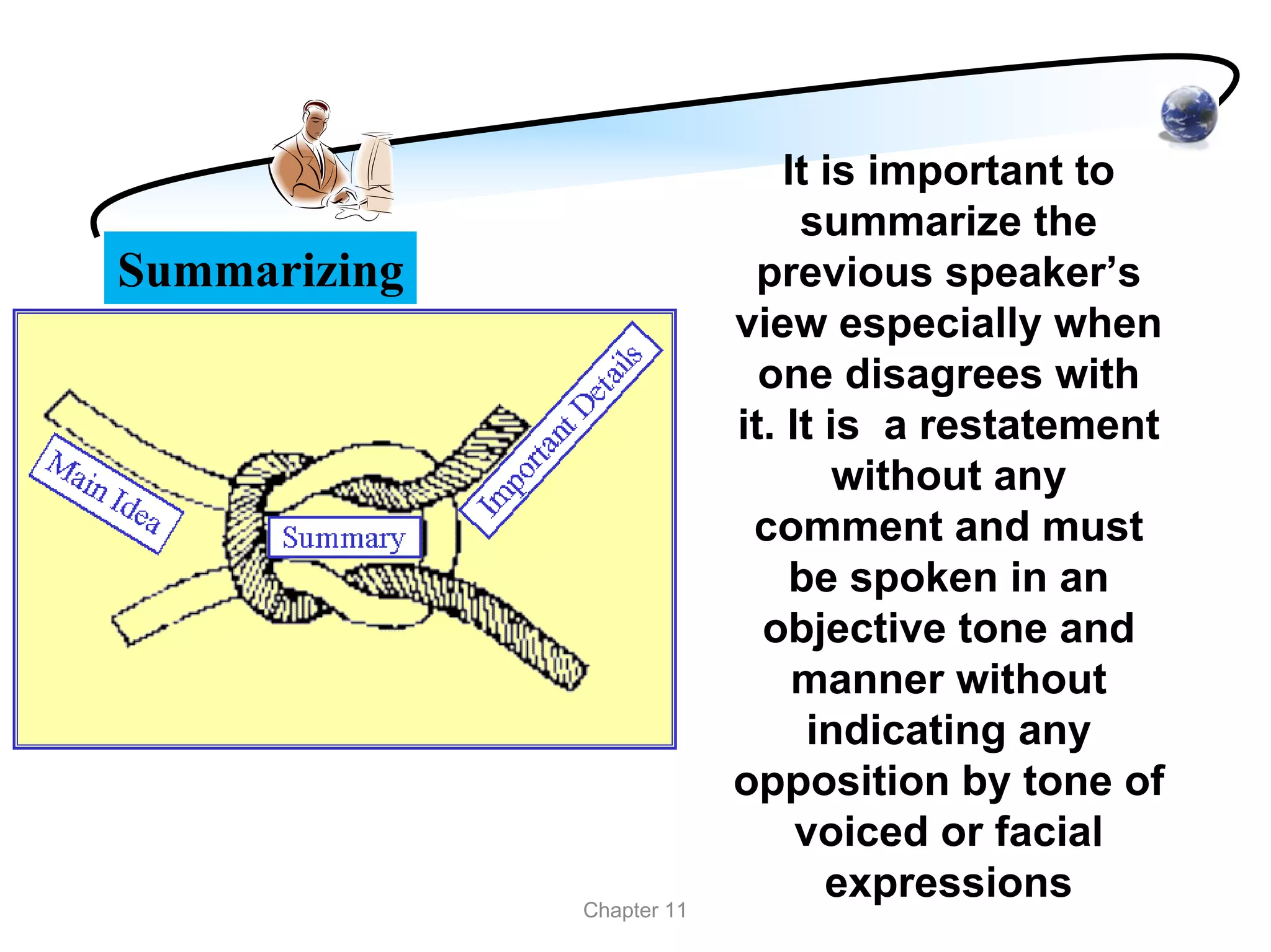
It is important to
                                summarize the
Summarizing                 previous speaker’s
                           view especially when
                             one disagrees with
                           it. It is a restatement
                                   without any
                            comment and must
                                be spoken in an
                             objective tone and
                                manner without
                                 indicating any
                           opposition by tone of
                                voiced or facial
              Chapter 11
                                  expressions
Closure
           Ending a communication event
            on a pleasant note is always
          beneficial for relationships. Style
           and manner of communication
          are the basis of relationships and
                     good feeling


                  Chapter 11

Interpersonal communication

  • 1.
  • 2.
    Interpersonal communication is defined as speaking to and listening another person in alteration, and thinking concurrently. It is strongly influenced by each individual’s intrapersonal communication Chapter 11
  • 3.
    The useful model,the Johari Window (indicates the relationship between intrapersonal and interpersonal communication) shows the four aspects of a person’s awareness: open, hidden, blind and unknown. Chapter 11
  • 4.
  • 5.
  • 6.
    As acquaintance andtrust between you and me grows, I may feel comfortable about disclosing more personal details about myself. This process is called self-disclosure Chapter 11
  • 7.
    Communication skills There are 4 verbal communication skills; two are encoding skills: speaking and writing; two are decoding skills: listening and reading. The fifth is the intrapersonal skill is crucial to both encoding and decoding: thought or reasoning and competence in dealing with emotion or feeling. Language skill affects a person’s ability to analyze one’s own purposes and intentions and the ability to express oneself. Our communication skills deficiencies also limit the ideas that are available to us and limit our ability to think. Chapter 11
  • 8.
    Skills for interpersonalcommunication The skills needed for interpersonal communication are self-awareness, control over oneself, speaking clearly and pleasantly, good manners and etiquettes, Listening, understanding of non-verbal behavior and feedback Chapter 11
  • 9.
    Self Awareness Knowledgeof one’s own attitudes, prejudices and perceptions and competent handling of one’s intrapersonal communication is required for effective interpersonal communication. Chapter 11
  • 10.
    It involves skillin dealing with intrapersonal Control Over Oneself communication. Holding one’s tongue is difficult, but if you have the ability to maintain peace, and keep silent till you reach the right moment to speak, your interpersonal communication will be more effective and you will save yourself a great deal of energy. You and only should choose how you will behave Chapter 11
  • 11.
    Speaking clearly &Pleasantly It is the primary requirement of successful interpersonal communication. Making eye contact, varying the voice to avoid monotone, being brief and to the point, asking questions are the tips to keep the listener involved. The some ways to ensure that you appear comfortable to be with are: First, at the beginning of an encounter, move and speak slower, lower and less; demonstrate that part of you which is most like them; bring out the other person’s best side. Chapter 11
  • 12.
    Good Manners andEtiquettes Knowledge and practice of proper etiquette result in successful conversation Chapter 11
  • 13.
    Introduction Introductionsare the few moments in which critical first impressions are made on all sides. Generally impressions are made within 20-30 seconds upon meeting someone. In business it is based on hierarchy; A client always comes before anyone in your organization; an elected official comes before a non-official; introduce a junior executive to a senior executive. If no own introduces you, just introduce yourself to the other Chapter 11
  • 14.
    Paying Compliments It isan art; an expression of appreciation. It should be temperate, it should be genuine, it should have no other motive than to recognize someone for something special. When someone pays you a compliment, acknowledge it and than the person graciously Chapter 11
  • 15.
    Listening A good listenerconcentrates on the speaker’s line of interest, tries to understand the speaker’s framework and uses the same terminology. This wins the goodwill of the other party Chapter 11
  • 16.
    Understanding of non-verbalbehavior Ability to sense the feelings behind words from the body language develops with practice. We must listen with eyes as well as the ears. Good interpersonal skill depends a great deal on control and command of one’s body language Chapter 11
  • 17.
    Being the mostdelicate and difficult skills of interpersonal communication, it requires Feedback tact, honesty and self-control. Give feedback immediately or soon after the event; give it in a positive manner; be specific, not general or vague; give feedback only on the aspects which the person can control and correct; be sure of your own motive inn giving feedback. While accepting feedback seek and receive it with genuine desire to improve; be non-defensive; listen attentively; if vague feedback is offered, seek clarification and ask for specific instances; think over the received feedback Chapter 11
  • 18.
    Being the powerfultool Asking Questions in dialogue, the style and way of asking must be carefully cultivated. Ask open-ended questions; do not ask questions which make others uncomfortable; ask what if…?; offer alternative and ask; ask about their feelings; repeat back what they said Chapter 11
  • 19.
    Assertiveness without aggression Assertiveness is reasonable behavior. Being assertive is being neither passive nor aggressive. It in not just a set of techniques. It requires self-knowledge, understanding of one’s own skill and limitations, a sense of self-worth and recognition of one’s own and other people’s rights and responsibilities. Being assertive helps to achieve a ‘win/win’ outcome in most business dialogue Chapter 11
  • 20.
    Expressing disagreement withoutbeing offensive Express disagreement without being offensive. When you disagree, instead of keeping silent or responding aggressively, try positive assertiveness. Do not attempt to solve problems that others raise Chapter 11
  • 21.
    It is importantto summarize the Summarizing previous speaker’s view especially when one disagrees with it. It is a restatement without any comment and must be spoken in an objective tone and manner without indicating any opposition by tone of voiced or facial Chapter 11 expressions
  • 22.
    Closure Ending a communication event on a pleasant note is always beneficial for relationships. Style and manner of communication are the basis of relationships and good feeling Chapter 11