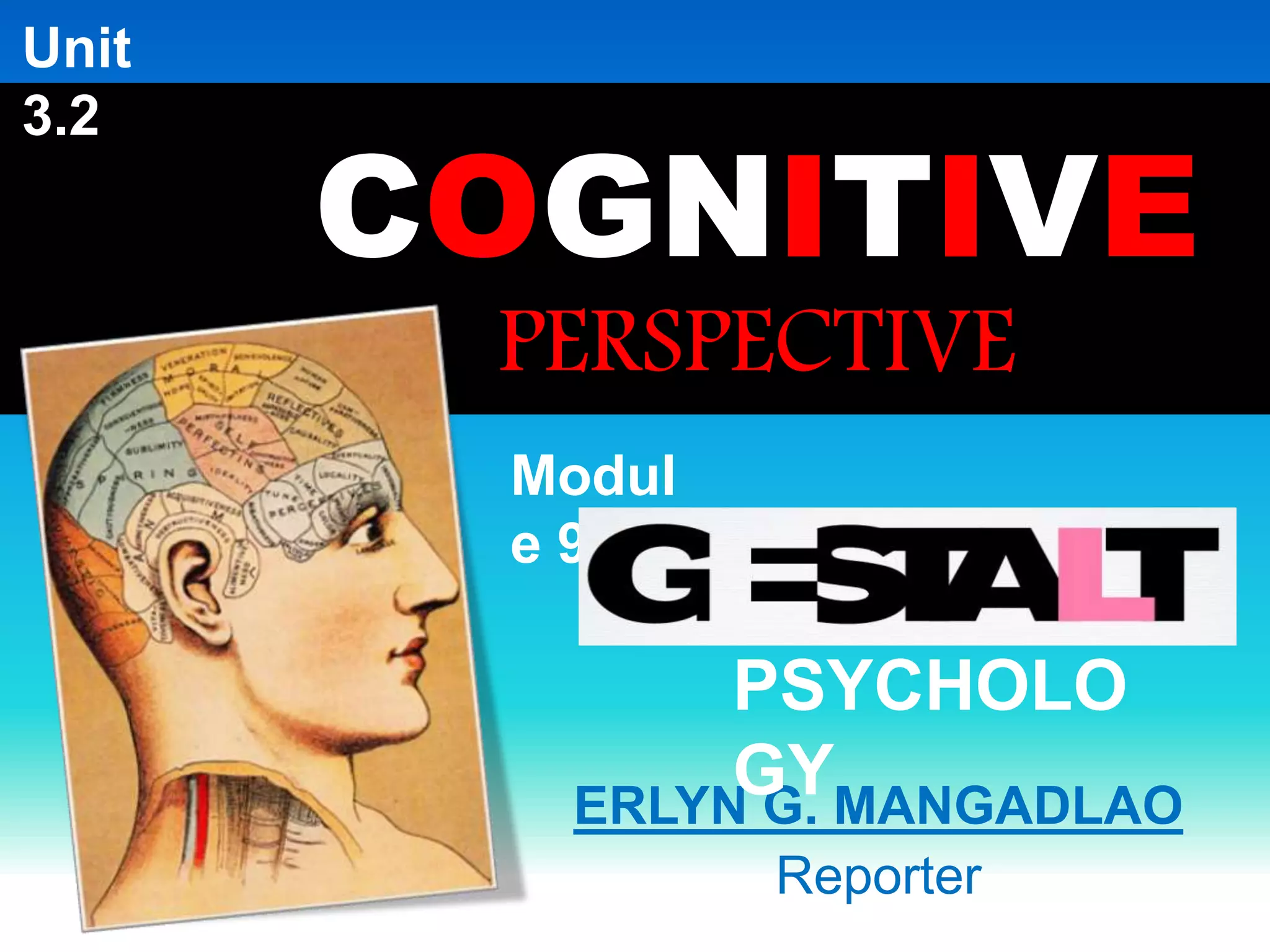
COGNITIVE 
PERSPECTIVE 
ERLYN G. MANGADLAO 
Reporter 
Modul 
e 9: 
PSYCHOLO 
GY 
Unit 
3.2
• the forefront of the cognitive 
psychology. 
–The foundation of the cognitive perspective 
to learning. 
– The external and mechanistic focus of 
behaviorism. 
– The mental processes and products of 
perception.
OLD MAN OR TWO PEOPLE
LADY OR OLD WOMAN
BIRD OR LEAVES
HORSE OR LADY
OLD COUPLE OR YOUNG PEOPLE
Was your experience in figuring 
Out the picture? WHAT 
WHAT Helped you perceived the 
interesting pictures? 
Did you go about examining the 
pictures? HOW
THEORY 
Was the initial 
cognitive 
responded to 
behaviorism. 
Emphasized the 
importance of sensory 
wholes and the 
dynamic nature of 
visual perception. 
Term gestalt 
means: 
“Form” or 
“Configuration”
GESTALT PSYCHOLOGISTS 
Max Wertheimer 
(1880 – 1943) 
Wolfgang 
Köhler 
(1887 - 1967 ) 
Kurt Koffka 
(1887 – 1941) 
Kurt Lewin 
(1890 – 1947)
Certain Factors Impact on this 
perceptual process. 
• Past experiences 
• Needs 
• Attitudes 
• and One’s Present 
situation 
– can affect his 
perception.
PRINCIPLES
PRAGNANZ
Law of Proximity 
Elements that 
are closer 
together will 
be perceived 
as a coherent 
object.
Law of Similarity 
Elements that 
look similar 
will be 
perceived as 
part of the 
same form.
Law of Closure 
occurs when an 
object is 
incomplete or a 
space is not 
completely 
enclosed.
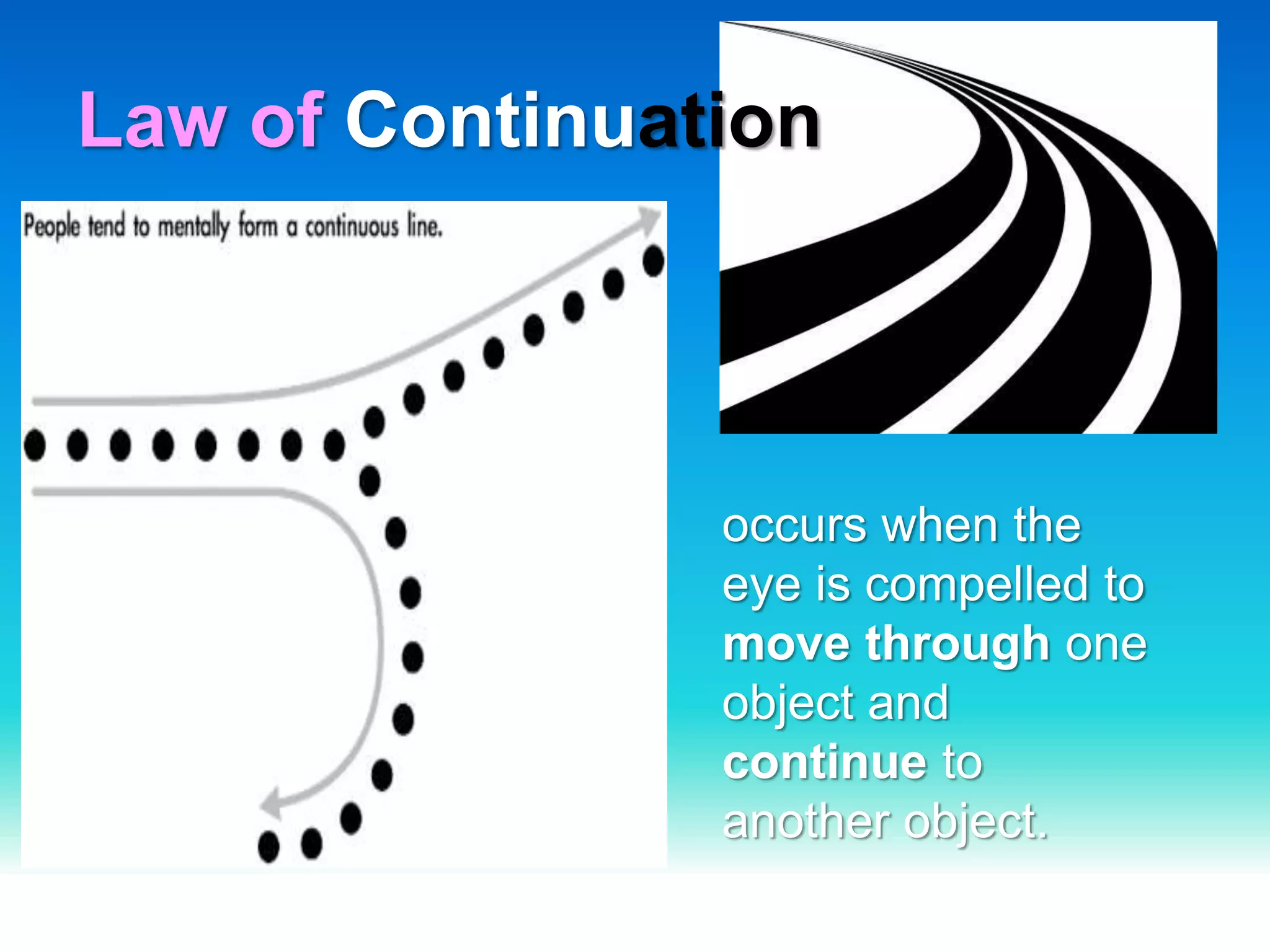
Law of Continuation 
occurs when the 
eye is compelled to 
move through one 
object and 
continue to 
another object.
Law of Pragnanz 
Reality is organized or reduced to the simplest 
form possible.
Law of Figure/Ground 
We pay attention 
and perceive things 
in the foreground 
first.
The important aspect of learning was 
not reinforcement, but the coordination of 
thinking to create new organizations. 
Kohler referred to this behavior as 
insight or discovery learning. 
Creative 
thought 
Gestalt 
laws 
Good 
learning
Thank 
you!

Cognitive Psychology

  • 1.
    COGNITIVE PERSPECTIVE ERLYNG. MANGADLAO Reporter Modul e 9: PSYCHOLO GY Unit 3.2
  • 2.
    • the forefrontof the cognitive psychology. –The foundation of the cognitive perspective to learning. – The external and mechanistic focus of behaviorism. – The mental processes and products of perception.
  • 4.
    OLD MAN ORTWO PEOPLE
  • 5.
  • 6.
  • 7.
  • 8.
    OLD COUPLE ORYOUNG PEOPLE
  • 9.
    Was your experiencein figuring Out the picture? WHAT WHAT Helped you perceived the interesting pictures? Did you go about examining the pictures? HOW
  • 11.
    THEORY Was theinitial cognitive responded to behaviorism. Emphasized the importance of sensory wholes and the dynamic nature of visual perception. Term gestalt means: “Form” or “Configuration”
  • 12.
    GESTALT PSYCHOLOGISTS MaxWertheimer (1880 – 1943) Wolfgang Köhler (1887 - 1967 ) Kurt Koffka (1887 – 1941) Kurt Lewin (1890 – 1947)
  • 13.
    Certain Factors Impacton this perceptual process. • Past experiences • Needs • Attitudes • and One’s Present situation – can affect his perception.
  • 15.
  • 16.
  • 17.
    Law of Proximity Elements that are closer together will be perceived as a coherent object.
  • 18.
    Law of Similarity Elements that look similar will be perceived as part of the same form.
  • 21.
    Law of Closure occurs when an object is incomplete or a space is not completely enclosed.
  • 23.
    Law of Continuation occurs when the eye is compelled to move through one object and continue to another object.
  • 24.
    Law of Pragnanz Reality is organized or reduced to the simplest form possible.
  • 25.
    Law of Figure/Ground We pay attention and perceive things in the foreground first.
  • 27.
    The important aspectof learning was not reinforcement, but the coordination of thinking to create new organizations. Kohler referred to this behavior as insight or discovery learning. Creative thought Gestalt laws Good learning
  • 28.

Editor's Notes

  • #2 Using Gestalt Theory in Visualizations
  • #11 What is Gestalt? Gestalt is a German word, meaning shape, that refers to our understanding something as a whole, not merely the sum of its parts.
  • #12 If you understand the ‘laws’ of Gestalt, you can begin to encode multiple layers of meaning in your communication