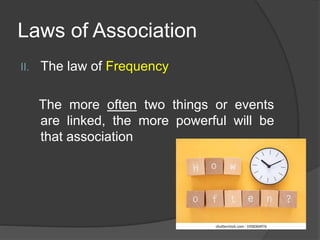
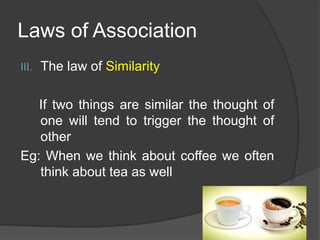
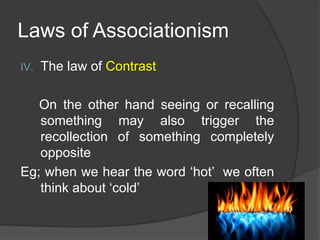
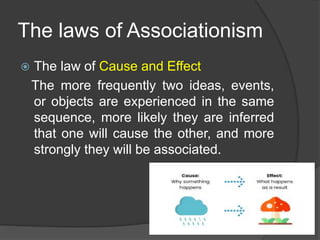
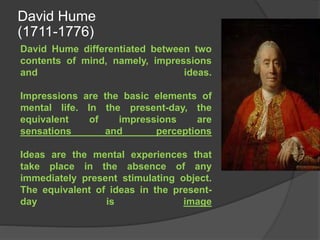
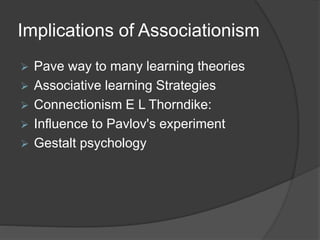
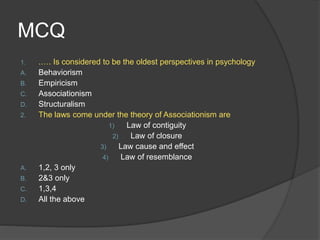
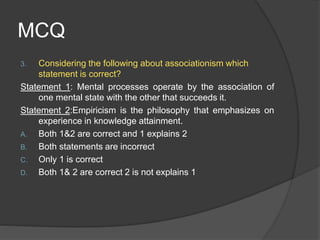
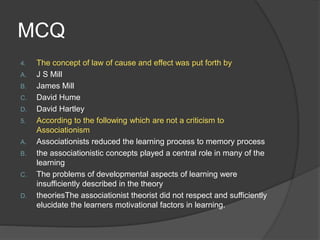
Associationism is one of the oldest perspectives in psychology that suggests mental processes operate through the association of mental states. A major idea of associationism is that complex ideas form from the association of simpler ideas. The British empiricists like Hobbes, Locke, Berkeley, and Hume used associationistic principles to explain mental activity. Hume differentiated impressions and ideas and proposed three laws of association: resemblance, contiguity, and cause and effect. Associationism influenced many learning theories and continues to be relevant today.




![Raymond cattell [autosaved]](https://cdn.slidesharecdn.com/ss_thumbnails/raymondcattellautosaved-190113045031-thumbnail.jpg?width=640&height=640&fit=bounds)


