Prevention & Control of
Heart Disease
The Heart of Health
[Dr] Amzad Ali
Email: ali.amzad@gmail.com
Skype: ali.amzad
Cell: +8801713 004696
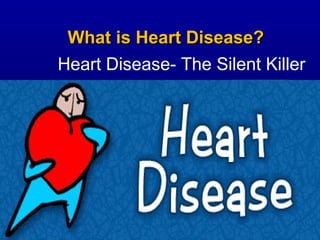
What is Heart Disease?What is Heart Disease?
Heart Disease- The Silent Killer
What is Heart Disease?
 A general term that covers a number of
diseases which affect the heart, including
coronary artery disease, heart-failure and
angina.
 Heart Disease is the number one killer in the
United States and 2nd
in Bangladesh.
 Increasing in Bangladesh among all ages
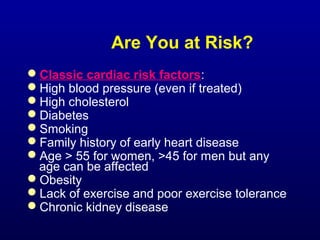
Are You at Risk?
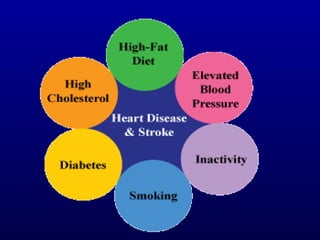
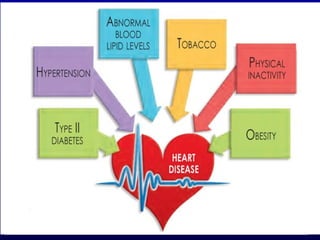
Classic cardiac risk factors:
High blood pressure (even if treated)
High cholesterol
Diabetes
Smoking
Family history of early heart disease
Age > 55 for women, >45 for men but any
age can be affected
Obesity
Lack of exercise and poor exercise tolerance
Chronic kidney disease
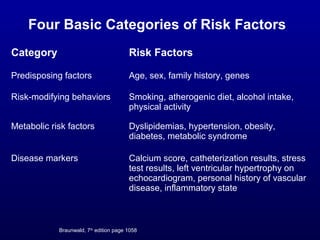
Category Risk Factors
Predisposing factors Age, sex, family history, genes
Risk-modifying behaviors Smoking, atherogenic diet, alcohol intake,
physical activity
Metabolic risk factors Dyslipidemias, hypertension, obesity,
diabetes, metabolic syndrome
Disease markers Calcium score, catheterization results, stress
test results, left ventricular hypertrophy on
echocardiogram, personal history of vascular
disease, inflammatory state
Four Basic Categories of Risk Factors
Braunwald, 7th
edition page 1058
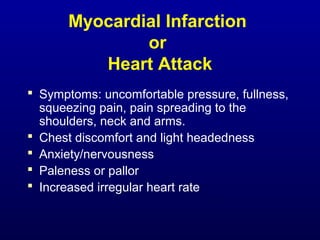
Myocardial Infarction
or
Heart Attack
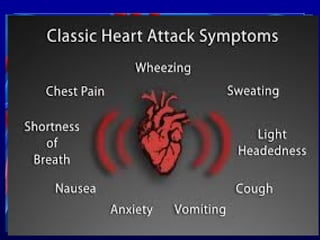
 Symptoms: uncomfortable pressure, fullness,
squeezing pain, pain spreading to the
shoulders, neck and arms.
 Chest discomfort and light headedness
 Anxiety/nervousness
 Paleness or pallor
 Increased irregular heart rate
Cerebrovascular Accident
or
Stroke
 Blood vessel in the brain becomes blocked by
atherosclerosis- the tissue supplied by the
artery dies.
 Embolus – which is a traveling blood clot.
Symptoms of Stroke
 Sudden numbness or weakness of the face, arm
or leg, especially on one side of the body.
 Sudden confusion, trouble speaking, or
understanding.
 Sudden trouble seeing in one or both eyes.
 Sudden trouble walking, dizziness, loss of balance
or coordination.
 Sudden severe headache with no known cause.
 If you have any of these symptoms you need
immediate medical attention!
Unchangeable Risk Factors
 Age- the older you get, the greater the chance.
 Sex- males have a greater rate even after women
pass menopause.
 Race- minorities have a greater chance.
 Family history- if family members have had CHD,
there is a greater chance.
 Personal Medical History- other diseases such as
Diabetes Mellitus can increase chances.
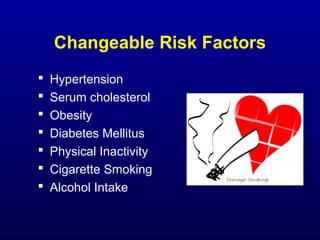
Changeable Risk Factors
 Hypertension
 Serum cholesterol
 Obesity
 Diabetes Mellitus
 Physical Inactivity
 Cigarette Smoking
 Alcohol Intake
How can You Stop CVD?
Diet and Nutrition, there are several
guidelines listed by the American Heart
Association:
 Eat a variety of fruits and vegetables every
day. ( 5 servings - they are naturally low in fat
and high in vitamins and minerals)
 Eat a variety of grain products ( 6 a day)
Diet and Prevention of CVD
 Choose nonfat or low-fat products.
 Use lean meats- choose chicken, fish, turkey
and lean cuts of beef and pork.
 Switch to fat-free milk- gradually reduce the
fat content of the milk you drink.
 Maintain a level of physical activity that keeps
you fit and matches the # of calories you eat.
 Balance the # of calories you eat with the
number of calories you use each day.
Exercise and CVD
 Serves several functions in preventing and
treating those at high risk.
 Reduces incidence of obesity.
 Increases HDL
 Lowers LDL and total cholesterol
 Helps control diabetes and hypertension
 Those at high risk should take part in a
specially supervised program.
Cardiovascular Disease
Prevention in Women
 A five-step approach
Assess and stratify women into high risk, at risk,
and optimal risk categories
Lifestyle approaches recommended for all women
Other cardiovascular disease interventions:
treatment of HTN, DM, lipid abnormalities
Highest priority is for interventions in high risk
patients
Avoid initiating therapies that have been shown to
lack benefit, or where risks outweigh benefits
Risk Stratification:
 High Risk
Diabetes mellitus
Documented atherosclerotic disease
Established coronary heart disease
Peripheral arterial disease
Cerebrovascular disease
Abdominal aortic aneurysm
Includes many patients with chronic kidney disease,
Obesity
Hypertension
Smoking
Physical inactivity
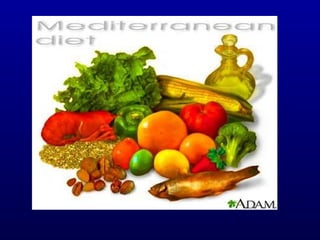
What Should I Eat?
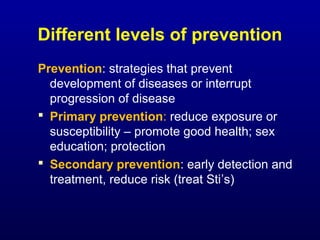
Different levels of prevention
Prevention: strategies that prevent
development of diseases or interrupt
progression of disease
 Primary prevention: reduce exposure or
susceptibility – promote good health; sex
education; protection
 Secondary prevention: early detection and
treatment, reduce risk (treat Sti’s)
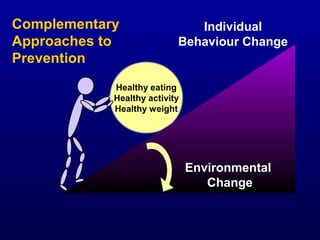
Individual
Behaviour Change
Healthy eating
Healthy activity
Healthy weight
Environmental
Change
Complementary
Approaches to
Prevention
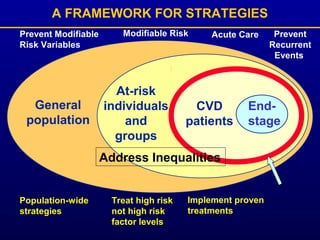
Modifiable Risk
General
population
At-risk
individuals
and
groups
CVD
patients
A FRAMEWORK FOR STRATEGIES
Prevent Modifiable
Risk Variables
Prevent
Recurrent
Events
End-
stage
Acute Care
Population-wide
strategies
Treat high risk
not high risk
factor levels
Implement proven
treatments
Address Inequalities
Conclusion
 Cardiovascular disease is the number
one killer globally and 2nd
in Bangladesh.
 It is highly preventable and controllable
with diet, exercise and reduction of risk
factors.
 Knowledge, attitude and practices
developed in early age and act NOW
 Good resource:www.americanheart.org
References
1. WHO. Tech. Report Series 137. WHO. 1952.
2. WHO.Constitution Of World Health Organization. 1946.
3. WHO. Role of Health sector in Food and Nutrition. Tech.
Report Series 137. Geneva. 1980.
4. IGNOU. Concepts in Nursing. Available online at:
http://www.ignou.ac.in/edusat/BNS/BNS101-Blk2-3-4/Block1en/38-66
5. WHO. Ageing and Health. A health promotion approach for
developing countries. WHO, Regional Office for the Western
Pacific United Nations Avenue.Manila, Philippines;2000.11-15.
6. Ghai OP, Gupta P. Essential Preventive Medicine. Vikas
Publishing House Pvt Ltd. India;1999:23,817-819.
7. Park K. Park’s textbook of preventive and social medicine. 20th
edition, 2013. Banarsidas Bhanot publishers, Jabalpur, India

Heart disease

  • 1.
    Prevention & Controlof Heart Disease The Heart of Health [Dr] Amzad Ali Email: ali.amzad@gmail.com Skype: ali.amzad Cell: +8801713 004696
  • 2.
    What is HeartDisease?What is Heart Disease? Heart Disease- The Silent Killer
  • 3.
    What is HeartDisease?  A general term that covers a number of diseases which affect the heart, including coronary artery disease, heart-failure and angina.  Heart Disease is the number one killer in the United States and 2nd in Bangladesh.  Increasing in Bangladesh among all ages
  • 5.
    Are You atRisk? Classic cardiac risk factors: High blood pressure (even if treated) High cholesterol Diabetes Smoking Family history of early heart disease Age > 55 for women, >45 for men but any age can be affected Obesity Lack of exercise and poor exercise tolerance Chronic kidney disease
  • 7.
    Category Risk Factors Predisposingfactors Age, sex, family history, genes Risk-modifying behaviors Smoking, atherogenic diet, alcohol intake, physical activity Metabolic risk factors Dyslipidemias, hypertension, obesity, diabetes, metabolic syndrome Disease markers Calcium score, catheterization results, stress test results, left ventricular hypertrophy on echocardiogram, personal history of vascular disease, inflammatory state Four Basic Categories of Risk Factors Braunwald, 7th edition page 1058
  • 9.
    Myocardial Infarction or Heart Attack Symptoms: uncomfortable pressure, fullness, squeezing pain, pain spreading to the shoulders, neck and arms.  Chest discomfort and light headedness  Anxiety/nervousness  Paleness or pallor  Increased irregular heart rate
  • 10.
    Cerebrovascular Accident or Stroke  Bloodvessel in the brain becomes blocked by atherosclerosis- the tissue supplied by the artery dies.  Embolus – which is a traveling blood clot.
  • 11.
    Symptoms of Stroke Sudden numbness or weakness of the face, arm or leg, especially on one side of the body.  Sudden confusion, trouble speaking, or understanding.  Sudden trouble seeing in one or both eyes.  Sudden trouble walking, dizziness, loss of balance or coordination.  Sudden severe headache with no known cause.  If you have any of these symptoms you need immediate medical attention!
  • 12.
    Unchangeable Risk Factors Age- the older you get, the greater the chance.  Sex- males have a greater rate even after women pass menopause.  Race- minorities have a greater chance.  Family history- if family members have had CHD, there is a greater chance.  Personal Medical History- other diseases such as Diabetes Mellitus can increase chances.
  • 13.
    Changeable Risk Factors Hypertension  Serum cholesterol  Obesity  Diabetes Mellitus  Physical Inactivity  Cigarette Smoking  Alcohol Intake
  • 14.
    How can YouStop CVD? Diet and Nutrition, there are several guidelines listed by the American Heart Association:  Eat a variety of fruits and vegetables every day. ( 5 servings - they are naturally low in fat and high in vitamins and minerals)  Eat a variety of grain products ( 6 a day)
  • 15.
    Diet and Preventionof CVD  Choose nonfat or low-fat products.  Use lean meats- choose chicken, fish, turkey and lean cuts of beef and pork.  Switch to fat-free milk- gradually reduce the fat content of the milk you drink.  Maintain a level of physical activity that keeps you fit and matches the # of calories you eat.  Balance the # of calories you eat with the number of calories you use each day.
  • 16.
    Exercise and CVD Serves several functions in preventing and treating those at high risk.  Reduces incidence of obesity.  Increases HDL  Lowers LDL and total cholesterol  Helps control diabetes and hypertension  Those at high risk should take part in a specially supervised program.
  • 17.
    Cardiovascular Disease Prevention inWomen  A five-step approach Assess and stratify women into high risk, at risk, and optimal risk categories Lifestyle approaches recommended for all women Other cardiovascular disease interventions: treatment of HTN, DM, lipid abnormalities Highest priority is for interventions in high risk patients Avoid initiating therapies that have been shown to lack benefit, or where risks outweigh benefits
  • 18.
    Risk Stratification:  HighRisk Diabetes mellitus Documented atherosclerotic disease Established coronary heart disease Peripheral arterial disease Cerebrovascular disease Abdominal aortic aneurysm Includes many patients with chronic kidney disease, Obesity Hypertension Smoking Physical inactivity
  • 19.
  • 21.
    Different levels ofprevention Prevention: strategies that prevent development of diseases or interrupt progression of disease  Primary prevention: reduce exposure or susceptibility – promote good health; sex education; protection  Secondary prevention: early detection and treatment, reduce risk (treat Sti’s)
  • 23.
    Individual Behaviour Change Healthy eating Healthyactivity Healthy weight Environmental Change Complementary Approaches to Prevention
  • 24.
    Modifiable Risk General population At-risk individuals and groups CVD patients A FRAMEWORKFOR STRATEGIES Prevent Modifiable Risk Variables Prevent Recurrent Events End- stage Acute Care Population-wide strategies Treat high risk not high risk factor levels Implement proven treatments Address Inequalities
  • 26.
    Conclusion  Cardiovascular diseaseis the number one killer globally and 2nd in Bangladesh.  It is highly preventable and controllable with diet, exercise and reduction of risk factors.  Knowledge, attitude and practices developed in early age and act NOW  Good resource:www.americanheart.org
  • 27.
    References 1. WHO. Tech.Report Series 137. WHO. 1952. 2. WHO.Constitution Of World Health Organization. 1946. 3. WHO. Role of Health sector in Food and Nutrition. Tech. Report Series 137. Geneva. 1980. 4. IGNOU. Concepts in Nursing. Available online at: http://www.ignou.ac.in/edusat/BNS/BNS101-Blk2-3-4/Block1en/38-66 5. WHO. Ageing and Health. A health promotion approach for developing countries. WHO, Regional Office for the Western Pacific United Nations Avenue.Manila, Philippines;2000.11-15. 6. Ghai OP, Gupta P. Essential Preventive Medicine. Vikas Publishing House Pvt Ltd. India;1999:23,817-819. 7. Park K. Park’s textbook of preventive and social medicine. 20th edition, 2013. Banarsidas Bhanot publishers, Jabalpur, India

Editor's Notes

  • #11 Cerebrovascular Accident – Every 53 seconds someone in America has a stroke. Stroke is the nation’s #3 killer and is the leading cause of long-term disability. People with heart disease have twice the risk of having a stroke. It is caused when a blood vessel in the brain become blocked by artherosclerosis and the tissue supplied b the artery dies. It can also be caused by a traveling blood clot known as an embolus.
  • #13 Unchangeable Risk Factors: Age, the older you get the greater the chance of heart disease. Four out of five people who die of congestive heart disease are 65 years of age or older. Sex, males have a greater rate of congestive heart disease. Race, minorities have a greater chance of heart disease. African Americans have a greater chance of high blood pressure. The risk is also higher in Mexican Americans, America Indians, native Hawaiians and Asian Americans. Also included as unchangeable risk factors is your family history and your own personal medical history.
  • #14 Hypertension Serum Cholesterol: As cholesterol rises so does the risk of congestive heart disease, and obesity. It is unhealthy because excess weight puts more strain on your heart. It can raise blood pressure and blood cholesterol and lead to diabetes. Diabetes Mellitus, Physical Inactivity, and Cigarette Smoking along with Alcohol intake are the other changeable risk factors. A smoker’s risk of a heart attack is more than twice that of a non-smoker.
  • #15 How can you stop cardiovascular disease? The heart healthy diet is designed to decrease sodium, saturated fat, including trans fatty acids which are all closely linked to high blood cholesterol and an increased risk of heart disease. It also encourages the increased intake of monounsaturated fat, Omega 3 fatty acids and soluble fiber which helps to lower blood cholesterol levels and reduce the risk of heart disease.
  • #18 SLIDE INFORMATION SOURCE: Mosca L, et al. Evidence-based guidelines for cardiovascular disease prevention in women. Circulation 2004; 109:672-693. A five part approach was supported by currently available evidence.
  • #19 SLIDE INFORMATION SOURCE: Mosca L, et al. Evidence-based guidelines for cardiovascular disease prevention in women: 2007 update. Circulation 2007; 115: 1481-501.