PRESENTED BY
Bronchitis is an inflammation of the lining
of bronchial tubes, which carry air to the
lungs. The inflammation causes swelling of
the lining of these breathing tubes,
narrowing the tubes and promoting
secretion of inflammatory fluid . It occurs
when the trachea and large and small
bronchi within the lungs.
1) ACUTE BRONCHITIS:-
2) CHRONIC BRONCHITIS:-
Acute bronchitis:-Infection or other factor that
irritate the lungs cause acute bronchitis. The
same viruses that cause colds and the flu
often cause acute bronchitis. These viruses
are spread through the air when people
cough. They also are spread through physical
contact. Acute bronchitis lasts from a few days
to 10 days.
Certain substances can irritate lungs and
airways and risk for acute bronchitis
ex.:- solid Inhaling , cigarette, cigar, air
pollution ,dusts e.t.c.
Chronic bronchitis:- it occurs when the lining of
the bronchial tubes is constantly irritated and
inflamed . Chronic bronchitis if you have a
cough with mucus on most days for at least 3
month a year.
Repeatedly breathing in fumes that irritate and
damage lungs and airway tissues causes
chronic bronchitis .smoking is the major
causes of this condition . Breathing is air
pollution and dust or fumes from the
environment or the workplace also can lead to
chronic bronchitis.
CAUSES:-
 Bronchitis occur most often during the cold and flu
season.
 several viruses causes bronchitis, including
influenza A and B , commonly referred to as “the
flu”
 a number of bacteria are also known to causes
bronchitis such as mycoplasma pneumonia.
 bronchitis also can occur when a person inhales
irritating fumes or dust . Chemical solvents and
smoke , including tobacco smoke,
 Bronchitis may also occur when acids from stomach
consistently back up into esophagus and a few
drops go into upper airway.
 the chances of bronchitis having more sever
symptoms including the elderly, those with
weakened immune system ,smokers , and repeated
exposure to lungs.
SYMPTOMS OF BRONCHITIS:-
 cough , which may produce mucus
 wheezing
 low fever and chills
 chest tightening
 sore throat
 body aches
 breathlessness
 headaches
 blocked nose
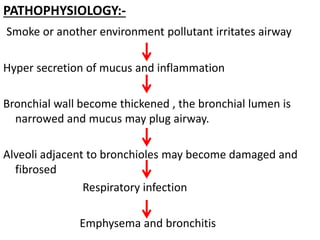
PATHOPHYSIOLOGY:-
Smoke or another environment pollutant irritates airway
Hyper secretion of mucus and inflammation
Bronchial wall become thickened , the bronchial lumen is
narrowed and mucus may plug airway.
Alveoli adjacent to bronchioles may become damaged and
fibrosed
Respiratory infection
Emphysema and bronchitis
CLINICAL MANIFESTATIONS:-
ACUTE BRONCHITIS:-
 cough
 fever
 aches and stuffy
 runny nose
 vomiting
 diarrhea
 Cold and flu
 mucus yellow or green (bacterial infection)
Chronic bronchitis:-
 cough that’s worse in morning
 damp weather
 Wheezing
 chest discomfort
 cough large amounts of mucus (smoker’s cough)
 shortness of breath
DIAGNOSTIC EVALUATION:-
 Chest x-ray
Blood test
 sputum test
 pulmonary function test
 pulse oximetry
MEDICAL MANAGEMENT:-
 Anti inflammatory
 Bronchodilators
 Nebulizer hypertonic saline
 Anti biotic
 Analgesic
 Anti emetic
 Antacid
NURSING DIAGNOSIS:-
 ineffective airway clearance related to excessive ,
thickened mucous secretions and
bronchoconstriction
 impaired gas exchange related to ventilation –
perfusion inequality
 ineffective breathing pattern related to dyspnea ,
airway irritants
 activity intolerance related to fatigue , ineffective
breathing patterns.
 knowledge deficit related to treatment regimen
and self care.

Bronchitis

  • 1.
  • 2.
    Bronchitis is aninflammation of the lining of bronchial tubes, which carry air to the lungs. The inflammation causes swelling of the lining of these breathing tubes, narrowing the tubes and promoting secretion of inflammatory fluid . It occurs when the trachea and large and small bronchi within the lungs.
  • 3.
    1) ACUTE BRONCHITIS:- 2)CHRONIC BRONCHITIS:-
  • 4.
    Acute bronchitis:-Infection orother factor that irritate the lungs cause acute bronchitis. The same viruses that cause colds and the flu often cause acute bronchitis. These viruses are spread through the air when people cough. They also are spread through physical contact. Acute bronchitis lasts from a few days to 10 days. Certain substances can irritate lungs and airways and risk for acute bronchitis ex.:- solid Inhaling , cigarette, cigar, air pollution ,dusts e.t.c.
  • 5.
    Chronic bronchitis:- itoccurs when the lining of the bronchial tubes is constantly irritated and inflamed . Chronic bronchitis if you have a cough with mucus on most days for at least 3 month a year. Repeatedly breathing in fumes that irritate and damage lungs and airway tissues causes chronic bronchitis .smoking is the major causes of this condition . Breathing is air pollution and dust or fumes from the environment or the workplace also can lead to chronic bronchitis.
  • 6.
    CAUSES:-  Bronchitis occurmost often during the cold and flu season.  several viruses causes bronchitis, including influenza A and B , commonly referred to as “the flu”  a number of bacteria are also known to causes bronchitis such as mycoplasma pneumonia.  bronchitis also can occur when a person inhales irritating fumes or dust . Chemical solvents and smoke , including tobacco smoke,
  • 7.
     Bronchitis mayalso occur when acids from stomach consistently back up into esophagus and a few drops go into upper airway.  the chances of bronchitis having more sever symptoms including the elderly, those with weakened immune system ,smokers , and repeated exposure to lungs.
  • 8.
    SYMPTOMS OF BRONCHITIS:- cough , which may produce mucus  wheezing  low fever and chills  chest tightening  sore throat  body aches  breathlessness  headaches  blocked nose
  • 9.
    PATHOPHYSIOLOGY:- Smoke or anotherenvironment pollutant irritates airway Hyper secretion of mucus and inflammation Bronchial wall become thickened , the bronchial lumen is narrowed and mucus may plug airway. Alveoli adjacent to bronchioles may become damaged and fibrosed Respiratory infection Emphysema and bronchitis
  • 10.
    CLINICAL MANIFESTATIONS:- ACUTE BRONCHITIS:- cough  fever  aches and stuffy  runny nose  vomiting  diarrhea  Cold and flu  mucus yellow or green (bacterial infection)
  • 11.
    Chronic bronchitis:-  coughthat’s worse in morning  damp weather  Wheezing  chest discomfort  cough large amounts of mucus (smoker’s cough)  shortness of breath
  • 12.
    DIAGNOSTIC EVALUATION:-  Chestx-ray Blood test  sputum test  pulmonary function test  pulse oximetry
  • 13.
    MEDICAL MANAGEMENT:-  Antiinflammatory  Bronchodilators  Nebulizer hypertonic saline  Anti biotic  Analgesic  Anti emetic  Antacid
  • 14.
    NURSING DIAGNOSIS:-  ineffectiveairway clearance related to excessive , thickened mucous secretions and bronchoconstriction  impaired gas exchange related to ventilation – perfusion inequality  ineffective breathing pattern related to dyspnea , airway irritants  activity intolerance related to fatigue , ineffective breathing patterns.  knowledge deficit related to treatment regimen and self care.