Dr. K. Malathi
MD Scholar
Department of Kaya Chikitsa.
CONTENTS
Definition
Aetiology
Classification/Types
Pathogenesis
Clinical features
Diagnosis
Treatment
Summery
Definition
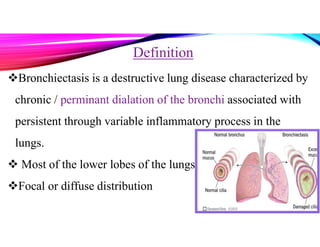
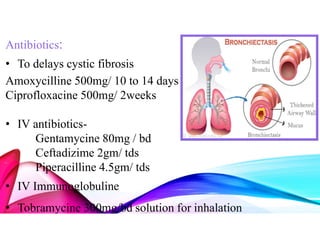
Bronchiectasis is a destructive lung disease characterized by
chronic / perminant dialation of the bronchi associated with
persistent through variable inflammatory process in the
lungs.
 Most of the lower lobes of the lungs
Focal or diffuse distribution
Aetiology:
It is often brought by damage of the lungs by other
conditions as:
 Tuberculosis
Cystic fibrosis
Immotile Ciliary Syndrome
Alpha 1 antitrypsin deficiency
Autoimmune disorders
Inhaled foreign bodies
Allergic bronchopulmonary aspergillosis ABPA
Post radiation fibrosis
HIV
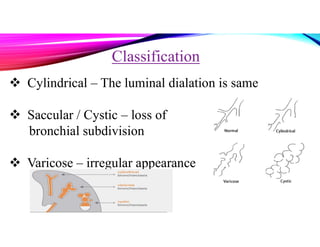
Classification
 Cylindrical – The luminal dialation is same
 Saccular / Cystic – loss of
bronchial subdivision
 Varicose – irregular appearance
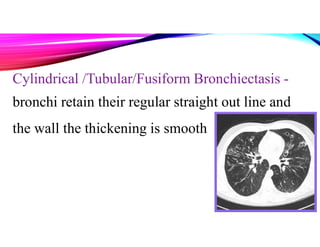
Cylindrical /Tubular/Fusiform Bronchiectasis -
bronchi retain their regular straight out line and
the wall the thickening is smooth
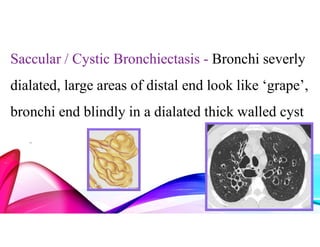
Saccular / Cystic Bronchiectasis - Bronchi severly
dialated, large areas of distal end look like ‘grape’,
bronchi end blindly in a dialated thick walled cyst
–
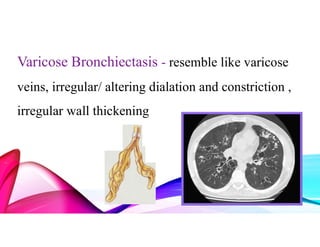
Varicose Bronchiectasis - resemble like varicose
veins, irregular/ altering dialation and constriction ,
irregular wall thickening
“
”
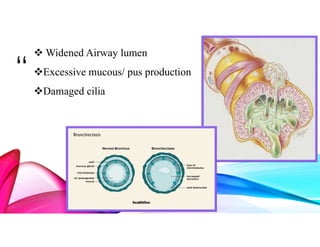
 Widened Airway lumen
Excessive mucous/ pus production
Damaged cilia
Pathophysiology
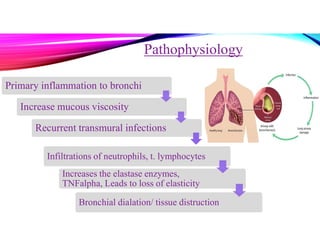
Primary inflammation to bronchi
Increase mucous viscosity
Recurrent transmural infections
Infiltrations of neutrophils, t. lymphocytes
Increases the elastase enzymes,
TNFalpha, Leads to loss of elasticity
Bronchial dialation/ tissue distruction
Clinical features
Shortness of breath
Cough with lot of mucous – green/ yellow
sputum upto 240ml
Purulant expectoration – the volume of the
sputum can be estimating the severity of the disease.
Clubbing of finger
Hemoptysis
Systemic manifestations –fever, weight loss
Reccurant Pneumonia
Wheezing in wide spread bronchiectasis
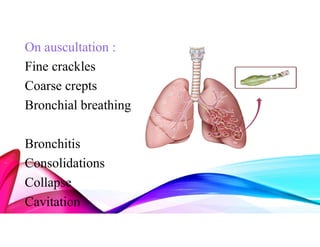
On auscultation :
Fine crackles
Coarse crepts
Bronchial breathing
Bronchitis
Consolidations
Collapse
Cavitation
Diagnosis
History and physical examination
Blood tests
Pulmonary function tests – ( LOW FEV1/ FVC in Ratio)
Oxygen saturation
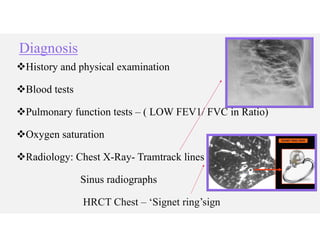
Radiology: Chest X-Ray- Tramtrack lines
Sinus radiographs
HRCT Chest – ‘Signet ring’sign
Sputum culture to identify the bacteria-
pulmonary,H. influenza,
Broncoscopy
Special investigations – IgA immunoglobulins
Detection of cystic fibrosis by sweat chloride
test
 Barium test to identify GERD
Complications :
 Lung abscess
 Pleural effusion. Pleurasy, Empyema
 Corpulmonale
 Cerebral abscess
 Amyloidosis
 Pneumonia
Treatment:
Eliminate the cause
Control the infection
Oxygen therapy
Inhalation of nebulized broncho dialators –
Isoproterenol
Alpha antitrypsin replacement therapy
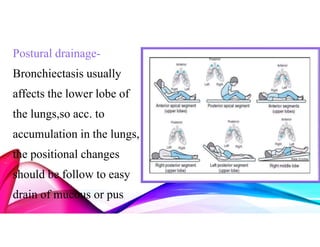
Postural drainage-
Bronchiectasis usually
affects the lower lobe of
the lungs,so acc. to
accumulation in the lungs,
the positional changes
should be follow to easy
drain of mucous or pus
Antibiotics:
• To delays cystic fibrosis
Amoxycilline 500mg/ 10 to 14 days
Ciprofloxacine 500mg/ 2weeks
• IV antibiotics-
Gentamycine 80mg / bd
Ceftadizime 2gm/ tds
Piperacilline 4.5gm/ tds
• IV Immunoglobuline
• Tobramycine 300mg/bd solution for inhalation
Surgical :
• Indications in damage/disease confined to one lobe or
segment
• Uncontrolled hemoptysis – bronchial artery embolization
 Lung transplant
 Surgical Resection
 Removal of viscous secretions/ foreign bodies/ mucous/ pus
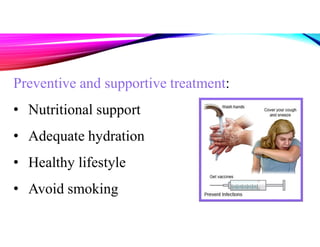
Preventive and supportive treatment:
• Nutritional support
• Adequate hydration
• Healthy lifestyle
• Avoid smoking
Summery
BRONCIECTASIS Is an extreme form of obstructive
bronchitis, leads to perminant/ abnormal dialation and
distortion of bronchi and bronchioles.
Bronchitis also have similar Symptoms like Bronchiectasis, by
investigations and thorough examination will be rule out the
actual diagnosis.
BRONCHIECTASIS PPT .pdf

BRONCHIECTASIS PPT .pdf

  • 1.
    Dr. K. Malathi MDScholar Department of Kaya Chikitsa.
  • 2.
  • 3.
    Definition Bronchiectasis is adestructive lung disease characterized by chronic / perminant dialation of the bronchi associated with persistent through variable inflammatory process in the lungs.  Most of the lower lobes of the lungs Focal or diffuse distribution
  • 4.
    Aetiology: It is oftenbrought by damage of the lungs by other conditions as:  Tuberculosis Cystic fibrosis Immotile Ciliary Syndrome
  • 5.
    Alpha 1 antitrypsindeficiency Autoimmune disorders Inhaled foreign bodies Allergic bronchopulmonary aspergillosis ABPA Post radiation fibrosis HIV
  • 6.
    Classification  Cylindrical –The luminal dialation is same  Saccular / Cystic – loss of bronchial subdivision  Varicose – irregular appearance
  • 7.
    Cylindrical /Tubular/Fusiform Bronchiectasis- bronchi retain their regular straight out line and the wall the thickening is smooth
  • 8.
    Saccular / CysticBronchiectasis - Bronchi severly dialated, large areas of distal end look like ‘grape’, bronchi end blindly in a dialated thick walled cyst –
  • 9.
    Varicose Bronchiectasis -resemble like varicose veins, irregular/ altering dialation and constriction , irregular wall thickening
  • 10.
    “ ”  Widened Airwaylumen Excessive mucous/ pus production Damaged cilia
  • 11.
    Pathophysiology Primary inflammation tobronchi Increase mucous viscosity Recurrent transmural infections Infiltrations of neutrophils, t. lymphocytes Increases the elastase enzymes, TNFalpha, Leads to loss of elasticity Bronchial dialation/ tissue distruction
  • 12.
    Clinical features Shortness ofbreath Cough with lot of mucous – green/ yellow sputum upto 240ml Purulant expectoration – the volume of the sputum can be estimating the severity of the disease. Clubbing of finger
  • 13.
    Hemoptysis Systemic manifestations –fever,weight loss Reccurant Pneumonia Wheezing in wide spread bronchiectasis
  • 14.
    On auscultation : Finecrackles Coarse crepts Bronchial breathing Bronchitis Consolidations Collapse Cavitation
  • 15.
    Diagnosis History and physicalexamination Blood tests Pulmonary function tests – ( LOW FEV1/ FVC in Ratio) Oxygen saturation Radiology: Chest X-Ray- Tramtrack lines Sinus radiographs HRCT Chest – ‘Signet ring’sign
  • 16.
    Sputum culture toidentify the bacteria- pulmonary,H. influenza, Broncoscopy Special investigations – IgA immunoglobulins Detection of cystic fibrosis by sweat chloride test  Barium test to identify GERD
  • 17.
    Complications :  Lungabscess  Pleural effusion. Pleurasy, Empyema  Corpulmonale  Cerebral abscess  Amyloidosis  Pneumonia
  • 18.
    Treatment: Eliminate the cause Controlthe infection Oxygen therapy Inhalation of nebulized broncho dialators – Isoproterenol Alpha antitrypsin replacement therapy
  • 19.
    Postural drainage- Bronchiectasis usually affectsthe lower lobe of the lungs,so acc. to accumulation in the lungs, the positional changes should be follow to easy drain of mucous or pus
  • 20.
    Antibiotics: • To delayscystic fibrosis Amoxycilline 500mg/ 10 to 14 days Ciprofloxacine 500mg/ 2weeks • IV antibiotics- Gentamycine 80mg / bd Ceftadizime 2gm/ tds Piperacilline 4.5gm/ tds • IV Immunoglobuline • Tobramycine 300mg/bd solution for inhalation
  • 21.
    Surgical : • Indicationsin damage/disease confined to one lobe or segment • Uncontrolled hemoptysis – bronchial artery embolization  Lung transplant  Surgical Resection  Removal of viscous secretions/ foreign bodies/ mucous/ pus
  • 22.
    Preventive and supportivetreatment: • Nutritional support • Adequate hydration • Healthy lifestyle • Avoid smoking
  • 23.
    Summery BRONCIECTASIS Is anextreme form of obstructive bronchitis, leads to perminant/ abnormal dialation and distortion of bronchi and bronchioles. Bronchitis also have similar Symptoms like Bronchiectasis, by investigations and thorough examination will be rule out the actual diagnosis.