American Fire Service: The Past, Present, and Future   Chapter 1
Objectives Examine how the history of our society has shaped the American attitude toward fire prevention and fire control efforts Describe and explain how other countries approach the control of fires and compare and contrast their approach with U.S. efforts Describe new technologies and systems the fire service has implemented in recent years
Objectives (cont’d.) Describe the fire service of today, its successes, its problems, and its efforts toward improvement Examine and envision the challenges and opportunities open to the fire service in the twenty-first century
Introduction U.S. culture and its rich and complex history has shaped the American fire service into what it is today Reflection on the history of fire service is necessary to understand how it has evolved
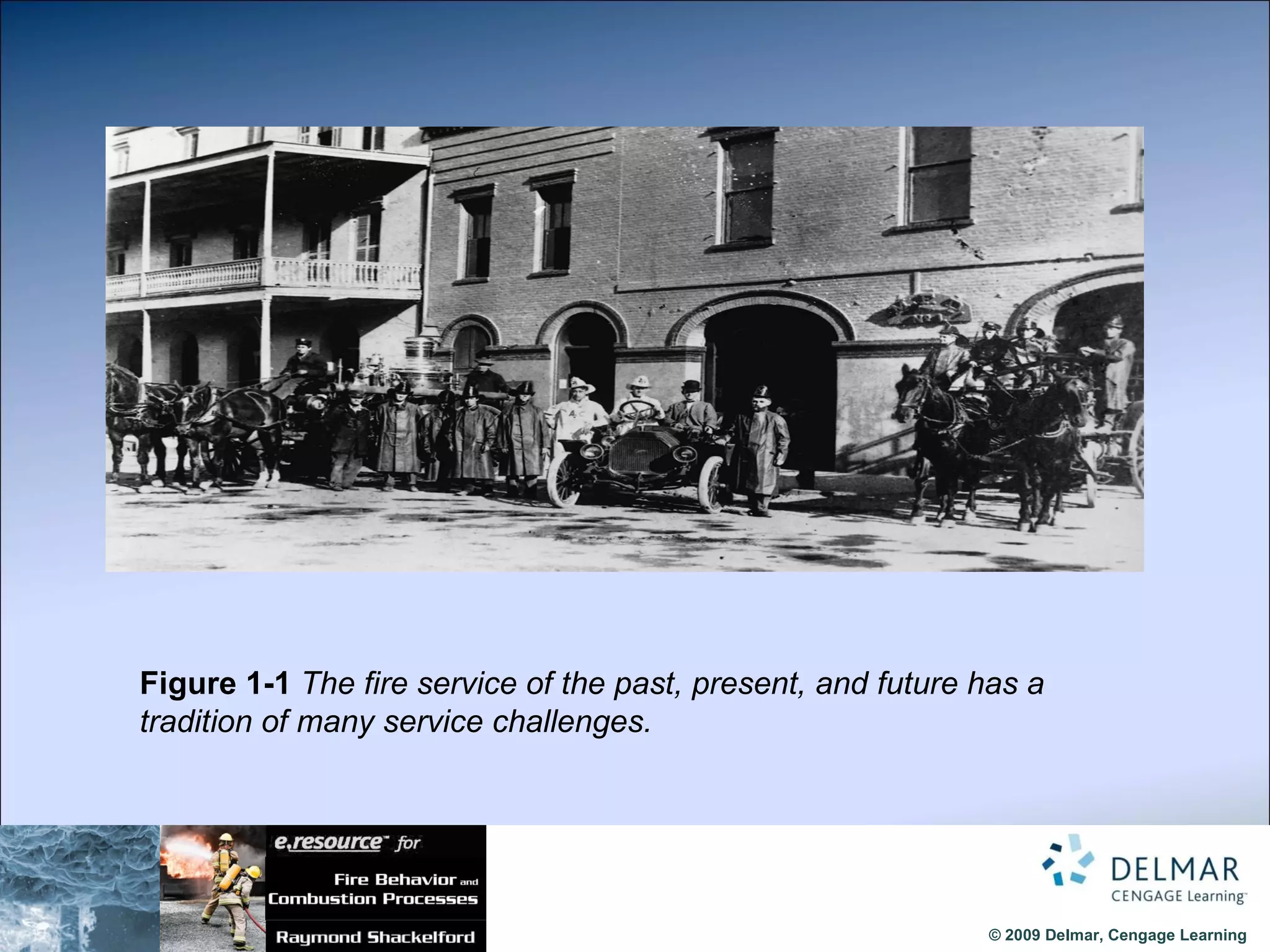
Figure 1-1  The fire service of the past, present, and future has a tradition of many service challenges.
Fire Service of the Past Early colonial settlements experienced several major conflagrations and a number of large fires Conflagration:  A fire with major building-to-building flame spread over a great distance Pattern of occasional conflagrations and large fires has continued through history to present day
The Industrial Revolution Focus on growth and expansion in cities  Increased growth in building construction Corruption in building departments resulted in poor construction practices and little or no fire code enforcement Resulted in large fires that destroyed entire cities Growth and expansion took precedence over fire and life safety concerns
Two Great Fires October 9, 1871: two major fires raged out of control  Wisconsin forest fire Death of 1,152 persons; burned 2,400 square miles of forested land “ Great Chicago Fire” Death of 300 persons; destroyed buildings in a 2.5 square mile area Buildings used quick, poor-quality construction with little or no fire-resistant materials
Insurance Companies Respond The National Board of Fire Underwriters Organized in 1874 Led to enforcement of ordinances by city council Insurance Services Office (ISO) Independently applies grading schedule to city fire departments Sets the rate for fire insurance premiums for individual structures
The Decade of Conflagrations The years 1900 to 1909 called “the decade of conflagrations” Five of the most significant fires in U.S. Earthquake and fire in conjunction in California Triggered formation of National Fire Protection Association (NFPA) and ISO grading schedule Cylindrical occurrence of conflagrations and rebuilding continues to exist
Fire Service of Today We are still plagued with conflagrations that devastate our towns and cities Today’s fire students need a better understanding of: Fire combustion processes Use of improved fire-resistant building materials and methods Use of improvements in fire technologies
Discovering the U.S. Fire Problem Studies by international associations pointed to causes and trends Fire service realized need for public support Recommendations from fire service conferences:  America Burning   (1973);  America Burning Revisited  (1987);  America Burning Recommissioned, America at Risk  (2000) National Professional Development Model: education and training requirements
Comparing the U.S. Fire Problem Differences from other highly industrialized countries: Low percentage of budget spent on fire prevention Low or inadequate funding Use of wood Use of plastics: increase of BTUs; greater chance of flashover Social acceptance of uncontrolled fires
Emergency Medical Services Began in 1930s with first aid to firefighters Radio communications improved 70% of today’s requests for fire department assistance are for medical emergencies Communication and scientific advancements will continue to increase opportunities for enhanced services
Building and Fire Code Enforcement and Improvements 2003 World Trade Center study Found a number of needed improvements in modern high-rise buildings Discussed relationships between building construction methods, fire-resistant materials, fire combustion processes, fire behavior, and impact on firefighter safety Improvements in one area of building construction can lead to unanticipated problems for firefighters
Training and Education Firefighters are better trained today due to improved procedures, requirements, and techniques Example: dealing with hazardous materials Training requirements are strictly enforced Higher education will soon be required for promotion into fire service decision making positions
Administration and Coordination Resources need to be consolidated to deal with emergency incidents such as wildland/urban interface fires Incident Command System (ICS) Management system utilized on emergency scene  Designed to keep order and follow a sequence of set guidelines National Incident Management System (NIMS) Comprehensive; integrates resources from public and private agencies
Equipment and Personnel Protection Fire equipment has improved significantly and will continue to advance technologically Powerful diesel engines Better braking systems Larger capacity pumps New larger-sized hose Better designed nozzles Safer protective equipment and clothing
Protective Systems Smoke and carbon monoxide detectors Available to greater numbers of citizens due to lower cost Quick-acting fire sprinkler head New and improved residential sprinkler systems Increased use of protective systems in residential, commercial, and multifamily dwellings
Fire Service of the Future U.S. must begin to use SI measuring system to effectively communicate globally Meter: basic unit of length Surface and volume relationships both divided and multiplied by factors of 10 Joule: unit of energy (work)
Fire Service and Technology ERT advisory group established by a FEMA grant to identify needs of emergency responders: Alternative fuels Infrared imaging Global positioning Ultrafine water mist Compressed air foam systems
Improvements in Building Safety Research is being conducted in the following areas: Increasing structural integrity Enhancing fire resistance Improving emergency egress and access Cybernetic building systems Preparation for higher levels of technology necessary for future challenges
Summary Long history of conflagrations and large fires Lack of social pressure; abundance of timber for construction; rapid growth of poorly planned cities; insufficient building and fire code  Continued improvement is vital Must adopt SI measuring system  Continue enhancing fire resistance of materials Require increased training and education Embrace technological advances

Chapter 01-American Fire Service: Past, Present, and Future

  • 1.
    American Fire Service:The Past, Present, and Future Chapter 1
  • 2.
    Objectives Examine howthe history of our society has shaped the American attitude toward fire prevention and fire control efforts Describe and explain how other countries approach the control of fires and compare and contrast their approach with U.S. efforts Describe new technologies and systems the fire service has implemented in recent years
  • 3.
    Objectives (cont’d.) Describethe fire service of today, its successes, its problems, and its efforts toward improvement Examine and envision the challenges and opportunities open to the fire service in the twenty-first century
  • 4.
    Introduction U.S. cultureand its rich and complex history has shaped the American fire service into what it is today Reflection on the history of fire service is necessary to understand how it has evolved
  • 5.
    Figure 1-1 The fire service of the past, present, and future has a tradition of many service challenges.
  • 6.
    Fire Service ofthe Past Early colonial settlements experienced several major conflagrations and a number of large fires Conflagration: A fire with major building-to-building flame spread over a great distance Pattern of occasional conflagrations and large fires has continued through history to present day
  • 7.
    The Industrial RevolutionFocus on growth and expansion in cities Increased growth in building construction Corruption in building departments resulted in poor construction practices and little or no fire code enforcement Resulted in large fires that destroyed entire cities Growth and expansion took precedence over fire and life safety concerns
  • 8.
    Two Great FiresOctober 9, 1871: two major fires raged out of control Wisconsin forest fire Death of 1,152 persons; burned 2,400 square miles of forested land “ Great Chicago Fire” Death of 300 persons; destroyed buildings in a 2.5 square mile area Buildings used quick, poor-quality construction with little or no fire-resistant materials
  • 9.
    Insurance Companies RespondThe National Board of Fire Underwriters Organized in 1874 Led to enforcement of ordinances by city council Insurance Services Office (ISO) Independently applies grading schedule to city fire departments Sets the rate for fire insurance premiums for individual structures
  • 10.
    The Decade ofConflagrations The years 1900 to 1909 called “the decade of conflagrations” Five of the most significant fires in U.S. Earthquake and fire in conjunction in California Triggered formation of National Fire Protection Association (NFPA) and ISO grading schedule Cylindrical occurrence of conflagrations and rebuilding continues to exist
  • 11.
    Fire Service ofToday We are still plagued with conflagrations that devastate our towns and cities Today’s fire students need a better understanding of: Fire combustion processes Use of improved fire-resistant building materials and methods Use of improvements in fire technologies
  • 12.
    Discovering the U.S.Fire Problem Studies by international associations pointed to causes and trends Fire service realized need for public support Recommendations from fire service conferences: America Burning (1973); America Burning Revisited (1987); America Burning Recommissioned, America at Risk (2000) National Professional Development Model: education and training requirements
  • 13.
    Comparing the U.S.Fire Problem Differences from other highly industrialized countries: Low percentage of budget spent on fire prevention Low or inadequate funding Use of wood Use of plastics: increase of BTUs; greater chance of flashover Social acceptance of uncontrolled fires
  • 14.
    Emergency Medical ServicesBegan in 1930s with first aid to firefighters Radio communications improved 70% of today’s requests for fire department assistance are for medical emergencies Communication and scientific advancements will continue to increase opportunities for enhanced services
  • 15.
    Building and FireCode Enforcement and Improvements 2003 World Trade Center study Found a number of needed improvements in modern high-rise buildings Discussed relationships between building construction methods, fire-resistant materials, fire combustion processes, fire behavior, and impact on firefighter safety Improvements in one area of building construction can lead to unanticipated problems for firefighters
  • 16.
    Training and EducationFirefighters are better trained today due to improved procedures, requirements, and techniques Example: dealing with hazardous materials Training requirements are strictly enforced Higher education will soon be required for promotion into fire service decision making positions
  • 17.
    Administration and CoordinationResources need to be consolidated to deal with emergency incidents such as wildland/urban interface fires Incident Command System (ICS) Management system utilized on emergency scene Designed to keep order and follow a sequence of set guidelines National Incident Management System (NIMS) Comprehensive; integrates resources from public and private agencies
  • 18.
    Equipment and PersonnelProtection Fire equipment has improved significantly and will continue to advance technologically Powerful diesel engines Better braking systems Larger capacity pumps New larger-sized hose Better designed nozzles Safer protective equipment and clothing
  • 19.
    Protective Systems Smokeand carbon monoxide detectors Available to greater numbers of citizens due to lower cost Quick-acting fire sprinkler head New and improved residential sprinkler systems Increased use of protective systems in residential, commercial, and multifamily dwellings
  • 20.
    Fire Service ofthe Future U.S. must begin to use SI measuring system to effectively communicate globally Meter: basic unit of length Surface and volume relationships both divided and multiplied by factors of 10 Joule: unit of energy (work)
  • 21.
    Fire Service andTechnology ERT advisory group established by a FEMA grant to identify needs of emergency responders: Alternative fuels Infrared imaging Global positioning Ultrafine water mist Compressed air foam systems
  • 22.
    Improvements in BuildingSafety Research is being conducted in the following areas: Increasing structural integrity Enhancing fire resistance Improving emergency egress and access Cybernetic building systems Preparation for higher levels of technology necessary for future challenges
  • 23.
    Summary Long historyof conflagrations and large fires Lack of social pressure; abundance of timber for construction; rapid growth of poorly planned cities; insufficient building and fire code Continued improvement is vital Must adopt SI measuring system Continue enhancing fire resistance of materials Require increased training and education Embrace technological advances