Extinguishing Agents   Chapter 4
Objectives Review and examine the basic components of the fire extinguishment process Review the five basic classifications of fire and explain the various types of agents used to extinguish or control fires in these five classifications
Objectives (cont’d.) Examine in detail the variety of agents used for fire extinguishment and explain the application methods for each of these agents Identify and explain the benefits of using the latest technological advances in fire extinguishing agents such as compressed air foam and ultrafine water mist systems
Introduction Fire combustion process modeled by using a fire tetrahedron Fire professionals use this model daily to extinguish fires Fire professionals’ task is to select the method that will stop the progress of the fire quickly and safely
Fire Extinguishment Theory Heat and temperature are not the same Heat: form of energy Defined as the molecular motion of the material Temperature: measure of average molecular velocity or degree of intensity of the heat
Interruption of the Combustion Process Combustion is interrupted by removing one or more components of the fire tetrahedron Four extinguishment processes: Temperature reduction Fuel removal Oxygen removal Breaking release of additional fuel from material
Temperature Reduction/Heat Removal Water cools temperature of fuel to below ignition temperature Insufficient cooling can lead to rekindling  Flammable vapors may continue to be released If fuel temperature is above flash point, a source of ignition with sufficient energy will cause reignition
Fuel Removal Stop flow of liquid or gaseous fuel  Wildland fires Remove vegetation in front of the fire Backfire   or burn fuel in front of main fire
Oxygen Depletion Reduce the amount of oxygen available to the combustion Cover pan containing burning food Flood area with inert gas Blanketing fuel with foam
Chemical Flame Inhibition Extinguishing agents interrupt the combustion reaction Exact mechanisms have not been completely determined
Extinguishment and Classification of Fires Classification of fire based on the type of fuel being burned Five fire classifications: A, B, C, D, and K Each has own specific requirements for fire extinguishment
The Process and Agents of Extinguishment Water has ability to absorb heat energy more than all other elements except mercury Non-conforming characteristic in processes of expansion and contraction Latent heat of vaporization: quantity of heat absorbed by a substance when it changes from a liquid to vapor
Agents to Improve Plain Water Water not always best extinguisher for fires Gasoline fires or other hydrocarbon liquids with flash points below 100°F should not use water Water not effective on most metallic dusts and shavings, or in pyrophoric metals
Additives to Improve Water Applications Several chemicals developed to increase water’s effectiveness when combined Temperature can be lowered Can be made thicker Surface tension can be reduced to decrease the amount of friction loss
Wet Water Water with a wetting agent added Wetting agent reduces surface tension of water  Allows it to flow and spread better Used when need to penetrate deeply to reach seat of a fire in tightly baled materials  Cotton Tightly packed cardboard boxes
Slippery Water Uses polymers, a plastic like additive Increases amount of water moved through hose line Reduces friction loss Pressure lost by fluids while moving through pipes, hoses, lines, or other limited spaces Flowing larger quantities of water will increase the reaction backpressure
Thick Water Designed to improve water’s ability to provide insulating barrier surface of a solid fuel Expensive Reports on use have not been very positive
Viscous Water Thickening agents added to water: Clings and adheres to surfaces of fuel by providing a continuous coating thicker than untreated water over the fuel surface Projects further when discharged from nozzle  Better resists wind and air currents
Water Application Methods Straight stream Fog or spray Water mist systems Foams
Straight Stream Water Applications Should not impact the thermal layer zones  Cools temperature of ceiling area over fire Highly effective on a high flash point liquid fire
Fog or Spray Water Applications Divides water stream into very small drops resulting in more water surface area Absorbs great deal of heat Can produce thermal imbalance   between hot and cool smoke layers Purges an area of smoky and noxious gases
Water Mist Systems New research and technological improvements in nozzles and pressure systems demonstrate possibility of efficient fire suppression Dependant on: Mist droplet size Mist stability Transportation behavior of mist Unobstructed nozzles Efficiency and rate of droplet vaporization
Foams Long history of success Two-powder foam to single-powder foam to mechanical foam Now surfactant or detergent foam is also used Better penetrates a porous solid fuel source as it reduces surface tension of water Known as wet water or wetting agent
Foam Classifications Class A Extinguish Class A fires, or fires in combustible solids Class B Extinguish Class B fires Special foams Compressed air foam systems Low, medium, or high expansion foam
AFFF Concentrate Combination of water and perfluorocarboxylic acid Loses water content rather rapidly  May provide less burn-back resistance compared to other protein-based foams
Application of Class A Foams Mixture of water, foam concentrate, and air Can be made wetter or dryer Size of bubbles determined by air pressure Wet, dry, and fluid foams
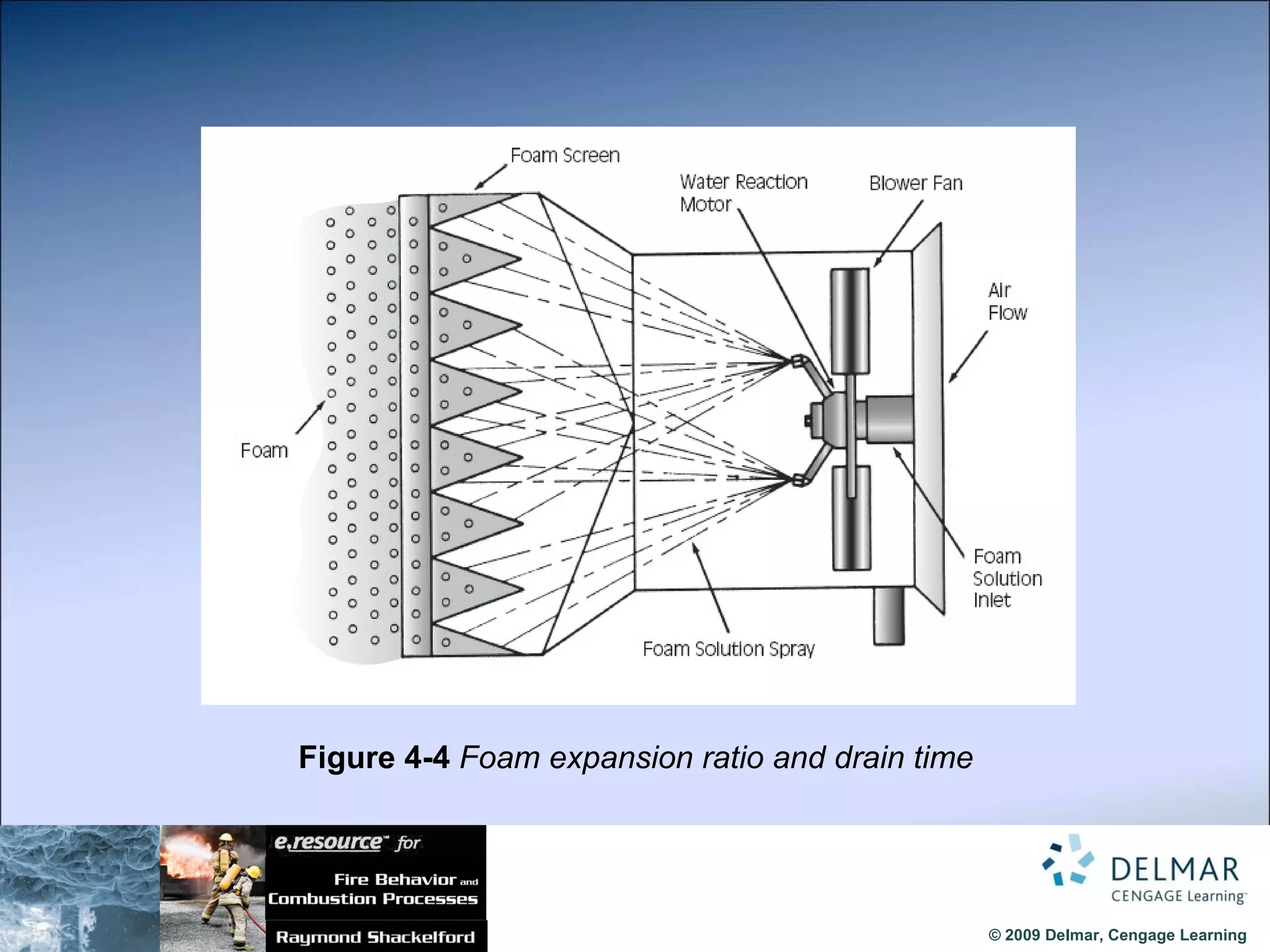
Figure 4-4  Foam   expansion ratio and drain time
Wet Foam Smaller bubbles Less expansion  Fast drain times Drain time : amount of time for the water to drain away from the foam solution Good for initial fire suppression, overhaul, and penetration into deep-seated fires
Dry Foam High expansion ratio  Fluffy and consists mainly of air Slow drain times  Hold shape for a long period of time Good for exposure protection
Fluid Foam Medium to smaller bubbles Moderate drain times Works well for: Direct attack Exposure protection Mop-up operations
Fire Extinguishing Chemicals and Other Agents Water is not always the best extinguishing agent Agents that have been developed to fill in for water:  Dry chemicals Carbon dioxide Halogenated agents
Dry Chemicals Principle chemicals used for dry chemical agents: Sodium bicarbonate, potassium bicarbonate, potassium chloride, and urea-potassium bicarbonate Used on Class B, D and K fires Discharged under high pressure by gas expellant  Forms blanket over top of the fire  Extinguishes fire by excluding oxygen
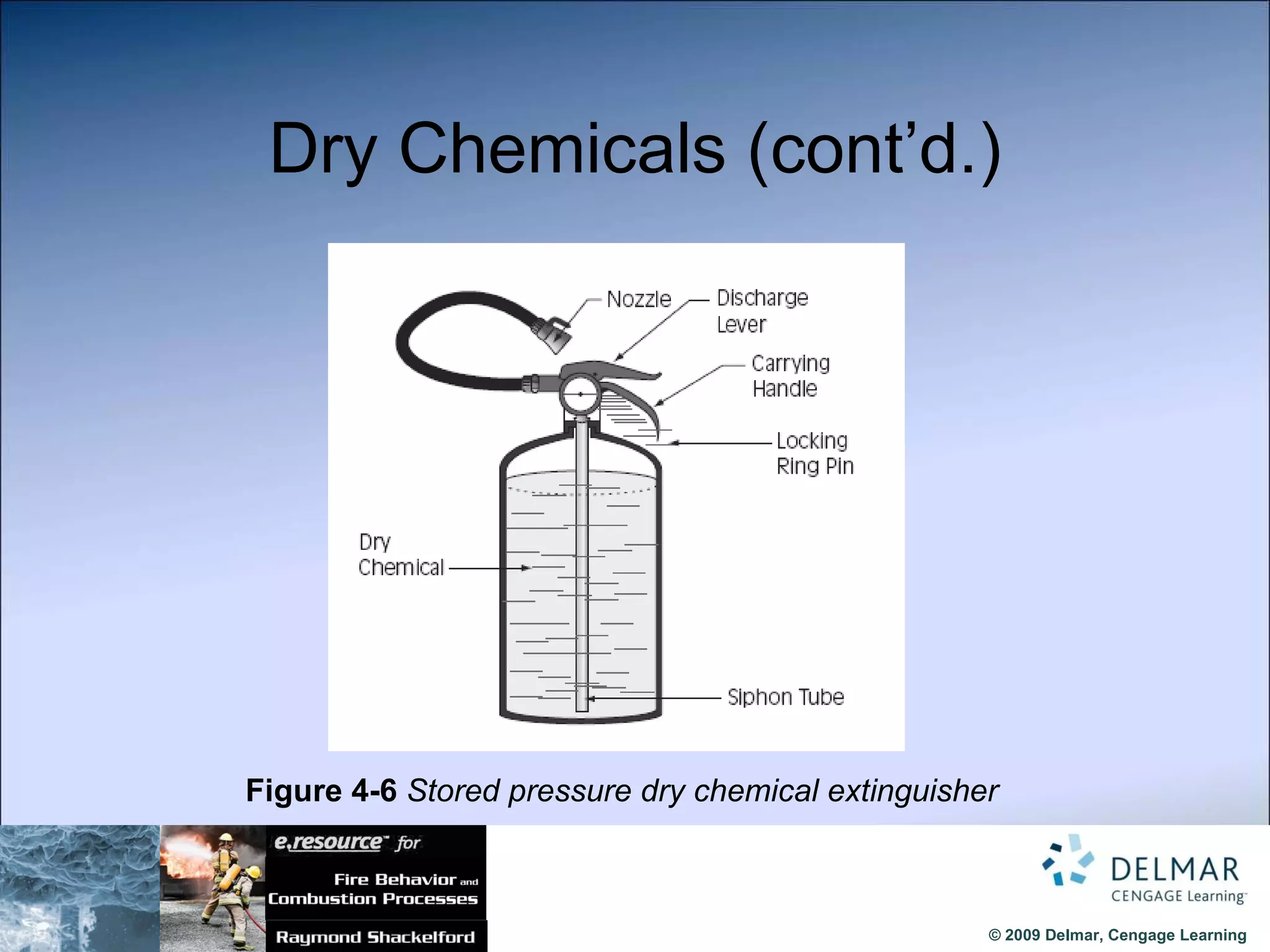
Dry Chemicals (cont’d.) Figure 4-6  Stored pressure dry chemical extinguisher
Application of Dry Chemicals Two common arrangements: Stored pressure Separate pressure container Activation can be manual, automatic, or both Location of discharge nozzles need to be located in the center above the cooking surface
Carbon Dioxide Consist of high-pressure cylinders or low-pressure tanks containing carbon dioxide under pressure Colorless, odorless, electrically non-conducive gas that is non-corrosive to most metals
Application of Carbon Dioxide Known as “dry ice” Extinguishes fires by smothering Creates a refrigerating effect Creates shrill noise Creates static electricity
Halogenated Agents Halon 1301 emerged as effective extinguishing agent not serious toxic threat to humans Seriously depleted the ozone layer surrounding the earth Production of certain halons used for extinguishing purposes banned in certain countries (Halon 1211,a liquid, and Halon 1301, a gas) New “environmentally clean” agents developed
Alternative (Clean) Halogenated Fire Extinguishing Systems Not effective against fires in certain chemicals or mixtures of chemicals Designed primarily for areas where persons are prohibited Monthly inspection of the enclosure is needed
Clean Agent Application Methods Triggering detectors or manual release starts an alarm sequence Control head provides gas escape route into atmosphere through discharge control valve Escape of gas creates imbalance of pressure Nozzles designed to distribute extinguishing agent at controlled rate, smoothly and evenly in fan-shaped patterns
Special Extinguishment Situations Many metals and some chemicals are incompatible with water, dry powder, and carbon dioxide extinguishing agents when burning May react violently when incompatible agents used Specialized extinguishing agents are required
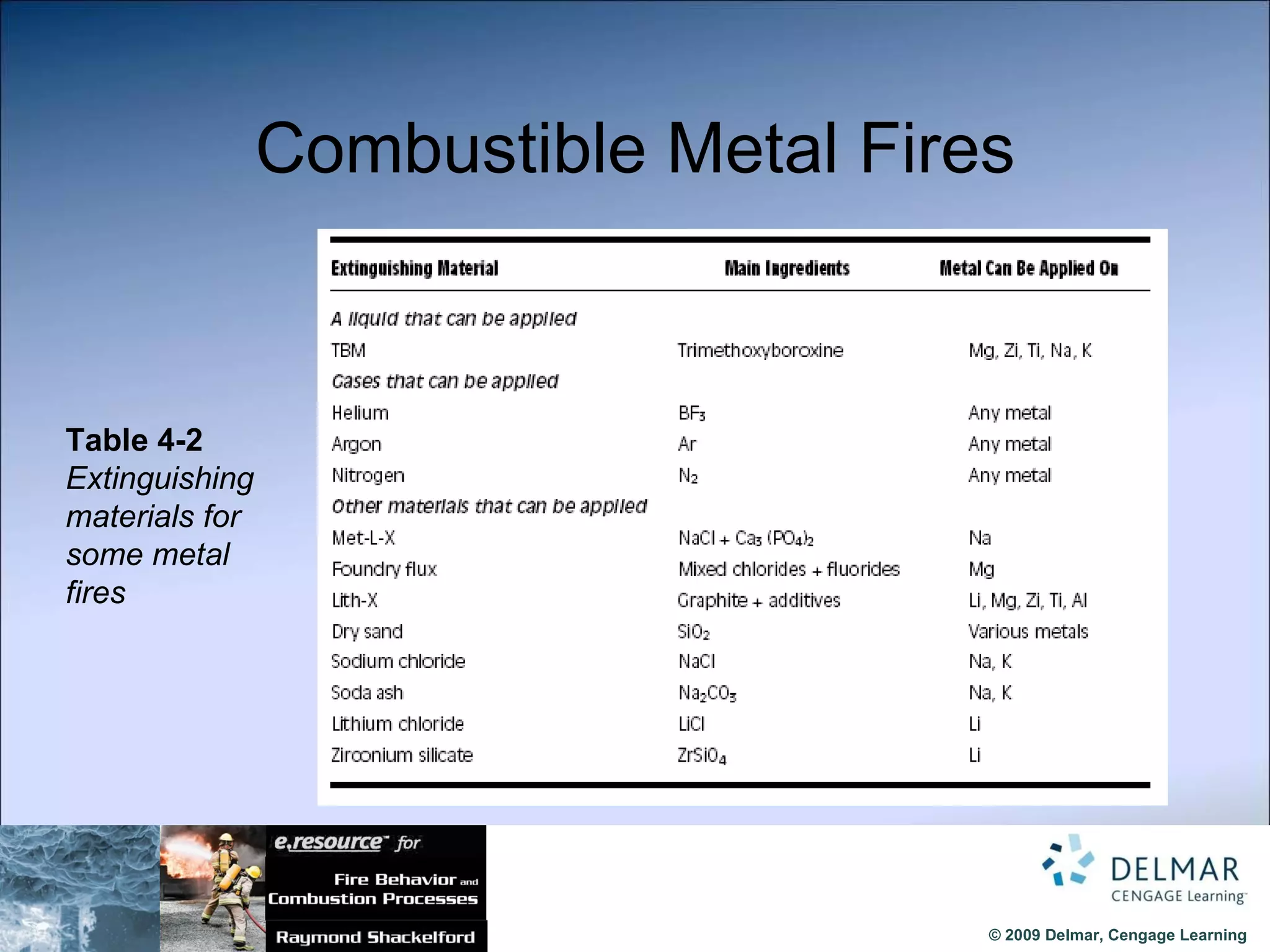
Combustible Metal Fires Table 4-2  Extinguishing materials for some metal fires
Chemical Fires Encountered in high school or college labs, leather tanning plants, and wool dying processes Runoff of contaminated water may impact groundwater Imperative that firefighters make provisions to have persons who can provide technical expertise and advice respond to the incident
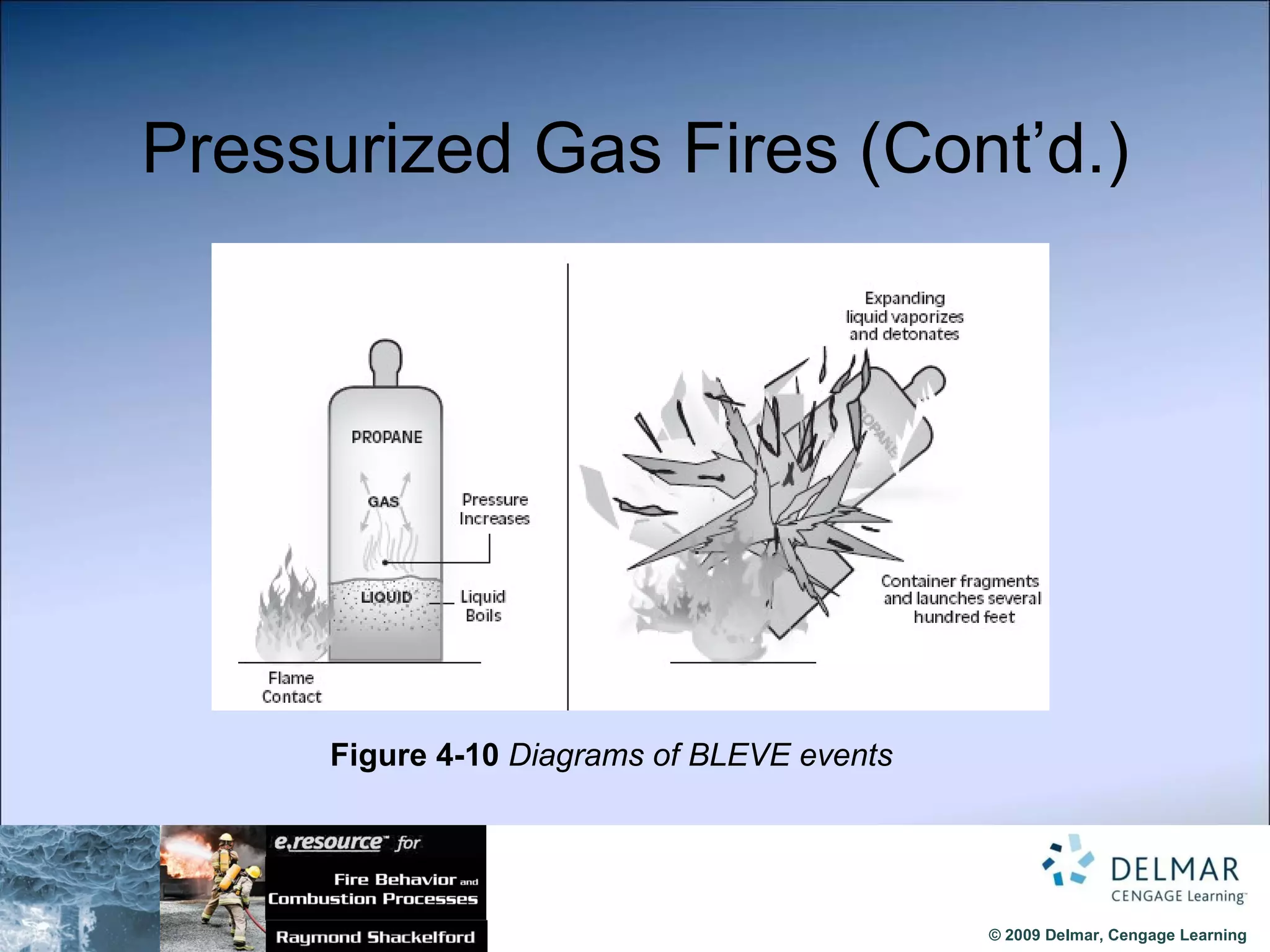
Pressurized Gas Fires Difficult to extinguish because the gas is under pressure Damaged tank, fitting, or valve will provide a continuous supply of fuel Where there is no fire, immediate evacuation required Need to ensure gas supply cut off Tank must be cooled
Pressurized Gas Fires (Cont’d.) Figure 4-10  Diagrams of BLEVE events
Summary Fires extinguished by: Cooling, depleting the oxygen, removing fuel, or breaking chain of combustion Water is not the only extinguishing agent Can be made more effective by making it slippery, reducing its surface tension, and making it thicker Carbon dioxide, dry chemicals, and foam also used as extinguishers

Chapter 04-Extinguishing Agents

  • 1.
  • 2.
    Objectives Review andexamine the basic components of the fire extinguishment process Review the five basic classifications of fire and explain the various types of agents used to extinguish or control fires in these five classifications
  • 3.
    Objectives (cont’d.) Examinein detail the variety of agents used for fire extinguishment and explain the application methods for each of these agents Identify and explain the benefits of using the latest technological advances in fire extinguishing agents such as compressed air foam and ultrafine water mist systems
  • 4.
    Introduction Fire combustionprocess modeled by using a fire tetrahedron Fire professionals use this model daily to extinguish fires Fire professionals’ task is to select the method that will stop the progress of the fire quickly and safely
  • 5.
    Fire Extinguishment TheoryHeat and temperature are not the same Heat: form of energy Defined as the molecular motion of the material Temperature: measure of average molecular velocity or degree of intensity of the heat
  • 6.
    Interruption of theCombustion Process Combustion is interrupted by removing one or more components of the fire tetrahedron Four extinguishment processes: Temperature reduction Fuel removal Oxygen removal Breaking release of additional fuel from material
  • 7.
    Temperature Reduction/Heat RemovalWater cools temperature of fuel to below ignition temperature Insufficient cooling can lead to rekindling Flammable vapors may continue to be released If fuel temperature is above flash point, a source of ignition with sufficient energy will cause reignition
  • 8.
    Fuel Removal Stopflow of liquid or gaseous fuel Wildland fires Remove vegetation in front of the fire Backfire or burn fuel in front of main fire
  • 9.
    Oxygen Depletion Reducethe amount of oxygen available to the combustion Cover pan containing burning food Flood area with inert gas Blanketing fuel with foam
  • 10.
    Chemical Flame InhibitionExtinguishing agents interrupt the combustion reaction Exact mechanisms have not been completely determined
  • 11.
    Extinguishment and Classificationof Fires Classification of fire based on the type of fuel being burned Five fire classifications: A, B, C, D, and K Each has own specific requirements for fire extinguishment
  • 12.
    The Process andAgents of Extinguishment Water has ability to absorb heat energy more than all other elements except mercury Non-conforming characteristic in processes of expansion and contraction Latent heat of vaporization: quantity of heat absorbed by a substance when it changes from a liquid to vapor
  • 13.
    Agents to ImprovePlain Water Water not always best extinguisher for fires Gasoline fires or other hydrocarbon liquids with flash points below 100°F should not use water Water not effective on most metallic dusts and shavings, or in pyrophoric metals
  • 14.
    Additives to ImproveWater Applications Several chemicals developed to increase water’s effectiveness when combined Temperature can be lowered Can be made thicker Surface tension can be reduced to decrease the amount of friction loss
  • 15.
    Wet Water Waterwith a wetting agent added Wetting agent reduces surface tension of water Allows it to flow and spread better Used when need to penetrate deeply to reach seat of a fire in tightly baled materials Cotton Tightly packed cardboard boxes
  • 16.
    Slippery Water Usespolymers, a plastic like additive Increases amount of water moved through hose line Reduces friction loss Pressure lost by fluids while moving through pipes, hoses, lines, or other limited spaces Flowing larger quantities of water will increase the reaction backpressure
  • 17.
    Thick Water Designedto improve water’s ability to provide insulating barrier surface of a solid fuel Expensive Reports on use have not been very positive
  • 18.
    Viscous Water Thickeningagents added to water: Clings and adheres to surfaces of fuel by providing a continuous coating thicker than untreated water over the fuel surface Projects further when discharged from nozzle Better resists wind and air currents
  • 19.
    Water Application MethodsStraight stream Fog or spray Water mist systems Foams
  • 20.
    Straight Stream WaterApplications Should not impact the thermal layer zones Cools temperature of ceiling area over fire Highly effective on a high flash point liquid fire
  • 21.
    Fog or SprayWater Applications Divides water stream into very small drops resulting in more water surface area Absorbs great deal of heat Can produce thermal imbalance between hot and cool smoke layers Purges an area of smoky and noxious gases
  • 22.
    Water Mist SystemsNew research and technological improvements in nozzles and pressure systems demonstrate possibility of efficient fire suppression Dependant on: Mist droplet size Mist stability Transportation behavior of mist Unobstructed nozzles Efficiency and rate of droplet vaporization
  • 23.
    Foams Long historyof success Two-powder foam to single-powder foam to mechanical foam Now surfactant or detergent foam is also used Better penetrates a porous solid fuel source as it reduces surface tension of water Known as wet water or wetting agent
  • 24.
    Foam Classifications ClassA Extinguish Class A fires, or fires in combustible solids Class B Extinguish Class B fires Special foams Compressed air foam systems Low, medium, or high expansion foam
  • 25.
    AFFF Concentrate Combinationof water and perfluorocarboxylic acid Loses water content rather rapidly May provide less burn-back resistance compared to other protein-based foams
  • 26.
    Application of ClassA Foams Mixture of water, foam concentrate, and air Can be made wetter or dryer Size of bubbles determined by air pressure Wet, dry, and fluid foams
  • 27.
    Figure 4-4 Foam expansion ratio and drain time
  • 28.
    Wet Foam Smallerbubbles Less expansion Fast drain times Drain time : amount of time for the water to drain away from the foam solution Good for initial fire suppression, overhaul, and penetration into deep-seated fires
  • 29.
    Dry Foam Highexpansion ratio Fluffy and consists mainly of air Slow drain times Hold shape for a long period of time Good for exposure protection
  • 30.
    Fluid Foam Mediumto smaller bubbles Moderate drain times Works well for: Direct attack Exposure protection Mop-up operations
  • 31.
    Fire Extinguishing Chemicalsand Other Agents Water is not always the best extinguishing agent Agents that have been developed to fill in for water: Dry chemicals Carbon dioxide Halogenated agents
  • 32.
    Dry Chemicals Principlechemicals used for dry chemical agents: Sodium bicarbonate, potassium bicarbonate, potassium chloride, and urea-potassium bicarbonate Used on Class B, D and K fires Discharged under high pressure by gas expellant Forms blanket over top of the fire Extinguishes fire by excluding oxygen
  • 33.
    Dry Chemicals (cont’d.)Figure 4-6 Stored pressure dry chemical extinguisher
  • 34.
    Application of DryChemicals Two common arrangements: Stored pressure Separate pressure container Activation can be manual, automatic, or both Location of discharge nozzles need to be located in the center above the cooking surface
  • 35.
    Carbon Dioxide Consistof high-pressure cylinders or low-pressure tanks containing carbon dioxide under pressure Colorless, odorless, electrically non-conducive gas that is non-corrosive to most metals
  • 36.
    Application of CarbonDioxide Known as “dry ice” Extinguishes fires by smothering Creates a refrigerating effect Creates shrill noise Creates static electricity
  • 37.
    Halogenated Agents Halon1301 emerged as effective extinguishing agent not serious toxic threat to humans Seriously depleted the ozone layer surrounding the earth Production of certain halons used for extinguishing purposes banned in certain countries (Halon 1211,a liquid, and Halon 1301, a gas) New “environmentally clean” agents developed
  • 38.
    Alternative (Clean) HalogenatedFire Extinguishing Systems Not effective against fires in certain chemicals or mixtures of chemicals Designed primarily for areas where persons are prohibited Monthly inspection of the enclosure is needed
  • 39.
    Clean Agent ApplicationMethods Triggering detectors or manual release starts an alarm sequence Control head provides gas escape route into atmosphere through discharge control valve Escape of gas creates imbalance of pressure Nozzles designed to distribute extinguishing agent at controlled rate, smoothly and evenly in fan-shaped patterns
  • 40.
    Special Extinguishment SituationsMany metals and some chemicals are incompatible with water, dry powder, and carbon dioxide extinguishing agents when burning May react violently when incompatible agents used Specialized extinguishing agents are required
  • 41.
    Combustible Metal FiresTable 4-2 Extinguishing materials for some metal fires
  • 42.
    Chemical Fires Encounteredin high school or college labs, leather tanning plants, and wool dying processes Runoff of contaminated water may impact groundwater Imperative that firefighters make provisions to have persons who can provide technical expertise and advice respond to the incident
  • 43.
    Pressurized Gas FiresDifficult to extinguish because the gas is under pressure Damaged tank, fitting, or valve will provide a continuous supply of fuel Where there is no fire, immediate evacuation required Need to ensure gas supply cut off Tank must be cooled
  • 44.
    Pressurized Gas Fires(Cont’d.) Figure 4-10 Diagrams of BLEVE events
  • 45.
    Summary Fires extinguishedby: Cooling, depleting the oxygen, removing fuel, or breaking chain of combustion Water is not the only extinguishing agent Can be made more effective by making it slippery, reducing its surface tension, and making it thicker Carbon dioxide, dry chemicals, and foam also used as extinguishers