A fire extinguisher is an active fire
protection tool used to extinguish or
manage small fires in crisis
circumstances.
Fire Extinguisher Types
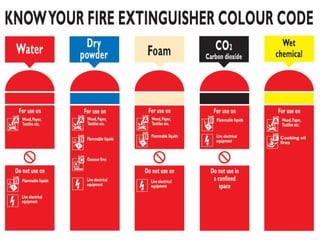
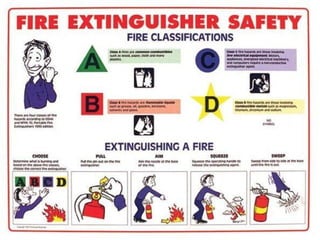
Class a fire extinguisher
Class A fires absorb ordinary burnable
equipment or SOLIDS such as plastic,
paper and wood.
Class b fire extinguisher
It absorbs flammable and
combustible fluid such as
lacquers, alcohol, diesel oil,
gasoline, oil-based paint sand
so on.
Class c fire extinguisher
The fires absorb energized
electrical equipment and
FLAMMABLE GASES like
propane, methane, butane etc.
Class d fire extinguisher
Class D fires are fires that engage
combustible metals such as
titanium, magnesium and sodium.
Class k fire extinguisher
Class K fires are fires that occupy
vegetable oils, animal oils, or fats
in cooking appliances.
How To Use Fire Extinguisher ?
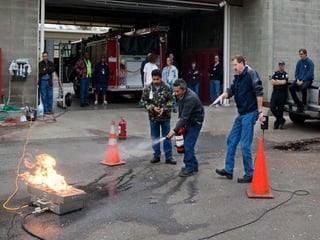
● Alert other residents and keep someone to
inform the fire department in emergency.
● The fire should be small and limited to a
single object.
● Make sure that you are safe from the fire
that may produce toxic smoke and ensure
that you can be safe from it.
● Try to recognize a means of escape and
ensure that the fire will not be linking you
and the escape route
WHY
Fire Extinguisher Training
NEED ?
There are lots of large buildings or office blocks
where huge majority of us working, have a fire
extinguisher of every level.Some of the most
horrible fires have started from just a tiny electrical
fire and have gutted complete buildings, cracked
businesses and in the most awful case destroyed
lives.So we think spending a day on fire
extinguisher training is one of the best decisions in
your life. It will help you to learn such skills which
could save your life.
fireextinguishertraininghq.com
Thanks ...

Fire extinguisher training

  • 2.
    A fire extinguisheris an active fire protection tool used to extinguish or manage small fires in crisis circumstances.
  • 3.
  • 4.
    Class a fireextinguisher Class A fires absorb ordinary burnable equipment or SOLIDS such as plastic, paper and wood.
  • 5.
    Class b fireextinguisher It absorbs flammable and combustible fluid such as lacquers, alcohol, diesel oil, gasoline, oil-based paint sand so on.
  • 6.
    Class c fireextinguisher The fires absorb energized electrical equipment and FLAMMABLE GASES like propane, methane, butane etc.
  • 7.
    Class d fireextinguisher Class D fires are fires that engage combustible metals such as titanium, magnesium and sodium.
  • 8.
    Class k fireextinguisher Class K fires are fires that occupy vegetable oils, animal oils, or fats in cooking appliances.
  • 9.
    How To UseFire Extinguisher ?
  • 10.
    ● Alert otherresidents and keep someone to inform the fire department in emergency. ● The fire should be small and limited to a single object. ● Make sure that you are safe from the fire that may produce toxic smoke and ensure that you can be safe from it. ● Try to recognize a means of escape and ensure that the fire will not be linking you and the escape route
  • 12.
  • 14.
    There are lotsof large buildings or office blocks where huge majority of us working, have a fire extinguisher of every level.Some of the most horrible fires have started from just a tiny electrical fire and have gutted complete buildings, cracked businesses and in the most awful case destroyed lives.So we think spending a day on fire extinguisher training is one of the best decisions in your life. It will help you to learn such skills which could save your life.
  • 17.