FIRE EXTINGUISHER


Agus S.M
Farinahida
Mayasari
Nur H
MMQ 18
Outline
•   Description
•   Fire Classes
•   Classification
•   Part Of Fire Extinguisher
•   How To Use
•   Maintenance
Description


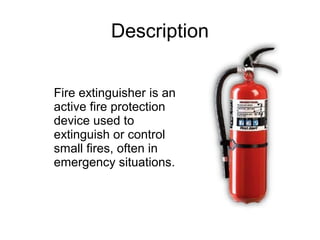
Fire extinguisher is an
active fire protection
device used to
extinguish or control
small fires, often in
emergency situations.
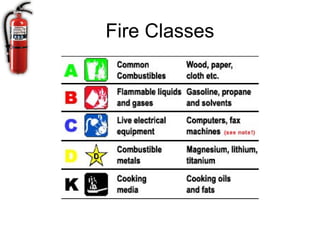
Fire Classes
Classification
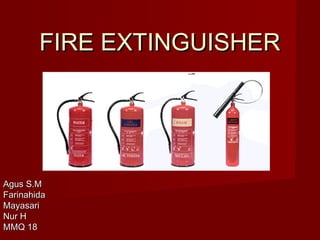
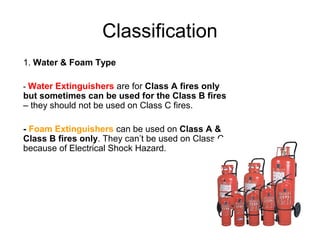
1. Water & Foam Type

- Water Extinguishers are for Class A fires only
but sometimes can be used for the Class B fires
– they should not be used on Class C fires.

- Foam Extinguishers can be used on Class A &
Class B fires only. They can’t be used on Class C
because of Electrical Shock Hazard.
Classification
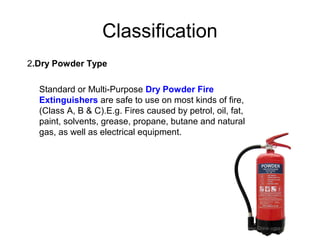
2.Dry Powder Type

  Standard or Multi-Purpose Dry Powder Fire
  Extinguishers are safe to use on most kinds of fire,
  (Class A, B & C).E.g. Fires caused by petrol, oil, fat,
  paint, solvents, grease, propane, butane and natural
  gas, as well as electrical equipment.
Classification
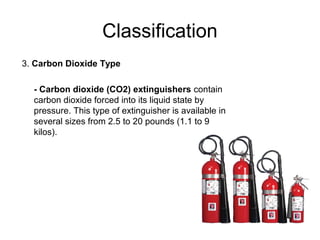
3. Carbon Dioxide Type

  - Carbon dioxide (CO2) extinguishers contain
  carbon dioxide forced into its liquid state by
  pressure. This type of extinguisher is available in
  several sizes from 2.5 to 20 pounds (1.1 to 9
  kilos).
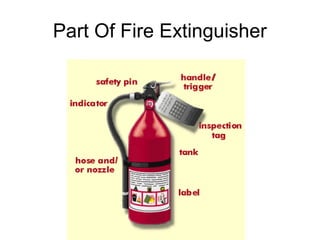
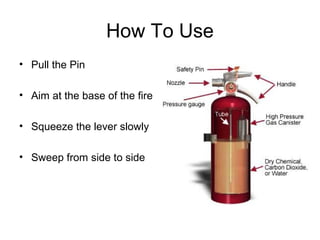
Part Of Fire Extinguisher
How To Use
• Pull the Pin

• Aim at the base of the fire

• Squeeze the lever slowly

• Sweep from side to side
Maintenance
• Basic Service : Check weight and correct pressure.

• Extended Service: Water, Wet Chemical, Foam & Powder
  extinguishers require every five years.


• Overhaul: CO2 extinguishers, due to their high operating
  pressure, are subject to pressure vessel safety legislation and
  must be hydraulic pressure tested, inspected internally &
  externally and date stamped every 10 years.
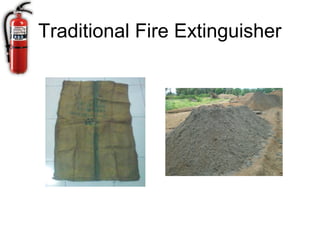
Traditional Fire Extinguisher

Fire extinguisher

  • 1.
  • 2.
    Outline • Description • Fire Classes • Classification • Part Of Fire Extinguisher • How To Use • Maintenance
  • 3.
    Description Fire extinguisher isan active fire protection device used to extinguish or control small fires, often in emergency situations.
  • 4.
  • 5.
    Classification 1. Water &Foam Type - Water Extinguishers are for Class A fires only but sometimes can be used for the Class B fires – they should not be used on Class C fires. - Foam Extinguishers can be used on Class A & Class B fires only. They can’t be used on Class C because of Electrical Shock Hazard.
  • 6.
    Classification 2.Dry Powder Type Standard or Multi-Purpose Dry Powder Fire Extinguishers are safe to use on most kinds of fire, (Class A, B & C).E.g. Fires caused by petrol, oil, fat, paint, solvents, grease, propane, butane and natural gas, as well as electrical equipment.
  • 7.
    Classification 3. Carbon DioxideType - Carbon dioxide (CO2) extinguishers contain carbon dioxide forced into its liquid state by pressure. This type of extinguisher is available in several sizes from 2.5 to 20 pounds (1.1 to 9 kilos).
  • 8.
    Part Of FireExtinguisher
  • 9.
    How To Use •Pull the Pin • Aim at the base of the fire • Squeeze the lever slowly • Sweep from side to side
  • 10.
    Maintenance • Basic Service: Check weight and correct pressure. • Extended Service: Water, Wet Chemical, Foam & Powder extinguishers require every five years. • Overhaul: CO2 extinguishers, due to their high operating pressure, are subject to pressure vessel safety legislation and must be hydraulic pressure tested, inspected internally & externally and date stamped every 10 years.
  • 11.